Hua Xia Shi Bao

Search documents
国铁集团前三季度营收9122亿元,多项运输指标创历史新高,“十五五”交通投资仍将保持高位
Hua Xia Shi Bao· 2025-11-01 02:32
Core Insights - The railway sector in China has been actively enhancing passenger services and optimizing travel experiences, leading to impressive financial results for the first three quarters of 2023, with total revenue reaching 912.2 billion yuan and net profit at 11.72 billion yuan [2][3] Financial Performance - In the first three quarters of 2023, the China National Railway Group reported total operating revenue of 912.2 billion yuan and a net profit of 11.72 billion yuan [2] - The asset-liability ratio stood at 62.79% by the end of the third quarter, a decrease of 0.72 percentage points compared to the end of the previous year, indicating a stable operational environment [2] Passenger Transport Growth - The railway sector saw a significant increase in passenger traffic, with 3.54 billion passengers transported in the first three quarters, marking a 6% year-on-year growth and setting a historical record for the same period [5] - The introduction of themed trains such as "fan trains" and "silver-haired trains" has contributed to this growth, with 1,818 tourist trains operated, a 27% increase year-on-year [5] Freight Transport Performance - In terms of freight, the railway system transported 3.03 billion tons of goods in the first three quarters, with a daily average of 185,300 cars, reflecting a year-on-year increase of 3.4% and 4.3% respectively [7] - The total volume of logistics contracts signed reached 1.36 billion tons [7] Investment and Infrastructure Development - Fixed asset investment in the railway sector for the first three quarters amounted to 593.7 billion yuan, representing a year-on-year increase of 5.8%, with 968 kilometers of new lines put into operation [8] - Key projects such as the Chongqing to Jiangjiang section of the Yuxia High-speed Railway and the Shenyang to Jiamusi High-speed Railway have progressed positively, enhancing regional connectivity [8] Technological Innovations - The CR450 project, which is the world's first train capable of operating at 400 km/h, has shown promising results, achieving a record speed of 453 km/h during trials [9] - The railway sector aims to focus on building a world-class railway enterprise through innovation and reform [9]


10月PMI降至49.0%:制造业景气度放缓,新动能与服务业支撑经济韧性
Hua Xia Shi Bao· 2025-11-01 02:32
Core Viewpoint - The manufacturing sector in China experienced a decline in October, with the manufacturing PMI dropping to 49.0%, indicating a contraction in production and market demand, while the non-manufacturing sector showed slight improvement with a PMI of 50.1% [2][3][4] Manufacturing Sector Analysis - The manufacturing production index fell to 49.7%, a significant drop of 2.2 percentage points, marking the first contraction since April [3] - The new orders index decreased to 48.8%, reflecting a decline in market demand [3] - Seasonal factors, including the timing of the Mid-Autumn Festival, contributed to the decline in manufacturing PMI, with historical data showing a pattern of decreases in October [3][4] - Despite the overall decline, certain industries such as agricultural processing, automotive, and aerospace maintained production and new orders indices above 52.0%, indicating robust activity [4][5] External Demand and Trade Impact - The new export orders index fell by 1.9 percentage points to 45.9%, highlighting the impact of high tariffs from the U.S. on global trade and Chinese exports [4] Structural Highlights in Manufacturing - The equipment manufacturing and high-tech sectors showed resilience, with their respective PMIs at 50.5% and 50.2%, indicating continued expansion [5] - Large enterprises reported stable performance, with production and new orders indices remaining in the expansion zone for six consecutive months [5] Non-Manufacturing Sector Performance - The non-manufacturing business activity index rose slightly to 50.1%, indicating a return to expansion, with significant growth in sectors related to consumer spending and infrastructure [6][7] - The service sector, particularly in transportation and hospitality, saw high activity levels, driven by holiday consumption and promotional events [6][7] - The construction sector experienced a temporary decline, but indicators suggest a potential acceleration in infrastructure investment due to recent policy measures [7] Policy Impact and Future Outlook - Recent fiscal policies, including the introduction of new financial tools and local government debt issuance, are expected to support infrastructure investment and stabilize economic activity [7][8] - The overall economic activity is anticipated to remain resilient, with macroeconomic policies expected to take effect and further consolidate the foundation for stable economic operation [8]

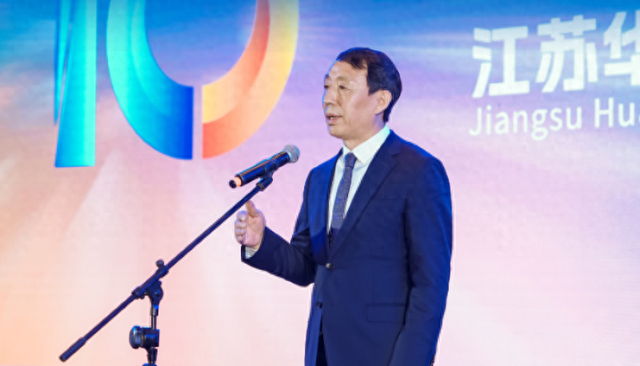
江苏华辰董事长张孝金:变压器市场变化很快,加大投入才能抓住机遇 | 对话能源大咖
Hua Xia Shi Bao· 2025-11-01 02:00
Core Viewpoint - The future growth of China's new energy industry is expected to be significant, driven by the demand for clean energy and the government's policy to accelerate the construction of a new energy system [2][5]. Industry Overview - By the end of the 14th Five-Year Plan, most of the new electricity demand will be met by new clean energy generation [2]. - The market for power transmission and distribution is rapidly increasing alongside the growth of wind, solar, and energy storage sectors [2]. - The demand for transformer capacity has risen sharply, necessitating quick adaptation to market needs to avoid competitive disadvantages [2]. Company Insights - Jiangsu Huachen's new energy power equipment industrial base has attracted industry attention, with a planned total investment of approximately 2 billion RMB [2]. - The company recognizes the need for new investments to meet current market demands, emphasizing that without new inputs, it risks missing opportunities [4]. - The company plans to establish at least three joint venture factories in overseas markets within the next three years, focusing on Europe and the Middle East [6]. Market Dynamics - The clean energy sector is projected to see a significant increase in installed capacity, with a target of reaching 3.6 billion kilowatts of wind and solar power by 2035 [5]. - The competition in the distribution transformer market is intense, with many players, while the high-voltage transformer market is more concentrated with only a few capable manufacturers [7]. - The rapid growth of new energy installations may lead to imbalances in the distribution network, posing challenges for the industry [8]. Future Directions - The company is considering the development of solid-state transformers, which offer advantages such as reduced size and improved energy conversion efficiency, while also facing challenges in maintaining insulation and thermal control [10].

昔日香饽饽遇冷!光伏设备、逆变器业绩重构,支架企业开始亏损
Hua Xia Shi Bao· 2025-11-01 01:58
Core Viewpoint - The photovoltaic industry is experiencing a significant performance restructuring, with major companies in key sectors such as equipment, inverters, junction boxes, and mounting brackets facing declining profits and some even reporting losses, indicating a shift in the industry's profitability logic [1] Equipment Sector - Equipment suppliers are seeing the most pronounced decline, with several leading companies reporting both revenue and net profit decreases in Q3 [2] - Jiejia Weichuang (捷佳伟创) reported Q3 revenue of 4.734 billion yuan, a decrease of 17.26% year-on-year, and net profit of 858 million yuan, a sharp decline from previous growth rates [2] - Jing Sheng Machinery (晶盛机电) experienced a dramatic drop in Q3 revenue to 2.474 billion yuan, down 42.87%, and net profit of 262 million yuan, down 69.65% [2] - Maiwei Co., Ltd. (迈为股份) reported Q3 revenue of 1.991 billion yuan, a decline of 31.3%, and net profit of 269 million yuan, down 9.42% [4][5] - Aotewei (奥特维) saw its Q3 revenue drop to 1.292 billion yuan, down 48.65%, with net profit plummeting 90.04% to 50 million yuan [6] Inverter Sector - The inverter industry is experiencing a bifurcated performance, with some companies like Sungrow (阳光电源) and GoodWe (固德威) reporting significant profit increases, while others face profit declines [7] - Sungrow achieved a net profit of 4.147 billion yuan in Q3, up 57.04% year-on-year, while GoodWe's net profit surged by 200.83% [7] - Conversely, companies like Jinlang Technology (锦浪科技) and Deye (德业股份) reported net profit declines of 16.85% and 17.84%, respectively [7] Junction Box Sector - The junction box sector has also seen significant profit declines, with Zairun New Energy (泽润新能) reporting a net loss of approximately 3.856 million yuan in Q3, a 115.93% year-on-year drop [8] - Kuai Ke Electronics (快可电子) reported Q3 revenue of 328 million yuan, up 66.1%, but net profit decreased by 64.47% [8] Mounting Bracket Sector - The mounting bracket sector is facing similar challenges, with Qingyuan Co. (清源股份) reporting Q3 revenue of 470 million yuan, a 5.47% increase, but net profit down 73.94% [8] - Leading company Zhongxinbo (中信博) reported a net profit decline of 74.49% year-on-year, with Q3 losses reaching 48.39 million yuan, a 119.76% drop [9][10] Overall Industry Outlook - The overall profitability of the photovoltaic equipment, inverter, junction box, and mounting bracket sectors is declining, with industry experts indicating that the stability of returns from photovoltaic power stations is not as strong as before, complicating investment decisions [10]


海螺、冀东等水泥巨头净利大增,煤价下跌成“大功臣”
Hua Xia Shi Bao· 2025-11-01 01:58
Core Viewpoint - The cement industry has experienced stagnant revenue but significant profit growth in the first three quarters of the year, highlighting the need for further actions to maintain this performance amid overcapacity and declining prices [2][3]. Group 1: Company Performance - Jinyu Jidong reported a slight revenue increase of 0.1% to 18.575 billion yuan, while net profit surged by 113.6% to 40.35 million yuan, attributed to reduced costs from falling coal and raw material prices [2]. - Conch Cement's revenue decreased by 10.06% to 61.298 billion yuan, but net profit rose by 21.28% to 6.305 billion yuan, driven by enhanced cost control [3]. - Huaxin Cement achieved a revenue of 25.033 billion yuan, a 1.27% increase, with net profit soaring by 76.01% to 2.004 billion yuan, benefiting from rising domestic cement prices [3]. - Tapai Group's revenue slightly declined by 0.49% to 2.916 billion yuan, while net profit increased by 54.23% to 588 million yuan, supported by improved sales and cost control measures [4]. Group 2: Price Trends and Market Dynamics - Cement prices have been on a downward trend since April, reaching a near nine-year low, with only the first quarter supporting profit growth [2][5]. - The national cement price index dropped nearly 19% from approximately 394 at the beginning of the year to 320 by the end of September [4]. - The average selling price of cement has decreased less than the drop in coal prices, allowing for some profit margin retention [4]. Group 3: Industry Challenges and Strategies - The cement industry is facing a supply-demand imbalance, leading to intensified competition and price declines [5][8]. - The implementation of staggered production has been a key strategy for the industry, with companies showing varying levels of compliance [6][7]. - The cyclical nature of demand and the industry's response to price fluctuations have created a cycle of self-regulation and competitive pressure [8].



钛白粉提价效果不佳,龙佰集团净利下降34%
Hua Xia Shi Bao· 2025-11-01 01:53
Core Viewpoint - The titanium dioxide industry is undergoing a significant adjustment, with major companies reporting declines in net profits and increasing losses due to falling prices and weak demand [2][3][4]. Group 1: Industry Performance - Major companies such as Longbai Group, Tianneng Chemical, and Lubao Chemical have reported declines in net profits, while Jinpu Titanium and Huayun Titanium have incurred losses, with Jinpu Titanium experiencing the largest drop [2][4]. - In the first three quarters of the year, Longbai Group's revenue was 19.435 billion yuan, down 6.86% year-on-year, and net profit was 1.674 billion yuan, down 34.68% [4]. - The average price of rutile titanium dioxide in China was approximately 12,997 yuan/ton, a year-on-year decrease of 14% [3]. Group 2: Price Trends - The average market price of titanium dioxide in the third quarter was 12,992 yuan/ton, reflecting a quarter-on-quarter decline of 8.92% and a year-on-year decline of 14.21% [5]. - Despite multiple price increases throughout the year, the effectiveness of these price hikes has been limited, with actual execution falling short of announced increases [6][9]. - In October, the average price of titanium dioxide slightly increased to 13,860 yuan/ton, a 0.29% rise from the beginning of the month [9]. Group 3: Future Outlook - Demand for titanium dioxide is expected to decline in the fourth quarter, particularly in November and December, leading to further downward pressure on prices, which are projected to range between 12,200 and 13,000 yuan/ton [10]. - The industry is also facing challenges from anti-dumping investigations in key export markets, significantly impacting export volumes, particularly to India [11][12]. - Longbai Group is pursuing an overseas expansion strategy to mitigate domestic market pressures by acquiring foreign titanium dioxide companies and establishing subsidiaries in Malaysia and the UK [12].

南都电源89亿元订单在手仍亏2.2亿元,高负债成为转型“拦路虎”
Hua Xia Shi Bao· 2025-11-01 01:53
Core Viewpoint - Zhejiang Nandu Power Supply Co., Ltd. is undergoing a challenging strategic transformation from lead-acid to lithium-ion batteries, facing significant financial losses and high debt levels while attempting to stabilize its operations and improve profitability [2][3][5]. Financial Performance - In the first three quarters of the year, Nandu Power reported a revenue of 5.911 billion yuan, a year-on-year decline of 24.8%, and a loss of 220 million yuan, which is an improvement compared to a loss of 247 million yuan in the same period last year [3]. - The company experienced a significant loss of 1.497 billion yuan in 2024, and despite some recovery in the second and third quarters of this year, it has not yet achieved overall profitability [3][4]. - The gross margin for the lithium battery products has turned positive this year, with some orders in the data center backup power segment achieving a gross margin of up to 35% [3][4]. Business Transformation - Nandu Power has actively reduced production in its lead-acid recycling business, which has seen a revenue decrease of 2 billion yuan, significantly impacting overall financial performance [3][4]. - The company has approximately 8.9 billion yuan in unfulfilled orders, with a significant portion coming from large-scale energy storage projects and overseas data center lithium battery orders [4]. Debt and Financial Health - As of the end of the third quarter, Nandu Power's asset-liability ratio reached 79.01%, with interest-bearing debt at 49.99%, indicating substantial financial pressure [5]. - The company has a cash shortfall exceeding 4.4 billion yuan when comparing cash on hand to short-term borrowings and current liabilities [5]. - Despite high debt levels, the operating cash flow has improved, with a net inflow of 860 million yuan in the first three quarters, a significant increase from a negative cash flow of 720 million yuan in the previous year [5].

中美会晤释放强信号!大豆、豆粕价格要变天?一文看懂核心逻辑
Hua Xia Shi Bao· 2025-11-01 00:32
Core Viewpoint - The recent surge in U.S. soybean futures prices is attributed to expectations of China purchasing U.S. soybeans, marking a significant shift after a period of zero imports from the U.S. [3][5] Group 1: U.S. Soybean Market Dynamics - On October 30, U.S. soybean futures reached a peak of $11.14 per bushel, the highest in 15 months, closing at $11.09 on October 31 [3]. - Analysts suggest that the potential for China to resume soybean purchases from the U.S. is a key driver behind the price increase [5][6]. - Following a meeting between Chinese President Xi Jinping and U.S. President Trump, there is optimism regarding the stabilization of U.S.-China relations, which could positively impact global soybean trade [5]. Group 2: Chinese Purchasing Behavior - There is speculation that China may agree to purchase 12 million tons of U.S. soybeans this season, with potential procurement actions expected in November and December [6]. - The Chinese market's demand for soybeans is influenced by domestic supply conditions, with analysts noting that increased imports could stabilize domestic soybean supply [6][10]. - The Chinese soybean purchasing strategy may involve a mix of U.S. and Brazilian soybeans, depending on price competitiveness [7]. Group 3: Domestic Soybean and Meal Demand - Domestic demand for soybean meal remains strong, supported by high inventory levels in the livestock sector [8][10]. - Recent data indicates that China's industrial feed production has shown significant year-on-year growth, reflecting robust demand for soybean meal [8]. - As of October 24, major oil mills in China reported a decrease in soybean inventory and an increase in soybean meal inventory, indicating shifting market dynamics [10]. Group 4: Price Outlook and Market Sentiment - Analysts express mixed views on the future of soybean prices, with some predicting a bullish trend while others caution against potential downward pressure if imports increase [6][11]. - The ongoing U.S. government shutdown has hindered the release of updated agricultural reports, contributing to uncertainty in the market [9]. - The overall sentiment in the market is cautious, with expectations that any recovery in U.S. soybean prices may be limited by global supply conditions, particularly from South America [11][12].

伤敌一千自损八百?价格战后Q3遇冷:白电三巨头业绩继续分化
Hua Xia Shi Bao· 2025-10-31 21:37
Core Insights - The financial performance of China's major white goods manufacturers, Midea Group, Haier Smart Home, and Gree Electric Appliances, has shown significant divergence in Q3 2023, with Gree experiencing declines in both revenue and net profit, while Midea and Haier reported growth in these metrics [2][3][4]. Financial Performance - Midea Group reported revenue of approximately 363.1 billion yuan, a year-on-year increase of 13.82%, and a net profit of about 37.9 billion yuan, up nearly 20% [2]. - Haier Smart Home's revenue was close to two-thirds of Midea's, with a year-on-year growth of nearly 10%, and a net profit of 17.4 billion yuan, reflecting a 14.68% increase [2]. - Gree Electric Appliances saw revenue of about 137.2 billion yuan, a decline of 6.5%, and a net profit of approximately 21.5 billion yuan, down 2.27% [3]. Market Conditions - Q3 2023 was characterized by a challenging environment for the white goods market, with significant differentiation in performance among the major players [4][5]. - The overall market for large home appliances showed a mixed performance, with air conditioning sales growing by about 3%, while washing machines and refrigerators saw declines of approximately 16% and 30%, respectively [4][5]. - The decline in Gree's financial metrics is attributed to its heavy reliance on air conditioning sales, which faced intense price competition [5][6]. Pricing Strategies - Major brands, including Gree, Midea, and Haier, have reduced their air conditioning prices in response to market pressures, with average prices dropping by 7% to 11% year-on-year [6]. - The entry of new competitors, such as Xiaomi, has intensified competition in the air conditioning market, impacting the sales of established brands [6][7]. Export Challenges - The export market for white goods, particularly air conditioning units, has also faced challenges, with a reported 12.9% decline in export volumes in Q3 [7]. - High inventory levels in certain overseas markets have contributed to this downturn, alongside increased competition from new entrants [7]. Future Outlook - The upcoming Q4, which includes the Double Eleven shopping festival, may not yield significant improvements for the white goods sector due to high comparative bases from the previous year and ongoing price wars [8]. - Analysts express skepticism about the effectiveness of promotional strategies in stimulating demand, given the current market conditions [8].




1.5亿利润与12亿负债,祥源文旅为何景区造血,债务“起飞”?
Hua Xia Shi Bao· 2025-10-31 16:17
本报(chinatimes.net.cn)记者张蓓 见习记者 陈炳衡 北京报道 景区资源与低空经济双轮驱动,浙江祥源文旅股份有限公司(600576)(下称:祥源文旅)在三季度交 出营收净利双增的业绩答卷。祥源文旅2025年第三季度报告显示,公司单季度实现营业收入3.43亿元, 同比增长35.11%;归母净利润6462.6万元,同比增长27.33%。公司经营活动产生的现金流量净额大幅增 长94.89%,达到3.29亿元。前三季度累计营收8.44亿元,同比增幅35.29%,归母净利润1.56亿元,同比 增长41.8%。 记者根据财报数据计算,公司货币资金与流动负债比率为54.73%,有息资产负债率达21.08%,较去年 同期显著上升。祥源文旅2025年三季报显示,有息负债为12.3亿元,较上年同期增加151.91%。财务费 用同比增长174.91%,主要因有息负债规模扩大导致利息支出增加。 10月29日,研究文旅行业的银行从业人士对《华夏时报》记者表示:"祥源文旅在行业内竞争力的护城 河一般,盈利能力良好,但营收成长性仍需观察。能否形成长期收益,要看在后续的行业竞争内是否可 以形成核心竞争力。"这一评价反映了市场 ...