
Hua Xia Shi Bao

Search documents
上海门店“强制租客退租”?魔方公寓:正进行房源结构战略性优化,新门店同步拓展
Hua Xia Shi Bao· 2025-12-05 09:39
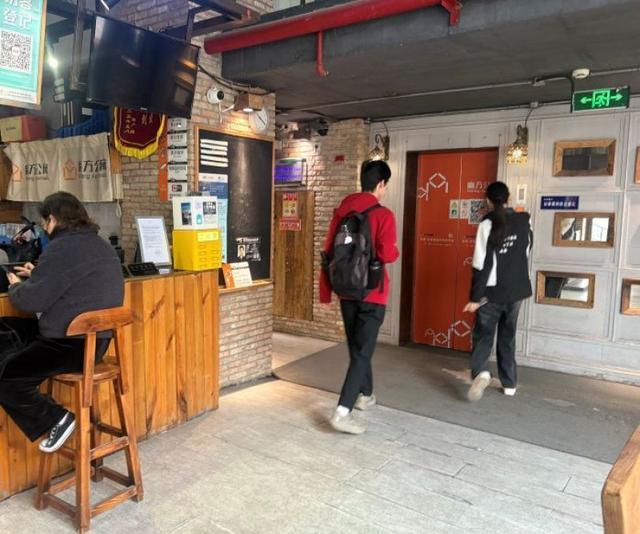
Core Viewpoint - The recent closure of the Shanghai Xizang South Road store of Mofang Apartment has raised concerns among tenants, with some alleging forced eviction and demanding compensation. However, Mofang Living Service Group clarified that the closures are part of normal lease expirations and strategic optimization, not indicative of financial distress [2][15]. Group 1: Store Closures and Tenant Reactions - Mofang Apartment has requested tenants to vacate the Xizang South Road store by December 31, 2025, leading to speculation of a "collapse" or "runaway" situation among netizens [2]. - The company confirmed that the closure is due to lease expiration and strategic optimization, denying any impact on overall operations [2][15]. - The Xizang South Road store, which offers 203 one-bedroom units, is part of a government-regulated affordable housing initiative [4]. Group 2: Operational Model and Financial Performance - Mofang's operational model includes direct management of properties and a franchise management model, allowing for flexibility in property management [3]. - As of October 2025, Mofang operates over 84,300 units across more than 280 locations, with a national occupancy rate exceeding 90% [2]. - The company reported revenues from its direct management model of 9.13 billion, 13.9 billion, and 16.26 billion yuan from 2020 to 2022, indicating a strong reliance on this model for income [17]. Group 3: Strategic Adjustments and Future Plans - The closures are described as a strategic contraction due to high initial costs and underperforming financial data in certain locations, rather than a sign of financial instability [15]. - Mofang is actively expanding, with new projects planned in key regions such as the Yangtze River Delta and the Greater Bay Area, including several new store openings [16]. - The company is also in the process of capital operations, having initiated a listing process in 2022, although this has been paused [16][17].

200万善款,茅台公益为贵州残疾人事业添动能
Hua Xia Shi Bao· 2025-12-05 09:00
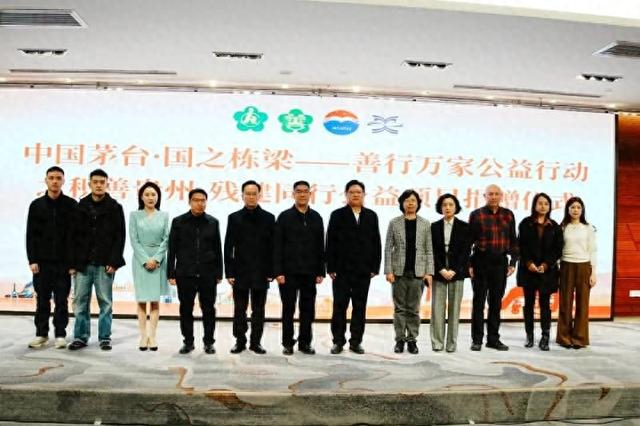
Group 1 - The event "China Moutai - National Pillar - Good Deeds for All Public Welfare Action" was held in Guiyang on December 3, coinciding with the 34th International Day of Persons with Disabilities, highlighting the commitment to support individuals with disabilities [2] - The provincial leaders emphasized the significant achievements of the "Accumulating Goodness in Guizhou" initiative over the past three years, including improved mechanisms, upgraded assistance brands, and expanded communication channels [3] - The Guizhou Moutai Public Welfare Foundation has invested over 10 billion yuan in public welfare over the past 20 years, focusing on precise assistance for individuals with disabilities [5] Group 2 - During the donation ceremony, Guizhou Moutai Group and its Public Welfare Foundation donated 2 million yuan to the Guizhou Provincial Disabled Persons Welfare Foundation to support various projects aimed at integrating and assisting individuals with disabilities [9] - The event showcased a collaborative spirit between Guizhou Moutai and the welfare foundation, reinforcing the brand's commitment to social responsibility and enhancing the visibility of the "Accumulating Goodness in Guizhou" initiative [10] - The event included a presentation by the Guizhou Broadcasting Television Station's "Chasing Light Cinema" team, highlighting the impact of their projects on the community, along with performances by students from special schools [12][15]

盘点46位“独管一基”基金经理:4人超百亿元领跑,12人规模不足1亿元
Hua Xia Shi Bao· 2025-12-05 07:33
Core Insights - The article discusses a unique subset of fund managers in the public fund industry who manage only one fund throughout their careers, highlighting the rarity of such "dedicated" managers [2][6]. Group 1: Fund Manager Statistics - A total of 46 fund managers meet the criteria of managing a single active equity fund for over three years, with only four managers exceeding a scale of 10 billion yuan [2][4]. - The four fund managers with assets over 10 billion yuan are: Zhu Shaoxing from Fuquan Fund (24.15 billion yuan), Fu Pengbo from Ruiyuan Fund (23.629 billion yuan), Zhao Yi from Quanguo Fund (19.069 billion yuan), and Zhao Feng from Ruiyuan Fund (12.441 billion yuan) [3][5]. - The top four fund managers collectively manage approximately 70% of the total assets of the 46 managers, indicating a trend of capital concentration towards top brands and well-known managers [5]. Group 2: Management Scale Distribution - The management scale distribution among the 46 fund managers shows a pyramid structure, with only two managers exceeding 20 billion yuan and a significant drop in scale below this threshold [4][5]. - Most fund managers have a management scale below 5 billion yuan, with 31 out of 46 managers (67%) managing less than 1 billion yuan [5]. Group 3: Longevity and Performance - Among the 46 fund managers, only five have managed the same fund for over ten years, including Zhu Shaoxing and others [6]. - Some long-term managers have not seen significant growth in their fund sizes, which may be attributed to various factors such as investment style stability and market dynamics [6][8]. Group 4: Investment Strategies and Market Trends - The article notes that some fund managers, despite not being long-term managers, have seen significant growth due to alignment with recent market trends, such as Chi Chen Sen from Anxin Fund [7]. - The reasons behind a fund manager's decision to manage a single fund can be complex, including investment strategy uniqueness and the desire to maintain strategy purity [8][10]. Group 5: Industry Perspectives - There are differing opinions within the industry regarding the phenomenon of fund managers managing only one fund, with some viewing it as a sign of extreme focus and others as a form of risky betting [9][10]. - The article suggests that this "single fund" approach may reflect a strategic choice by fund companies to create benchmark products or a deliberate decision by managers to control the scale of their funds [10].

无证上岗卖基金!浙江两银行遭证监会责令改正
Hua Xia Shi Bao· 2025-12-05 05:14
无证上岗销售基金 日前,浙江证监局连发两份行政监管措施决定书,分别对嘉兴银行与浙江稠州商业银行作出责令改正的 决定。 经查,浙江稠州商业银行在基金销售方面存在多项问题。部分基金销售业务人员未取得基金从业资格; 部分基金宣传材料、基金销售制度修订未经合规审查;存在为个别未完成风险测评的客户办理基金销售 业务;通过手机APP销售基金时,未提示投资者阅读基金合同、招募说明书;在向普通投资者销售高风 险产品时,未履行特别的注意义务。 本报(chinatimes.net.cn)记者张萌 卢梦雪 北京报道 没有基金从业资格,却堂而皇之地销售基金产品? 日前,浙江证监局对嘉兴银行、浙江稠州商业银行分别作出责令改正决定,指出两家银行存在多项违规 行为。不仅部分基金销售业务人员未取得从业资格,嘉兴银行基金销售业务部门的分管负责人亦未取得 从业资格,违反相关规定。 今年下半年以来,已有多家银行因类似问题被监管部门采取责令改正、出具警示函等措施,包括江苏江 南农商银行、海南银行、晋商银行等。 有业内人士向《华夏时报》记者分析称,中小银行在推进财富管理转型过程中,对合规经营重视不足, 合规理念和内控机制建设滞后,是导致相关现象屡禁不 ...

日本大概率在12月决定加息,长期债券雪崩
Hua Xia Shi Bao· 2025-12-05 04:02
Core Viewpoint - The Bank of Japan's Governor Kazuo Ueda delivered a hawkish speech on December 4, leading to a significant rise in Japan's long-term bond yields, with the 10-year government bond yield reaching 1.939%, the highest since 2007, and the 30-year bond yield hitting a historic high of 3.445% [2] Group 1: Interest Rate Policy - Ueda's remarks on December 1 indicated a strong signal regarding the upcoming monetary policy meeting on December 18-19, suggesting a potential interest rate hike [2] - He provided multiple arguments for raising interest rates, stating that the belief in achieving economic outlook is strengthening and conditions for policy normalization are improving [2] - Ueda noted that despite recent negative GDP growth, it is a "temporary" technical adjustment, and the economy is still in a mild recovery [2] Group 2: Wage Growth and Inflation - Ueda highlighted that the preliminary momentum for wage negotiations in spring is improving, indicating a potential shift towards persistent inflation trends [2] - The core Consumer Price Index (CPI) in Japan rose by 3.0% year-on-year in October, marking 50 consecutive months of increase, with significant price hikes in various food items [3] - The acceleration of inflation in Japan is attributed to the end of nearly three decades of deflation, rapid economic growth, and a booming job market [3] Group 3: Supply Chain Issues - There is a supply-side gap in Japan, particularly in rice prices, which significantly impact inflation statistics [4] - Factors such as extreme heat leading to poor rice harvests are contributing to rising prices, making rice a key driver of current inflation [4] - The aging population of agricultural workers and abandoned farmland complicate the ability to quickly address supply shortages [4] Group 4: Monetary Policy Challenges - The Bank of Japan has historically been cautious about tightening monetary policy, fearing it could disrupt the fragile inflation and economic growth [4] - Ueda's previous adherence to the "temporary inflation" narrative has delayed the normalization process [4] - The current stance of the Bank of Japan is to raise interest rates once a solid economic growth foundation is confirmed, balancing the need for demand suppression with economic stability [4]

产能提升3倍 对标华为抢占市场份额?“小作文”突袭后尾盘猛拉 寒武纪紧急辟谣
Hua Xia Shi Bao· 2025-12-05 00:34
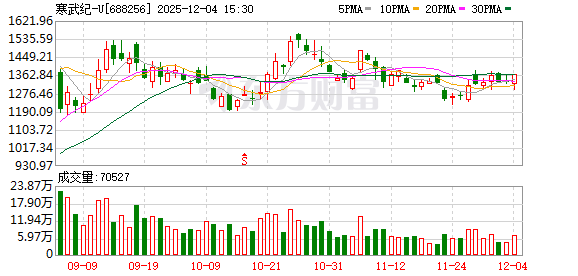
12月4日下午,一则有关寒武纪的"小作文"在市场流传,寒武纪尾盘快速拉升。 12月4日晚间,寒武纪发布严正声明称,公司关注到今日媒体及网络传播的关于公司产品、客户、供应及产能预测等相关信息,均为误导市场的不实信 息。 据智通财经报道,当天早些时候,有外媒援引知情人士的话报道称,寒武纪计划明年将人工智能(AI)芯片产量提升逾三倍,对标华为抢占市场份额, 并填补因英伟达被迫退出而产生的市场空缺。 该报道还称,寒武纪计划在2026年交付50万个AI加速器,其中包括多达30万个其最先进的思元590和690晶片。据悉,公司将主要通过中芯国际最新的7纳 米"N+2"工艺生产晶片。 上述消息一出,寒武纪尾盘放量拉升,收盘涨2.75%。12月4日早盘,寒武纪一度跌近3%,随后震荡拉升。 截至收盘,寒武纪报1369元/股,总市值为5773亿元。今年以来,寒武纪股价累计涨幅达108%。 在此,公司提醒广大投资者,寒武纪相关事项均以公开披露信息为准,请各位投资者提高信息辨别能力,不传播、不采信来源不明或未经核实的虚假信 息。 此外,对于任何捏造、散布传播不实信息的行为,公司将保留追究相关人员法律责任的权利。 根据公告,公司拟使用母 ...

伦铜价格创历史新高!注销仓单暴增802%,铜精矿供应增量腰斩,高盛为何逆势唱空?
Hua Xia Shi Bao· 2025-12-05 00:15
Core Viewpoint - Recent surge in copper prices driven by strong demand from emerging sectors such as AI, energy storage, photovoltaics, wind power, and electric vehicles, alongside supply constraints and structural inventory issues [3][4][10] Market Dynamics - LME copper futures reached a historical high of $11,540 per ton, marking a 31% increase since 2025 [3][4] - Shanghai copper futures surpassed 90,000 yuan per ton for the first time, closing at 90,780 yuan, with a daily increase of 2% [3] - The market sentiment is influenced by a macro environment of loose monetary policy and a tight balance in copper supply and demand [3][10] Supply Constraints - Major copper mines in Indonesia, Chile, and the Democratic Republic of Congo have reduced output due to various disruptions, leading to a negative growth rate in copper production [5] - The processing fees for copper concentrate have dropped to negative values, forcing reductions in smelting output [5] - LME registered warehouse stocks decreased by 32.3% year-on-year, indicating a significant reduction in available copper for delivery [5][6] Demand Growth - Global copper consumption is expected to grow by nearly 800,000 tons annually, driven by both traditional and emerging sectors [4][7] - Asian demand contributes over 60% of the increase, primarily through aggressive purchasing rather than a sudden spike in absolute consumption [8] - The demand for copper in the domestic market remains resilient, particularly in the real estate and appliance sectors [7][10] Investment Outlook - Analysts suggest that the current copper price trend is supported by long-term structural factors, including the rise of new industries and persistent supply shortages [9][10] - The expectation of continued monetary easing by the Federal Reserve is likely to sustain high copper prices [10] - Goldman Sachs predicts that the recent surge in copper prices may be temporary, as supply is expected to meet global demand in the long run [11]
繁荣表象下存隐忧:新能源汽车用户满意度80%,新车故障率同比增加18次
Hua Xia Shi Bao· 2025-12-04 13:59
Core Insights - The penetration rate of new energy vehicles (NEVs) in China has surpassed 50%, indicating a shift from trend to mainstream [2] - The user satisfaction index for the NEV industry in 2025 is reported at 80 points, a year-on-year increase of 1 point, marking a recovery in user satisfaction [2] - Despite high satisfaction, the number of faults per 100 vehicles has increased to 109, up by 18 from the previous year, highlighting ongoing quality and reliability challenges [2][6] User Satisfaction and Brand Performance - User perception of quality and value are driving factors behind the increase in satisfaction, with scores of 80.6 for quality and 79.7 for value, both exceeding the overall satisfaction increase [3] - Domestic brands have achieved a user satisfaction score of 80, matching that of joint venture brands in the NEV sector, while still trailing by 1 point in traditional fuel vehicles [3][4] - Domestic brands are outperforming joint ventures in terms of reliability, with significantly lower fault rates, particularly in smart cockpit systems [4] Market Dynamics and Competitive Landscape - As of October 2025, the market share of domestic passenger vehicles has risen to approximately 72%, disrupting the previous market dynamics where joint ventures led [5] - The shift in user decision-making criteria towards product value over brand prestige is reshaping competition in the automotive sector [5] - Analysts suggest that future competition will focus on a comprehensive experience across R&D, manufacturing, and service, rather than just individual parameters [5] Challenges Facing the Industry - The industry is grappling with a high concentration of faults, particularly in smart cockpit, smart driving assistance, and interior systems, which together account for 60% of total faults [6] - Users exhibit a lower tolerance for faults in NEVs compared to traditional vehicles, creating pressure on manufacturers to enhance reliability [6] - There is a noticeable gap in service satisfaction, with sales service remaining stable at 81 points, while after-sales service satisfaction has dropped to 79 points, indicating a need for improvement in service capabilities [7] Strategic Recommendations - Domestic brands are advised to focus on consolidating strengths while addressing weaknesses, particularly in quality and after-sales service [8] - Reducing fault rates, especially in smart technology, is crucial to meet rising user expectations and maintain competitive advantages [8] - The industry is encouraged to prioritize quality and service improvements to build long-term trust and brand loyalty among consumers [8]


“1—6级别并不是所有职级” ,宁德时代基层员工涨薪150元引争议
Hua Xia Shi Bao· 2025-12-04 12:17
本报(chinatimes.net.cn)记者胡雅文 北京报道 近日,宁德时代(300750.SZ)1—6级员工基本工资上调150—200元的消息传开。12月1日,董事长曾毓 群以"没错"二字向媒体证实了这一消息。12月2日,《华夏时报》记者就此事联系了宁德时代方面,截 至发稿未得回复。一位宁德时代工程师告诉记者,"自己没有收到这一邮件,1—6级别并不是所有职 级。" 加班费和基本工资是基层员工收入的主要来源。以3级员工为例,除开基本工资,还有工作津贴200元、 地区津贴400元、绩效奖0—600元、全勤奖150元、夜班津贴20元/天、加班费则以基本工资为基数,平 时加班费为1.5倍、周末为2倍、法定节假日为3倍。当税前月薪为7800元时,若绩效奖为600元,夜班按 20天/月算,加班费可达4000元,加班费占比超过一半。 由于基本工资还充当着加班费基数,基层员工的实际增长收入会高于100—200元。如上述第2职级的基 本工资比第1职级高100元,但税前月薪由6400元增长了7.81%至6900元。 中国企业资本联盟中国区首席经济学家柏文喜告诉《华夏时报》记者,"宁德时代此次涨薪的象征意义 大于实际金额,核心 ...


金融活水润科创,恒丰银行在湾区书写“科技-产业-金融”融合新篇|五篇大文章调研行
Hua Xia Shi Bao· 2025-12-04 10:17
Core Insights - The article highlights the strong pulse of technological innovation in the Guangdong-Hong Kong-Macao Greater Bay Area, showcasing the integration of finance and technology as a core competitive arena [2] - It emphasizes the shift in financial services from traditional lending models to a more ecosystem-oriented approach that supports the entire lifecycle of tech enterprises [2][7] Group 1: Financial Services Transformation - The traditional financial model, which relies heavily on collateral and financial statements, creates a significant gap for high-tech startups, leading to challenges in securing financing [3] - 恒丰银行 (Hengfeng Bank) is addressing this gap by forming specialized teams that understand the industry, policies, and finance, and by offering customized financing solutions like "factory mortgage loans" tailored to the growth cycles of tech companies [5][7] - The bank has successfully provided over 1 billion yuan in loans to 24 small and micro enterprises in the增城数创中心 (Zengcheng Digital Innovation Center), with 50% of these companies achieving their first financing breakthrough [7] Group 2: Support for High-Tech Enterprises - Guangdong 蓝科车仆实业有限公司 (Blue Science Carpu Industrial Co., Ltd.) benefited from a 3.35 million yuan factory mortgage loan with a 20-year term, which aligned with its long-term development plans [6] - 广州玛太电子有限公司 (Guangzhou Matai Electronics Co., Ltd.) received a 7.66 million yuan factory mortgage loan along with payroll services, demonstrating a comprehensive financial support model [6] - The bank's innovative risk assessment system moves away from traditional collateral models, focusing instead on technology barriers, market potential, and team capabilities [7][15] Group 3: Comprehensive Financial Support in Shenzhen - 恒丰银行's Shenzhen branch has provided 5.6 billion yuan in loans to tech enterprises since its establishment, positioning itself as a key player in the regional tech finance ecosystem [8][11] - The partnership with 大族激光科技产业集团股份有限公司 (Han's Laser Technology Industry Group Co., Ltd.) exemplifies a strategic collaboration where financial services extend beyond mere funding to include industry insights and support for supply chain stability [11][12] - The bank's services encompass a full range of financial needs, from working capital to long-term funding strategies, ensuring a stable supply chain for its clients [12] Group 4: Ecosystem Collaboration - The development of a robust ecosystem for tech finance relies on collaboration among banks, government, and enterprises, with Shenzhen's government providing risk compensation funds to enhance banks' confidence in lending to tech firms [13] - In Guangzhou, 恒丰银行 collaborates with innovation parks to improve service efficiency and reduce costs, addressing information asymmetry between banks and enterprises [14] - The bank employs advanced technologies like AI and big data to enhance risk management and streamline the evaluation process for tech enterprises [15] Group 5: Future Directions - 恒丰银行 aims to deepen its focus on supporting enterprises with advanced technology and innovation capabilities, particularly in critical areas of national technological innovation [16] - The bank is committed to enhancing its role in supporting industrial innovation and contributing to high-quality development in the financial sector [16][17]

