
Zhong Guo Qi Che Bao Wang

Search documents
央视“第一发布”车企首秀,长安马自达EZ-60央视认证全球好车
Zhong Guo Qi Che Bao Wang· 2025-11-14 09:17
Core Viewpoint - Changan Mazda officially launched its global strategic new energy SUV, MAZDA EZ-60, at the first automotive brand release event on the "First Release" platform of China Central Television (CCTV), emphasizing the narrative of "Chinese manufacturing going global" [1][3][25] Group 1: Product Features and Strategy - The EZ-60 is positioned as a "trendsetter" in the global new energy vehicle market, focusing on five core dimensions: user experience, safety, intelligent empowerment, driving pleasure, and quality commitment [3][9] - The vehicle's body is made of 86.5% high-strength steel, meeting the stringent safety standards of both China and Europe, showcasing a commitment to global quality [7][23] - The EZ-60's charging capability allows for a 30% to 80% charge in just 15 minutes, enhancing user convenience [14][22] Group 2: Collaboration and Innovation - The partnership between Changan Mazda and CCTV represents a strategic alignment of a national platform with the company's global ambitions and commitment to quality [5][25] - Changan Mazda collaborates with top-tier suppliers like Baosteel and iFlytek to create a co-creation model that supports high-quality development in the new energy sector [7][22] - The company is breaking traditional joint venture models by integrating its century-old manufacturing heritage with China's new energy industry advantages, aiming for a "double hundred doubling strategy" [22][23] Group 3: Market Positioning and Consumer Trust - The authoritative endorsement from CCTV serves as a significant quality assurance for consumers, alleviating concerns regarding battery safety and reliability in new energy vehicles [23][25] - The launch of the EZ-60 sets a new reference standard for global new energy vehicles, promoting a shift in the Chinese new energy vehicle industry from scale leadership to standard leadership [23][25] - The event highlighted the collaborative innovation capabilities of the Chinese new energy vehicle supply chain, positioning it favorably in the global market [25]


2025智能新能源汽车数智技术全域安全开发者大会启幕,重构汽车"全域安全"新边界
Zhong Guo Qi Che Bao Wang· 2025-11-14 08:22
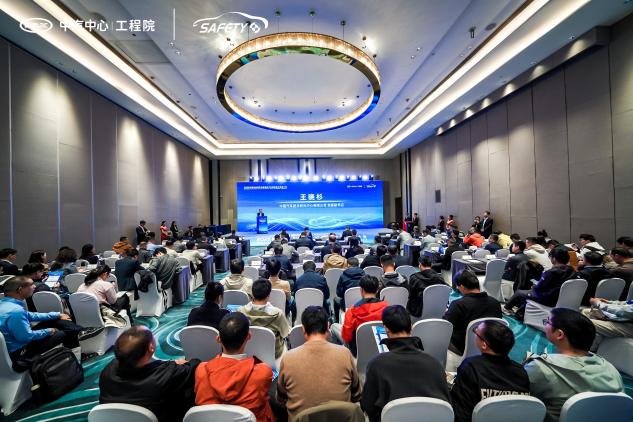
Core Insights - The "2025 Intelligent New Energy Vehicle Digital Technology All-Domain Safety Developer Conference" was held in Tianjin, focusing on the theme of exploring automotive all-domain safety and driving collaborative innovation among developers [1][2][21] - The conference highlighted the importance of automotive safety technology as a key measure of core competitiveness in the automotive industry, emphasizing the transition from a major automotive nation to a strong automotive nation in China [2][5] Industry Trends - The automotive industry is rapidly evolving from traditional transportation to "mobile intelligent terminals," raising the strategic importance of all-domain safety [2][5] - The concept of automotive safety has expanded beyond traditional passive protection to include intelligent driving safety, active safety, functional safety, AI safety, and electromagnetic safety [6][9] Technological Developments - Over 20 experts discussed cutting-edge topics such as collision safety dynamics, insurance risk protection for vehicles going abroad, and the integration of new intelligent safety technologies [6][8] - The conference showcased advancements in safety technology, including a shift from "experience-driven" to "data-driven" safety research, with applications of AI algorithms and big data analysis in collision scenario simulations and risk prediction [8][14] Collaborative Efforts - The establishment of the "Automotive Digital Technology Joint R&D Center" aims to address challenges in the digital and intelligent transformation of the automotive industry, providing a national-level platform for R&D and testing [15][19] - A strategic cooperation agreement was signed between the China Automotive Technology and Research Center and Allianz Group to focus on vehicle risk assessment and insurance pricing, supporting domestic brands in international markets [19][21] Future Outlook - The conference is seen as a catalyst for accelerating data sharing, standard co-construction, and technological collaboration within the automotive industry, marking a significant step towards achieving all-domain safety [21][23] - The industry is committed to addressing new challenges posed by the digital age in safety technology through continuous innovation and collaboration [21]
中国重卡在俄遭遇冰点时刻
Zhong Guo Qi Che Bao Wang· 2025-11-14 08:16
"蜜月期"已过,中国重卡对俄出口正急速降温。俄罗斯市场曾是中国重卡出口的黄金赛道,但2025年以 来,俄罗斯市场整体需求大幅萎缩,让中国重卡对俄出口增速明显放缓,而俄罗斯不断抬高政策壁垒, 更给势头受挫的中国重卡 "当头一棒"。 01 市场面临深度调整 俄罗斯市场长期由本土卡车企业以及众多欧美品牌共同主导,这一稳定局面在2022年迎来历史性转折。 俄乌冲突引发的供应链断裂,让本土重卡企业产能严重受限,难以满足市场需求。与此同时,欧美日韩 整零企业集体撤离,留下了巨大的市场真空。 在此背景下,中国重卡企业实现"快速补位",由此在俄罗斯市场开启了数年的"黄金增长期",市场份额 从不足10%飙升至超过60%,推动形成以俄罗斯本土品牌和中国车企为主要力量的新格局。在2024年俄 罗斯重卡市场销量排名前十的企业中,有七席由中国车企占据,居于销量前位的车企几乎被中国车企和 本土品牌包揽。 税费政策的调整,直接抬高了中国重卡进入俄罗斯市场的资金成本,削弱了其价格竞争力。不仅如此, 俄罗斯还不断收紧非本土卡车的认证标准和条件。例如,在认证体系方面,所有进口车型必须通过俄罗 斯本土实验室的强制性检测,认证周期从6个月拉长至12 ...
期待网约公交车织密民生幸福线
Zhong Guo Qi Che Bao Wang· 2025-11-14 08:16
Core Viewpoint - The introduction of "online bus services" in cities like Shijiazhuang, Handan, and Changsha represents a new approach to urban public transportation, combining flexibility and inclusivity to enhance the travel experience and address challenges faced by traditional bus services during off-peak hours and in low-traffic areas [1][2]. Group 1: Benefits of Online Bus Services - Online bus services significantly improve the travel experience by addressing the "last mile" issue, particularly for peak travel times related to schools, hospitals, and large communities, through efficient scheduling that connects key transport hubs with destinations [2][3]. - The time cost is greatly optimized; for instance, a 2-kilometer journey in Beijing that takes 10-20 minutes by bike or walking can be significantly reduced by using online bus services, making short commutes more efficient [2]. - The economic benefits are notable, with fares for online buses ranging from 2-3 yuan, providing a cost advantage over taxis and allowing citizens to enjoy convenient services at a low cost [2]. Group 2: Operational Advantages - Online bus services utilize intelligent scheduling systems to optimize resource allocation, effectively activating existing bus resources, reducing empty vehicle rates, and lowering operational costs [2][4]. - This service model fills gaps in traditional bus coverage, extending the reach of public transport services and enhancing overall service quality and user satisfaction, which in turn boosts ridership [2][4]. Group 3: Industry Context and Trends - The concept of online bus services is not entirely new, with various cities across the country already implementing similar flexible transport solutions, indicating a growing trend towards innovative public transport models [3][4]. - The introduction of online bus services reflects the struggles of public transport companies in adapting to changing travel demands and the need for innovative operational models to balance public service and market dynamics [4][5]. - The promotion of online bus services aligns with national policies aimed at reinforcing the priority of public transport, showcasing a commitment to enhancing urban mobility and service quality [5][6].
东风日产N6何以担当“最家电混”
Zhong Guo Qi Che Bao Wang· 2025-11-14 07:29
Core Viewpoint - Dongfeng Nissan is launching the N6, its first plug-in hybrid sedan, showcasing over 30 "most family-oriented hybrid" technologies, aiming to strengthen its position in the increasingly competitive new energy vehicle market [1][3][17] Group 1: Product and Technology - The N6 is designed to cater to mainstream Chinese families, focusing on safety, comfort, intelligence, and economy, with a target price of under 150,000 yuan [3][9] - The "AI Cloud Engine Hybrid" system is the first of its kind for passenger vehicles, built on Nissan's extensive experience in electrification and hybrid technology [4][8] - The N6 features a large 21.1 kWh CTP battery, offering a pure electric range of 180 km, and a fuel consumption of 2.79 L per 100 km in hybrid mode [6][8] Group 2: Safety and Comfort - The N6 incorporates innovative safety features, including the industry's first hybrid anti-stall control technology, ensuring reliability even in extreme conditions [8][9] - The vehicle's design emphasizes comfort, with AI zero-pressure seats and advanced noise reduction technologies, creating a quiet cabin environment [11][13] Group 3: Market Strategy - The N6 is positioned as a high-value option in the 100,000 yuan segment, with a pre-sale price ranging from 109,900 to 121,900 yuan, aiming to redefine market perceptions [9][14] - Dongfeng Nissan is committed to a GLOCAL strategy, focusing on local needs while leveraging global technologies, with plans to launch six new electric vehicles by the end of 2027 [14][16] Group 4: Future Outlook - The company aims to enhance its "most family-oriented" electric vehicle lineup, reflecting a commitment to user experience and safety with innovative policies like the "self-ignition compensation" program [16][17] - Dongfeng Nissan is positioning itself as a competitive player in the new energy vehicle market, emphasizing its technological strengths and user insights [17]

费尼亚发布新型燃油系统创新技术产品矩阵
Zhong Guo Qi Che Bao Wang· 2025-11-14 05:45
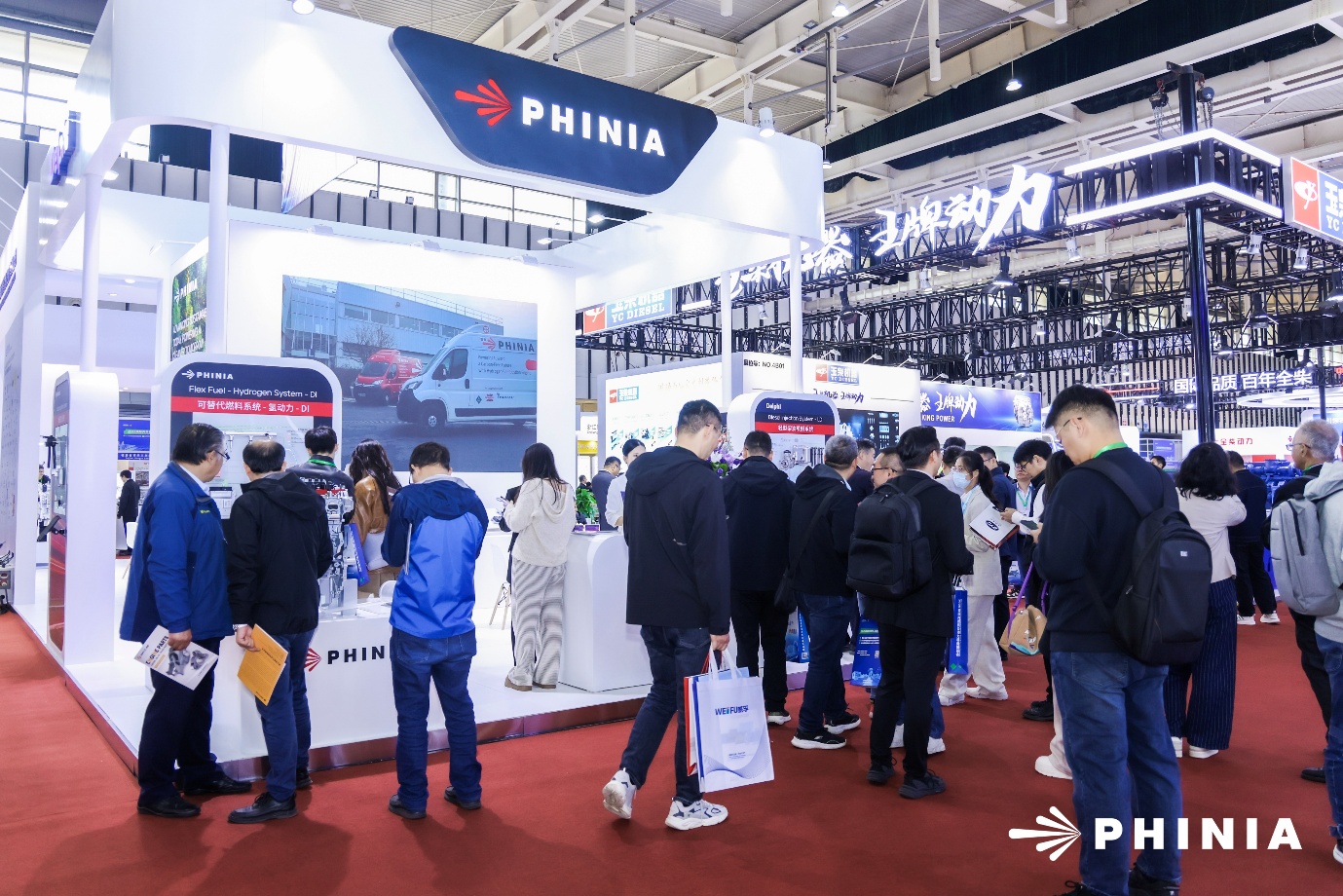
• PHINIA将在2025年国际内燃机与动力装备博览会上展示其新型柴油甲醇双燃料喷射新技术创新成果,以支持满足国六B及未来排放法规。 在全球内燃机技术迈向低碳化、高效化的浪潮中,费尼亚(PHINIA)作为领先的燃料喷射系统供应商,在11月12日至14日举办的2025 年国际内燃机与 动力装备博览会(2025 ICE&PE)上展示了多项燃油系统创新技术,这些产品覆盖了从柴油到氢能、甲醇等替代燃料的全方位解决方案,体现出费尼亚在重 型商用车、船电发动机、轻型车辆及非道路应用领域的深厚技术积累。 超高压喷射系统在中国市场受青睐 费尼亚是全球汽车市场首家推出500bar超高压汽油直喷系统的供应商。目前,该系统已配装长安新蓝鲸动力平台,用于xEV车型,现以在长安汽车的十 余款车型上应用。通过精细雾化、新型喷油器和锻造油轨等先进技术,可实现更充分燃烧,降低后处理成本。此外,费尼亚的智能控制软件支持多种喷油模 式,优化全时域、全速域、全温域、全场域等全场景性能,并兼容各类燃油与汽油发动机平台。 双燃料喷射系统兼顾高效与低碳 费尼亚展示了多款应用于柴油及双燃料喷射系统的新产品。在双燃料喷射器方面,费尼亚推出柴油甲醇双喷油器 ...
限时焕新价19.48万元,BJ40增程元境智行版正式上市!
Zhong Guo Qi Che Bao Wang· 2025-11-14 05:16
Core Points - Beijing Off-road has launched the BJ40 Extended Range Intelligent Edition, priced at 204,800 yuan, with a limited-time promotional price of 194,800 yuan after subsidies [1] - The BJ40 Extended Range family now includes three versions: Standard, Advanced, and Intelligent Edition [3] - The company introduced two major welcome gifts for all versions, including a 60,000 yuan off-road package and a 40,000 yuan eight-fold premium experience [3] Group 1: Product Features and Innovations - The BJ40 Extended Range Intelligent Edition features three differential locks and an intelligent all-wheel drive system, enabling it to tackle steep inclines with a 100% climbing ability [12] - It boasts a fuel consumption of only 1.33 liters per 100 kilometers and can accelerate from 0 to 100 km/h in just 5.5 seconds [14] - The vehicle is equipped with a unique embedded metal roll cage, enhancing safety standards significantly [17] Group 2: Customer Engagement and Community - The company held a "Car Owner's Best" award ceremony, recognizing 16 users for their unique stories and experiences with the BJ40 Extended Range [6] - User feedback was actively solicited during the event, emphasizing the brand's commitment to customer satisfaction and community building [8] Group 3: Safety and Technology - The BJ40 Extended Range Intelligent Edition features a three-tier external protection system for battery safety, improving its resistance to impacts by 95% compared to competitors [17] - It is the first off-road vehicle in the country to utilize a pure visual technology solution, equipped with 26 high-precision sensors for enhanced environmental awareness [19][21] - The vehicle includes advanced driver assistance features such as automatic lane changes and parking assistance, enhancing user convenience and safety [21][23] Group 4: Marketing and Future Plans - The company is committed to making extended-range SUVs a mainstream trend, moving beyond niche markets [26] - Beijing Off-road has announced the launch of the "Wild Hoo" skiing version of the BJ40 Extended Range, expanding its product offerings [25] - A preview for the 2025 Guangzhou Auto Show was announced, featuring the first concept off-road vehicle in 67 years [25]

和气、底气、霸气——从合资新模式看中国汽车零部件企业“成长三部曲”
Zhong Guo Qi Che Bao Wang· 2025-11-14 03:23
Core Insights - The global automotive industry is undergoing a significant transformation, with China's new energy vehicle market achieving a monthly penetration rate exceeding 58%, marking the arrival of a "new automotive era" driven by Chinese consumer demand [2] - Recent joint ventures in the automotive parts sector, such as the partnership between Hangsheng Electronics and Autoliv, and the memorandum of cooperation between Chen Zhi Group and Benteler, reflect a profound evolution in the collaboration logic and development paths of Chinese and foreign parts manufacturers, indicating the emergence of a new joint venture model characterized by "multi-dimensional bilateral empowerment" [2][3] Joint Venture Evolution - Historically, Sino-foreign joint ventures in the automotive sector were primarily based on a "market for technology" model, where foreign partners provided technology and branding while Chinese partners offered market access [3] - This model has shifted to a "bilateral empowerment" approach, where both parties contribute equally, as evidenced by the recent agreements between Hangsheng Electronics and Autoliv, and Chen Zhi Group and Benteler [3][4] - The new joint ventures are not merely resource exchanges but involve deep capability complementarity, with Hangsheng Electronics filling Autoliv's gaps in electric and intelligent vehicle technologies [3][4] Strategic Partnerships - The joint venture between Hangsheng Electronics and Autoliv aims to establish a new company focused on automotive electronic safety, leveraging both companies' strengths to enhance market presence in China and globally [3][7] - Similarly, the partnership between Chen Zhi Group and Benteler will focus on high-end chassis components and battery box systems, with a significant emphasis on maintaining Chinese control in decision-making processes [4][7] Cultural and Operational Synergy - The success of these joint ventures is underpinned by cultural alignment and shared values, such as a commitment to quality and long-termism, which fosters trust and collaboration [4][12] - The evolving dynamics of these partnerships reflect a shift from being technology followers to becoming technology enablers, with Chinese firms increasingly taking the lead in defining standards and practices [4][16] Market Dynamics and Competitive Landscape - The transition to electric and intelligent vehicles has fundamentally altered the competitive landscape, with Chinese automotive companies rapidly advancing in these areas while many international parts suppliers lag behind [5][17] - This shift has resulted in a reversal of roles, where foreign companies now seek technological empowerment from Chinese firms, which have become key players in the global supply chain [5][17] Confidence and Market Positioning - The new joint venture model is characterized by a balance of "harmony" and "confidence," where Chinese suppliers are increasingly assertive in negotiations and partnerships, reflecting their growing technological and market strengths [11][13] - The capital market's support for Chinese automotive companies, alongside their technological advancements, has enhanced their bargaining power in international collaborations [14][15]

当汽车遇见量子:产业新变量的“叩门”
Zhong Guo Qi Che Bao Wang· 2025-11-14 03:23
Core Insights - Quantum technology is recognized as a transformative force in the automotive industry, with applications in enhancing vehicle information security, accelerating new materials and battery research, and optimizing autonomous driving algorithms [2][3][5]. Group 1: Quantum Technology Overview - Quantum technology integrates principles of quantum mechanics with various scientific fields, offering new paradigms for information acquisition, processing, and transmission [3][4]. - The advantages of quantum technology include extraordinary computing power, nearly absolute information security, and extreme precision in sensing capabilities [4][5]. Group 2: Applications in Automotive Industry - Quantum technology is poised to revolutionize the automotive sector by improving data security for smart vehicles through quantum encryption and enhancing precision in environmental sensing for autonomous driving [5][6]. - The introduction of "quantum eyes" technology allows vehicles to identify objects in low visibility conditions, significantly improving the performance of autonomous systems [6]. Group 3: Enhancements in Vehicle Performance - Major automotive companies are leveraging quantum computing to simulate molecular interactions, leading to the development of batteries with higher energy density and longer range [7]. - Quantum sensors can provide millimeter-level positioning support for autonomous vehicles, enhancing their ability to perceive the environment and make timely decisions [6][7]. Group 4: Future Prospects and Challenges - The integration of quantum technology is expected to redefine the automotive landscape, with predictions that by 2027, high-end smart vehicles equipped with quantum communication modules will achieve zero-latency vehicle-to-infrastructure communication [9]. - Despite the promising outlook, the large-scale application of quantum technology faces challenges, including the need for reliable engineering, a shortage of interdisciplinary talent, and the establishment of unified technical standards [10][11].

观车 · 论势 || 不能盲目夸大固态电池商业化进程
Zhong Guo Qi Che Bao Wang· 2025-11-14 03:23
Core Viewpoint - The commercialization of solid-state batteries is facing significant challenges, and the timeline for widespread adoption is likely optimistic, with realistic expectations set for post-2030 [1][2]. Group 1: Industry Challenges - Current solid-state battery technology is not fully mature, with technical bottlenecks, cost considerations, and market acceptance being key factors hindering rapid commercialization [1][2]. - The production processes and equipment for solid-state batteries differ fundamentally from those of lithium-ion batteries, making the transition costly and complex [2]. - The competition among various material systems for the electrolyte layer (oxide, sulfide, polymer) presents a challenge in determining the most viable technology route [2]. Group 2: Commercialization Path - Solid-state batteries are expected to first find commercial applications in high-demand sectors such as aviation and robotics, where energy density and safety are critical, before expanding into electric vehicles and energy storage [2]. - The global market for solid-state batteries is projected to exceed 206 GWh by 2030 and grow to over 740 GWh by 2035, indicating a significant shift towards large-scale applications [3]. Group 3: Strategic Importance - Solid-state batteries represent a strategic competitive advantage in the next generation of power batteries, with their revolutionary benefits in energy density, safety, and temperature adaptability [3]. - The development of solid-state batteries is crucial for maintaining leadership in the smart connected new energy vehicle industry and has broad applications in aerospace and defense sectors [3]. Group 4: China's Market Advantage - China, as the largest market for new energy vehicles, offers substantial application scenarios and market demand for solid-state batteries, driving innovation and attracting global attention [4]. - Domestic battery companies are increasing R&D investments in solid-state technology, achieving breakthroughs in key areas, and benefiting from a rich landscape of application scenarios [4]. - The future will see coexistence between solid-state and liquid batteries, with both technologies optimizing for their respective applications, particularly in the Chinese market [4].