Zhong Guo Qi Che Bao Wang

Search documents
大国交通,科技自强!萝卜快跑周全无人订单达25万,累计服务超1700万次
Zhong Guo Qi Che Bao Wang· 2025-11-14 01:40
"萝卜快跑周全无人订单达25万,全球的出行服务次数超1700万次,超越谷歌Waymo成为全球第一。"11月13日,百度创始人李彦宏在百度世界 2025大会上表示,得益于行业领先的无人驾驶技术、丰富的运营经验和卓越的安全记录,萝卜快跑在2025年迎来高速发展的一年。 今年以来,萝卜快跑已在北京、上海、武汉、深圳、香港、迪拜、阿布扎比等22座城市落地,全球自动驾驶总里程突破2.4亿公里,相当于绕地球6000 圈。其中,全无人驾驶里程达1.4亿公里。11月10日,萝卜快跑还获得阿布扎比首批全无人驾驶商业化运营许可,并与阿联酋无人驾驶出行公司AutoGo扩大 合作,建成当地最大规模的全无人商业化运营车队。这些进展共同推动了订单量的迅猛攀升。 萝卜快跑在全球市场的领先,得益于国家在人工智能赋能实体经济、加速产业升级转型的一系列政策引导。早在2017年,科技部便前瞻布局,支持百度 成为国家科技重大专项"自动驾驶国家新一代人工智能开放创新平台";工信部则明确"单车智能+网联赋能"的战略路线,加速推进人工智能与传统汽车产业 深度融合、双向赋能。 萝卜快跑订单量的持续突破与海外市场的快速拓展,不仅是企业商业成功的体现,更是国家 ...


汽车早餐 | 公安部将限制汽车百公里加速小于5秒;长安汽车计划2028年量产下线人形机器人;福特CEO称美国技能工人严重短缺
Zhong Guo Qi Che Bao Wang· 2025-11-14 01:31
Domestic News - The Ministry of Public Security will impose a limit on passenger cars to achieve a 0-100 km/h acceleration time of no less than 5 seconds after each start [2] - The Ministry of Commerce stated that China is legally conducting export controls on rare earth-related items and is designing a new export licensing system to expedite the export process [3] - The China Automotive Technology and Research Center has categorized batteries into three types: solid-state batteries, solid-liquid hybrid batteries, and liquid batteries, and is working on establishing national standards [4] - The China Automotive Chip Innovation Alliance has formed a RISC-V working group with several automotive manufacturers to promote the large-scale application of related chips [4] International News - Tesla announced that the FSD (Full Self-Driving) supervision version will soon be launched in South Korea [5] - Waymo has launched a paid Robotaxi service on highways in key markets including San Francisco, Los Angeles, and Phoenix, with plans to expand this service to more passengers and routes in the future [6] Corporate News - Ford's CEO Jim Farley revealed that the company has 5,000 skilled worker vacancies, despite offering salaries as high as $120,000, which is nearly double the median wage for American workers [7] - Changan Automobile plans to mass-produce humanoid automotive robots by 2028, focusing on core technologies such as "brain," "energy," and "drive" [9] - Faraday Future announced that its future models will be equipped with the North American Charging Standard (NACS) interface, allowing access to over 28,000 Tesla Supercharger stations across North America, Japan, and South Korea [10] - GKN (Suzhou) Automatic Transmission Company increased its registered capital from 398 million RMB to 958 million RMB, representing a growth of approximately 141% [11] - Zhongtong Bus announced an adjustment to its share repurchase price limit to 14.90 RMB per share due to a mid-term dividend distribution [12] - Hummer Automotive Sales Service Company increased its registered capital from 100 million RMB to 400 million RMB, marking a 300% increase [13]


理想汽车架构再调整,李想直管人事
Zhong Guo Qi Che Bao Wang· 2025-11-13 11:08
Core Viewpoint - Li Auto announced an organizational restructuring, merging the "Organization Department" and "Human Resources Department" into a new "Human Resources" department, which will be part of the Product and Strategy Group, led by Yang Haishan, reporting directly to CEO Li Xiang [1] Group 1: Organizational Changes - The restructuring includes the renaming of the Organization and Finance Group to CFO Functional Group [1] - This year, Li Auto has made multiple structural adjustments, including changes to the Sales and Service Group and the establishment of the Smart Vehicle Group [1] Group 2: Delivery Performance - In October, Li Auto delivered 31,767 new vehicles [1]

全场景布局勾勒“绿色、智能”新图景 东风商用车交出新答卷
Zhong Guo Qi Che Bao Wang· 2025-11-13 09:38
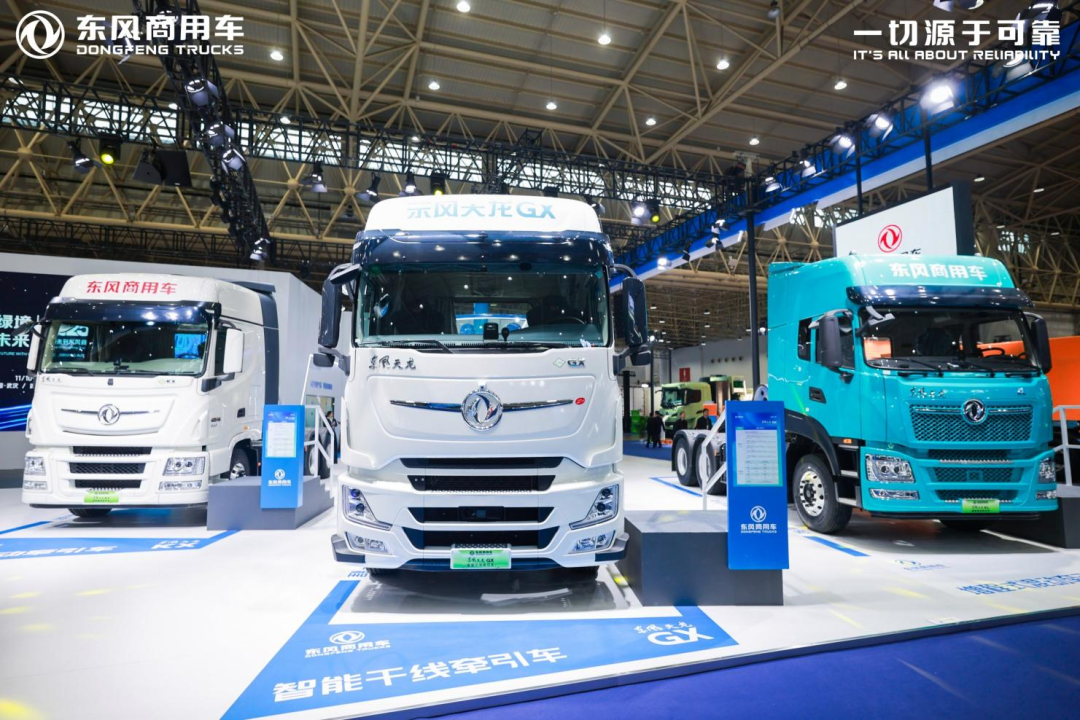
Core Insights - The 2025 China International Commercial Vehicle Show (CCVS) held in Wuhan focused on "high-end, intelligent, and green" themes, showcasing the latest achievements in the global commercial vehicle industry [1] - Dongfeng Commercial Vehicle, as the host, presented six models covering pure electric, hydrogen, and hybrid technologies, along with seven core technology exhibits, emphasizing its technological strength and ecological layout [1][3] Industry Overview - The Chinese commercial vehicle industry is undergoing a significant transformation, with sales reaching 3.117 million units from January to September 2025, marking a 7.8% year-on-year increase [3] - In the new energy sector, sales of new energy commercial vehicles reached 566,000 units, a staggering 61.4% increase year-on-year, with a market penetration rate of 23.9%, expected to exceed 30% for the year [3] - Exports of new energy commercial vehicles reached 64,000 units, a 150% increase, highlighting globalization and new energy as dual driving forces for the industry [3] Dongfeng Commercial Vehicle Performance - Dongfeng Commercial Vehicle achieved a wholesale sales volume of 63,000 units in the first half of the year, a 4.3% increase year-on-year, with terminal sales at 60,000 units [3] - The company’s new energy product sales surged by 191% year-on-year, becoming a significant growth driver in the commercial vehicle sector [3][5] - By 2024, Dongfeng aims to double its overseas export volume and quadruple its new energy sales compared to the beginning of the 14th Five-Year Plan [5] Technological Innovations - Dongfeng showcased six high-quality models at the exhibition, including hydrogen fuel cell and pure electric vehicles, demonstrating its comprehensive operational capabilities in the new energy sector [8] - The Dongfeng Tianlong GX hydrogen fuel cell tractor features a fuel cell efficiency of ≥48%, with a refueling time of just 20 minutes and a range of up to 700 km [8] - The Dongfeng Tianlong KL pure electric tractor can recharge to 80% in under 20 minutes, achieving a range of 100 km with just 5 minutes of charging [9] Strategic Vision - Dongfeng Commercial Vehicle is committed to sustainable development through innovation in new energy and intelligent connected vehicles, positioning itself as a key player in the low-carbon transformation of the logistics industry [6] - The company plans to maintain high-intensity R&D investments in strategic emerging industries, with over 70% of new industry investments during the 15th Five-Year Plan period [16] - Dongfeng aims to enhance its core capabilities in technology breakthroughs, platform development, and testing validation, striving to become a leader in the international commercial vehicle market [16]
“中国心”动力测试:2.0T与专用混动成行业新锚点
Zhong Guo Qi Che Bao Wang· 2025-11-13 09:06
Core Insights - The "China Heart" 2025 Annual Top Ten Engines and Hybrid Systems real vehicle testing event has commenced, marking its 20th anniversary, with 14 automotive companies participating and showcasing a variety of power systems [2][8] - The current trend in China's automotive industry shows a parallel development of multiple technical routes for power systems, transitioning from an economic optimization phase to a new stage of performance evolution [2][4] Group 1: Engine and Hybrid System Trends - Among the 14 models tested, 10 are 2.0L engines, with 9 being 2.0T engines, indicating a trend towards uniformity in engine displacement [3] - The trend of specialized power systems is becoming more pronounced, with Chery's high-performance hybrid system designed specifically for off-road use, featuring a total power of 665 kW and torque of 1135 N·m [3][4] - BYD's 2.0T horizontally opposed engine is notable as the first mass-produced model of its kind from a Chinese brand, showcasing innovative design solutions for compact engine compartments [3] Group 2: Market Positioning and Consumer Trends - The participation of larger displacement power systems reflects the automotive industry's shift towards the mid-to-high-end market and the demand for enhanced power [4] - The evaluation of various power systems indicates a focus on improving cost-performance ratios, with companies striving for advancements in weight reduction, noise reduction, and vibration control [4][5] - The increasing electrification of domestic mid-to-high-end off-road vehicles is expected to enhance China's competitive edge in this niche market globally [4] Group 3: Safety and Regulatory Considerations - Experts express concerns regarding the safety risks associated with high-performance vehicles, emphasizing the need for regulatory frameworks to manage power output standards [5][6] - The importance of user experience over sheer performance metrics is highlighted, with companies encouraged to focus on practical efficiency rather than excessive technological advancements [6] Group 4: Industry Evolution and Future Outlook - The "China Heart" initiative has documented the evolution of China's automotive power systems over the past 20 years, reflecting a shift from reliance on joint ventures to a stronger presence of domestic brands [8][9] - The future of the automotive industry in China is expected to see continued growth and innovation, with a focus on self-sufficiency in technology and enhancing the international competitiveness of domestic brands [9]



三电技术精细化迭代引领行业升级——“中国心”2025年度十佳新能源汽车动力系统实车测试
Zhong Guo Qi Che Bao Wang· 2025-11-13 09:06
Core Insights - The Chinese electric vehicle (EV) market is entering a critical transformation phase driven by technology, with production and sales exceeding 10 million units in the first nine months of 2023, reflecting over 30% year-on-year growth, significantly outpacing the overall automotive industry [2] - The market penetration rate for EVs reached 57.8% in September 2023, indicating a shift from the popularization phase to a quality enhancement phase [2] - The "China Heart" 2025 annual top ten EV power systems testing showcased the highest level of current Chinese EV power technology, with 15 models participating, including both pure electric and range-extended hybrid systems [2][3] Industry Trends - The testing revealed three major trends in power system technology: the adoption of 800V high-voltage architecture, deep integration of motor, battery, and intelligent driving systems, and a shift towards self-research and development as a core competitive advantage [3] - The BYD Tang L EV features the world's first super-kilovolt architecture, indicating a new phase of competition in the "kilovolt-level" technology [3] - The new generation of range-extended systems, such as the Seres SET330D, achieved significant performance improvements, including a maximum thermal efficiency of 44.8% [3] Competitive Landscape - Domestic brands are gaining significant advantages in technological advancement and supply chain resilience, while joint venture brands are accelerating their technological follow-up, injecting new vitality into industry competition [4] - The "China Heart" evaluation emphasizes a balanced approach to advanced technology and user value, highlighting the importance of aligning advanced technologies with user needs and infrastructure capabilities [5][6] User-Centric Development - The focus on user experience is critical, with experts noting that the 2025 models show significant improvements in power, acceleration response, and ride comfort compared to previous years [5] - There is a caution against excessive technological parameters that may not align with consumer needs, emphasizing the importance of practical technology optimization [6][7] - The evaluation process aims to identify models that excel in comprehensive performance rather than just individual strengths, reinforcing the need for a user-centered approach in technology development [7]

一体化压铸的成本困局
Zhong Guo Qi Che Bao Wang· 2025-11-13 07:46
Core Insights - The integration of die-casting technology in the automotive industry has been promoted as a cost-reduction tool, significantly reducing the number of parts and manufacturing costs by up to 40% per vehicle [2][7] - However, the average qualification rate for integrated die-cast parts is only 65% to 80%, compared to over 98% for traditional stamped parts, leading to a higher number of defective products [2][3] - The hidden costs associated with lower qualification rates and higher maintenance expenses pose significant challenges for the widespread adoption of this technology [7][8] Qualification Rate Concerns - The qualification rate for integrated die-casting is notably low, with some companies reporting rates as low as 30% to 40% during trial production, which can rise to around 90% in mass production [3][6] - Low qualification rates can lead to increased production costs and may indicate that quality inspection standards are being relaxed, potentially masking deeper quality issues [3][6] - Quality defects in die-cast parts are often subtle and may not be detected until long-term use, resulting in structural performance degradation [3][4] Technical Challenges - The shift from traditional multi-part structures to integrated die-cast components presents unprecedented challenges in materials science, mold engineering, and process control [4][5] - Material properties, particularly the flow characteristics and solidification behavior of aluminum alloys, are critical to achieving high qualification rates [4][5] - The complexity of the die-casting process, including temperature control and mold precision, significantly impacts the quality and consistency of the final products [5][6] Cost Implications - The initial investment for integrated die-casting lines is three times higher than traditional stamping lines, with costs for large die-casting machines exceeding 50 million yuan [7][8] - Despite potential weight reductions of 16% to 30%, the losses from low qualification rates can negate these advantages, leading to a poor return on investment [7][8] - Maintenance costs for integrated die-cast components are significantly higher, as damage often requires complete part replacement rather than simple repairs [8][9] Industry Response - Companies are encouraged to invest in research and development to improve material science, mold design, and process control to enhance qualification rates [9] - Establishing comprehensive lifecycle cost assessment models is essential for evaluating the true economic impact of integrated die-casting technology [9] - The evolution of integrated die-casting reflects a broader industry shift from prioritizing scale to balancing quality and cost, necessitating collaborative efforts to address these challenges [9]

中国汽车从泰国出口欧洲,要“火”?
Zhong Guo Qi Che Bao Wang· 2025-11-13 07:25
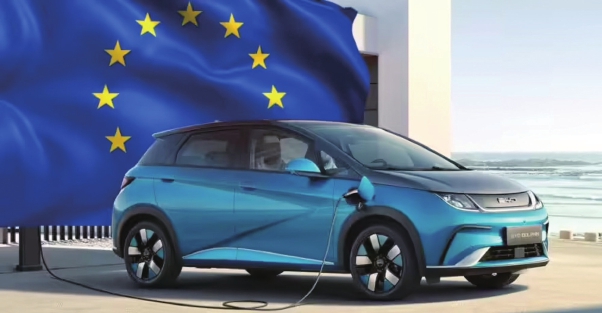
Core Insights - Changan Automobile has announced its strategy to establish a presence in Thailand and serve the local market, launching three new models and planning to export over 1,000 DEEPAL S05 SUVs to Europe by December 2023 [2] - BYD has also begun exporting electric vehicles from its Thai factory to Europe, with over 900 units shipped to countries like the UK, Germany, and Belgium, marking a significant step in its global expansion [2] Export Strategy - Chinese automakers are increasingly choosing to export vehicles from Thailand to Europe to avoid high EU anti-subsidy tariffs, which can reach up to 45.3% for electric vehicles produced in China [2][5] - The EU has imposed a maximum anti-subsidy tax of 35.3% on electric vehicles produced in China since October 2022, prompting companies like BYD, Geely, and SAIC to seek alternative production bases [2][5] Market Performance - Chinese brand vehicles in Europe are experiencing significant growth, with sales expected to reach 90,571 units by September 2025, a 149% increase year-on-year, capturing a market share of 7.4% [3] - MG, BYD, and Chery are leading the sales rankings among Chinese brands in Europe, with MG achieving a 62% year-on-year increase in September sales [3] Production Capacity - Chinese automakers have established substantial production capacity in Thailand, exceeding 600,000 units, which allows them to meet both local and export demands [6][7] - The Thai automotive market is projected to face challenges in 2024, with total new car sales expected to decline by 26%, highlighting the importance of exports for Chinese brands [6][7] Government Support - The Thai government is actively promoting the country as a regional electric vehicle manufacturing hub, offering incentives that encourage Chinese automakers to establish production facilities [8] - Recent adjustments to Thailand's electric vehicle support policies allow locally manufactured electric vehicles intended for export to count towards domestic production quotas, further incentivizing exports [8] Global Strategy - Chinese automakers are adopting a flexible global strategy, allowing them to navigate trade barriers and optimize production resources across different markets [9][10] - The shift from product export to a global brand presence signifies a maturation in the operational capabilities of Chinese automakers, enhancing their competitiveness on the world stage [11]
重塑轻型商用车市场格局 东风乾坤定义未来
Zhong Guo Qi Che Bao Wang· 2025-11-13 01:44
Core Viewpoint - The Chinese commercial vehicle industry is undergoing a significant transformation by 2025, driven by electrification, intelligence, and sustainability, with traditional manufacturers needing to adapt and innovate to remain competitive [1] Group 1: Brand and Product Development - Dongfeng Motor Corporation launched its new high-end light vehicle brand "Dongfeng Qiankun" at the 2025 China International Commercial Vehicle Exhibition, showcasing its technological capabilities and strategic ambitions [1][3] - The brand name "Qiankun" is inspired by traditional Chinese philosophy, symbolizing the pursuit of efficiency and user trust [3] - Dongfeng Qiankun aims to be a leader in high-efficiency fresh food transportation, focusing on cold chain and green transportation logistics [5] Group 2: Product Features and Market Positioning - The product strategy includes a dual approach of fuel and electric vehicles, utilizing established supply chains for fuel vehicles and advanced technology for electric vehicles [5][6] - The Dongfeng Qiankun K6 model features a new generation engine that reduces fuel consumption by 10% compared to competitors, saving over 5400 yuan annually [8] - The K6 model is designed for comfort and efficiency, with a spacious cabin and advanced features, while the Dongfeng Dolika has also been updated to improve fuel efficiency by 12% [8] Group 3: New Energy Strategy - Dongfeng's new energy strategy focuses on multiple technology routes, including pure electric and hydrogen fuel, with a goal of achieving over 60% penetration of new energy vehicles by 2030 [9][11] - The company is developing advanced technologies for intelligent driving and energy efficiency, with plans for future upgrades to its intelligent chassis and battery systems [11][12] Group 4: Strategic Vision and Market Trends - Dongfeng is building a comprehensive competitive system across the entire value chain, aiming to establish itself as a high-end brand and a leader in green technology [12][14] - The company recognizes the shift in customer demands from basic transportation to comprehensive lifecycle cost and intelligent efficiency, positioning itself to define future market trends [12][14] - Dongfeng's commitment to innovation and strategic foresight aims to redefine the value proposition in the light commercial vehicle sector [14]


全球份额稳定提升,中国汽车持续释放活力
Zhong Guo Qi Che Bao Wang· 2025-11-12 13:03
Core Insights - The global automotive market is experiencing significant growth, with global sales reaching 8.55 million units in September 2025, marking a 10% year-on-year increase and a 12% month-on-month increase. China's market share has risen to 38%, up 2 percentage points from the previous year, indicating an acceleration in the globalization of Chinese automobiles [2] Group 1: Domestic Market Dynamics - A series of favorable policies in China have injected strong momentum into the automotive and particularly the new energy vehicle (NEV) sector, driving domestic consumption through trade-in and replacement incentives [2] - Major Chinese automakers, including SAIC, BYD, and Geely, reported sales exceeding 300,000 units in October, with significant year-on-year growth, and the share of NEVs in traditional automakers' sales continues to rise [2] - New energy vehicle startups like Leap Motor, Xiaomi, and Xpeng have also achieved record sales, with Leap Motor's monthly sales surpassing 70,000 units for the first time [2] Group 2: Global Market Position - Chinese automakers are increasingly influential in the global market, with two Chinese companies, BYD and Geely, ranking 6th and 9th respectively among the world's top 10 automakers, and Chery approaching the top 10 at 11th place [4] - The shift in product strategy for Chinese automakers has moved from a one-size-fits-all approach to localized development tailored to the specific needs of different regional markets, enhancing their competitiveness [4][5] - Chinese NEV companies are adapting to stringent European emission regulations and are exploring mid-to-high-end products, improving their brand perception and market presence [4] Group 3: Strategic Shifts in Global Operations - Chinese automakers are transitioning from "going out" to "going in," establishing local production facilities overseas to comply with local regulations and reduce trade barriers [5] - The "ecological going out" strategy represents a new model of globalization for Chinese automotive companies, focusing on systematic output, localized R&D, and supply chain collaboration [5] - The future direction for Chinese automotive companies includes deepening technological innovation, enhancing supply chain collaboration, and building a comprehensive global service ecosystem to maintain stable growth in global market share [5]