
Zhong Guo Qi Che Bao Wang

Search documents
中国造,世界销 跨国车企出口力度拉满
Zhong Guo Qi Che Bao Wang· 2025-11-17 08:31
Core Insights - The establishment of Nissan Import and Export (Guangzhou) Co., Ltd. marks a significant milestone for Nissan's operations in China, being the first joint venture vehicle import and export company set up by a foreign automotive brand in China [2] - The shift of multinational automotive companies to use China as an export base reflects a strategic transformation in the global automotive industry and highlights the enhanced comprehensive strength of China's automotive sector [2][10] - The transition from "Made in China, Sold in China" to "Made in China, Sold to the World" is revitalizing the production capacity of multinational companies in China and facilitating China's evolution from a major automotive manufacturing country to a strong manufacturing country [2] Industry Trends - The Chinese automotive market has entered a phase of stock competition, with domestic brands gaining market share at the expense of foreign and joint venture brands, leading to a decline in market penetration for the latter [3] - In the first three quarters of this year, domestic brand passenger car sales reached 14.651 million units, a year-on-year increase of 22.9%, with a market share of 69%, up 5.1 percentage points year-on-year [3] - Multinational companies are facing approximately 10 million units of redundant production capacity in China, primarily in fuel vehicle production, with capacity utilization rates dropping from 73% in 2020 to 56% in 2024 [3] Company Strategies - Many multinational companies are closing or selling their factories in China due to declining sales and overcapacity, with General Motors' SAIC-GM shutting down its Beisheng factory in Shenyang as a notable example [4] - Nissan's establishment of its import and export company is part of a broader trend where multinational companies are optimizing production capacity and turning to exports to improve operational efficiency [4][5] - The Nissan N7, developed by a local team in China, represents a significant step in Nissan's strategy to export vehicles developed in China to global markets, showcasing the feasibility of local development models [9][10] Economic Advantages - The decision of multinational companies to use China as an export base is driven by the country's complete supply chain and cost advantages, which are difficult to replicate elsewhere [6][8] - China's automotive industry has developed a highly concentrated supply chain, allowing manufacturers to find nearly all suppliers within a short distance, significantly reducing logistics and communication costs [6] - Despite rising labor costs, the overall manufacturing costs remain competitive due to improved infrastructure, logistics efficiency, and economies of scale [8] Strategic Shift - The approach of multinational companies has evolved from tactical adjustments aimed at digesting excess domestic capacity to strategic layouts that leverage China's supply chain and R&D capabilities [12] - The shift in strategy reflects a recognition of the dual value of the Chinese market, where intense competition drives innovation and a robust supply chain offers significant cost and efficiency advantages [12]


专论 || 魏文清:关于我国汽车产业国际化前景与任务的研判
Zhong Guo Qi Che Bao Wang· 2025-11-17 08:23
Core Viewpoint - China's automotive industry has successfully transitioned to electric vehicles, creating a comparative advantage and driving significant growth in automotive exports, marking a solid step towards internationalization [1] Group 1: Internationalization Strategy - The internationalization of China's automotive industry requires a tailored approach based on local conditions and timing, with three main modes: product trade, capacity investment, and a mixed approach [2] - There are eight primary internationalization scenarios based on trade relations, tariff barriers, and local market development, which dictate different strategies and paces for market entry [2] Group 2: Market Segmentation - Priority markets account for about 25% of overseas markets, characterized by stable business environments and low resistance to new brands, allowing for rapid market share acquisition [2] - Gradual markets, making up 35% of overseas markets, involve developed countries with strong automotive industries, requiring a longer cultivation period for successful entry [3] - Cautious markets, comprising 40% of overseas markets, present significant political and trade risks, necessitating a careful approach to maintain existing business while preparing for future expansion [3] Group 3: Long-term Outlook - The internationalization of China's automotive industry is likened to a marathon, with expectations of reaching significant milestones over the next 30 years, including trade export and overseas production layout [4] - By 2024, it is projected that overseas sales of Chinese brands will reach approximately 6.1 million units, with a market share of about 9.0% [4] - By 2030, overseas sales are expected to approach 10 million units, with a market share exceeding 12% [4] Group 4: High-Quality Development - High-quality internationalization requires a robust support system, including technological innovation, building world-class multinational automotive groups, and establishing a global supply chain [6][7] - A reliable service system for after-sales and financial services is essential for supporting international operations [8] - The government plays a crucial role in creating a favorable regulatory environment and facilitating international cooperation [9][10] Group 5: Cultural and Information Exchange - Establishing a global automotive culture that resonates with local consumers is vital for the internationalization of China's automotive industry [12] - A comprehensive information platform is necessary for timely and accurate data collection to mitigate risks associated with international operations [11]
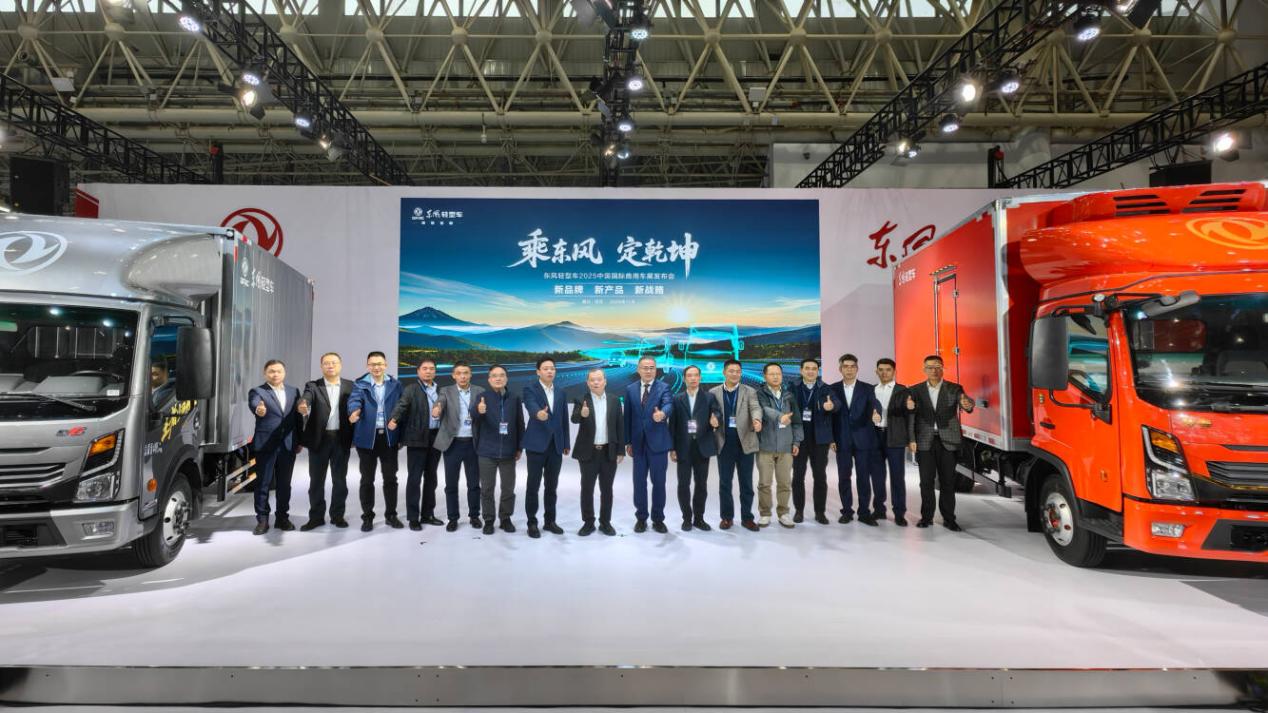
“乘东风·定乾坤” 解码东风轻型车“新质造”全链支撑
Zhong Guo Qi Che Bao Wang· 2025-11-17 08:18
Group 1 - Dongfeng Motor Corporation unveiled its high-end light truck brand "Dongfeng Qiankun" at the Wuhan International Commercial Vehicle Exhibition, showcasing two new models: Dongfeng Qiankun K6 and Dongfeng Dolika, along with a strategic blueprint indicating that the penetration rate of new energy vehicles will exceed 60% by 2030 [1][9] - The company emphasizes its commitment to innovation and competitiveness through its R&D efforts, focusing on electric, intelligent, and connected technologies, and has made significant advancements in autonomous driving, EV and PHEV commercialization, and lightweight fuel-saving technologies [4][9] - Dongfeng's R&D facilities include advanced testing labs for engines and intelligent networking, ensuring rigorous standards such as "million-kilometer reliability testing" for powertrains and comprehensive simulations for smart driving features [5][7] Group 2 - The integration of the Dongfeng Cummins D2.5/3.0 engines with the new Dongfeng Qiankun K6 model highlights the importance of seamless collaboration between engine and vehicle design to achieve optimal performance and fuel efficiency [11][14] - Dongfeng Cummins has established a smart manufacturing system that incorporates AI and robotics, enhancing production precision and efficiency while reducing delivery times through flexible production lines [13][20] - The company is responding to diverse customer demands by implementing flexible manufacturing processes, including the first automated AGV production line for light trucks, which has improved manufacturing efficiency by 15% [17][20] Group 3 - Dongfeng's strategic focus on high-quality development aims to redefine efficient transportation standards and enhance service quality, aligning with national goals for sustainable manufacturing [10][16] - The company is committed to a dual-path strategy of "zero-carbon urban distribution" and "high-efficiency diesel," addressing both policy directions and varying customer needs [9][10] - The overall vision of Dongfeng is to not only follow market trends but to actively define the future of the industry, reflecting a strong sense of responsibility and commitment to customer trust [22]

评论 || 渗透率首超50% 新能源汽车高质量发展仍需居安思危
Zhong Guo Qi Che Bao Wang· 2025-11-17 08:01
Core Insights - In October, China's new energy vehicle (NEV) sales reached 1.715 million units, a year-on-year increase of 20%, accounting for 51.6% of total vehicle sales, marking a significant milestone in the market [1] - The growth of NEVs is driven by both domestic and international markets, with pure electric vehicles (EVs) being the main growth engine [1] - Domestic sales of NEVs were 1.459 million units, up 12.1% year-on-year, with pure EV sales at 943,000 units, a 28% increase, contributing 77% of the domestic NEV sales growth [1] - Exports of NEVs reached 256,000 units, a staggering 99.9% increase, with plug-in hybrid electric vehicle (PHEV) exports growing 2.7 times [1] Domestic Market Performance - Pure electric vehicles are the core growth driver in the domestic market, with top-selling models including Geely Xingyuan, Wuling Hongguang Mini EV, BYD Seagull, Tesla Model Y, and Xiaomi SU7, all being pure electric [1] - The "old-for-new" policy has significantly supported NEV sales this year, but its effectiveness may diminish next year without increased support [2] - The gradual reduction of NEV purchase tax exemptions starting next year may lead to a demand pull-forward into Q4 of this year [2] Export Market Challenges - Chinese NEV manufacturers face increasing trade barriers and intense competition in international markets, particularly from established brands in Europe, the US, and Japan [3] - Existing brands hold over 60% market share in Africa, Europe, and South America, and over 85% in Oceania and North America, posing significant challenges for Chinese exports [3] Policy and Industry Development - The government needs to establish a stable policy framework to support NEV consumption, including clarifying the continuation of the "old-for-new" policy and ensuring effective implementation of tax exemptions [4] - The industry must focus on technological innovation and brand enhancement, particularly in electric and intelligent vehicle technologies [4] - Companies should leverage strategic opportunities to build brand recognition and engage in mergers and acquisitions to strengthen their global presence [4] Infrastructure and Regulatory Environment - Optimizing the domestic charging infrastructure and ensuring compliance with construction requirements for charging facilities in residential areas is crucial for sustainable NEV development [5] - The focus should shift from quantity growth to quality improvement, enhancing industry standards and market regulation [5] - Internationally, enhancing cooperation mechanisms can help address trade barriers and support companies in expanding their overseas markets [5]

首发国产新世代BMW iX3!宝马携手Momenta加速全场景智能驾驶辅助落地
Zhong Guo Qi Che Bao Wang· 2025-11-17 06:38
Core Insights - Momenta and BMW Group have officially announced a collaboration focused on developing advanced intelligent driving assistance solutions tailored for the Chinese market [1] - The new intelligent driving assistance system will first be integrated into the domestically produced BMW iX3, with plans for mass production and market launch by 2026 [5] Group 1 - The collaboration aims to create a comprehensive navigation assistance feature that addresses local driving scenarios, covering both highways and urban roads [1] - The BMW iX3 is expected to be produced at the Brilliance BMW manufacturing base in Shenyang, China, and will be the first model to feature Momenta's intelligent driving assistance system [5] - Future applications of this intelligent driving assistance solution will extend to multiple vehicle models, indicating a broader strategy for integration across BMW's lineup in China [5]

《关于进一步加强二手车出口管理工作的通知》发布,二手车出口规范发展迎来历史节点(附解读)
Zhong Guo Qi Che Bao Wang· 2025-11-17 06:35
同时,要进一步加强合规审查。严格以改装车名义出口车辆的许可证申领条件。各地商务主管部门 要指导改装车出口企业准确填写车辆底盘品牌、改装车品牌、车辆型号等信息,提交改装真实性证明材 料。对无法证明改装真实性,同类改装车产品未列入工业和信息化部《道路机动车辆生产企业及产品公 告》、不具备有效的国家强制性产品认证的产品,不予发放出口许可证。要对本地改装车生产企业出口 情况、与出口量相适应的改装生产能力等进行排查,相关情况及时上报商务部。 为保证管理工作切实有效实施,《通知》发布了《二手车出口不诚信行为负面清单》及《改装真实 性证明材料清单》。要求各地商务主管部门要加强本地二手车出口信用评价体系建设,对照《二手车出 口不诚信行为负面清单》,对企业开展日常监督与动态管理,规范企业经营行为及出口竞争秩序。要及 时对有不诚信行为的企业进行约谈,对有多次不诚信行为、未及时提供出口车辆维修技术及备件支持、 不履行质量保证义务的企业,或者此类企业法人及关联人另设企业开展二手车出口业务的,应责令其就 此前不诚信行为制定并落实整改措施。在受理审查其出口许可证申请时,应综合考虑整改落实情况作出 是否准予许可的决定。 商务部、工业和信息 ...

专用车产业迎来从“规模致胜”到“价值引领”关键转折
Zhong Guo Qi Che Bao Wang· 2025-11-17 03:43
Core Insights - The specialized vehicle industry is crucial for rural revitalization, national economic construction, and public safety, undergoing significant transformations in product management, industry structure, and market environment [1] - The 2025 Specialized Vehicle Industry Development Forum highlighted the themes of "collaboration, reshaping, and win-win" for the industry [1] Group 1: Trends in the Industry - The industry is experiencing three major trends: electrification, intelligence, and internationalization, with a focus on long-term governance, standard revisions, and access regulations [3][4] - By 2024, China's sales of new energy specialized vehicles are expected to exceed 300,000 units, with a penetration rate of nearly 30%, and projections indicate that by the end of the 14th Five-Year Plan, some public sectors may exceed a 70% penetration rate for electric vehicles [4] - In terms of internationalization, China's specialized vehicle exports are projected to reach 52,100 units in 2024, marking a year-on-year increase of 44.6%, with a shift from low-value to high-value products [4] Group 2: Challenges and Opportunities - The specialized vehicle industry faces challenges such as intensified competition and the need for transformation, requiring a shift from "scale cost" to "value innovation" and from "selling products" to "providing services" [7] - The market demand for specialized vehicles is stabilizing at a low level after years of rapid growth, with a shift from "scale construction" to "refined operation" in urban development [7] - The industry is expected to integrate deeply into the "smart city" development strategy, focusing on data interaction, intelligent decision-making, and unmanned operations [7] Group 3: Future Directions - Companies are encouraged to transition products towards cleanliness, intelligence, and platformization, evolving specialized vehicles from mere tools to mobile service platforms [7] - The industry must collectively promote innovation-driven growth, moving from price competition to value creation, and achieving an upgrade from "many weak" to "few strong" players [7][8] - The automation application in the specialized vehicle industry faces challenges due to diverse market demands, necessitating solutions for efficient production line adjustments [10]

自动泊车无人洗护!自动驾驶时代的汽车后市场服务如何重构?
Zhong Guo Qi Che Bao Wang· 2025-11-17 01:48
Core Insights - The rapid development of autonomous driving technology is reshaping the automotive industry, particularly impacting the automotive aftermarket services [2] - The automotive aftermarket is experiencing a transformation driven by technological advancements and changing consumer demands, especially from the "Z generation" [4] Group 1: Expansion of Service Scope - The automotive aftermarket is expected to grow significantly, with predictions indicating that dedicated services for new energy vehicles will exceed 35% of the market [3] - Emerging service demands such as sensor calibration, software diagnostics, and OTA upgrades are becoming new growth points in the aftermarket [3] - The complexity of autonomous vehicles necessitates a corresponding enhancement in technical capabilities and service models within the aftermarket [3] Group 2: User Experience Transformation - The shift in user experience from mere functionality to immersive service experiences is driven by consumer demand and technological innovation [8] - The application of AR technology allows users to monitor the repair process in real-time, enhancing transparency and trust [8] - The integration of VR entertainment during vehicle maintenance transforms waiting time into an enjoyable experience, adding new value to aftermarket services [8] Group 3: Service Model Innovation - The automotive aftermarket is transitioning from a "service finds people" model to a "people find service" model, emphasizing proactive, intelligent, and automated services [5][6] - Predictive maintenance systems utilizing IoT technology and AI diagnostics are key initiatives in restructuring service models, significantly reducing unplanned maintenance rates by 65% [6] - The introduction of subscription-based service models, such as maintenance packages, is emerging as a new direction for sustainable business practices in the industry [9][10] Group 4: Industry Collaboration and Ecosystem Development - The automotive aftermarket is moving towards an "ecological symbiosis" model, fostering collaboration across the industry to meet the complex service demands of autonomous vehicles [7] - The shift from hardware-centric services to a "soft-hard collaboration" model is essential for addressing the intricate service needs of autonomous vehicles [7] - The competition in the future will focus on data operations, scenario integration, and global layout, rather than just individual service capabilities [10]

品胜绿电直连技术破局服务费“内卷”困境
Zhong Guo Qi Che Bao Wang· 2025-11-17 01:40
随着新能源汽车保有量的不断增多,电充市场需求也不断高涨。但市场端,运营商却很难盈利,深陷充电服务费不断下探、同质化恶性竞争 的"内卷"中,生存艰难。日前,品胜集团发布光储兆瓦超充·绿电直连技术,用光伏的接入,从根本上解决价格"内卷"困境,帮助充电运营商迈入光 储充一体的新发展。 构网型光储充放一体化运营 推动V2G商业化运营 北京理工大学深圳汽车研究院部长张涛也表示,当前充电运营领域正深陷资源、成本与效率的"不可能三角",场地资源紧张限制光伏装机,超充升级成 本高企挤压利润,变压器增容的高门槛也让众多运营商陷入困境。北京理工大学深圳汽车研究院推出的虚拟增容技术为品胜光储兆瓦超充·绿电直连技术提 供技术支撑,通过虚拟动态增容,省去更换变压器才能增加功率的繁荣环节,且兼具峰谷套利与需求侧响应功能,破解当下V2G车网协同技术推广瓶颈,依 托品胜电能增量柜实现就地结算、就地存储、就地消纳,有效缓解V2G"结算难"、"电网冲击"两大痛点,为运营商创造更多赢利点的同时,推动V2G商业化 运营。 从便携移动电源到户外储能电源,再到如今的电动汽车光储充放电系统,品胜集团完成了技术能力的跨维度布局。借助光储兆瓦超充绿电直连方案 ...

发挥产学研优势 做好汽车高原测试的一极——专访西南林业大学机械与交通学院院长李玮、副教授李加强
Zhong Guo Qi Che Bao Wang· 2025-11-16 03:39
Core Insights - The automotive industry is increasingly focusing on high-altitude testing as a crucial aspect of vehicle performance validation [1] Group 1: High-Altitude Testing Contributions - Southwest Forestry University has been actively researching vehicle emissions and energy utilization issues in high-altitude regions, particularly focusing on hybrid vehicles' adaptability to high-altitude conditions [2] - The research team has conducted comprehensive tests on various types of hybrid vehicles, including PHEVs, REEVs, HEVs, and traditional gasoline vehicles, across seven representative cities in Yunnan [2] - The studies revealed key factors affecting emissions characteristics and energy efficiency of hybrid vehicles in high-altitude areas, along with strategies for optimization and emission reduction [2] Group 2: Industry-Academia Collaboration - The university positions itself as a source of technological innovation, a bridge for results transformation, and a training base for high-quality application-oriented talents [3] - Collaborations with multiple automotive manufacturers and component suppliers have been established to conduct high-altitude emission testing and calibration [3] - The university is developing a comprehensive laboratory for hydrogen energy vehicles, which will serve as both a research base and a technology service platform for industry collaboration [3] Group 3: Supporting Belt and Road Initiative - Yunnan's geographical position as a gateway to South Asia and Southeast Asia allows the university to contribute to the Belt and Road Initiative through technological innovation and talent cultivation [4] - Research on vehicle emissions and energy efficiency in high-altitude and tropical regions aims to provide technical references for traffic pollution control in similar terrains in neighboring countries [4] - The university plans to build a regional platform for clean energy technology exchange, focusing on hydrogen, photovoltaics, and energy storage applications in cross-border transport and smart traffic systems [5]