
Zhong Guo Qi Che Bao Wang

Search documents
斑马全模态端到端Qwen Omni上车,汽车座舱迈入主动智能时代
Zhong Guo Qi Che Bao Wang· 2025-09-28 03:40
Core Insights - Zebra Intelligent's Auto Omni, a full-modal edge model vehicle solution, aims to enhance smart cockpit experiences from command-based interaction to always-on proactive services [1][3][9] Group 1: Product Features - Auto Omni leverages Qualcomm's 8X97 computing platform and Alibaba's Qwen3-Omni model to create an optimal full-modal, end-to-end solution for smart cockpits [3][9] - The solution enables deployment and operation of large models on edge chips, allowing for complex engineering tasks such as training and optimization based on vehicle scenarios [3][4] - Auto Omni enhances AI capabilities in smart cockpits by improving perception and memory, enabling continuous awareness and interaction [4][5] Group 2: User Experience - The smart cockpit powered by Auto Omni can provide proactive services in various scenarios, including real-time, conditional, planning, and casual interactions, with 90% of scenarios being usable offline [4][5] - The system prioritizes user data security by simplifying data processing, ensuring sensitive information is protected while maintaining functionality [5][9] Group 3: Industry Positioning - Zebra Intelligent has established a collaborative ecosystem with over 800 million deployments across 60+ automotive brands, positioning itself as a leading AI full-stack technology service provider [9][10] - The company has developed a comprehensive AI product lineup, including 10 platforms and over 30 advanced AI features, enhancing user interaction and experience [10][11] - Zebra Intelligent is part of the first "AI Car Platform Service Alliance," collaborating with various content and service partners to provide a seamless user experience [11]


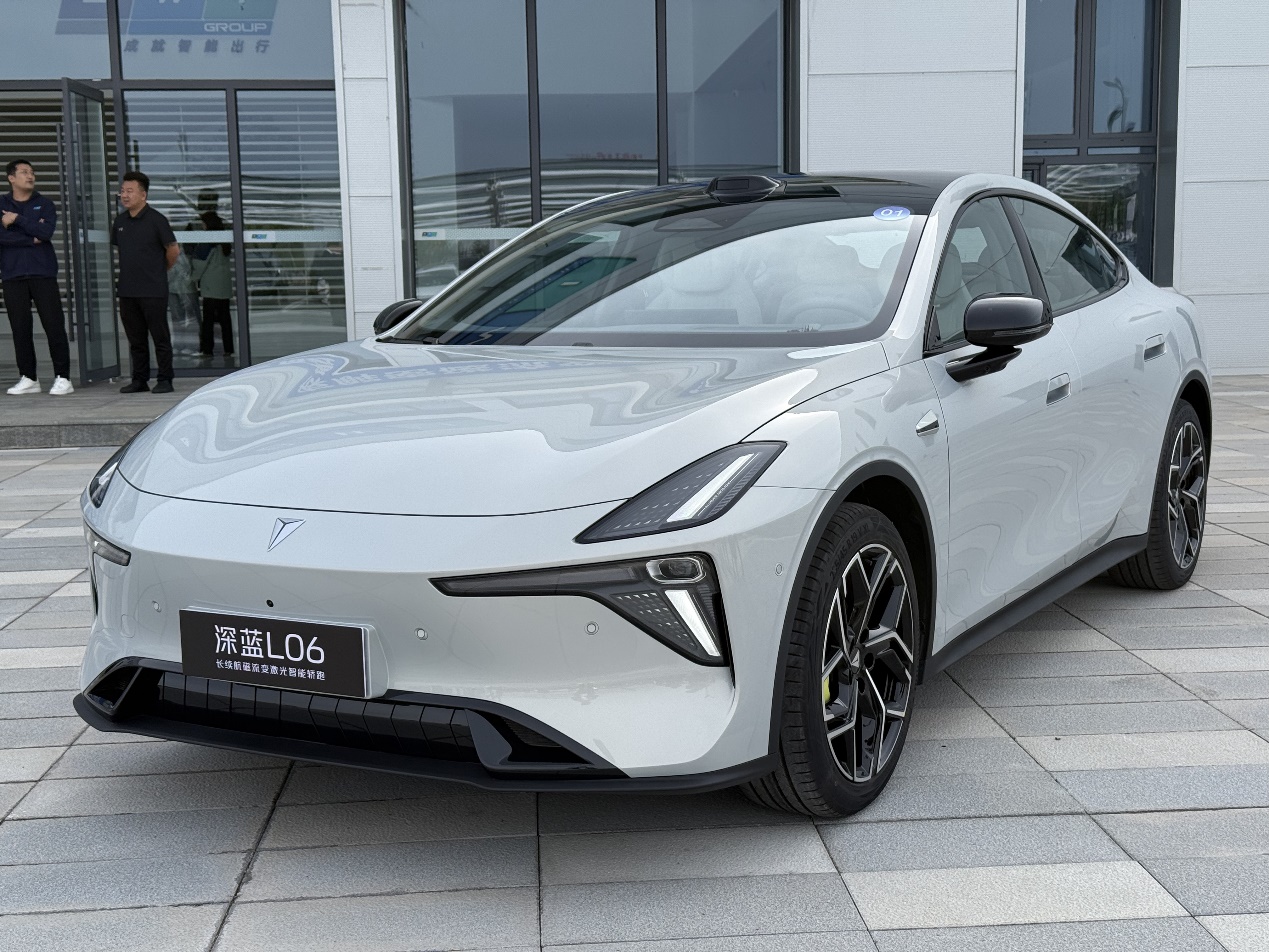
从超豪华专属到国产大规模量产,京西智行携手深蓝汽车开启“磁流变元年”
Zhong Guo Qi Che Bao Wang· 2025-09-28 03:29
Core Insights - The collaboration between Jingxi Zhixing and Deep Blue Automotive marks the introduction of magnetorheological suspension technology into the mainstream Chinese automotive market, signifying the start of a new era for domestic automotive brands [2][6] Group 1: Technology Overview - Magnetorheological technology, discovered in 1948, allows for rapid adjustment of damping force by controlling the arrangement of magnetic particles in a liquid, enabling a switch between liquid and solid states in milliseconds [2] - The technology was first applied in luxury vehicles, with over 3 million units installed globally in high-end models since its debut in the Ferrari 599 GTB in 2006 [2] - The new magnetorheological suspension system can adjust damping up to 1000 times per second, providing enhanced vehicle stability and control in various driving conditions [5] Group 2: Strategic Collaboration - Deep Blue Automotive has been researching magnetorheological technology since 2020, aiming to integrate it into domestic vehicles through a new platform developed in collaboration with Jingxi Zhixing [3] - The partnership focuses on a comprehensive engineering approach to reconstruct the vehicle architecture rather than merely transplanting existing technology [3] - The collaboration is seen as a pivotal moment for the rise of Chinese chassis technology, breaking the dominance of international giants in the suspension system sector [5][6] Group 3: Market Impact and Future Outlook - The launch of the Deep Blue L06 with the magnetorheological suspension system is viewed as a significant milestone, with expectations for the technology to be widely adopted across multiple domestic automakers by 2026, potentially exceeding 300,000 units [6][7] - The CEO of Jingxi Zhixing emphasized the importance of open collaboration and innovation in driving the global competitiveness of the Chinese automotive industry [6][7] - The year 2025 is projected to be a landmark year for the domestic implementation of magnetorheological technology in vehicles [7]
国四补贴到账,实实在在的甜头!重庆物流老板:东风商用车这波置换简单又划算
Zhong Guo Qi Che Bao Wang· 2025-09-28 03:22
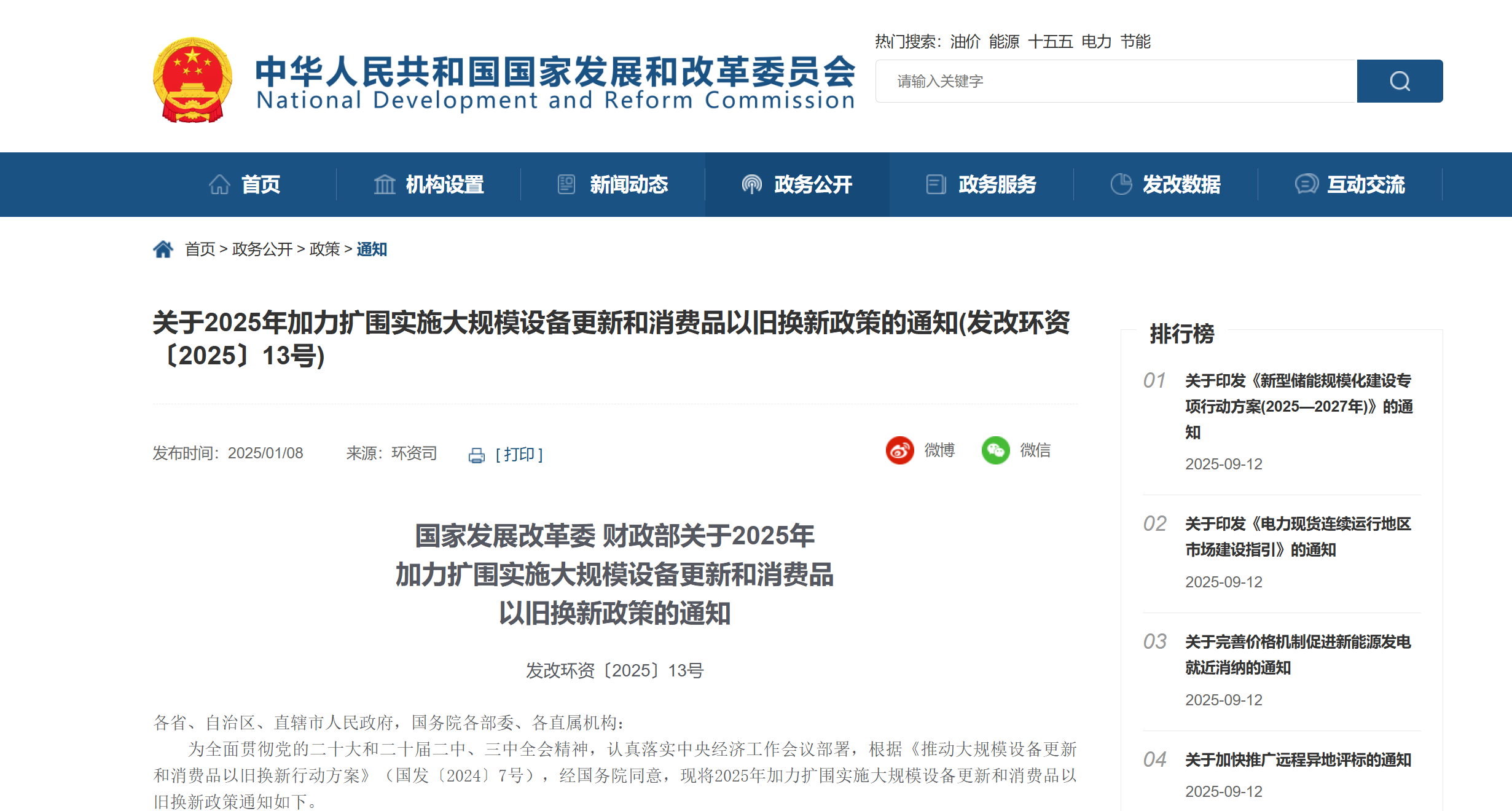
前几年,谁要是手里还揣着一台国四车,心里多少有点犯愁。二手市场行情冷清,收车商一口价就是"废铁价",卡友们卖车心里都觉得不值。但今年情 况不一样了。随着国四淘汰政策正式落地,国家和地方密集出台报废补贴实施细则,曾经在市场上不值钱的"老破车",摇身一变成了"香饽饽"。借着政策的 东风,不少东风商用车的客户趁机置换新车,用手里的国四车换来了新车,还顺带拿到了一笔真金白银的补贴。 "以前卖废铁价,现在置换一下,相当于手里直接多出来十来万,划算得很!"在他们当中,就有不少人已经尝到了实实在在的甜头。比如在重庆,就有 两位物流老板的经历颇具代表性。 来源:中华人民共和国国家发展和改革委员会 全程服务,换车更省心 "以前老车跑得时间久了,心里总没底,新车就完全不一样了。"这是重庆勇航物流有限公司老板陈庆华的感受。他常年跑快递速运,主要线路是重庆到 周边区县,单趟150-300公里,车货总重18吨。 今年6月,他提前报废了一辆国四东风天锦KR燃油载货车。旧车二手价也就1万块左右,但政策落地后,他只需把手续交给东风商用车经销商,工作人 员全程协助补贴申请、车辆评估和报废流程,他只需坐等"收钱"。"通过购新车政策和旧车残值折算 ...

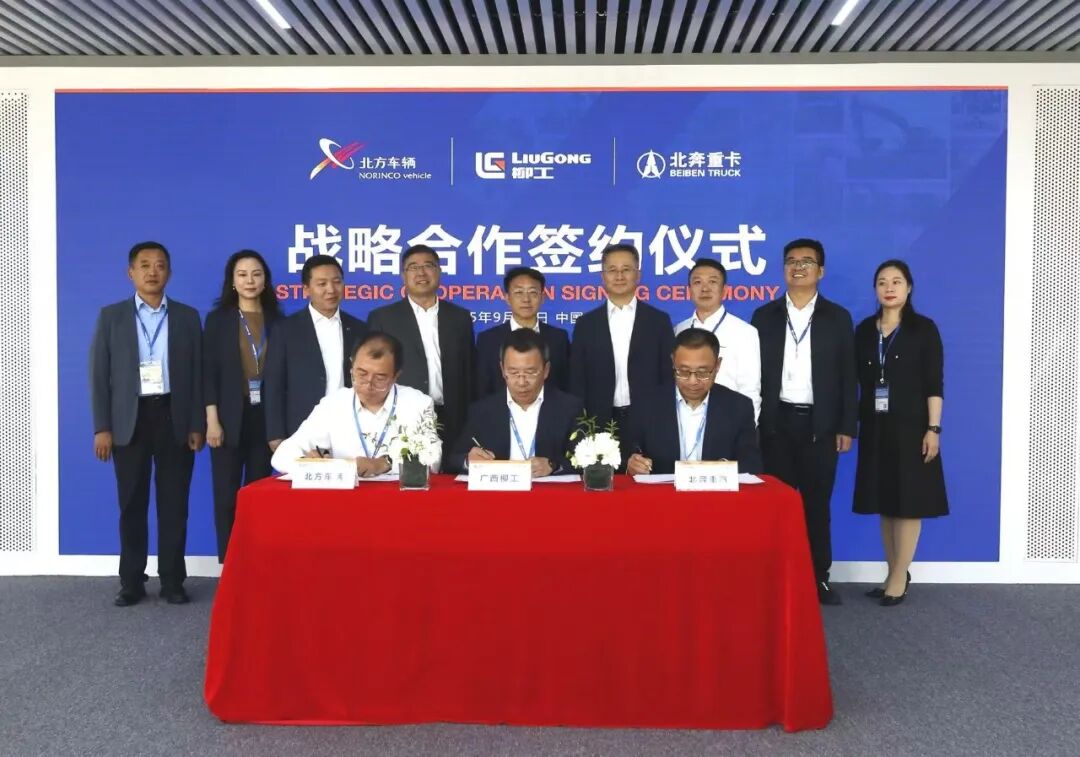
三方战略签约!中国北方车辆、柳工机械、北奔重汽共拓产业协同新局
Zhong Guo Qi Che Bao Wang· 2025-09-28 02:53
Core Viewpoint - The strategic cooperation agreement signed by China North Vehicle Company, Guangxi Liugong Machinery Co., Ltd., and Beiben Heavy-Duty Truck Group marks the beginning of a new chapter in deep collaboration across multiple fields, aiming for win-win development [1][3]. Group 1: Strategic Cooperation Framework - The three parties aim to establish a long-term and stable strategic partnership, ensuring cooperation through a dedicated mechanism and planning specific operational models for joint projects [3]. - The core objectives of the cooperation include "common development and long-term collaboration," focusing on four major areas: core field synergy, business model innovation, overseas market expansion, and upgrading the scope of cooperation [3]. Group 2: Key Areas of Focus - Core field synergy will enhance business interactions in infrastructure and mining scenarios, deepening collaboration between engineering machinery and heavy truck supply chains to improve overall service capabilities [3]. - Business model innovation will explore diversified models, leveraging the technological and product strengths of the three parties to provide comprehensive solutions that cover both "equipment + services" for various customer needs [3]. - The overseas market expansion will utilize each party's international channels and brand foundations to actively explore overseas aftermarket cooperation, enhancing the global competitiveness of Chinese equipment manufacturing brands [3]. Group 3: Future Development and Industry Impact - This collaboration is a significant move for upstream and downstream enterprises in the industry to adapt to development trends and integrate advantageous resources [4]. - The three parties will adhere to principles of mutual trust and complementary advantages, deepening cooperation in industry, technology, and market aspects, thereby contributing to the high-quality development of China's infrastructure, mining equipment, and heavy truck industries [4].

智驾中国队闯全球:生态输出与协同共建
Zhong Guo Qi Che Bao Wang· 2025-09-28 02:35
Core Insights - Chinese intelligent driving companies are accelerating their global expansion, driven by industry characteristics and domestic competition, focusing on risk avoidance, customer resource acquisition, and overcoming development bottlenecks [3][4][5] Group 1: Globalization Strategy - The global strategy of Chinese intelligent driving companies is not merely market expansion but a strategic necessity to avoid single risks and capture customer resources [3][4] - Collaborations with major global automakers like Mercedes and Toyota allow Chinese companies to cover multiple markets simultaneously, enhancing customer value [3][4] - The competitive landscape in the domestic market is pushing these companies to seek opportunities abroad, as the domestic market is increasingly dominated by leading players [4][5] Group 2: Technology Ecosystem Output - Chinese intelligent driving companies are focusing on exporting a complete technology ecosystem rather than just individual products, which is essential for their success in global markets [6][7] - Successful examples include collaborations like WeRide with Renault in France, which integrate advanced technology with local manufacturing and operational management [7] - The ability to provide a comprehensive technology ecosystem enhances competitiveness and allows for better adaptation to local market needs [6][7] Group 3: Collaborative Approach - The complexity of intelligent driving technology necessitates collaboration among various stakeholders to build a robust ecosystem [8][9] - Partnerships with local firms can facilitate quicker market entry and better alignment with local regulations and consumer habits, as seen with companies like Ninebot in the UAE [9] - The recent IAA auto show highlighted the trend of ecosystem co-construction among Chinese companies and global partners [9][10] Group 4: Synergy with Automakers - Collaborating with automakers is a strategic choice for intelligent driving companies, addressing challenges in technology implementation and market entry [11][12] - Joint efforts can streamline the integration of intelligent driving systems into vehicles, ensuring seamless transitions from development to production [11][12] - This collaboration also allows for maximizing commercial value through shared resources and expertise [12] Group 5: Rule-Making and Industry Leadership - Chinese intelligent driving companies are transitioning from followers to rule-makers in the global industry, supported by technological advancements and practical experience [13][14] - Companies like Horizon Robotics are setting high standards in chip performance and safety, enabling them to enter the supply chains of top international automakers [13] - The practical experience gained from diverse traffic scenarios in China positions these companies to contribute effectively to international standards and regulations [14] Group 6: Challenges and Risks - Despite advancements, Chinese intelligent driving companies face significant risks, particularly geopolitical uncertainties that could disrupt partnerships [15][16] - Compliance with stringent data protection regulations in regions like Europe poses challenges for market entry and operational continuity [16][17] - The need for deep localization of technology to meet varying regional traffic conditions and user habits is critical for successful market penetration [17]

8.39万元起售!BJ30旅行家定义轻越野旅行新标杆
Zhong Guo Qi Che Bao Wang· 2025-09-28 02:11
Core Viewpoint - The launch of the BJ30 Traveler by Beijing Off-road aims to make off-road travel accessible to more consumers, featuring a competitive pricing strategy and innovative warranty offerings [1][3][6]. Product Launch and Pricing - The BJ30 Traveler is positioned as a "light off-road SUV" with a price range of 99,900 to 136,900 yuan, and a promotional price starting at 83,900 yuan after subsidies [1]. - The vehicle is available in six configurations, significantly lowering the entry barrier for consumers interested in off-road capabilities [1]. Warranty and Customer Benefits - The BJ30 Traveler introduces a lifetime warranty covering over 99% of vehicle components, a first in the light off-road SUV segment, demonstrating the company's confidence in product quality [3]. - A comprehensive benefits package worth up to 43,000 yuan includes cash rewards, trade-in subsidies, and free upgrades, enhancing the overall customer experience [3]. Performance and Technology - The vehicle features a proprietary hybrid system with a maximum power of 301 kW and torque of 685 N·m, outperforming some traditional fuel off-road models [7]. - It includes an advanced four-wheel drive system with a response time of 0.03 seconds and seven driving modes for various terrains, enhancing off-road capabilities [7][9]. Space and Design - The BJ30 Traveler boasts a length of 4,730 mm and a wheelbase of 2,820 mm, achieving a 66% usable space rate, with significant rear legroom and a maximum storage capacity of 1,496 liters [9]. - The design allows for a flat sleeping area of 1.92 meters, catering to outdoor enthusiasts [9]. Fuel Efficiency - The vehicle's hybrid architecture achieves a fuel consumption of 5.85 L per 100 km, lower than many A0-class sedans, showcasing its efficiency [11]. - It features six driving modes that optimize performance and fuel economy based on driving conditions [11]. Marketing Strategy - Beijing Off-road has appointed young actor Li Gengxi as the global ambassador for the BJ30 Traveler, aligning the brand with a youthful and vibrant image [12]. - The company launched an official IP "Ye Hu Hu" to promote a carefree outdoor lifestyle, appealing to younger consumers [14]. - A short outdoor adventure series featuring the BJ30 Traveler was released to showcase the vehicle's capabilities in a relatable context, moving away from traditional advertising [14]. Market Positioning - The BJ30 Traveler aims to redefine the standards of the 100,000 yuan light off-road SUV market, leveraging technological advancements and a deep understanding of consumer needs [16]. - The launch is expected to intensify competition in the light off-road SUV segment, with Beijing Off-road positioned to lead the market [16].

什么是高端豪华的底气?这个汽车品牌给出了新时代的答案
Zhong Guo Qi Che Bao Wang· 2025-09-28 02:11
Core Viewpoint - The Chinese automotive brands are shifting from a short-term focus on individual blockbuster models to a long-term strategy centered on building a comprehensive high-end value system, as the market transitions to a competition based on established products rather than new technologies [1][10]. Group 1: High-End Market Strategy - The era of relying on single star models for high-end breakthroughs is over, as many brands face challenges in establishing a lasting high-end identity [1]. - The recent actions of Lantu Automotive, including the launch of the "Tian Di Kun Peng 2.0" design philosophy and the unveiling of three flagship models, signify a strategic upgrade and a replicable model for achieving high-end market success [1][10]. Group 2: Cultural Integration and Design Philosophy - Lantu Automotive emphasizes the integration of culture and automotive design, moving beyond superficial cultural elements to create a driving experience that resonates with users [3][16]. - The "Tian Di Kun Peng 2.0" design philosophy reflects deep Chinese cultural roots and aims to establish a new paradigm in automotive aesthetics, showcasing cultural confidence and global expression [5][16]. Group 3: Product Matrix and Technological Innovation - Lantu's product lineup includes the 2026 models of Lantu Dreamer, Lantu Zhaiguang L, and Lantu Taishan, covering a full range of high-end vehicles, which supports the long-term strategy of product matrix and technological reserves [10][12]. - The Lantu Taishan, as a flagship SUV, incorporates advanced technologies such as 800V intelligent hybrid systems and rapid charging capabilities, setting new standards for luxury SUVs [10][12]. Group 4: User Experience and Emotional Connection - The design of Lantu vehicles focuses on creating an emotional space that enhances user experience, moving away from mere luxury material accumulation to a more profound connection with users [9][16]. - The cabin design philosophy of "Zheng Xin, Xiu Shen, Qi Jia" aims to provide a serene and intelligent experience, catering to various user scenarios and enhancing family travel experiences [9][16]. Group 5: Differentiation in High-End Market - The differentiation strategy for Chinese brands in the high-end market lies in moving beyond traditional luxury standards by integrating local cultural elements and addressing user needs with a blend of technology and emotional appeal [16]. - Lantu Automotive's approach demonstrates that high-end positioning does not require adherence to conventional luxury paradigms but can be achieved through deep cultural integration and a comprehensive product matrix [16].

全球产业力量汇聚山城 共绘“车路云一体化”发展新图景
Zhong Guo Qi Che Bao Wang· 2025-09-28 02:04
Group 1 - The core concept of "vehicle-road-cloud integration" has become a global consensus as a key path for the development of intelligent connected vehicles [1][3] - The forum held in Chongqing aimed to create a high-end dialogue platform across multiple fields, including automotive, transportation, communication, and artificial intelligence, to promote cross-industry resource integration [1][3] - China's automotive industry has rapidly innovated, becoming the world's largest producer, consumer, and exporter of new energy vehicles, achieving significant breakthroughs in core technologies and industrial chains [3][4] Group 2 - The forum highlighted the importance of collaboration among various stakeholders in the intelligent transportation ecosystem, emphasizing the role of vehicles as the core carriers of smart traffic [9][11] - Major automotive companies shared their advancements in AI technology and its integration into vehicle-road-cloud systems, showcasing initiatives aimed at enhancing safety and operational efficiency [9][11] - The release of the "Vehicle-Road-Cloud Integration Economic Development 2025" report marks a significant step in providing strategic guidance for governments and enterprises, promoting efficient connections between technology, scenarios, and capital [12][14] Group 3 - The "Vehicle-Road-Cloud Integration Scale Verification Action" is set to launch in the fourth quarter of 2025 in Chongqing, involving large-scale joint testing by multiple automotive companies, focusing on critical scenarios for intelligent driving safety [14][16] - The forum served as a platform to showcase China's achievements in vehicle-road-cloud integration and to outline a clearer vision for the future of global smart transportation [16]

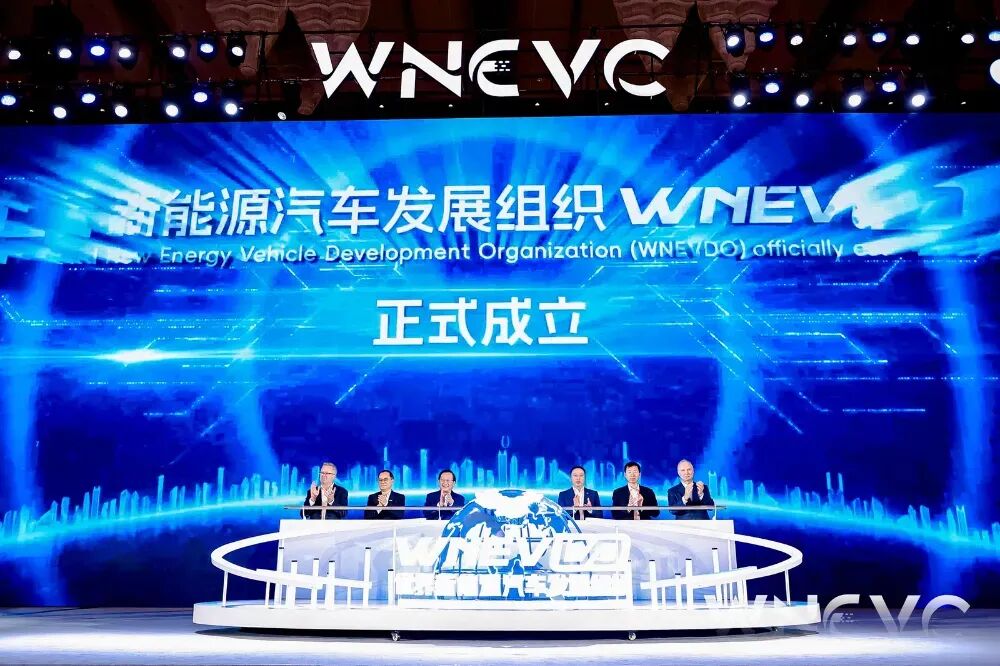
世界新能源汽车发展组织成立
Zhong Guo Qi Che Bao Wang· 2025-09-28 01:53
Core Points - The World New Energy Vehicle Development Organization (WNEVDO) was officially established on September 27 [1] - The organization aims to promote the green and intelligent transformation of the automotive industry and sustainable development, creating a "five-in-one" development system [3] - The establishment of WNEVDO marks a new starting point for collaborative development in the global new energy vehicle industry [3] Group 1 - WNEVDO was initiated by the China Society of Automotive Engineers, Changan Automobile Co., Ltd., and the World Automotive Engineering Federation [3] - The organization will serve as an important platform for global automotive industry governance and international multilateral cooperation [3] - The 2025 World New Energy Vehicle Conference (WNEVC 2025) will be hosted by various Chinese governmental and scientific organizations, featuring multiple forums and discussions on key topics [3]
明年起,电动车出口需办许可证;辅助驾驶强制国标征求意见;奇瑞港股上市 | 9月车事月报
Zhong Guo Qi Che Bao Wang· 2025-09-28 01:39
Macro Policy - Beijing supports the switching of ordinary small car indicators for purchasing either fuel or new energy vehicles without any limit on the number of switches [2][3] - The Ministry of Industry and Information Technology (MIIT) and five other departments launched a three-month special rectification action to address online chaos in the automotive industry [4][5] - The MIIT released a work plan aiming for approximately 32.3 million vehicle sales in 2025, with new energy vehicle sales targeted at around 15.5 million, reflecting a 20% year-on-year growth [6][7] - MIIT is soliciting public opinions on mandatory national standards for driving assistance systems, with a deadline for feedback set for November 15, 2025 [8][9] - The Ministry of Commerce announced the establishment of five industry standardization technical committees, focusing on key sectors including automotive and pharmaceuticals [10][11] - New national standards for recreational vehicles will be implemented in March 2026, emphasizing safety measures during operation [12][13] - MIIT is seeking public input on mandatory safety standards for car door handles, with feedback due by November 22, 2025 [14][15] - The State Administration for Market Regulation announced the first quality inspection of new energy vehicle products to curb irrational competition [17][18] - The Ministry of Commerce and three other departments will implement export license management for pure electric passenger vehicles starting January 1, 2026, to promote healthy trade in new energy vehicles [19][20] Industry Trends - Multiple Chinese automotive brands showcased their capabilities during the 80th anniversary of the victory in the Anti-Japanese War [21][22] - In the first eight months of 2025, China's automotive production and sales exceeded 21 million units, marking a year-on-year increase of approximately 12.7% and 12.6% respectively [23][24] - Several automakers committed to a "60-day payment term" initiative to support small and medium-sized suppliers [25][26] - As of August 2025, the total number of electric vehicle charging infrastructure units reached 17.348 million, reflecting a 53.5% year-on-year increase [27][28] - The Ministry of Ecology and Environment announced plans to eliminate nearly 20 million high-emission vehicles during the 14th Five-Year Plan period [29][30] - The Financial Regulatory Bureau reported that over 1.6 billion motor vehicles have been insured since the beginning of the 14th Five-Year Plan, a 40% increase compared to the previous five-year period [31][32] International Developments - Hyundai workers initiated partial strikes demanding a reduction in weekly working hours and wage increases [33][34] - The 2025 Munich Auto Show featured a significant increase in Chinese exhibitors, showcasing advancements in various automotive sectors [35][36] - ZF Friedrichshafen announced the early departure of its CEO amid financial challenges [37][39] - NVIDIA invested $5 billion in Intel, acquiring approximately 4.91% of its total shares [40][41] - Porsche announced a strategic shift to extend the lifecycle of internal combustion engine models in response to declining sales and profits [42][43] - The U.S. government implemented a 15% tariff on EU automotive imports, expected to significantly impact the European automotive industry [44][45] Corporate Dynamics - The China Automotive Technology and Research Center announced the establishment of a new smart connected vehicle innovation base in Tianjin, with an investment of nearly 2 billion yuan [46][47] - Didi Chuxing revealed that its average commission rate for 2024 will be 14%, down from previous years [48][49] - Hesai Technology successfully listed on the Hong Kong Stock Exchange, marking the largest IPO in the lidar industry [50][51] - Chery Automobile officially listed on the Hong Kong Stock Exchange, raising approximately 9.14 billion HKD [54][55] - Seres announced that its H-share issuance has been approved by the China Securities Regulatory Commission, marking a significant step towards its Hong Kong listing [56][57]
