
Jin Rong Shi Bao

Search documents
杭州银行持续优化普惠金融服务 为小微企业发展注入金融动能
Jin Rong Shi Bao· 2025-12-15 06:51
中小企业联系千家万户,是推动创新、促进就业、改善民生的重要力量。杭州银行(600926)紧扣国家 普惠金融发展战略,严格落实金融监管要求,深化客群经营与数智化转型,确保"政策落地有力度、精 准服务有精度、民生保障有温度",让金融活水精准滴灌至千门万户。 截至2025年三季度,该行小微金融条线贷款余额为1576.8亿元,普惠型小微企业贷款余额增长显著,达 到1722.7亿元,增幅为10.73%;普惠型小微信用贷款余额达230.64亿元,同比增长17.70%,以实实在在 的举措为实体经济注入金融活水。 精准滴灌优企客群,聚焦专精特新、科技型中小企业等,联合经信、科技部门获取优质客群名单,累计 投放贷款2196笔,授信金额62.62亿元,用信余额24.42亿元,综合用信率达59%。 场景服务园区客群,持续开展"耕园行动",上半年杭州银行在产业园区组织产品宣讲会、主题交流会等 活动超40场;推出"厂抵贷",依托云抵贷平台实现"抵押+信用"一键双贷,为园区企业从初创到成长的 全周期发展保驾护航。 政策资源打出"组合拳" 好政策,关键在落实。杭州银行将政策落地作为普惠金融工作的"第一抓手",通过机制创新与资源倾 斜,确保 ...

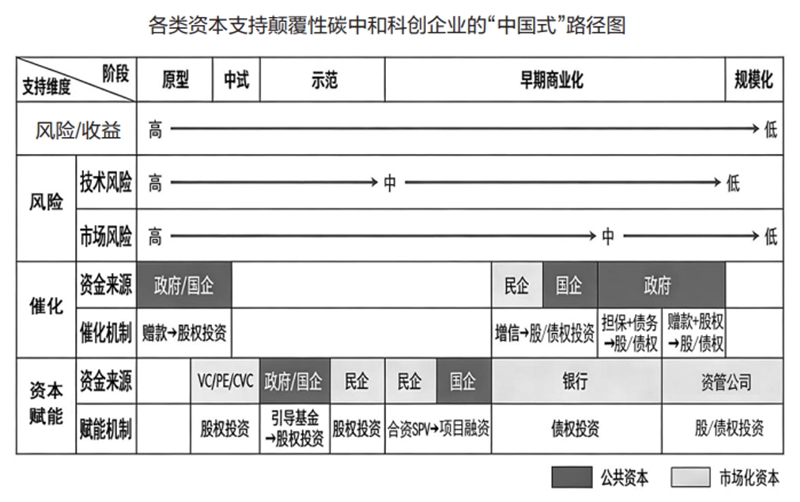
颠覆性碳中和技术创新:利用公共资本撬动市场化资本
Jin Rong Shi Bao· 2025-12-15 05:17
Core Viewpoint - The necessity of developing disruptive carbon-neutral technologies is emphasized as high-carbon industries in China, such as electricity, steel, cement, and aluminum smelting, have not yet achieved carbon neutrality through traditional methods, highlighting the need for significant investment and innovative approaches to reduce carbon emissions to near-zero levels [1][2]. Summary by Sections Disruptive Carbon Neutral Technology Investment - Approximately half of carbon-neutral technologies have not reached commercial scale, particularly in "hard tech" and "deep tech," which rely heavily on foundational scientific research [2]. - High-carbon industries face significant market investment challenges due to the high capital intensity and long investment cycles required for scaling up carbon-neutral technologies [2][3]. Public Capital to Leverage Market Capital - Public capital is essential for supporting the development of disruptive carbon-neutral technologies due to their dual positive externalities of technological spillover and carbon reduction [4]. - The key to attracting market capital lies in reducing perceived risks through public funding, which can help address both technological and market risks faced by investors [4][5]. Catalytic Mechanisms - Public capital can intervene in the early stages of technology development by providing catalytic funding to improve the risk-reward profile for investors, thus attracting more market capital [5]. - In early commercialization, public capital can enhance the investment appeal by offering guarantees and hybrid funding structures to mitigate the low returns associated with carbon-neutral technologies [5][6]. Capital Empowerment - Public capital can collaborate with market capital in the demonstration and early commercialization phases to fill funding gaps and empower the scaling of innovative technologies [6]. - Establishing venture capital funds focused on carbon-neutral technologies can signal to the market and attract additional investments [6]. Case Studies - Several international and domestic cases illustrate how public capital has successfully attracted market capital in the field of disruptive carbon-neutral technologies, with specific mechanisms and support structures detailed [7][9]. - Examples include Boston Metal and Sublime Systems, which received public grants to validate and scale their technologies, leading to successful market capital participation [10]. - Elysis and Zhongchu Guoneng are highlighted as cases where public capital effectively partnered with market capital to accelerate technology development [11]. Future Outlook - To further promote the innovation of disruptive carbon-neutral technologies, public capital should focus on incubating tech companies, establishing supportive financing policies, and exploring financing mechanisms that align with China's unique context [13][14][15].

“十五五”时期的环境演进与金融适变
Jin Rong Shi Bao· 2025-12-15 04:20
Core Insights - The "15th Five-Year Plan" period is crucial for achieving socialist modernization and advancing high-quality financial development, with a focus on adapting to complex changes in the operating environment [1][2] - The international order is undergoing a paradigm shift, impacting domestic development and requiring financial institutions to enhance resilience and adaptability [2][3] Financial Environment Changes - The global development and governance landscape is shifting from a "superpower-led globalization" to a "camp-based, fragmented, and multi-polar balance," necessitating a reevaluation of financial strategies [2][3] - The transition from vertical to horizontal global trade structures is reshaping the profit transmission mechanisms, with emerging economies like China breaking the monopoly of developed nations in high-value segments [3] Low-Interest Rate Impact - A prolonged low-interest rate environment is driving a shift in banking operations from "scale-driven" to "capability-building," emphasizing customer service and innovative financial products [5][7] - Direct financing is gaining traction, with a notable increase in its share compared to indirect financing, indicating a structural change in the financial market [6] Technological Transformation - Technological innovation is becoming a dominant force in reshaping financial paradigms, with AI emerging as a core component of financial services [8][9] - The evolution of financial infrastructure is closely tied to advancements in technology, leading to a systemic transformation in financial assets and services [9][10] Demographic Changes - Population structure changes, particularly aging, are significantly impacting financial factors, including savings rates and investment preferences [11][12] - Financial institutions must adapt to the needs of an aging population by offering tailored wealth management and integrated services [12] Client Demand Evolution - The demand from leading enterprises is shifting towards capital-intensive, specialized, and customized financial services, particularly in technology sectors [13][14] - The rise of lightweight enterprises and digital economy models necessitates a rethinking of service strategies, focusing on data-driven credit models and streamlined online services [14] Strategic Focus for Financial Institutions - Financial institutions should align with national strategies and adapt to trends in international order, technology, demographics, and client needs to enhance competitiveness and service effectiveness [15]
以改革创新为根本动力 加快建设金融强国
Jin Rong Shi Bao· 2025-12-15 03:37
Core Viewpoint - The "15th Five-Year Plan" emphasizes high-quality development, economic reform, and the construction of a financial powerhouse as key components for China's socio-economic advancement [1][2][4]. Group 1: Economic Reform and Development - The integration of reform and development is crucial for high-quality growth, with reform acting as a driving force for addressing various developmental challenges [2][3]. - The Chinese Communist Party has recognized the need for deeper reforms to enhance the efficiency of resource allocation and improve development quality [3][4]. Group 2: Financial Sector Development - The financial sector is seen as the lifeblood of the real economy, with a focus on enhancing financial services to support high-quality development [7][8]. - The transition from a large financial system to a strong one requires significant reforms and innovations in financial practices, theories, and regulations [8][9]. Group 3: Modernization of Financial Systems - The establishment of a modern financial system is essential, with an emphasis on integrating technology, green finance, and inclusive finance to support economic growth [10][11]. - Financial reforms must align with the broader goals of national modernization and the promotion of a robust economic framework [12][13]. Group 4: Regulatory and Legal Framework - Strengthening the legal framework for finance is critical, including the development of comprehensive financial laws and regulations to ensure stability and security [14][15]. - The regulatory system must adapt to the evolving financial landscape, ensuring that all financial activities are effectively monitored and managed [14][15].
“十五五”时期: 如何推进中国特色养老服务体系成熟定型
Jin Rong Shi Bao· 2025-12-15 03:33
Core Viewpoint - The aging population in China is accelerating, and the pension service sector is evolving beyond traditional welfare to play a dual role in ensuring social welfare and fostering new economic growth [1] Top-Level Logic - The pension service reform in China has entered a new stage characterized by systematic integration and high efficiency, with over 80 policy documents issued since 2020 [2] - Six core logics have been identified in the current policy design: 1. Universal fairness, emphasizing affordable and quality services for all, particularly vulnerable groups [2] 2. System integration, creating a unified service network that combines home, community, and institutional care [3] 3. Digital empowerment, utilizing technology to enhance service supply and management [3] 4. Grassroots restructuring, focusing on community-based services and regional centers [4] 5. Collaborative governance, involving multiple stakeholders in service provision [4] 6. Safety regulation, strengthening oversight to mitigate risks in the rapidly developing market [4] Reform Practices - Current reform practices exhibit four prominent features: 1. A dual focus on problem-solving and demand-driven initiatives, addressing urgent needs of the elderly [6] 2. Pilot demonstrations and gradual implementation to accumulate experience before broader application [7] 3. Activating existing resources while expanding new ones through government investment and innovative financial tools [7] 4. Combining policy support with market mechanisms to ensure fair competition and service innovation [7] Development Trends - The "15th Five-Year Plan" is expected to bring six strategic transformations in the pension service sector: 1. Transitioning from focusing on key groups to ensuring basic services for all elderly [8] 2. Shifting from supply-side support to demand-side subsidies for elderly individuals [8] 3. Moving from merely providing care to enabling active participation of the elderly in society [8] 4. Emphasizing precision and detail in service delivery amid economic pressures [9] 5. Advancing from information technology to intelligent solutions in service provision [10] 6. Expanding the focus from pension services to the broader silver economy [11] Future Measures - To address challenges and ensure successful implementation of reforms during the "15th Five-Year Plan," five key areas of focus are recommended: 1. Strengthening organizational leadership to integrate pension service construction into broader socio-economic planning [13] 2. Enhancing policy communication and training to ensure effective implementation at all levels [14] 3. Establishing a robust evaluation system for dynamic policy adjustments based on feedback [15] 4. Promoting regional collaboration to address disparities in aging development across regions [15] 5. Deepening the development of the silver economy and fostering new business models in pension services [16]
金融数据总量保持合理增长 质效水平稳步提升
Jin Rong Shi Bao· 2025-12-15 03:33
"金融总量数据充分体现了适度宽松的货币政策状态。"业内专家表示,当前社会融资规模和M2增速比 名义GDP增速高出约一倍,充分体现了适度宽松的货币政策状态,为经济高质量发展营造了适宜的金融 总量环境。 积极财政政策发力 支撑金融总量合理增长 业内专家表示,今年以来,宏观政策加大逆周期调节力度,对提振内需、稳定经济发挥了积极作用,也 为金融总量合理增长提供了支撑。特别是随着财政赤字率提升,政府债券对社会融资规模的贡献度明显 提高。数据显示,今年新增政府债务总规模11.86万亿元,比去年增加2.9万亿元,普通国债、特别国债 和地方政府专项债额度都明显增加,相应带动政府债券在社会融资规模中占比提升。 "政府债券发行节奏明显提前,实现了早发行、早使用、早见效。"有业内人士表示,目前1.3万亿元的 超长期特别国债已全部发行完毕,2万亿元用于偿还存量隐性债务的再融资专项债和4.4万亿元主要用于 项目建设的新增专项债也已基本发完。近期财政部宣布提前下达2026年新增地方政府专项债务限额,会 更好衔接岁末年初的项目资金建设需求。初步测算,今年我国政府债券净融资额有望突破12万亿元,政 府债券融资占社会融资规模增量比重达四成。政 ...
以深化资本市场投融资改革为高质量发展注入新动能
Jin Rong Shi Bao· 2025-12-15 03:29
投资端改革的核心,在于吸引并培育更多长期、稳定、专业的机构投资者,改善投资者结构,强化市场 内在稳定机制,推动资本市场从"规模扩张"向"质量提升"转变。 当前,以社保基金、保险资金、国家级产业基金等为代表的"长钱""稳钱"正成为市场中坚力量。数据显 示,在私募创投市场中,国资背景的资本占比已近八成,充分发挥着市场"压舱石"的作用,这些资金存 续期长、秉持长期价值投资理念,其持续入场显著改善了市场流动性和稳定性。同时,银行系金融资产 投资公司(AIC)等新生力量加快布局,其百亿级注册资本及对硬科技、人工智能等战略性新兴产业的 聚焦,进一步壮大了服务国家战略的耐心资本阵营。 日前召开的中央经济工作会议在擘画"十五五"开局之年经济工作蓝图时强调,必须坚持政策支持和改革 创新并举,坚持创新驱动,加紧培育壮大新动能,并明确指出要"持续深化资本市场投融资综合改革"。 站在"十四五"圆满收官与"十五五"谋划开篇的历史节点,这一部署深刻揭示了在挖掘经济潜能、推动高 质量发展的关键阶段,资本市场肩负的历史使命与改革方向。投资与融资作为资本市场基本功能的一体 两面,必须协同推进,方能优化资源配置,促进创新资本形成,为经济持续回升 ...
刚刚,最新经济数据发布
Jin Rong Shi Bao· 2025-12-15 03:09
粮食播种面积增加、单产提高。全国粮食播种面积17.91亿亩,比上年增加134.8万亩,增长0.1%;粮食 单产399.1公斤/亩,每亩产量比上年增加4.4公斤,增长1.1%。 11月份,全国规模以上工业增加值同比增长4.8%,环比增长0.44%。分三大门类看,采矿业增加值同比 增长6.3%,制造业增长4.6%,电力、热力、燃气及水生产和供应业增长4.3%。 "11月份国民经济延续稳中有进发展态势。"12月15日,在国新办新闻发布会上,国家统计局新闻发言 人、总经济师、国民经济综合统计司司长付凌晖介绍,生产供给基本平稳,就业形势总体稳定,市场价 格继续改善,新质生产力稳步发展,经济运行延续总体平稳、稳中有进发展态势。 1.4万亿斤:全年粮食实现丰收 4.8%:工业生产稳定增长 全年全国粮食产量14298亿斤,比上年增加167.5亿斤,增长1.2%,稳定在1.4万亿斤以上。 装备制造业增加值同比增长7.7%,高技术制造业增加值增长8.4%。3D打印设备、工业机器人、新能源 汽车产品产量同比分别增长100.5%、20.6%、17.0%。 1至11月份,全国规模以上工业增加值同比增长6.0%。1至10月份,全国规模以 ...
金融数据总量保持合理增长
Jin Rong Shi Bao· 2025-12-15 02:52
Core Viewpoint - The People's Bank of China (PBOC) has been enhancing its monetary policy toolkit to support the transformation and upgrading of the economy, focusing on directing credit resources towards key strategic areas and weak links in the national economy [1][8]. Monetary Policy and Financial Data - As of November 2025, the broad money supply (M2) reached 336.99 trillion yuan, growing by 8.0% year-on-year, which is 0.9 percentage points higher than the previous year [1] - The narrow money supply (M1) stood at 112.89 trillion yuan, with a year-on-year increase of 4.9% [1] - The total social financing stock was 440.07 trillion yuan, up 8.5% year-on-year, exceeding the previous year's growth by 0.7 percentage points [1] - From January to November, the increment in social financing was 33.39 trillion yuan, which is 3.99 trillion yuan more than the previous year [1] - The increase in RMB deposits was 24.73 trillion yuan, while RMB loans rose by 15.36 trillion yuan during the same period [1]. Fiscal Policy and Government Bonds - The macroeconomic policies have intensified counter-cyclical adjustments, positively impacting domestic demand and economic stability, thereby supporting reasonable growth in financial totals [3] - The total new government debt this year reached 11.86 trillion yuan, an increase of 2.9 trillion yuan from last year, with significant contributions from various types of government bonds [3] - The issuance of government bonds has been accelerated, with 1.3 trillion yuan of ultra-long-term special bonds fully issued, and 2 trillion yuan allocated for refinancing hidden debts [3] - The net financing of government bonds is expected to exceed 12 trillion yuan this year, accounting for 40% of the increase in social financing [3]. Coordination of Monetary and Fiscal Policies - The collaboration between monetary and fiscal policies has effectively stabilized market liquidity and provided funding assurance for major projects [4] - The PBOC's liquidity support has facilitated the smooth issuance of government bonds, maintaining stable market expectations [4] - The synergy between macro policies is crucial, producing a combined effect that supports growth and structural adjustments [4]. Direct Financing Development - The development of direct financing through equity and bonds is a clear directive in the 14th Five-Year Plan, aligning with the goal of building a strong financial nation [5] - Direct financing is characterized by risk-sharing and long-term partnerships, making it more suitable for high-growth and R&D-intensive sectors [5]. Loan Growth and Quality Improvement - By the end of November, the RMB loan balance was 271 trillion yuan, with a year-on-year growth of 6.4%, remaining above the nominal economic growth rate [6] - The average interest rate for newly issued corporate loans was approximately 3.1%, down about 30 basis points from the previous year [7] - The balance of inclusive small and micro loans reached 35.88 trillion yuan, growing by 11.4%, while medium to long-term loans for manufacturing increased by 7.7% [7]. Credit Structure Optimization - The PBOC has been guiding financial institutions to enhance the adaptability of financial products and services to the economic transformation [8] - Optimizing the credit structure is essential for achieving high-quality development and meeting the operational goals of banks [8].
做优增量、盘活存量 提升宏观经济治理效能
Jin Rong Shi Bao· 2025-12-15 02:52
Core Viewpoint - The Central Economic Work Conference emphasizes the need to address both old problems and new challenges in China's economic development, while maintaining confidence in the long-term positive trend of the economy [1] Group 1: Economic Policy Direction - The conference sets a tone of "strengthening confidence, leveraging advantages, and responding to challenges" for economic work in the coming year and beyond [1] - The focus will be on "steady progress and improving quality and efficiency," indicating a shift away from short-term stimulus towards long-term economic planning [1][2] Group 2: Policy Implementation Strategies - The meeting highlights the importance of "optimizing increment and revitalizing stock," indicating a strong continuity and stability in macroeconomic policies [2][3] - Specific strategies include "controlling increment, reducing inventory, and optimizing supply" in the real estate sector, and "optimizing debt restructuring and replacement methods" in the fiscal sector [3][4] Group 3: Monetary Policy - The monetary policy will continue to adopt a moderately loose stance, with a focus on stabilizing economic growth and ensuring reasonable price recovery [5][6] - The emphasis will be on the dual approach of "optimizing increment and revitalizing stock," with a shift towards enhancing policy effectiveness rather than just timing [6][7] Group 4: Fiscal Policy - The fiscal policy will reflect the spirit of "optimizing increment and revitalizing stock," with higher demands for fiscal discipline and expenditure efficiency [8] - The projected fiscal deficit rate for 2026 is expected to remain around 4%, with an increase in the fiscal deficit scale to approximately 6 trillion yuan [8]