
Qi Huo Ri Bao Wang

Search documents
银期合作共筑服务实体经济新范式(下)——“银期保”为农民打造全周期“安全网”
Qi Huo Ri Bao Wang· 2025-12-04 01:05
Core Viewpoint - The "Yinqi Bao" model developed by the Dalian Commodity Exchange addresses the long-standing issue of farmers facing difficulties in obtaining loans, which has hindered the modernization and scale of agriculture in China. This model creates a comprehensive safety net for farmers by integrating banks, insurance companies, futures companies, and leading enterprises, allowing for shared risks and benefits in the agricultural value chain [1][7]. Group 1: Loan Accessibility and Risk Management - Farmers have historically struggled with low loan limits, strict approval processes, and high interest rates due to a lack of effective collateral and unstable production [3]. - The "Yinqi Bao" model enhances farmers' creditworthiness by using income insurance policies and orders from leading enterprises as collateral, allowing banks to increase credit limits from around 500,000 yuan to 3 million yuan [3][4]. - The model shifts banks from being mere fund providers to integral partners in the agricultural value chain, thus improving risk management and financial support for farmers [2][7]. Group 2: Project Implementation and Financial Innovation - The "Yinqi Bao" project in Xinjiang's Tacheng covers 30,000 acres of corn cultivation with a project amount of 48 million yuan, increasing the insurance coverage to 1,600 yuan per acre [4]. - The project utilizes financial technology to ensure efficient fund flow, with a platform established for timely payments to farmers, thereby reducing operational costs and risks associated with traditional payment methods [5][6]. - The integration of data from various sources, including insurance and land transfer information, allows for a comprehensive assessment of farmers' credit profiles, facilitating better loan terms and conditions [4][6]. Group 3: Systematic Support for Agricultural Development - The "Yinqi Bao" model represents a shift from isolated financial support to a systematic approach that combines various financial instruments to support rural revitalization [7]. - By embedding a dual guarantee mechanism of "insurance + orders," the model fosters a cycle of risk-sharing, credit-building, and benefit-sharing among all stakeholders involved [6][7]. - The success of the Tacheng project illustrates the potential for replicating this financial model across different regions and agricultural sectors in China, promoting increased farmer income and industry efficiency [7].

金联创首席投研专家王军:能化企业可利用“立体套保”实现动态对冲
Qi Huo Ri Bao Wang· 2025-12-04 01:05
王军还以今年6月原油市场为例,指出在以色列军事行动前,原油持仓已出现多头增仓50%的信号,随 后地缘冲突推动原油价格剧烈波动。他提醒产业客户应通过监测持仓边际变化,预判价格脉冲风险。 针对企业避险实践,他表示,基于单一品种的传统基差交易利润空间已大幅收窄,PE、PP、PVC等品 种基差甚至不足以覆盖持仓成本。他建议企业转向"立体套保"模式,通过跨品种、跨区域、跨周期的组 合策略实现动态对冲。例如,"买产地、空销区"实现区域套利,通过"买成品、空原料"锁定加工利润, 或者利用甲醇与PP、PTA与甲醇之间的波动率差异进行基差套利。 王军建议,能源化工企业需从"一阶思维"走向"二阶思维",即不仅要分析供需基本面,更要预判波动率 结构与资金行为,从而设计定制化、场景化的对冲方案。不同区域、不同规模的企业应量身定制风险管 理方案,不能套用同一模板。期货从业者要与产业客户齐心协力,在产能过剩、价格波动的行业转型 期,帮助企业建立价格稳定机制。 近日,在长沙举办的"2025年期货业高质量发展创新研讨会"上,金联创网络科技有限公司首席投研专家 王军表示,在全球能源格局重塑、定价权转移与产业深度整合的背景下,能源化工企业需要以 ...
蛋鸡养殖行业处于产能出清阶段
Qi Huo Ri Bao Wang· 2025-12-04 01:00
河北、山东地区调研 行业整体处于产能缓慢出清阶段,此阶段的持续时间将受淘鸡节奏、补栏意愿及种源改善等多重因素影 响,需持续跟踪动态变化。 目前蛋鸡养殖行业面临供给充裕、需求乏力,成本竞争加剧的格局,利润对产能的传导是周期性波动的 关键所在。我们基于在产存栏量和养殖利润,辅以价格、社融、利率等指标,将鸡蛋市场基本面周期定 性地划分为景气、压力、出清、回暖四个阶段。 基于周期推演,2025年下半年蛋鸡养殖行业由压力期过渡至出清期,针对市场是否会出现超淘现象、整 体补栏下行拐点何时发生、春节前冷库蛋能否全部出库、资本投机行为是否会改变市场长期趋势、疫病 风险是否具有持续性,以及未来行情如何判断等问题,正信期货调研团队于11月底深入辛集、衡水、聊 城、曲周、馆陶、邯郸等蛋鸡产业一线,携手当地具有代表性的养殖企业、贸易商、种鸡企业及大型屠 宰企业,通过实地考察了解行业发展现状,寻找供需矛盾,为后市行情提供参考。 问题1: 市场是否会出现超淘现象 "超淘"需综合考量存栏总量、鸡龄结构、淘汰鸡价格及养殖户情绪等多重因素,而非简单的提前淘汰行 为。当前河北淘鸡价格为3.2元/斤,湖北为3.6元/斤,尽管养殖户面临亏损,但由于 ...
东南亚洪水引发减产担忧 棕榈油企稳反弹
Qi Huo Ri Bao Wang· 2025-12-04 00:55
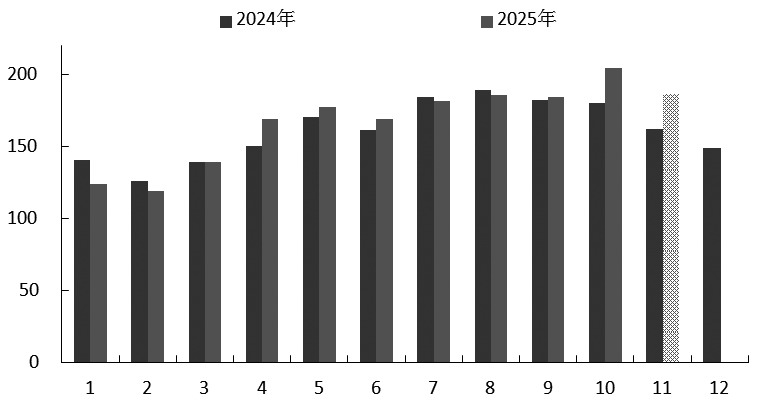
关注美国生物柴油政策 近期,市场担忧洪水影响马来西亚及印尼棕榈油产量,美国环保局澄清2026年及2027年生物柴油合规义务量 下降的传闻,棕榈油价格出现反弹。在印度2026年斋月前,棕榈油仍然具有价格优势。尽管需求端支撑棕榈 油价格反弹,但是持续上涨还需要生物柴油及减产周期表现配合。 上半年,机构预估今年马来西亚棕榈油产量为1950万吨,略高于2024年的1934万吨。然而,从6月开始,马来 西亚棕榈油产量持续维持较高增速,进入减产周期的10月也保持增长,市场预估今年马来西亚棕榈油产量有 望突破2000万吨。另外,马来西亚棕榈油局(MPOB)10月报告显示,马来西亚棕榈油累库超预期。进入11 月,马来西亚棕榈油出口降幅不断扩大,印度和中国等国采购放缓。印尼能矿部公布的数据显示,截至11月 初,年内印尼生物柴油累计分销量为122.5亿升,而2025年全年目标为156亿升,如果保持当前分销速度,全年 目标将难以完成。 9月,印尼棕榈油产量环比下降22.45%,至429.8万吨,受9月工作日天数少的因素影响;1—9月,累计产量同 比增加440万吨。9月,印尼上调出口关税接近80美元/吨,导致当月棕榈油出口量环比下降 ...

交易经验是靠一次次实战积累起来的
Qi Huo Ri Bao Wang· 2025-12-04 00:39
Core Insights - The article highlights the journey of Li Zhen, who achieved third place in the black group of a trading competition, emphasizing his unique trading path developed through experience and self-discovery [1] Group 1: Trading Philosophy and Strategy - Li Zhen's trading approach is purely technical, relying on a trading system for decision-making without considering fundamental analysis [2] - His trading style focuses on trend following, particularly excelling in capturing trend reversal opportunities, utilizing a "mid-term reversal trend" strategy during the competition [2] - Risk control and money management are flexible and pragmatic, with stop-loss strategies adjusted based on market trends and personal mindset [2] Group 2: Emotional and Mental Management - To manage anxiety related to trading, Li Zhen advocates using capital that can be afforded to lose, thereby reducing psychological pressure [3] - His emotional management evolved from Confucian to Daoist and then to Buddhist philosophies, focusing on self-discipline, market alignment, and inner peace [3] - Li Zhen believes that the market itself does not change significantly; rather, it is the trader's mindset that needs to adapt [3]
闪策科技荣获双项大奖,以智能风控解决方案赋能行业严守合规底线
Qi Huo Ri Bao Wang· 2025-12-03 09:13
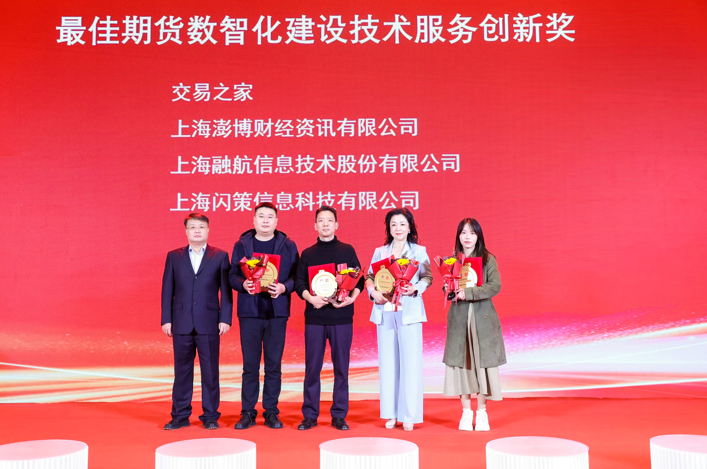
Core Insights - Shanghai Shance Information Technology Co., Ltd. (Shance Technology) and its General Manager Wu Xuehua received two awards: "Best Futures Digitalization Construction Technology Service Innovation Award" and "Best Financial Technology Innovation Elite Award" at the "2025 Futures Industry High-Quality Development Innovation Seminar" held in Changsha [1][3] Group 1: Industry Challenges - The evaluation focused on financial technology companies providing intelligent software, big data, and AI services for the futures industry, considering their technical support, service content, and practical effectiveness in promoting transformation [3] - The introduction of the "Futures Market Programmatic Trading Management Regulations (Trial)" has transformed futures companies from mere transaction providers to the first line of risk defense in programmatic trading supervision [3][4] - The industry faces challenges in implementing the new regulations, including the difficulty of traditional risk control methods in capturing abnormal trading behaviors due to the high speed and volume of programmatic trading [3][4] Group 2: Technological Solutions - The "Cakongjun" system developed by Shance Technology addresses these challenges with a non-intrusive bypass deployment model, ensuring low latency, high precision, and easy scalability [4] - The system includes real-time monitoring, preemptive blocking, and full-chain traceability features, aligning with regulatory requirements for real-time intervention and traceability [4] - Shance Technology is integrating AI into the risk control process to enhance analysis efficiency, allowing compliance personnel to focus on risk decision-making and management [4][6] Group 3: Strategic Vision - Wu Xuehua emphasized that the "Cakongjun" system provides solid technical support for compliance management and serves as a strategic pivot for futures companies to transition from "passive compliance" to "active service" [6] - The company aims to strengthen compliance as a "shield" for futures companies and develop quantitative tools for growth-oriented teams, with AI deeply integrated into these scenarios [6] - The award-winning case exemplifies the deep integration of financial technology with core business processes in the futures industry, enhancing operational efficiency and management precision [6]
法则会褪色 真金粹新火
Qi Huo Ri Bao Wang· 2025-12-03 02:52
Group 1 - The article discusses the evolution of trading strategies and the impact of market changes on traditional trading rules established by the author of "The Wall Street Ghost" [2][3][4] - It highlights the shift from a simpler market structure to a more complex environment dominated by algorithmic trading and high-frequency trading, which has altered the timing and validation of trades [2][6] - The author introduces a new "credit limit" system to adapt to modern market conditions, allowing positions to oscillate near the cost line without immediate liquidation [3][5] Group 2 - The article emphasizes the dangers of adding positions in volatile markets, contrasting past successful strategies with current risks associated with high leverage and rapid market movements [4][5] - It outlines a new approach to position sizing and adding to positions, focusing on independent entry reasons and market depth rather than simply relying on existing profits [5][6] - The concept of "giant volume" has changed, with the author noting that much of the volume in today's market is generated by algorithmic trading and does not necessarily indicate genuine market sentiment [6][7] Group 3 - The article concludes with a reflection on the importance of maintaining rituals in trading, which provide a sense of stability amid the uncertainties of the market [8][9] - It suggests that while trading rules may evolve, the underlying principles of risk management, discipline, and humility remain timeless and essential for traders [9][10]
“千钧奋起,万树花开”年度策略会圆满召开
Qi Huo Ri Bao Wang· 2025-12-03 02:36
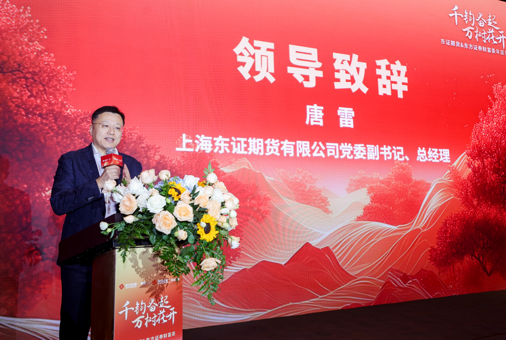
2025年11月28日,由东证期货与东方证券财富管理委员会联合主办"千钧奋起,万树花开"年度策略会在 上海浦东顺利召开,本次会议设置1个主论坛与4个分论坛,议程覆盖宏观经济与政策、大宗商品、产业 动态及大类资产配置等多个领域,为500余名各界投资者搭建了专业高效的交流平台。 东证期货党委副书记、总经理唐雷出席本次策略会并发表致辞。他表示,2025年宏观图景的核心脉络聚 焦"破"与"立",期货行业已正式从"量的扩张"阶段迈入"质的突围"的全新发展阶段。当前,期货行业既 迎来了新的发展高度,也处于转型关键节点。面对行业变局与多重挑战,东证期货明确两大核心发力方 向:一是坚持研究下沉,扎实推进产业链深度研究,这份源自一线实践的"泥土气息",正是公司稳健发 展的最坚实底气;二是深化科技赋能,推动金融科技从辅助工具升级为核心竞争力,将大数据平台"繁 微"打造为连接研究、决策与风险管理的智慧中枢,凭借技术优势突破传统业务瓶颈,为客户创造独特 价值。 策略会主论坛特别邀请复旦大学经济学院副院长陈钊教授,带来"在变化中把握机遇:创新、市场与 AI"的主题分享。陈钊教授指出,坚持创新发展是中国崛起的重要道路。企业必须具备国际视 ...

对外经济贸易大学国际经贸学院研究员李正强:全球衍生品市场呈现四大趋势
Qi Huo Ri Bao Wang· 2025-12-03 02:12
Core Viewpoint - The seminar on "High-Quality Development of the Futures Industry by 2025" highlighted the need for the futures and derivatives market to effectively serve economic high-quality development, emphasizing the characteristics of a robust market system [1] Group 1: Current Trends - The global derivatives market is experiencing four major trends: the rise of the Asia-Pacific region, predominance of over-the-counter markets, financial recovery, and digital transformation [1] - The Asia-Pacific region has become the largest on-exchange derivatives trading market, accounting for over 60% of the global market [1] - Approximately 80% of global futures and options trading is now concentrated in the Asia-Pacific region, with financial derivatives making up nearly 90% of the on-exchange derivatives market [1] Group 2: Development Paths - Eight development paths for the futures market were proposed, including accelerating the construction of a multi-tiered derivatives market and supporting pilot projects for over-the-counter markets and new business models [2] - The product system should be improved by introducing new varieties such as clean energy, carbon emissions, foreign exchange futures, and commodity indices [2] - High-level opening up is essential to attract global traders and expand the international layout of exchanges [2] - Continuous optimization of the market environment is necessary, promoting models like "insurance + futures" [2] - Establishing dynamic management mechanisms for margin and position limits that align with market development is crucial [2] - Embracing artificial intelligence to enhance the standardization and visualization of risk management services is recommended [2] - Strengthening intermediary institutions to create a comprehensive service provider group that understands and can manage hedging is important [2] - A sound regulatory framework is needed to provide institutional support for market innovation and development [2] Group 3: Market Resilience - The unique development path of China's futures market has been characterized by a sequence of developments: first on-exchange then over-the-counter, first commodities then financials, first futures then options, and first domestic then international [2] - The market has successfully withstood multiple external shocks over 20 years, thanks to a robust regulatory system and a rich toolbox for risk prevention [2] - The construction of a world-class exchange and derivatives market is achievable, supported by China's vast agricultural production, processing, and trade scale, along with active participation from enterprises and institutional investors [2]
学会取舍 只做看得懂的行情
Qi Huo Ri Bao Wang· 2025-12-03 01:45
Core Insights - Liu Taibao achieved second place in the non-ferrous metals group of the 19th National Futures (Options) Real Trading Competition, leveraging his part-time trading of copper put options while working on short film scripts [1] Group 1: Trading Strategy - Liu's initial exposure to options trading began in 2019 when he helped a friend manage inventory in the non-ferrous trade, leading to an interest in using put options to hedge against falling copper prices [2] - A pivotal moment in Liu's trading career came in 2025 when he simplified his trading strategy by focusing solely on copper, which significantly improved his trading success rate [2] - Liu's winning trade in the competition was based on a supply-demand analysis, where he identified an oversupply situation in copper and combined it with technical signals to decide on buying put options [2][3] Group 2: Trading Philosophy - Liu emphasizes a trading philosophy of "not being greedy" and focusing on small, understandable profits, which he developed after experiencing significant losses [4] - His trading logic is grounded in two main principles: the importance of supply-demand dynamics in determining copper prices and the necessity of risk control before pursuing profits [4] - Liu has adapted his trading routine to fit his schedule, dedicating specific times for market analysis without interfering with his film production work [4] Group 3: Risk Management - Risk control is a fundamental rule in Liu's trading approach, employing a "logical stop-loss" strategy to exit positions when supply-demand logic changes, regardless of the financial loss incurred [5] - Liu follows strict money management rules, allocating 90% of trading profits to his film fund and limiting his trading capital to a small percentage of his total funds [5] - He adheres to a "10% principle" for position sizing, ensuring that no more than 10% of his spare cash is invested in options and that initial positions are kept small to manage risk effectively [5]