Zhong Guo Huan Jing Bao

Search documents
当人工智能遇上生态治理,能带来哪些变革?
Zhong Guo Huan Jing Bao· 2025-09-18 02:07
Core Viewpoint - The rapid development of artificial intelligence (AI) is transforming various fields, particularly in ecological governance, as highlighted by the State Council's opinion on implementing the "AI +" initiative, which aims to create a beautiful ecological governance framework in China [1] Group 1: AI's Role in Ecological Governance - AI technology provides a revolutionary technical pathway for the transformation of ecological governance, addressing the limitations of traditional fragmented approaches [2] - AI enables the creation of an integrated dynamic perception network across land, air, and sea, utilizing satellite remote sensing, aerial observation, ground sensing, and marine detection to support high-precision ecological governance [2] - Through deep learning and knowledge graphs, AI can enhance land spatial planning by simulating various development scenarios and optimizing planning schemes to balance economic development and ecological protection [2] Group 2: Comprehensive Governance Capabilities - AI demonstrates full-chain governance effectiveness in multi-factor ecological systems, enhancing monitoring, prediction, simulation, and problem-solving capabilities [3] - AI's predictive capabilities can uncover environmental change patterns from vast data, while its simulation abilities can model ecosystem responses to different governance measures [3] - In the national carbon market, AI supports intelligent allocation algorithms, risk warning models, and dynamic evaluation of emission reduction effects, facilitating efficient market operations and the achievement of carbon neutrality goals [3] Group 3: Collaborative Efforts for AI Application - Future deep application of AI in ecological governance requires collaborative efforts in three areas: technological breakthroughs, institutional innovation, and talent cultivation [4] - Strengthening core technologies and infrastructure is essential, with collaboration among government, research institutions, and enterprises to enhance AI application stability and accuracy [4] - Institutional innovation involves improving policy frameworks and standards to promote data sharing and collaborative governance, ensuring AI technology aligns with ecological governance needs [4] Group 4: Talent Development - There is a need to cultivate interdisciplinary talent who understand both ecological governance and AI, promoting collaboration between academia, research, and industry [5] - Establishing incentive mechanisms to attract top global talent is crucial for supporting the intelligent transformation of ecological governance [6]
加快从“生态佳”向“生态+”迈进——鄂尔多斯开创美丽建设新局面
Zhong Guo Huan Jing Bao· 2025-09-18 01:15
Core Viewpoint - The article emphasizes the commitment of Ordos City in Inner Mongolia to ecological civilization construction, aiming to enhance the ecological environment while promoting high-quality economic development and improving the business environment [1][14]. Group 1: Ecological Protection and Development - Ordos City is focused on building a national model for ecological governance, integrating "ecology+" into all aspects of social and economic development to ensure the safety of the Yellow River and enhance urban green spaces [1][14]. - The city has implemented a comprehensive ecological protection strategy, including the establishment of 171 ecological environment control units and the optimization of land use through ecological protection red lines and agricultural land boundaries [4][16]. Group 2: Energy Transition and Industrial Upgrading - Ordos has accelerated its green energy transition, becoming one of the first cities in China to implement pollution reduction and carbon reduction initiatives, with a total installed power capacity of 60.33 million kilowatts, of which renewable energy accounts for 39.3% [17][19]. - The city is developing 18 new coal-based industrial chains, including large-scale green hydrogen projects, and has seen a 261.3% increase in the added value of the new energy equipment manufacturing industry [5][18]. Group 3: Environmental Quality Improvement - Since 2018, Ordos has completed over 9,800 pollution prevention tasks, maintaining an air quality good rate of around 90% and achieving a 100% compliance rate for drinking water sources [12][21]. - The city has made significant progress in waste management, with the comprehensive utilization rate of industrial solid waste increasing from 37.45% in 2020 to 71% currently [12][21]. Group 4: Social and Economic Benefits - The ecological improvements have translated into enhanced living conditions, with Ordos being recognized as a national forest city and a city with high happiness levels, reflecting the integration of ecological and social benefits [22][24]. - The city promotes ecological industries, providing stable employment opportunities and increasing income for local residents, with an annual increase of over 30,000 yuan per person in desertification-affected areas [28][29]. Group 5: Governance and Community Engagement - Ordos is enhancing its ecological governance framework, focusing on community involvement in ecological protection and promoting a culture of environmental awareness through various initiatives [29][30]. - The city has adopted a proactive approach to environmental management, reducing administrative burdens on businesses and improving the efficiency of environmental assessments and approvals [31][34].


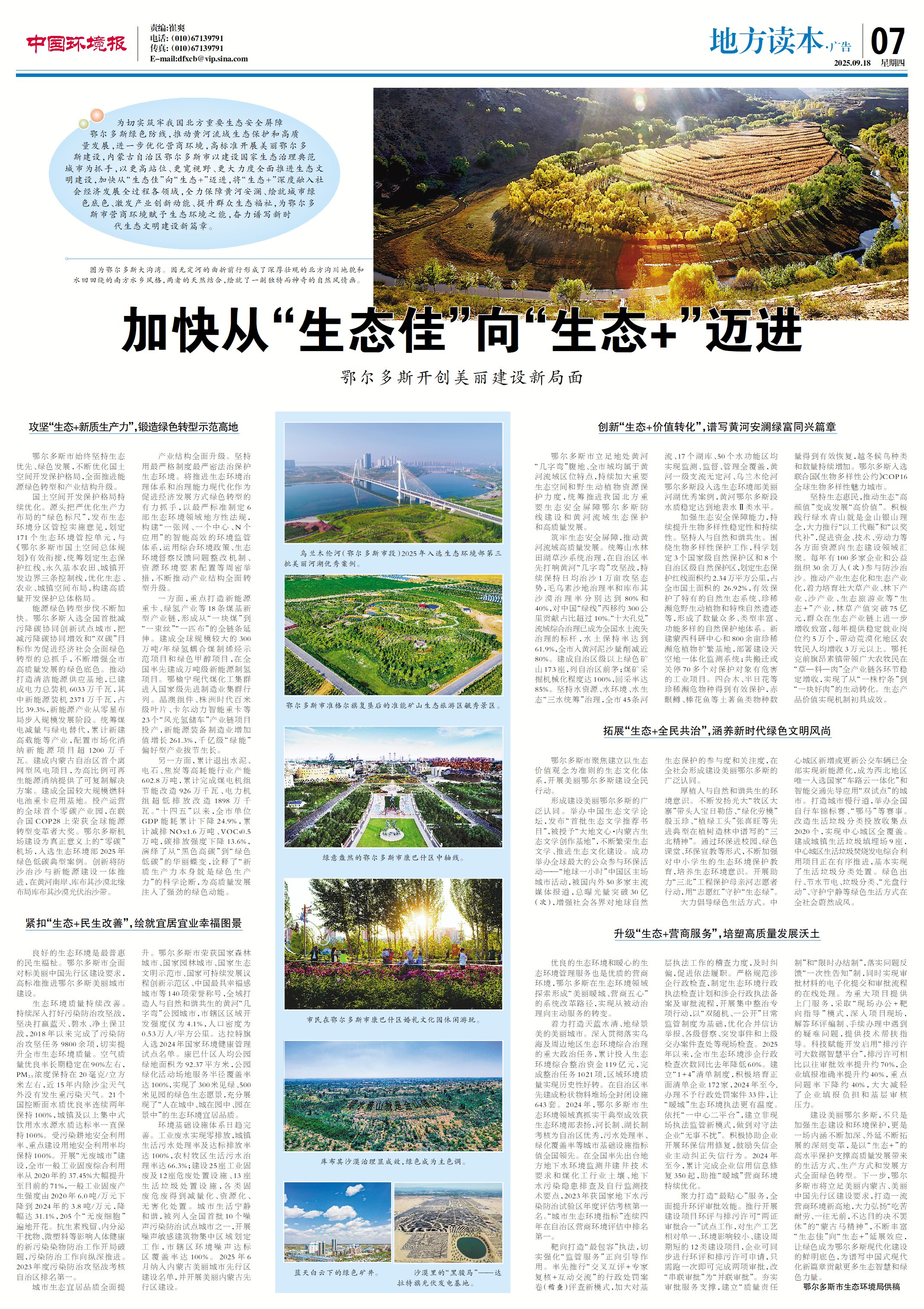
推动化工行业减污降碳协同创新——南通经济技术开发区打出绿色“组合拳”
Zhong Guo Huan Jing Bao· 2025-09-18 01:15
Core Viewpoint - The Nantong Economic and Technological Development Zone is committed to green development, focusing on pollution reduction and carbon emission control, while enhancing the ecological environment and promoting the green transformation of the chemical industry [2][3]. Group 1: Green Transformation Initiatives - The development zone has implemented a comprehensive plan with 45 enhancement projects targeting the chemical industry, focusing on raw material substitution, process improvement, and clean production [4]. - Notable projects include the IDA glyphosate clean production transformation, which recycles 640,000 tons of glyphosate mother liquor, recovers 12,500 tons of phosphorus products, and reduces carbon emissions by 32,000 tons annually [4]. - By 2024, the development zone has completed 34 projects, optimizing product structures and eliminating approximately 37,000 tons of high-pollution chemical capacity, resulting in a reduction of wastewater discharge by 1.4 million tons and hazardous waste by 2,000 tons [5]. Group 2: Regulatory and Management Enhancements - The development zone has established a collaborative mechanism among multiple departments to enhance pollution reduction and carbon emission management, ensuring a systematic and refined approach [3]. - New chemical enterprises must meet international advanced standards in process, equipment, energy efficiency, and pollution prevention, with over 40% of new projects achieving benchmark energy efficiency levels [5]. Group 3: Spatial Optimization and Resource Circulation - The development zone is optimizing its spatial layout by relocating chemical enterprises to reduce land use by 3.7 square kilometers, which is expected to achieve an annual carbon reduction of 220,000 tons [7][8]. - The establishment of a green raw material supply network and the construction of a compressed air pipeline are projected to reduce carbon emissions by 10,000 tons annually [9]. - The development zone aims to create a "zero-waste park" by promoting the deep processing and efficient utilization of by-products, with companies achieving significant reductions in hazardous waste generation and carbon emissions [10][11].
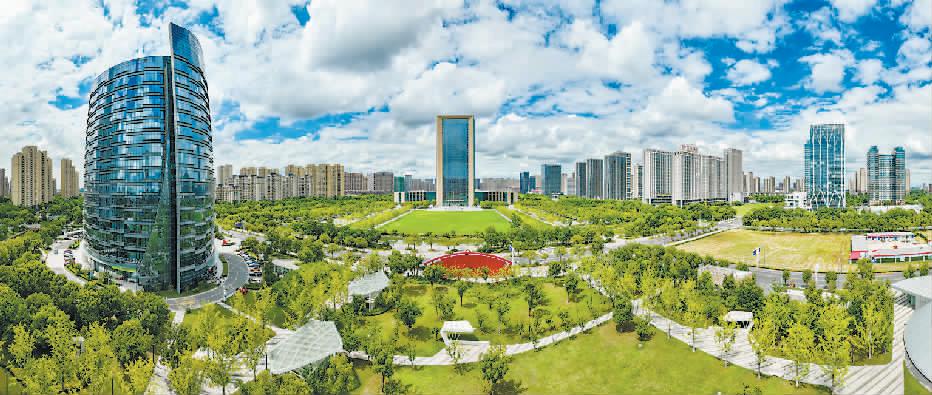
系统构建我国产品碳足迹管理体系
Zhong Guo Huan Jing Bao· 2025-09-17 23:18
Group 1 - The core viewpoint emphasizes the importance of establishing a product carbon footprint management system to quantify and reduce carbon emissions, which aids in green transformation and enhances market competitiveness [1][5] - The Chinese government has prioritized the development of a product carbon footprint management system since the 18th National Congress, with policies being rapidly introduced to standardize carbon footprint accounting and management [2][5] - The current product carbon footprint management system in China is still in need of improvement, particularly in areas such as data transparency, accuracy, and the establishment of regulatory frameworks [2][3][4] Group 2 - Supply chain carbon footprint management faces challenges due to complexity and lack of regulatory frameworks for evaluation and disclosure [3][4] - There is a significant discrepancy in carbon footprint certification standards across different countries, complicating global trade and compliance for Chinese enterprises [4][7] - The establishment of a carbon footprint data sharing platform is crucial for enhancing data transparency and accuracy, requiring collaboration among government, industry associations, and third-party organizations [5][6] Group 3 - Improving carbon labeling certification and information disclosure systems is essential for promoting green transformation in supply chains [6][8] - Strengthening international recognition of carbon footprint certification standards can reduce trade barriers and enhance China's influence in global carbon management [7][8] - The cultivation of professionals in carbon footprint management is vital for supporting the development of the management system, necessitating collaboration between educational institutions and industry [8][9][10]
安徽省委书记梁言顺督导中央生态环保督察反馈问题整改 坚决筑牢长江经济带生态安全底线
Zhong Guo Huan Jing Bao· 2025-09-17 08:56
Core Points - The article emphasizes the importance of ecological protection and the need for strict compliance with environmental regulations in the Yangtze River region [1][2] - It highlights the commitment to implement the three-year action plan for the protection of the Yangtze River and the ten-year fishing ban [2] Group 1 - The Anhui Provincial Secretary Liang Yanshun stresses the need to deeply learn and implement Xi Jinping's ecological civilization thoughts and the important speeches made during his inspection of Anhui [1] - Liang emphasizes the necessity of political responsibility and accountability in addressing the feedback from the central ecological and environmental protection inspection [1] - The focus is on enhancing the quality and stability of the Yangtze River ecosystem and ensuring ecological safety along the Yangtze Economic Belt [1] Group 2 - The article mentions specific companies involved in the rectification process, including Taihengte, Yuanyhang Chemical, Delamei, and Anqing Petrochemical [1] - Liang calls for thorough remediation efforts, including relocation, demolition, and ecological restoration, to eliminate pollution risks in the Yangtze River [1] - The need for a comprehensive approach to pollution control, including precise, scientific, and legal measures, is highlighted to prevent re-pollution after remediation [2]
生态优先,恢复河流的生命力
Zhong Guo Huan Jing Bao· 2025-09-17 07:05
Core Viewpoint - The article emphasizes the need for restoring urban rivers to their natural state, highlighting the ecological and social importance of such restoration efforts [1][2] Group 1: Current State of Urban Rivers - Many urban rivers have been altered for modernization, losing their natural flow and ecological functions due to concrete encasements and channelization [1] - These changes have led to a decline in water self-purification abilities, loss of aquatic habitats, and disconnection from surrounding ecosystems [1] Group 2: Restoration Strategies - Restoration should not merely involve dismantling existing structures but should adopt systematic and ecological methods to revive river vitality [1] - Key strategies include creating diverse river conditions with deep pools, shallow areas, and varied flow rates, as well as using natural materials for riverbed restoration [1][2] - Planting native vegetation along riverbanks to create multi-layered green belts that filter pollutants and stabilize soil is essential [1][2] Group 3: Integrated Urban Planning - A shift from "engineering-first" to an ecology-first approach is necessary for effective river management [2] - Urban planning should allocate sufficient ecological space for rivers and prioritize the restoration of severely degraded sections [2] - Incorporating "sponge city" concepts can enhance urban rainwater management, reducing flood impacts and providing stable ecological flows to rivers [2] Group 4: Community Engagement and Education - River restoration should be part of broader urban ecological civilization efforts, involving public participation and environmental education [2] - Initiatives like ecological monitoring, public water activities, and educational exhibits can raise awareness and foster respect for water ecosystems [2]
中邮保险:深化绿色金融实践服务国家发展战略
Zhong Guo Huan Jing Bao· 2025-09-17 03:12
Core Viewpoint - China Post Life Insurance Co., Ltd. actively implements the national strategy for carbon peak and carbon neutrality, integrating green development concepts into its operations and showcasing its responsibilities as a state-owned enterprise [1][2]. Group 1: Green Finance Development - The company has established a comprehensive green finance management system and released the "Implementation Plan for High-Quality Development of Green Finance," outlining 15 specific tasks across various dimensions to ensure accountability [1]. - By the end of 2024, the scale of green bonds and non-standard ESG investments is expected to reach 31.774 billion yuan, covering projects in green rail transportation and clean energy [1]. - The company led a 4 billion yuan investment in Huaneng New Energy's capital increase project, supporting the largest private equity financing in the domestic renewable energy sector for the year [1]. Group 2: Product Innovation and Technology Empowerment - The company maintains a product strategy focused on "protection as the main priority," with over 90% of its products being risk protection and long-term savings types [2]. - The main product lines include "whole life insurance + annuity + critical illness," with innovative products like the "Zhenxiang Lifetime Dividend Whole Life Insurance" being launched [2]. - The digital transformation has led to an online service model with self-service and smart counters, achieving online processing rates of 98.7% for underwriting, 98.63% for policy maintenance, and 99.83% for claims, ranking among the industry leaders [2]. Group 3: Social Responsibility and Green Culture - The company has conducted the "Plant a Tree, Green a Piece of Sky" public welfare activity for eight consecutive years, promoting environmental responsibility [2]. - It has organized over 3,000 open day events benefiting more than 50,000 people, alongside initiatives like the "Health Station" during the National Insurance Publicity Day [2]. - The "Green Umbrella Public Welfare" brand has been established to convey a sense of responsibility and care within the community [2].
中邮证券:绿色金融实践结硕果
Zhong Guo Huan Jing Bao· 2025-09-17 03:12
中邮证券有限责任公司坚持"服务实体经济发展 致力客户财富增长"的企业使命和金融服务实体、民生经 营原则,积极服务国家绿色低碳战略,践行金融使命担当,以高质量发展助推国家绿色发展。 加强顶层设计,服务金融强国建设。编制《关于贯彻落实中央金融工作会议精神的行动方案》《增强核心 功能建设一流企业行动方案》及《落实金融"五篇大文章"行动方案》,明确公司绿色工作定位与要求,通 过丰富绿色金融产品及投资手段、支持绿色产业直接融资、加强绿色研究力量、推动自身运营低碳转型等 任务清单,为绿色金融工作提供有力支撑和清晰目标任务。 创新产品与服务,激发市场主体绿色投资活力。与中债估值中心设立业内首支机构定制碳中和绿色债券指 数,为境内外投资者了解中国碳中和绿色债券市场提供便捷渠道和投资参照。担任计划管理人、销售机构 发行全国首单绿色工程尾款资产支持专项计划"中建2号11期工程尾款绿色资产支持专项计划";担任牵头主 承销商、受托管理人发行"绿色+乡村振兴"双贴标产品;担任联席主承销商发行"中建三局集团2024年面向 专业投资者公开发行科技创新可续期公司债券(可持续挂钩)(第一期)"等项目,助力绿色建筑科技创新 与低碳示范项目建设运 ...
每3度电中就有1度绿电!风电光伏应用场景亟待进一步拓展
Zhong Guo Huan Jing Bao· 2025-09-17 03:10
Group 1 - The core viewpoint is that China has established the world's largest and fastest-growing renewable energy system, with renewable energy generation capacity increasing from 40% to approximately 60% [1] - The total electricity consumption in China now includes one-third green electricity, indicating a significant shift towards greener energy sources [1] - Distributed photovoltaic (PV) systems have emerged as a new force, with over 400 million kilowatts of new installations, including 160 million kilowatts from household PV systems, making over 7 million families "PV landlords" [1] Group 2 - China continues to prioritize large-scale renewable energy projects in regions with optimal conditions, such as Qinghai, Gansu, Shaanxi, and Ningxia, leading to the construction of major solar and wind power bases [1] - The "big base, big project" approach has resulted in significant investments and advancements in renewable energy technology, with China's renewable energy patents accounting for over 40% of the global total [1] - The average cost of electricity generated from wind and solar projects has decreased by 60% and 80%, respectively, over the past decade, showcasing China's contribution to global low-carbon transition [1] Group 3 - During the 14th Five-Year Plan, there has been a push to expand small-scale distributed wind and solar power markets, with over 7 million households adopting the "self-use and surplus electricity online" model [2] - The potential for small-scale distributed wind and solar power is significant, as these installations can be located near populated areas, leading to lower investment costs and improved land use [2] - Challenges remain in public awareness and willingness to utilize rooftops or barren land for solar installations, necessitating patience and targeted demonstrations in suitable communities [2] Group 4 - China has established a comprehensive wind and solar power technology system capable of producing a wide range of equipment and facilities [3] - To enhance product offerings, it is crucial to conduct thorough research to identify user needs and improve product design [3]
中国邮政的绿色实践与“两山”答卷
Zhong Guo Huan Jing Bao· 2025-09-17 03:06
Core Viewpoint - The article emphasizes the commitment of China Post to promote green development and ecological harmony as part of China's modernization strategy, showcasing various initiatives in sustainable practices and environmental responsibility [1][12]. Group 1: Green Transformation Initiatives - China Post is actively implementing circular packaging as a key strategy for green transformation, focusing on reducing resource consumption and environmental impact [5][6]. - The company has successfully recycled 53.14 million corrugated boxes by June this year, with a 98.64% usage rate of reusable transit bags in provincial operations and 10% of urban express deliveries utilizing circular packaging [7]. - The "Bamboo Instead of Plastic" initiative aims to replace plastic packaging with biodegradable bamboo products, with pilot applications already launched in Beijing and Hainan [8][9]. Group 2: Collaborative and Community Engagement - China Post has organized the "Internet + National Volunteer Tree Planting" initiative, engaging over 130,000 participants and raising over 2.23 million yuan for afforestation projects [10][11]. - The company integrates its green initiatives with public participation, enhancing awareness and involvement in environmental protection through its services [11]. Group 3: Future Directions and Commitments - China Post plans to continue its commitment to ecological sustainability by utilizing clean energy vehicles, optimizing transportation modes, and enhancing green facility construction [13]. - The company aims to leverage its research capabilities and collaborative efforts across the industry to provide new pathways and technologies for green governance [13].