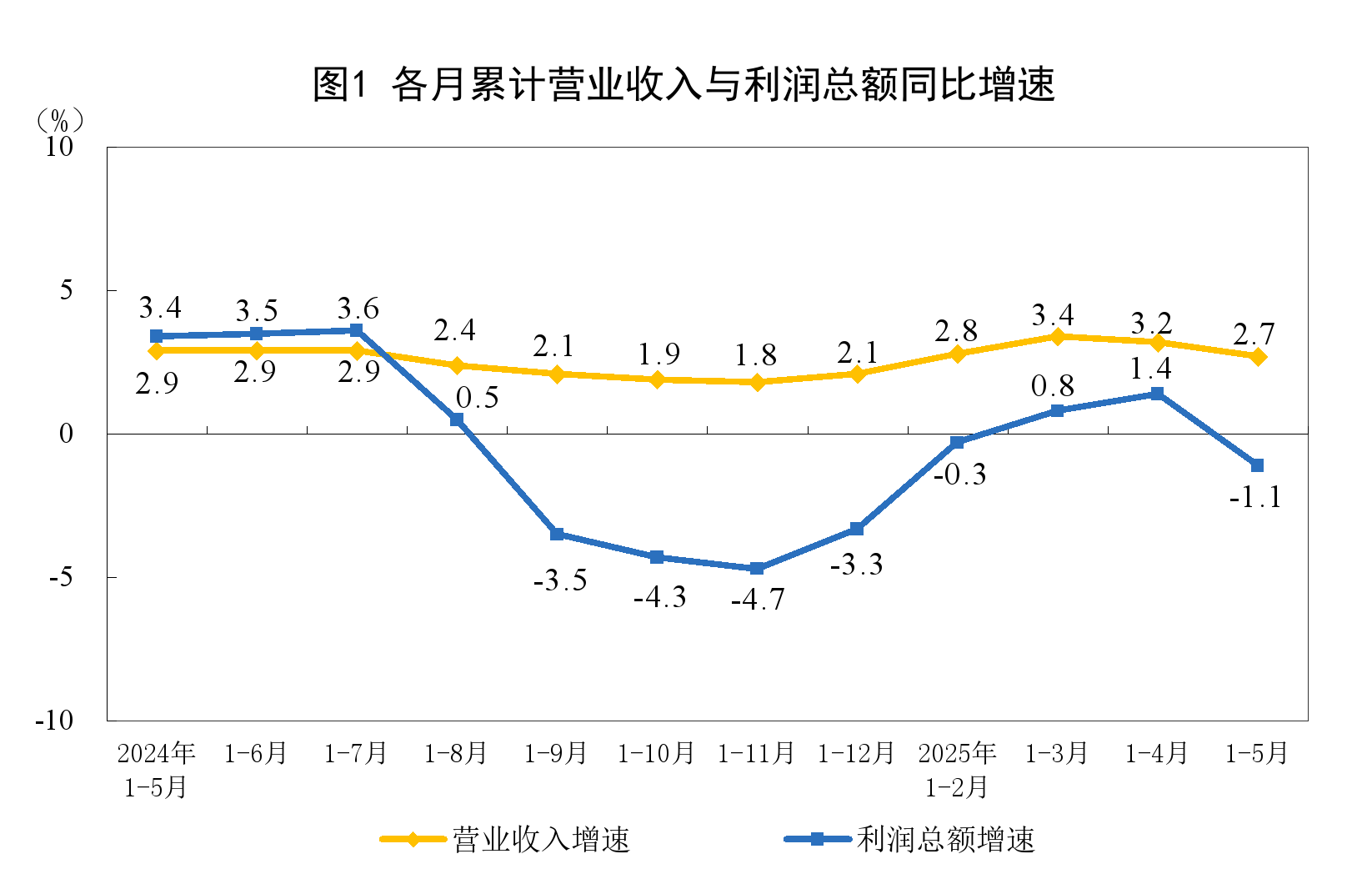
Guo Jia Tong Ji Ju

Search documents
2025年6月下旬流通领域重要生产资料市场价格变动情况
Guo Jia Tong Ji Ju· 2025-07-04 01:30
Core Viewpoint - The monitoring of market prices for 50 important production materials across nine categories indicates a mixed trend, with 26 products experiencing price increases, 20 seeing declines, and 4 remaining stable in late June 2025 compared to mid-June 2025 [2]. Group 1: Price Changes in Major Categories - In the black metal category, prices for rebar, wire rod, and ordinary medium plates decreased by 1.0%, while seamless steel pipes remained unchanged [4]. - In the non-ferrous metals category, electrolytic copper saw a price increase of 0.2%, while aluminum ingots remained stable [4]. - Chemical products displayed varied trends, with sulfuric acid increasing by 1.7% and caustic soda decreasing by 5.3% [4]. Group 2: Energy and Coal Prices - The petroleum and natural gas sector saw significant price increases, with gasoline (95 National VI) rising by 3.6% and liquefied natural gas (LNG) increasing by 0.6% [4]. - In the coal category, prices for anthracite coal decreased by 4.8%, while ordinary mixed coal saw a slight increase of 1.5% [4]. Group 3: Agricultural Products - Agricultural products showed mixed results, with corn prices increasing by 1.3% and cotton prices rising by 1.0%, while soybean prices decreased slightly by 0.1% [5]. - The price of urea remained stable, while the price of compound fertilizer decreased by 1.1% [5]. Group 4: Monitoring Methodology - The price monitoring encompasses a wide range of products across 31 provinces, involving over 2,000 wholesalers and dealers, ensuring comprehensive coverage of the market [8][9]. - The methodology includes on-site price collection, as well as inquiries via phone and electronic communication [9].
★2025年5月份居民消费价格同比下降0.1%
Guo Jia Tong Ji Ju· 2025-07-03 01:56
Core Viewpoint - In May 2025, the national consumer price index (CPI) showed a year-on-year decrease of 0.1%, with urban prices remaining stable and rural prices declining by 0.4% [1][2] Price Changes Overview Year-on-Year Changes - Food prices decreased by 0.4%, while non-food prices remained stable [1] - The average CPI for January to May 2025 also decreased by 0.1% compared to the same period last year [2] - Among various categories, food and tobacco prices increased by 0.1%, contributing approximately 0.02 percentage points to the CPI increase [1] - Fresh fruit prices rose by 5.5%, impacting the CPI by approximately 0.12 percentage points, while fresh vegetable prices fell by 8.3%, leading to a CPI decrease of about 0.17 percentage points [1][2] Month-on-Month Changes - In May, the CPI decreased by 0.2% month-on-month, with both urban and rural areas experiencing a decline of 0.2% [1][2] - Food prices fell by 0.2%, contributing to a CPI decrease of approximately 0.05 percentage points [1] - Fresh vegetable prices saw a significant decline of 5.9%, impacting the CPI by approximately 0.12 percentage points [1][2] Category-Specific Price Movements Food and Tobacco - Year-on-year, food and tobacco prices decreased by 0.2%, with specific declines in grain prices by 1.4% and fresh vegetable prices by 8.3% [2][3] - Pork prices increased by 3.1% year-on-year, while egg prices decreased by 3.5% [1][2] Clothing - Clothing prices increased by 1.5% year-on-year, with specific increases in apparel and footwear prices [3] Housing - Housing prices remained stable, with rental prices showing no change [3] Transportation and Communication - Transportation and communication prices decreased by 4.3% year-on-year, with fuel prices for transportation dropping by 12.9% [3] Education, Culture, and Entertainment - Prices in this category increased by 0.9% year-on-year, with education services rising by 1.2% [3] Healthcare - Healthcare prices increased by 0.3% year-on-year, with medical services rising by 0.7% [3] Other Goods and Services - Prices in this category rose by 7.3% year-on-year, indicating a significant increase in demand or costs [3]
★2025年5月份工业生产者出厂价格同比下降3.3%
Guo Jia Tong Ji Ju· 2025-07-03 01:56
Core Insights - In May 2025, the national industrial producer's ex-factory prices decreased by 3.3% year-on-year and 0.4% month-on-month, while the purchasing prices fell by 3.6% year-on-year and 0.6% month-on-month [1][3] Industrial Producer Price Year-on-Year Changes - In May, the ex-factory prices of production materials dropped by 4.0%, contributing approximately 2.98 percentage points to the overall decline in ex-factory prices. The mining industry saw a significant price drop of 11.9%, while raw materials and processing industries experienced declines of 5.4% and 2.8%, respectively. Consumer goods prices fell by 1.4%, with food prices also down by 1.4% [1][3] - The purchasing prices for fuel and power decreased by 9.8%, black metal materials by 7.3%, and chemical raw materials by 5.4%. Conversely, prices for non-ferrous metal materials and wires increased by 4.6% [1][2] Industrial Producer Price Month-on-Month Changes - In May, the ex-factory prices of production materials decreased by 0.6%, impacting the overall ex-factory price level by approximately 0.44 percentage points. The mining industry prices fell by 2.5%, while raw materials and processing prices decreased by 0.9% and 0.3%, respectively. Consumer goods prices remained stable [1][3] - The purchasing prices for fuel and power fell by 2.1%, chemical raw materials by 1.2%, and black metal materials by 0.6%. Prices for agricultural products remained unchanged [2][3] Key Industry Price Changes - The coal mining and washing industry saw a price drop of 3% year-on-year, while the oil and gas extraction industry experienced a decline of 5.6%. The black metal mining industry prices decreased by 0.9%, whereas the non-ferrous metal mining industry prices increased by 0.8% [3][4] - In the food manufacturing sector, prices fell by 0.3% year-on-year, while the beverage and refined tea manufacturing industry saw a slight increase of 0.1% [4]
6月份中国制造业PMI继续回升 新订单指数回升至扩张区间
Guo Jia Tong Ji Ju· 2025-06-30 02:04
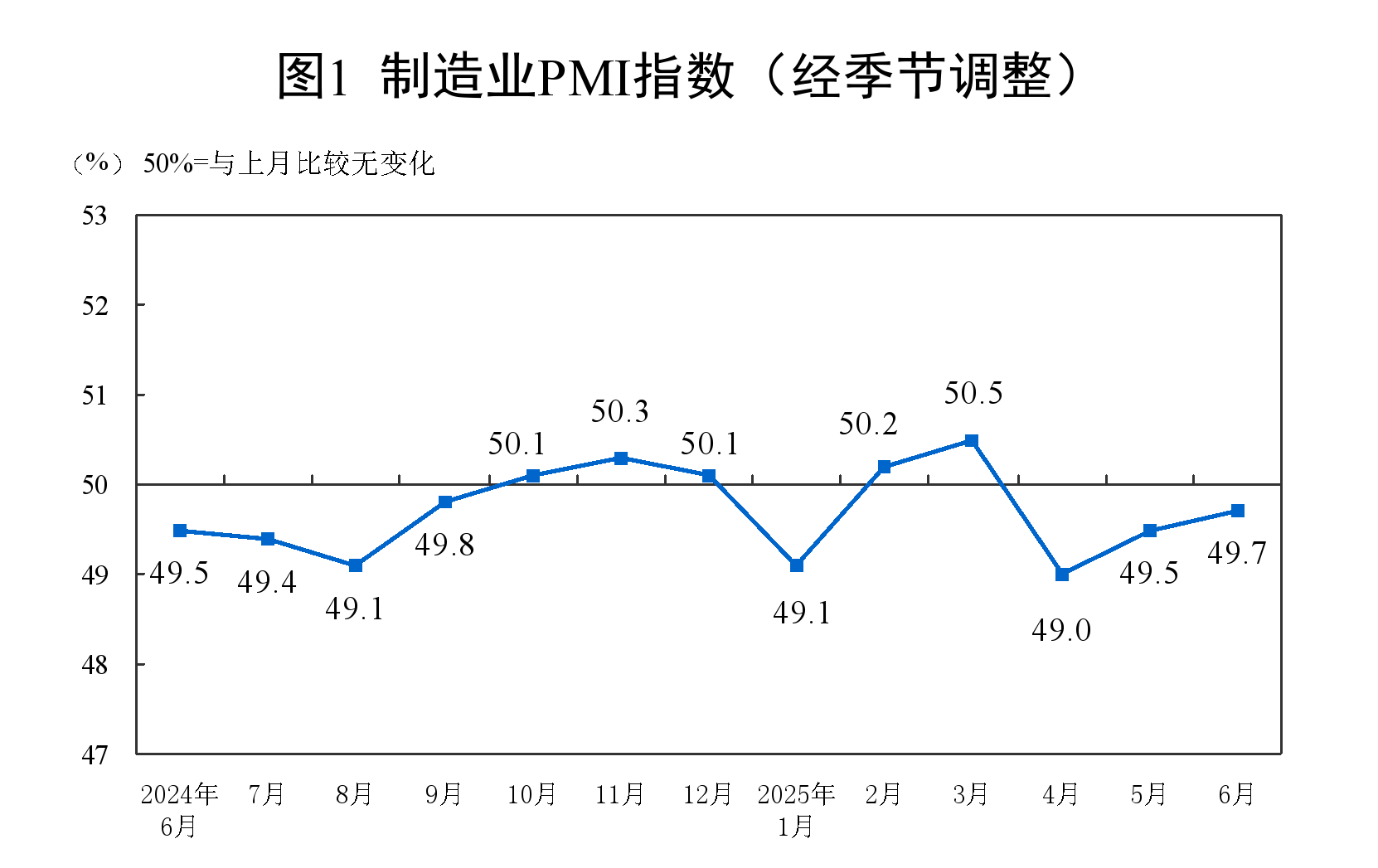
Group 1: Manufacturing PMI Overview - The manufacturing Purchasing Managers' Index (PMI) for June is 49.7%, an increase of 0.2 percentage points from the previous month, indicating continued improvement in manufacturing sentiment [2] - Large enterprises have a PMI of 51.2%, up 0.5 percentage points, while medium-sized enterprises have a PMI of 48.6%, up 1.1 percentage points, and small enterprises have a PMI of 47.3%, down 2.0 percentage points, all below the critical point [5] - Among the five sub-indices of the manufacturing PMI, the production index, new orders index, and supplier delivery time index are above the critical point, while the raw material inventory index and employment index are below the critical point [6] Group 2: Manufacturing Sub-Indices - The production index is at 51.0%, up 0.3 percentage points, indicating accelerated production activities in manufacturing [7] - The new orders index is at 50.2%, up 0.4 percentage points, suggesting an improvement in market demand for manufacturing [8] - The raw materials inventory index is at 48.0%, up 0.6 percentage points, indicating a continued narrowing of the decline in major raw material inventories [9] - The employment index is at 47.9%, down 0.2 percentage points, reflecting a slight decline in employment sentiment within manufacturing [10] - The supplier delivery time index is at 50.2%, up 0.2 percentage points, indicating faster delivery times from raw material suppliers compared to the previous month [11] Group 3: Non-Manufacturing PMI Overview - The non-manufacturing business activity index for June is 50.5%, an increase of 0.2 percentage points, indicating continued expansion in the non-manufacturing sector [14] - The construction industry business activity index is at 52.8%, up 1.8 percentage points, while the service industry business activity index is at 50.1%, down 0.1 percentage points [17] Group 4: Non-Manufacturing Sub-Indices - The new orders index for non-manufacturing is at 46.6%, up 0.5 percentage points, indicating a slight recovery in market demand [21] - The input prices index is at 49.9%, up 1.7 percentage points, suggesting stable input prices for non-manufacturing activities [21] - The sales prices index is at 48.8%, up 1.5 percentage points, indicating a narrowing decline in sales prices [21] - The employment index is at 45.5%, unchanged from the previous month, indicating continued weakness in employment sentiment in the non-manufacturing sector [21] Group 5: Comprehensive PMI Output Index - The comprehensive PMI output index for June is 50.7%, an increase of 0.3 percentage points, indicating an overall acceleration in production and business activities across enterprises [27]


国家统计局:6月制造业PMI继续回升,制造业景气面有所扩大
Guo Jia Tong Ji Ju· 2025-06-30 01:36
Group 1: Manufacturing Purchasing Managers Index (PMI) - In June, the manufacturing PMI rose to 49.7%, with 11 out of 21 surveyed industries in the expansion zone, an increase of 4 from the previous month, indicating an overall expansion in manufacturing sentiment [2] - The production index and new orders index were at 51.0% and 50.2%, respectively, both showing improvements of 0.3 and 0.4 percentage points, suggesting accelerated production activities and improved market demand [2] - Large enterprises reported a PMI of 51.2%, up 0.5 percentage points, indicating significant support for the manufacturing sector, while small enterprises saw a decline in PMI to 47.3%, down 2.0 percentage points [3] Group 2: Non-Manufacturing Business Activity Index - The non-manufacturing business activity index reached 50.5%, an increase of 0.2 percentage points, indicating continued expansion in the non-manufacturing sector [4] - The construction industry showed a notable increase with a business activity index of 52.8%, up 1.8 percentage points, reflecting a recovery in construction activities, particularly in civil engineering [4] - The business activity expectation index for the non-manufacturing sector was at 56.0%, indicating optimism among service industry enterprises regarding future developments [4] Group 3: Comprehensive PMI Output Index - The comprehensive PMI output index rose to 50.7%, an increase of 0.3 percentage points, indicating an acceleration in overall production and business activities across enterprises [5] - The manufacturing production index and non-manufacturing business activity index contributed to the comprehensive PMI output index, standing at 51.0% and 50.5%, respectively [5]
国家统计局服务业调查中心高级统计师赵庆河解读2025年6月中国采购经理指数
Guo Jia Tong Ji Ju· 2025-06-30 01:35
Group 1: Manufacturing PMI Insights - The manufacturing Purchasing Managers' Index (PMI) rose to 49.7% in June, with 11 out of 21 surveyed industries in the expansion zone, an increase of 4 industries from the previous month, indicating an overall improvement in manufacturing sentiment [2][3] - The production index and new orders index were at 51.0% and 50.2%, respectively, both showing increases of 0.3 and 0.4 percentage points from the previous month, suggesting accelerated production activities and improved market demand [3] - The purchasing volume index increased to 50.2%, up by 2.6 percentage points, reflecting enhanced procurement willingness among enterprises due to the recovery in production and demand [3] Group 2: Price Index Trends - The main raw material purchase price index and factory price index rose to 48.4% and 46.2%, respectively, both up by 1.5 percentage points, indicating an overall improvement in manufacturing market price levels [3] - The increase in prices was influenced by rising international crude oil prices, particularly affecting the petroleum and coal industries, while the black metal smelting and processing industries saw a decline in price indices due to falling iron ore prices and insufficient terminal demand [3] Group 3: Enterprise Size and Industry Performance - Large enterprises reported a PMI of 51.2%, up by 0.5 percentage points, indicating significant support for the overall manufacturing sector, while medium-sized enterprises saw a PMI of 48.6%, an increase of 1.1 percentage points, showing improved sentiment [4] - The equipment manufacturing, high-tech manufacturing, and consumer goods industries all maintained PMIs above 50, indicating continued expansion, with equipment manufacturing showing particularly strong activity with production and new orders indices above 53.0 [4] Group 4: Non-Manufacturing Sector Insights - The non-manufacturing business activity index rose to 50.5%, up by 0.2 percentage points, indicating continued expansion in the non-manufacturing sector [5] - The service sector's business activity index was stable at 50.1%, with certain industries like telecommunications and financial services showing strong growth, while consumer-related sectors experienced a decline in activity [5] - The construction sector's business activity index increased to 52.8%, up by 1.8 percentage points, reflecting a recovery in construction activities, particularly in civil engineering [5] Group 5: Comprehensive PMI Overview - The comprehensive PMI output index rose to 50.7%, up by 0.3 percentage points, indicating an acceleration in overall production and business activities across enterprises [6] - The manufacturing production index and non-manufacturing business activity index contributed to this increase, standing at 51.0% and 50.5%, respectively [6]
2025年6月中国采购经理指数运行情况
Guo Jia Tong Ji Ju· 2025-06-30 01:31
Group 1: Manufacturing PMI Overview - In June, the Manufacturing Purchasing Managers' Index (PMI) was 49.7%, an increase of 0.2 percentage points from the previous month, indicating continued improvement in manufacturing sentiment [1] - Large enterprises had a PMI of 51.2%, up 0.5 percentage points, while medium-sized enterprises had a PMI of 48.6%, up 1.1 percentage points, and small enterprises had a PMI of 47.3%, down 2.0 percentage points [4] - The production index was 51.0%, indicating accelerated production activities, and the new orders index was 50.2%, suggesting improved market demand [4][6] Group 2: Employment and Supplier Conditions - The employment index was 47.9%, a slight decrease of 0.2 percentage points, indicating a minor decline in employment sentiment within the manufacturing sector [5] - The supplier delivery time index was 50.2%, an increase of 0.2 percentage points, suggesting that suppliers' delivery times have improved compared to the previous month [6] Group 3: Non-Manufacturing PMI Overview - In June, the Non-Manufacturing Business Activity Index was 50.5%, an increase of 0.2 percentage points, indicating continued expansion in the non-manufacturing sector [10] - The construction industry had a business activity index of 52.8%, up 1.8 percentage points, while the services industry had a business activity index of 50.1%, down 0.1 percentage points [12] Group 4: Non-Manufacturing Demand and Pricing - The new orders index for non-manufacturing was 46.6%, an increase of 0.5 percentage points, indicating a slight recovery in market demand [16] - The input prices index was 49.9%, slightly below the critical point, indicating stable input prices for non-manufacturing activities [16] Group 5: Comprehensive PMI Output Index - The Comprehensive PMI Output Index was 50.7%, an increase of 0.3 percentage points, indicating an overall acceleration in production and business activities across sectors [23]
国家统计局:1-5月钢铁行业盈利316.9亿元
Guo Jia Tong Ji Ju· 2025-06-27 01:37
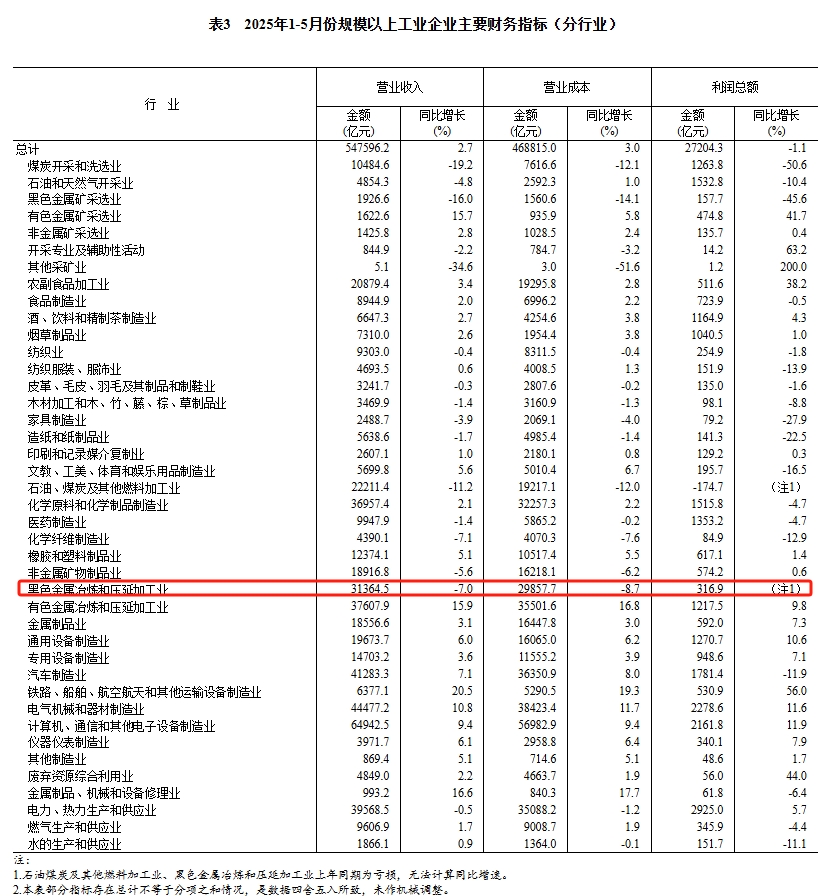
Core Insights - From January to May, the total profit of industrial enterprises above designated size in China reached 27,204.3 billion yuan, a year-on-year decrease of 1.1% [1] - The profit performance varied significantly across different types of enterprises, with state-owned enterprises experiencing a decline of 7.4%, while private enterprises saw a growth of 3.4% [1] Group 1: Overall Industrial Performance - The total profit of state-owned enterprises was 8,709.5 billion yuan, down 7.4% year-on-year [1] - The profit from private enterprises amounted to 7,592.5 billion yuan, reflecting a growth of 3.4% [1] - Foreign and Hong Kong, Macao, and Taiwan-invested enterprises reported a profit of 6,856.8 billion yuan, an increase of 0.3% [1] Group 2: Sector-Specific Profit Trends - The mining industry saw a profit of 3,580.4 billion yuan, down 29.0% year-on-year [1] - The manufacturing sector achieved a profit of 20,201.4 billion yuan, marking a growth of 5.4% [1] - The electricity, heat, gas, and water production and supply sector reported a profit of 3,422.5 billion yuan, up 3.7% [1] Group 3: Key Industry Highlights - The agricultural and sideline food processing industry experienced a profit increase of 38.2% [2] - The computer, communication, and other electronic equipment manufacturing industry grew by 11.9% [2] - The automotive manufacturing industry faced a profit decline of 11.9% [2] - The coal mining and washing industry saw a significant profit drop of 50.6% [2] - The black metal smelting and rolling industry turned from loss to profit, achieving a total profit of 316.9 billion yuan [2]
国家统计局工业司统计师于卫宁解读2025年1—5月份工业企业利润数据
Guo Jia Tong Ji Ju· 2025-06-27 01:34
Group 1 - In the first five months of 2025, industrial enterprises above designated size achieved a total profit of 27,204.3 billion yuan, showing a year-on-year decline of 1.1% due to multiple factors such as insufficient effective demand and declining industrial product prices [1] - Despite the profit decline, the gross profit margin for these enterprises increased by 1.1% year-on-year, contributing to a 3.0 percentage point increase in overall profits [1] - The operating revenue for industrial enterprises grew by 2.7% year-on-year, indicating a sustained growth trend that creates favorable conditions for future profit recovery [1] Group 2 - The equipment manufacturing industry demonstrated significant resilience, with profits increasing by 7.2% year-on-year, contributing 2.4 percentage points to the overall industrial profit growth [2] - Among the eight sectors within the equipment manufacturing industry, seven reported profit growth, with notable increases in electronics, electrical machinery, and general equipment sectors, achieving growth rates of 11.9%, 11.6%, and 10.6% respectively [2] - The aerospace, aviation, and maritime industries experienced rapid growth, with profits increasing by 56.0% year-on-year, driven by successful commercial operations of domestic large aircraft and advancements in space exploration [2] Group 3 - The "two new" policy effects are becoming increasingly evident, with significant profit growth in general and specialized equipment sectors, achieving increases of 10.6% and 7.1% respectively [3] - The consumer goods sector benefited from policies promoting the replacement of old equipment, with profits in smart consumer devices and kitchen appliances growing by 101.5% and 20.7% respectively [3] - Private and foreign-invested enterprises also saw profit growth, with increases of 3.4% and 0.3% year-on-year, surpassing the average growth rate of all industrial enterprises [3]
2025年1—5月份全国规模以上工业企业利润下降1.1%
Guo Jia Tong Ji Ju· 2025-06-27 01:30
Core Insights - The total profit of industrial enterprises above designated size in China from January to May reached 27,204.3 billion yuan, a year-on-year decrease of 1.1% [1] - The profit performance varied across different types of enterprises, with state-owned enterprises experiencing a 7.4% decline, while private enterprises saw a 3.4% increase in profits [1][11] - The mining industry faced a significant profit drop of 29.0%, while the manufacturing sector reported a profit increase of 5.4% [1][11] Group 1: Profit and Revenue Overview - From January to May, the total operating revenue of industrial enterprises was 547,596.2 billion yuan, reflecting a year-on-year growth of 2.7% [11] - The operating costs amounted to 468,815.0 billion yuan, which is a 3.0% increase compared to the previous year [11] - The operating profit margin was 4.97%, showing a decrease of 0.19 percentage points year-on-year [2][11] Group 2: Industry-Specific Performance - The agricultural and sideline food processing industry saw a profit increase of 38.2%, while the automotive manufacturing sector experienced a decline of 11.9% [2][11] - The computer, communication, and other electronic equipment manufacturing industry reported a profit growth of 11.9% [2][11] - The coal mining and washing industry faced a drastic profit decline of 50.6% [2][11] Group 3: Financial Ratios and Metrics - As of the end of May, the total assets of industrial enterprises were 182.36 trillion yuan, a year-on-year increase of 5.1% [2] - The total liabilities reached 105.26 trillion yuan, reflecting a growth of 5.3% [2] - The asset-liability ratio stood at 57.7%, which is an increase of 0.1 percentage points compared to the previous year [2] Group 4: Accounts Receivable and Inventory - The accounts receivable for industrial enterprises amounted to 26.40 trillion yuan, marking a year-on-year increase of 9.0% [3] - The finished goods inventory was recorded at 6.65 trillion yuan, which is a 3.5% increase [3] - The average collection period for accounts receivable was 70.5 days, an increase of 4.1 days year-on-year [4]