
Hu Xiu

Search documents
lululemon在北美,正沦为“妈妈品牌”
Hu Xiu· 2025-10-23 00:02
Core Insights - Lululemon is facing significant challenges in the market, with a decline in sales and brand perception as competitors like FP Movement gain traction among younger consumers [1][7][10]. Sales Performance - In Q1 2025, Lululemon's online sales and store traffic both decreased, leading to a 30% year-over-year drop in net profit [2]. - The company's stock price has plummeted approximately 70% from its peak last year, indicating a severe loss of market confidence [7]. Market Trends - The North American market, which contributes 70% of Lululemon's revenue, is experiencing negative growth in several business metrics, while the Chinese market remains a bright spot [7]. - The shift in consumer preferences towards loose-fitting styles, as exemplified by FP Movement's success, is redefining athletic fashion [10][12]. Competitive Landscape - FP Movement's sales grew by 34% year-over-year, and the brand plans to open 300 new stores in North America, highlighting its aggressive expansion strategy [12]. - Other brands like Athleta and Jo+Jax are also redefining athletic aesthetics with loose silhouettes, further challenging Lululemon's market position [13]. Consumer Behavior - The North American Gen Z demographic is increasingly favoring comfort and practicality over the traditional "activewear" aesthetic, leading to a decline in the appeal of Lululemon's signature tight-fitting products [14][19]. - Reports indicate that over half of Gen Z in the U.S. hold multiple jobs, reflecting a shift in lifestyle that prioritizes comfort over luxury [17]. Brand Perception - Lululemon's brand is perceived as outdated among younger consumers, who associate it with older generations, leading to a decline in its aspirational value [14][22]. - The brand's previous image as a luxury activewear label is being undermined by the rise of more innovative and affordable competitors [52]. Product Strategy - Lululemon has attempted to adapt by increasing the proportion of loose-fitting products in its lineup, but its offerings are seen as less innovative compared to competitors [25][26]. - The company has faced criticism for its stagnant product designs and recent price increases, which have alienated cost-conscious consumers [56]. Legal and Market Challenges - Lululemon's recent lawsuit against Costco for selling knockoff products has backfired, driving consumers to seek out these alternatives instead [35][36]. - The brand's unique selling propositions, such as fabric technology, are no longer exclusive, as competitors have begun to replicate these features effectively [40]. Future Outlook - Lululemon's founder has expressed concerns about the company's direction, emphasizing the need for innovation and brand reputation as key metrics for success [64][65]. - The path to regaining high growth is expected to be increasingly difficult amid changing consumer preferences and intensified competition [65][66].



日本首相落定,难逃短命魔咒?
Hu Xiu· 2025-10-23 00:02
日本首相的人选终于尘埃落定了,高市早苗历经波折艰难上位,成为日本历史上首位女首相。然而,她 恐怕也难逃短命的魔咒,为什么呢? ...
以日为鉴
Hu Xiu· 2025-10-22 21:27
Core Insights - The article discusses the phenomenon of increased bank deposits in China, with a total increase of 12.73 trillion yuan in the first three quarters, and a significant surge of 2.96 trillion yuan in September alone, reversing a previous downward trend [1] - It draws parallels between the current low-interest environment in China and Japan's "lost decades," suggesting that despite low returns, individuals prefer to hold cash and deposits due to a lack of confidence in riskier assets [2][17] - The article highlights the performance of Japan's Nikkei 225 index, which has seen substantial growth since its historical low in 2009, driven by the Bank of Japan's aggressive ETF purchasing strategy [5][9] Group 1: Bank Deposits and Economic Behavior - In the first three quarters, individuals increased their bank deposits by 12.73 trillion yuan, with a notable rise of 2.96 trillion yuan in September, indicating a shift in savings behavior [1] - The current interest rates for bank deposits are very low, with savings accounts yielding between 0.05% and 0.2%, and fixed-term deposits around 1% [1] - This situation mirrors Japan's experience during its prolonged low-interest period, where citizens opted for cash and deposits due to a lack of investment confidence [2][17] Group 2: Japanese Market Insights - The Nikkei 225 index has shown remarkable recovery, rising from a low of 7,054 points in March 2009 to 48,580.44 points in October 2023, reflecting a compound annual growth rate of over 10% for those who invested in related ETFs [2][5] - The Bank of Japan's unique approach of purchasing ETFs has played a crucial role in stabilizing and boosting the stock market, with the central bank's holdings now representing about 7% of the total market capitalization [5][9] - Japan's economic recovery has been characterized by a shift from growth to returns, with significant contributions from export-oriented companies benefiting from a weaker yen [9][11] Group 3: Investment Strategies and Comparisons - The article suggests that Chinese investors could learn from Japan's experience by considering investments in domestic ETFs, particularly in the context of low-interest rates [4][23] - The structure of the Chinese stock market, particularly the CSI 300 index, reflects a similar evolution as Japan's, with a focus on financial, real estate, and emerging technology sectors [23][25] - The Chinese ETF market has surpassed Japan's, indicating a growing acceptance and potential for further investment in index funds among retail investors [31]

一文讲透Agent的底层逻辑
Hu Xiu· 2025-10-22 14:47
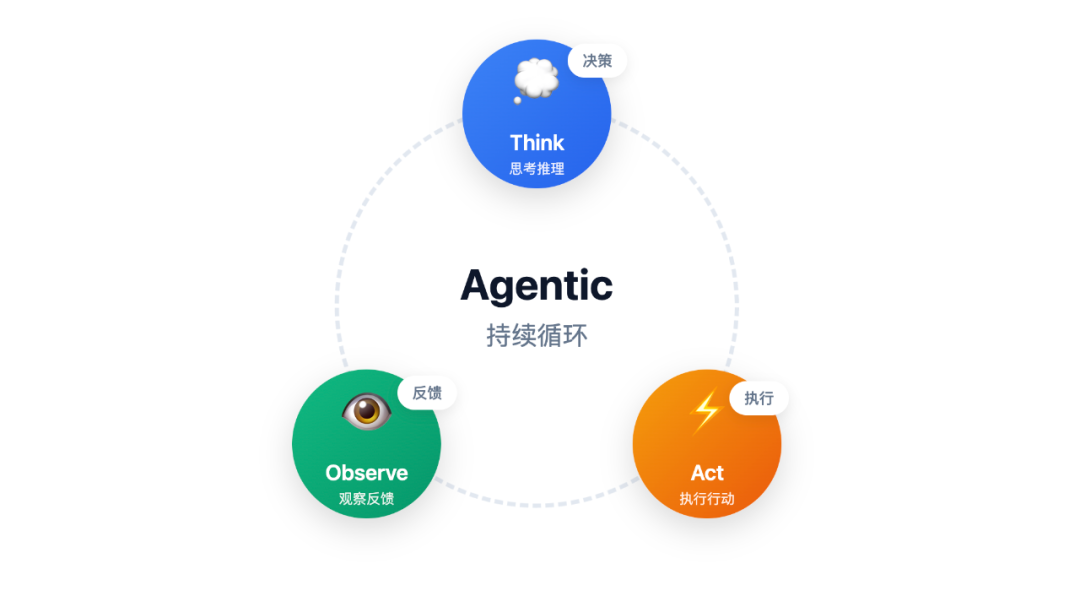
Core Insights - The article emphasizes the importance of understanding AI Agents beyond mere API calls, highlighting the need for a structured cognitive process that enhances their capabilities [3][15][56] Group 1: Understanding AI Agents - The article identifies two common misconceptions about AI Agents: one that mystifies their capabilities and another that oversimplifies them as just repeated calls to ChatGPT [1][2] - It aims to establish a consensus on the cognitive processes that underpin AI Agents, asserting that their effectiveness lies in the design of these processes rather than just the underlying models [3][4] Group 2: Development Insights - The article outlines a structured approach to developing AI Agents, detailing the transition from "prompt engineers" to "Agent process architects" [7][72] - It discusses the threefold value of structured processes: providing a framework for thought, creating memory compression algorithms, and enabling interaction with the real world [6][55][66] Group 3: Theoretical Foundations - The article connects the effectiveness of the "Think -> Act -> Observe" cycle to foundational theories in cybernetics and information theory, explaining how feedback mechanisms enhance goal attainment and reduce uncertainty [74][75][91] - It illustrates the evolution from open-loop systems to closed-loop systems, emphasizing the importance of feedback in achieving reliable outcomes [77][84] Group 4: Practical Applications - The article uses a travel planning example to contrast the static outputs of traditional chatbots with the dynamic, iterative processes of AI Agents, showcasing the latter's ability to produce actionable and reliable results [40][48] - It highlights the significance of structured workflows in enhancing the quality and reliability of AI outputs, moving beyond mere text generation to a more interactive and iterative approach [55][68] Group 5: Future Directions - The article discusses the future role of developers as "Agent process architects," focusing on designing cognitive workflows, empowering AI with tools, and constructing decision-making contexts [100][102] - It emphasizes the need for advanced cognitive architectures that can manage complex tasks and improve execution efficiency while maintaining high-quality outcomes [106][111]
用AI出卷子的老师,已经触及底线了
Hu Xiu· 2025-10-22 13:50
Core Viewpoint - The article discusses the emergence of AI-generated content in educational materials, particularly in Chinese language exams, raising concerns about the accuracy and integrity of the content being taught to students [18][34][47]. Group 1: AI in Education - AI-generated poems have appeared in exam papers, leading to doubts about their authenticity and relevance [15][19]. - The use of AI to create exam questions is seen as a shortcut by educators, undermining the educational process [46][48]. - There are examples of AI-generated content that lack historical accuracy, such as misattributed authorship of poems [33][24]. Group 2: Impact on Teaching and Learning - The reliance on AI for generating exam content may lead to a decline in students' critical thinking and analytical skills [36][39]. - Teachers express frustration over the increasing demands placed on them, which leads to a reliance on AI for creating innovative content [43][44]. - The educational system risks becoming overly standardized and formulaic, potentially stifling creativity and individuality among students [58][59]. Group 3: Regulatory and Ethical Concerns - The Ministry of Education has issued guidelines prohibiting the use of AI as a substitute for teaching, emphasizing the importance of accurate and responsible content creation [47][48]. - There is a growing concern that the quality of education may deteriorate if AI-generated content continues to fill classrooms without proper oversight [60][61].

差评为什么不能得到尊重?
Hu Xiu· 2025-10-22 13:43
Core Viewpoint - The article discusses the implications of negative reviews in e-commerce, highlighting the pressure on sellers to maintain high ratings and the potential for misuse of customer information by sellers to manage reviews [1][6][13]. Group 1: Impact of Negative Reviews - Negative reviews can lead to significant consequences for sellers, including the potential removal of products from platforms if they receive multiple negative ratings [1][12]. - Sellers often feel compelled to contact customers directly to resolve issues related to negative reviews, which raises concerns about privacy and the ethics of such practices [3][5]. Group 2: E-commerce Platform Responsibilities - E-commerce platforms have a responsibility to protect user privacy and should not allow sellers to directly contact customers regarding reviews [5][6]. - The algorithms used by platforms place excessive weight on seller ratings and positive reviews, creating pressure on sellers to manipulate feedback [7][8][11]. Group 3: Review Mechanism and Consumer Trust - The current review system often results in a lack of genuine feedback, with many products displaying artificially high ratings due to the suppression of negative reviews [13][14]. - A more transparent review system that allows for honest feedback, without the binary of good or bad ratings, could enhance consumer trust and provide a clearer understanding of product quality [15][17].
经营的本质是什么?
Hu Xiu· 2025-10-22 13:24
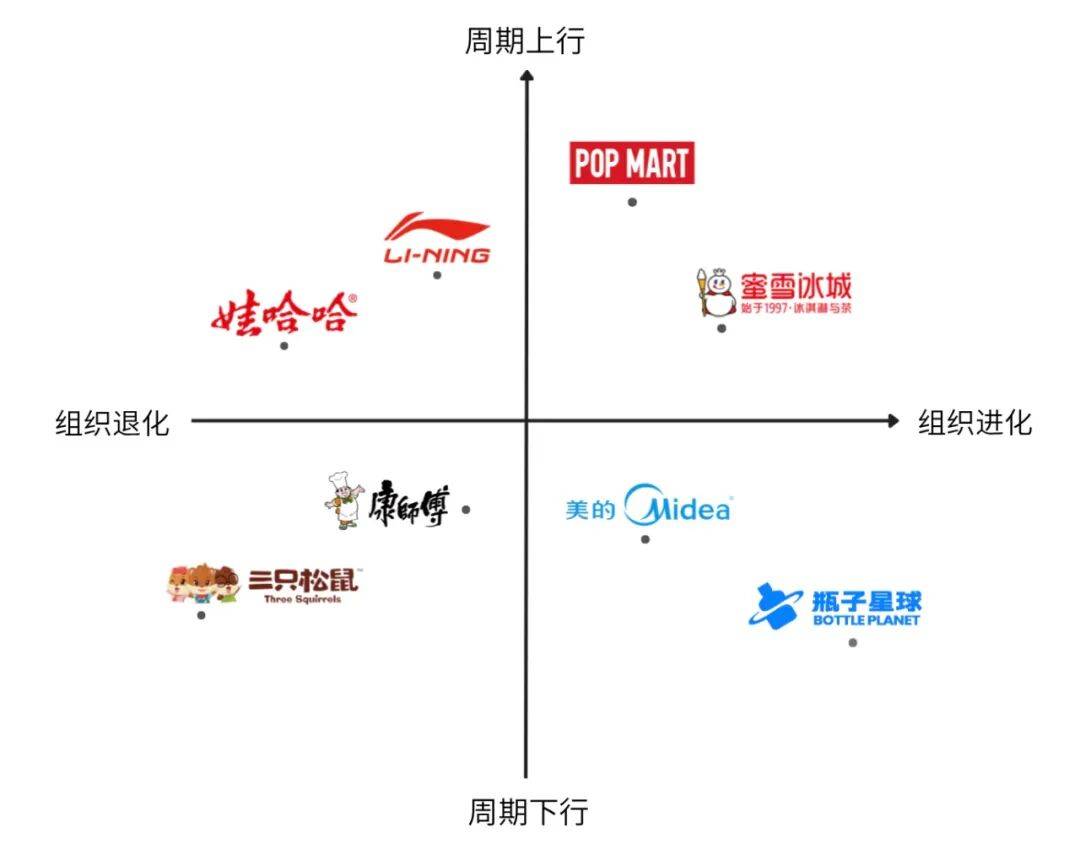
Core Insights - The article discusses the importance of both external cycles and internal organization in determining a company's success or failure during different market conditions [1][2][3] - It presents a four-quadrant model to categorize companies based on their organizational strength and market cycles, illustrating how these factors interact to shape business outcomes [3][4] Quadrant Analysis Quadrant 1: Upward Cycle + Organizational Evolution - Companies like Mixue Ice City and Pop Mart thrive during industry booms due to strategic accuracy and efficient execution, benefiting from favorable market conditions [6][7] - Mixue Ice City's success is attributed to its low-cost model and 100% self-sourced supply chain, achieving high gross and net profit margins in the new tea beverage sector [10][11][12] - Pop Mart capitalizes on global expansion and market adaptability, demonstrating a keen understanding of market dynamics despite periods of lower visibility [14][15][16] Quadrant 2: Downward Cycle + Organizational Evolution - Companies such as Bottle Planet and Midea exemplify resilience in challenging environments, adapting their strategies to align with market demands [17][18] - Bottle Planet, known for its brand Jiangxiaobai, pivoted to a "new liquor" strategy to counteract declining traditional liquor sales, leading to renewed growth [20][21][24] - Midea's transformation into a technology ecosystem company, driven by a focus on organizational strength over individual leadership, has resulted in significant market value growth [26][27] Quadrant 3: Upward Cycle + Organizational Degeneration - Wahaha and Li Ning illustrate how poor organizational management can squander opportunities during favorable market conditions [28][29] - Wahaha's leadership struggles have hindered its ability to capitalize on the bottled water market, while Li Ning's missteps in brand strategy have led to significant market value decline [30][34][35] Quadrant 4: Downward Cycle + Organizational Degeneration - Companies like Master Kong and Three Squirrels face compounded challenges from external market pressures and internal management issues [37][38] - Master Kong's sales have declined due to the rise of food delivery services, while its strategies have failed to adapt effectively to changing consumer preferences [39][41] - Three Squirrels struggles with maintaining quality and adapting to market changes, resulting in significant revenue losses and competitive disadvantages [43][44] Conclusion - The analysis emphasizes that while market cycles are constant, the organizational structure and adaptability of a company are crucial for long-term survival and success [45][46][47]





OpenAI要让AI替代“初级投行员工”
Hu Xiu· 2025-10-22 13:24
Core Insights - OpenAI is conducting a unique experiment called "Mercury," hiring over 100 former investment banking employees to train its AI models in financial modeling and other core skills [1][2] - The project aims to teach AI how to perform tasks typically done by junior bankers, raising concerns about the future job security of entry-level positions in the finance industry [1][2] Group 1: Project Details - The "Mercury" project has recruited professionals from top financial institutions, including JPMorgan, Morgan Stanley, and Goldman Sachs, as well as talent from Brookfield Corp., Mubadala Investment Co., Evercore Inc., and KKR & Co. [2] - Participants are paid $150 per hour and are required to submit a financial model each week, using simple language to write prompts and executing them in Microsoft Excel [2] - The application process for participants involves minimal human intervention, including a 20-minute interview with an AI chatbot and tests on financial statement knowledge and modeling skills [3] Group 2: AI Learning Focus - The project emphasizes the importance of attention to detail, as junior analysts often work long hours and handle tedious tasks, such as building complex merger models in Excel [4] - According to Bloomberg columnist Matt Levine, the meticulous nature of investment banking is crucial for AI to learn, as even minor formatting errors can lead to significant trust issues [5] - Levine describes the current generative AI as "smart but careless," suggesting that the project is a form of reinforcement learning to instill the necessary attention to detail in AI [5] Group 3: Implications for the Industry - The direct goal of the "Mercury" project is to enable AI to replace the work of junior employees, raising questions about the future of the traditional apprenticeship model in investment banking [6] - Historically, junior analysts have learned skills through foundational work, but if AI takes over these tasks, it may hinder the development of future leaders in the industry [6] - The high turnover rate in investment banking means that many former analysts may not feel burdened by the prospect of training AI to replace their previous roles [6] Group 4: OpenAI's Strategic Focus - The "Mercury" project reflects OpenAI's broader commercialization strategy, targeting the lucrative financial services sector to demonstrate the value of its technology in complex business environments [7] - Despite its high valuation, OpenAI has yet to achieve profitability, prompting the company to actively explore enterprise markets [7] - The initiative indicates OpenAI's ambition to develop specialized AI tools that can be deeply integrated into corporate workflows, aiming for a significant position in the global business landscape [7]
从2000元一斤到60元一斤,法国顶级食材,被中国打成了“白菜价”?
Hu Xiu· 2025-10-22 13:05
Core Insights - The price of French foie gras has dramatically decreased from 2000 yuan per kilogram to less than 60 yuan per kilogram in a small county in Anhui, China [1] - The article explores how foie gras became a prestigious delicacy in France and how China has managed to lower its price [1] - It raises the question of which other premium ingredients have also seen their prices drop in China [1] Price Dynamics - Foie gras, once considered a luxury item, is now available at a price comparable to common vegetables in China [1] - The significant price reduction indicates a shift in market dynamics and consumer accessibility [1] Cultural Context - The article discusses the cultural significance of foie gras in France and its transformation in the Chinese market [1] - It highlights the contrast between the traditional perception of foie gras and its current status in China [1]
20分钟读懂AI史上最重要的一篇论文——《Attention Is All You Need》
Hu Xiu· 2025-10-22 13:05
Core Insights - The article highlights the transformative impact of the 2017 paper "Attention Is All You Need," which introduced the Transformer architecture, revolutionizing the AI technology landscape [1] - The emergence of leading AI tools like ChatGPT and DeepSeek is directly linked to the advancements made possible by the Transformer model [1] Summary by Sections Transformer Architecture - The Transformer architecture has fundamentally changed the approach to artificial intelligence, leading to a global "arms race" in the AI sector [1] - Key concepts such as attention mechanisms, Q/K/V, multi-head attention, and positional encoding are explained in a simplified manner [1] Impact on AI Industry - The paper has catalyzed the rapid rise of major players in the AI industry, including OpenAI, showcasing the significant economic opportunities created by these advancements [1] - The narrative includes the story of eight authors who left Google to pursue entrepreneurial ventures, resulting in remarkable wealth creation [1]