
Hu Xiu

Search documents
投资人,正在大疆门口“蹲”项目
Hu Xiu· 2025-10-10 07:59
Core Insights - The article discusses the current trend of investment in AI hardware, highlighting that many financial advisors (FAs) are relocating their offices near DJI in Shenzhen to capitalize on the AI boom [1][3] - The focus has shifted from high-quality FA services to basic tasks, with a strategy of targeting employees from major tech companies for investment opportunities [2][3] - Recent financing activities in the AI hardware sector indicate a strong interest from investors, particularly in companies that have connections to established tech giants [4][5] Investment Trends - The AI hardware sector is experiencing significant investment, with companies like Robopoet and Ropet securing millions in funding [4][5] - Notable recent financings include Nothing's $200 million Series C round and Haivivi's 200 million yuan Series A round, indicating a robust interest in AI-integrated products [4][5] - The trend shows that many investors are "all in" on consumer hardware, driven by China's strong supply chain and the recent IPO of a successful AI hardware company [5] AI Toy Market - The AI toy segment is emerging as a rapidly growing niche, with 96 investment institutions currently involved [6] - Investors are divided on the value of AI in toys, with some seeing potential in the technology while others criticize the lack of differentiation in products [6][8] - User retention rates for AI toys are declining, suggesting that initial novelty wears off quickly, impacting long-term engagement [7][8] Future of AI Devices - There is ongoing speculation about the next generation of smart devices that could replace smartphones, with companies like OpenAI and Meta exploring new form factors such as AI-driven glasses [12][13][15] - OpenAI is developing a pocket-sized AI device that integrates advanced context-aware systems, while Meta is betting on smart glasses as the future of personal devices [12][13] - The market for smart glasses remains contentious, with differing opinions on their viability based on user habits and technological readiness [15] Emerging Opportunities - Investment opportunities are categorized into "upgrade opportunities" that enhance existing products and "definition opportunities" that create entirely new categories [16][17] - Specific needs, such as those for special education tools for children with disabilities, are identified as potential areas for growth [18][19] - The concept of interactive IP-based products is gaining traction, allowing for personalized user experiences through smart devices [20]
7万亿的体育大蛋糕要怎么做
Hu Xiu· 2025-10-10 07:46
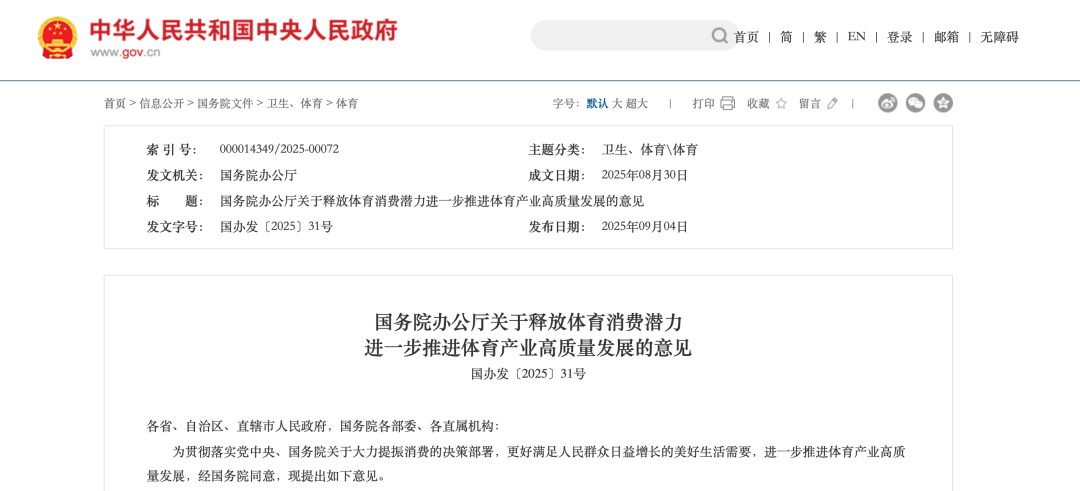
Core Insights - The sports industry in China is increasingly recognized as a significant contributor to economic growth, with its GDP contribution rising to approximately 1.2% [2][19] - Recent government policies aim to enhance the sports industry's quality and scale, targeting a total industry size of over 7 trillion yuan by 2030 [5][49] - There is a growing demand for quality sports content among the Chinese population, indicating substantial potential for the sports industry [3][19] Industry Growth and Potential - The sports industry in China has experienced an average annual growth rate of 9.7% over the past decade, reaching a total scale of 3.95 trillion yuan [19] - The increasing popularity of local sports events, such as the "Su Super" and "Zhejiang BA," has demonstrated the economic impact of sports, with significant ticket sales and related consumption [37][39] - The rise of niche sports like skiing and rock climbing is contributing to the diversification and growth of the sports industry [40] Policy Support and Structural Changes - The recent policy document from the State Council emphasizes the need for a comprehensive and sustainable sports industry, focusing on supply-side improvements and market-driven growth [6][33] - Key measures include enhancing event management, upgrading sports products, expanding consumption scenarios, and providing financial and talent support [34][41] - The policy aims to address existing shortcomings in China's sports industry, such as insufficient marketization and a lack of mature business models [7][22] Comparison with Developed Markets - China's sports industry still lags behind developed markets like the US and Europe in terms of scale and commercialization, with significant gaps in service-oriented consumption [22][25] - The sports service sector in China accounts for only 11% of the industry's value added, compared to over 50% in the US [26][27] - The absence of high-profile sports IPs in China limits the commercial potential of local leagues compared to established leagues like the NBA and NFL [31][32] Future Outlook - The successful implementation of the new policies could lead to a more market-oriented sports industry, fostering greater public participation and investment [47][52] - The development of a complete value chain in the sports industry is essential for sustainable growth, moving away from reliance on major events for short-term boosts [49][50] - As infrastructure and regulatory frameworks improve, the Chinese sports industry is poised for significant growth opportunities in the coming years [51][53]

三角洲删共享家园:当游戏运营开始与玩家为敌
Hu Xiu· 2025-10-10 07:33
Core Viewpoint - The recent changes in the "Delta Action" gameplay have led to significant backlash from the player community, with 12 million players expressing their dissatisfaction due to the forced competitive nature of the game [1] Group 1 - The "Delta Action" update has eliminated the popular "shared home" gameplay, pushing players towards mutual harm [1] - The drastic changes implemented by the developers have caused widespread outrage among the player base [1] - The involvement of a character likened to "Cyber Jiaxu" suggests potential tools or strategies that could assist the developers in managing player feedback and game dynamics [1]
每个人都可能罹患精神疾病
Hu Xiu· 2025-10-10 07:20
Core Insights - The article discusses the challenges faced by individuals with mental health disorders and their families, emphasizing the need for better understanding and support within society [1][22][23]. Group 1: Understanding Mental Health - The perception of mental health and psychiatric disorders is often influenced by media portrayals, leading to misconceptions about the environment and individuals within psychiatric care [1][2]. - There exists a stress-sensitivity model in clinical psychiatry that explains the varying susceptibility of individuals to mental health disorders based on personal stress thresholds [4][5]. Group 2: Impact of Mental Health Disorders - Mental health disorders not only affect the patients but also have significant repercussions on their families and caregivers, leading to emotional and social challenges [14][21]. - A case study of a bipolar disorder patient illustrates how external stressors, such as family tragedies, can trigger relapses, highlighting the complex interplay between mental health and life events [7][8][12]. Group 3: Community and Family Support - The article emphasizes the importance of family support in the recovery process of individuals with mental health disorders, noting that caregivers often face significant burdens and emotional distress [50][62]. - A national survey revealed that a majority of caregivers are female and have been providing care for over five years, indicating a long-term commitment that often leads to their own mental health challenges [52][53][59]. Group 4: Community Resources and Training - There is a notable lack of community resources and trained social workers to support individuals with mental health issues, particularly in rural areas [71][72]. - Training programs for social workers and community helpers are essential to bridge the gap in mental health services, ensuring that caregivers and patients receive adequate support [74][75]. Group 5: Involvement of Individuals with Lived Experience - The article advocates for the inclusion of individuals with lived experiences of mental health disorders in the development of mental health services, emphasizing their unique insights into the challenges faced [78][80]. - Initiatives that encourage peer support and community involvement are crucial for creating a more inclusive and understanding environment for those affected by mental health issues [83][84].

找不到稳定工作不是你的错
Hu Xiu· 2025-10-10 07:20
Core Points - The article discusses the rise of non-regular employment in Japan, particularly focusing on the "lost generation" who entered the job market during the economic downturn of the late 1990s and early 2000s, leading to a significant increase in non-regular workers from 8.81 million in 1990 to over 20 million by 2016 [2][4] - It highlights the systemic issues that have led to this phenomenon, including government policies favoring flexible employment and the impact of neoliberal reforms on job security and income inequality [4][6] Group 1: Employment Trends - The increase in non-regular employees began in the mid-1990s, with many graduates unable to find stable jobs, leading to a significant portion of the workforce remaining in non-regular positions well into their 40s [1][2] - The proportion of non-regular employees who are "involuntary" is notably high, with 70.7% of men and 57.6% of women in non-regular positions not choosing this path voluntarily [2][3] - The "lost generation" faces stark disparities in marriage rates compared to regular employees, with only 24.4% of non-regular male employees married by age 30-39, compared to 69.3% of regular employees [2] Group 2: Socioeconomic Implications - The article points out that the rise of non-regular employment has contributed to the creation of a "lower class" in Japan, characterized by low education and income levels, with a significant number of single women and single mothers [3][4] - The neoliberal reforms initiated in the 1980s have led to a labor market that favors low-cost, flexible employment, exacerbating the issues faced by the lost generation [4][5] - The widening income gap and the perception of poverty as a personal failure are prevalent, with a significant portion of the lower class internalizing the belief that their economic struggles are due to a lack of effort rather than systemic issues [12][13] Group 3: Political and Economic Context - The article discusses how political decisions, particularly tax reforms favoring corporations and the wealthy, have contributed to the growing income inequality and the challenges faced by the lower class [6][12] - It emphasizes the low political engagement of the lost generation, which is paradoxical given their direct experience with the consequences of neoliberal policies [8][9] - The concept of "parental gacha" reflects the deterministic view of socioeconomic mobility in Japan, where individuals feel their fortunes are largely dictated by their family background [10][11]

无人驾驶会是租车公司们的第二曲线么?
Hu Xiu· 2025-10-10 07:01
Core Viewpoint - The article discusses the challenges faced by car rental companies in China and explores whether autonomous driving could serve as a new growth avenue for these companies. However, it concludes that autonomous vehicles are unlikely to be a viable second curve for rental companies due to various economic and social factors [1][2]. Industry Challenges - The car rental market has been under pressure due to declining new car sales, the impact of the COVID-19 pandemic, and the widespread adoption of electric vehicles, leading to squeezed profit margins from used car value differences [1]. - Increased competition from ride-hailing platforms and online travel agencies (OTAs) has intensified price wars, pushing rental companies into a low-margin business model [1][2]. Autonomous Driving as a Strategy - The push for autonomous driving is seen as a strategic attempt by rental companies to secure their future, but the article argues that it is not a feasible solution at this time [2]. - National policies regarding the re-employment of drivers and the need for a balanced approach to technology adoption hinder the large-scale implementation of autonomous vehicles [2][3]. Market Dynamics - The article highlights that private car upgrades are easier and less costly than transitioning to autonomous rental vehicles, suggesting that widespread adoption of autonomous cars will only occur when labor costs rise significantly [3]. - Consumer habits indicate that without prior experience with autonomous vehicles, the likelihood of renting one for daily use is minimal, making it more plausible for ride-hailing platforms to offer such services [3]. Opportunities for Rental Companies - Rental companies can leverage the advantages of intelligent driving technology to enhance safety and customer experience, potentially offering "no insurance" products to improve brand reputation [6]. - Increasing regulatory standards and compliance requirements can help elevate the competitive landscape, ensuring long-term sustainability for the industry [7]. - Providing deep test-driving experiences with intelligent driving features can cater to the growing demand for vehicle upgrades among consumers [8]. - Differentiating service offerings based on customer usage scenarios can help rental companies capture more market share and customer loyalty [9]. Conclusion - The future of car rental services should focus on meeting the self-driving needs of consumers, which differs from traditional ride-hailing services, emphasizing a lifestyle choice rather than mere transportation [10]. - Intelligent driving services can enhance user enjoyment and fulfill the demand for a third space, positioning rental companies more favorably within the automotive industry rather than merely as transportation providers [11][12].
王健林首富变首负,被限高割肉还债?
Hu Xiu· 2025-10-10 07:01
王健林,曾三次中国首富、两次亚洲首富,如今成"首负",因巨债被限制高消费,坐不了飞机头等舱, 住不了星级酒店。一个缔造了商业传奇的枭雄,到如今负债累累,这背后有着怎样的人生起伏? ...
AI叙事逐渐离谱
Hu Xiu· 2025-10-10 06:55
Core Insights - A Japanese AI company, alt.ai, which went public last year claiming to create high-synchronization "digital human avatars," has faced significant issues within a year of its IPO [1][2]. Group 1: Company Performance - Alt.ai's sales figures have been found to be inflated, raising concerns about the company's financial health [2]. - The founder of alt.ai has been notably absent, only communicating through digital avatars, which adds to the skepticism surrounding the company's operations [2]. Group 2: Industry Trends - The AI industry is experiencing a data center arms race, with companies like OpenAI and Meta investing heavily in infrastructure [6]. - Nvidia has invested $100 billion in OpenAI for AI infrastructure, which OpenAI then uses to purchase Nvidia's chips, creating a cycle of financial interdependence among AI companies [14]. - The current revenue model heavily relies on subscription fees, but the market for willing subscribers is saturated, making profitability challenging [16]. Group 3: Market Dynamics - The AI sector is seeing astronomical investments, with capital markets pouring in vast sums, raising questions about the sustainability and value of these expenditures [9][10]. - According to Bain's estimates, the AI infrastructure needs to generate $2 trillion in annual revenue by 2030 to justify the investments, equivalent to the combined revenue of major tech companies in 2024 [11]. - The industry's current financial practices resemble a "you pay me, I pay you" model, which obscures the true sources of revenue [12][13].



秋招宣讲会,大学生还有必要去吗?
Hu Xiu· 2025-10-10 06:41
Group 1 - The article discusses the challenges faced by university students during the autumn recruitment season, highlighting the intense competition and pressure they experience [1][2][32] - It emphasizes the significance of campus recruitment presentations, which have become a hot topic as companies seek to attract talent [4][32] - The article critiques the recent LVMH recruitment presentation at Fudan University, noting the lack of tangible benefits for students, such as gifts or useful recruitment information [7][21][20] Group 2 - The article provides insights into the structure and expectations of recruitment presentations, indicating that students generally seek clear information about salaries, career paths, and immediate feedback on applications [41][50] - It mentions that a significant number of recruitment presentations are scheduled across the country, with over 7,977 events expected to take place from September 22 to October 23, involving more than 2,200 companies [33][36] - The article highlights the trend of companies using gifts and incentives to attract students to their presentations, with various strategies employed, such as limited giveaways and interactive social media campaigns [25][29][50]

金价新高 黄金是新的货币,铜是新的“石油”
Hu Xiu· 2025-10-10 06:41
Core Insights - The best-performing assets globally during the recent holiday period were gold, copper, and AI [1] - The price of London gold has reached $4,000 per ounce, driven by political instability in the US, Japan, and France [1] Group 1 - Gold prices have surged significantly, indicating strong demand amid geopolitical uncertainties [1] - The rise in copper prices suggests a potential increase in industrial activity and demand [1] - The performance of AI as an asset class highlights its growing importance in investment portfolios [1]