Tai Mei Ti A P P

Search documents
顺丰一年内连投3轮,自动驾驶公司白犀牛获5亿元B轮融资
Tai Mei Ti A P P· 2025-08-21 11:35
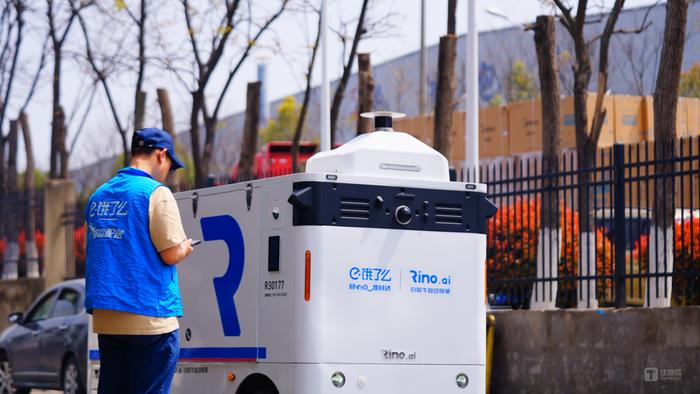
Core Insights - Baixinou Zhida (Beijing) Technology Co., Ltd., an L4 autonomous driving company, has completed a B+ round of financing, raising nearly 500 million RMB in total for its B round [2] - The funding will focus on three main areas: development of automotive-grade unmanned vehicle products, continuous iteration of AI technology, and expansion of commercial scenarios [2] - The company aims to accelerate the "scaled landing" of its services in the last-mile logistics sector [2] Financing Details - The latest round saw participation from existing investors such as SF Express and Linear Capital, along with new investors including Jun Capital, 360 Fund, and Huatai Zijin [2] - This marks the third investment from SF Express within a year, following its initial investment in August 2024 [2] Business Development - Founded in 2019 by a team from Baidu's autonomous driving division, Baixinou initially focused on supermarket deliveries and has since partnered with major retail companies like Yonghui and Hema [2] - Since 2023, the company has shifted its focus to express logistics, specifically targeting the commercialization of delivery from distribution points to service stations [2] - The number of active vehicles has grown from nearly 100 at the end of 2024 to around 1,000 currently, covering over 100 cities and serving major logistics firms such as SF Express, Zhongtong, Jitu, and China Post [2] Cost Efficiency and Operational Impact - Baixinou's unmanned vehicles can reduce last-mile delivery costs by 30%-50%, with specific examples showing a drop in delivery costs from 0.2 RMB to 0.1 RMB per package [3] - The use of unmanned vehicles allows delivery personnel to focus more on collection and delivery services, resulting in a business volume increase of over 20% [3] - The vehicles can operate 24/7, enabling remote scheduling for nighttime delivery tasks [3] Product Development and Standards - A significant focus of the recent financing is on the development of automotive-grade unmanned vehicle products, addressing customer concerns regarding reliability and lifespan [3] - The company is adhering to automotive industry standards throughout the design, supply chain selection, and manufacturing processes, ensuring safety, reliability, and durability [3] - This approach also provides a clear basis for regulatory compliance, facilitating the orderly opening of road rights [3] Future Plans - Baixinou plans to solidify its core express logistics business while expanding into retail replenishment and urban freight scenarios [4] - The R&D team is working on expanding the product line to meet the diverse needs of customers [4] - By 2026, the company aims to have 5,000 active vehicles, with a long-term vision of creating unmanned vehicle products for the global market [4]


Pop Mart Surges 12% After Nearly Quadrupling Profit on Labubu Craze
Tai Mei Ti A P P· 2025-08-21 11:04
Core Viewpoint - Pop Mart International Group Ltd. experienced a significant surge in stock price, rising over 12% following a nearly fourfold increase in first-half profit, driven by high demand for its Labubu dolls both domestically and internationally [1][3]. Financial Performance - Revenue for the first half of 2025 increased by 204% year-on-year to 13.88 billion yuan (approximately $1.93 billion), while net profit attributable to shareholders surged by 397% to 4.57 billion yuan [4]. - The company's previous guidance projected at least 200% revenue growth and a 350% rise in earnings, which was significantly exceeded [4]. Growth Strategy - CEO Wang Ning stated that Pop Mart is on track to meet its 2025 revenue target of 20 billion yuan, with expectations to reach 30 billion yuan this year [5]. - The company plans to launch a miniature version of Labubu designed for smartphones, indicating a focus on product innovation [5]. Market Dynamics - The popularity of Labubu, characterized by its "ugly-cute" aesthetic, has led to viral sales, with products like $30 keychains being endorsed by celebrities [6]. - Revenue from Asia-Pacific markets outside China rose nearly 258% to 2.85 billion yuan, while sales in the Americas increased over 1,000% to 2.26 billion yuan, highlighting the importance of international markets [7]. Intellectual Property and Expansion - Pop Mart emphasizes the significance of intellectual property in its business model and aims to expand its global reach while developing original characters and collaborations [8]. Investor Sentiment - Analysts suggest that the stock's rebound may be influenced by short-sellers covering positions, with expectations of new highs in the coming weeks [9]. - Different investor bases are positioning themselves, with domestic hedge funds and retail investors locking in profits while global institutional investors view Pop Mart as a broader play on China consumption [9]. Regulatory Environment - Despite strong growth, Pop Mart faces regulatory scrutiny in China regarding "blind-box" toys, which may impact its sales strategy [10]. Long-term Outlook - Some analysts express caution regarding the sustainability of Pop Mart's flagship brands, noting that while current sales are robust, future consumer preferences are uncertain [11]. - The stock has increased over 200% since January, leading to concerns about stretched valuations compared to regional peers, although the company is seen as well-positioned for continued growth [11]. Cultural Impact - Labubu's global popularity continues to shape the company's trajectory, with investors optimistic about the ongoing appeal of the "ugly-cute" trend [12].

AI赋能下的体检革命:美年健康如何让优质体检移向“民生货架”
Tai Mei Ti A P P· 2025-08-21 09:44
Core Insights - The article emphasizes the transformation of health check-ups from optional to essential under the "Healthy China" strategy, highlighting the need for improved public understanding of health screenings [3][5] - The company, Meinian Health, proposes an "ALL IN AI" strategy to enhance the value chain of health check-ups through AI and digital capabilities, aiming to break the misconception that price determines effectiveness [3][6][21] Industry Challenges - Traditional health check-up models face three main challenges: misconceptions about effectiveness based on price, technological limitations, and accessibility issues [5][9] - The public often equates higher prices with better screening results, which contradicts data showing that many low-cost routine tests effectively identify health risks [6][7] Technological Innovations - Meinian Health has introduced AI-driven solutions to personalize health check-up packages based on individual risk factors, enhancing the precision and efficiency of screenings [11][14] - The company launched the AI health management assistant "Health Xiaomei," which integrates vast health data and expert knowledge to provide tailored health management services [12][13] Screening Efficiency - AI applications in health screenings have significantly improved detection rates, such as increasing lung nodule detection rates from 30% to over 60% [16][19] - The use of AI in various diagnostic tools, including CT scans and eye examinations, has enhanced diagnostic accuracy and reduced waiting times for patients [17][19] Post-Screening Management - Meinian Health emphasizes that health check-up reports should initiate ongoing health management, providing personalized health plans and real-time consultations [18][22] - The company has established a comprehensive cancer management system that ensures timely intervention for high-risk patients, significantly improving treatment outcomes [21][22] Social Impact - The early detection services provided by Meinian Health have led to substantial healthcare savings, with estimates suggesting over 10 billion yuan saved annually through early cancer interventions [22] - The company's efforts in standardizing medical quality and collaborating with healthcare networks enhance the reliability of health check-up results, making them valuable for clinical diagnosis [23][24] Future Outlook - Meinian Health plans to expand its reach by acquiring additional health check-up centers, particularly in lower-tier cities, to promote equitable access to quality health services [24] - The integration of advanced technologies is expected to further enhance the efficiency and effectiveness of health check-ups, positioning Meinian Health as a benchmark in the industry [24]

赚不到酒店钱的酒店机器人,该何去何从?
Tai Mei Ti A P P· 2025-08-21 09:25
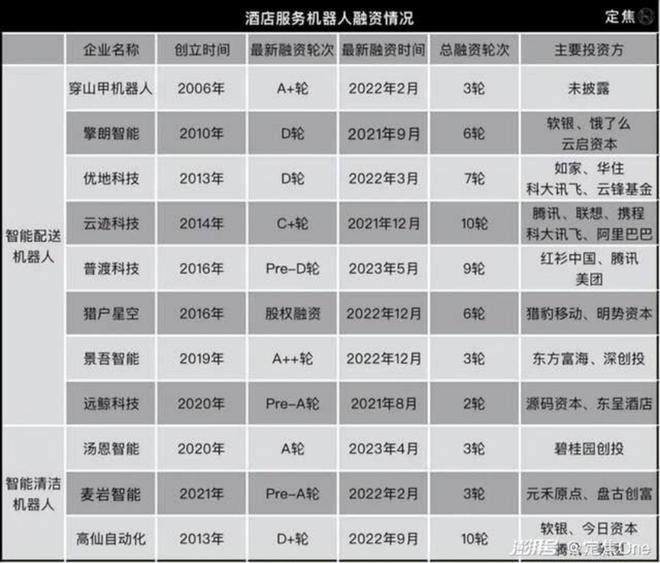
Group 1 - The hotel robot industry has seen widespread adoption, with companies like Huazhu Group and Atour Hotels integrating robots for various services, yet companies like Cloudminds Technology have reported significant losses, totaling 815 million RMB over three years [1][14][17] - The COVID-19 pandemic acted as a turning point for the hotel robot market, significantly increasing demand for contactless services [2] - In 2021, Cloudminds Technology raised 500 million RMB in Series C funding, indicating strong investor interest in the sector [3] Group 2 - The hotel robot market is maturing, with a peak of over 36,000 robots online daily in 2024, completing over 500 million services [8] - Despite advancements, robots like the "Figure 01" are still slower than human workers, highlighting limitations in efficiency [10] - The "Bleisure" travel market is projected to reach 692.73 billion USD in 2024, with younger travelers increasingly favoring tech-enhanced experiences [11] Group 3 - Cloudminds Technology holds a significant market share of 12.2% in the hotel robot sector, but has faced continuous losses and high liabilities [14][17] - The competitive landscape has led to price wars, with robot prices dropping significantly, impacting profit margins [19][20] - The operational costs of implementing robots, including infrastructure upgrades, have hindered their adoption in hotels [21][22] Group 4 - Future strategies for the hotel robot industry include reducing initial purchase costs, offering rental models, and enhancing product capabilities through partnerships [26][27] - Expanding into international markets is seen as a crucial step for growth, especially in regions with high labor costs [28] - Tailoring robot designs to fit cultural preferences in different markets can enhance acceptance and usability [30]

毛利率超特斯拉,小鹏学会了赚钱|钛度车库
Tai Mei Ti A P P· 2025-08-21 02:45
Core Insights - In the first half of 2025, the company reported a revenue of 34.08 billion yuan, doubling year-on-year, with a gross margin of 17.3%, surpassing Tesla in the second quarter [2][5] - The delivery volume reached 197,000 units, exceeding the total for the previous year, while net losses narrowed to 1.14 billion yuan, indicating a potential path to profitability [2][6] - The chairman expressed confidence that the fourth quarter will mark a new phase of self-sustaining profitability [2] Revenue and Delivery Performance - The surge in delivery volume was primarily driven by two high-volume models, MONA M03 and P7+, with P7+ accounting for over 20% of sales in the first half of 2025 [3] - The average selling price per vehicle dropped to 153,000 yuan in Q1 but rebounded to 164,000 yuan in Q2 due to the introduction of higher-margin models [3][5] Gross Margin and Cost Management - The overall gross margin of 17.3% represents an increase for eight consecutive quarters, slightly ahead of Tesla [5] - The company invested 4.19 billion yuan in R&D, a 48.6% increase year-on-year, focusing on core technologies such as AI and autonomous driving [5][6] Financial Health and Future Outlook - Cash reserves increased to 47.57 billion yuan, providing strategic flexibility amid industry pressures [6] - The company expects to deliver between 113,000 and 118,000 units in Q3, with a monthly delivery rate exceeding 40,000 units starting in September [6] Market Position and Competitive Landscape - Despite the positive financial indicators, challenges remain, including a low sales proportion of SUV models and slow overseas market penetration, with only 18,000 units delivered globally in the first half of 2025 [7] - The competitive landscape is intensifying, with rivals like Xiaomi and Zeekr also aiming for profitability, necessitating a focus on operational efficiency and cost control [7] Strategic Transformation - The company has shifted from a "technology romanticism" approach to a more pragmatic focus on operational capabilities, supply chain management, and sales channels [7] - The first half of 2025 marks a significant transformation for the company, transitioning from a technology-centric narrative to one of efficient manufacturing and cost control [7]

淘天宠物年销售破500亿,头部品牌向“左”还是“右”?
Tai Mei Ti A P P· 2025-08-21 02:38
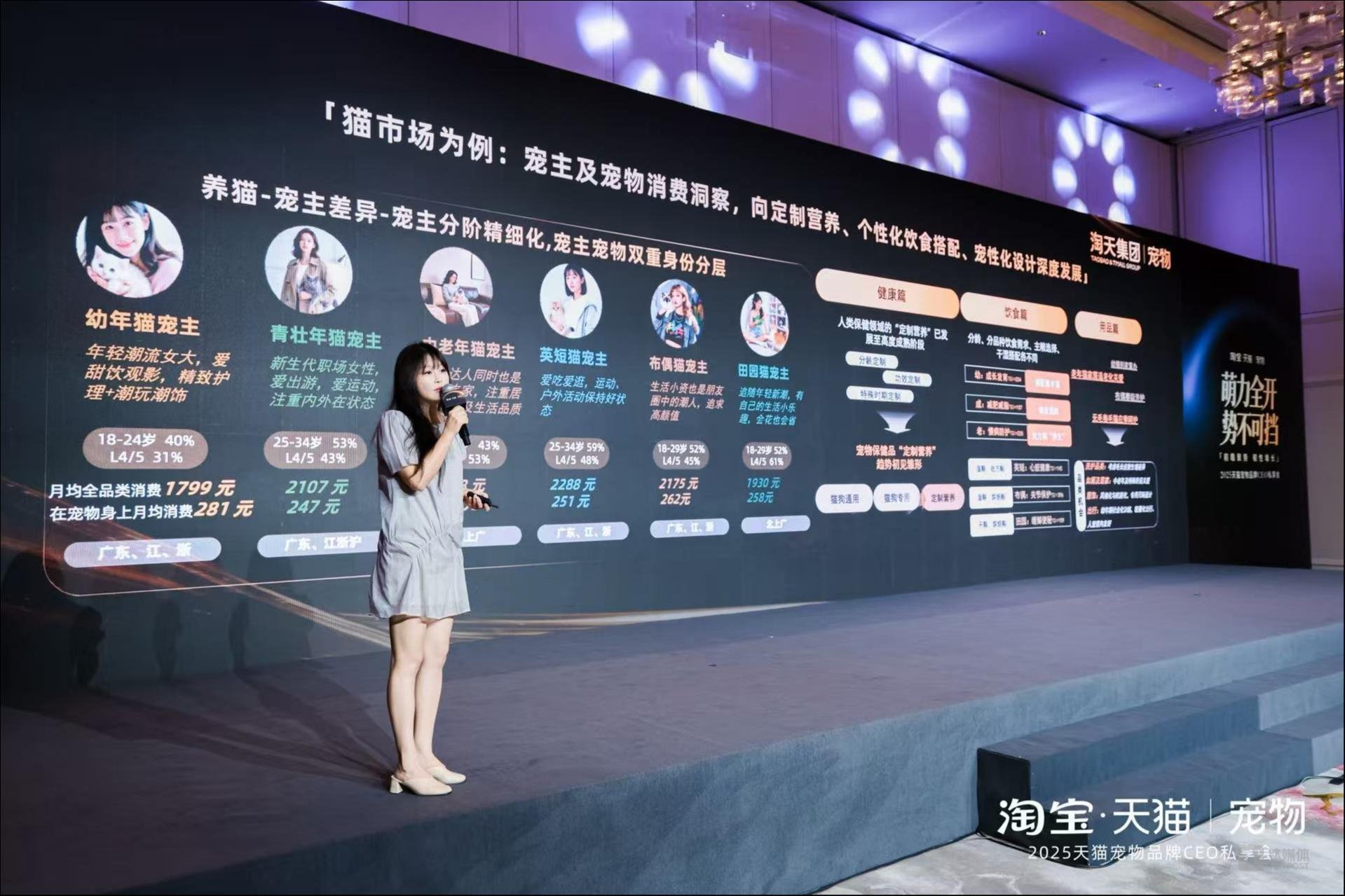
Core Insights - The pet industry is experiencing significant growth, with a total annual transaction volume exceeding 50 billion yuan on Tmall, maintaining double-digit growth [2][4] - Tmall's market share in the pet industry reached 67% during the first phase of the 618 shopping festival, significantly outperforming competitors [2][4] - The overall scale of the Chinese pet industry is estimated at 350 billion yuan, indicating that the market is still evolving and expanding [2][4] Industry Dynamics - Domestic brands are focusing on continuous innovation to maintain competitiveness, while international brands face challenges from the rise of local competitors [2][3] - The pet market is characterized by high channel concentration, with Tmall being the leading online platform for pet consumption [4][5] - The trend towards premiumization in the pet industry reflects a growing consumer base willing to invest in higher-quality products for their pets [4][5] Consumer Education and Market Standards - There is a significant gap in consumer knowledge regarding pet care, particularly in understanding pet age classifications, prompting Tmall and Royal Canin to establish standardized age definitions for pets [5][6] - The need for consumer education is evident, as many pet owners lack basic knowledge about their pets' developmental stages [5][6] Brand Strategies - Royal Canin maintains a stable product line focused on precise nutritional needs, while domestic brands like Guibao are more flexible and responsive to local consumer demands [10][12] - Guibao emphasizes research and data analysis to inform product development, showcasing a commitment to understanding pet behavior and nutritional needs [12][13] - The contrasting strategies of international and domestic brands highlight the diversity and maturity of the pet food market in China [12][13] Market Trends - The pet industry is increasingly influenced by emotional and social factors, with younger consumers seeking to better understand and care for their pets [7][8] - The vaccination rate for pets in China is around 20%, significantly lower than the 60% rate in developed countries, indicating a need for improved pet health awareness [8][9] - The development of instant retail in the pet market presents new opportunities for growth, particularly for female consumers who often purchase heavy pet supplies [9][10]
京城IT四少币圈豪赌:要做下一个MicroStrategy
Tai Mei Ti A P P· 2025-08-21 02:24
Core Insights - The article discusses the transformation of Boyaa Interactive under the leadership of Dai Zhikang, who has shifted the company's focus from traditional gaming to cryptocurrency investments, particularly Bitcoin [1][10][12] - Boyaa Interactive's stock price has surged dramatically, from 0.5 HKD to 8.2 HKD, reflecting a nearly 17-fold increase, largely due to its Bitcoin holdings [11][12] - The company aims to position itself as a leader in the Web3 gaming space, integrating blockchain technology with its gaming operations [16][18] Company Background - Dai Zhikang was one of the "Four IT Youngsters" in Beijing, known for founding Discuz!, which became a leading community software [2][4] - After selling Discuz! to Tencent for 280 million RMB, he continued to innovate within the tech space, including significant contributions to WeChat's QR code payment system [3][4] - He transitioned into angel investing, achieving substantial returns, particularly from his early investment in Boyaa Interactive [5][6] Investment Strategy - In 2023, Boyaa Interactive made a bold decision to invest over 200 million USD in Bitcoin, acquiring 3,416 BTC at an average cost of approximately 59,300 USD each [11][12] - The company has adopted a contrarian investment approach, buying Bitcoin during market downturns, which has led to significant unrealized gains [11][12] - Boyaa's annual report now emphasizes Bitcoin as a core asset, reflecting a shift in performance metrics from traditional gaming metrics to cryptocurrency holdings [12][14] Market Position and Future Plans - Boyaa Interactive has become the largest Bitcoin holder in the Hong Kong market, transforming its image from a struggling gaming company to a significant player in the cryptocurrency space [12][14] - The company plans to continue increasing its Bitcoin holdings, with a target of accumulating 21,000 BTC by 2027 [18][19] - Dai Zhikang envisions integrating gaming with Web3 technologies, aiming to create a new ecosystem that leverages both virtual currencies and blockchain [16][18] Challenges and Criticism - Despite the impressive stock performance, Boyaa's core gaming business has shown signs of decline, with a reported revenue drop of 5.2% in the first half of 2025 [15][19] - Critics argue that relying heavily on Bitcoin and Web3 gaming could be risky, as the latter is still in its infancy and has seen many projects fail [19] - The volatility of Bitcoin poses a significant risk, with the company already facing a loss of 315 million HKD due to price fluctuations [15][19]
从白领到巨头,AI镰刀为什么先割美国?
Tai Mei Ti A P P· 2025-08-21 02:24
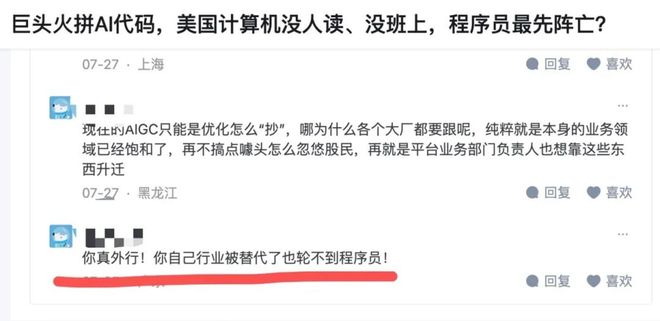
Group 1 - The core argument highlights the disparity in job opportunities for computer graduates in the US, with a significant drop in enrollment in computer science courses and a projected unemployment rate of 5.7% for computer science graduates by 2025, compared to a national rate of 4% [4][5] - AI is significantly impacting white-collar jobs in the US, with companies like Anthropic and Shopify automating tasks traditionally performed by financial teams and requiring proof that AI cannot perform a job before hiring [4][5] - The US has a more advanced industrial internet, leading to a greater reliance on software to replace human labor, which is not as prevalent in China due to its competitive consumer internet landscape [5][7] Group 2 - Major US tech companies are facing substantial challenges due to AI advancements, with Adobe experiencing a significant stock drop and Salesforce seeing a slowdown in core module growth as AI tools replace traditional software functions [5][6] - Google's search business is particularly affected, with its global market share dropping below 90% and a significant decline in click-through rates for AI-generated search results [6] - In contrast, Chinese companies like Baidu are less impacted by AI disruptions, as they have already adapted to a competitive consumer internet environment, and their AI business is growing, with Baidu reporting over 10 billion yuan in new AI revenue [8][9] Group 3 - The capital expenditure on AI infrastructure is projected to be significantly higher for US tech giants, with estimates exceeding $400 billion by 2025, compared to $51 billion for China's top four internet companies [9] - The US government is adopting a more aggressive stance on AI development, while China is taking a more cautious approach focused on macroeconomic stability and safety [10] - The competitive landscape is shifting, with the US leading in closed-source technology development while China is focusing on open-source initiatives to build a robust ecosystem [11][12] Group 4 - ByteDance plans to invest approximately $12 billion in AI infrastructure by 2025, while Baidu continues to lead in AI investments across various sectors [13] - Alibaba and Tencent are primarily focusing their AI investments on cloud services, e-commerce, and social business [13]





谷歌深夜上新,黄仁勋都中意的Pixel手机,为何成不了“安卓标杆”
Tai Mei Ti A P P· 2025-08-20 23:32
Core Insights - The integration of AI with hardware has become a key consideration for consumers when purchasing electronic devices, with Google's new Pixel 10 series being a focal point in this trend [2] - The Pixel 10 series features the new 3nm Tensor G5 chip, which significantly enhances performance and supports over 20 AI capabilities, marking a substantial upgrade in imaging capabilities [2][4] - Despite the advancements, the Pixel brand remains a niche player in the smartphone market, with a market share of only around 1%, even after a 21% year-on-year increase in shipments [10][12] Group 1: Product Features - The Pixel 10 series is powered by the Tensor G5 processor, which shows a 34% improvement in CPU performance and a 60% increase in TPU performance compared to its predecessor [4][6] - The series includes advanced AI features such as Magic Cue, call notes, fraud detection, and intelligent editing through Gboard, enhancing user experience [6] - The imaging capabilities have been upgraded with features like Best Take and Camera Coach, which utilize AI to optimize photo quality and provide real-time shooting advice [7] Group 2: Market Position and Strategy - The starting price of the Pixel 10 series is set at $799, which may limit its competitiveness in the market, especially compared to other brands [9] - Google's strategy focuses on high-end markets, primarily in the US, Western Europe, and Japan, where it captures nearly 90% of its total shipments [12] - The relationship between Google and Android manufacturers is more collaborative than competitive, with Google leveraging the Pixel brand to showcase new Android and AI features, benefiting the overall Android ecosystem [13]

【钛晨报】李强:加大高质量科技供给和政策支持,着力推动生物医药产业提质升级;中国一汽拟入股零跑汽车?双方回应;字节跳动辟谣:与芯原股份并无AI芯片相关合作
Tai Mei Ti A P P· 2025-08-20 23:32
Group 1: Biopharmaceutical Industry Development - The Chinese government emphasizes the need for high-quality technological supply and policy support to enhance the biopharmaceutical industry, focusing on innovation and the development of new drugs [2][3] - The government aims to accelerate the pace of research and development in biopharmaceuticals by concentrating on new targets, compounds, and mechanisms, while also fostering high-end talent in life sciences [2] - There is a significant market potential for innovative drugs in China, and the government encourages timely identification of high clinical value projects and supports enterprises in international cooperation [2][3] Group 2: Innovation and Collaboration - The government promotes a collaborative approach in the biopharmaceutical sector, advocating for integrated services that support the entire research and development chain [3] - Emphasis is placed on leveraging artificial intelligence to enhance various stages of drug development, clinical trials, and production processes [3] - The government encourages the modernization and industrialization of traditional Chinese medicine through the application of modern scientific theories and technologies [3] Group 3: Financial Performance of Companies - Baidu reported a total revenue of 32.7 billion yuan for Q2 2025, with a core net profit of 7.4 billion yuan, reflecting a 35% year-on-year increase [8] - Yonghui Supermarket experienced a revenue decline of 20.73% year-on-year, with a net loss of 241 million yuan in the first half of 2025 [11][12] - Muyuan Foods achieved a revenue of 76.46 billion yuan in the first half of 2025, marking a 34.46% increase, with a net profit of 10.53 billion yuan, up 1169.77% year-on-year [12] Group 4: Market Trends - China's ETF market has surpassed Japan, becoming the largest in Asia with an asset management scale of 681 billion USD as of July 2025 [22] - The Hong Kong IPO market saw a total fundraising amount of 109.4 billion HKD in the first half of 2025, leading the world and showing a 716% year-on-year increase [23]