Tai Mei Ti A P P

Search documents
快手由守转攻
Tai Mei Ti A P P· 2025-06-03 03:37
Core Viewpoint - Kuaishou's Keling AI is accelerating its development with the launch of the new 2.1 series model, which emphasizes semantic response and motion performance upgrades, while significantly reducing video generation costs [1][2] Group 1: Product Development - Keling AI 2.1 includes two versions: Standard (720p, 1080p, supports image-to-video) and Master (1080p, film-level effects, supports both image-to-video and text-to-video) [1] - The cost to generate a 5-second video has decreased from 100 inspiration points to 20 for 720p and 35 for 1080p, while the Master version remains at 100 inspiration points [1][2] - Keling AI has undergone rapid updates, with over 20 iterations since its 1.0 version release last June, and the user base has grown significantly [5][6] Group 2: Financial Performance - Kuaishou's Q1 2025 report shows a 3.4% decline in profit year-on-year, but adjusted net profit increased by 4.4%, leading to a stock price increase of over 10% in subsequent trading days [2][3] - Keling AI's revenue exceeded 150 million yuan in Q1 2025, indicating a strong commercial progress [4][8] - The average daily active users reached 408 million, with a year-on-year growth of 3.6%, while monthly active users reached 712 million, growing by 2.1% [4] Group 3: Strategic Positioning - Kuaishou has elevated Keling AI to a first-level department, indicating its strategic importance within the company [8] - The company is focusing on AI as a core business area, with plans to expand its international presence and enhance its service offerings [8][10] - Kuaishou's cautious approach to AI investment contrasts with other major players like Tencent and Alibaba, who are making significant financial commitments to AI development [9][10]

印度低迷、中东疲软,新兴手机市场集体“失速”
Tai Mei Ti A P P· 2025-06-03 02:03
Core Insights - The global smartphone market outlook has significantly declined, with a projected year-on-year growth of only 0.6% in 2025, reaching 1.24 billion units, down from an earlier forecast of 2.3% growth [2] - Emerging markets, particularly India, Southeast Asia, and the Middle East, have experienced a slowdown in smartphone shipments, attributed to inventory adjustments, the end of post-pandemic replacement cycles, rising product costs, and macroeconomic uncertainties [3][4][6] - The high-end smartphone segment continues to grow, with demand for devices priced over $800 reaching new highs, indicating a bifurcated market structure where premium products are less affected by economic downturns [7][8] Market Performance - In Q1 2025, India saw an 8% decline in smartphone shipments, totaling 32.4 million units, while Southeast Asia experienced a 3% drop, marking its first decline since 2024 [4] - The Middle East also faced a 4% decrease in shipments, totaling 11.7 million units [4] - The overall smartphone market is expected to remain flat, with a slight increase of 0.1% globally, while emerging markets are projected to be the largest growth drivers until 2029 [11] Competitive Landscape - Apple has gained significant market share in emerging markets, achieving a 19% market share in Q1 2025, driven by strong sales of the iPhone 16 series [10] - The smartphone market is increasingly polarized, with high-end consumers seeking brand and performance upgrades, while budget-conscious consumers focus on value [7][8] - Companies are adapting to external uncertainties, such as changing tariff policies, by diversifying channels and maintaining flexible product strategies [6][11] Future Trends - The shift towards experience-driven consumption in emerging markets is becoming a key competitive factor, with brands introducing subscription services to meet diverse consumer needs [12] - Long-term growth opportunities for Chinese brands in global markets will depend on effective risk management and compliance with local regulations [13][15] - The evolving market dynamics necessitate a balance between local policy requirements and the need for foreign investment, highlighting the importance of strategic partnerships [15]

【钛晨报】反对“内卷式”恶性竞争,中国汽车工业协会发布重要倡议;香港《稳定币条例》正式成为法例;特朗普称将把进口钢铁关税从25%提高至50%
Tai Mei Ti A P P· 2025-06-02 23:42
Group 1 - The core viewpoint of the article emphasizes the importance of maintaining fair competition in the Chinese automotive industry, particularly in the rapidly growing electric vehicle sector, where new car sales of electric vehicles have exceeded 40% [2][3] - The China Association of Automobile Manufacturers (CAAM) has issued an initiative urging all companies to adhere to fair competition principles and avoid monopolistic practices that harm other businesses [2][3] - The initiative highlights that the recent decline in industry profitability is largely due to chaotic price wars, which disrupt normal business operations and threaten the safety of the supply chain [2][3] Group 2 - The CAAM's initiative calls for companies to conduct self-examinations and rectifications in accordance with national laws and regulations, particularly regarding pricing strategies and advertising practices [2] - The association warns that the ongoing price wars, initiated by a specific automaker's significant price cuts, could further squeeze profit margins and negatively impact product quality and after-sales service [2][3] - The initiative stresses the need for continuous investment in product after-sales service and innovation to ensure the healthy development of the industry [2][3]


不再高歌猛进,理想汽车“慢”下来了|钛度车库
Tai Mei Ti A P P· 2025-05-31 01:17
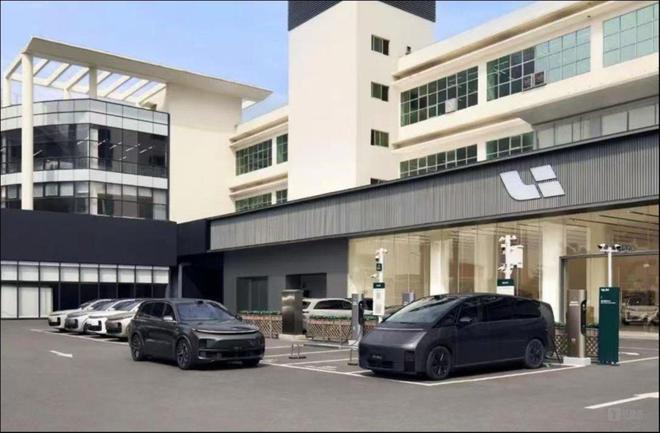
Core Viewpoint - The financial performance of Li Auto in Q1 2025 shows revenue growth but reveals underlying concerns about slowing growth and market competition [2][3] Financial Performance - Li Auto reported Q1 2025 revenue of 25.93 billion RMB, a year-on-year increase of 1.1% but a quarter-on-quarter decline of 41.4% [3] - The company has experienced a second consecutive quarter of revenue growth below double digits, contrasting sharply with the over 100% growth seen in 2023 [3] - The average selling price of vehicles decreased from 302,000 RMB in the previous year to 266,000 RMB, a drop of 12% [3] - Despite the pressure on selling prices, the gross margin remained stable at 19.8%, slightly up by 0.5 percentage points year-on-year [4] Cost Management - Total operating expenses for Q1 2025 were 5 billion RMB, down from 5.9 billion RMB in Q1 2024, reflecting a reduction in employee compensation and improved operational efficiency [5] - R&D expenses decreased to 2.5 billion RMB from 3 billion RMB, influenced by lower employee compensation and the pace of new vehicle plans [5] Future Outlook - For Q2 2025, Li Auto expects deliveries between 123,000 and 128,000 units, with revenue projected to reach between 32.5 billion and 33.8 billion RMB [6] - The company has revised its annual sales target from 700,000 to 640,000 units, indicating a need to deliver 510,000 units in the second half of the year [6] - Upcoming models, including the i8 and i6, will face intense competition in the 200,000 to 300,000 RMB price range [7] Strategic Challenges - Li Auto is at a strategic crossroads, balancing between maintaining a high-end market position and entering the mass market, which could lead to intensified price competition [9][10] - The company is transitioning from the 2024 to 2025 model year, with expectations of maintaining a gross margin around 19% in Q2 [9] Market Position - Li Auto maintains a strong financial position with cash reserves of 110.7 billion RMB and has been profitable for ten consecutive quarters [8] - The company faces a critical challenge as it navigates a market where growth is no longer easy, emphasizing the need for sustainable growth strategies [11]

成立仅一年,这家魔幻车企要吊打比亚迪 | 马上评
Tai Mei Ti A P P· 2025-05-30 23:15
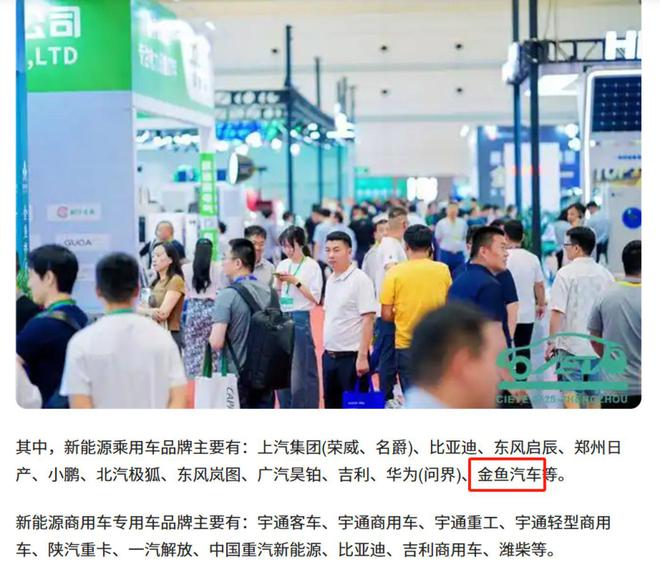
Core Viewpoint - The emergence of a new automotive brand, Jin Yu Automobile, at the 2025 Zhengzhou New Energy Vehicle and Light Storage Charging Exhibition, highlights the competitive landscape of the new energy vehicle sector in China [1][3]. Group 1: Company Overview - Jin Yu Automobile is a newly established brand that aims to enter the competitive new energy vehicle market, showcasing its bold naming strategy and innovative design [3][7]. - The company claims to have "core technology," including solid-state batteries, which positions it as a potential disruptor in the market, challenging established players like CATL, BYD, and Tesla [9][11]. Group 2: Marketing and Business Strategy - Jin Yu Automobile is actively recruiting nationwide partners with a low entry cost, promoting a wealth-sharing model that appeals to potential investors [11][16]. - The brand's marketing strategy includes a slogan that directly competes with BMW, emphasizing affordability and value [16]. Group 3: Company Background and Operations - Jin Yu Automobile was established on April 29, 2024, and has quickly progressed to participate in automotive exhibitions, indicating a rapid development cycle [31]. - Despite its claims of advanced technology, there is a lack of official records or presence in government databases, raising questions about its legitimacy [35][38]. Group 4: Leadership and Connections - The actual controller of Jin Yu Automobile, Zhu Qinpeng, has connections to other companies in the automotive and chemical sectors, suggesting a network of related business interests [38][40]. - The brand's aggressive marketing tactics and partner recruitment strategies mirror those of a previous venture in the pesticide industry, indicating a potentially controversial business model [45][46].

昆药集团Q1“开门黑”,华润三九入主第三年靠什么兑现双位数增长? | 直击业绩会
Tai Mei Ti A P P· 2025-05-30 13:28
Core Viewpoint - Kunming Pharmaceutical Group's stock price has experienced significant volatility, with a sharp decline following a brief rise, raising concerns among investors regarding its performance and future growth plans [2][3]. Financial Performance - In 2024, Kunming Pharmaceutical Group reported revenue of 8.401 billion yuan, a slight decrease of 0.34% year-on-year, while net profit attributable to shareholders increased by 19.86% to 648 million yuan [3]. - However, in Q1 2025, the company faced a substantial decline in performance, with revenue dropping by 16.53% to 1.608 billion yuan and net profit falling by 31.06% to approximately 90.48 million yuan [3][7]. - The company aims for double-digit revenue growth in 2025, despite the challenges faced in the first quarter [5][7]. Strategic Transition - The company is undergoing a significant transformation in its sales and channel management, moving from a decentralized distribution model to a more integrated and structured approach [4][5]. - The new channel system aims to enhance brand recognition and operational efficiency, focusing on long-term brand building and better collaboration with distributors [5][7]. Market Focus - Kunming Pharmaceutical Group is targeting the aging population and chronic disease management, positioning itself as a leader in the "silver health industry" [7][8]. - The company’s product portfolio includes treatments for cardiovascular diseases, with a noted decline in revenue from this segment, which fell by 17.45% to 2.195 billion yuan in 2024 [8]. Product Performance - Sales of key products, such as the blood stasis series and Tianma injection, have shown mixed results, with significant declines in some areas, such as a 54.66% drop in sales volume for the freeze-dried blood stasis injection [9]. - The company is actively working to improve its market presence and sales channels, particularly in retail and smaller medical institutions [9].


中国智能化汽车的三次出海
Tai Mei Ti A P P· 2025-05-30 10:04
Core Insights - The article highlights the emerging trend of Chinese automotive companies expanding their smart vehicle capabilities internationally, alongside their electric vehicle advancements [1][12] - It identifies three waves of globalization in the Chinese automotive sector: the export of smart driving technology, the establishment of manufacturing plants abroad, and the globalization of automotive cloud services [13] Group 1: Smart Driving Technology Export - The first wave involves the export of autonomous driving technology and smart driving products, with companies like Xpeng and NIO leading the charge [2] - Baidu's "Luobo Kuaipao" has deployed 1,000 autonomous vehicles in Dubai, indicating a significant step in scaling up overseas operations [3] - Xiaoma Zhixing's Robotaxi service revenue share increased from 4.8% to 12.1% year-on-year, showcasing the growing demand for smart driving solutions [3][4] Group 2: Manufacturing Expansion - The second wave sees Chinese automotive manufacturers establishing factories abroad, with BYD's factory in Thailand being a notable example, featuring an investment of over 69.8 million RMB and a production capacity of 150,000 vehicles annually [6] - BYD's market share in Thailand has reached 30%, with a gross margin of 28.87% in overseas markets, significantly higher than in domestic markets [6][7] - The establishment of factories in strategic locations allows Chinese companies to avoid trade barriers and leverage regional trade agreements, enhancing their competitive edge [7][8] Group 3: Cloud Services Globalization - The third wave focuses on the globalization of automotive cloud services, essential for processing the vast amounts of data generated by autonomous vehicles [9][10] - Huawei Cloud and Alibaba Cloud are expanding their services globally, providing critical infrastructure for data processing and algorithm updates for smart vehicles [11] - Huawei Cloud has established a presence in 33 geographical regions, supporting over 140 operators and 500 financial clients, indicating its significant role in the automotive cloud service landscape [11]
中炬高新内控风波再起:突遭诉讼要求撤销罢免决议,董事会换届两度“难产”
Tai Mei Ti A P P· 2025-05-30 09:28
Core Viewpoint - The ongoing power struggle among shareholders of Zhongju Gaoxin (600872.SH) continues, with a recent lawsuit from Talen Tong Fund Management challenging key resolutions that removed directors associated with the Baoneng Group, indicating a potential counterattack from Baoneng [2][3][4] Shareholder Dispute - Talen Tong has filed a lawsuit to annul the resolutions from the 2023 extraordinary general meeting and the 15th meeting of the 10th board of directors, citing procedural flaws in the meeting [3][4] - The resolutions in question involved the removal of four directors and three executives linked to the Baoneng Group, which suggests that Talen Tong's actions align with Baoneng's interests [3][4][5] Board Election Delays - The board and supervisory board elections have been postponed twice, reflecting the intensifying shareholder conflict within the company [4][5] - The company has cited ongoing preparations for the elections as the reason for the delays, which were initially set for March 22, 2025, then postponed to May, and again proposed for a two-month delay [4][5] Financial Performance - Zhongju Gaoxin's financial performance has deteriorated, with a reported revenue of 5.519 billion yuan for 2024, a year-on-year increase of 7.39%, but a significant decline in net profit to 893 million yuan, down 47.37% [5] - In the first quarter, the company recorded a revenue of 1.102 billion yuan, a decrease of 25.81%, and a net profit of 181 million yuan, down 24.24% year-on-year, indicating a troubling trend of declining revenue and profit [6]


苹果打起价格战,国产手机只能靠边站
Tai Mei Ti A P P· 2025-05-30 08:33
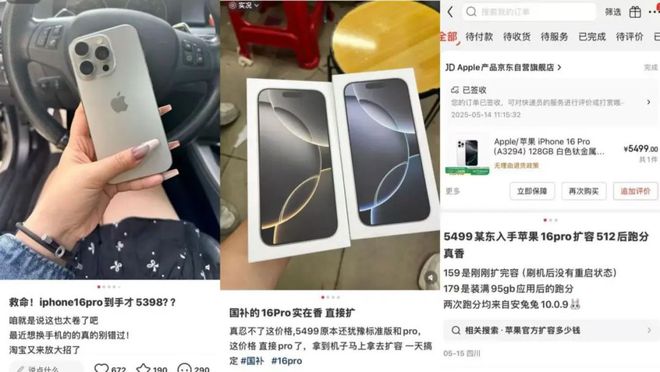
Core Insights - Apple has successfully regained market share in China with the iPhone 16 Pro, achieving a significant increase in activation rates due to a strategic price reduction [3][4] - The price drop has led to a surge in sales, with the iPhone 16 Pro activating 520,000 units in week 20 of 2025, nearly 3.8 times the previous week, while the Pro Max model saw a 100% increase [3][4] - Despite a strong sentiment for supporting domestic brands, consumer purchasing behavior shows a preference for Apple products, with over 63% of consumers choosing Apple when price is comparable [6][7] Market Dynamics - Apple's market share in China reached 21.5%, surpassing domestic brands like Huawei and Xiaomi, marking a return to the top position after several quarters [4] - The price strategy is seen as a response to the competitive pressure from high-end domestic models and aims to build momentum ahead of major sales events [4][8] - Domestic brands face challenges in high-end market profitability due to Apple's pricing strategy, which diminishes the perceived value of similar-priced domestic models [8][9] Consumer Behavior - Consumers express a desire to support domestic brands but often choose Apple due to its ecosystem and user experience, which are perceived as superior [6][7] - The integration of Apple products creates a seamless user experience that is difficult for domestic brands to replicate, leading to a loyalty that transcends price considerations [6][12] Competitive Landscape - Domestic brands are struggling with a "three dilemmas" situation: profit pressure in the high-end market, ecological shortcomings compared to iOS, and challenges in the mid-to-low-end market [8][9] - The competition is shifting towards AI capabilities and innovative scenarios, with domestic brands exploring new user experiences that Apple has not yet addressed [11][12] - The future of competition may hinge on who can redefine the smartphone experience, with AI and integrated ecosystems becoming critical factors [13][14] Strategic Recommendations - Domestic brands need to focus on creating a comprehensive ecosystem that can rival Apple's, emphasizing seamless integration across devices and services [11][12] - Innovations in AI and unique user scenarios could provide domestic brands with opportunities to differentiate themselves from Apple [12][13] - The path to success for domestic brands lies not in competing on hardware alone but in establishing a compelling reason for users to switch from Apple [15][16]

兴业银行千万存款换实习:私行业务转型困境下的畸形创新
Tai Mei Ti A P P· 2025-05-30 04:16
Core Viewpoint - The "Elite Internship Program" launched by Industrial Bank's private banking department has sparked widespread controversy and criticism for linking internship opportunities to high deposit requirements, raising concerns about fairness and social equity [2][6][7]. Group 1: Program Details and Reactions - The program requires non-private banking clients to deposit an additional 10 million yuan and existing private banking clients to deposit an additional 5 million yuan to secure internship opportunities at 50 well-known companies [2]. - Following the exposure of the program, companies like ByteDance and CITIC Securities denied any collaboration, emphasizing the independence of their recruitment processes [2][6]. - Industrial Bank acknowledged the misunderstanding caused by incomplete promotional statements and has suspended the program, clarifying that internships would be determined through company interviews rather than direct referrals [2][3]. Group 2: Motivations Behind the Program - The primary motivation for launching the program is to retain existing high-net-worth clients and attract new ones amid intense competition in the banking sector [3][4]. - The program aims to enhance client loyalty by offering scarce internship opportunities, addressing the significant concern of children's career development for wealthy families [3][4]. Group 3: Industry Context and Challenges - Industrial Bank faces pressure for business transformation, with a notable decline in non-interest income and a drop in net interest margin, indicating a struggling traditional profit model [4][9]. - The bank's credit card business has also seen a rise in non-performing loans, further complicating its financial health [4]. Group 4: Service Innovation and Competition - The "Elite Internship Program" represents a bold attempt at service innovation, extending beyond traditional wealth management to encompass various aspects of clients' lives [5][11]. - However, the program's approach has blurred the lines of fair competition, commodifying internship opportunities and raising ethical concerns about social equity [5][6][7]. Group 5: Public and Regulatory Response - The public reaction has been overwhelmingly negative, with widespread criticism of the program as a blatant challenge to fairness and social justice [6][7]. - Regulatory bodies are expected to investigate the program for potential violations of financial regulations, which could lead to reputational damage and operational impacts for Industrial Bank [8][9]. Group 6: Broader Implications - The incident highlights deeper issues within the private banking sector, including the challenges of differentiation and the need for banks to adapt to the evolving demands of high-net-worth clients [10][11]. - The program's failure underscores the importance of maintaining ethical standards and focusing on genuine service capabilities rather than seeking shortcuts for business growth [13].