汽车商业评论

Search documents
浪涌姑苏,轩辕同学巨浪5期毕业了!
汽车商业评论· 2025-12-05 23:06
Core Viewpoint - The article emphasizes the importance of collaboration and innovation in the new automotive ecosystem, highlighting the graduation ceremony of the "Giant Wave 5" program and the ongoing development of the "Xuanyuan School" as a platform for industry leaders to connect and grow together [6][8][39]. Group 1: Event Overview - The "Giant Wave 5" graduation ceremony took place on December 5, 2023, in Suzhou, attended by over 130 industry elites, including leaders from the automotive supply chain and representatives from Xuanyuan School [6][9]. - The event featured a speech by Dr. Jia Ke, emphasizing the core slogan of Xuanyuan School: "Waves embrace waves, light embraces light," which reflects the spirit of innovation and collaboration [8][19]. Group 2: Program Highlights - The "Giant Wave 5" program involved two years of in-depth study and practical experiences across eight cities, including visits to major automotive companies such as NIO and SAIC [11][19]. - Graduates expressed their appreciation for the program, noting the significant personal and professional growth they experienced, as well as the valuable connections made with like-minded peers [15][19]. Group 3: Educational Philosophy - Xuanyuan School aims to create a dynamic learning environment that combines practical industry knowledge with theoretical insights, fostering a community of automotive professionals [35][39]. - The curriculum is designed to address the specific needs of the automotive industry, providing actionable solutions and fostering collaboration among participants [28][30]. Group 4: Future Directions - Xuanyuan School is set to launch the "Giant Wave 6" and "Lingxuan 6" programs, which will feature a joint class aimed at enhancing innovation across the entire automotive value chain [39]. - The school continues to evolve, transitioning from a traditional educational model to a more integrated ecosystem that emphasizes continuous learning and industry engagement [35][37].


45位大咖“说长论短”,中国新汽车CES第一天
汽车商业评论· 2025-12-05 23:06
Core Insights - The article discusses the mixed outlook for the Chinese automotive industry in 2025, highlighting both positive developments and ongoing challenges [4][6][8]. - The theme of the WNAT-CES 2025 event is "Long-term and Short-term," emphasizing the need for a balance between immediate concerns and future strategies [8][10]. Industry Overview - In the first ten months of 2025, the sales profit margin for the Chinese automotive industry was 4.4%, which is an improvement over 2024 but still among the lowest in five years [4]. - October 2025 saw a sales profit margin of only 3.9%, marking the lowest for the same month in five years [4]. Event Details - The WNAT-CES 2025, held in Suzhou, included two main forums, eight specialized sub-forums, a new automotive technology exhibition, and a celebration night, with nearly a hundred speakers and a thousand attendees from 12 vehicle groups and 300 supply chain companies [12][13]. Key Themes and Discussions - The event aimed to address the urgent need for a balanced approach between immediate survival challenges and long-term strategic planning in the automotive sector [8][10]. - Discussions included the current state of new automotive technology cooperation and supply chain development, as well as the evolving relationships between manufacturers and suppliers [13][46]. Industry Challenges - The article notes that the automotive market has been characterized by intense competition, price wars, and a lack of profitability, leading to a collective realization of the need to move away from internal competition towards value-based competition [20][21]. - The focus is shifting from price competition to breakthroughs in core technologies, user experience, and brand value [21][22]. Future Outlook - Industry leaders predict that it may take another ten years for the automotive sector to stabilize, with only about ten major players likely to remain in the market [16]. - The article emphasizes the importance of collaboration and innovation among industry players to build a resilient and vibrant automotive ecosystem [18][19]. Technological Advancements - The article highlights the ongoing transformation towards intelligent and connected vehicles, with a focus on integrating AI and smart technologies into automotive systems [30][85]. - The development of intelligent chassis and the importance of a robust supply chain for innovation and efficiency are also discussed [60][64]. Market Trends - The article notes a significant increase in the export of plug-in hybrid vehicles, with a growth rate of 240%, indicating strong global market potential [58]. - The article also mentions the need for diverse powertrain strategies, with hybrid and electric vehicles coexisting as complementary technologies [50][56]. Conclusion - The automotive industry is at a critical juncture, facing both challenges and opportunities as it navigates technological advancements and market dynamics [4][8][20]. - The emphasis on collaboration, innovation, and a balanced approach to short-term and long-term strategies will be crucial for the industry's future success [8][18][19].
贾可:中国汽车淘汰赛至少还有十年
汽车商业评论· 2025-12-05 07:31
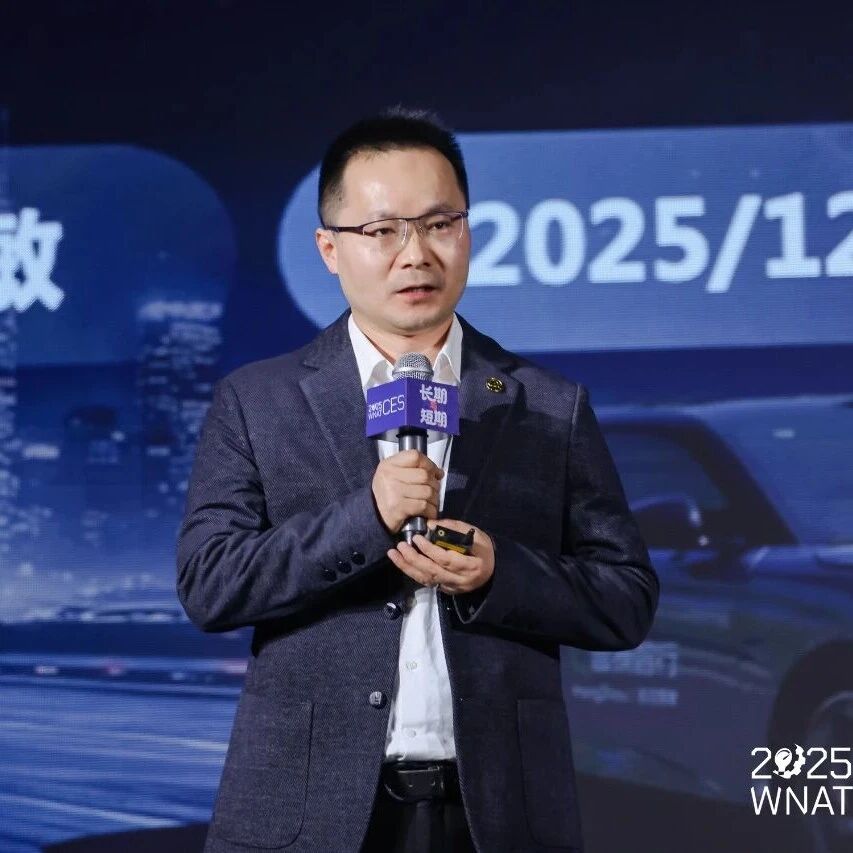
Core Viewpoint - The Chinese automotive industry has not yet reached a stable state, and it may take another 10 years for the market to stabilize, with approximately 10 major automotive giants expected to remain in the future [3][35]. Group 1: Industry Overview - The WNATCES 2025 event focused on the theme of "long-term vs. short-term," featuring various forums and exhibitions aimed at addressing current industry pain points and promoting sustainable development in the new automotive ecosystem [5][7]. - Historical context shows that the automotive industry has undergone significant changes over the past century, with periods of fragmentation followed by consolidation, particularly in Europe and the U.S. [12][15][17]. Group 2: Market Dynamics - Predictions from industry leaders suggest a competitive landscape where only a few manufacturers will survive in the coming years, with estimates ranging from 3 to 10 major players by 2030 [10][19]. - The transition from traditional fuel vehicles to electric and intelligent vehicles has created new opportunities and challenges, with core components like the "three electrics" (battery, motor, and electronic control) becoming critical for competitiveness [20][22]. Group 3: Competitive Landscape - The current automotive market is categorized into six major camps, including traditional private enterprises, state-owned groups, new car-making forces, and joint ventures, each with distinct strategies and market positions [26][29]. - The rise of new entrants in the automotive sector, particularly those leveraging technology and innovative business models, indicates a dynamic and evolving competitive environment [31][38]. Group 4: Future Outlook - The industry is expected to continue evolving, with a focus on both cost leadership and superior user experience as key competitive strategies [24][30]. - The integration of AI and other advanced technologies into the automotive sector presents significant potential for transformation and growth, suggesting that the industry is still in a phase of exploration and development [33][43].

谈崩的日系三巨头,搭伙闯美国
汽车商业评论· 2025-12-05 07:31
Core Viewpoint - Mitsubishi Motors is seriously considering relocating production back to the United States, actively pursuing collaboration with Nissan and Honda to jointly produce vehicles in the U.S. [3][6] Group 1: Current Situation and Challenges - Since closing its joint venture with Chrysler in Illinois in 2015, Mitsubishi has completely exited U.S. production, relying solely on imports for its sales in the market [4]. - This strategy has exposed Mitsubishi to multiple risks, including fluctuations in U.S. tariff policies and market demand, alongside high labor and material costs, leading to increasing pressure on its North American operations [4]. - In FY 2024, Mitsubishi's sales in the U.S. were only 113,000 units, about one-tenth of Nissan or Honda's sales during the same period, and the company reported business losses from April to September of that year [4]. Group 2: Collaboration with Nissan and Honda - The collaboration with Nissan and Honda is seen as a key pathway for Mitsubishi to break its reliance on imports and regain growth momentum in the competitive North American market [6]. - The core focus of this collaboration includes exploring joint assembly for mass production of cross-border vehicles and participating in the joint development of new models [6]. - Mitsubishi aims to finalize plans soon, with substantial progress expected before the announcement of its next mid-term plan, potentially as early as spring [6]. Group 3: Market Dynamics and Strategic Fit - The combined market share of Mitsubishi, Nissan, and Honda in the U.S. exceeds 15%, slightly surpassing Toyota, indicating that even small-scale joint production could significantly reduce costs and enhance market competitiveness [8]. - Nissan has assembly plants in Mississippi and Tennessee, but its capacity utilization has been declining due to weak market demand, while Honda's plants are operating at full capacity [8]. - Mitsubishi's lack of its own factories makes this collaboration a strategic fit to utilize Nissan's idle capacity and Honda's expansion needs [9][10]. Group 4: Historical Context and Future Prospects - The discussions for collaboration among Mitsubishi, Nissan, and Honda are not new, having been preceded by multiple rounds of negotiations [13]. - In March 2024, Nissan and Honda reached a preliminary agreement, laying the groundwork for future collaboration, which included sharing electric vehicle batteries and jointly developing autonomous driving software [14][15]. - However, Mitsubishi's participation in a proposed merger between Nissan and Honda faced challenges, leading to a shift towards a more open and pragmatic collaboration approach [19][21]. Group 5: Open Cooperation and Future Directions - The breakdown of the merger talks has not halted the collaboration process; instead, it has led to a more flexible cooperation model among the three companies [26]. - Nissan's new CEO has expressed an open attitude towards various forms of collaboration without touching on capital integration, emphasizing the importance of operational flexibility to meet market demands [28]. - Mitsubishi is also looking to expand its collaboration beyond production, with ongoing discussions about joint efforts in regions outside the U.S. [28].

新汽车CES上,吉利供应链副总裁发出三大行业倡议
汽车商业评论· 2025-12-05 07:31
Core Viewpoint - The Chinese automotive industry is transitioning from a follower to a leader, driven by technological innovation and the restructuring of supply chains [4][12]. Industry Status and Trends - The Chinese automotive industry has developed significant advantages in industrial density, value density, and talent density, leading to rapid growth and becoming a focal point globally [10]. - The supply chain is evolving from a supporting role to a more prominent position, with an increasing proportion of global vehicles utilizing Chinese components [12]. - The industry is experiencing fierce competition, with profit margins still lagging behind the average for large enterprises, which may limit R&D investments [13]. Key Initiatives and Strategies - Three major initiatives were proposed: 1. Build a deeply collaborative industrial ecosystem while allowing for individual autonomy 2. Strengthen density and promote sustainable development 3. Collaborate internationally to enhance the global supply chain and the reputation of Chinese automotive brands [5]. - The company aims to establish a comprehensive, integrated supply chain that spans various vehicle types and components, ensuring robust support across its brands [15][16]. Supply Chain Management - The company is focusing on long-term cooperation, strategic trust, and mutual empowerment among partners, emphasizing a market-driven pricing model [19][20]. - A 5A evaluation system for suppliers has been established, focusing on quality, sustainability, and management capabilities [24]. - The logistics strategy is shifting towards an integrated model, enhancing collaboration across the supply chain [24][26]. Future Expectations - The automotive industry requires collaborative efforts for high-quality development, focusing on shared technology standards, basic research, and supply chain resilience [29]. - The company is committed to enhancing the resilience and value creation of the Chinese automotive industry while fostering a competitive environment that drives innovation [29][31].

京东广汽卖车被骂上热搜,然后呢?
汽车商业评论· 2025-12-03 23:07
新汽车生态合作,报名中国版CES! 撰文 | 张 霖郁 编辑 | 黄 大路 设计 | 甄 尤美 7位车主,坐在广汽埃安、京东和宁德相关负责人面前,双方隔着3米左右的矩形桌,两侧坐着媒体。 刚开始,气氛并不好。 "其实,我觉得你们三方应该把我们首批车主当成宝。坦白讲,我们是冒着很大风险来京东买车的。当天上市发布会我就下定了。下单后关于贷 款分期,有个利息问题,我不确定买车后自己会不会卖车,然后就去找京东客服问利息怎么算。" 埃安UT super车主高先生首先发问。他说:"这么一个小问题折磨了两个小时,京东客服反复用标准话术回答,但就是没有回答我的问题。几天 后,我才得到明确答复。" 高先生接着问:"埃安UT super是京东、广汽和宁德一起做的,但对我们来说是一个整体,现在有问题到底应该找谁,京东的客服很明显不够用 了。" 这一天是2025年12月1日,北京北三环的某一家酒店会议室内,京东"国民好车"交付引发了全网争议,话题甚至冲上热搜。 7位经历过类似问题的用户被邀请到现场,与三方直接对话。 坐在高先生以及其他6位车主对面的,是广汽埃安BU副总裁、埃安品牌首席用户官杨龙,京东汽车营销副总裁陆欢,宁德时代电服副 ...




英伟达开源自动驾驶软件,中国车企要接吗?
汽车商业评论· 2025-12-03 23:07
Core Insights - The article discusses the launch of the Alpamayo-R1 model by NVIDIA, which is the world's first open-source visual-language-action (VLA) model designed for autonomous driving scenarios, enhancing decision-making through "chain reasoning" [5][10][12] - The model significantly improves safety in complex long-tail scenarios, achieving a 12% increase in planning accuracy, a 35% reduction in accident rates, and a 25% decrease in near-miss incidents [10][12] - NVIDIA's strategy includes expanding its ecosystem influence by providing open-source technology, allowing automakers to quickly assemble autonomous driving systems [14][16] Technical Advancements - The Alpamayo-R1 model processes sensor data into natural language descriptions, enabling step-by-step reasoning similar to human drivers [5][10] - The model's low latency response of 99 milliseconds enhances its effectiveness in real-time decision-making [10] - The accompanying Cosmos developer toolchain offers resources for data construction, scene generation, and model evaluation, facilitating model fine-tuning and deployment [12] Strategic Considerations - NVIDIA's move to open-source its core algorithms is seen as a strategic effort to solidify its market position and drive demand for its hardware, such as the Orin/Thor automotive-grade chips [14][16] - The initiative is expected to establish industry standards for safety and evaluation, aligning with global regulatory demands for transparency in autonomous driving [19] - The shift from closed to open-source models in the autonomous driving sector may trigger a new wave of open-source development, as decision-making algorithms become critical competitive factors [24] Industry Impact and Opportunities - NVIDIA's open-source approach intensifies competition between open-source and closed-source ecosystems in the autonomous driving industry [21][24] - Chinese automakers, heavily reliant on NVIDIA's platforms, stand to benefit from the open-source tools for local algorithm development and scene tuning [26][27] - However, the industry faces challenges, including a significant talent gap in autonomous driving engineering, with a projected shortfall of over one million professionals by 2025 [29][30]

6年砸进上百亿,丰田章男造城烂尾了吗
汽车商业评论· 2025-12-02 23:07
Core Viewpoint - Toyota's Woven City project represents a bold initiative to create a living laboratory for future mobility and urban living, aiming to test and develop next-generation transportation technologies and sustainable urban infrastructure [4][12][18] Group 1: Project Overview - Woven City is located at the base of Mount Fuji and is designed as a city for mobility and innovation, allowing for various transportation experiments without public road regulations [6][10] - The project is a significant investment of $10 billion, utilizing the site of a former Toyota factory that closed in 2018 [6][8] - The first phase will accommodate 360 residents, primarily employees from Toyota and its subsidiary Woven by Toyota [4][8] Group 2: Purpose and Goals - The primary motivation for building Woven City is to facilitate Toyota's transformation from a traditional automaker to a modern mobility company, especially in the fields of software and autonomous vehicles [8][18] - Woven City aims to serve as a testing ground for various mobility solutions, including the e-Palette autonomous vehicle concept and other innovative transportation technologies [9][10] Group 3: Community and Collaboration - The city will host two main participant groups: "Weavers," who are passionate about expanding mobility options, and "Inventors," including startups and researchers developing new products and services [14][16] - The concept of "kakezan" (multiplicative effect) is emphasized, where diverse fields and cultures intersect to generate new ideas and value [16] Group 4: Future Implications - Woven City is envisioned as a model for future smart cities, influencing aspects from autonomous driving to sustainable infrastructure [18] - The project reflects Toyota's ambition to lead in future mobility and human-centered design, starting from the foothills of Mount Fuji [18][19]


汽车广告发疯,擦边不如擦地
汽车商业评论· 2025-12-02 23:07
Group 1 - The article discusses the evolving landscape of automotive marketing in China, highlighting a shift towards unconventional and relatable marketing strategies that resonate with consumers [4][19][30] - The rise of "anti-marketing" tactics, such as the viral success of a cleaning lady from a Lexus dealership who gained popularity through her humorous and relatable car commentary, illustrates a departure from traditional high-end marketing approaches [6][8][12] - Various brands, including BMW, Volvo, and Audi, have followed suit by featuring ordinary staff in their marketing efforts, creating a "cleaning lady car model universe" that reflects consumer fatigue with conventional marketing [8][9][19] Group 2 - The article highlights the innovative marketing strategies employed by brands like Avita, which uses humorous and relatable social media content to engage younger audiences, despite some criticism regarding brand positioning [20][22] - Xiaopeng Motors has embraced cross-industry collaborations, featuring characters from popular video games in their marketing campaigns to attract younger consumers, showcasing the potential of AI in creating interactive marketing content [23][26] - NIO's creative content marketing, including the use of a character named "Sticky Rice," exemplifies how brands can create engaging narratives that resonate with consumers, turning brand representatives into relatable figures [27][29] Group 3 - The article notes that traditional luxury brands like Mercedes-Benz are adapting their marketing strategies by incorporating humor and direct engagement with consumers during product launches, moving away from formal presentations [13][18] - Geely's marketing stunt of fitting 42 women into a vehicle to set a Guinness World Record demonstrates the lengths to which brands will go to create memorable marketing moments, although it raises concerns about consumer safety [30][33] - GAC Group's approach to marketing through a personal vlog by its leader, which emphasizes authenticity and relatability, contrasts with the more conventional promotional tactics seen in the industry [34][37] Group 4 - The article discusses the backlash faced by brands like Xiaomi and Chery due to marketing missteps that have led to a decline in consumer trust, highlighting the importance of maintaining brand integrity in marketing efforts [42][44] - The automotive industry is experiencing a shift where brands must balance innovative marketing with consumer expectations and trust, as seen in the challenges faced by companies attempting to engage consumers through gimmicks [44][45]

60天卖出100多辆,特斯拉印度天崩开局
汽车商业评论· 2025-12-01 23:06
Core Viewpoint - Tesla's entry into the Indian market has faced significant challenges, with low sales figures highlighting the difficulties of competing in a price-sensitive market dominated by local brands and high import tariffs [4][5][11]. Group 1: Market Entry and Initial Performance - Tesla opened its first experience center in Mumbai in July, marking its official entry into the Indian automotive market [4][8]. - Since opening orders in July, Tesla has sold only over 100 vehicles in India, which is notably low given the country's large population and growing automotive market [5][11]. - The Model Y, Tesla's only model available in India, had slightly over 600 orders by mid-September, but only a few converted to actual sales [5][11]. Group 2: Challenges Faced - High import tariffs, which can reach 100%, have historically hindered Tesla's ability to price competitively in India [7]. - A recent policy change reduced import tariffs to 15% for electric vehicles, contingent on local manufacturing commitments, but Tesla has opted to initially sell imported vehicles rather than invest in local production [7][11]. - The pricing of the Model Y in India is approximately 6.7 million rupees (around $80,000), significantly higher than its starting price of $40,000 in the U.S., making it unaffordable for most Indian consumers [11][12]. Group 3: Competitive Landscape - The Indian electric vehicle market is growing, with over 202,000 registrations this year, but Tesla's market share is minimal compared to local brands like Tata and Mahindra, which dominate the lower price segments [14][15]. - German luxury brands have sold around 4,000 electric vehicles in India this year, overshadowing Tesla's performance [15]. - Local brands are leveraging existing fuel vehicle platforms to offer more affordable electric options, making it difficult for Tesla to compete [14][15]. Group 4: Infrastructure and Consumer Hesitance - Currently, India has only two Tesla supercharging stations, which is insufficient for a country with a population of nearly 1.5 billion [12]. - Tesla plans to expand its charging network but still lags behind local competitors who have established more extensive charging infrastructures [12][14]. - Delivery delays and high prices have resulted in Tesla's early adopters being primarily high-income consumers, limiting broader market penetration [12][16].