投中网

Search documents
从“十年千亿”到“28日定律”:成都国资的确定性投资哲学
投中网· 2025-10-29 06:30
Core Viewpoint - Chengdu is initiating a systematic practice of industry investment through institutional innovation, marked by the launch of the "Investment 28 Plan" and the signing of the first projects under the future industry fund, indicating a shift from opportunistic investment to a more structured and nurturing investment ecosystem [3][4]. Group 1: Investment Strategy - The "Investment 28 Plan" aims to establish a predictable investment rhythm by designating the 28th of each month as a city-level innovation day, providing a platform for capital and resources to converge for emerging projects [6][8]. - This plan is designed to cultivate a comprehensive ecosystem that supports the entire lifecycle of startups, from seed stage to IPO, through a dual approach of direct investment and sub-funds [6][12]. - The initiative reflects a departure from traditional venture capital models, which often seek quick returns, towards a long-term investment strategy that accommodates the lengthy R&D cycles typical in hard technology sectors [7][12]. Group 2: Ecosystem Development - The "Investment 28 Plan" is not merely about financial returns but focuses on building a stable and efficient interaction platform that reduces transaction costs and enhances resource allocation efficiency [10][12]. - The plan incorporates a "12345" service framework that connects various elements of the innovation ecosystem, ensuring that funded enterprises gain access to a network that includes market validation, policy support, physical space, and media exposure [11][12]. - By fostering a collaborative environment where government and enterprises share risks and rewards, the initiative aims to create a sustainable and resilient industrial ecosystem in Chengdu [17][19]. Group 3: Future Outlook - The recent signing of 15 projects with a total investment of nearly 500 million yuan highlights the targeted approach of the "Investment 28 Plan," aligning with Chengdu's modern industrial system [21][23]. - The strategy aims to enhance the local supply chain's resilience and self-sufficiency, particularly in the context of global supply chain disruptions, thereby contributing to national security and industrial stability [23]. - The ongoing commitment to the "Investment 28 Plan" signifies Chengdu's long-term confidence in its industrial ecosystem, with the potential for future success stories akin to the "Haiguang" narrative [23][24].



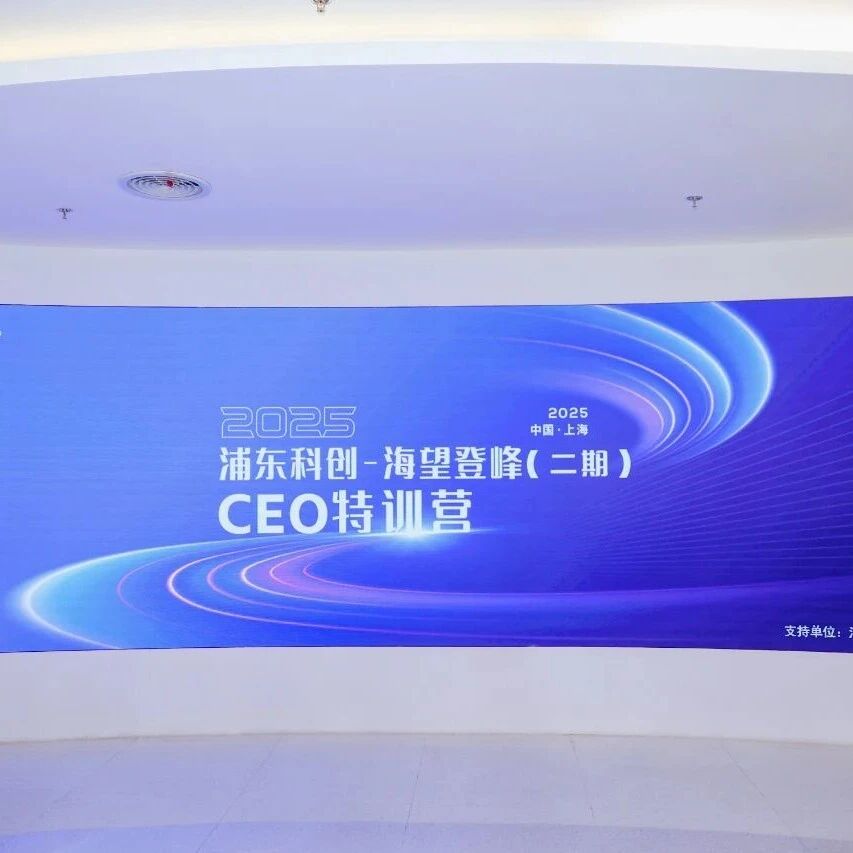
浦东科创-海望登峰(二期)CEO特训营第三模块课程圆满收官,打造科技创业者全链条实战能力
投中网· 2025-10-29 06:30
Core Insights - The article discusses the successful completion of the "Pudong Science and Technology Innovation - Haiwang Summit (Phase II) CEO Training Camp," focusing on the transformation of scientific research into marketable products and the strategic empowerment of technology enterprises [2][11]. Group 1: Challenges in Technology Entrepreneurship - The director of the Shanghai Institute of Optics and Fine Mechanics, Zhang Long, highlighted three main challenges faced by researchers in entrepreneurship: lack of commercialization mindset, poor communication between research systems and capital/industry, and insufficient planning in result transformation and team building [2][3]. - Zhang proposed a market-driven approach for technology entrepreneurship, emphasizing the need for scientists to shift from a "technology-driven" to a "value-driven" mindset, and to design effective equity structures and incentive mechanisms [3]. Group 2: Team Dynamics and Leadership - Chen Yu, founder of Yinian Yijian, addressed the challenges of team conflicts and talent matching in different stages of enterprise development, emphasizing the importance of the founder's mental maturity in decision-making and team collaboration [5][6]. - Chen outlined four stages of mental development for founders, stressing the need to understand customer thinking to drive product design and innovation in the AI era [6]. Group 3: Strategic Planning and Execution - Strategic leadership expert Fu Lei discussed the importance of balancing long-term vision with flexibility in strategy, particularly for technology startups navigating uncertain environments [8]. - Fu emphasized the need for entrepreneurs to develop systematic thinking through a cycle of learning, experience, and practice, and to integrate strategy into daily decision-making for sustained competitive advantage [8]. Group 4: Practical Applications and Outcomes - Participants in the training camp expressed that the program provided a comprehensive learning experience covering key aspects of entrepreneurship, including research transformation, technology development, team management, and strategic planning [10]. - The training camp aims to continue providing high-quality resources and a forward-looking learning platform to support entrepreneurs in achieving sustainable innovation and growth [11].
上海首支生物制造基金落地,道彤投资携奥浦迈“C+VC生态”重构产业格局
投中网· 2025-10-29 06:30
Core Viewpoint - The next decade is expected to be a pivotal period for China's biomanufacturing industry, following a decade of innovation in pharmaceuticals [2][10]. Investment Strategy - Dao Tong Investment has launched Shanghai's first biomanufacturing industry fund, totaling 1 billion yuan, in collaboration with Aopumai, utilizing a "C+VC" model to drive industry growth [4][10]. - The fund aims to address the high technical barriers and long conversion cycles inherent in the biomanufacturing sector, leveraging Shanghai's unique ecosystem [4][5]. Industry Collaboration - The establishment of the "Biomanufacturing Industry Value Partners" consortium aims to integrate resources across enterprises, research institutions, and capital to accelerate industrialization [8][9]. - The consortium will focus on four key areas: resource sharing, technology transfer, application and capital collaboration, and talent development [9][10]. Market Potential - Biomanufacturing has been identified as a key future industry in China's 2025 government work report, indicating significant market opportunities [2][10]. - Dao Tong's investment strategy emphasizes the importance of transforming scientific research into large-scale industrial production, highlighting the synergy between synthetic biology and biomanufacturing [3][10]. Recent Investments - Dao Tong has made several strategic investments in biomanufacturing projects, including Yuan Tian Biotechnology and Wei Yuan Biotechnology, focusing on technology conversion efficiency and sustainable practices [13][15]. - Yuan Tian's innovative PET recycling technology and Wei Yuan's industrial enzyme platform exemplify the potential for cost-effective and environmentally friendly solutions in the industry [14][15]. Future Outlook - The biomanufacturing sector is poised for a "golden era" in the next decade, driven by lower costs, faster production efficiencies, and greener methods to address energy and climate challenges [17][18]. - Dao Tong aims to be a key player in this transformation, fostering a sustainable innovation ecosystem through capital, partnerships, and targeted investments [17][18].

中,投中,这家机构连中三元
投中网· 2025-10-28 03:43
Core Viewpoint - The article discusses the successful listing of Wuhan Heyuan Bio on the Sci-Tech Innovation Board, marking a significant milestone in the revival of the board's fifth set of listing standards for unprofitable companies, particularly in the biotech sector [3][6]. Group 1: Industry Overview - The Sci-Tech Innovation Board has prioritized the biopharmaceutical industry since its inception in 2019, with a total market capitalization of 1.13 trillion yuan for 110 listed biopharmaceutical companies as of December 2024 [5]. - The biopharmaceutical sector faces challenges due to long R&D cycles, high investment costs, and low success rates, leading to a significant drop in IPOs from 36 in 2021 to just 1 in 2024 on the Sci-Tech Innovation Board [6]. - The reintroduction of the fifth set of standards has opened new capital windows for unprofitable hard-tech companies, with Heyuan Bio being the first to successfully list under these new guidelines [6][13]. Group 2: Company Highlights - Heyuan Bio specializes in plant-derived recombinant protein expression technology and has developed a product, Aofumin®, which is the first human serum albumin injection based on recombinant protein technology in China [11][12]. - The company has received significant strategic investments from various institutions, including Yifeng Capital, which has supported Heyuan Bio through multiple funding rounds, demonstrating a commitment to long-term investment [12][13]. - The successful listing of Heyuan Bio is seen as a validation of Yifeng Capital's strategic foresight and investment approach in the biopharmaceutical sector [20]. Group 3: Investment Insights - Yifeng Capital has been a key player in the recent successes of Heyuan Bio, North Chip Life, and Tainuo Maibo, showcasing its ability to identify and support promising biotech companies [7][20]. - The firm has built a robust investment strategy focused on long-term value creation, aligning with the principles of nurturing innovation and supporting the commercialization of scientific advancements [20]. - Yifeng Capital's CEO emphasizes the importance of time in developing innovative companies, positioning the firm as a "runner" alongside scientists rather than a short-term profit seeker [20].

浙江社保科创基金签约落地 王浩刘捷刘昆谷澍共同揭牌并见证签约
投中网· 2025-10-28 03:43
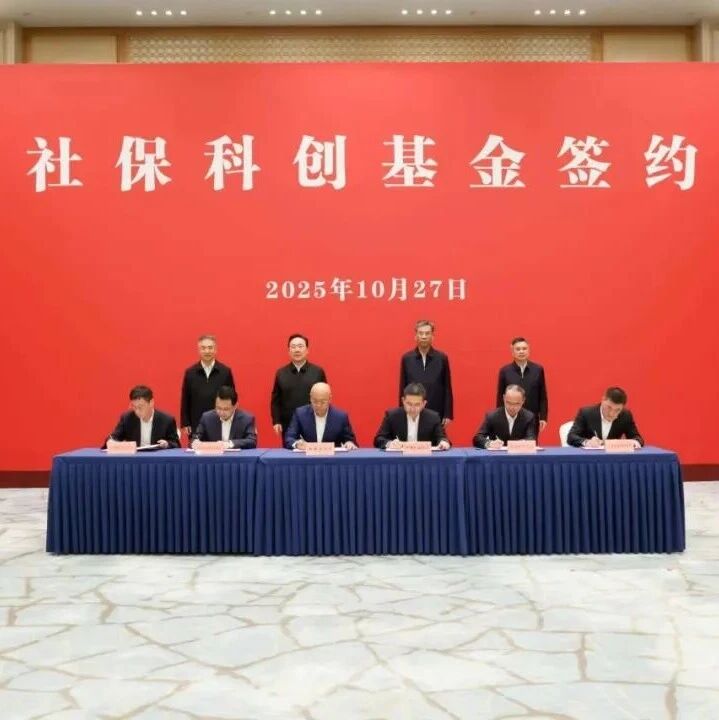
Core Viewpoint - The establishment of the Zhejiang Social Security Science and Technology Innovation Fund, with an initial scale of 50 billion yuan, aims to support innovation-driven development and enhance the modern industrial system in Zhejiang [2][3]. Group 1 - The Zhejiang Social Security Science and Technology Innovation Fund was officially launched in Hangzhou on October 27, marking a significant step in supporting innovation in the region [3]. - The fund is a collaboration between the Zhejiang provincial government, the National Social Security Fund Council, and Agricultural Bank of China, reflecting a strong partnership between industry and finance [3]. - The fund's initial scale is set at 50 billion yuan, which will leverage social capital to invest in key areas of technological innovation [3]. Group 2 - The fund is designed to align with the national strategy for innovation-driven development and aims to bolster patient capital in the region [3]. - It is expected to facilitate the development of new productive forces tailored to local conditions, thereby accelerating the construction of a modern industrial system unique to Zhejiang [3].

海愿资本:让中国硬科技影响世界
投中网· 2025-10-28 03:43
Core Viewpoint - The article discusses the internationalization of hard technology investments, highlighting the rebranding of Zijin Port Capital to Haiyuan Capital, which signifies a strategic shift towards a global perspective in innovation and investment [3][4]. Group 1: Internationalization of Hard Technology - By 2025, the focus of China's hard technology sector will shift from "internal competition" to "going global," with over 60 local R&D assets expected to be successfully authorized for international markets in 2024 [7]. - Deloitte's report indicates that 37% of large Chinese enterprises will have over 20% of their revenue from overseas by 2024, marking a transition from product export to brand and technology export [7]. - The internationalization of hard technology represents a fundamental shift in China's globalization model, moving from being a passive recipient of rules to an active shaper of global industry standards [7]. Group 2: Competitive Advantages in Hard Technology - China has made significant advancements in hard technology, particularly in sectors like renewable energy and artificial intelligence, establishing a robust supply chain and achieving world-leading technological capabilities [8]. - The comprehensive control over the entire supply chain in the renewable energy sector provides Chinese companies with unmatched cost advantages and scalability, essential for competing in the global market [8]. Group 3: Haiyuan Capital's Role - Haiyuan Capital's portfolio includes leading companies in the internationalization of hard technology, such as Jieput, which has subsidiaries in Japan, the US, and Singapore, and Daxiang Shengkai, which utilizes deep learning for real-time voice extraction [10][11]. - The investment strategies of Haiyuan Capital include leveraging the Hong Kong Stock Exchange for global capital access, establishing direct sales channels, and forming partnerships with strategic investors to enhance international presence [14][15][16]. - Haiyuan Capital has built a unique global innovation ecosystem through collaborations with top universities and institutions worldwide, facilitating the incubation of high-quality projects [19][20][21]. Group 4: Future Outlook - Haiyuan Capital aims to integrate resources from the Hangzhou Bay and Guangdong-Hong Kong-Macao Greater Bay Area to connect Chinese innovation with global markets, positioning itself as a bridge for hard technology [22].

4000元一件都卖爆,谁在捧红高价羽绒服?
投中网· 2025-10-28 03:43
Core Viewpoint - The article highlights the rapid growth of the high-end down jacket market in China, driven by increasing consumer interest in outdoor activities and the rising popularity of outdoor brands among non-outdoor enthusiasts [5][14][25]. Group 1: Market Trends - The sales of mid-length down jackets for men and women on JD.com saw a year-on-year increase of 180% from October 9 to October 15, while sports down jackets experienced a fourfold increase in sales [5]. - On Tmall, several outdoor brands achieved impressive sales, with some products reaching over 10 million yuan in sales within half an hour of launch [6]. - The high-end down jacket market (priced above 1500 yuan) is projected to account for over 30% of the market share by 2024 [15]. Group 2: Consumer Behavior - The article notes that younger consumers are increasingly purchasing high-priced outdoor down jackets, with many valuing functionality and brand image over price [30][34]. - A significant portion of outdoor users spends over 8000 yuan annually on equipment, with the average spending increasing for those who have been involved in outdoor activities for over a year [28]. - The trend of outdoor activities is becoming a lifestyle choice, leading to a growing consumer base willing to invest in high-end outdoor apparel [34]. Group 3: Competitive Landscape - Traditional down jacket brands like Bosideng are now competing directly with specialized outdoor brands in the high-end market, with Bosideng launching products priced over 3000 yuan [24][17]. - Outdoor brands such as KAILAS and Arc'teryx are gaining traction in the high-end segment, with products priced significantly higher than traditional offerings [20][21]. - The article discusses the challenges faced by traditional brands in meeting the expectations of core outdoor enthusiasts, as they transition into the outdoor apparel market [18].

人均身价过亿,高盛买了
投中网· 2025-10-27 06:47
Core Insights - The acquisition of Industry Ventures by Goldman Sachs marks a significant move in the venture capital landscape, highlighting the increasing importance of venture capital in driving growth for Wall Street banks [5][12][10] Group 1: Acquisition Details - Goldman Sachs announced the acquisition of Industry Ventures, a venture capital firm managing $7 billion in assets, for $665 million in cash and stock, with potential additional payments of up to $300 million based on future performance [5][9] - The deal is expected to be completed in Q1 2026, with all 45 employees joining Goldman Sachs, and the CEO and core management team being appointed as partners in Goldman Sachs Asset Management [5][6] Group 2: Strategic Rationale - Goldman Sachs aims to enhance its alternative investment platform, which has a scale of $540 billion, by integrating Industry Ventures into its external investment group, XIG, which manages over $450 billion [6][8] - The acquisition is not intended to position Goldman Sachs as a competitor in the venture capital space but rather to leverage Industry Ventures' expertise in secondary transactions, which are becoming increasingly vital in the private equity market [7][12] Group 3: Market Context - The secondary market for venture capital transactions is projected to reach $61.1 billion from June 2024 to June 2025, surpassing the total IPO exit amount of $58.8 billion during the same period, indicating a shift in exit strategies for investors [9][12] - The acquisition reflects a broader trend where banks are increasingly recognizing the value of venture capital firms in diversifying their investment strategies and meeting complex client needs [12][13] Group 4: Implications for the Industry - The deal signifies a potential increase in venture capital acquisitions by financial institutions, as the secondary market becomes a crucial component of private equity investment strategies [11][12] - The transaction may inspire similar moves in the industry, particularly as the U.S. public market continues to face challenges, leading to a greater focus on private market opportunities [13][14]


可控核聚变火了,上百家投资机构抢份额
投中网· 2025-10-27 06:47
Core Viewpoint - The article discusses the increasing interest and investment in controlled nuclear fusion, often referred to as the "artificial sun," highlighting its potential as a future energy source and the shift in investor sentiment towards this sector [3][4][19]. Investment Trends - The controlled nuclear fusion sector is experiencing a surge in attention from investors, with significant funding rounds being completed, such as the nearly 100 million yuan first round financing for Andong Fusion [3][14]. - There are at least two other startups in the controlled nuclear fusion space expected to complete new rounds of financing by 2025, indicating a growing trend in investment [14]. Historical Context - The concept of nuclear fusion has a long history, dating back to the 1940s, with significant milestones such as the first hydrogen bomb explosion marking humanity's initial achievement in nuclear fusion [6]. - The development of controlled nuclear fusion has faced challenges, with the International Thermonuclear Experimental Reactor (ITER) project experiencing delays and budget overruns [7]. Technological Advances - Recent technological advancements, including breakthroughs in materials and structures, have made the realization of controlled nuclear fusion more feasible [7][8]. - The article notes that various technical approaches, such as magnetic confinement and inertial confinement, are being explored, with magnetic confinement currently being the mainstream method [7]. Market Dynamics - The demand for clean energy is driving increased investment in controlled nuclear fusion, with the global fusion industry seeing a dramatic rise in investment from 1.9 billion USD in 2021 to 9.7 billion USD in recent years [18]. - The number of nuclear fusion companies has increased by 143% since 2021, reflecting a growing interest in this sector [18]. Policy Support - Government policies in countries like China and the U.S. are increasingly supporting the development of nuclear fusion, with the recent inclusion of "fusion" in Chinese law signaling significant opportunities for the sector [17]. - Cities such as Shanghai and Hefei are actively promoting policies to accelerate the development of controlled nuclear fusion, attracting both national teams and startups [17]. Future Outlook - The consensus among commercial fusion companies is that grid-connected power generation could be achieved before 2040, with many expecting to reach this milestone between 2030 and 2035 [20]. - The article suggests that the combination of entrepreneurial enthusiasm and investment momentum is significantly accelerating the commercialization of controlled nuclear fusion [20].

红杉连续领投两家AI丨投融周报
投中网· 2025-10-27 06:47
Focus Review - The hard technology sector is witnessing significant financing activities, with Jiusi Intelligent completing a $100 million B4 round led by Ant Group, raising a total of $400 million in B rounds to date [4][10]. - New Stone Technology, a provider of L4 level unmanned city distribution solutions, announced over $600 million in D round financing, led by Stone Venture from the UAE [4][21]. Health Sector - Saina Biotechnology completed a new round of financing exceeding 100 million RMB, led by Shunxi Fund and Yizhuang Guotou [5][28]. - Zhongzhi Keyi, a company specializing in ultra-fast time-resolved imaging technology, also announced over 100 million RMB in A round financing, with strong backing from various funds [5][29][30]. Internet Sector - In the AI field, Xunyu Technology secured over 100 million RMB in Pre-A round financing, co-led by GL Ventures and Sequoia China [5][39]. - LiblibAI, an AI application company, completed a $130 million B round financing, with participation from Sequoia China and CMC Capital [5][40]. Additional Financing Activities - Jitian Starship completed over 100 million RMB in A and A+ rounds, led by Shunrong Capital and Zhi Yi Investment [7]. - Renxin Technology, a high-speed vehicle SerDes chip company, announced over 100 million RMB in A+ round financing, bringing its total financing for the year to nearly 300 million RMB [8]. - Juzi Technology completed several hundred million RMB in B round financing, with investors including Shanghai Guotou and Songjiang Guotou [9]. - Eagle Semiconductor announced a B+ round financing exceeding 700 million RMB, setting a record for VCSEL startups in China [14].