半导体芯闻

Search documents
DRAM价格,一路飙升
半导体芯闻· 2025-08-01 10:30
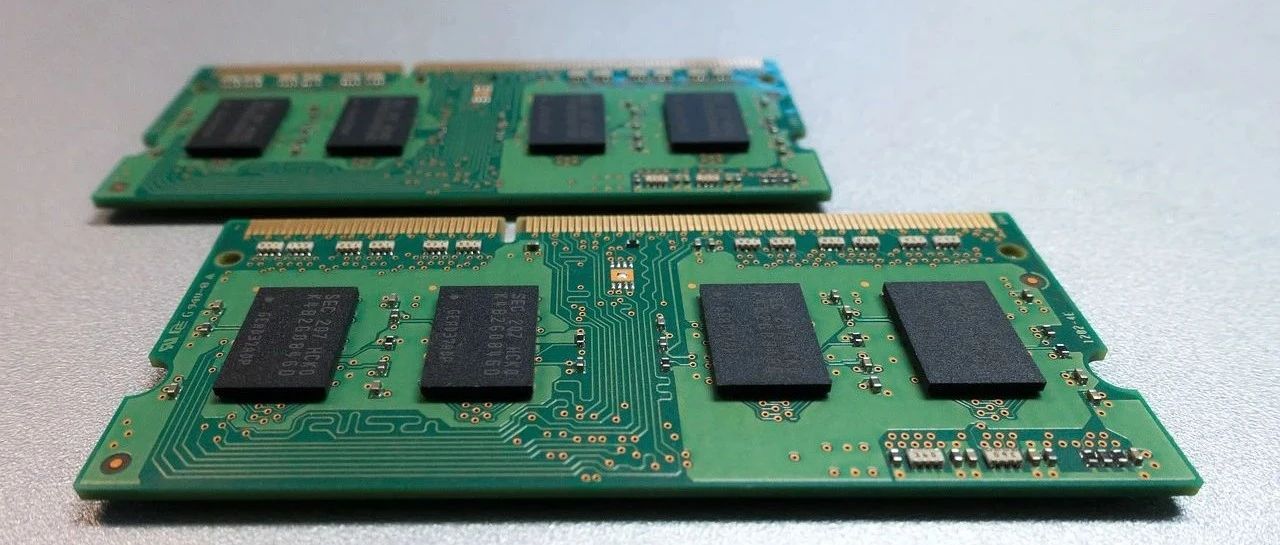
Core Insights - The prices of storage semiconductors, specifically DRAM and NAND flash, have significantly increased for the fourth consecutive month as of July, with DRAM prices rising by 50% compared to the previous month [2][3] - The average fixed trading price for PC DRAM (DDR4 8Gb 1Gx8) reached $3.90 in July, marking the highest level since October 2021 [2] - Major DRAM manufacturers are prioritizing server DRAM over PC DRAM, leading to supply pressures and a price reversal for DDR4, which is now priced about 4% higher than DDR5 [3] DRAM Market Dynamics - The average fixed trading price for NAND flash products (128Gb 16Gx8 MLC) increased by 8.67% in July, following a trend of price recovery after a decline that began in September of the previous year [3] - The reduction in production of older DDR4 products due to manufacturers' plans to phase them out has led to a decrease in supply, while demand from PC manufacturers remains strong [3] - The price increase for DDR4 is expected to continue until the end of 2025, with DDR5 usage projected to grow gradually [3] Industry Trends - The demand for edge AI computing power is rising, driven by the proliferation of AI models, which is positively impacting the market for high-performance Ethernet switches, advanced storage products, GPUs, and edge computing chips [4] - The exit of major players like Samsung, SK Hynix, and Micron from the commodity DRAM market is anticipated to lead to a price increase for commodity DRAM, with prices expected to remain at mid-to-high levels in 2025 and 2026 [4] - The recovery in demand from sectors such as smartphones, PCs, IoT, and industrial control boards, along with the trend of domestic substitution, is expected to drive up supply prices from various storage manufacturers [4]

联手国产EDA,本土RISC-V的最优解
半导体芯闻· 2025-07-31 10:23
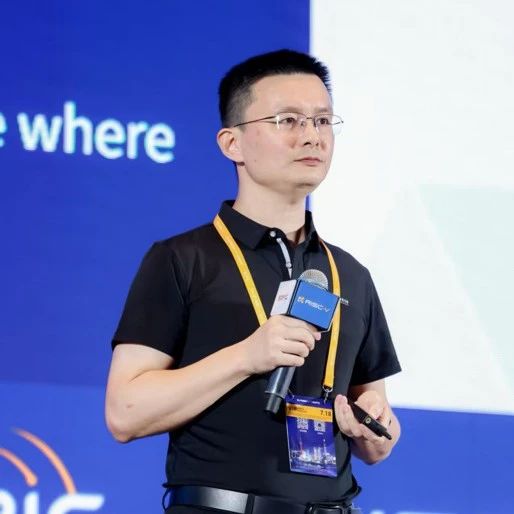
Core Viewpoint - The article discusses the impact of U.S. export control regulations on China's technological advancements in high-performance computing, advanced manufacturing, AI, and EDA/IP fields, highlighting the strategic importance of EDA/IP alongside AI chips and aerospace engines in national security [1]. Group 1: RISC-V and AI Chip Development - RISC-V architecture is emerging as a crucial breakthrough in China's domestic computing ecosystem, offering flexibility and open-source advantages that allow it to address a wide range of computing needs, from general to specialized applications [3]. - The RISC-V architecture has rapidly expanded from low-end applications to high-performance computing, data centers, AI, and smart vehicles, becoming the most autonomous processor architecture globally [3]. - The combination of RISC-V, domestic EDA, and open-source models is seen as a key direction for achieving self-sufficiency in China's AI computing industry [6]. Group 2: EDA and IP Significance - EDA and IP are critical components in China's technological self-sufficiency, with recent export controls underscoring the urgency for domestic capabilities in these areas [3]. - The challenges posed by the current geopolitical climate necessitate a robust domestic EDA and IP framework to mitigate the impact of foreign technology restrictions [3]. Group 3: Challenges in RISC-V Development - The evolution of RISC-V towards multi-core architectures presents challenges in chip validation and hardware-software co-validation, which require advanced EDA tools and methodologies [4][8]. - The increasing performance demands in AI applications necessitate more complex and rigorous validation processes for RISC-V IP, ensuring stability and reliability across various AI algorithms and frameworks [9]. Group 4: Innovations in Verification Solutions - The launch of the UVHS system by Hejian Gongruan provides a comprehensive verification solution for RISC-V chips, significantly enhancing the efficiency of chip validation processes [10]. - The UVHS system supports large-scale FPGA platforms and offers advanced debugging capabilities, which are essential for the development of high-performance RISC-V systems [12]. - The introduction of the next-generation verification hardware, UVHS-2, aims to accelerate chip validation cycles and support a wide range of applications, including AI computing and data centers [10].
高通业绩不如预期,股价下跌
半导体芯闻· 2025-07-31 10:23
Core Viewpoint - Qualcomm's smartphone market growth is sluggish, leading to a decline in stock price and raising concerns about tariffs impacting the smartphone industry [1] Group 1: Financial Performance - Qualcomm reported a 7% increase in mobile-related sales, reaching $6.33 billion for the third fiscal quarter ending June 29, falling short of analysts' expectations of $6.48 billion [1] - The company achieved a 10% revenue growth to $10.37 billion, with adjusted earnings per share of $2.77, surpassing Wall Street's forecast of $2.72 [2] - Automotive chip revenue grew by 21% to $984 million, while semiconductor sales for connected devices increased by 24% to $1.68 billion [2] Group 2: Business Diversification - Qualcomm's automotive and IoT segments saw revenue growth exceeding 20%, indicating a successful diversification strategy [3][4] - The mobile business revenue increased by 7% to $6.32 billion, while automotive revenue reached $984 million and IoT revenue soared by 24% to $1.68 billion [4] - The company aims for automotive and IoT sectors to contribute 50% of total revenue by 2030, as discussed during the investor day event in November 2024 [4] Group 3: Competitive Landscape - Qualcomm faces ongoing challenges from Apple, which is producing its own modem chips for iPhones, potentially reducing Qualcomm's supply in these devices [2][4] - The company is showing signs of reducing its dependency on Apple for modem-related revenue [5]


车、机、芯,三条最火科技故事线亮相ICTS信息展,神秘盲盒等你来!
半导体芯闻· 2025-07-31 10:23
Core Insights - The article discusses the integration of three major technological trends: Artificial Intelligence (AI), Embodied Intelligence, and Intelligent Driving, highlighting their interconnectedness and the underlying industry chains [2][3][20]. Group 1: Artificial Intelligence - AI is defined as the capability of machines to simulate human intelligence behaviors, including perception, thinking, learning, and decision-making. IDC predicts that by 2028, China's AI investment will exceed $100 billion, with a compound annual growth rate of 35.2% [7][8]. - The AI industry chain includes components such as AI chips, servers, sensors, machine learning frameworks, and data services, emphasizing the importance of chips as the core of the industry [9][8]. Group 2: Embodied Intelligence - Embodied Intelligence refers to intelligent agents with physical bodies that interact with the physical world, accumulating knowledge and skills through perception and control. Its applications span various sectors, including industrial manufacturing, healthcare, and education [13][14]. - The industry chain for Embodied Intelligence includes upstream core technology development, key components, system integrators, and downstream applications, showcasing a comprehensive view of the sector [14]. Group 3: Intelligent Driving - Intelligent Driving is described as an advanced driving technology that combines AI, autonomous driving, vehicle sensors, and internet technologies to enhance driving experiences. The ultimate goal is fully autonomous driving [17][18]. - The industry chain for Intelligent Driving encompasses core technology and hardware supply, system integration, and application scenarios, with significant representation from companies in the field during the upcoming expo [18][20]. Group 4: Event Overview - The 2025 China International Industrial Expo will feature three main exhibition areas focusing on "Secrets of Computing Power," "AI's Rebellion," and "Intelligent Driving Disassembly," showcasing advancements in semiconductor independence, AI-enabled industrial software, and digital transformation in manufacturing [24][23]. - The event will also host industry summits on topics like industrial internet and integrated circuits, aiming to empower high-quality development in the electronic information industry [24].
AMD要自研独立NPU
半导体芯闻· 2025-07-31 10:23
Core Viewpoint - AMD is exploring the potential of a dedicated neural processing unit (NPU) as an alternative to GPUs for AI workloads in PCs, indicating a shift in the processing hierarchy for handling AI and machine learning tasks [1][2][5] Group 1: AMD's NPU Development - AMD is in discussions with clients regarding the use cases and potential opportunities for a dedicated accelerator chip, which is likely to be an NPU rather than a GPU [1][2] - The company is leveraging AI engine technology acquired from Xilinx to enhance the performance of future discrete NPU products [3] - AMD's NPU solutions are expected to consume less energy compared to traditional GPUs, which is a significant advantage for AI workloads [4][5] Group 2: Market Trends and Competitors - Major OEMs like Lenovo, Dell, and HP are beginning to explore the use of independent NPUs and other dedicated accelerator chips as alternatives to GPUs for AI workloads [2][6] - Dell has announced the use of Qualcomm's AI 100 PC inference card in its new Dell Pro Max Plus laptops, claiming it to be the world's first workstation equipped with an enterprise-level independent NPU [6] - Other companies, such as Encharge AI, are also developing independent NPU solutions, showcasing a growing trend in the market towards dedicated AI processing capabilities [6]

台积电美国厂员工自述:被压榨了
半导体芯闻· 2025-07-31 10:23
如果您希望可以时常见面,欢迎标星收藏哦~ 来源 :内容来自 中央社 。 全球晶圆代工龙头台积电赴美国亚利桑那州设厂,一名曾在该厂任职4年的工程师近日于Reddit论 坛上详叙被压榨的过程,而且他在台湾受训完再到美国上班,中间经历许多混乱及不安,甚至发生 种种歧视,文章引发许多网友关注。 台湾人不帮美国同事 原po指出,2021年加入台积电后便在那年夏天前往台南受训,期间包括住宿安排、工作用的设 备、最基本的进出门禁都一团乱,甚至缺乏可以用英文沟通的窗口。许多台湾员工对于这批即将派 到美国工作的同事也不太愿意协助,理由是「美国人赚太多了,薪水很高,不值得我们帮忙」。 他透露在台湾这段日子深刻感受到文化差异和排外氛围,所以后来有20%的人选择离职。几年后回 到了亚利桑那,新厂施工进度严重落后、现场规画松散、要求未经完整训练的员工做设施维护、主 管偏好用台湾人等,如果拒绝服从还会导致年终考绩被扣分,这时大约有70%的人已离开公司。 点这里加关注,锁定更多原创内容 严重的性别与种族歧视 此外,他在面试新人时也被指示要优先考虑台湾人,其次为持有签证的人,因为较好控制。至于印 度裔人士不要录取,还给他们取难听的绰号,他面 ...

ASML光刻机,被豁免关税
半导体芯闻· 2025-07-31 10:23
Core Viewpoint - The article discusses the implications of the recent trade framework established between the U.S. and the EU, particularly focusing on the 15% tariff on certain products, including semiconductor equipment from companies like ASML, which could significantly impact U.S. chip manufacturers' costs [1][2]. Group 1: Trade Framework and Tariffs - The U.S. and EU have agreed on a trade framework that includes a 15% tariff on EU products entering the U.S., with specific exemptions for semiconductor equipment from companies like ASML [1]. - The trade agreement outlines zero tariffs on strategic products, including aircraft, specific chemicals, certain pharmaceuticals, semiconductor equipment, agricultural products, natural resources, and key raw materials [1]. Group 2: Impact on Semiconductor Equipment Costs - The average price of ASML's advanced immersion DUV ArF equipment is approximately $89.615 million, while the low-NA EUV equipment is priced around $265 million. A 15% tariff would increase these costs to approximately $103 million and $305 million, respectively [2]. - The depreciation of the dollar against the euro since early February has already made EU-produced semiconductor equipment more expensive for U.S. chip manufacturers, and the additional 15% tariff would exacerbate this cost increase [2]. Group 3: Effects on U.S. Chip Manufacturers - If the Trump administration imposes a 15% tariff on ASML's lithography, measurement, and inspection equipment, U.S. chip manufacturers would face increased costs of $13 million per DUV machine and up to $40 million per EUV machine [2]. - AMD's CEO has indicated that the cost of chips produced at TSMC's Arizona facility could increase by up to 20% compared to those produced in Taiwan, highlighting the financial strain on U.S. chip production [2].

台积电正在开发第二代“SoW”
半导体芯闻· 2025-07-31 10:23
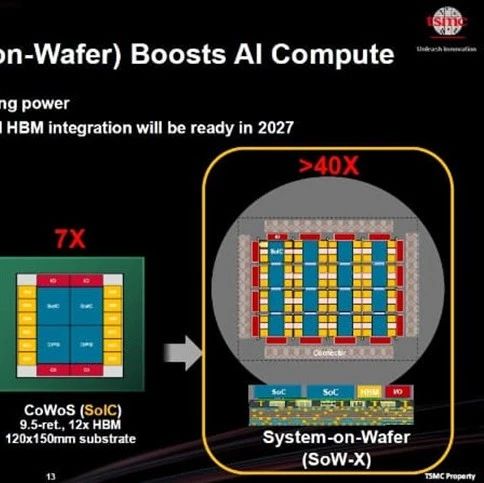
Core Viewpoint - TSMC is developing the second generation of its System on Wafer (SoW) technology, which integrates various components onto a large 300mm silicon wafer, enhancing performance and efficiency in semiconductor packaging [1][2]. Group 1: SoW Technology Overview - The SoW technology integrates chiplets, stacked chip modules, memory modules, power modules, I/O boards, and heat dissipation boards on both sides of a 300mm wafer [1]. - The first generation of SoW, named SoW-P, focuses on integrating System on Chip (SoC) as the main circuit, while the second generation, SoW-X, will combine SoC with High Bandwidth Memory (HBM) for heterogeneous integration [2]. Group 2: CoWoS Technology - The second generation of SoW is an upgrade of the CoWoS (Chip on Wafer on Substrate) technology, which uses an intermediate substrate to enhance data transmission speed and density [7]. - CoWoS technology has evolved since its introduction in 2012, with significant advancements in the size and efficiency of silicon interposers, particularly after 2016 [8][9]. Group 3: Future Developments and Roadmap - TSMC's roadmap includes expanding the size of the intermediate substrate in CoWoS technology, with plans for a substrate size 5.5 times larger than the photomask by 2025-2026 and 8 times larger by 2026-2027 [13]. - The SoW-X technology is expected to be implemented by 2027, with anticipated challenges related to high manufacturing costs and customer acceptance [24]. Group 4: Performance Metrics - The SoW-X module, arranged in a 4x4 matrix, is designed to achieve a performance per watt that is 65% higher than a PCIe cluster system, although it is 27% lower than a single CoWoS-L module [20]. - The total power consumption for SoW-X is projected to reach 17kW, with water cooling solutions being considered for heat dissipation [22].
三星利润,暴跌94%
半导体芯闻· 2025-07-31 10:23
Core Viewpoint - Samsung Electronics reported a significant decline in its semiconductor division's operating profit, down 94% year-on-year, primarily due to high inventory-related costs despite stable sales [1][5]. Financial Performance - For Q2, Samsung's operating profit was 4.67 trillion KRW (approximately 3.4 billion USD), a 55.23% decrease compared to the same period last year [1][5]. - Net profit fell by 48.01% to 5.11 trillion KRW, while total revenue slightly increased by 0.67% to 74.56 trillion KRW [1][5]. - The semiconductor business revenue decreased by 2% year-on-year, reflecting ongoing inventory issues [1][5]. Business Segments - The semiconductor division faced challenges with low capacity utilization in its foundry business, leading to stagnant revenue of 6.7 trillion KRW [1][5]. - The mobile and network business saw a 40.9% increase in operating profit, reaching 3.1 trillion KRW, driven by strong sales of flagship models like Galaxy S25 and mid-range Galaxy A series [1][5]. Future Outlook - Samsung anticipates a slight improvement in profitability in the second half of the year, focusing on increasing server memory chip sales and awaiting certification for HBM3E high-bandwidth memory [2][6]. - The company aims to enhance the yield of its next-generation 2nm GAA process to attract large clients, including a recent eight-year contract with Tesla worth 23 trillion KRW [2][3][8]. Product Innovations - The smartphone market is expected to be boosted by the launch of new foldable models, Galaxy Z Fold 7 and Z Flip 7, along with innovative products like XR headphones and a three-segment "Trifold" smartphone [4][8]. - Samsung's AI strategy is advancing, with a shift towards a multi-modal architecture for smartphone interaction, enhancing features in the S25 series through collaboration with Google [9]. Market Conditions - Despite uncertainties in the second half of the year, Samsung expects a rebound in performance, driven by growth in AI and robotics sectors [6]. - The company is closely monitoring the impact of tariffs and geopolitical risks on its core businesses, particularly in semiconductors and consumer electronics [6]. Investment Strategy - Samsung has invested 120 million USD in approximately 40 companies in the first half of the year, focusing on AI, robotics, and digital health to discover new technologies [6]. - The company plans to expand its HBM and advanced DRAM sales, anticipating a significant price increase for DRAM starting in the second half of the year [6][7].
邀您参会 | Tower Semiconductor宣布举办2025年全球技术研讨会
半导体芯闻· 2025-07-30 10:54
Core Viewpoint - Tower Semiconductor is hosting the 2025 Global Technology Symposium (TGS 2025) in Shanghai, aimed at providing a platform for existing and potential customers to engage directly with the management and technical experts of Tower [1][2]. Agenda Summary - The event will commence with registration from 08:30 to 09:30, followed by an opening session led by Mrs. Rachel Xie, the China Country Manager [1]. - A keynote address will be delivered by Mr. Russell Ellwanger, CEO of Tower Semiconductor, from 09:45 to 10:30 [1]. - An invited talk by Eoptolink is scheduled from 10:30 to 11:15 [2]. - Dr. Marco Racanelli, President, will discuss market megatrends and Tower's technology solutions in RF mobile, infrastructure, power, and sensors from 11:15 to 12:00 [1]. - A lunch break is set from 12:00 to 13:30 [2]. - Mr. Naoki Okada will present on Tower's design enablement from 13:30 to 14:15 [2]. - Dr. Mete Erturk will discuss power management technologies from 14:15 to 15:00 [2]. - A coffee break will occur from 15:00 to 15:15 [3]. - Dr. Benoit Dupont will present on OLEDoS displays and next-generation image sensor technologies from 15:15 to 15:45 [3]. - Dr. Ed Preisler will cover foundry technologies for high-speed data transfer applications from 15:45 to 16:45 [3]. - The event will conclude with closing remarks by Mr. Lei Qin, Senior Vice President of Worldwide Sales [3]. Venue and Contact Information - The symposium will take place at the Aloft Hotel in Zhangjiang, Shanghai [5]. - Contact number for the hotel is +86 21-38168888 [5]. Registration - Participants can register for the event by scanning the QR code or clicking on the "Read More" link at the end of the article [6].