半导体芯闻

Search documents
黄仁勋:尽最大努力向华为学习
半导体芯闻· 2025-07-16 10:44
Core Viewpoint - Huang Renxun, the founder of Nvidia, praised Huawei's exceptional chip design capabilities and emphasized the company's strengths in system engineering and cloud services, highlighting Huawei's ability to independently explore markets [1][2]. Group 1: Nvidia's Perspective on Huawei - Huang Renxun acknowledged Huawei's impressive technology and questioned the superiority of other mobile companies compared to Huawei [2]. - He expressed a desire for Nvidia to learn from Huawei and other competitors, indicating a recognition of the competitive landscape in China [2]. - Huang noted that AI is revolutionizing various industries, including computer graphics, and mentioned the potential of AI in quantum computing and its impact on biology and physics [2]. Group 2: Nvidia's Market Strategy in China - Nvidia plans to resume sales of its H20 chip in China, following the approval of export licenses by the U.S. government, which Huang described as a significant victory for the company [5][8]. - Huang highlighted the importance of the Chinese market, citing its size, vibrancy, and innovation, and emphasized the necessity for U.S. companies to establish a presence there [5]. - The H20 chip is tailored to comply with U.S. regulations, being classified as the "fourth best" chip, which is slower than the fastest chips used in the U.S. [6][7]. Group 3: AI Development in China - Huang pointed out the rapid advancements in AI technology in China, mentioning notable models like DeepSeek and Alibaba's contributions [3][6]. - He emphasized that China's open-source AI initiatives are catalysts for global progress and play a crucial role in ensuring AI safety [6]. - Huang expressed a desire for more advanced chips to enter the Chinese market, indicating that Nvidia's technology will continue to improve over time [3]. Group 4: U.S.-China Relations and Technology - The U.S. Secretary of Commerce indicated that the decision to resume H20 chip sales is part of broader negotiations between the U.S. and China regarding rare earth materials [6][8]. - The U.S. aims to keep China reliant on American technology while allowing them access to less advanced chips [7]. - Huang noted that recent changes in U.S. policy are a result of constructive discussions between the U.S. and Chinese governments regarding export controls [8]. Group 5: Collaboration with Chinese Companies - Huang expressed interest in collaborating with Chinese companies, specifically mentioning Xiaomi and the electric vehicle sector, which he finds impressive [9]. - He acknowledged the need for supply chains to adapt to tariff issues but remained optimistic about finding solutions [9].



事关日本厂,台积电表示:无法评论
半导体芯闻· 2025-07-16 10:44
Core Viewpoint - TSMC's Kumamoto 2 factory in Japan has begun construction on surrounding facilities, with the main construction expected to continue in the second half of the year, reflecting the Japanese government's expectations [1][2]. Group 1: TSMC's Operations and Developments - The Kumamoto 2 factory will be a focal point in TSMC's upcoming earnings call, with significant attention on its operational outlook and the impact of U.S. tax developments and currency fluctuations on TSMC's performance [2]. - TSMC's investment strategy is influenced by customer demand, business opportunities, operational efficiency, government support, and economic costs, with the company asserting that its U.S. investment plans will not affect existing investments in other regions [2]. - TSMC's first joint venture factory in Kumamoto is set to begin mass production in 2024, alongside a joint venture factory in Dresden, Germany [3].

混合键合太贵了,HBM 5还将使用TCB
半导体芯闻· 2025-07-16 10:44
Core Viewpoint - Hanmi Semiconductor's chairman refuted the notion of shifting to hybrid bonding systems for HBM4 and HBM5 production, emphasizing the high costs and inefficiency of such equipment compared to traditional TC bonders [1][2]. Group 1: Market Position and Strategy - Hanmi Semiconductor holds the number one market share in the global HBM TC Bonder market, with a 90% share of the NVIDIA HBM3E market as of 2024, aiming for a 95% share in the HBM4 and HBM5 markets by the end of 2027 [1]. - The company plans to develop hybrid bonding machines for HBM6, with a target launch by the end of 2027, and is also set to introduce non-adhesive bonding machines within the year [2]. Group 2: Technological Advancements - Hanmi Semiconductor boasts advanced thermal compression bonding technologies, including NCF and MR-MUF types, positioning itself as a leader in HBM production technology [2]. - The company emphasizes its in-house production system, managing the entire process from design to assembly, which enhances its competitive edge in technology innovation and cost management [2]. Group 3: Market Demand and Future Outlook - The chairman expressed confidence in the growing demand for high-spec bonding machines due to the expansion of the global AI market and the increasing need for HBM [2]. - Hanmi Semiconductor is actively investing in technology development and capacity expansion to meet the anticipated growth in HBM demand [2].
ASML发布财报,EUV扮演重要角色
半导体芯闻· 2025-07-16 10:44
Core Viewpoint - ASML reported strong financial results for Q2 2025, with net sales of €7.7 billion and a gross margin of 53.7%, driven by increased demand for EUV lithography machines and a robust outlook for the semiconductor market, particularly in AI applications [1][5][12]. Financial Performance - Q2 2025 net sales reached €7.7 billion, with a gross margin of 53.7% and net income of €2.3 billion, representing 29.8% of total net sales [2][5]. - The company expects Q3 2025 net sales to be between €7.4 billion and €7.9 billion, with a gross margin between 50% and 52% [1]. - Full-year 2025 net sales are projected to grow approximately 15% year-over-year, with a gross margin around 52% [1]. Order and Sales Breakdown - New orders in Q2 2025 amounted to €5.5 billion, including €2.3 billion from EUV lithography machines [2][5]. - The largest revenue contribution came from EUV machines, with 11 units shipped during the quarter [2][5]. - Revenue distribution showed 69% from logic applications and the remainder from memory applications, with Taiwan contributing 33% and mainland China 27% to total revenue [2][5]. Market Trends and Growth Drivers - The EUV business is expected to grow approximately 30% year-over-year, primarily driven by demand in AI [2][5]. - The installed base management services are anticipated to grow by about 20%, supported by significant growth in the first half of the year and upcoming service needs as systems exceed warranty periods [6][12]. - The logic chip market is expected to grow as customers increase production capacity for advanced process chips, while the memory chip market remains strong with ongoing investments in high-bandwidth memory (HBM) and DDR5 products [5][12]. New Product Launch - ASML launched the first TWINSCAN EXE:5200B system, which features improved imaging contrast and resolution, allowing for higher transistor density in chip manufacturing [7][9]. Impact of Tariffs - ASML is actively working to mitigate the impact of tariffs on its operations and is exploring free trade zones to alleviate adverse dynamics [10][11]. - The company identified four categories of tariffs affecting its business, including those on complete systems and components used for service operations [11][12].


Marvell,重拳出击
半导体芯闻· 2025-07-16 10:44
Core Viewpoint - The article discusses the rapid expansion of Artificial Intelligence (AI) and the shift from general-purpose GPUs to customized application-specific integrated circuits (ASICs) by cloud service providers to reduce power consumption and costs [1]. Group 1: ASIC Market Growth - The ASIC market is projected to reach $22.78 billion by 2025 and challenge $36.8 billion by 2032, with a compound annual growth rate (CAGR) of approximately 7.1% [2]. - Customized ASICs offer significant advantages over GPUs in terms of power consumption, unit cost, and heat dissipation, making them increasingly popular for cloud and edge computing [2]. Group 2: Collaboration between TSMC and Marvell - TSMC and Marvell have announced a deepened collaboration focusing on advanced processes below 3 nanometers and next-generation silicon photonics technology [1][4]. - TSMC holds over 60% of the global foundry market share and has a production capacity of approximately 17 million 12-inch wafers annually [4]. Group 3: Marvell's Market Position - Marvell's market share in the ASIC space is approximately 15%, while Broadcom leads with a market share of 55%-60% [6]. - Marvell's AI-related revenue is expected to exceed $1.5 billion in 2024 and reach $2.5 billion in 2025, with the total addressable market for custom AI chips revised from $43 billion to $55 billion by 2028 [6]. Group 4: Technological Innovations - TSMC's silicon photonics technology aims to enhance bandwidth by ten times while significantly reducing latency and power consumption, with validation expected by 2025 and mass production by 2026 [5]. - The collaboration between TSMC and Marvell is expected to redefine the next generation of AI chip standards, intensifying cloud giants' reliance on TSMC [6].

2 纳米良率大战
半导体芯闻· 2025-07-16 10:44
Core Insights - TSMC's N2 process is leading the industry with a yield of approximately 65% expected by mid-2025, significantly surpassing its competitors [1][4] - Intel's 18A process has shown remarkable improvement, reaching a yield of 55%, with potential to increase to 65%-75% by optimizing processes [2][3] - Samsung's SF2 process is lagging with a yield of only 40%, facing significant challenges that need to be addressed to remain competitive [4] TSMC's N2 Process - TSMC is investing in improving the yield of its N2 process, aiming for close to 75% by 2026 [1] - The company is addressing technical challenges such as stitching and overlay control in EUV lithography to enhance yield and performance [1] - Comprehensive optimizations, including advanced pellicles to reduce contamination, are being implemented to boost yield [1] Intel's 18A Process - Intel's 18A process yield has improved from 50% to 55%, indicating successful defect reduction and process optimization [2] - The company plans to start mass production of the Panther Lake processor using the 18A process by the end of 2025 [2] - Future enhancements with the Intel 18A-P version are expected to further improve yield and competitiveness [2][3] Samsung's SF2 Process - Samsung's SF2 process yield remains at 40%, attributed to wafer-level defects and slow EUV patterning capability improvements [4] - The next-generation 2nm node is expected to launch in early 2027, but significant yield improvements are needed beforehand [4] - Samsung faces a challenging task to catch up with TSMC and Intel, requiring breakthroughs in technology and yield optimization [4]

芯闻速递丨华大半导体牵头国内首个《汽车安全芯片应用领域白皮书》重磅发布
半导体芯闻· 2025-07-16 10:44
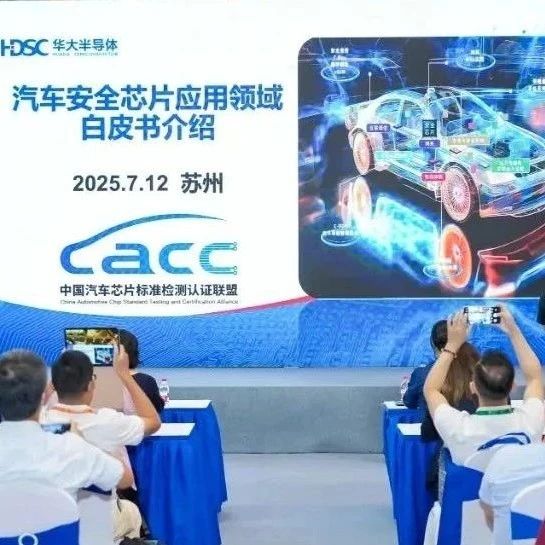
Core Viewpoint - The white paper on automotive safety chips is the first systematic guide in China, addressing technology routes, application scenarios, and verification systems, filling a gap in standardization and certification in the automotive industry [3][5]. Group 1: Overview of the White Paper - The white paper was officially released on July 12 at the fifth China Integrated Circuit Design Innovation Conference, organized by the China Automotive Chip Standard Testing and Certification Alliance, led by Huada Semiconductor and China Automotive Research [5]. - It consists of eight chapters covering vehicle information security needs, an overview of automotive safety chips, attack and defense cases, 14 application scenarios for automotive safety chips, key technical requirements, and testing and certification [6]. Group 2: Application Scenarios - The white paper outlines 14 application scenarios for automotive safety chips, including commercial vehicle T-Box applications, gateway applications, intelligent cockpit applications, C-V2X applications, OTA applications, ETC-OBU applications, digital key applications, eSIM applications, Beidou navigation intelligent system applications, anti-counterfeiting for power batteries, in-vehicle wireless charging applications, in-vehicle fragrance applications, and charging certification applications [4][6]. Group 3: Industry Leadership - Huada Electronics demonstrates full-chain leadership in the smart connected vehicle safety chip sector, leveraging over 20 years of experience in safety chip technology, with products achieving AEC-Q100 G1 automotive certification and CC EAL6+ security certification, reaching international leading performance levels [8].
日本功率半导体代工厂,申请破产
半导体芯闻· 2025-07-15 10:04
Core Viewpoint - JS Foundry, a Japanese wafer foundry, filed for bankruptcy after failed negotiations for SiC technology collaboration, despite initial government support and a brief operational history [1][2][3]. Group 1: Company Background - JS Foundry was established in 2022 and operates a 41-year-old wafer plant previously owned by Sanyo and later by ON Semiconductor [3]. - The company had a revenue of $68 million in its first operational year, a significant increase from $17.6 million the previous year [3]. - JS Foundry has a debt of $110 million and employed 550 staff members [3][4]. Group 2: Market Context - The power semiconductor market is facing challenges due to a slowdown in electric vehicle sales and increased competition from China [4]. - Notable competitors, such as Wolfspeed, have also filed for bankruptcy, and Renesas Electronics has abandoned plans to start SiC production later this year [4]. Group 3: Government Support and Investment - The Japanese central government and Niigata Prefecture planned to provide subsidies worth billions of yen for equipment investment in JS Foundry [4]. - The company was co-founded by Mercuria Investment and Sangyo Sosei Advisory, backed by the Development Bank of Japan [3][4].
初创公司,颠覆芯片设计
半导体芯闻· 2025-07-15 10:04
Core Viewpoint - The article discusses the challenges in chip design due to increasing complexity and physical limitations, emphasizing the need for innovative solutions to bridge the gap between AI software advancements and hardware design processes [1][4]. Group 1: Challenges in Chip Design - The complexity and high customization of chip designs can lead to costs exceeding $100 million per design [3]. - The traditional chip design process can take over three years and requires significant investment and expertise, making it difficult to meet market demands [4]. Group 2: Cognichip's Approach - Cognichip is developing Artificial Intelligence Chips (ACI) that can understand, learn, and solve chip design problems at high speed and with great parallelism [1][4]. - The company aims to create a foundational model based on physical information to enhance parallelism in the design process, reducing design margins [4]. Group 3: Market Opportunities - Cognichip targets three segments of the semiconductor market: established leaders seeking efficiency, mid-tier companies looking for incremental expertise, and startups aiming for rapid market recognition [5]. - The company has secured $33 million in seed funding from investors such as Lux Capital and Mayfield [5].
事关氮化镓,三大灵魂拷问
半导体芯闻· 2025-07-15 10:04
Core Viewpoint - The article highlights the rising prominence of Gallium Nitride (GaN) technology in various sectors, particularly in data centers and automotive applications, while Silicon Carbide (SiC) faces challenges. The power GaN market is projected to grow significantly, with a forecasted compound annual growth rate (CAGR) of 41% from 2023 to 2029, reaching over $2 billion [1]. Group 1: GaN Market Dynamics - NVIDIA is leading the transition to 800 V HVDC data center power infrastructure, which will significantly utilize GaN technology [1]. - Yole Group predicts that the power GaN market will grow tenfold from 2023 to 2029, driven by its higher switching frequency and power density, as well as reduced energy loss [1]. Group 2: TSMC's Shift in GaN Production - TSMC announced it will cease GaN foundry production by July 2027, citing low profit margins and a shift in focus towards advanced logic processes [6]. - This decision has forced existing customers to seek new partnerships, indicating a significant shift in the GaN foundry landscape [6]. Group 3: GaN Production Challenges and Opportunities - InnoScience, a leading domestic GaN manufacturer, emphasizes the importance of 8-inch wafer production for cost-effectiveness and scalability, arguing that 6-inch production is not viable for large-scale applications [7]. - The transition to 12-inch GaN production is seen as feasible but requires significant preparation and experience from 8-inch production [10][12]. Group 4: GaN Applications Beyond Consumer Electronics - GaN technology is not limited to consumer electronics; it has potential applications in electric vehicles (EVs) and data centers, with partnerships like that with CATL showcasing its capabilities [15][17]. - The article discusses the potential for GaN in smart and electric vehicles, highlighting its role in energy management and as part of distributed energy systems [16]. Group 5: Strategic Collaborations - InnoScience's collaboration with STMicroelectronics aims to enhance GaN power solutions across various sectors, leveraging each company's strengths to improve supply chain resilience [18]. - The partnership is expected to expand GaN product offerings and market capabilities, indicating a strategic move to solidify positions in the growing GaN market [18].