半导体芯闻

Search documents
美光撼动HBM格局
半导体芯闻· 2025-09-25 10:21
Core Viewpoint - Micron Technology's announcement regarding its HBM4 (High Bandwidth Memory) has disrupted the global semiconductor industry, revealing that it has achieved the highest speed in the industry, contrary to market expectations that it would lag behind competitors SK Hynix and Samsung Electronics [1][2]. Group 1: Financial Performance - Micron reported a 46% year-over-year revenue increase for Q4 (June-August), reaching $11.5 billion (approximately 15.79 trillion KRW) [1]. - Operating profit surged by 126.6% to $4.5 billion (approximately 5.52 trillion KRW), exceeding market expectations [1]. - Adjusted earnings per share were $3.03, with an operating margin of 35% [1]. Group 2: Business Segments - Revenue from cloud virtual server memory sales increased significantly by 213.6%, reaching $4.543 billion [1]. - HBM sales for the June-August period amounted to $2 billion, with annual sales projected at $8 billion [1]. - The number of HBM customers expanded to six, driven by the growth in AI data centers and high-performance server memory demand [1]. Group 3: HBM4 Development - Micron announced the delivery of HBM4 samples to customers, achieving an industry-leading speed of 11 Gbps [1]. - Despite previous concerns about not meeting NVIDIA's speed requirements, Micron's CEO stated readiness for a product that exceeds 11 Gbps with optimal power efficiency [2]. - HBM4 is set to begin mass production in Q2 of next year, with full-scale production expected in the second half of the year [2]. Group 4: Competitive Landscape - The competition in the HBM4 market is evolving from a two-way rivalry between SK Hynix and Samsung to a three-way competition including Micron, intensifying the competitive dynamics [2]. - Analysts suggest that if Micron's claims are accurate, it may shift its focus from low power consumption to speed enhancement [2].


艾迈斯欧司朗,闪耀光博会
半导体芯闻· 2025-09-25 10:21
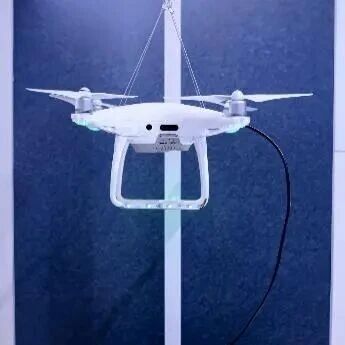
Core Viewpoint - The article highlights the advancements and innovations presented by ams OSRAM at the annual Light Expo in Shenzhen, focusing on their cutting-edge lighting and sensing solutions, particularly the new high-resolution dToF sensor TMF8829 and its applications in various industries [1][3][4]. Group 1: dToF Sensor Innovations - The TMF8829 sensor features a dual vertical cavity surface emitting laser (VCSEL) light source, with a measurement range of up to 11 meters and an accuracy of 0.25mm, significantly enhancing the ability to detect fine movements [4]. - The sensor's resolution has been increased from the common 8×8 to 48×32 (1536 segments), allowing for precise detection of subtle spatial differences and covering an 80° field of view [4][5]. - TMF8829 can maintain stable performance even with dirty cover glass, and its histogram output function aids AI systems in extracting hidden patterns from raw signals [5]. Group 2: Applications and Market Recognition - The TMF8829 sensor is applicable in various scenarios, including smart lighting systems for occupancy monitoring, object recognition in robotics, and intelligent people counting in building automation [5]. - ams OSRAM has achieved high market recognition in the infrared chip sector, with a market share leading in security camera applications and strong presence in beauty, consumer, and industrial markets [6]. Group 3: Strategic Partnerships - ams OSRAM collaborated with Shining 3D to create the EinScan Rigil, a multifunctional wireless handheld 3D scanner, utilizing ams OSRAM's advanced light source solutions [8][10]. - The partnership emphasizes the importance of high-quality light source performance for accurate data acquisition in complex environments, showcasing the synergy between the two companies [11][12]. - The collaboration marks a strategic upgrade from product cooperation to a technology-driven ecosystem, enhancing both companies' capabilities in the 3D scanning market [12].
日本芯片设备,销量大增
半导体芯闻· 2025-09-25 10:21
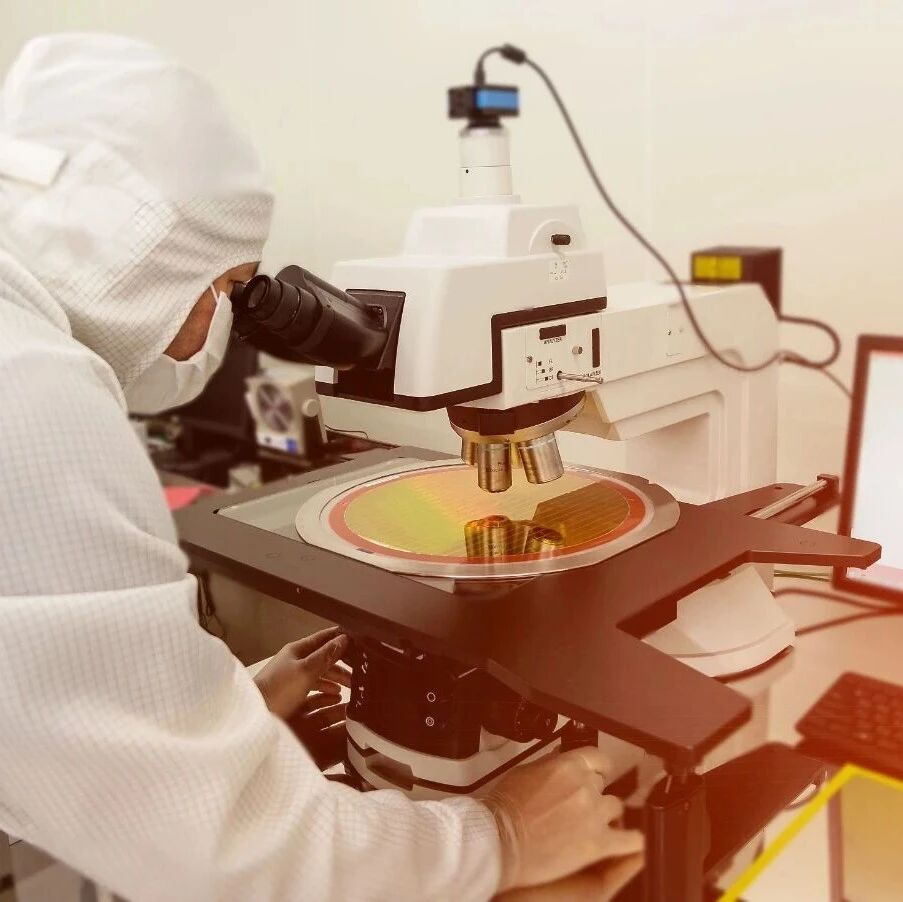
Group 1 - The core viewpoint of the articles highlights the strong growth in Japan's semiconductor manufacturing equipment sales, with a significant increase of 15.6% year-on-year in August 2025, marking the 20th consecutive month of growth and setting a historical record since 1986 [1][2] - Japan's semiconductor equipment sales reached 4,057.64 million yen in August 2025, exceeding 4,000 million yen for the 10th consecutive month, and the cumulative sales from January to August 2025 amounted to 3.375 trillion yen, a 19.2% increase compared to the same period last year [1][2] - The global market share of Japanese semiconductor equipment stands at 30%, making it the second-largest in the world after the United States [1] Group 2 - TSMC plans to exclude Chinese manufacturers from its semiconductor manufacturing equipment for its upcoming 2nm chip production line, anticipating stricter U.S. regulations on Chinese equipment [2] - The Semiconductor Equipment Association of Japan (SEAJ) revised its forecast for Japan's semiconductor equipment sales for the fiscal year 2025 to 4.8634 trillion yen, reflecting a 2.0% increase from the previous year and marking the second consecutive year of record sales [2]
AI时代下,全球及中国半导体产业现状与展望
半导体芯闻· 2025-09-25 10:21
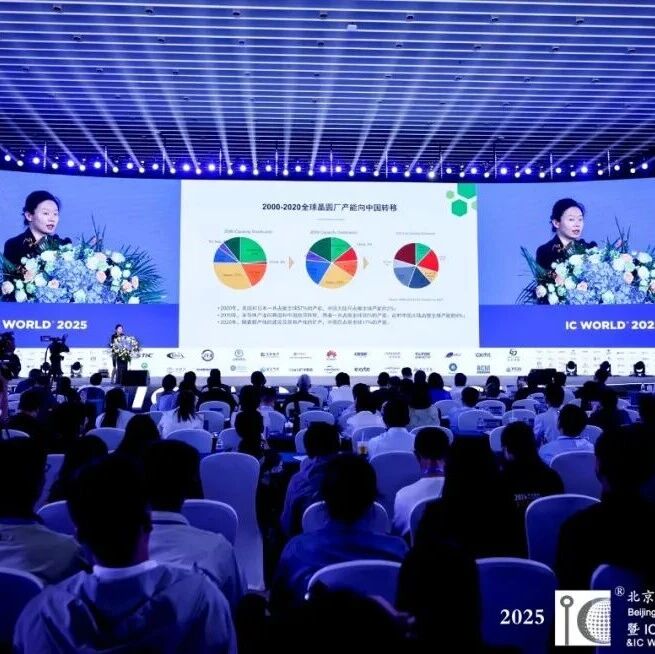
Core Viewpoint - The global semiconductor market is projected to experience significant growth, with sales expected to reach $630.5 billion in 2024, a year-on-year increase of 19.7%, and to exceed $700 billion in 2025, marking an 11.2% growth [5]. Global Semiconductor Market Trends - The semiconductor market has evolved from $200 billion in 2000 to an anticipated $1 trillion by 2030, driven primarily by artificial intelligence (AI) [5]. - AI infrastructure, including servers, data centers, and storage, is expected to grow from $149 billion in 2024 to $340 billion by 2030, representing 34% of the $1 trillion market [5]. - The demand for AI-related semiconductor components, such as GPUs, is projected to increase significantly, with GPU market size expected to grow from $100 billion in 2025 to $326 billion by 2030 [6]. Government Initiatives and Investments - Various governments are investing heavily in semiconductor infrastructure, with the U.S. announcing a $500 billion AI infrastructure plan, Europe investing over €50 billion through the Chip Act, and China continuing its investment through multiple phases of its national semiconductor fund [6][7]. - China's semiconductor industry has rapidly developed, increasing its global wafer fab capacity from 2% in 2000 to an estimated 17% in 2020, with projections to reach 26% by 2026 [7]. Equipment Investment Trends - Global fab equipment investment was around $40 billion to $60 billion in 2020, skyrocketing to $100 billion in 2021, and is expected to maintain this level through 2025, with projections to exceed $120 billion by 2028 due to AI and global chip legislation [8]. - In 2025, AI and high-performance computing (HPC) investments are expected to account for 40% of total equipment investments, increasing to 48% by 2028 [8]. China's Semiconductor Industry Development - China is a major player in the global semiconductor market, holding 46% of the Asia-Pacific market and 24% of the global market [11]. - The sales revenue of China's integrated circuit industry reached ¥1,227.69 billion in 2023, with a year-on-year growth of 2.3%, and is projected to exceed ¥1,300 billion in 2024 [11]. - The compound annual growth rate (CAGR) for China's wafer fab capacity is expected to be 8.1% from 2024 to 2028, with significant growth in mainstream nodes [12]. Long-term Investment Outlook - China's semiconductor equipment investment is projected to be $38 billion in 2025 and $36 billion in 2026, leading global semiconductor equipment investments [13]. - The total capital expenditure for the semiconductor industry is expected to reach $160 billion in 2025, with major companies like Samsung, TSMC, and Intel accounting for over 57% of global capital expenditure [14].
台积电1.4nm,要来了
半导体芯闻· 2025-09-25 10:21
Core Insights - TSMC's 1.4nm "A14" process yield performance has reportedly surpassed expectations, indicating strong progress in development [2] - The A16 process integrates advanced technologies, achieving an 8-10% speed increase, a 15-20% reduction in power consumption, and a 1.1x increase in chip density compared to the N2P process, making it suitable for high-performance computing applications [1][4] - The A14 process, designed for AI and smartphone applications, offers up to a 15% speed increase, a 30% reduction in power consumption, and over a 20% increase in chip density compared to the N2 process [1][4] TSMC's Future Plans - TSMC plans to break ground on its 1.4nm factory in the fourth quarter, with an expected production value increase from NT$4,857 billion to NT$5,000 billion and maintaining around 4,500 jobs [4] - The first risk production of the 1.4nm factory is scheduled for 2027, with mass production expected in the second half of 2028 [5] - TSMC's advanced process roadmap extends to 2030, with 2nm mass production set for the second half of 2025 and the introduction of the A16 process in the second half of 2026, promising a further 15-20% improvement in performance and efficiency [5]


芯片,将如何被颠覆?
半导体芯闻· 2025-09-25 10:21
Core Viewpoint - The integration of AI into EDA tools has the potential to fundamentally change chip design processes, but true disruption will occur when the tasks being executed change rather than just improving productivity [1][5]. Group 1: AI and EDA Integration - AI is expected to disrupt the entire EDA process, but current advancements are more about productivity enhancement rather than true disruption [1]. - The introduction of AI-driven tools could lead to significant changes in chip design, particularly in areas like High-Level Synthesis (HLS), where tools can be trained on large architectures [5]. - The potential for AI to generate code from specifications could expand the user base significantly, possibly by 10 to 100 times, thereby transforming the EDA landscape [5]. Group 2: Challenges and Limitations - The complexity of chip design has increased due to the demands of Moore's Law, leading to compromises primarily in creativity [3]. - There is skepticism about whether AI can independently achieve breakthroughs in parallel processing design due to existing biases in single-processor architectures [3]. - The idea of training semiconductor AI systems on all existing data is impractical, as companies focus on specific chip types and problems, leading to entrenched biases [4]. Group 3: Future of Semiconductor Industry - Disruption in the semiconductor industry is expected to be gradual rather than sudden, with initial changes likely occurring in advanced synthesis tools [5]. - The evolution of AI in semiconductor design will require significant improvements in virtual prototyping and error detection processes [5]. - The introduction of more AI assistants in core processes will address issues like power consumption and cost over time [5].
华天科技收购华羿微电
半导体芯闻· 2025-09-25 10:21
Core Viewpoint - The company, Tianshui Huatian Technology Co., Ltd., is planning to acquire Huayi Microelectronics Co., Ltd. through a share issuance and cash payment, which constitutes a related party transaction but does not qualify as a major asset restructuring [1] Group 1: Acquisition Details - The acquisition target, Huayi Microelectronics, is recognized as a leading domestic semiconductor company specializing in high-performance power devices, including research, design, packaging, testing, and sales [1] - Huayi Microelectronics employs a "design + packaging and testing" dual-driven business strategy, integrating device design with packaging and testing for collaborative development [1] Group 2: Financial Performance - Huayi Microelectronics reported revenues of 847 million, 1.16 billion, and 1.157 billion for the years 2020 to 2022, with net profits of 41.63 million, 88.13 million, and a loss of 43.21 million respectively [2] - The company's R&D investment was 33.73 million, 45.70 million, and 58.12 million from 2020 to 2022, with R&D expenditure as a percentage of revenue at 3.98%, 3.94%, and 5.03%, indicating a slight increase in 2022 [2] - In 2022, Huayi Microelectronics experienced a slight decline in revenue and a significant net loss, with a larger loss when excluding non-recurring items [2]


存储巨头,纷纷投靠台积电
半导体芯闻· 2025-09-24 10:47
Core Viewpoint - Micron Technology, as the largest computer memory chip manufacturer in the U.S., has provided an optimistic quarterly performance outlook driven by demand for artificial intelligence devices, indicating a significant role in AI investments [1][4]. Group 1: Financial Performance - For the first quarter of the fiscal year, Micron expects revenue of approximately $12.5 billion, exceeding analysts' average estimate of $11.9 billion [1]. - The projected earnings per share (EPS) is around $3.75, higher than the market's previous estimate of $3.05 [1]. - In the fourth quarter of the fiscal year, Micron reported a 46% year-over-year revenue increase, reaching $11.3 billion, surpassing market expectations of $11.2 billion [3]. Group 2: Product Development - Micron is making progress with its HBM4 12-Hi DRAM solution, which offers over 11 Gbps pin speed and 2.8 TB/s bandwidth, claiming it will outperform competitors in performance and efficiency [1]. - The company plans to collaborate with TSMC to produce the next-generation HBM4E memory, expected to launch in 2027 [2]. - Micron is also focusing on LPDDR memory for data centers, becoming the sole supplier of LPDDR DRAM in this sector, and is working on GDDR7 memory with expected pin speeds exceeding 40 Gbps, a 25% increase from the initially announced 32 Gbps [2]. Group 3: Market Dynamics - Micron anticipates that the supply tightness of memory chips will continue into next year due to growing demand from data center equipment and AI-related businesses [4]. - The company plans to increase capital expenditures to meet market demand, with investments in facilities and equipment reaching $13.8 billion in fiscal year 2025 [4]. - Micron's CEO highlighted the unique advantage of being the only U.S.-based memory manufacturer in capturing AI opportunities, with data center business reaching historical highs [3]. Group 4: Competitive Landscape - Micron has narrowed the gap with market leader Samsung in the HBM sector, launching products closely aligned with NVIDIA's AI processors [5]. - Analysts have expressed optimism about Micron's growth potential in the data center market, leading to significant stock price increases [5].
芯智慧 新未来|第七届浦东新区长三角集成电路技能竞赛圆满落幕
半导体芯闻· 2025-09-24 10:47
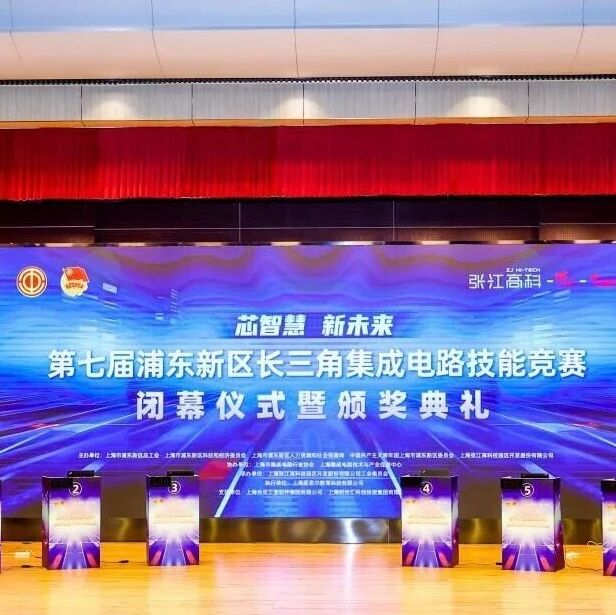
Core Viewpoint - The seventh Pudong New Area Yangtze River Delta Integrated Circuit Skills Competition successfully concluded, focusing on the theme "Chip Intelligence, New Future," aiming to promote high-quality development in the integrated circuit industry through talent exchange and cooperation [1][3]. Group 1: Event Overview - The competition was co-hosted by various local government bodies and organizations, attracting over a hundred companies and professionals from the Yangtze River Delta region [3]. - The event featured two main competition tracks: a team competition on "Design of Security Encryption Chips Based on National Secret Standards" and an individual competition on "Integrated Circuit CAD Programming Based on AI Tools," aligning closely with real industry needs [5]. Group 2: Achievements and Awards - Six companies and three universities were awarded in the competition, with Shanghai Chip Color Intelligent Technology Co., Ltd. winning the first prize in the corporate group [6][8]. - East China Normal University won the first prize in the university group, while six individual winners were also recognized [10][12]. Group 3: Future Directions - The Pudong New Area Federation of Trade Unions plans to expand platforms for employee participation and develop more dynamic competition models to support the integrated circuit industry's growth [3][12]. - The event aims to create a collaborative network across regions, enhancing technology research, talent cultivation, and standard development within the integrated circuit industry [12].

英伟达,钱太多?
半导体芯闻· 2025-09-24 10:47
如果您希望可以时常见面,欢迎标星收藏哦~ 过去几天,英伟达登上头条的原因,并不是它卖出了多少芯片,而是它能开出多大的支票。上周晚 些时候,公司宣布将向陷入困境的芯片制造商英特尔投资 50 亿美元。随后在周一,又传出消息 称,英伟达计划在未来几年向 OpenAI 投资 最高 1000 亿美元。 这个数字尤其惊人,因为就在三年前,英伟达每年的自由现金流还只有区区 60 亿美元出头。但人 工智能的狂热及其引发的"军备竞赛",让英伟达不仅成为全球市值最高的公司,还成为"现金储备 最深"的科技巨头之一。 根据 FactSet 数据,英伟达在过去四个季度中创造了 720 亿美元自由现金流,本财年预计将接近 1000 亿美元。这一规模超过了除苹果之外所有超大市值科技公司的今年预期自由现金流。 然而,如何花掉这笔巨款并非易事。英伟达在过去四个季度回购了近 500 亿美元的股票,并在近 期又追加了 600 亿美元的回购计划。公司在过去两年中将研发投入翻了一番,但依旧难以追上爆 炸式的销售增长。过去四个季度,英伟达的研发费用仅占营收的 9%,而此前五个财年的年均比例 为 22%。 用 现 金 去 收 购 一 家 大 型 公 司 ...