半导体行业观察

Search documents
英诺赛科,跃居全球第一
半导体行业观察· 2025-10-30 01:07
Core Insights - Gallium Nitride (GaN) has emerged as one of the most disruptive semiconductor technologies in the past decade, with a projected market size of $3 billion by 2030 [2] - The consumer and mobile sectors are expected to account for over 50% of the power GaN device market by 2030, driven by rapid charger adoption [2] - The automotive market is anticipated to be the next wave of expansion, with a projected compound annual growth rate (CAGR) of up to 73% from 2024 to 2030 [2] - Data centers are seeking energy-efficient solutions, with NVIDIA collaborating with wide bandgap chip manufacturers to integrate SiC and GaN technologies into their HVDC power systems [3] - The power GaN ecosystem is entering a decisive phase of consolidation and expansion, highlighted by significant acquisitions such as Infineon's $830 million acquisition of GaN Systems [6] Market Trends - The automotive and mobility sectors are expected to see significant growth, with GaN devices being widely used in LiDAR systems and on-board chargers [2] - The telecommunications market is projected to grow at an impressive CAGR of 53% from 2024 to 2030, driven by the adoption of GaN technology [3] - Innoscience is expected to maintain market leadership with a projected market share of 30% in 2024, supported by design orders in various sectors [6] Company Developments - Renesas Electronics, through its subsidiary Transphorm, is expected to achieve GaN revenue exceeding $100 million by 2026 [9] - Infineon is solidifying its position in the GaN space through its CoolGaN™ products and the acquisition of GaN Systems, while also collaborating with NVIDIA on a pilot production line [9] - Navitas is expanding its business from consumer markets to high-power markets, leveraging its GaNSafe technology [9] - EPC is innovating with a broad e-mode product portfolio, reinforcing its position as a key low-voltage GaN supplier [10] Competitive Landscape - Foundries are playing a crucial role in the GaN ecosystem, with companies like Polar Semi and PSMC entering the competition [10] - GlobalFoundries, X-FAB, and Vanguard are expanding their GaN product offerings, while Samsung is preparing to launch GaN products in 2026 [10] - Onsemi is expected to enter the GaN market soon, supported by its strong position in silicon and SiC [10]


黄仁勋吹牛了,英伟达团队辟谣
半导体行业观察· 2025-10-30 01:07
Core Viewpoint - NVIDIA's CEO Jensen Huang expressed optimism about the revenue potential of the Blackwell and Rubin AI product lines, projecting significant sales growth compared to the previous Hopper series, although subsequent clarifications adjusted these figures [2][4]. Revenue Projections - The initial claim of $500 billion in revenue from Blackwell and Rubin products over the next five quarters was clarified to represent cumulative shipments from 2025 to 2026, including revenues from NVIDIA's InfiniBand and NVLink products [4]. - It is estimated that 30% of the expected demand has already been shipped, contributing $100 billion in revenue from Blackwell products this month [4]. - The revised revenue expectation for the next five quarters is $307 billion, lower than the initial projection made by Huang [4]. Product Performance - The Blackwell series is noted for its superior performance and energy efficiency, which has made it popular among customers, marking a significant achievement for NVIDIA [4]. - The Rubin product line is anticipated to be crucial for NVIDIA's expansion in computing capabilities, with the introduction of the Vera Rubin superchip, which integrates ARM-based Vera CPU and Rubin chipsets [4]. Market Position and Growth - NVIDIA's market capitalization reached a record $5 trillion, indicating strong momentum in the AI sector [5]. - The company has transitioned from a focus on consumer GPUs to establishing a foundational role in providing necessary computing power for large tech firms, significantly increasing its market share [5]. - NVIDIA's recent announcements at the GTC 2025 conference have contributed to its soaring market value and reinforced its leadership in AI computing [5][6]. Strategic Developments - The GTC 2025 conference showcased NVIDIA's collaborations with notable companies like Nokia and Palantir, highlighting untapped applications of AI technology [6]. - There is potential for NVIDIA to re-enter the Chinese AI market, which could yield substantial additional revenue, as discussions about Blackwell AI chips with Chinese leaders are anticipated [6].

高通AI芯片,大猜想
半导体行业观察· 2025-10-30 01:07
Core Viewpoint - Qualcomm is attempting to regain its position in the AI accelerator market through a partnership with Humain AI, but it faces significant challenges in competing with Nvidia's dominance in AI training and inference workloads [2][3][5]. Group 1: Qualcomm's AI Strategy - Qualcomm signed a memorandum of understanding with Humain to develop AI technologies for edge and data center applications, focusing on advanced data center CPUs and AI solutions [3][5]. - The partnership aims to accelerate backend cloud infrastructure and adapt Humain's Arabic language models for Qualcomm's Snapdragon and Dragonwing SoCs [3][5]. - Qualcomm's initial AI 100 XPU was released in 2019, but its performance has not been widely recognized in the market [5][6]. Group 2: AI Accelerator Performance - Recent benchmarks indicate that Qualcomm's AI 100 Ultra outperforms Nvidia's A100 GPUs in terms of power efficiency, with a 60% lower power consumption for similar workloads [8][9]. - The AI 100 series has shown competitive performance in various AI inference tasks, although the overall market is crowded with startups chasing AI inference opportunities [6][7][8]. - Qualcomm plans to release new versions of its AI accelerators, including the AI 200 and AI 250, with improved specifications and performance metrics [11][12][17]. Group 3: Market Position and Financial Implications - Qualcomm's collaboration with Humain could potentially lead to significant deployments, with estimates suggesting a need for 1,250 racks to support a large-scale AI deployment [19]. - The financial implications of this partnership could be substantial, with projected costs for AI 200 Ultra cards and associated infrastructure reaching approximately $3.2 billion [19][20]. - The competitive landscape indicates that Qualcomm may need to adjust pricing strategies to effectively compete with Nvidia's offerings, which are currently more expensive in terms of performance per watt [20].


晶体管,100周年
半导体行业观察· 2025-10-30 01:07
Core Insights - The article discusses the historical development and future prospects of transistors, emphasizing their central role in modern technology and the ongoing advancements in silicon devices [2][4][7]. Group 1: Historical Context - Julius Edgar Lilienfeld applied for a patent in 1925 for a method to control electric current, which laid the groundwork for field-effect transistors, although it was not developed into a working prototype at the time [4]. - The first working transistor was invented in December 1947 by William Shockley, John Bardeen, and Walter Brattain at Bell Labs, marking a significant milestone in semiconductor technology [4]. Group 2: Current Developments - The revolution in artificial intelligence is directly linked to advancements in silicon-based complementary metal-oxide-semiconductor (CMOS) technology, which has made transistors smaller, cheaper, and more powerful [7]. - By 2018, approximately 130 billion billion (10^21) transistors had been manufactured, indicating the massive scale of production and the ongoing growth in this area [7]. Group 3: Future Prospects - As the physical limits of silicon are approached, researchers are exploring alternative semiconductors, including two-dimensional transition metal dichalcogenides and one-dimensional carbon nanotubes [8]. - Innovations reported in 2023 include molybdenum disulfide (MoS2) transistors with gate lengths under 60 nanometers and new transfer techniques for two-dimensional device integration [8]. - While predicting the future of transistor technology is challenging, it is expected that transistors will continue to dominate for a considerable time, despite the potential emergence of new platforms like memristors or quantum bits [8].

东芝中止和天岳先进的合作
半导体行业观察· 2025-10-30 01:07
Core Viewpoint - Toshiba's subsidiary has withdrawn from a technology cooperation agreement with a Chinese wafer supplier due to economic security concerns, highlighting the sensitivity of chip supply chains and geopolitical factors in the semiconductor industry [2]. Group 1: Toshiba's Actions and Agreements - Toshiba Electronic Devices & Storage Corporation signed a memorandum of understanding with Chinese SiC wafer supplier SICC on August 22, 2023, to enhance semiconductor quality and ensure stable wafer supply, but the agreement was terminated shortly after due to discussions between both parties [2]. - The company will continue purchasing wafers from SICC despite the termination of the agreement, indicating ongoing reliance on Chinese suppliers [2]. - Toshiba, along with Rohm, will receive up to 129.4 billion yen (approximately 851 million USD) from Japan's Ministry of Economy, Trade and Industry for investments in power semiconductor technology, crucial for electric vehicles [2]. Group 2: Collaboration with Tianyue Advanced - Toshiba has reached a basic cooperation agreement with Tianyue Advanced Technology Co., Ltd. regarding SiC power semiconductor substrates, focusing on technical collaboration and commercial cooperation to enhance the characteristics and quality of SiC power semiconductors [5]. - The collaboration aims to expand the supply of high-quality and stable substrates, with further discussions planned to finalize cooperation details [5]. - Tianyue Advanced, established in 2010, specializes in the development and production of single-crystal SiC substrates and has become a leading player in the field, with plans to release the world's first 12-inch SiC substrate in 2024 [6].

德明利亮相安博会,推出面向智能安防的多维度存储解决方案
半导体行业观察· 2025-10-30 01:07
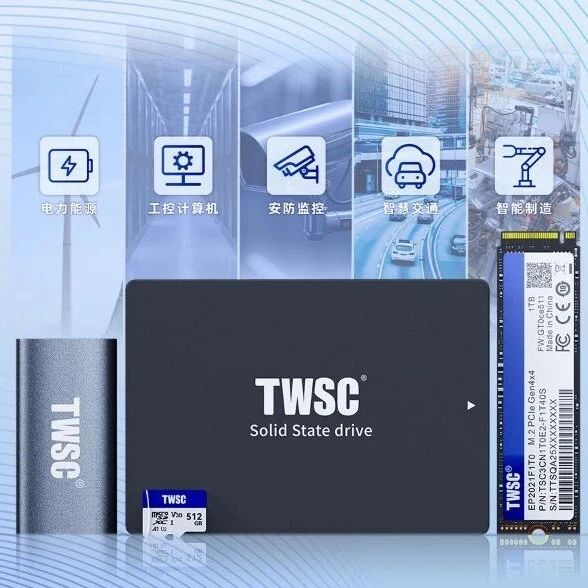
Core Viewpoint - Demingli Technology Co., Ltd. focuses on innovative research and development of storage control chips and solutions, showcasing its industrial-grade storage products at the CPSE Security Expo, emphasizing the need for high performance and reliability in next-generation smart security systems [2][3]. Group 1: Company Overview - Founded in 2008, Demingli is recognized as a national high-tech enterprise and a key "little giant" enterprise specializing in storage control chips [2]. - The company has developed a comprehensive solution covering front-end data collection, edge storage, and central analysis to support stable and efficient operation of security systems [3]. Group 2: Product Offerings - The VS1030 series SATA 2.5 inch SSD is optimized for 24/7 continuous video recording, supporting 50MB/s steady-state write bandwidth, ensuring 16 channels of 4K video can be recorded continuously for 30 days without frame loss [6]. - The EP1021 series PCIe 3.0×4 M.2 SSD is designed to handle multiple high-definition video streams and AI analysis, achieving sequential read speeds of up to 3500MB/s, suitable for high-temperature and high-vibration industrial environments [8]. - Demingli's industrial-grade TF cards support a wide temperature range of -40℃ to 85℃ and have a write endurance of 3000 to 60000 cycles, ensuring stability and durability in harsh conditions [10]. - The portable solid-state drive (PSSD) offers capacities from 1TB to 4TB with a maximum transfer rate of 2000MB/s, designed for quick data export and on-site analysis [12]. Group 3: Market Positioning - Demingli aims to upgrade "storage hardware" into scenario-based solutions, focusing on a full customization capability that includes control chips, firmware algorithms, and tailored services [14]. - The company emphasizes high reliability, durability, and long-term stable operation in critical fields such as security monitoring, network communication, industrial control, and energy [14].
报名火热进行中丨全方位解读ICCAD Expo,洞见产业“芯”未来
半导体行业观察· 2025-10-30 01:07
Core Insights - The ICCAD Expo serves as a significant platform for the semiconductor industry, gathering over 400 leading companies in EDA, IP, IC design services, foundry, and packaging [3] - The event aims to facilitate collaboration and exchange among industry leaders and experts, providing insights into the latest trends and developments in the semiconductor sector [8][9] Industry Overview - In 2023, the total sales revenue of China's chip design industry is approximately 646.04 billion RMB, with regional contributions from the Yangtze River Delta (382.84 billion RMB), Pearl River Delta (166.21 billion RMB), and Central and Western regions (98.55 billion RMB) [5] - There are 731 companies with revenues exceeding 100 million RMB, an increase of 106 companies from the previous year, accounting for 87.15% of the industry's total sales [5] Challenges and Opportunities - The chip design industry faces challenges such as sluggish growth among leading companies and a product structure skewed towards mid-to-low-end products [5] - Constructive suggestions have been provided to address external pressures and internal challenges within the industry [5] Event Highlights - The ICCAD Expo 2025 will take place on November 20-21, 2025, in Chengdu, featuring a high-level forum and multiple sub-forums focusing on cutting-edge technologies and innovations in the semiconductor industry [7][11] - The event will host over 8,000 industry professionals, including 2,000 IC design companies and 300 service providers, ensuring high-level networking opportunities [15] Key Participants - Notable exhibitors include TSMC, SMIC, Alibaba DAMO Academy, and other leading firms across the semiconductor value chain [13] - The event will feature presentations from industry leaders, including CEOs and CTOs, sharing insights on technology and development trends [15][14] Agenda Overview - The agenda includes a peak forum, multiple sub-forums, and an exhibition covering various aspects of the semiconductor industry, providing a comprehensive view of current trends and future directions [12][11]






DRAM价格,飙升50%
半导体行业观察· 2025-10-29 02:14
Core Insights - The DRAM supply chain is facing significant challenges, particularly in the server memory segment, with major hyperscale vendors in the US and China receiving only 70% of their ordered server DRAM [2] - Demand for traditional DDR5 RDIMM is exceeding supply, driven by a shift in production capacity towards AI-related advanced nodes by major manufacturers like Samsung and SK Hynix [2][3] - The market is experiencing a surge in spot prices, with DDR5 16 GB modules rising from $7-$8 to around $13 since late September, indicating a tightening supply situation [2][3] Supply and Demand Dynamics - Order fulfillment rates for channel vendors and smaller OEMs are low, around 35%-40%, as larger hyperscale companies secure fixed allocations, forcing smaller clients to the spot market or to wait until 2026 for capacity [3] - Micron has warned that DRAM is a "supply-constrained industry," with supply growth lagging behind demand expected to continue into next year [3] - TrendForce indicates that DDR4 prices are slowly declining, but the overall DRAM market is expected to see price increases of 13%-18% in Q4 [6][7] Price Trends - Recent price hikes in the DRAM market have reached up to 30%, with some manufacturers pausing quotes for certain DRAM and NAND flash products due to pricing pressures [5][6] - Kingston's DDR4 desktop memory module prices have more than doubled since March, reflecting the broader trend of rising memory prices [6] - TrendForce predicts that the shortage of DDR4 will persist until mid-2026, with overall DRAM prices expected to rise by 13%-18% in Q4 [6][7] Future Outlook - The price surge is driven by two main factors: the announcement of DDR4 discontinuation and stockpiling due to US-China tariff tensions [7] - The demand for DDR5 RDIMM, LPDDR5X, and HBM is expected to increase significantly as North American data centers accelerate AI server investments [9][10] - Despite efforts to adjust production capacity, uncertainties remain regarding supply stability for DDR5 due to technical issues and prioritization of HBM4 production [10]
芯片订单超5000亿美金,英伟达市值直逼五万亿
半导体行业观察· 2025-10-29 02:14
Core Viewpoint - Nvidia's CEO Jensen Huang announced new partnerships and alleviated concerns about an AI bubble, stating that the company's AI processor orders have reached $500 billion and that it will build seven new supercomputers for the U.S. Department of Energy, positioning Nvidia to become the first company with a market value of $5 trillion [2][4]. Group 1: Partnerships and Collaborations - Nvidia is collaborating with Uber, Palantir, and CrowdStrike to ensure its technology remains central to the AI boom [3]. - A €1 billion ($1.2 billion) data center is planned in Germany with Deutsche Telekom, and an investment agreement with Nokia has been announced [3]. - Nvidia will support 100,000 Uber autonomous vehicles with its technology, and it is developing an autonomous driving platform with Lucid Group [5]. - A $1 billion investment in Nokia aims to assist its transition from mobile networks to AI [5]. - CrowdStrike is developing a continuous learning AI agent in collaboration with Nvidia, while Palantir will integrate Nvidia's technology with its Ontology platform [5]. Group 2: Market Position and Sales Projections - Nvidia's latest chips are expected to ship 20 million units, a significant increase from the previous generation's 4 million units [4]. - The demand for Nvidia's GPUs remains strong, with 6 million units shipped in the last four quarters [9]. - Nvidia anticipates that sales from Blackwell and the upcoming Rubin chips will reach $500 billion [9]. Group 3: Manufacturing and Production - Nvidia's fastest AI chip, the Blackwell GPU, is now fully produced in Arizona, marking a shift from previous production in Taiwan [8]. - The company emphasizes the importance of bringing manufacturing back to the U.S. for national security and economic reasons [8]. Group 4: AI Market Outlook - Huang expressed confidence that the AI market is not in a bubble, citing strong customer willingness to pay for AI models [4][15]. - Nvidia plans to release a blueprint for building large-scale "gigabit" AI data centers, which will be referred to as "AI factories" [15]. Group 5: Challenges and Competition - Despite its dominance in the AI accelerator market, Nvidia faces increasing competition from AMD, Qualcomm, and others [6][15]. - The company has experienced significant sales losses due to U.S. export restrictions, particularly concerning its H20 chip [11].
一个辍学生,同时挑战ASML和台积电
半导体行业观察· 2025-10-29 02:14
Core Viewpoint - The article discusses the emergence of Substrate, a startup founded by James Proud, which aims to revolutionize semiconductor manufacturing by developing a new technology that could significantly reduce production costs and challenge established players like ASML and TSMC [2][4][15]. Group 1: Company Overview - Substrate has raised over $100 million from investors, including Peter Thiel's Founders Fund, and is valued at over $1 billion [4]. - The company plans to establish a manufacturing facility in the U.S. to reduce reliance on overseas suppliers, aligning with national security priorities [4][17]. - Substrate's technology involves using a particle accelerator as a light source for a new type of lithography, which could potentially match the resolution of ASML's advanced machines [12][15]. Group 2: Technology and Innovation - The startup aims to combine proprietary particle accelerator technology with custom lithography tools to achieve commercial viability [12][15]. - Substrate claims its machines can print features at 12 nanometers, comparable to the latest high-NA EUV machines from ASML [13][15]. - The company has demonstrated its system at national laboratories, creating complex patterns on wafers [13]. Group 3: Challenges and Market Position - Substrate faces skepticism from industry experts regarding its ability to replicate the complex semiconductor supply chain within three years [4][8]. - The company has encountered challenges in securing funding from government initiatives, with initial requests for over $1 billion being denied [8]. - Despite the challenges, Substrate's founders believe that their approach could provide a viable alternative in the semiconductor market, especially as the U.S. seeks to bolster its domestic manufacturing capabilities [18].