半导体行业观察

Search documents
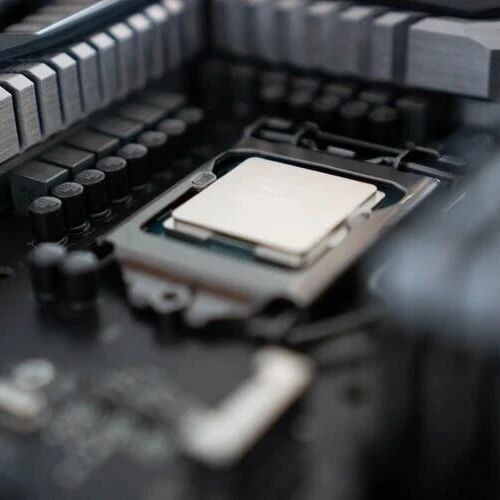
Arm,势不可挡
半导体行业观察· 2025-09-24 02:54
Core Viewpoint - The article discusses the significant shift from x86 architecture to Arm architecture in the computing industry, highlighting the growing dominance of Arm in various sectors, including personal computers and data centers, driven by major companies like Apple and Microsoft [1][3][15]. Group 1: Industry Support for Arm - The Arm ecosystem has expanded significantly over the past decade, with numerous chip design companies emerging, unlike the x86 field, which is dominated by Intel and AMD [3][8]. - Major tech companies, including Apple, Qualcomm, and Amazon, are developing high-performance processors based on Arm architecture, indicating a robust industry shift [3][4][15]. - Nvidia's involvement in Arm, despite its investments in Intel, showcases the dual focus on both x86 and Arm architectures [3][16]. Group 2: Software Compatibility - Early attempts to run Windows on Arm faced significant challenges, with many popular applications unable to run natively, leading to slow translation processes [11][12]. - Apple's Rosetta 2 translation tool has successfully enabled seamless operation of x86 applications on Arm-based Macs, contrasting with Microsoft's earlier struggles [12][13]. - Recent improvements in Windows on Arm have led to better compatibility and the release of native versions of key applications, addressing previous software shortages [12][15]. Group 3: Future of Arm and x86 - The article predicts that Arm will continue to gain traction, with Qualcomm and Arm's CEOs forecasting that up to 50% of computer shipments could be based on Arm architecture within five years [15][20]. - Despite the rise of Arm, x86 is not expected to disappear quickly, as it remains entrenched in many legacy systems [19][20]. - The competition between Arm and x86 is driving innovation, with Intel and AMD increasing their investments to enhance power efficiency and performance [20].


DDR 5,惊人的速度
半导体行业观察· 2025-09-24 02:54
Core Points - The article discusses a new world record in memory overclocking, achieved by Canadian overclocker Salty Croissant, who pushed DDR5 memory frequency to 6,510 MHz, equating to an impressive 13,020 MT/s speed, surpassing any existing memory module performance [2] - The record was set using a single 24GB Corsair Vengeance module, with a default speed of 7,500 MT/s, on a system featuring an Intel Core Ultra 7 265K CPU and a GIGABYTE flagship Z890 AORUS Tachyon ICE motherboard, designed specifically for extreme CPU and memory overclocking [2] - Prior to this achievement, the highest record was 12,872.2 MT/s, set by the ASUS ROG Maximus Z890 APEX motherboard, while the previous record for the GIGABYTE Z890 AORUS Tachyon ICE was 12,752 MT/s, achieved by renowned overclocker HiCookie [2] Technical Details - The official confirmed world record frequency remains at 12,920.2 MT/s, not 13,020 MT/s, although Croissant provided a CPU-Z screenshot to support his claim of surpassing the 13,000 MT/s threshold [3] - To achieve the new world record, memory timings had to be loosened to 68-128-128-256-1500-2T, with a CAS latency of 68, which is not ideal for most practical applications, including gaming [7] - Extreme overclocking typically requires the use of liquid nitrogen for cooling, suggesting that similar methods were likely employed in this record-setting attempt [8] Market Implications - Extreme overclocking serves as a proof-of-concept demonstration of performance under specific conditions, which is generally not applicable for everyday use, as high memory overclocking often necessitates disabling CPU cores, making such systems unstable and impractical for average users [8] - Despite the impressive nature of this new world record, it is unlikely to impact PC users significantly, as no manufacturers are expected to release factory-made memory modules capable of reaching such extreme frequencies, indicating that these achievements will remain niche pursuits for professional overclockers and PC enthusiasts [8]
人工智能芯片,太热了
半导体行业观察· 2025-09-24 02:54
公众号记得加星标⭐️,第一时间看推送不会错过。 来源 : 内容 编译自微软 。 人工智能确实很热门。 数据中心用于运行最新人工智能突破的芯片产生的热量比前几代硅片要多得多。任何经历过手机或笔 记本电脑过热的人都知道,电子产品不喜欢过热。面对日益增长的人工智能需求和更新的芯片设计, 目前的冷却技术将在短短几年内限制其发展。 为了解决这一问题,微软成功测试了一种新型冷却系统,其散热效果比目前常用的先进冷却技术—— 冷板——高出三倍。该系统采用微流体技术,将液体冷却剂直接引入硅片内部——也就是热量的来 源。硅片背面直接蚀刻出微小通道,形成凹槽,使冷却液能够直接流到芯片上,从而更高效地散热。 该团队还利用人工智能识别芯片上独特的热信号,并更精确地引导冷却剂流动。 研究人员表示,微流体技术可以提高下一代人工智能芯片的效率并增强其可持续性。目前,数据中心 运行的大多数GPU都采用冷板进行冷却,这些冷板与热源之间有多层隔离,从而限制了其散热量。 随着新一代人工智能芯片的性能越来越强大,它们产生的热量也越来越多。微软云运营与创新高级技 术项目经理 Sashi Majety 表示:"如果五年后你仍然严重依赖传统的冷却板技术,那 ...

“芯片需求让人失望”
半导体行业观察· 2025-09-24 02:54
Core Viewpoint - ASM International NV has lowered its sales forecast for the second half of the year due to lower-than-expected demand from some customers [3] Group 1: Sales Forecast and Performance - ASM expects revenue growth for 2025 to be at the lower end of the previously anticipated range of 10% to 20% when calculated at constant exchange rates [3] - The company reported that while third-quarter performance will meet previous expectations, a decline is anticipated in the fourth quarter [3] - ASM forecasts a 5% to 10% decrease in revenue for the second half of 2025 compared to the first half, attributing this to lower-than-expected demand for equipment used in advanced logic chips [3] Group 2: Market Conditions and Competitors - Major customers like Intel have become more conservative in spending, with Intel announcing the cancellation of some factory projects in July [3] - Samsung's chip division also experienced a significant decline in the second quarter [3] - ASML Holding NV has also lowered its sales growth forecast for next year due to overall economic uncertainty [4] Group 3: Long-term Outlook - ASM projects that sales will exceed €5.7 billion (approximately $6.7 billion) by 2030, indicating an average annual growth rate of at least 12% [4] - Analysts from firms like JPMorgan, Citigroup, and Oddo BHF remain optimistic about the company's long-term performance due to its transition to "Gate-All-Around" (GAA) technology, which is expected to increase the addressable market by up to $500 million [4] - Despite current challenges, ASM is expected to perform better than the industry average, with improving profit margins and strong growth opportunities projected until 2020 [4]
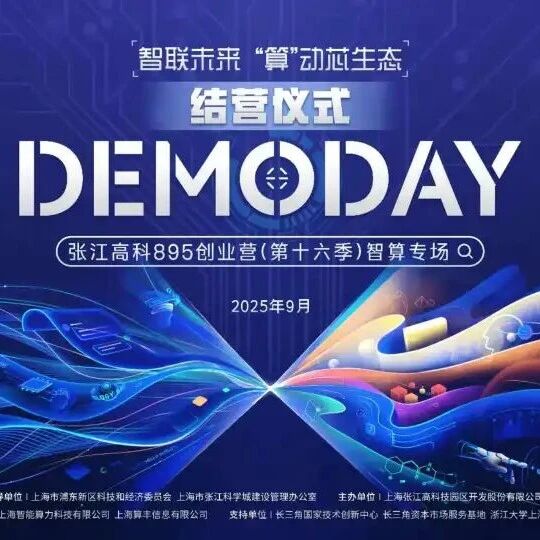
9月26日,895创业营(第十六季)DemoDay“智”等您来!
半导体行业观察· 2025-09-23 01:08
Core Viewpoint - The article highlights the 16th season of the Zhangjiang High-tech 895 Startup Camp, focusing on artificial intelligence and intelligent computing, showcasing 21 innovative companies in the field and preparing for the upcoming Demo Day event to present the most promising projects [1]. Group 1: Event Overview - The theme of the event is "Connecting the Future, Driving the Chip Ecosystem," emphasizing the importance of AI and intelligent computing [1]. - The camp has organized various activities since its launch in May, including opening ceremonies, classes, industry salons, and entrepreneurial journeys, leading up to the anticipated Demo Day [1]. Group 2: Featured Startups - Jiangyuan Chip Technology (Shanghai) Co., Ltd. focuses on the development of domestically produced AI chips and intelligent computing platforms, having successfully mass-produced China's first fully domestically developed AI model computing chip, addressing the "bottleneck" issue in AI chips [5]. - Shanghai Yunmai Chip Technology Co., Ltd. is a leading company in high-performance network interconnection chips, with its self-developed YSA-100 chip already released and performing well in customer tests, contributing to China's intelligent computing infrastructure [6]. - Beijing Chaoxing Future Technology Co., Ltd. provides high-efficiency AI computing solutions for edge intelligence scenarios, with its "Jingzhe" R1 chip already in mass production and R2 expected to launch in 2025 [8]. - Yingwei Chip (Shanghai) Technology Co., Ltd. specializes in optoelectronic integration technology, offering high-performance solutions for data center optical interconnects, enhancing data transmission efficiency while reducing system energy consumption [9]. - Ningbo Yunjin Micro Intelligent Technology Co., Ltd. focuses on the application of large model technology in embodied intelligence, with a management team from top institutions like Zhejiang University and Alibaba [10]. - Yanchip Micro (Shanghai) Co., Ltd. specializes in ReRAM technology, focusing on embedded IP, independent storage, and storage-computing integrated chips for edge AI inference [12].
这类芯片,需求激增
半导体行业观察· 2025-09-23 01:08
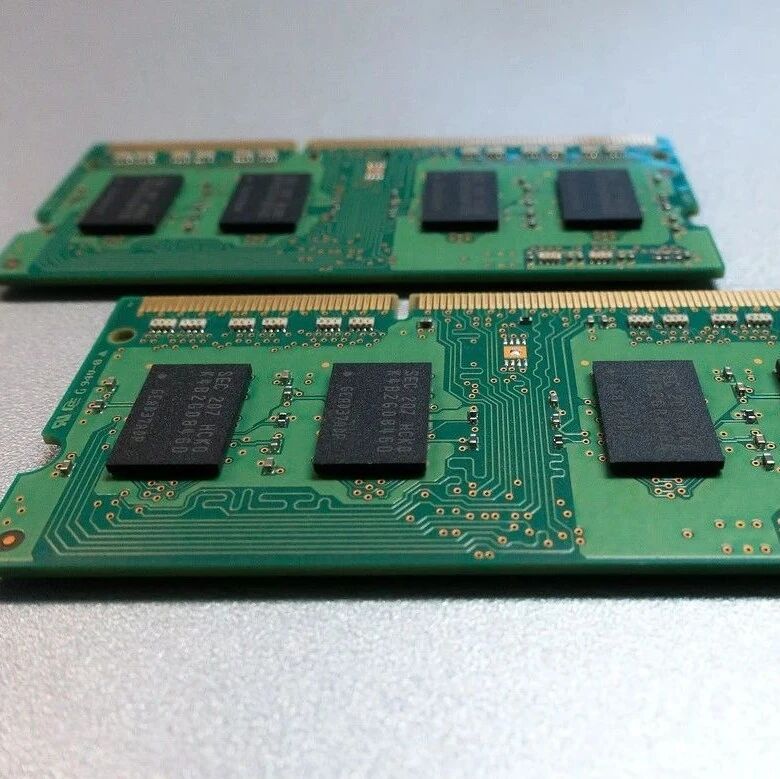
Core Viewpoint - The semiconductor performance of Samsung Electronics is expected to exceed expectations due to a surge in memory demand, leading KB Securities to raise its target stock price to 110,000 KRW and maintain a "buy" rating [2] Group 1: Samsung Electronics' Performance - KB Securities has increased its net profit forecasts for Samsung Electronics for this year and next by 16.1% and 24.4%, respectively, to 34 trillion KRW and 52 trillion KRW [2] - The semiconductor division's operating profit is projected to reach 20.8 trillion KRW in the second half of this year, a 33% increase compared to the same period last year [2] - Samsung is expected to gain a competitive edge in the high bandwidth memory (HBM) market with its upcoming HBM4, which utilizes 1c DRAM and 4nm logic chips, achieving a performance of 11 Gbps [2] Group 2: Market Dynamics and Price Increases - Samsung Electronics plans to raise prices for some DRAM products by up to 30% and NAND products by up to 10% due to supply shortages in the memory market [4] - SK Hynix is also expected to follow suit with price increases as market prices rise [4] - The demand for memory from AI data centers is driving price increases across the memory industry, with companies like Sandisk and Micron also announcing price hikes [5] Group 3: Future Market Projections - Market Insights predicts that the AI server market growth will significantly boost the DRAM market, with DRAM capacity in AI servers expected to increase from an average of 1TB to over 2.5TB from 2024 to 2030 [6] - The sales of DRAM in data centers are projected to grow from $48 billion in 2024 to $154 billion by 2030, accounting for 70% of total DRAM sales [6]
谷歌投了一家电源芯片公司
半导体行业观察· 2025-09-23 01:08
公众号记得加星标⭐️,第一时间看推送不会错过。 来源 : 内容 编译自siliconangle 。 芯片初创公司 Empower Semiconductor Inc. 今天宣布已完成一轮价值超过 1.4 亿美元的融资。 富达领投了此次 D 轮融资。Alphabet Inc. 旗下 CapitalG 初创基金、Walden Catalyst Ventures、 Maverick Silicon、Atreides Management、Socratic Partners、Knollwood 以及阿布扎比投资局的 一家全资子公司也参与了此次融资。此轮融资使 Empower 的外部融资总额超过 2 亿美元。 总部位于加州圣何塞的Empower公司开发电源管理芯片。这些芯片是服务器用来向其组件分配电力的 集成电路。这类芯片还用于其他任务,最显著的是保护处理器免受电压浪涌的影响。 Empower 出售 IVR 的同时,也销售电容器。电容器是微型电池,处理器可以用来储存电能。芯片设 计师利用它们来移除处理器中多余的能量,加速计算并执行一系列其他任务。 该公司开发了一种名为 ECAP 的硅基电容器。该公司表示,ECAP 是市 ...
15大客户疯抢2nm
半导体行业观察· 2025-09-23 01:08
Core Viewpoint - TSMC's 2nm orders are booming, with 15 clients confirmed, primarily from the HPC sector, indicating strong demand driven by AI applications [2][3] Group 1: Demand and Market Position - TSMC's 2nm technology is expected to surpass the previous generation in demand, providing a stable business foundation and sustainable growth over the next five years [3][4] - The initial 2nm production line will span four major wafer fabs in Taiwan, with a target monthly capacity of 100,000 wafers by 2026 [3][4] - Major tech companies expected to be clients include Apple, AMD, Qualcomm, MediaTek, Broadcom, and Intel, with Apple anticipated to secure nearly half of the initial 2nm capacity [4][10] Group 2: Technical Advancements - The 2nm process features a revolutionary Gate-All-Around (GAA) transistor structure and optimized NanoFlex DTCO, enhancing chip performance and efficiency [4][5] - Compared to the 3nm process, the 2nm technology shows significant advantages in power consumption, with reductions of 24% to 35% under the same voltage conditions, and potential performance improvements of up to 15% [7][8] Group 3: Pricing and Cost Implications - TSMC's 2nm wafer prices are expected to rise by 50%, which may lead to increased costs for clients like Qualcomm and MediaTek, who are already facing higher fees for the 3nm process [8][10] - The price increase for 3nm wafers has already forced Qualcomm and MediaTek to raise prices for their flagship products, impacting the overall market dynamics [9][10]
EUV光刻,新里程碑
半导体行业观察· 2025-09-23 01:08
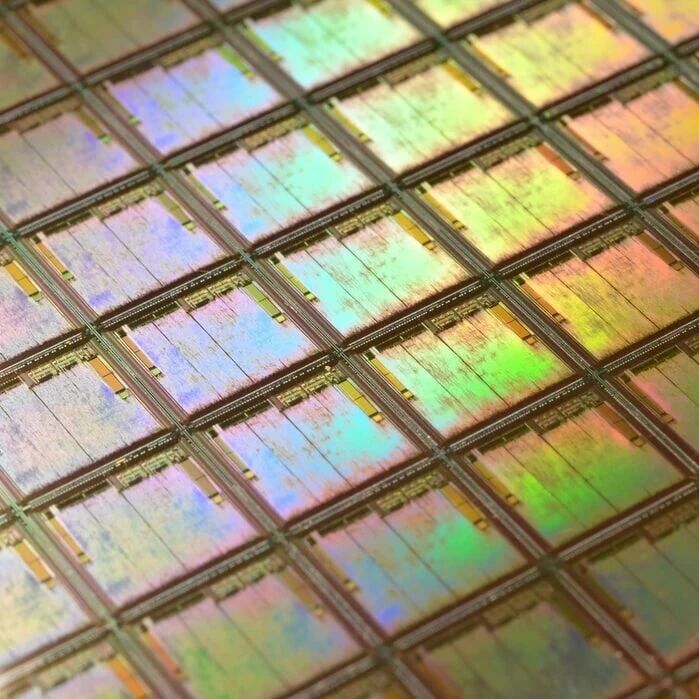
Core Insights - Imec has made significant advancements in single-print high numerical aperture EUV lithography technology, showcasing a 20nm pitch line structure with a critical dimension (CD) of 13nm, which is crucial for advanced semiconductor manufacturing [3][8][10] - The results achieved by Imec are pivotal for meeting the goals outlined in the European Chips Act, particularly concerning technology nodes below 2nm [3][11] Summary by Sections - **Technological Achievements** - Imec demonstrated a 20nm pitch line structure with a 13nm T2T CD and a local critical dimension uniformity (LCDU) of 3nm, marking a significant milestone in the industry [9][10] - The results were obtained through the optimization of metal oxide photoresists and the underlying illumination pupil shape and mask selection [9][10] - **Collaboration and Ecosystem** - The advancements are a result of collaboration with ASML and the establishment of the ASML-Imec high numerical aperture EUV joint laboratory in Veldhoven, which has fostered a robust ecosystem for lithography technology development [11] - The partnership emphasizes the importance of collaboration among leading chip manufacturers, equipment suppliers, and material providers to enhance high numerical aperture EUV lithography capabilities [11] - **Future Directions** - Imec is working towards reducing the end-to-end distance to 13nm and below while maintaining functional interconnects, with promising results already seen at the 11nm process node [5][10] - The laboratory is also exploring alternative metallization schemes for below 20nm pitches, demonstrating the compatibility of ruthenium (Ru) direct metal etching with single-exposure high NA EUV lithography [10][11]

芯片新帝国崛起?
半导体行业观察· 2025-09-23 01:08
Core Viewpoint - India aims to become a global semiconductor powerhouse but faces significant challenges due to late entry into the advanced chip manufacturing race and intense competition [2] Group 1: India's Semiconductor Ambitions - India has approved 10 semiconductor projects with a total investment of ₹1.6 trillion (approximately $18.2 billion), including two semiconductor manufacturing plants and several testing and packaging facilities [2] - The Indian government has introduced a new plan to support electronic component manufacturing to address critical bottlenecks in the semiconductor supply chain [4][6] - The country is shifting from traditional silicon-based semiconductors to advanced silicon carbide-based semiconductors, with a roadmap to introduce advanced 3D glass packaging technology [6][9] Group 2: Investment and Infrastructure - Major investments include Tata Electronics' collaboration with Taiwan's Powerchip Semiconductor Manufacturing Corp to build a ₹910 billion ($11 billion) semiconductor manufacturing facility in Gujarat [9] - The Indian semiconductor industry is projected to create 1 million jobs by 2026, driven by government initiatives, infrastructure development, and increasing private investment [14] Group 3: Challenges and Ecosystem Development - Experts emphasize that India needs a vibrant and long-term ecosystem, not just a few manufacturing plants, to succeed in the semiconductor industry [3] - The country faces challenges in infrastructure, continuous power supply, and a talent gap in managing and scaling manufacturing facilities [13] - India's semiconductor design talent pool contributes 20% to the global market, but the core knowledge for advanced chip design often resides in countries with mature intellectual property systems [11][12] Group 4: Future Prospects - The success of India's semiconductor ambitions will depend on addressing operational challenges and ensuring sustainable funding and strategic partnerships [13] - With global giants entering the Indian market, the country is poised to reduce import dependency and accelerate its economic transformation [14]