半导体行业观察

Search documents
特朗普重申:芯片关税会很高
半导体行业观察· 2025-09-17 01:30
来源 : 内容来自半导体行业观察综合 。 美国总统唐纳德·特朗普16日表示,利润高于汽车的半导体和药品可能面临比汽车25%更高的关税。 特朗普政府已根据《贸易扩展法》第232条款对汽车及其零部件征收25%的关税,该条款允许对被视 为威胁国家安全的进口产品征收关税,目前还在考虑对半导体和药品征收关税。与美国达成贸易协定 的日本自16日起已将汽车关税从27.5%降至15%,而韩国汽车则因谈判陷入僵局,仍需缴纳25%的关 税。 特朗普在离开白宫前往英国进行国事访问期间接受记者采访时,被问及有人担心将汽车关税从25%降 至15%会损害美国汽车制造商的利益,他表示:"我没有在任何事情上妥协。" 美国汽车业对特朗普 与日本和欧盟达成的贸易协定表示不满,该协定旨在将汽车关税从25%降至15%,因为这将增强日本 汽车在美国市场的价格竞争力。特朗普强调,"他们多年来没有缴纳任何关税",以此凸显他实施25% 关税的初衷。 他补充道:"现在他们缴纳的关税是15%,有些产品可能还要更高。半导体和制药行业的关税可能更 高。半导体和制药行业的利润率比汽车高。" 他的言论被解读为,他此前多次承诺要征收的半导体行 业特定关税可能会超过汽车行 ...


SRAM停止微缩,怎么办?
半导体行业观察· 2025-09-17 01:30
Core Viewpoint - Memory latency, bandwidth, capacity, and energy consumption are increasingly becoming bottlenecks for performance improvement. The article proposes a shift from large, shared, homogeneous memory systems to smaller, tightly coupled memory segments that provide private local memory, significantly reducing access costs [2][4]. Group 1: Challenges in Memory Architecture - The idea of a large distributed memory address space is appealing but faces scalability and signaling challenges, which are physical limitations in modern engineering [4][5]. - Scaling capability has effectively reached its limit, with the cost per byte of SRAM and DRAM stabilizing, making large-capacity memory economically unfeasible [4][6]. - Signal transmission costs increase with distance, making remote memory access expensive and inefficient [5][12]. Group 2: Limitations of 2D Scaling - Traditional 2D scaling for SRAM and DRAM has reached its end, with costs per byte remaining stagnant for over a decade, leading to increased system costs [7][9]. - The growth of on-chip cache cannot keep pace with the expansion of chip area, necessitating more efficient storage resource utilization [9][14]. Group 3: Integration and Efficiency - Tighter integration enhances data transfer bandwidth and energy efficiency, as seen in the performance of L1, L2, and L3 caches [10][12]. - Modern DDR5 memory achieves a bandwidth of 358 Gbps, but the increase in core counts per slot has outpaced bandwidth improvements [10][12]. Group 4: Proposed Solutions - The article suggests a fundamental redesign of memory hierarchy, focusing on locality, bandwidth, and energy efficiency rather than raw capacity [14][15]. - The concept of "compute-memory nodes" integrates computing capabilities with private local memory, allowing for explicit management of data locality and sharing [14][15]. - DRAM is redefined as a capacity-driven storage layer for large working sets and cold data, while performance-critical access is managed through faster, on-package memory [15].
龙芯首款GPU,准备好了
半导体行业观察· 2025-09-16 01:39
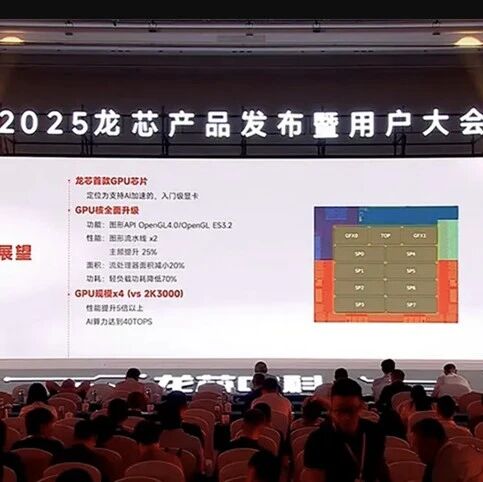
Core Viewpoint - Longxin Technology's first GPGPU chip, the 9A1000, is nearing completion with plans for tape-out in Q3 2023, marking a significant milestone for the company, which has primarily focused on processors until now [1][3]. Group 1: Product Development - The 9A1000 is positioned as an entry-level graphics card supporting AI acceleration, distinguishing it from other Chinese graphics cards like the Lisuan G100, which is said to compete with the GeForce RTX 4060 [1]. - Specific specifications of the 9A1000 remain undisclosed, but it is suggested to have performance similar to the Radeon RX 550 released eight years ago [3]. - The chip supports PCIe 4.0 and is compatible with 128-bit LPDDR4X high-speed memory, featuring eight computing clusters and advanced internal architecture [3][4]. Group 2: Performance Specifications - The 9A1000 boasts a pixel fill rate of 16 GP/s, a texture fill rate of 32 GT/s, and floating-point performance of 1 TFLOPS (FP32) and 64 GFLOPS (FP64), with INT8 performance reaching 32 TFLOPS [4]. - Recent updates indicate a 20% reduction in the area of stream processors, a 25% increase in operating frequency, and a 70% optimization in power consumption under light load [4]. - The 9A1000 is reported to be four times faster than the integrated graphics of the 2K3000 processor, with AI computing capabilities of up to 40 TOPS, slightly below AMD's Ryzen AI Max+ [5]. Group 3: Future Developments - Longxin is also developing the 9A2000, which is expected to be ten times faster than the 9A1000 and comparable to the GeForce RTX 2080 [5]. - Plans for the 9A3000, a successor to the 9A2000, are in place, although specific specifications are currently unclear [5].

苹果新芯片,乏善可陈
半导体行业观察· 2025-09-16 01:39
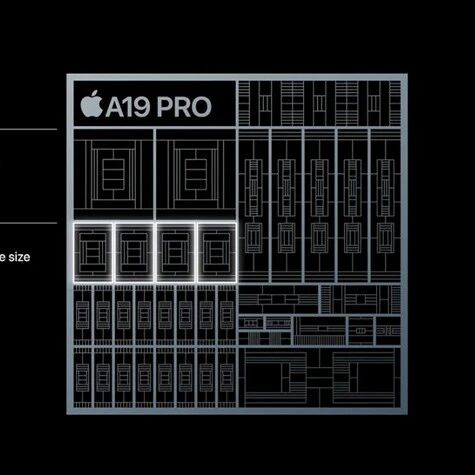
Core Viewpoint - Apple has launched its latest iPhone 17 series featuring the new A19 and A19 Pro SoCs, promising slight performance improvements over the previous generation due to advancements in chip architecture and manufacturing processes [2][3]. Chip Manufacturing - The A19 series utilizes TSMC's advanced 3nm process node, marking a shift to the higher-performing N3P node from the previous N3E node, which allows for a 4% increase in transistor density and a 5% performance boost while reducing power consumption by 5-10% [3][4]. CPU Architecture - The A19 series maintains a similar CPU architecture to the A18 series, featuring a 2+4 core configuration, with improvements in front-end bandwidth and branch prediction units aimed at enhancing overall CPU performance [5][7]. - The last level cache (LLC) for the A19 Pro has increased by 50%, from 24MB in the A18 Pro to 36MB, which is expected to improve performance and efficiency [9]. Performance Improvements - Apple claims that the iPhone 17 Pro's sustained CPU performance is up to 40% better than the iPhone 16 Pro, while the standard iPhone 17 shows a 40% performance increase over the A16 SoC used in the iPhone 15 [10]. GPU Enhancements - The A19 SoC introduces the Apple10 GPU architecture, which enhances FP16 performance, reportedly doubling the FP16 throughput compared to previous architectures [14][16]. - Apple claims that the GPU performance of the iPhone 17 is approximately 20% faster than the iPhone 16, and the iPhone 17 Pro is 50% faster than the iPhone 15 Pro [18][19]. Neural Engine and Memory - The A19 chip features an upgraded neural engine with improved memory bandwidth, although specific performance metrics have not been disclosed [26]. - The A19 series is expected to support faster memory, likely exceeding the LPDDR5X-7500 used in the A18 series, although exact specifications are not yet confirmed [24]. Wireless Technology - The introduction of the Apple N1 wireless chip marks Apple's first foray into self-developed short-range wireless technology, supporting Wi-Fi 7 and Bluetooth 6.0, which enhances device connectivity and tracking capabilities [28][29].

美国正在扰乱全球芯片
半导体行业观察· 2025-09-16 01:39
Core Viewpoint - The article discusses the U.S. government's plan to acquire a 9.9% stake in Intel to revitalize the semiconductor industry, which is seen as strategically important for national security and economic stability [3][4][7]. Group 1: U.S. Government's Involvement - The U.S. government aims to reverse Intel's decline by investing in the company, hoping to replicate the successful public-private partnership model seen with Taiwan's TSMC [3][4]. - The investment is intended to keep semiconductor manufacturing within the U.S. and enhance domestic production capabilities to meet the industrial demand for semiconductors [4][7]. - The government intervention may lead to pressure on companies like Nvidia and AMD to source chips from Intel, complicating the global semiconductor supply chain [1][4]. Group 2: Intel's Current Challenges - Intel is facing significant delays in launching its semiconductor factory in Ohio, with production now expected to start in 2030 or later due to a lack of customer orders [3][7]. - The company's struggles in the foundry business are a major reason for its financial losses, leading to considerations of divesting this segment [3][7]. - Despite the government's support, Intel's management is cautious about selling its foundry business, as they believe retaining operational control is crucial for future success [3][7]. Group 3: Market Dynamics and Risks - Fitch Ratings warns that the U.S. government's stake in Intel could distort capital investments in the semiconductor industry, potentially leading to inefficiencies in resource allocation among chip manufacturers [1]. - The geopolitical risks associated with semiconductor supply chains, particularly concerning Taiwan and China, heighten the importance of a strong domestic player like Intel [4][7]. - Intel's reliance on overseas markets for 76% of its revenue poses risks, especially if government interventions lead to a decline in its business in countries perceived as adversarial [7].

台积电市占,再创新高
半导体行业观察· 2025-09-16 01:39
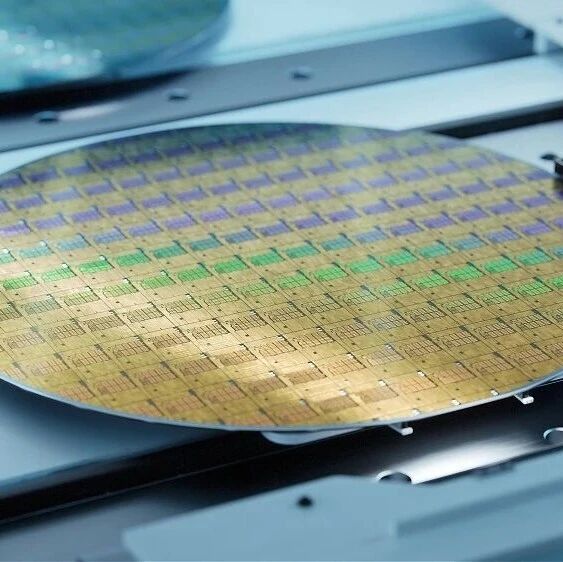
Core Insights - Taiwan's semiconductor manufacturing company, TSMC, is projected to increase its foundry market share to 38% by Q2 2025, up from 31% year-over-year, driven by a 19% increase in foundry revenue due to AI demand and Chinese subsidies [1] - Advanced packaging technology is becoming increasingly important, with TSMC expected to maintain its leadership in both advanced process nodes and advanced packaging in the foreseeable future [1][2] - The OSAT (Outsourced Semiconductor Assembly and Test) industry is experiencing a revenue growth rate acceleration from 5% to 11%, with companies like ASE and King Yuan benefiting significantly from AI GPU demand [2] Summary by Sections TSMC Market Share and Revenue Growth - TSMC's foundry market share is expected to rise to 38% by Q2 2025, compared to 31% in the same period last year [1] - The overall foundry revenue is anticipated to grow by 19% year-over-year, primarily due to the demand for advanced processes and packaging driven by AI and subsidies from China [1] - Counterpoint Research forecasts moderate single-digit growth in foundry revenue by Q3 2025 [1] Advanced Packaging and Technology Trends - Advanced packaging is becoming a crucial growth driver for chip manufacturers, with TSMC's strong technology and customer relationships positioning it well for future leadership [2] - The shift towards Foundry 2.0 indicates a transition from traditional foundry services to a more integrated technology platform, encompassing various semiconductor manufacturing processes [2] Application Processor (AP) Market Dynamics - TSMC is expected to dominate the application processor market with a projected 90% share in the 5nm or smaller process technology segment [3] - The demand for advanced semiconductor processes is increasing due to the growing need for performance and energy efficiency in high-end smartphones [4] - TSMC's market share in the sub-3nm AP manufacturing segment is projected to be around 87% this year, increasing to 89% by 2028 [4] Competitive Landscape - Samsung is working to improve its yield rates in the 3nm and below processes to catch up with TSMC, having recently stabilized its 3nm process [5] - Despite Samsung's efforts, TSMC continues to lead in advanced process technology, with significant market share in AP manufacturing for major clients like Apple and Qualcomm [4][5]

韩国芯片,急了
半导体行业观察· 2025-09-16 01:39
Group 1: South Korea's Semiconductor Dominance - South Korea's semiconductor industry, led by SK Hynix and Samsung, holds a significant market share in DRAM and NAND, with a combined 70% share in DRAM and nearly half in NAND [1][3] - The country's semiconductor exports are projected to reach a record $142 billion in 2024, accounting for one-fifth of total exports [1] Group 2: AI Chip Development - The South Korean government announced a plan to invest 150 trillion KRW (approximately $108 billion) over the next five years to develop AI, semiconductors, biotechnology, defense, robotics, and green transportation [3] - Rebellions, a South Korean AI chip company, has raised $225 million since its inception in 2020 and is known for its energy-efficient AI computing chips [4] - Sapeon Korea, an AI chip startup under SK Telecom, became South Korea's first AI chip unicorn with a valuation of 1.3 trillion KRW (approximately $1 billion) [4] Group 3: SiC Semiconductor Focus - South Korea aims to increase its self-sufficiency in SiC (silicon carbide) power semiconductors from 10% to 20% by 2028, with a government investment of 902 billion KRW [9][10] - SK Siltron CSS holds a 6% share of the global SiC wafer market and has signed a long-term supply contract with Infineon Technologies [10] - The South Korean government is also focusing on developing core technologies for SiC chips and has plans to build demonstration infrastructure [10][11] Group 4: Industry Challenges and Opportunities - South Korea has approximately 160 fabless companies, significantly fewer than China's over 3,000, indicating a need for growth in this sector [16][17] - The local market's capacity to absorb semiconductor production remains a concern, especially in the context of geopolitical tensions affecting global supply chains [17]

Open RAN已死?
半导体行业观察· 2025-09-16 01:39
Core Viewpoint - Mavenir's CEO warns that without support from "brownfield" operators, Open RAN may face extinction, leading to a monopoly by Ericsson and Nokia outside of China [1][4] Group 1: Open RAN Development - Open RAN was officially launched in early 2018 with the establishment of the O-RAN Alliance, aimed at creating more open interfaces to foster competition among suppliers [3] - Since the formation of the O-RAN Alliance, there have been few new "greenfield" network projects, with the largest network owned by Echostar set to retire after selling spectrum licenses to AT&T and SpaceX [3][4] - Major existing "brownfield" operators show a lack of interest in Open RAN, preferring traditional suppliers like Huawei, Ericsson, and Nokia, whose RAN market share increased from 75.1% in 2023 to 77.4% [4] Group 2: Market Competition - Nokia's mobile networks president asserts that competition in the market is more intense than critics suggest, with companies like Samsung, Fujitsu, and NEC also participating [5] - Omdia reports that Samsung held a 4.8% share of the RAN market last year, ranking as the fifth-largest supplier, while NEC and Fujitsu had shares of 0.9% and 0.5%, respectively [5] Group 3: Technological Integration - Nokia claims to have integrated its baseband technology with multiple manufacturers' radio units, including Mavenir and a Korean RF unit manufacturer [6] - Nokia's MantaRay platform allows operators to manage RAN from different suppliers, addressing concerns about multi-vendor integration in Open RAN [8][9] Group 4: Future Outlook - Despite positive remarks from Nokia regarding Open RAN's progress, concerns remain among large telecom operators about the sub-industry's prospects, with projected annual spending on RAN products declining by 22% from 2022 to 2024 [12] - Smaller suppliers like Mavenir may struggle to compete against larger companies like Fujitsu and NEC, which have the backing of larger electronic firms [12][13]



国产芯片,两桩收购
半导体行业观察· 2025-09-16 01:39
Core Viewpoint - The article discusses recent acquisitions in the semiconductor industry, highlighting the strategic moves by companies like Purun and Amlogic to enhance their market positions and technological capabilities through these transactions [1]. Group 1: Purun's Acquisition of Noah Changtian - Purun Semiconductor plans to acquire a controlling stake in Zhuhai Noah Changtian Storage Technology Co., which will allow it to indirectly control SkyHigh Memory Limited [3][5]. - The acquisition is expected to complement Purun's product, market, and technology offerings, enhancing its competitiveness in non-volatile storage products [3][6]. - The target company, Noah Changtian, holds 100% of SHM, which specializes in high-performance 2D NAND and derivative memory products, with a strong global sales network [4][6]. Group 2: Market Trends and Opportunities - The global semiconductor industry is experiencing rapid growth due to technological advancements, increasing market demand, and supportive policies [6]. - The storage chip sector, particularly 2D NAND, is undergoing significant development, driven by AI, data factorization, and domestic substitution trends [6][7]. - The SLC NAND market is projected to grow from $2.31 billion in 2024 to $3.44 billion by 2029, with a compound annual growth rate of 5.8% [7]. Group 3: Amlogic's Acquisition of Chipmike - Amlogic plans to acquire 100% of Chipmike Semiconductor for approximately RMB 316.11 million, which will make Chipmike a wholly-owned subsidiary [9]. - The acquisition aims to enhance Amlogic's capabilities in wireless communication, particularly in IoT, automotive, and mobile smart terminal sectors [9][10]. - By integrating Chipmike's technology, Amlogic seeks to build a comprehensive communication technology stack, enhancing its AIoT product offerings and expanding its market reach [10].



英特尔完成Altera股份出售
半导体行业观察· 2025-09-16 01:39
据报道,芯片制造商英特尔宣布,由于近期涉及Altera业务的一项交易,该公司将下调全年成本预 期,随后股价周一飙升约5%。据Investopedia报道,继今日上涨后,英特尔股价今年迄今已上涨约 27%。 据Investopedia报道,英特尔宣布已完成向私募股权公司银湖资本出售其可编程芯片部门Altera 51% 的 股 份 , 交 易 价 格 约 为 33 亿 美 元 。 据 报 道 , 该 交 易 于 4 月 首 次 披 露 , 并 于 上 周 五 正 式 完 成 。 据 Investopedia报道,英特尔将保留Altera剩余49%的股份。 由于此次交易带来的现金注入,英特尔已将其2025财年非公认会计准则运营支出目标从此前预计的 170亿美元下调至168亿美元。据Investopedia报道,一份监管文件显示,英特尔2026财年运营支出 目标保持不变,仍为160亿美元。 此次资产剥离正值这家陷入困境的半导体制造商经历结构性变革,财务压力日益增大之际。 公众号记得加星标⭐️,第一时间看推送不会错过。 来源 : 内容来自半导体行业观察综合 。 报道进一步指出,英特尔首席执行官陈立武(Lip-Bu Ta ...