半导体行业观察

Search documents
存储芯片,价格飙升20%
半导体行业观察· 2025-09-18 02:09
Core Viewpoint - The article highlights a significant increase in NAND and DRAM contract prices expected in Q4 2025, driven by AI infrastructure demands and supply constraints [2][3]. Group 1: Price Trends - NAND and DRAM contract prices are projected to rise by 15-20% in Q4 2025, contrasting with typical seasonal price declines [2]. - SanDisk has increased NAND prices by approximately 10% in September, indicating tightening supply conditions [2]. - The demand for high-density 3D NAND products is surging, with cloud service providers actively procuring these products due to their faster read speeds and larger capacities [2][3]. Group 2: Supply Chain Dynamics - Samsung's next-generation V9 NAND is reportedly close to being sold out, as cloud customers are securing capacity early due to its advantages [3]. - TrendForce has noted that traditional DRAM types are under significant pressure, and if cloud orders continue to rise, typical winter discounts on NVMe drives may be less than expected [3]. Group 3: Market Performance - Phison Electronics reported record revenue of NT$59.34 billion in August, a 23% year-over-year increase, attributed to non-consumer demand and closer collaboration with NAND manufacturers [4]. - The article emphasizes that AI is reshaping the cloud storage landscape, leading to stronger pricing power for flash memory manufacturers compared to previous years [4].

SK海力士,奖金炸裂
半导体行业观察· 2025-09-18 02:09
Core Viewpoint - SK Hynix is making significant moves in the semiconductor industry by launching a large-scale recruitment drive for new graduates, which is expected to attract a high number of applicants due to competitive compensation packages and performance bonuses [2][4][6]. Group 1: Recruitment and Compensation - SK Hynix has initiated a recruitment campaign for over 100 new employees, coinciding with the graduation season in March and September, and has eliminated the cap on profit-sharing bonuses, allowing employees to receive up to 100 million KRW annually [2][4]. - The company’s average annual salary reached 117 million KRW last year, and recent recruitment events have seen a surge in interest, with reports indicating that new hires could earn more than their counterparts at Samsung Electronics [5][6]. - The competition for new positions is expected to be fierce, with predictions of a recruitment ratio exceeding 100:1, compared to last year's 50:1 [6][7]. Group 2: Performance and Market Position - SK Hynix reported a 47.8% increase in sales, reaching 354.948 billion KRW, and a 93.6% increase in operating profit, totaling 152.124 billion KRW for the first half of the year [7][8]. - The company is projected to maintain its position as the highest taxpayer in South Korea, with corporate taxes paid in the first half of the year exceeding 27 trillion KRW, marking a 129% increase from the previous year [6][7]. - SK Hynix has captured a 39.5% share of the global DRAM market, continuing to outperform competitors like Samsung Electronics, and is expected to report strong earnings in the upcoming quarters [8].
超越EUV光刻,新进展
半导体行业观察· 2025-09-18 02:09
Core Viewpoint - The article discusses the advancements in lithography technology, particularly the development of "Beyond-EUV" (B-EUV) technology, which aims to surpass the current EUV lithography standards by utilizing shorter wavelengths for improved resolution in chip manufacturing [2][3][5]. Group 1: B-EUV Technology Overview - B-EUV technology utilizes lasers with wavelengths of 6.5nm to 6.7nm, potentially achieving resolutions below 5nm, which could replace the current EUV technology [2][3]. - The current EUV technology operates at a wavelength of 13.5nm, achieving resolutions of 13nm natively and 8nm through multi-patterning [8]. - The development of B-EUV is still in its early stages, with researchers acknowledging that it may take several years to produce even experimental tools [2][3]. Group 2: Challenges in B-EUV Development - The transition to B-EUV faces significant challenges, including the need for new light sources, projection optics, and photoresist materials that can effectively interact with the shorter wavelengths [6][17]. - The efficiency of the B-EUV light source is critical, as the shorter wavelengths are more easily absorbed by materials, complicating the design of effective optical systems [5][6]. - Current research indicates that while 6.7nm light has a lower reflectivity compared to 13.5nm, it may still be a viable option if the challenges in material interaction and optical design can be overcome [5][6]. Group 3: Innovations in Light Sources - Companies like Inversion are exploring new methods to create compact, high-power light sources using Laser Wakefield Acceleration (LWFA), which could potentially support B-EUV technology [13]. - The Lawrence Livermore National Laboratory is working on a project to enhance EUV light source efficiency significantly, aiming for a tenfold increase over current standards [11]. - xLight is developing a free electron laser (FEL) technology that could provide higher power EUV light, potentially optimizing production processes in semiconductor manufacturing [15][16]. Group 4: Breakthroughs in Photoresist Materials - Researchers at Johns Hopkins University have discovered that metals like zinc can absorb B-EUV light and trigger chemical reactions in organic compounds, leading to the potential for finer patterning on semiconductor wafers [17][18]. - The development of a chemical liquid deposition (CLD) technique allows for rapid testing of different metal-organic combinations, enhancing the flexibility of materials used in chip manufacturing [17][18]. - While challenges remain in fully realizing B-EUV technology, the advancements in photoresist materials represent a significant step forward in addressing key bottlenecks in the process [17][18].

芯片,何时能复苏?
半导体行业观察· 2025-09-18 02:09
Core Viewpoint - The semiconductor market growth is driven by average selling prices (ASP) rather than shipment volumes, indicating that a recovery can only be confirmed when shipment volumes increase [2][3] Group 1: Market Trends - The global semiconductor market is projected to grow by 16% this year, reaching $732 billion, with a worst-case scenario of 15% growth and a best-case scenario of 19% [2] - By 2026, the market is expected to grow by 12%, reaching $813 billion, with a worst-case growth of 6% and a best-case growth of 18% [2] - There is a dichotomy in the market, with AI data centers thriving while non-AI markets remain weak [2][3] Group 2: Capital Expenditure and Pricing - Capital expenditure as a percentage of sales remains high at approximately 15%, compared to a long-term trend of 11% [3] - Average selling prices have stabilized at $1.76 in July after hitting a low of $1.11 in June 2022 [3] - The enthusiasm for compound semiconductors is waning, with significant investments in GaN wafer fabs in China surpassing those in SiC [3] Group 3: Geopolitical Factors - The U.S. government is considering imposing tariffs on semiconductors, potentially exceeding 25%, which adds uncertainty to the global semiconductor industry [5][6] - The Trump administration's policies have created a climate of uncertainty, affecting not only U.S. companies but also allies like South Korea and Japan [5][6] - The U.S. government is leveraging its position to pressure companies like Intel to increase investments while simultaneously restricting imports of semiconductor equipment to China [6][7] Group 4: Industry Sentiment - The semiconductor industry is experiencing a downturn, with a significant drop in the Business Sentiment Index (BSI) for the electronics and telecommunications sector [5] - Experts emphasize the need for calm and accurate judgment in the face of market volatility and government policies [8]

小米自研芯片,拆解曝光
半导体行业观察· 2025-09-17 01:30
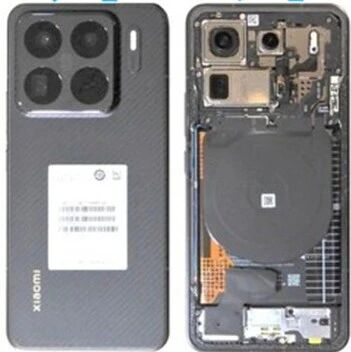
Core Viewpoint - The article highlights the significant advancements in the semiconductor industry, particularly focusing on Xiaomi's high-end smartphone, the Xiaomi 15S Pro, which is set to launch in May 2025, featuring a 3nm processor designed in China, amidst the backdrop of US-China tensions and the growing investment in general artificial intelligence (AGI) [2][3]. Group 1: Xiaomi's Product Launch - Xiaomi is celebrating its 15th anniversary in 2025 by launching several commemorative models, including the Xiaomi 15S Pro, which will be released six months after the flagship Xiaomi 15 series [3]. - The Xiaomi 15 series is expected to feature Qualcomm's self-developed 3nm Snapdragon 8 Elite processor, while the Xiaomi 15S Pro will utilize Xiaomi's own 3nm chip [3][13]. Group 2: Technical Specifications - The Xiaomi 15S Pro features a dual-layer internal circuit board divided into three sections: processor board, communication board, and terminal/IMU board, with a triple-camera setup, each with a 50MP CMOS image sensor from different manufacturers [5]. - The device integrates both imported and self-developed chips, particularly in camera, power, and battery systems, showcasing Xiaomi's rapid development in these areas [8][10]. Group 3: Chip Development - Xiaomi's XRING O1 processor, manufactured using 3nm technology, includes a 10-core CPU, 16-core GPU, 6-core NPU, and 3-core ISP, indicating a competitive edge over Qualcomm and MediaTek [17]. - The article notes that Xiaomi has been investing in semiconductor research and development for nearly a decade, evolving from entry-level processors to high-end solutions [21]. Group 4: Market Position and Future Outlook - As a major consumer of advanced chips, China is increasingly recognized in the semiconductor landscape, with Xiaomi's development of its own chips positioning it favorably in the market [2]. - Xiaomi's strategic move to develop proprietary chips is seen as a preparation for potential expansion into robotics and automotive sectors, indicating a long-term vision beyond the smartphone market [17].

啃最硬的骨头:一家国产EDA公司如何赢得市场
半导体行业观察· 2025-09-17 01:30
Core Viewpoint - The article highlights the emergence of Hangxin Technology as a key player in the EDA (Electronic Design Automation) sector, particularly in the challenging Signoff area, which is crucial for chip design and manufacturing [1][4][5]. Group 1: Industry Context - EDA tools are essential for chip design, with Signoff being the final verification step before manufacturing, representing a significant technical barrier in the semiconductor industry [1][4]. - The EDA Signoff segment has been dominated by international giants, making it difficult for new entrants, especially Chinese companies, to gain a foothold [1][4]. Group 2: Company Strategy - Hangxin Technology's entry into the EDA Signoff field is a strategic decision aimed at addressing the high barriers to entry and establishing a unique value proposition in the domestic market [4][5]. - The company has developed a comprehensive product line, including seven products that cover various critical aspects of chip design, emphasizing 100% independent research and development [5][6]. Group 3: Market Positioning - Hangxin's approach allows for a more tailored response to domestic market needs compared to standardized solutions from foreign EDA vendors, enhancing its competitive edge [5][6]. - The company has built strong relationships with leading design firms and foundries, positioning itself as a critical support for successful chip production [6][8]. Group 4: Challenges and Solutions - The high switching costs associated with EDA Signoff tools pose a significant challenge, as clients are hesitant to change due to concerns over reliability and risk [7][8]. - Hangxin focuses on building trust through rigorous validation and successful case studies, gradually winning over clients with proven value [7][8]. Group 5: Future Outlook - The company aims to integrate its tools into a platform that simplifies the Signoff process, allowing clients to execute all necessary checks with a single command [10]. - Hangxin is also pursuing a "left shift" strategy to identify issues earlier in the design process, thereby reducing costs associated with late-stage problem-solving [10][11].

这类芯片,英伟达悄然领先
半导体行业观察· 2025-09-17 01:30
公众号记得加星标⭐️,第一时间看推送不会错过。 来源 : 内容 编译自 nextplatform 。 2020年4月,Nvidia 以 69 亿美元收购了 Mellanox Technologies,以收购其 InfiniBand 和以太网交 换技术。五年多之后,随着 GenAI 的蓬勃发展,Nvidia 被 IDC 评为数据中心以太网交换领域的主 要收入来源。 水涨船高,但有一艘船正乘着稍高的波浪,那就是 Nvidia 的 Spectrum-X 以太网交换机和 DPU 组 合,它已成为用于互连 AI 集群的后端网络的首选网络,这些集群的规模超出了 Nvidia 销售的更高 性能 NVSwitch 内存结构的机架规模范围。 Nvidia 以太网的飞跃幅度是巨大的,就像过去两年 Nvidia 在计算方面的飞跃一样。 IDC在其数据附带的声明中表示,思科占据了路由器市场32.9%的份额,销售额达11.6亿美元,同比 增长17.7%。这意味着思科的增长速度超过了整个路由器市场。华为的路由器销售额仅为10.8亿美 元,增长率仅为13.3%,低于市场平均水平。我们目前尚不清楚瞻博网络在路由器市场的份额,但鉴 于HPE收 ...


中国或将改变模拟芯片格局
半导体行业观察· 2025-09-17 01:30
Core Viewpoint - The recent anti-dumping investigation initiated by China against U.S. analog chip imports may reshape the global market landscape, indicating escalating geopolitical tensions between China and the U.S. and accelerating domestic substitution of analog products [2]. Group 1: Investigation Details - The investigation began on September 13, 2025, following a complaint from the Jiangsu Semiconductor Industry Association [2]. - The focus of the investigation includes interface and gate driver chips, such as CAN and RS485 transceivers, which are widely used in automotive, industrial, and power electronics applications [2]. - The investigation is expected to last one year, with a possible six-month extension, assessing import conditions since 2024 and industry damage dating back to 2022 [3]. Group 2: Impact on Companies - Bernstein estimates the revenue exposure of major U.S. suppliers: TI at 11.4%, ADI at 7.8%, and Onsemi at 10.2%, with the Chinese market accounting for about 20% of revenue for TI and ADI [2]. - The investigation may have a limited impact on U.S. analog processor manufacturers, according to UBS analysts, who suggest that the effects on companies like Texas Instruments and ADI are expected to be minimal [3]. - Local companies such as Silergy, Novosense, 3Peak, SG Micro, and Joulwatt may benefit from this investigation, while U.S. firms face downside risks [3]. Group 3: Geopolitical Context - The investigation is seen as a response to recent U.S. trade restrictions on several Chinese companies, with the U.S. Commerce Department adding 32 entities to the trade restriction list, including 23 Chinese entities [4]. - The investigation may be similar to previous U.S. investigations into Chinese analog chip manufacturers, indicating a tit-for-tat dynamic in trade relations [4].



知存科技 2026 届校招启动:这类半导体人才将成香饽饽
半导体行业观察· 2025-09-17 01:30
Core Viewpoint - The article discusses the challenges faced by traditional chip architectures due to the rise of generative AI models and the emergence of in-memory computing technology, which significantly enhances AI computing efficiency and is seen as a disruptive technology in the post-Moore era [1][3]. Group 1: In-Memory Computing Technology - In-memory computing technology has gained traction as it addresses the "storage wall" and "power wall" issues inherent in the von Neumann architecture, leading to a potential efficiency improvement of several times in AI computing [1][3]. - The in-memory computing chips developed by Zhichun Technology have already served over 30 clients in commercial applications, showcasing the technology's practical viability [5]. Group 2: Talent Acquisition and Development - Zhichun Technology has launched the "Genius Doctor Program" for 2026, aiming to attract top talent in semiconductor devices, circuit design, and AI algorithms, reflecting the industry's talent competition amid rapid technological advancements [1][7]. - The program offers a unique growth system that includes mentorship and rotation across core R&D positions, allowing participants to gain comprehensive experience in the technology development process [7][10]. Group 3: Industry Trends and Future Outlook - The semiconductor industry is expected to face a talent shortage of over 300,000 professionals by 2025, highlighting the urgency for companies to develop and attract skilled individuals [1]. - The current phase of in-memory computing technology is critical as it transitions from "production validation" to "scale application," indicating a pivotal moment for the industry [12].
玻璃走向芯片,一步之遥
半导体行业观察· 2025-09-17 01:30
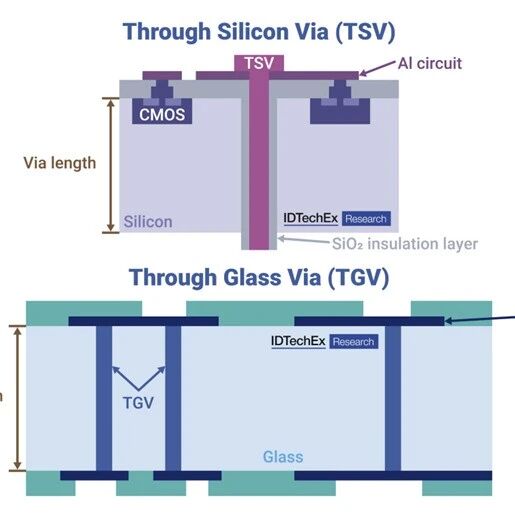
Core Viewpoint - Glass is transitioning from a background consumable to a core component in semiconductor packaging, providing essential substrates and dielectric materials for advanced applications [2][4]. Group 1: Glass in Semiconductor Manufacturing - Glass substrates are increasingly used in modern wafer fabs, supporting silicon wafers and forming sealed MEMS caps [2]. - The demand for higher bandwidth and power density in AI and high-performance computing (HPC) is driving the need for advanced packaging solutions, where glass can offer better performance than traditional organic laminates and silicon interposers [3][4]. Group 2: Market Potential and Applications - The low dielectric loss and optical transparency of glass make it a significant growth driver beyond computing packaging, particularly in photonic applications [6]. - Co-packaged optical devices (CPO) are being developed to simplify fiber connections, leveraging glass's capabilities to support electrical redistribution layers and low-loss waveguides [6]. Group 3: Supply Chain Insights - The transition from pilot lines to mass production for glass substrates hinges on advancements in laser drilling, copper filling, and panel processing technologies [8]. - Understanding the competitive landscape with silicon and improved organic materials is crucial, as foundries push for mixed wafer-level redistribution, which may diminish glass's advantages [8].