半导体行业观察

Search documents
英伟达,被进一步调查
半导体行业观察· 2025-09-15 08:28
Core Viewpoint - Nvidia is under investigation by China's State Administration for Market Regulation for allegedly violating antitrust laws related to its acquisition of Mellanox Technologies, which was approved with specific restrictive conditions in 2020 [2][4]. Group 1: Investigation Details - The investigation pertains to Nvidia's $6.9 billion acquisition of Mellanox, which significantly impacts supercomputing and artificial intelligence [4]. - The State Administration for Market Regulation had previously imposed conditions on the acquisition, including prohibiting forced bundling and unreasonable trading conditions [4][34]. - The specific violations by Nvidia regarding these conditions are currently unknown [4]. Group 2: Mellanox Overview - Mellanox, founded in 1999, is a leader in high-performance interconnect technology, particularly known for its InfiniBand technology used in over half of the world's supercomputers [5][6]. - The acquisition of Mellanox by Nvidia is seen as a strategic move to enhance Nvidia's position in the cloud AI chip market [6]. Group 3: Competitive Landscape - Nvidia's GPUs are the dominant solution for cloud AI acceleration, with competitors lacking the ecosystem and software tools that Nvidia offers [7]. - The combination of Nvidia's GPUs and Mellanox's interconnect technology creates a formidable barrier to entry for other AI chip companies, particularly in distributed training environments [8][10]. - The integration of these technologies is expected to solidify Nvidia's market position and increase competitive pressure on other players in the AI chip market [8][10]. Group 4: Market Dynamics - The GPU and interconnect device markets are characterized by high entry barriers due to capital and technology intensity, making it difficult for new entrants to compete effectively [29]. - Nvidia and Mellanox's combined market power allows them to potentially engage in anti-competitive practices, such as bundling products and limiting interoperability with third-party devices [30][31]. Group 5: Regulatory Conditions - The approval of the acquisition included several conditions aimed at mitigating anti-competitive risks, such as ensuring non-discriminatory practices in product sales and maintaining interoperability with third-party devices [34][35]. - These conditions are legally binding and will be monitored by the regulatory authority to ensure compliance [38].


全球芯片,最新预测
半导体行业观察· 2025-09-15 02:14
Core Viewpoint - The semiconductor industry is undergoing rapid transformation driven by advancements in artificial intelligence, geopolitical changes, and increased government investment in domestic production [1] Demand Analysis - Semiconductors are essential for innovation and daily life, with strong and evolving market demand due to rapid technological advancements and growth across various industries [3][4] - The global semiconductor market is expected to grow from $627 billion in 2024 to $1.03 trillion by 2030, driven by advancements in data centers, AI, autonomous vehicles, smartphones, and other emerging technologies [4] Automotive Sector - The automotive industry is experiencing profound changes due to electrification, autonomous driving, and software-defined vehicles (SDVs), increasing the role and value of semiconductors in modern vehicles [7][8] - The electric vehicle (EV) market is projected to account for around 50% of total vehicle sales by 2030, significantly increasing the demand for high-voltage power semiconductors like silicon carbide (SiC) [8][11] - The rise of autonomous driving technology is expected to elevate the semiconductor content in vehicles, with most new cars likely to feature Level 2 automation by 2030 [15][17] - The shift towards SDVs is leading to a reduction in the number of electronic control units (ECUs) while increasing the demand for high-performance system-on-chip (SoC) solutions [20] Server and Network - The demand for computing power is expected to grow significantly by 2030, driven by the rise of generative AI applications and the need for advanced data processing capabilities in data centers [27][28] - The global server market is projected to exceed $300 billion by 2030, fueled by investments from cloud service providers and telecommunications companies [28] - The expansion of 5G technology is anticipated to drive demand for network devices and GaN-based RF chips to achieve ultra-fast, low-latency communication [27][28] AI and Connectivity - The increasing complexity of AI models and the growing data sets are leading to a significant rise in demand for high-performance CPUs, GPUs, and AI accelerators within data centers [54][55] - The semiconductor content in mobile base stations is expected to increase as communication standards evolve, particularly with the rollout of 5G and future 6G networks [55][57] Home Appliances - The integration of AI and IoT technologies is making home appliances smarter, driving demand for AI processors and power management integrated circuits (PMICs) [56][61] - The rise of smart home experiences is leading to increased demand for connectivity integrated circuits as appliances become more interconnected [63] Industrial Sector - Semiconductors are transforming various industrial sectors, including healthcare, agriculture, and manufacturing, driven by the need for automation and efficiency [96][97] - The shift towards renewable energy is expected to increase the demand for power semiconductors, particularly SiC, to support effective power transmission and usage [105][106]


2nm,不可或缺
半导体行业观察· 2025-09-15 02:14
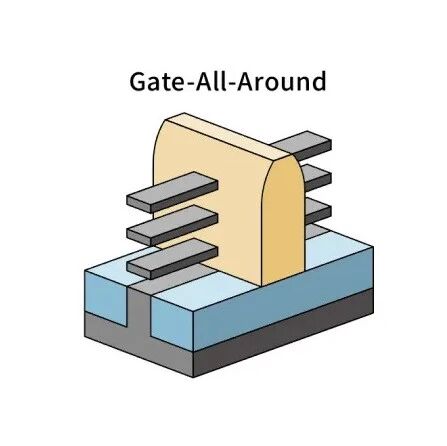
Core Viewpoint - The semiconductor industry is entering the 2nm era, which represents the most advanced technology to date, driven by the miniaturization of circuits and transistors, leading to significant improvements in performance, cost, and power efficiency [1][2][3]. Group 1: Technological Advancements - The term "process node" refers to the algebra of manufacturing technology, typically measured in nanometers, with smaller numbers indicating stronger processing capabilities [1]. - The trend of node scaling follows Moore's Law, which predicts that the number of components on integrated circuits will double approximately every 18-24 months [2]. - The introduction of FinFET technology in the early 2010s effectively mitigated leakage current issues associated with traditional planar transistors as technology approached the 20nm node [2]. Group 2: 2nm Technology Benefits - The 2nm semiconductor is expected to deliver a 45% performance increase and a 75% reduction in power consumption compared to 7nm chips, according to IBM's 2021 data [3]. - Gate-All-Around (GAA) transistors, which utilize nanosheets or nanowires, are designed to further improve control and suppress leakage, allowing for smaller transistor sizes while achieving higher performance [3]. Group 3: Importance for AI and IoT - The 2nm node is particularly crucial for artificial intelligence (AI) and the Internet of Things (IoT), as it provides the necessary computational power and energy efficiency for AI workloads [5]. - The technology enables advanced AI to run locally on billions of small, battery-powered IoT devices without excessive energy consumption [5]. Group 4: Challenges Ahead - The transition to 2nm technology presents challenges, including increased variability and yield control difficulties, as well as the high costs associated with EUV lithography systems [5]. - Only a few companies globally can afford the level of production required for 2nm technology, despite its potential to become the cornerstone of next-generation digital infrastructure [5]. Group 5: Comparative Features - A comparison of semiconductor features across different nodes shows that 2nm technology is expected to have a transistor density greater than 300M/mm², with power efficiency improvements of up to 30-40% compared to 3nm [6].
来了!纳芯微汽车电子技术研讨会·重庆站,报名通道已开启
半导体行业观察· 2025-09-15 02:14
Core Insights - The article emphasizes the importance of chips as the core technology and driving force behind the evolution of the automotive industry amidst the trends of intelligence and electrification [1]. Event Overview - The event hosted by Naxin Micro on September 25 in Chongqing will focus on automotive electronics, particularly in body electronics and intelligent cockpits, featuring comprehensive technical sharing and demo displays [1]. Agenda Highlights - A one-stop solution for motor driver ICs for body domain controllers will be presented [4]. - Intelligent high-side switches will assist in upgrading automotive electrical architectures [4]. - A comprehensive vehicle power management chip solution will be introduced [4]. - Pressure sensors will mark a new era in intelligent perception [4]. - Magnetic sensors will be discussed in the context of body electronics applications [4]. - Key products such as the NSUC1800 ultrasonic radar probe chip, NLS9116 and NLS9246 vehicle video SerDes chipsets, NSDA6934 Class D audio power amplifier, and NSUC1500 ambient light driver will be showcased [4]. - General interface and operational amplifier one-stop solutions will also be highlighted [4]. Detailed Agenda - The event will start with registration and demo displays from 13:30 to 14:00 [6]. - An introduction to Naxin Micro and automotive application solutions will take place from 14:00 to 14:20 [6]. - Various sessions will cover topics such as motor driver IC solutions, electrical architecture upgrades, power management solutions, and sensor applications [6]. - The event will conclude with a lucky draw and interactive session [6][8].


突发,英伟达叫停SOCAMM
半导体行业观察· 2025-09-15 02:14
Core Viewpoint - NVIDIA has revised its plans for the low-power DRAM (LPDDR) module SOCAMM, abandoning the SOCAM1 project in favor of SOCAM2, which is currently being tested with three memory manufacturers [1][2]. Group 1: SOCAMM Development - NVIDIA has started sample testing for SOCAMM2 with Samsung, SK Hynix, and Micron, shifting focus from SOCAM1 due to technical issues that prevented large-scale orders [1][2]. - SOCAMM aims to provide high-capacity memory at lower costs and power consumption compared to high bandwidth memory (HBM) [1]. Group 2: Technical Specifications - SOCAMM2 features the same 694 I/O ports as SOCAM1 but offers a data transfer speed of 9,600 MT/s, surpassing SOCAM1's 8,533 MT/s [2]. - The power consumption of SOCAMM is reported to be one-third lower than that of standard DRAM-based RDIMM server memory modules [2]. Group 3: Market Implications - The delay in SOCAMM1's launch has created opportunities for Samsung and SK Hynix, as they are now on equal footing with Micron in the development of SOCAMM2 [3]. - SOCAMM2 is expected to begin mass production in early next year, with increasing adoption anticipated as the demand for memory solutions to address data bottlenecks in AI computing rises [3].


韩国芯片出口,激增
半导体行业观察· 2025-09-15 02:14
Core Insights - South Korea's ICT exports reached a record high in August, driven primarily by semiconductor exports, which hit an all-time high of $15.11 billion, marking a 27.0% increase year-over-year [2][4] - Overall ICT exports amounted to $22.87 billion, reflecting an 11.1% increase compared to the same period last year, while imports grew by 7.6% to $12.53 billion, resulting in a trade surplus of $10.34 billion [2] - The semiconductor market's growth is attributed to rising fixed prices of memory semiconductors and increased investments in infrastructure, including AI servers [2] Export Performance - Semiconductor exports surged to $15.11 billion, surpassing the previous record of $14.98 billion set in June [2] - Display exports fell by 9.4% to $1.82 billion, impacted by declining prices and reduced demand for LCDs and OLEDs [2] - Mobile phone exports decreased by 15.4% to $1.33 billion, primarily due to a slowdown in exports to China [2] Industry Challenges - The semiconductor industry faces increased uncertainty due to potential U.S. tariffs on semiconductors and pharmaceuticals, which could lead to a 4.3% decline in annual sales for Korean semiconductor companies [4][5] - The U.S. government is conducting investigations that may result in additional trade restrictions, raising concerns about the future of the semiconductor sector in South Korea [4][5] Strategic Responses - Industry experts suggest that both the government and companies should adapt flexibly to the situation, seeking to turn pressure into opportunities [6] - There is a potential for collaboration between South Korean firms and U.S. tech companies, which could lead to mutual benefits and investment opportunities [6] - The industry remains cautious, as there is insufficient information to formulate specific countermeasures or strategies in response to the evolving trade landscape [7]
这类芯片,将供不应求
半导体行业观察· 2025-09-15 02:14
Core Viewpoint - The global demand for DRAM and NAND flash memory is expected to exceed supply in 2024, driven by the surge in AI-related storage needs, leading to price increases and market opportunities for major memory manufacturers like Micron, SanDisk, Samsung, and SK Hynix [1][2][3] Group 1: Market Dynamics - The memory market is experiencing a significant shift due to the rapid increase in AI cloud demand, with DRAM manufacturers focusing on High Bandwidth Memory (HBM) and facing challenges in production capacity [2] - Micron has announced a price increase of 20% to 30% for DRAM products, indicating a strong demand that exceeds expectations, with a potential new wave of purchasing activity in the market [1][2] - SanDisk has also raised prices by over 10% across all channels, signaling the start of a new round of price increases in the NAND market [2] Group 2: Price Trends and Projections - The DRAM price index has increased by approximately 72% in less than six months, while NAND prices remain relatively low compared to last year, indicating a widening gap between the two price indices [3] - The overall market value for NAND flash memory is projected to reach $65 billion in 2026 and $70 billion in 2027, with a growing contribution from AI demand [2] Group 3: Sector-Specific Insights - The server market is seeing a recovery in demand for enterprise-level NAND due to inventory depletion and a strong need for profitability, leading to a more aggressive pricing strategy from manufacturers [4] - With Micron exiting the mobile NAND market, domestic manufacturers are expected to benefit from the resulting market opportunities, leading to a slight increase in mobile NAND prices in Q4 [5]


大家不再抢芯片了
半导体行业观察· 2025-09-15 02:14
Core Insights - The consumer IC market is experiencing a slowdown due to the impact of tariff policies and the diminishing effects of subsidy policies in China [2][3] - Many IC design companies are expressing concerns about maintaining operational performance in the second half of the year, with some expecting results to be at best flat compared to the first half [2] - The AI wave is attracting significant attention and investment, but companies not involved in AI may struggle to achieve explosive growth [3] Group 1: Market Conditions - Consumer product demand remains weak, with the IC design industry not seeing the expected seasonal uptick during the traditional peak season [2] - The impact of U.S. tariff issues led to a significant inventory buildup in the first half of the year, resulting in reduced demand for the second half [2] - The effects of subsidy policies aimed at stimulating domestic consumption in appliances, smartphones, and automobiles are showing signs of weakening [2] Group 2: Industry Outlook - IC design companies are cautiously optimistic about maintaining performance levels similar to last year, despite the traditional peak season not being robust [2] - There is a general expectation that the upcoming purchasing seasons in China and the U.S. may not provide the anticipated boost to demand [2] - Industry experts suggest that the current focus on AI infrastructure may eventually lead to renewed demand for other IC sectors once the initial AI investments stabilize [3]
三星最强芯片将量产,打破高通垄断
半导体行业观察· 2025-09-15 02:14
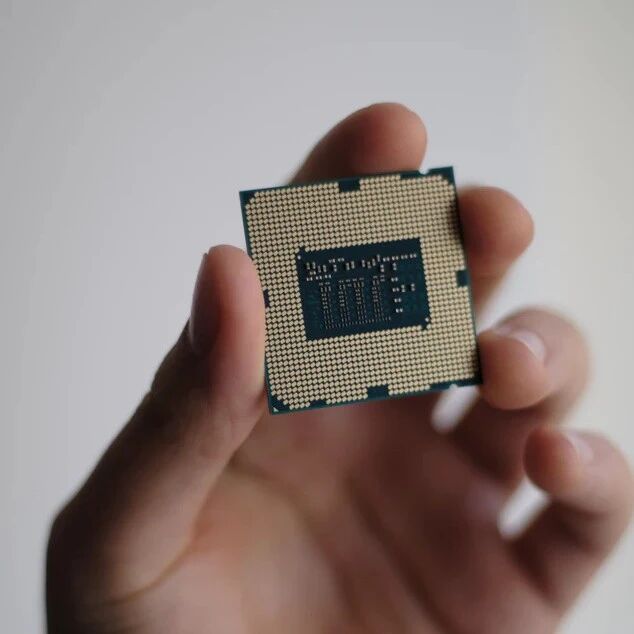
Core Viewpoint - Samsung's 2nm GAA technology has shown remarkable progress, with the Exynos 2600 ready for mass production, potentially breaking Qualcomm's monopoly in the chip market [2][3]. Group 1: Exynos 2600 Performance - The Exynos 2600 is expected to deliver significant performance improvements over the Exynos 2500, matching the Snapdragon 8 Elite Gen 5 in single-core and multi-core performance, and outperforming Apple's A19 Pro in multi-threaded tests [3][4]. - The Exynos 2600 features a 10-core CPU configuration, including one main core, three performance cores, and six efficiency cores, along with the Xclipse 960 GPU, which is 15% stronger than Qualcomm's Adreno 830 GPU [4]. Group 2: Market Impact and Partnerships - Samsung has signed a $16.5 billion agreement with Tesla for 2nm chips, which is expected to attract more customers and boost Samsung's stock price [4]. - The Galaxy S26 series is anticipated to feature both Qualcomm and Samsung's chips, with the Exynos 2600 likely powering the Galaxy S26 and Galaxy S26 Edge, while the Snapdragon 8 Elite 2 will be used in the Galaxy S26 Ultra [6]. Group 3: Technical Specifications - The Exynos 2600 has been tested in a Samsung engineering device, achieving scores of 2,155 in single-core and 7,788 in multi-core tests on Geekbench, outperforming the Exynos 2500 and showing competitive results against Qualcomm's Snapdragon 8 Elite [5].

原子级氟掺杂助力IGZO晶体管可靠性突破 —— VLSI 2024上的关键成果解读
半导体行业观察· 2025-09-14 02:55
Core Insights - The article discusses a significant technological breakthrough presented at the VLSI Symposium 2025, where atomic-level fluorine doping enhances the reliability of IGZO transistors at high temperatures, achieving a record low ΔVTH of less than 44 mV at 395K and 4MV/cm [1][3][12]. Industry Pain Points and Breakthrough Significance - IGZO transistors face challenges in reliability under high-temperature conditions, particularly due to PBTI effects, which lead to threshold voltage drift [3][4]. - The research team successfully addressed this issue through atomic-level fluorine doping, significantly improving high-temperature PBTI performance and opening new avenues for IGZO applications in complex system integrations [3][4]. Applications of IGZO Technology - IGZO is considered an ideal channel material for capacitor-less DRAM (1T-DRAM) due to its high on-state current and low off-state leakage [4]. - In "compute-in-memory" architectures, IGZO transistors are used for precise control of memristors [4]. - IGZO's low-temperature processability makes it a key option for post-CMOS logic layer stacking [4]. - The integration of IGZO with non-volatile devices like RRAM is suitable for neuromorphic computing and AI hardware chips, showcasing advantages in power consumption and density [4]. Performance Breakthroughs and Industrial Value - The fluorine doping process significantly enhances IGZO's reliability at high temperatures, with a record low ΔVTH of 43.7 mV achieved under high electric field strength and temperature conditions [9][12][15]. - The study highlights the strong dependence of threshold voltage drift on fluorine plasma power, with 250 W identified as the optimal doping power [12][15]. Mechanism Analysis - The introduction of fluorine atoms suppresses PBTI through several mechanisms: filling oxygen vacancies, forming stable bonds with metals, and significantly increasing the energy barrier for hydrogen migration [18][20]. - This research provides a novel atomic-scale understanding of how fluorine doping affects hydrogen ion migration, contributing to improved device reliability [18][20]. Team and Future Outlook - The work is led by a team from the National University of Singapore, with significant contributions from various researchers, indicating a strong collaborative effort in advancing IGZO technology for high-performance storage and computing applications [21].