半导体行业观察

Search documents
冯诺依曼架构的新替代方案
半导体行业观察· 2025-12-24 02:16
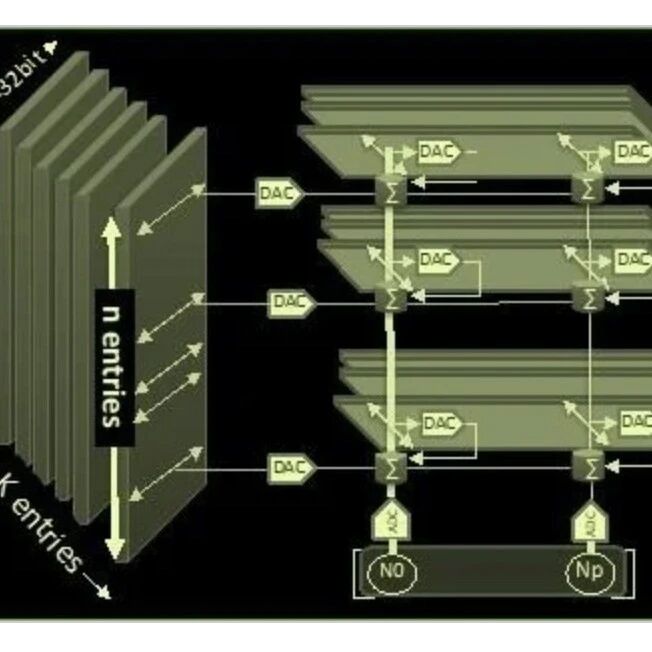
Core Viewpoint - The semiconductor industry is struggling to meet the immense demand for computing power driven by artificial intelligence (AI), particularly in data centers that consume significant electricity. The traditional computing architectures, such as the von Neumann architecture, are inadequate for the parallel processing needs of AI systems, necessitating a new approach to chip design [1][4][19]. Group 1: Challenges in Current Architectures - The traditional von Neumann architecture is inefficient for neural networks due to its sequential instruction processing, which does not align with the matrix-based structure of AI models [2][4]. - Large language models (LLMs) require extensive computations, with inference potentially needing between 100 billion to 10 trillion operations, highlighting the limitations of memory access times in von Neumann architectures [4][5]. - The inherent memory access issues in traditional CPUs and GPUs hinder their performance and power efficiency, as they cannot place sufficient memory close enough to the arithmetic logic units (ALUs) [5][6]. Group 2: Innovative Solutions - The exploration of alternative architectures, such as pulse arrays, aims to better align computing structures with neural network topologies, but previous attempts have faced challenges in practical implementation [6][8]. - Ambient Scientific's DigAn technology enables the creation of configurable matrix computers, which optimize the processing of AI workloads by integrating memory and computation more effectively [9][11]. - The new architecture features a novel computing unit called the analog MAC, which addresses the memory and computation separation issue inherent in von Neumann designs, allowing for significant improvements in efficiency [11][13]. Group 3: Performance and Power Efficiency - The DigAn architecture dramatically reduces the number of cycles needed for neural network operations, achieving a performance increase of over 100 times compared to typical microcontroller units (MCUs) while consuming less than 1% of the power of conventional GPUs [13][19]. - The GPX series chips, utilizing this innovative architecture, are designed for high performance and low power consumption, making them suitable for embedded systems and edge AI applications [14][16]. - The GPX10 Pro model features clusters of MX8 cores, providing a complete system-on-chip (SoC) solution that supports mainstream machine learning frameworks, facilitating easier model training and deployment [18][19].

替代高端oDSP,米硅发布高性能ASP电芯片!
半导体行业观察· 2025-12-24 02:16
12 月 22 日 , 上 海 米 硅 科 技 有 限 公 司 ( 以 下 简 称 " 米 硅 科 技 " ) 宣 布 成 功 流 片 全 球 首 款 4x112G ASP电芯片(Analog Signal Processor, 内含CDR模块) 并完成芯片核心功能 验证,以创新的模拟方案彻底打破美商oDSP方案在高速光模块领域的绝对垄断,为算力 中心提供了一条 更低时延、更低功耗、更低成本 的供应链新路径,标志着中国在高速电 芯片领域从"跟随者"正式迈向"领跑者"。米硅科技该系列ASP (CDR) 电芯片已与头部光 模块公司深度合作,共同斩获科技部国家重点研发计划项目。 米硅科技创始人罗刚表示 " 自 2020 年成立至今,米硅只做一件事:死磕技术,因为我们相 信最大的创新不是追随,而是开辟全新路径。 " 行业背景:400G-3.2T时代,电芯片是算力基建的"卡脖子"环节 根据 LightCounting 25年8月报告和上市公司招股书预测,2027 年全球 400G 及以上光模块出货 将超 1 亿只,对应电芯片(含 oDSP、CDR、TIA、Driver)市场规模近 60 亿美元,2030 年电 芯片市场 ...

中资被要求出售FTDI股权背后:一些思考
半导体行业观察· 2025-12-24 02:16
Core Viewpoint - The UK government's demand for Chinese companies to sell their stake in FTDI is reaching a critical juncture, with a forced sale order issued last December due to national security concerns, marking a significant shift in the global investment landscape and highlighting the impact of geopolitical tensions on business activities [1][2][4]. Group 1: National Security and Geopolitical Tensions - The UK government has cited national security risks as the reason for the forced sale of FTDI, which holds a dominant position in the USB bridge chip market, indicating a broader trend of Western economies decoupling from Chinese technology under the guise of security [2][3]. - FTDI's ownership is perceived as a threat to critical national infrastructure, reflecting how geopolitical considerations are increasingly influencing commercial decisions and leading to protectionist measures [3][4]. Group 2: Implications for the Semiconductor Industry - The forced sale of FTDI is expected to have far-reaching implications for the global semiconductor industry, emphasizing the need for China to focus on self-innovation and domestic production to navigate the challenges posed by international tensions [6]. - Companies like Qinheng, which produce similar USB bridge chips, may emerge as key players in the domestic market if FTDI's position is compromised, highlighting the potential for shifts in market dynamics due to geopolitical actions [6].
美国对华芯片关税,官宣延期
半导体行业观察· 2025-12-24 02:16
Core Viewpoint - The U.S. government plans to increase tariffs on semiconductor imports from China by June 2027, while initially setting the tariff rate to zero for the first 18 months, indicating a potential easing of trade tensions between the U.S. and China [1][2]. Group 1: Tariff Implementation - The U.S. will raise tariffs on Chinese semiconductor imports starting June 23, 2027, with the initial tariff rate being zero for the first 18 months [1]. - This decision follows a year-long investigation into China's semiconductor industry, which the U.S. claims has engaged in unfair trade practices [2]. Group 2: U.S. Position and Response - The U.S. Trade Representative's office asserts that China's pursuit of dominance in the semiconductor sector is unreasonable and burdensome to U.S. businesses, justifying potential actions against it [2]. - The Chinese government has expressed strong dissatisfaction with the U.S. investigation, labeling it as unilateral and protectionist, and has previously contested the legality of U.S. tariffs in international trade forums [2][3]. Group 3: Market Dynamics - The U.S. claims to provide substantial subsidies to its domestic semiconductor industry, which holds nearly half of the global market share, while accusing China of "non-market practices" [3]. - According to a recent report, Chinese semiconductor products account for only 1.3% of the U.S. market, with exports from China to the U.S. being significantly lower than imports from the U.S. to China [3].
NXP将关闭美国工厂,裁员、出售园区
半导体行业观察· 2025-12-24 02:16
Core Viewpoint - NXP Semiconductors is planning to sell its Austin campus and has initiated undisclosed layoffs, marking a significant shift from its previous expansion plans in the area [1][2]. Group 1: Campus Sale and Layoffs - NXP is looking to sell its 155-acre campus in southwest Austin, which has served as its U.S. headquarters since acquiring Freescale Semiconductor in 2015 [1]. - The company has begun targeted layoffs in Austin, although it has not disclosed specific numbers or submitted a layoff notice to the Texas Workforce Commission [1][2]. - NXP's previous plans for expansion in Austin, supported by a $291 million incentive from the city council, have been terminated earlier this year [2]. Group 2: Factory Closure and Market Exit - NXP is exiting the 5G power amplifier market due to deteriorating market conditions and a lack of recovery prospects, leading to the closure of its ECHO fab in Chandler, Arizona [3][4]. - The ECHO fab, which was launched in September 2020, was intended to produce GaN-based power amplifiers for 5G devices but will cease operations by Q1 2027 [5]. - The decision to exit the RF power market aligns with a broader trend of declining sales in the 5G sector, with NXP's communication infrastructure revenue dropping nearly 20% last year and further declining by 25% in the first nine months of this year [5][6]. Group 3: Impact on Workforce and Industry Dynamics - The closure of the ECHO fab is expected to result in job losses, although the exact number of affected employees is unclear [7]. - NXP's exit from the power amplifier market may leave equipment suppliers like Ericsson and Nokia in a challenging position, as they will need to find alternative components [4][7]. - Analysts suggest that NXP has lost market share in the 5G era due to its slow response to significant industry changes, allowing competitors like Sumitomo Electric to gain dominance [6].


HBM再涨价,存储告急!
半导体行业观察· 2025-12-24 02:16
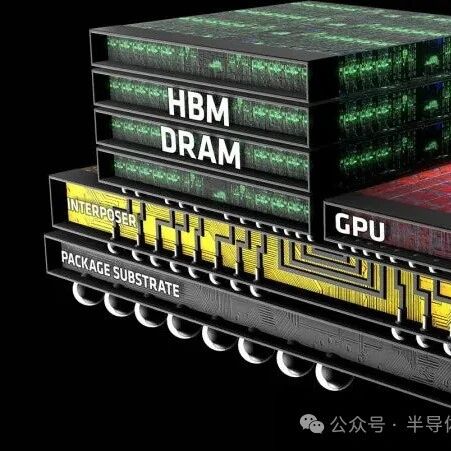
Core Viewpoint - The memory shortage issue is expected to persist for several years, contrary to initial expectations of a short-term problem lasting only two to five months [1] Group 1: Memory Market Dynamics - HBM3E prices have increased by approximately 20% due to heightened demand from companies like NVIDIA, Google, and Amazon, which are ramping up orders for AI accelerators [2][3] - The demand for HBM3E is expected to continue growing as major tech companies release AI accelerators, while manufacturers focus on expanding HBM4 production, limiting HBM3E supply [4][3] - Analysts predict that HBM4 will account for 55% of the HBM market revenue next year, with HBM3E at 45%, indicating a shift in market dynamics [4] Group 2: Company Performance and Projections - Micron Technology's stock is projected to rise by 168% by 2025, driven by high demand for memory in AI applications [5] - Micron reported a revenue of $13.64 billion for the latest quarter, a 56.6% year-over-year increase, largely due to AI-driven market demand [5] - Samsung Electronics and SK Hynix have seen significant upward revisions in their profit forecasts, with Samsung's expected operating profit for next year raised to 85.44 trillion KRW, a 94% increase from previous estimates [7][8] Group 3: Industry Challenges and Shifts - The memory market is experiencing unprecedented demand due to the rapid expansion of AI infrastructure, leading to a strategic shift in production focus from consumer electronics to high-margin memory solutions [11][12] - The supply of traditional DRAM and NAND memory is being constrained as manufacturers prioritize AI-related memory production, resulting in increased prices across all memory modules [11][12] - The shift in memory production priorities is expected to create challenges for consumer electronics manufacturers, particularly in the smartphone market, where rising memory costs could lead to higher prices or reduced specifications [13][14] Group 4: Future Outlook - The global investment in technology by major companies is projected to increase from $460 billion this year to $600 billion next year, further driving demand for memory [8] - The anticipated growth in the HBM market is expected to reach approximately $100 billion by 2028, with a compound annual growth rate of around 40% [6] - The competitive landscape is shifting, with companies like Micron, Samsung, and SK Hynix positioned to benefit significantly from the ongoing demand for high-bandwidth memory [17][18]


一家芯片新贵,组团对抗英伟达
半导体行业观察· 2025-12-24 02:16
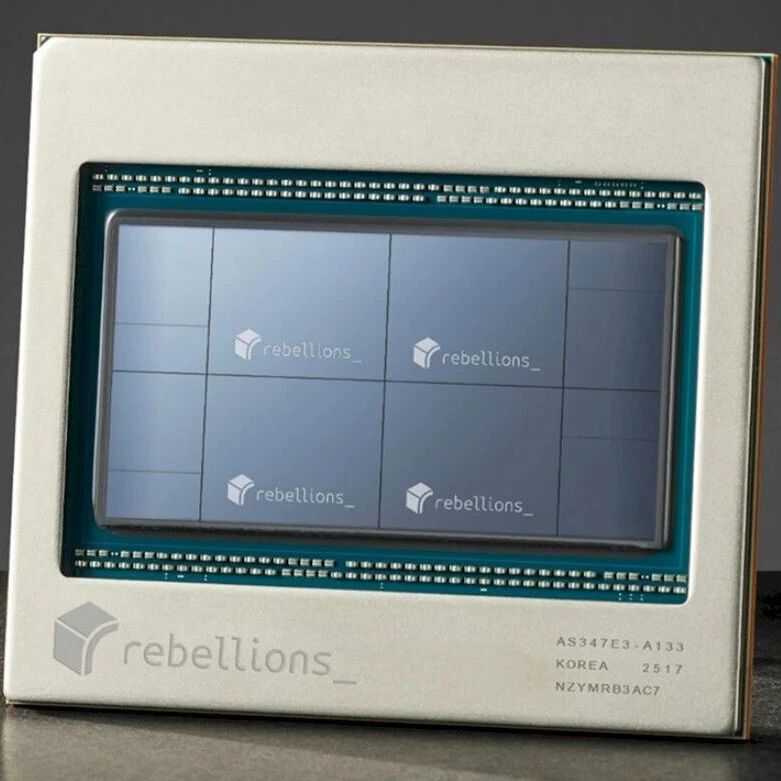
Core Insights - The article highlights the emergence of Rebellions AI, a South Korean startup that has gained significant backing from major HBM memory manufacturers and telecom companies, positioning itself to create AI accelerators for data centers [1][9] - Rebellions aims to leverage its partnerships and advanced chip technology to compete in the AI inference market, particularly focusing on the flexibility and adaptability of its second-generation AI accelerators [2][3] Company Overview - Rebellions was founded in September 2020, initially targeting AI inference chips for high-frequency trading, and has since evolved to compete with established players like NVIDIA and AMD [3][8] - The company is headquartered in Seoul, South Korea, which is a significant industrial and financial hub, projected to reach a GDP of $1.86 trillion by 2025 [5] Founders and Leadership - The company was co-founded by four individuals, including CEO Park Sung-hyun, who has a strong background in engineering and finance, and CTO Woo Jin-seok, who has extensive experience in AI research [5][7] Funding and Valuation - Rebellions has successfully raised $61 million in two rounds of funding and became South Korea's first AI chip unicorn with a valuation exceeding $1 billion after merging with Sapeon Korea [8][9] Technology and Product Development - The company has transitioned from using TSMC's 7nm process for its Ion chip to Samsung's 4nm process for its Rebel series chips, which are designed to compete with data center-level GPU accelerators [10][11] - The Rebel AI inference chips utilize a Coarse Grained Reconfigurable Array (CGRA) architecture, allowing for programmable interconnections between processing units, enhancing flexibility for various AI tasks [11][13] Performance Metrics - The Rebel Single chip is designed to achieve 160 teraflops at FP16 precision and 320 teraflops at FP8 precision, with a clock frequency estimated around 2 GHz [16][30] - The Rebel Quad configuration can deliver 1 petaflops at FP16 and 2 petaflops at FP8, with a power consumption of 600 watts, making it competitive with NVIDIA and AMD offerings [27][30] Market Positioning - Rebellions is strategically entering the AI inference market, which is seen as a lucrative area for monetization, especially as the demand for tensor mathematics and HBM memory exceeds supply [31][34] - The company is developing a software stack based on open-source technologies to support its hardware, including a communication library similar to NVIDIA's NCCL [34]
韩国芯片,赢麻了
半导体行业观察· 2025-12-23 01:18
公众号记得加星标⭐️,第一时间看推送不会错过。 全球半导体行业预计将进入以人工智能(AI)为中心的新增长阶段。在新的一年里,受AI数据中心 需求的推动,存储器半导体市场预计将继续保持由供应商驱动的超级周期,而系统半导体市场预计将 围绕AI加速器和先进工艺进行重组。 尤其值得一提的是,韩国半导体行业有望摆脱其在存储器领域 的垄断地位,并在AI系统半导体和代工领域探索新的增长引擎。 今年下半年,在全球大型科技公司大力投资人工智能基础设施的推动下,存储半导体市场进入了前所 未有的"超级周期"。人工智能服务器所需的高容量、高性能DRAM和NAND闪存需求激增,促使供应 商将产能集中于这些领域,通用内存的价格也随之上涨。 因此,预计三星电子和SK海力士今年的销售额将逐步增长。 这轮存储器超级周期很可能延续到新年。与以往需求驱动的周期不同,此次周期供应商占据了主导地 位。存储器公司优先投资改造现有生产线,而非新建晶圆厂,并且对快速扩张产能仍持谨慎态度。 美光科技已决定在新的一年停止面向消费级市场的DRAM和NAND闪存出货,并将重心转向人工智能 数据中心的内存产品。三星电子和SK海力士也已将其大部分DRAM产能分配给服务 ...
RISC-V如何走向数据中心?谷歌最新分享!
半导体行业观察· 2025-12-23 01:18
Core Insights - Google is integrating RISC-V into its data center infrastructure, highlighting the opportunities and challenges associated with this transition [1][2] - The journey towards heterogeneous computing began with x86 platforms and evolved through the adoption of ARM architecture, leading to the introduction of custom ARM processors [1] - Dixon emphasizes the importance of standardization for RISC-V to ensure compatibility in warehouse-scale deployments [2] Group 1: Transition to RISC-V - Google has successfully transitioned to ARM-based servers, launching the Tau T2A ARM instances and custom Axion ARM processors [1] - The company has mixed deployments of x86, ARM, and early RISC-V components, which are crucial for overcoming the slowdown of Moore's Law [1] - The transition process involved migrating over 30,000 software packages, providing self-service for various workloads [2] Group 2: Challenges and Solutions - Concerns about toolchain failures were largely unfounded, with most issues being minor configuration problems [2] - Some challenges included floating-point precision differences, which have been addressed through standardization [2] - The overall transition was smoother than anticipated, showcasing effective collaboration and automation [2] Group 3: Future Outlook - Google is actively participating in the development of standards like QoS and RVA23, and is a founding member of RISE to accelerate upstream development [3] - The company is applying its Gemini AI model to automate the migration process for ARM modifications [3] - Dixon calls for the approval of server specifications and the delivery of powerful SoCs, emphasizing the need for robust community collaboration [3]

掩膜公司,宣布涨价10%
半导体行业观察· 2025-12-23 01:18
Core Viewpoint - S&S Tech plans to increase the price of its blank masks by approximately 10% in 2024 due to the steady rise in quartz prices, which are expected to continue increasing, thus potentially enhancing the company's profitability [1][2]. Group 1: Company Performance - S&S Tech reported revenue of 176 billion KRW and an operating profit of 29.5 billion KRW in the previous year, marking a growth of 17% and 19% respectively compared to 2023 [1]. - The company is projected to achieve revenue of 240 billion KRW this year, representing a 40% increase from last year, with an expected operating profit margin of 20% [1]. - The growth in revenue is primarily attributed to strong demand from the Chinese market, despite the company not raising mask prices this year [1]. Group 2: Market Dynamics - The supply of high-purity quartz, essential for mask manufacturing, is limited, with American companies The Quartz Corp and Covia holding over 80% of the market share [2]. - The demand for quartz crucibles is surging due to the expansion of wafer fabrication capacity in China and increased demand from the solar panel market [2]. - S&S Tech has expanded its market share in China to 40%, with the Chinese market accounting for over half of its blank mask revenue [2]. Group 3: Strategic Developments - S&S Tech is also expanding its extreme ultraviolet (EUV) lithography mask business, which is currently dominated by Hoya [3]. - Samsung is collaborating with S&S Tech to reduce reliance on Japanese suppliers and aims to save costs and shorten delivery times by sourcing from the Korean company [3].