和讯

Search documents
寻找中国经济突围之路,和讯财经中国2025年会即将启幕
和讯· 2025-10-18 02:04
Core Viewpoint - The article emphasizes the challenges and opportunities facing the Chinese economy in 2025, highlighting the need for sustainable development and the activation of the private economy as key areas of focus for the upcoming "Finance China 2025 Conference" [3][4]. Group 1: Economic Challenges and Opportunities - In 2025, the Chinese economy is experiencing significant challenges, including deep adjustments in the real estate sector, pressure on local finances, weak external demand, and slow recovery in domestic demand [3]. - The overall economic operation is stabilizing and improving, but structural contradictions remain prominent, with investment, consumption, and exports not synchronizing [3]. - The conference aims to explore paths for balancing stable growth with structural optimization amid increasing global uncertainties and deepening domestic transformations [3][4]. Group 2: Conference Focus and Themes - The "Finance China 2025 Conference" will focus on macro policy coordination, structural reforms, technological innovation, industrial upgrades, the development of the private economy, financial openness, and risk prevention [4]. - The event will gather experts and scholars from various fields to analyze the current economic situation and discuss substantial reforms to optimize systems and mechanisms [4]. Group 3: Finance China Awards - The 23rd Finance Cloud Awards will be held concurrently, adhering to principles of fairness, justice, and openness, evaluating corporate value, social responsibility, technological innovation, and brand marketing [5]. - The awards will cover various sectors, including listed companies, banks, insurance, securities, funds, and futures, aiming to promote high-quality development in the domestic financial market [5]. - The "Finance China Annual Conference" has become one of the most influential annual events in the Chinese financial sector, recognized as a barometer for the following year's financial dynamics [5].


告别房地产周期后,理财怎么理?
和讯· 2025-10-17 09:22
Group 1 - The total number of A-share investors in China has surpassed 240 million as of June 2025, indicating that one in six Chinese individuals is now a stock market participant [2] - By the end of 2024, individual investors accounted for over 99.76% of the total investor base, with 99.63% of new accounts in the first half of 2025 being individual investors [2] - The influx of personal investors reflects strong confidence in the A-share market and a growing demand for wealth management amid economic transitions and structural adjustments in China [2] Group 2 - The family trust market in China is projected to exceed 900 billion yuan by the end of 2024, with expectations to enter the "trillion era" in 2025 [2] - An estimated 20 trillion yuan of wealth is expected to be passed down to the next generation over the next decade, highlighting the urgency of addressing family wealth inheritance issues [3][18] Group 3 - The investment landscape is shifting as individuals seek effective asset allocation strategies beyond traditional real estate investments, particularly in the context of a changing economic cycle [3] - Young investors exhibit diverse attitudes towards wealth management, with some being overly conservative and others seeking high-risk, high-reward opportunities [7][9] Group 4 - Quantitative investment strategies are gaining traction among retail investors, offering a systematic approach to decision-making that can mitigate emotional biases in trading [11][12] - Basic quantitative methods focus on fundamental analysis, allowing investors to make informed decisions based on company performance rather than market trends [12] Group 5 - Effective wealth management requires a clear understanding of individual financial goals and risk tolerance, which can significantly influence investment strategies [13][14] - A layered approach to wealth management, separating funds for daily living expenses from those intended for long-term growth, can alleviate anxiety related to investment losses [17] Group 6 - The concept of wealth management should evolve from viewing oneself as the "owner" of wealth to acting as a "steward," emphasizing responsible management and long-term value creation [20][21] - Wealth should be viewed through a moral lens, ensuring that its use benefits society and enhances overall well-being rather than merely serving personal interests [22]

真分红的重疾险来了,回报率或到3%
和讯· 2025-10-16 10:01
Core Viewpoint - The article discusses the resurgence of dividend-type critical illness insurance in China, driven by regulatory changes and market demand, which aims to provide better protection against inflation and meet diverse consumer needs [3][4][5]. Group 1: Return of Dividend-Type Critical Illness Insurance - The recent guidance from the National Financial Regulatory Administration allows for the reintroduction of dividend-type critical illness insurance after a 22-year hiatus, aiming to enhance the sustainability of long-term health insurance products [4][5][6]. - The traditional critical illness insurance has faced challenges due to fixed coverage levels being eroded by inflation, leading to a decline in sales since 2019. The introduction of dividend-type insurance is seen as a solution to these issues [5][11]. - Analysts predict that the implicit investment return rate of critical illness insurance could increase from 2% to between 2.5% and 3% following the reintroduction of dividend-type products, making them more attractive to consumers [7][11]. Group 2: Emergence of Lightweight Critical Illness Insurance - Lightweight critical illness insurance is gaining popularity, offering low-cost, short-term coverage that pays out upon diagnosis, catering to young graduates and budget-conscious families [3][9]. - This type of insurance addresses the "need for coverage but unable to afford" dilemma faced by many consumers, providing an entry-level option for those with limited financial resources [9][10]. - The combination of lightweight and dividend-type critical illness insurance products can create a complementary product line, meeting both immediate and long-term protection needs [10][12]. Group 3: Market Demand and Future Development - There is a significant untapped demand for critical illness insurance, with an estimated 400 million new policies expected to be sold from 2021 to 2024, indicating a potential market rebound as conditions improve [11][12]. - The industry is encouraged to develop a "multi-layered and combinable" product system to cater to varying consumer needs across different life stages and risk preferences [12][13]. - Technological advancements in pricing and service delivery, such as online underwriting and dynamic pricing, are anticipated to become standard practices in the future [13].

寻找中国经济突围之路,和讯财经中国2025年会即将启幕
和讯· 2025-10-15 09:47
Core Viewpoint - The article emphasizes the challenges and opportunities facing the Chinese economy in 2025, highlighting the need for sustainable development and the activation of the private economy as key areas of focus for the upcoming "Finance China 2025 Conference" [3][4]. Group 1: Economic Challenges and Opportunities - In 2025, the Chinese economy is experiencing significant challenges, including deep adjustments in the real estate sector, pressure on local finances, weak external demand, and slow recovery in domestic demand [3]. - The overall economic operation is stabilizing and improving, but structural contradictions remain prominent, with investment, consumption, and exports not synchronizing [3]. - The conference aims to explore paths for balancing stable growth with structural optimization amid increasing global uncertainties and deepening domestic transformations [3][4]. Group 2: Conference Focus and Themes - The "Finance China 2025 Conference" will focus on macro policy coordination, structural reforms, technological innovation, industrial upgrades, the development of the private economy, financial openness, and risk prevention [4]. - The event will gather experts and scholars from various fields to analyze the current economic situation and discuss substantial reforms to optimize systems and mechanisms [4]. Group 3: Finance China Awards - The 23rd Finance Cloud Awards will be held concurrently, adhering to principles of fairness, justice, and openness, evaluating corporate value, social responsibility, technological innovation, and brand marketing [5]. - The awards will cover various sectors, including listed companies, banks, insurance, securities, funds, and futures, aiming to promote high-quality development in the domestic financial market [5]. - The "Finance China Annual Conference" has become one of the most influential annual events in the Chinese financial sector, recognized as a barometer for the following year's financial dynamics [5].

TACO快不灵了,A股免疫“关税恐吓”
和讯· 2025-10-15 09:47
Core Viewpoint - The article discusses the TACO trading strategy, which capitalizes on the erratic behavior of former President Trump regarding tariffs, allowing investors to profit from market fluctuations caused by his threats and subsequent retreats [4][5][11]. Group 1: What is TACO Trading? - TACO stands for "Trump Always Chickens Out," a term coined by Robert Armstrong to describe Trump's inconsistent approach to tariffs [4]. - The TACO trading strategy involves predicting Trump's behavior, where market downturns occur after tariff threats, followed by rebounds when he retracts those threats [5][6]. - This trading pattern has become a recognized method on Wall Street, allowing traders to buy during panic and sell during recovery [5][8]. Group 2: Recent TACO Trading Examples - On October 10, Trump threatened to impose a 100% tariff on Chinese goods, leading to a significant market drop, with the Nasdaq index falling 3.56% and major tech companies losing approximately $770 billion in market value [6]. - Following a calming statement from Vice President Pence on October 12, the market rebounded, with Bitcoin and Ethereum seeing gains of over 2% and 7%, respectively [6][7]. - A similar pattern was observed on May 23, when Trump announced potential tariffs on the EU, causing a market drop, which was reversed after he postponed the tariffs [9][10]. Group 3: Market Immunity to TACO Trading - Analysts suggest that the market is becoming increasingly immune to Trump's tariff threats, as repeated instances have led to diminished effects of such announcements [11][13]. - The current geopolitical environment indicates that while tensions exist, the market's reaction to Trump's threats is becoming more rational and less panic-driven [11][12]. - The effectiveness of the TACO trading strategy may decline as investors grow skeptical of the credibility of Trump's threats, potentially leading to prolonged economic conflicts [13].

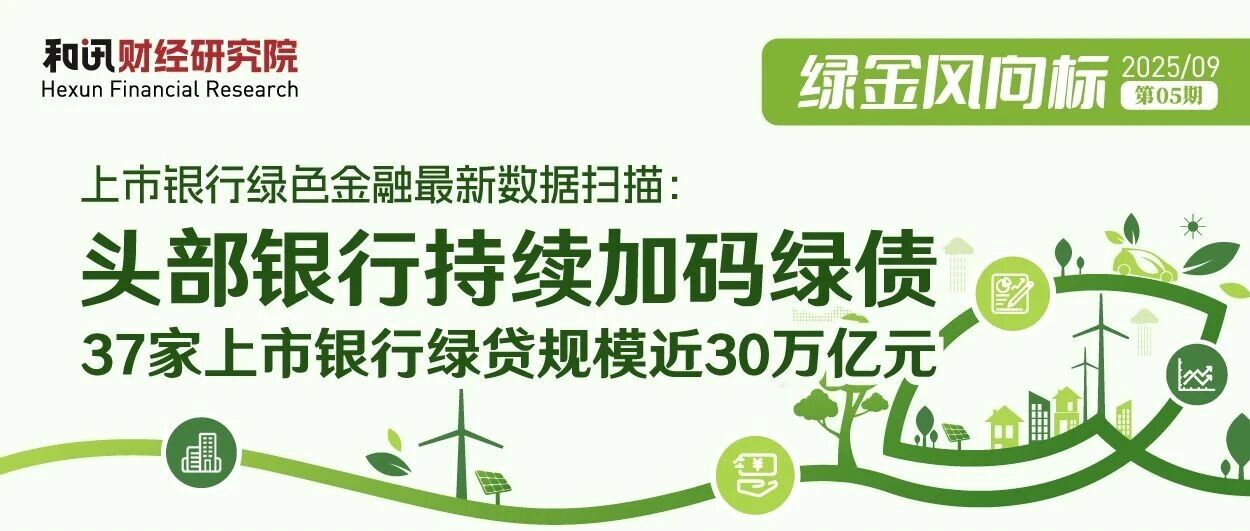
这个领域,A股上市银行平均每家投8000亿
和讯· 2025-10-14 09:25
Core Insights - The report highlights the continuous growth of green finance in China, with green loans reaching a total of 29.22 trillion yuan across 37 listed banks, indicating a robust upward trend in green financing [1][2] - The green bond market showed significant recovery in September, with 104 new bonds issued, totaling approximately 102.77 billion yuan, reflecting increased institutional financing demand [3][4] - The carbon market experienced heightened trading activity, with total transaction volume reaching 32.7 million tons and total transaction value at 2.004 billion yuan, although prices showed a downward trend [5][6] Group 1: Green Loan Expansion - As of the end of Q2 2025, the balance of green loans in China reached 42.39 trillion yuan, showing significant year-on-year and month-on-month growth [2] - The six major state-owned banks accounted for over 70% of the total green loan balance, with Industrial and Commercial Bank of China leading at over 6 trillion yuan [2][30] - The average green loan balance per listed bank was approximately 800 billion yuan, indicating a strong commitment to green financing across the sector [2] Group 2: Green Bond Market Activity - In September, the green bond market saw a total of 104 new issuances, with a total scale of approximately 102.77 billion yuan, marking a 112.24% increase in the number of bonds and a 190.72% increase in total issuance compared to August [3][33] - The average issuance size of new green bonds in September was 9.88 million yuan, up from 7.21 million yuan in August, indicating larger project sizes and stronger financing needs [3][33] - The proportion of bank green financial bonds increased from 35.36% in August to 42.91% in September, while asset-backed securities (ABS) also saw a significant rise in issuance [4][33] Group 3: Carbon Market Dynamics - The carbon market in September exhibited a "volume increase + price decline" characteristic, with total transaction volume reaching 32.7 million tons and total transaction value at 2.004 billion yuan, both showing substantial growth from August [5][39] - The average closing price for carbon emissions allowances (CEA) in September was 62.94 yuan per ton, down 11.5% from August, indicating a downward price trend [5][36] - Predictions suggest that carbon prices may continue to decline, with expected buy and sell prices for October at 55.39 yuan and 60.63 yuan per ton, respectively [5][41] Group 4: Policy and Market Developments - September saw multiple significant policy implementations aimed at enhancing green finance, including guidelines for sustainable corporate disclosures and new energy market regulations [11][12] - Local governments and enterprises are actively innovating in green finance, with notable projects such as the issuance of offshore green bonds and the introduction of biodiversity-linked loans [6][44] - The establishment of various green finance tools and frameworks is facilitating the transition from traditional financing methods to more diversified and innovative approaches [6][44]






新一轮经贸争端:背景、导火索及TACO交易
和讯· 2025-10-13 09:53
Core Viewpoint - The article discusses the ongoing U.S.-China trade dispute, highlighting that despite previous concerns about export declines, China's import and export growth has shown resilience in the first three quarters of the year, with a notable increase in trade volume and a shift in export dynamics towards other markets [2][5]. Trade Data Summary - In the first three quarters of 2023, China's total import and export volume reached 33.61 trillion yuan, a year-on-year increase of 4%, with exports at 19.95 trillion yuan (up 7.1%) and imports at 13.66 trillion yuan (down 0.2%) [2]. - The monthly trade data for September showed a total of 4.04 trillion yuan in imports and exports, reflecting an 8% growth [2]. Recent Developments in Trade Policies - On October 3, the U.S. Customs announced high port fees for Chinese-owned vessels starting October 14, and on October 7, the U.S. House of Representatives prepared to impose export restrictions on China regarding lithography equipment [2]. - On October 10, the Chinese Ministry of Commerce and Customs implemented export controls on certain rare earth materials and lithium battery components, effective November 8 [3]. Impact of Tariffs - President Trump announced on October 10 that starting November 1, a 100% additional tariff would be imposed on all imports from China, potentially raising the effective tariff rate on some goods to over 150% [3]. - The additional tariffs will affect a wide range of products, including consumer electronics, machinery, textiles, toys, and agricultural products, covering nearly the entire trade volume between the U.S. and China [3]. Export Trends and Market Reactions - Despite a significant drop in exports to the U.S., China's exports to the EU, ASEAN, Africa, and Latin America have seen rapid growth, contributing to overall export resilience [5]. - The export of mechanical and electrical products reached 12.07 trillion yuan in the first three quarters, growing by 9.6% and accounting for 60.5% of total exports [5]. Economic Analysis - The chief economist from Yuekai Securities noted that the increase in import growth, which turned positive in June, has been a key driver for overall trade growth, countering earlier negative trends due to falling commodity prices and insufficient domestic demand [4]. - The article suggests that the current trade tensions differ from previous ones due to the specific targeting of China and the nature of the tariffs, which are seen as retaliatory measures against China's export controls [6][7]. Market Sentiment and Future Outlook - The market's psychological resilience has improved since April, with investors now more optimistic about potential negotiations and outcomes following the recent tariff announcements [8]. - Analysts predict that the fourth quarter will not see significant volatility in trade data, as both sides have clearer demands and are likely to pursue rational resolutions to mitigate trade frictions [8].

杨德龙:受美股暴跌影响,下周科技股或继续调整
和讯· 2025-10-11 09:06
Group 1 - The U.S. stock market experienced a significant decline on October 10, with the Dow Jones falling by 1.9%, the S&P 500 by 2.71%, and the Nasdaq by 3.56% [2] - Major technology stocks in the U.S. saw widespread losses, with Broadcom down nearly 6%, Tesla over 5%, Amazon close to 5%, and Nvidia down 4.89% [2] - Concerns over deteriorating trade relations between the U.S. and China, particularly due to Trump's threats to raise tariffs in response to China's stricter rare earth export controls, contributed to investor anxiety [2] Group 2 - The U.S. government has been in a shutdown for 10 days, with no signs of resolution, raising fears of a recession [3] - The Senate has failed to pass a budget proposal for the seventh consecutive time, indicating a lack of progress in bipartisan negotiations [3] - The market now anticipates a 98% probability of the Federal Reserve lowering interest rates in October, with a focus on boosting employment over controlling inflation [3] Group 3 - The decline in U.S. stocks is expected to negatively impact the A-share and Hong Kong markets, particularly on the following Monday [3] - Despite the short-term market shocks, the A-share and Hong Kong markets have shown signs of a bull market, with the Shanghai Composite Index nearing the 4000-point mark after the National Day holiday [3][4] - The current bull market is supported by economic transformation, policy backing, and a significant shift in household savings [4] Group 4 - Short-term market adjustments are likely due to external factors, but the overall trend remains unchanged [4] - The ongoing bull market is expected to continue for an extended period, with the current phase possibly just being the first half of the rally since last year's September [5] - Investors are advised to take profits on previously high-performing technology stocks and reduce positions while maintaining confidence in the long-term outlook [5]

周其仁:大变局下的未来机会
和讯· 2025-10-10 09:35
Core Viewpoint - The article discusses the significant changes in the global competitive landscape, particularly focusing on the decline of the United States and its implications for China and the world [2][10]. Historical Context - The establishment of Sino-American relations began in 1978 with agreements on student exchanges and trade, leading to China's entry into the World Trade Organization in 2000 [3]. - The 1990s marked the peak of U.S. dominance post-Cold War, but subsequent years have seen a decline in its global influence [5][9]. Economic Challenges - The article highlights the issue of "Rust Belt" in the U.S., where traditional industries have faced decline, contrasting with countries like Switzerland that have maintained economic stability despite high wages [6][7]. - The U.S. economy is burdened by a significant trade deficit of $1.2 trillion and a national debt of $36 trillion, raising concerns about its sustainability [9]. Global Dynamics - The article references the "Thucydides Trap," suggesting that as China rises, the potential for conflict with the U.S. increases, although there are examples of countries avoiding such outcomes [10][11]. - The shift in global power dynamics indicates that the U.S. can no longer maintain its previous level of global engagement without addressing domestic issues [12][14]. Future Outlook - The article posits that regardless of the direction the world takes, economic considerations will remain central, with historical examples showing that crises can lead to new economic opportunities [15][16].

张明:财政可以加大对家庭部门的直接补贴
和讯· 2025-10-09 09:21
Core Viewpoint - The article emphasizes the importance of addressing debt issues in China to stabilize the economy and the real estate market, suggesting measures such as debt restructuring and capital replenishment for micro-entities [2][3]. Group 1: Debt Issues - The "debt-deflation" theory indicates that high debt burdens can harm the balance sheets of micro-entities, leading to reduced consumption and investment, which exacerbates price declines [2]. - To break the low-price cycle, it is crucial to lower debt and repair the balance sheets of micro-entities [2]. Group 2: Policy Recommendations - Five policy suggestions are provided to stabilize the economy: 1. Set a nominal GDP growth target of around 7% by stabilizing economic growth at 5% and targeting inflation at 2% [5]. 2. Emphasize expansionary fiscal policy alongside monetary policy, focusing on improving low-income group incomes and helping local governments manage debt [5]. 3. Promote counter-cyclical management of debt, allowing for higher tolerance of debt issues during economic pressure [5]. 4. Stabilize the real estate market by relaxing purchase and loan restrictions in major cities and providing support to key real estate companies [6]. 5. Encourage further reform and opening up, particularly in the service sector, to attract high-quality foreign direct investment [6]. Group 3: Market Dynamics - The current positive sentiment in the stock market is attributed to liquidity, and the need to stabilize the real estate market is highlighted to amplify the wealth effect from the stock market [3][4]. - Regulatory measures are being strengthened to improve the quality of listed companies and promote long-term investment [4].