清华金融评论

Search documents
2025清华五道口全球金融论坛主题讨论三丨全球经济碎片化的挑战
清华金融评论· 2025-05-20 10:30
Core Viewpoint - The article discusses the challenges posed by global economic fragmentation and emphasizes the need for international cooperation to address these issues. Group 1: Global Economic Fragmentation - Global economic fragmentation is characterized by a shift towards regionalization, which may present new development opportunities for Central Asian countries [3] - Factors contributing to fragmentation include cognitive biases, geopolitical tensions, populism, and trade protectionism, leading to weakened global economic ties and the formation of independent economic groups [6] - Historical trends show that global trade's share in GDP has fluctuated significantly, with fragmentation weakening global value chains and hindering economic growth [9] Group 2: Policy Recommendations - Policymakers are urged to adopt a dynamic and comprehensive perspective to address the complexities of economic fragmentation and its long-term impacts [9] - Strengthening multilateral cooperation is essential, not only in trade but also in areas like climate change, cybersecurity, and pandemic prevention [12] - Reforming international financial institutions and establishing new governance frameworks for emerging technologies and critical resources is necessary to maintain global order amid rising strategic competition [12] Group 3: Importance of International Cooperation - Enhancing international cooperation is crucial to counteract the effects of fragmentation, particularly in trade disputes, supply chain restructuring, and technological competition [15] - Constructive dialogue and the re-establishment of cooperative mechanisms among nations are vital for promoting global economic stability [15]

美债“危机”两个直接原因,进一步演变带来什么后果?|国际
清华金融评论· 2025-05-20 10:30
文/ 《清华金融评论》 王茅 近日30年期美国国债收益率突破5%, 表明美国国债的风险越来越高。导 致美债"危机"的与两件大事有关,一是关税问题,二是穆迪下调美国信用 评级。如果进一步演变, 将会给 美国股市、房市、汇市带来大麻烦。 5月19日,30年期美国国债收益率已突破5%。长期 以来,美国国债被认为是全球市场最为安全的投 资工具,是市场的 "锚",美国国债收益率也被认为是无风险利率。但现如今情况发生了变化,30 年期美国国债收益率一度飙至5%,表明美国国债的风险越来越高。 从历史的角度来看,只要长期美国国债收益率升至 5%,都表明有负面的大事发生,究竟是什么 事情造成了美国国债的"危机"? 本次美债"危机"的两个直接导火索 刚刚过去的周末,发生了两件大事。 一件与关税有关。 由于中国在中美关税问题上采取了强有 力的态度,当然更是因为中国强大的供应链等实力,促使美方主动与中方接洽谈判,达成了协 议。这个结果促使一些其他 "大国"确信,本国也可以在谈判中采取强硬立场以获益,这些国家认 为,自己也能够承担因放缓谈判步伐所带来的冲击。对于这种情况,美国方面感到非常"恼火"。 截至 2025年4月,美国联邦债务突 ...

嘉宾金句③丨2025清华五道口全球金融论坛
清华金融评论· 2025-05-20 10:30
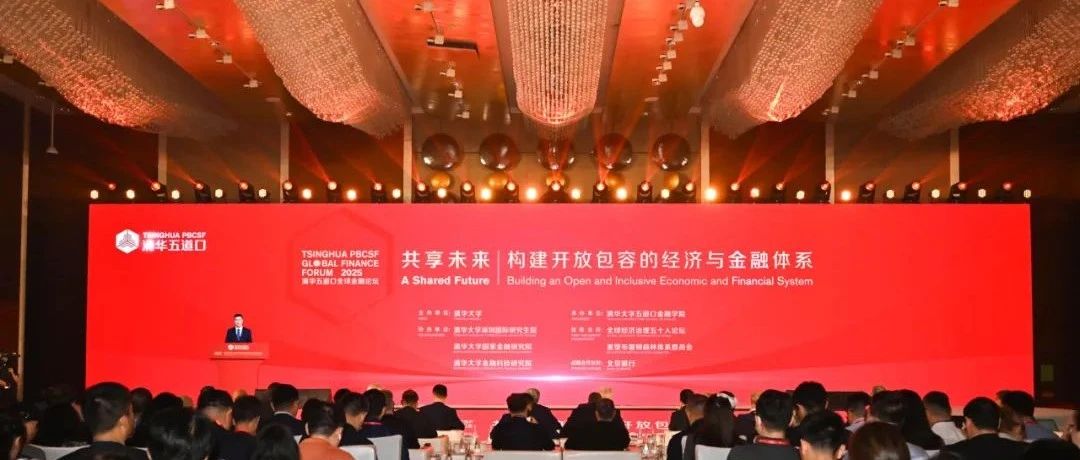
Core Viewpoint - The 2025 Tsinghua Wudaokou Global Financial Forum held in Shenzhen focuses on the outlook of China's economy and the role of finance in empowering technological innovation and development [1][15]. Group 1: Economic Outlook and Financial Policy - The forum includes a discussion on the "2025 China Economic Outlook" and the release of the "China Financial Policy Report 2025" [1]. - Key figures from the financial sector, including the project execution leader of the report and former chief economist of Guotai Junan Securities, are involved in the discussions [2]. - The event aims to gather insights from leaders, scholars, and industry elites to shape the financial landscape in China [1]. Group 2: Financial Empowerment of Technological Innovation - The second theme of the forum addresses how finance can empower technological innovation and development [15]. - Various experts, including the deputy director of the China Financial 40 Forum and the chairman of the National Science and Technology Achievement Transformation Guidance Fund, contribute to this discussion [20][18]. - The forum emphasizes the importance of financial support in fostering technological advancements and innovation within the economy [15].
2025清华五道口全球金融论坛主题讨论五丨绿色发展的机遇与挑战
清华金融评论· 2025-05-19 10:30
2025年5月17-18日,2025清华五道口全球金融论坛在深圳市成功召开。主题讨论五以"绿色发展的机遇与 挑战"为主题,清华大学五道口金融学院讲席教授、绿色金融研究中心主任鞠建东,巴西央行前副行 长、国际清算银行前副总经理路易斯·佩雷拉·达席尔瓦,联合国全球契约组织驻华代表刘萌,马里前矿 业能源和水利部部长、前塞内加尔河流域开发组织负责人哈马德·塞梅加等嘉宾发表主题演讲。 论坛由法国桥智库主席周瑞主持,来自60余国的500余名政商学界代表现场参会,共同探讨绿色金融的 全球协作路径。 鞠建东 清华大学五道口金融学院讲席教授 鞠建东在演讲中直面气候危机挑战,指出全球气温升幅已突破1.5℃,若延续现有趋势,2060年或 将面临升温4℃的灾难性后果。他提出三点核心建议:一是通过南南合作对冲发达国家绿色需求下 滑,中国应成为引领力量;二是政府需以担保机制确保绿色项目投资回报率,吸引国际资本参 与;三是推动多边开发银行与新兴市场协作,解决绿色能源供需错配问题。 他强调,在发达国家绿色需求下滑的背景下,中国需通过南南合作引领新兴市场并形成正向需 求。他以非洲绿电项目为例,提出政府应通过担保机制确保年化3%-4%的投资回报 ...
2025清华五道口全球金融论坛主题讨论二丨新形势下的国际贸易与投资
清华金融评论· 2025-05-19 10:30
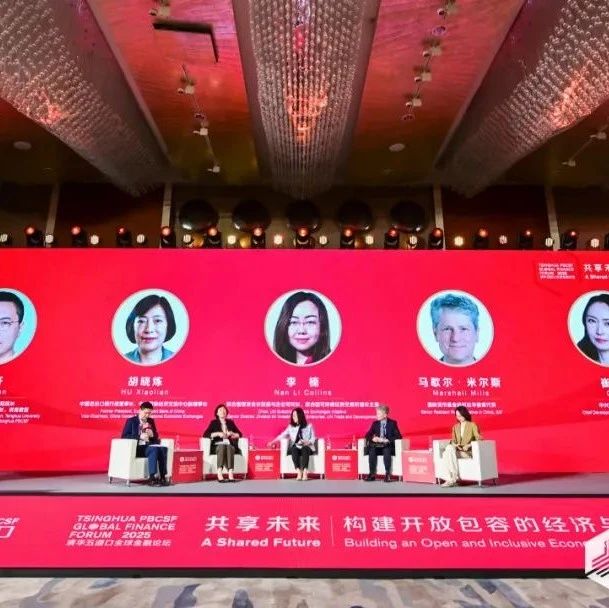
2025年5月17-18日,2025清华五道口全球金融论坛在深圳市成功召开。17日下午,主题论坛二 "新形势 下的国际贸易与投资" 顺利举办。中国进出口银行原董事长、中国国际经济交流中心副理事长胡晓炼, 联合国贸发会议投资与企业司司长、联合国可持续证券交易所倡议主席李楠,国际货币基金组织驻华首 席代表马歇尔・米尔斯,中兴通讯首席发展官崔丽分别围绕论坛主题发表见解。清华大学国家金融研究 院院长、清华大学五道口金融学院副院长、讲席教授田轩主持论坛。 图为论坛现场 胡晓炼 中国进出口银行原董事长 中国国际经济交流中心副理事长 胡晓炼以《新形势下国际贸易与投资的格局变化》为题发表观点,指出当前关税政策对国际贸易 投资体系产生冲击,对于未来国际贸易投资格局走势提出三点 "再平衡"思考:一是贸易投资中的 成本效益再平衡。全球南方新兴市场国家在全球贸易投资中的机遇和占比有望提升,而美国制造 业回流难度较大;二是全球贸易再平衡,将推动主要经济体内部经济结构深度调整。解决贸易不 平衡问题需聚焦本国储蓄、消费、投资等领域的协调发展,指望别国调整而自身不解决结构问题 难以实现可持续的贸易平衡;三是货币再平衡,促使世界货币体系向多元 ...

《清华金融评论》|封面专题:“十四五”回顾与“十五五”前瞻
清华金融评论· 2025-05-19 10:30
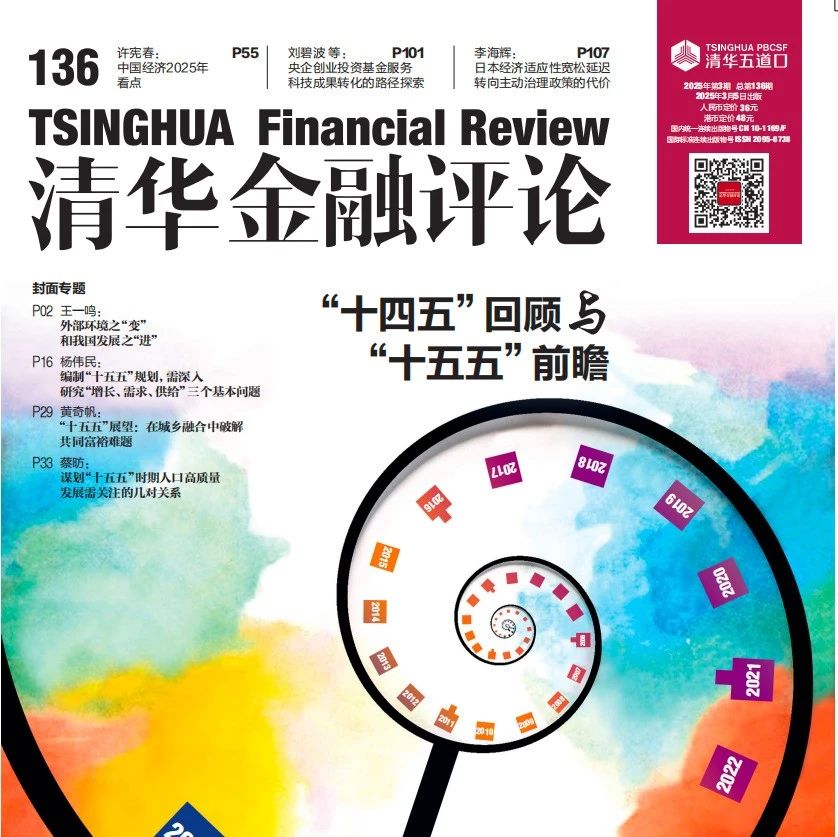
Core Viewpoint - The article emphasizes the importance of reviewing the "14th Five-Year Plan" and preparing for the "15th Five-Year Plan," highlighting the need for high-quality development and strategic planning in the face of changing domestic and international environments [3][4]. Summary by Sections Review of the "14th Five-Year Plan" - Significant changes in the domestic and international development environment have occurred, necessitating a focus on stable progress and high-quality development [3]. - The GDP has surpassed 120 trillion yuan, with domestic demand contributing increasingly to economic growth, and a recovery in consumer spending [3]. - There has been enhanced dynamism in investment, trade, and finance, alongside the deep integration of the digital economy with the real economy [3]. Outlook for the "15th Five-Year Plan" - The "15th Five-Year Plan" is positioned as a critical period for addressing global changes and establishing strategic advantages, laying the groundwork for achieving modernization by 2035 [4]. - Emphasis is placed on stabilizing economic growth, generating strong internal momentum, and expanding domestic demand [4]. - The plan aims to strengthen economic and financial security, mitigate risks in key areas, and accelerate the construction of a modern industrial system [4]. Key Themes and Discussions - Various experts contribute insights on essential issues such as growth, demand, and supply dynamics, as well as the challenges and strategies for achieving high-quality economic development during the "15th Five-Year Plan" [4]. - Discussions include the need for macroeconomic policy transformation to address insufficient demand and the importance of fiscal policy evolution [4].
多部门助推国家金融管理中心建设;证监会修订《上市公司重大资产重组管理办法》|每周金融评(2025.5.12-2025.5.18)
清华金融评论· 2025-05-19 10:30
Core Viewpoint - The article discusses the recent developments in the financial sector, including Moody's downgrade of the U.S. sovereign credit rating, the collaborative efforts to enhance Beijing's financial management capabilities, and the revisions to the regulations governing major asset restructuring for listed companies in China [4][5][8][9]. Group 1: Moody's Downgrade of U.S. Sovereign Credit Rating - Moody's downgraded the U.S. sovereign credit rating from Aaa to Aa1 due to increasing government debt and interest payment ratios [4]. - As of April 2025, U.S. federal debt exceeded $36 trillion, accounting for 98% of GDP, with projections indicating it could rise to 134% by 2035 [5]. - The annual interest expenditure on U.S. debt has reached 6.4% of GDP, with expectations it may rise to 9% by 2035 [5]. Group 2: Collaborative Efforts for Financial Development in Beijing - A meeting was held to discuss the development of Beijing as a national financial management center, emphasizing the need for collaboration among various financial regulatory bodies [8]. - The People's Bank of China is committed to supporting Beijing's economic and financial development, aiming to create a favorable monetary environment [8]. - The initiative aims to enhance Beijing's role in financial policy-making, regulatory coordination, and resource allocation, contributing to the broader goal of building a financial powerhouse [8][9]. Group 3: Revisions to Major Asset Restructuring Regulations - The China Securities Regulatory Commission (CSRC) released revised regulations for major asset restructuring, introducing a phased payment mechanism for restructuring shares [9]. - The revisions include increased regulatory flexibility regarding financial condition changes, inter-industry competition, and related party transactions [9]. - Following the new regulations, the total value of major restructuring transactions reached 200 billion yuan, marking an 11.6-fold increase compared to the same period last year, with 70% of these transactions focusing on strategic sectors like integrated circuits and new energy [9]. Group 4: Adjustments in Hang Seng Index and Hang Seng Tech Index - The Hang Seng Index and Hang Seng Tech Index underwent adjustments, with the inclusion of companies like Midea Group and ZTO Express, increasing the number of constituents [10]. - The adjustments reflect a shift towards sectors such as consumer goods, new energy technology, and modern logistics, while reducing the weight of traditional industries [11]. - Post-adjustment, the market capitalization of new economy sectors in the Hang Seng Index increased from 53.1% to 53.7%, indicating a trend of capital moving from low-growth sectors to high-growth areas [11]. Group 5: Hong Kong's Economic Outlook - The Hong Kong government maintained its GDP growth forecast for 2025 at 2%-3%, with the economy showing robust expansion in the first quarter of 2025 [12]. - The real GDP grew by 3.1% year-on-year in the first quarter, an acceleration from the previous quarter's growth of 2.5% [12]. - Factors contributing to this growth include a reduction in global economic uncertainties and improved conditions for trade and tourism [12].

嘉宾金句②丨2025清华五道口全球金融论坛
清华金融评论· 2025-05-19 10:30
Group 1: Core Themes - The forum focused on the challenges of global economic fragmentation and the development of the Guangdong-Hong Kong-Macao Greater Bay Area [1][12] - Key insights were shared by prominent figures in finance and academia, emphasizing the need for collaboration and innovative solutions to address economic challenges [1][3][5] Group 2: Key Speakers - Zhang Xiaoyan, Vice Dean and Chair Professor at Tsinghua University, highlighted the implications of economic fragmentation [1][12] - Ouyang Weimin, Vice President of the China Financial Society and former President of the China Development Bank, contributed insights on financial stability [1][5] - Other notable speakers included former Kazakhstani Deputy Prime Minister Kairat Kelimbetov and Roubini Nouriel, a professor at NYU Stern School of Business, who provided international perspectives on economic issues [1][10][3] Group 3: Regional Development Focus - Discussions on the Guangdong-Hong Kong-Macao Greater Bay Area emphasized its strategic importance for regional economic integration and innovation [1][12] - Key officials from Hong Kong and Macau, including Chen Weimin from the Hong Kong Monetary Authority and Wang Chunxin from the Hong Kong SAR government, discussed policies to enhance financial cooperation [1][16][19]
“十五五”前瞻——习近平对“十五五”规划编制工作作出重要指示 | 宏观经济
清华金融评论· 2025-05-19 10:30
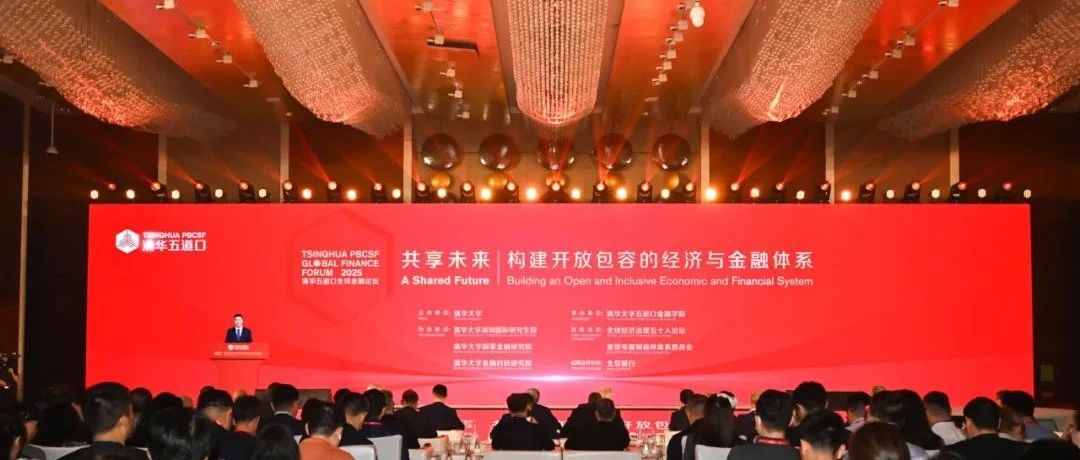
Core Viewpoint - The formulation and implementation of the "15th Five-Year Plan" is crucial for advancing China's modernization and fulfilling the strategic deployments of the 20th National Congress of the Communist Party of China [4]. Group 1: Planning and Decision-Making - Emphasis on scientific, democratic, and legal decision-making processes in the planning of the "15th Five-Year Plan" [3][4]. - The need for top-level design and public consultation to gather diverse opinions and experiences from the populace [4]. Group 2: Economic Context and Challenges - The "15th Five-Year Plan" period is seen as a critical transitional phase for achieving socialist modernization by 2035, facing both strategic opportunities and risks [7][8]. - Key economic issues to consider during planning include growth, demand, and supply [7]. Group 3: High-Quality Development - The importance of high-quality development and the need to upgrade supply, demand, and efficiency structures to achieve effective qualitative and reasonable quantitative economic growth [8][9]. - The role of technological innovation and new industries, such as AI and biotechnology, in driving future growth [8]. Group 4: Urban-Rural Integration - Urban-rural integration is highlighted as a necessary requirement for modernization, aiming to enhance planning, construction, and governance at both urban and rural levels [9]. Group 5: Macroeconomic Governance - The necessity for improved macroeconomic governance and policy consistency in response to changing external conditions and internal economic demands [11][12]. - The ongoing evolution of fiscal policy since 2008, with a focus on optimizing its effectiveness for growth and risk management [12]. Group 6: Trust Industry Development - The trust industry is encouraged to focus on high-quality development paths and align its strategies with the broader goals of China's modernization [13].

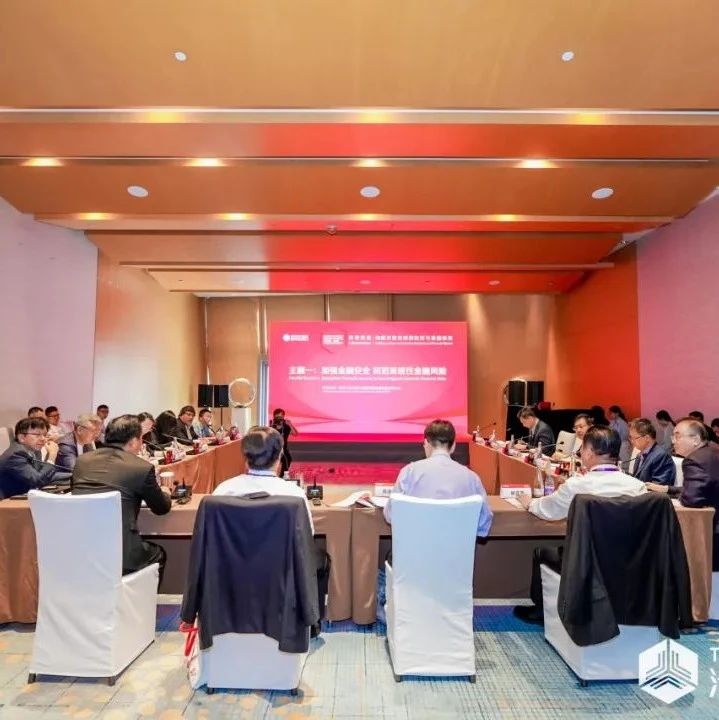
2025清华五道口全球金融论坛闭门会议一丨加强金融安全 防范系统性金融风险
清华金融评论· 2025-05-18 10:16
Core Viewpoint - The conference emphasized the importance of financial security as a critical component of national security and economic stability, highlighting the need for a long-term, systematic approach to strengthen financial safety measures in the face of evolving risks [4][5]. Group 1: Financial Security Importance - Financial is described as the lifeblood of the national economy and a key part of the country's core competitiveness [4]. - The stability and efficient operation of the financial system are crucial for resource allocation, economic innovation, and serving the real economy [4]. - Any instability in the financial system can rapidly affect the real economy, disrupting national economic order and social stability [4]. Group 2: Current Challenges - Experts noted that China's financial security faces unprecedented complexities, including the accumulation of traditional financial risks and the emergence of new risks, particularly due to the dual-edged effects of rapid financial technology development [5]. - There is a call for a "bottom-line thinking" approach, reinforcing a "systemic perspective," and building a "multi-party collaborative" financial security defense [5]. Group 3: Conference Outcomes - The successful hosting of the conference provided a high-level platform for in-depth communication and consensus-building, positively impacting the enhancement of China's financial security and the prevention of systemic financial risks [8].