美股研究社

Search documents
PayPal或在年底前证明市场判断是错误的
美股研究社· 2025-10-23 11:28
Core Viewpoint - PayPal's stock price has remained stagnant between $50 and $90 since a significant drop in 2022, with market expectations for a breakthrough by the end of 2024 not materializing, leading to a perception of the company as "PainPal" despite ongoing revenue and profit growth [1][21] Business Developments - PayPal is expected to perform well by the end of the year due to several strategic initiatives, including the relaunch of Braintree, expansion of advertising business, increased contribution from cryptocurrency, and rapid growth of Venmo and debit card services [3] Braintree Business - Braintree, PayPal's payment processing division, is refocusing on profitability by renegotiating contracts, which is projected to contribute 5% to revenue growth this year [5] - Although Braintree's transaction volume showed negative growth in early 2025, it is expected to accelerate from Q3 2025, indicating that recent revenue slowdowns are not as severe as anticipated [5][6] - A partnership with Google for payment processing is expected to significantly enhance transaction volumes [6] Advertising and Cryptocurrency Business - PayPal leverages its vast first-party transaction data to enhance its advertising business, which is expected to grow significantly and compete with major players like Google and Meta [8] - The advertising business has high margins and is anticipated to become a major revenue source by 2026, diversifying PayPal's profit structure beyond payment transaction volumes [9] - The cryptocurrency segment is benefiting from rising market prices and the introduction of stablecoins, which are expected to boost revenue and profit margins [10] Debit Card and Venmo Business - PayPal is expanding into offline payments through debit cards, which is expected to drive transaction volume growth, as evidenced by rapid user acquisition in Germany [12] Valuation - Despite projected double-digit growth in EPS and free cash flow over the next few years, PayPal's current rolling P/E ratio is only 14, which is low compared to historical performance and future growth expectations [14] - The significant discount in PayPal's free cash flow P/E ratio compared to peers suggests that the market does not recognize its growth potential [14] - A reasonable P/E ratio of at least 20 could imply a doubling of the stock price within 2.25 years, driven by product innovations and partnerships [15] Earnings Expectations - Analysts forecast PayPal's Q3 2025 revenue at $8.22 billion and EPS at $1.21, with expectations for the company to exceed these figures being crucial for market perception [17] - Free cash flow remains a key indicator, with a target of $6-7 billion for the year, and achieving this will be critical for maintaining investor confidence [17] Conclusion - PayPal's current low valuation, combined with multiple innovative business initiatives, positions the company for potential breakthroughs by the end of the year [21]



小扎新AI,凉得彻底?
美股研究社· 2025-10-23 11:28
Core Viewpoint - Meta has launched a new feature called Vibes, an AI video stream integrated into the Meta AI application, allowing users to browse AI-generated short videos and remix them easily, indicating a significant shift in short video creation and sharing [3][4][10]. Group 1: Introduction of Vibes - Vibes is positioned as an "AI video stream," serving as a content entry point that combines media and creation, enabling users to generate videos from ideas or remix existing ones [9][10]. - The feature aims to create a new content cycle by connecting browsing, creation, and sharing seamlessly [10][15]. Group 2: Meta's Strategic Ambitions - Meta seeks to reclaim control in the AI video era, as short videos have become a competitive battleground among social platforms, with TikTok and YouTube leading the charge [16][17]. - AI is a core driver in Meta's strategy, with a vision for user-generated content to dominate social feeds [18][19]. Group 3: Technical Foundations and User Experience - Meta's AI research teams have developed models like MovieGen, which can generate realistic video segments and modify existing videos, providing the necessary technical support for Vibes [21][24]. - Vibes is designed as a closed-loop experience of "browse, remix, and share," lowering the creation barrier for ordinary users and integrating deeply with Meta's existing platforms [24][25][29]. Group 4: Implications for Content Creation - The ease of creating videos through Vibes may blur the lines between original and derivative works, raising questions about copyright and ownership as remixing becomes commonplace [27][38]. - The phenomenon of AI-generated content is already observable on other platforms, with concerns about content homogenization and misinformation arising [31][37]. Group 5: Future Directions - Vibes is part of a broader strategy that includes integrating AI with hardware like smart glasses, potentially transforming how users create and share content in real-time [40][42]. - The introduction of Vibes marks a significant step towards making AI video generation a part of everyday social interactions, while also presenting challenges in content governance and authenticity [46][53][55].


AI日报丨谷歌发布量子计算突破性进展,马斯克表示不会取代英伟达
美股研究社· 2025-10-23 11:28
Group 1 - Applied Digital signed a $5 billion AI factory lease agreement with a cloud computing service provider for a duration of 15 years, which will enhance its computing power to 600 MW across two sites in North Dakota [5][6] - General Motors (GM) introduced new technologies including "eyes-off" autonomous driving and a conversational AI system developed with Google, aiming to enhance convenience and safety for consumers [8][10] - Morgan Stanley estimates that Amazon could save up to $4 billion annually by automating its warehouses, with a projected savings of $2 billion to $4 billion by 2027 due to a 20% to 40% reduction in order fulfillment costs [15] Group 2 - Google announced a breakthrough in quantum computing with its Willow chip, which reportedly runs algorithms 13,000 times faster than the best supercomputers, indicating potential applications in medicine and materials science [16][17] - Microsoft is pushing for further integration of Windows and Xbox, launching the ROG Xbox Ally series handheld gaming consoles, which can run PC games natively and stream games from Xbox consoles, marking a strategic shift in its gaming business [18]




特斯拉大跌5000亿,马斯克画饼难充饥
美股研究社· 2025-10-23 11:28
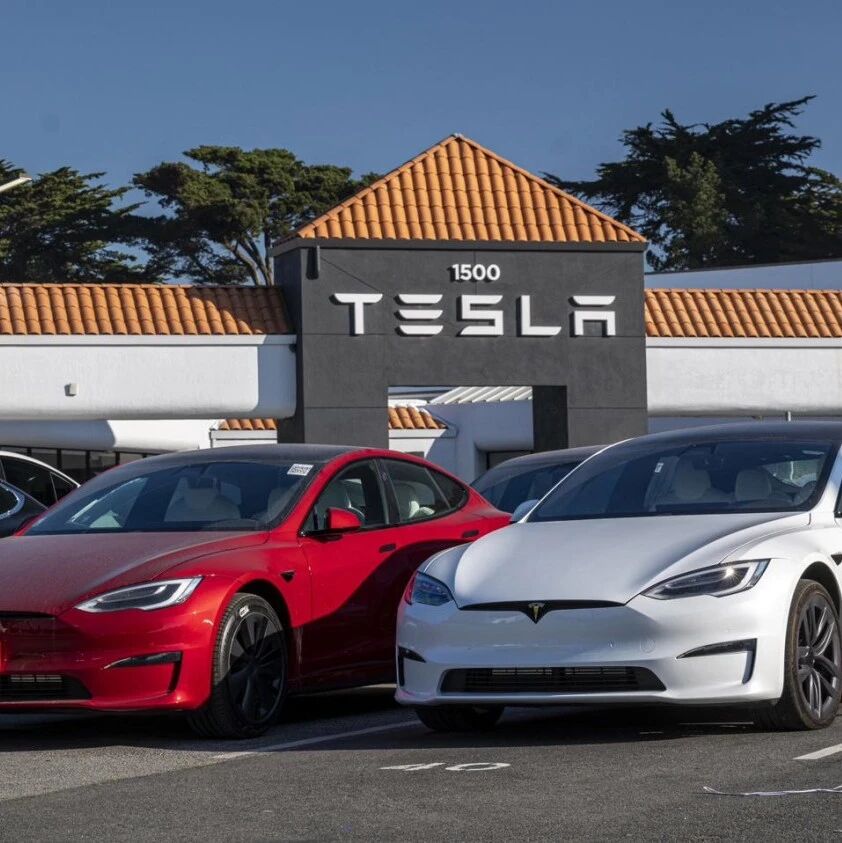
Core Viewpoint - Tesla's Q3 2025 earnings report shows a 12% year-over-year revenue increase, but a 37% decline in net profit, raising concerns about the sustainability of growth and future projects like Robotaxi and Optimus [4][12][36]. Financial Performance - Tesla's total revenue reached a record $28.095 billion, a 12% increase year-over-year, driven by strong delivery numbers of 497,000 vehicles, surpassing market expectations [9][12]. - The automotive segment generated $21.2 billion in revenue, a 6% increase year-over-year, but net profit fell to $1.37 billion from $2.17 billion, a 37% decline [12][11]. - Operating expenses increased by 50%, attributed to AI and other R&D projects, alongside rising tariffs and costs per vehicle [12][15]. Future Prospects - Investors are particularly focused on the rollout of Robotaxi and the production timelines for Cybercab and Optimus robots, but details remain vague [4][18]. - Musk stated that by the end of 2025, Robotaxi is expected to cover half of the U.S. population, but specifics on timelines and regulatory approvals are lacking [5][21]. - The Optimus robot's production timeline is also unclear, with Musk suggesting a potential release of V3 in Q1 2026, but emphasizing the challenges in manufacturing [25][27]. Market Reactions - Following the earnings call, Tesla's stock dropped nearly 5%, reflecting investor dissatisfaction with the lack of concrete plans and clarity on future projects [6][36]. - The introduction of "standard versions" of Model Y and Model 3 aimed at increasing competitiveness has not positively impacted stock prices, indicating market skepticism [14][31]. Regulatory and Competitive Landscape - Tesla is working with regulatory bodies in China, Europe, the Middle East, and Africa to gain approval for its Full Self-Driving (FSD) technology, but the focus on the Chinese market was notably minimal during the earnings call [30][29]. - The competitive landscape is intensifying, particularly in Europe, where Tesla's sales are declining due to increased competition from companies like BYD [12][31]. Executive Compensation Controversy - The upcoming vote on Musk's $1 trillion compensation plan has sparked controversy, with significant opposition from institutional investors citing dilution risks [32][34]. - Musk's emotional defense of the compensation plan during the earnings call highlights the tension between management and shareholders [36].

苹果第四季度业绩前瞻:盈利质量与利润率韧性超预期
美股研究社· 2025-10-23 11:28
Core Viewpoint - Apple's performance has outpaced the S&P 500 index by approximately 7 percentage points since the report in April, driven by a strong Q3 performance with a 10% year-over-year revenue growth and a 12% increase in earnings per share, despite incurring around $900 million in tariffs, resulting in a gross margin of about 46.5% [1][3][13] Group 1: Financial Performance - Q4 FY2025 earnings are expected to demonstrate the company's ability to maintain profit margins despite higher tariff costs, with a gross margin guidance of 46%-47% covering approximately $1.1 billion in tariff costs [3][4] - The services segment is nearing one-third of total revenue, with a gross margin close to 75%, enhancing overall profitability [3][4] - The growth rate for the services business is projected to be around 13% for the September quarter, consistent with the June quarter [3] Group 2: Product Performance - Early sales data for the iPhone 17 indicates performance at least on par with the previous year, with a stable proportion of high-end models, supporting the average selling price and maintaining product business gross margin around 35% [4] - The first quarter of FY2026 is expected to see revenue growth in the mid-single digits or higher, with gross margins again in the 46%-47% range [4] - User upgrade intentions are rising, supporting a healthier replacement cycle for the December quarter, although wearables and iPad sales may remain weak [4] Group 3: Key Indicators - Focus on profitability quality, including the services segment's contribution, overall gross margin, and product business gross margin, is crucial for assessing the impact of tariff costs and product structure on profitability [7] - Monitoring the relationship between tariff expenses and shipment volumes will provide insights into Apple's cost transfer capabilities and supply chain efficiency [7] - Progress in supply chain diversification, particularly the share of iPhones assembled in India and the contribution of Vietnam in Mac, iPad, and Apple Watch production, is key to understanding tariff risk predictability [7] Group 4: Operational Management - The company aims to control total operating expenses within the range of $15.6 billion to $15.8 billion, ensuring that expense growth remains below revenue growth while increasing investments in artificial intelligence [8]


AI日报丨OpenAI将推出新款浏览器ChatGPT Atlas,Meta联手Blue
美股研究社· 2025-10-22 10:09
Group 1 - OpenAI is launching a new AI-integrated web browser called ChatGPT Atlas, initially targeting Mac users, which may disrupt the competition with Chrome and Safari [5] - Airbnb's CEO Brian Chesky stated that the company heavily relies on Alibaba's Tongyi Qianwen model, claiming it is better and cheaper than OpenAI's offerings [6] - The first AI-assisted new drug MTS-004 developed by Jitai Technology has successfully completed Phase III clinical trials, filling a gap in the treatment of Pseudobulbar Affect in China [6] Group 2 - GE Vernova has agreed to acquire the remaining 50% stake in transformer manufacturer Prolec for approximately $5.3 billion, driven by the increasing demand for AI in the power sector [7] - Anthropic is in talks with Google for a cloud computing service agreement potentially worth hundreds of billions, which would enhance Google's position in the market [9] - Meta and private equity giant Blue Owl are raising $27 billion through bond issuance to build data centers, highlighting the significant capital demand for AI infrastructure [10][11]


Meta 股价上涨,与 Arm 合作增强人工智能领域信心
美股研究社· 2025-10-22 10:09
Group 1 - Meta's stock price increased over 2% to $732, driven by investor recognition of its new AI collaboration with Arm Holdings [1] - The partnership aims to develop high-efficiency chip platforms to support Meta's personalized services and recommendation systems, signaling a long-term commitment to expanding AI capabilities within its ecosystem [1][2] - This collaboration is seen as a strategic move to strengthen Meta's core infrastructure, enabling more efficient deployment of AI models across platforms like Facebook, Instagram, and Threads [2] Group 2 - The agreement aligns with Meta's broader AI development roadmap, focusing on personalized experiences while enhancing computational efficiency [2] - Arm's expertise in low-power architecture is expected to provide cost and performance advantages compared to traditional chip designs, reducing Meta's reliance on external chip manufacturers [2] - Analysts view this development as a reflection of Meta's ambition to shift focus from short-term advertising cycles to building long-term technological depth [2][5] Group 3 - Meta's stock has shown signs of stabilization after recent fluctuations, currently above the 20-day exponential moving average, with potential confirmation of a short-term trend reversal if it closes above the 50-day moving average [2] - The Bollinger Bands have narrowed, indicating reduced volatility compared to significant fluctuations in September, with key support levels at 720, 694, and 675 [3] - Maintaining above the lower channel boundary suggests a positive technical outlook, despite potential selling pressure if support levels are breached [3] Group 4 - Investor confidence in Meta's AI expansion and data center development supports its overall trend, with the partnership with Arm enhancing its competitive advantage in custom computing [5] - As the earnings season approaches, the market will focus on whether these investments can translate into revenue growth or cost efficiencies [5] - With a clear strategic plan, technical recovery, and renewed investor confidence, Meta has become one of the more resilient AI-related stocks in the market [5]


OCP大会焦点:制造和封装已大幅扩产,AI芯片瓶颈转向下游,包括内存、机架、电力等
美股研究社· 2025-10-22 10:09
Core Insights - The AI semiconductor industry is expected to experience significant growth in 2026, with a shift in investment logic from upstream to downstream infrastructure [2][10] - The bottleneck in AI development has transitioned from chip manufacturing and packaging to downstream components such as data center space, power supply, and cooling systems [2][5] Upstream Capacity No Longer the Sole Bottleneck - Chip manufacturing and packaging have significantly expanded, alleviating previous supply concerns [4] - TSMC reported stronger-than-expected AI demand and a quick ramp-up in CoWoS capacity, indicating flexibility in the supply chain [4] - Despite ongoing tightness in advanced node wafer front-end capacity, AI semiconductors are prioritized over other applications like cryptocurrency ASICs [4] Bottleneck Shift - The current constraints are now focused on data center space, power availability, and supporting infrastructure, which have longer construction cycles than chip manufacturing [6] - The deployment of large-scale GPU clusters presents challenges in power consumption and heat dissipation, leading to a shift towards liquid cooling and high-voltage direct current (HVDC) solutions [6] Storage and Memory - AI workloads demand high-speed data storage and access, with companies like Meta opting for QLC NAND flash for cost efficiency [8] - The global demand for HBM (High Bandwidth Memory) is projected to surge, with NVIDIA expected to consume 54% of the total HBM by 2026 [8] Racks and Networking - OCP has introduced standardized blueprints for "AI Open Data Centers" and "AI Open Cluster Designs" to facilitate large-scale deployments [9] - Companies like Alibaba are focusing on pluggable optics for their cost-effectiveness and flexibility, while new technologies like CPO/NPO are gaining attention [9] Demand Forecast Indicates Explosive Growth for Downstream Components - Global cloud service capital expenditure is expected to grow by 31% in 2026, reaching $582 billion, significantly exceeding market expectations [11] - AI server capital expenditure could see approximately 70% year-over-year growth if its share in overall capital spending increases [11] AI Chip Demand Breakdown - NVIDIA is projected to dominate the CoWoS capacity consumption with a 59% share, followed by Broadcom, AMD, and AWS [12] - In AI computing wafer consumption, NVIDIA leads with a 55% share, followed by Google, AMD, and AWS [12] Investment Focus Shift - The signals from the OCP conference and industry data indicate a new direction for AI hardware investment, emphasizing the importance of downstream infrastructure [13] - Investors are encouraged to broaden their focus from individual chip companies to the entire data center ecosystem, identifying key players in power, cooling, storage, memory, and networking [13]



OpenAI发布首个AI浏览器ChatGPT Atlas!谷歌最怕的来了
美股研究社· 2025-10-22 10:09
Core Viewpoint - OpenAI has launched a new browser called ChatGPT Atlas, which integrates ChatGPT functionalities to enhance user experience and productivity, posing a significant threat to Google's Chrome browser [2][7]. Group 1: Key Features of ChatGPT Atlas - The browser includes built-in ChatGPT, allowing users to invoke it from any page via a sidebar [4]. - It features a memory function that can search through browsing history, enabling personalized interactions [18]. - The AI agent can perform tasks directly on web pages, streamlining user workflows [22][30]. Group 2: User Experience and Accessibility - Users can easily set up ChatGPT Atlas by importing bookmarks, saved passwords, and browsing history from their current browser [10]. - The browser is available for macOS users, with plans for Windows, iOS, and Android versions to follow [13]. - A seven-day membership is offered when set as the default browser [13]. Group 3: Market Impact and Competition - Following the launch, Alphabet's stock price dropped over 2%, indicating market concern regarding the competitive threat posed by ChatGPT Atlas [7]. - The AI browser market is heating up, with other companies like Perplexity and Google also developing their AI-integrated browsers [78][79]. - OpenAI's Atlas aims to redefine how users interact with the web, potentially transforming the browser into a new operating system [72][73]. Group 4: Future Developments - OpenAI plans to continue evolving Atlas, with features aimed at enhancing user experience and integrating more AI capabilities [58]. - The browser is built on Google's Chromium engine, ensuring compatibility and performance [26]. - OpenAI emphasizes that Atlas will allow users to delegate routine tasks to the AI, promoting a more efficient lifestyle [56].

台积电实力无人能及
美股研究社· 2025-10-22 10:09
Core Viewpoint - TSMC's third-quarter financial results demonstrate strong performance, with a significant year-over-year revenue increase, and the company is expected to maintain its solid future outlook despite potential short-term growth slowdowns [1][5][8]. Financial Performance - TSMC reported third-quarter sales of approximately $33 billion, a substantial year-over-year increase of 41%, exceeding analyst expectations by $1.5 billion [5]. - Advanced technology nodes contributed significantly to revenue, with 3nm chips accounting for 23%, 5nm for 37%, and 7nm for 14%, totaling 74% of wafer revenue [5]. - The gross margin slightly improved to 59.5%, with an operating margin of around 50.6% and a net profit margin of 45.7%, showcasing strong profitability for a capital-intensive manufacturing company [5][6]. - The return on equity (ROE) reached 37.8%, indicating effective management of investor funds [6]. Market Position and Strategy - TSMC is a critical player in the AI sector, with major tech companies relying on its manufacturing capabilities for advanced chips, particularly for AI and data center applications [10][11]. - The company plans to increase capital expenditures to $40-$42 billion by 2025 to strengthen its market position amid rising AI demand [10]. - TSMC's advanced process technologies, including the upcoming 2nm node, are expected to further enhance its competitive edge [12]. Pricing Power and Future Outlook - TSMC is anticipated to raise prices for its advanced processes by 5%-10%, with potential increases for the new 2nm process reaching up to 50%, which could significantly boost profitability [13][14]. - The company is projected to achieve an average sales growth rate of about 30% over the next five years, driven by ongoing demand in the AI sector [18]. Valuation - Based on current assumptions, TSMC's fair stock price is estimated to be around $359 per share, indicating substantial upside potential [19]. Conclusion - The ongoing AI race is expected to benefit TSMC significantly, although there are concerns about market prudence in capital investments [21].