虎嗅APP

Search documents
牛市中掉队的邮储银行,或迎来逆袭
虎嗅APP· 2026-02-05 10:17
Core Viewpoint - The article discusses the underperformance of Postal Savings Bank compared to other major banks in a generally bullish market for bank stocks in 2025, highlighting the challenges it faces in terms of valuation and business structure [2][3][4]. Group 1: Performance Comparison - In 2025, Agricultural Bank of China saw a stock price increase of 52.66%, while Postal Savings Bank only increased by 0.67%, slightly outperforming Bank of Communications at 0.37% [2][3]. - As of January 2026, Postal Savings Bank's price-to-book (PB) ratio was 0.6, significantly lower than Agricultural Bank's 0.86 [4]. Group 2: Financial Metrics - For the first three quarters of 2025, Postal Savings Bank reported a revenue growth of 1.82% and a net profit growth of 0.98%, placing it in the middle tier among state-owned banks [5]. - The bank led the six major banks in asset expansion speed during the same period, indicating competitive project acquisition capabilities [9]. Group 3: Risk and Asset Quality - Despite a relatively low non-performing loan (NPL) ratio, Postal Savings Bank has seen a rising trend in NPLs, with the ratio increasing from 0.9% at the beginning of the year to 0.94% by Q3 2025 [14][13]. - The bank's reliance on retail loans, which constitute over 50% of its credit portfolio, has exposed it to risks as retail loan demand declines [12][11]. Group 4: Strategic Changes and Leadership - The recent appointment of Lu Wei as the new president is expected to bring a shift in strategy, focusing on corporate banking to complement the bank's retail strengths [28][19]. - The article suggests that the transition to a more balanced business model will take time and may not yield immediate results [34][33]. Group 5: Wealth Management and Corporate Banking - Postal Savings Bank's wealth management capabilities are limited, with a significant portion of its assets under management (AUM) still in low-risk products, which restricts income potential [21][23]. - The bank's corporate loan growth has been strong, but it still lags behind major competitors in absolute scale and business capability [27][26]. Group 6: Future Outlook - The article posits that while the new leadership may bring hope for improvement, the bank's structural challenges will require gradual adjustments rather than quick fixes [34][30]. - The expectation is for a gradual enhancement in performance, focusing on corporate banking and wealth management, while addressing the risks associated with retail loans [36][34].



黄仁勋酒后暴论:编程只是打字,已经不值钱了
虎嗅APP· 2026-02-05 10:17
Core Viewpoint - Huang Renxun, CEO of Nvidia, expressed that programming is merely typing and has lost its value, emphasizing the need for innovation and adaptation in the face of rapid technological evolution [4][6][20]. Group 1: AI and Innovation - Huang advocates for a management approach that encourages experimentation and exploration within organizations, stating that innovation often occurs outside of strict control [6][7][40]. - He emphasizes the importance of allowing teams to experiment with various AI tools without the immediate pressure of ROI calculations, fostering a culture of "letting a thousand flowers bloom" [6][40]. - The concept of "AI factories" is introduced, where the focus shifts from merely creating tools to generating digital labor, fundamentally transforming industries [9][10][68]. Group 2: Market Potential - Huang highlighted the vast market potential for AI, noting that the global IT industry is approximately $1 trillion, while the total global economy is around $100 trillion, indicating a hundredfold opportunity for AI to penetrate and reshape the remaining sectors [10][11][68]. - He pointed out that every industry has the chance to transform into a technology-driven company, with examples like Disney aspiring to be like Netflix and Mercedes wanting to emulate Tesla [11][68]. Group 3: New Paradigms in Computing - Huang discussed the shift from explicit programming to implicit programming, where users can simply express their intentions and the AI will generate the necessary code, thus lowering the technical barrier [20][70]. - He described the transition from a "pre-recorded" era of software to a "generative" era, where applications will be contextually unique and dynamically generated based on user interactions [17][52]. Group 4: Data Sovereignty and Knowledge Ownership - Huang stressed the importance of data sovereignty and the need for companies to maintain control over their core intellectual property, which he believes lies in the questions posed during interactions with AI rather than the answers themselves [16][73]. - He argued that the most valuable intellectual property is the ability to ask the right questions, which reflects a company's strategic thinking and innovation potential [16][73]. Group 5: Future of Work and AI Integration - Huang predicted that future companies will have numerous AI assistants that learn from employee decisions and inquiries, ultimately becoming unique intellectual assets for the organization [16][73]. - He warned that companies must adapt quickly to AI technologies, as those who fail to do so risk being outpaced by competitors who embrace these advancements [68][73].



李佳琦带货的新疆网红奶,要破产了
虎嗅APP· 2026-02-05 10:17
Core Viewpoint - The article discusses the dramatic fall of Maqiuer, a once-prominent dairy company in China, which faced bankruptcy due to a small debt of 595.49 million yuan, exposing deeper financial issues and mismanagement within the company [4][13][24]. Company Overview - Maqiuer was celebrated for its high-quality milk products, earning titles like "the Moutai of milk" and "the light of Xinjiang" [4]. - The company reached a market value of 50 billion yuan at its peak, but has now been pushed towards bankruptcy due to a minor debt issue [4][5]. Financial Decline - The company’s cash reserves plummeted from 370 million yuan to just 19 million yuan, a decrease of over 40% [5][14]. - Maqiuer's debt-to-asset ratio soared to 83%, significantly exceeding the industry average and indicating severe financial distress [14][23]. Historical Context - Founded by Li Yuhu, Maqiuer began as a small food workshop in 1988 and grew into a major player in the dairy industry, capitalizing on Xinjiang's advantageous geographical conditions for dairy farming [7][9]. - The company achieved rapid growth, with revenues reaching 2.8 billion yuan in 2002 and 3.8 billion yuan in 2003, marking the beginning of its dominance in the Xinjiang dairy market [9]. Marketing and Brand Strategy - Maqiuer's marketing strategies included innovative advertising campaigns, such as hiring singer Dao Lang for promotional songs, which significantly boosted brand recognition [8][9]. - The company leveraged social media and e-commerce, becoming a "internet celebrity" brand, especially during 2021 when it invested heavily in live-streaming sales [16]. Crisis Events - The "propylene glycol incident" in 2022 severely damaged consumer trust, leading to product recalls and fines totaling 73.15 million yuan, which wiped out two years of profits [17][22]. - Following this scandal, Maqiuer's revenue halved from nearly 1 billion yuan to over 600 million yuan, with cumulative losses exceeding 700 million yuan by 2025 [17][24]. Management and Operational Issues - The transition from the founder's management to the next generation led to a shift in focus from quality to aggressive marketing, resulting in a lack of investment in research and development [20][21]. - The company's operational decisions, such as prioritizing rapid turnover and low costs, contributed to compliance failures and subsequent financial penalties [22]. Conclusion - Maqiuer's story serves as a cautionary tale about the risks of neglecting core business principles in favor of rapid expansion and marketing, highlighting the importance of maintaining a solid foundation in any business [25].


OpenClaw揭示AI智能体底层需求:人类的“拔线权”
虎嗅APP· 2026-02-05 00:53
Core Insights - OpenClaw, an AI Agent, is being hailed as a potential "super worker" that could transform human work patterns, with its native community MoltBook gaining popularity through user interactions [4][5]. Group 1: Market Impact and Winners - The first "winner" identified is the MacMini and VPS providers, as MacMini sales have surged since OpenClaw's launch due to its compatibility with MacOS, which facilitates easier deployment of OpenClaw [6]. - The demand for "sandbox" environments has increased, driven by user concerns over data and information security [7]. - OpenClaw's deployment on MacOS is seen as the most cost-effective option, despite its capability to run on other systems like Raspberry Pi, which may offer lower costs but reduced performance [6][9]. Group 2: Security Concerns - A security assessment by ZeroLeaks AI revealed OpenClaw's alarming security score of 2/100, indicating critical vulnerabilities, including a high success rate of data extraction attempts [9]. - Users, including high-profile figures like David Sacks, express reluctance to deploy OpenClaw due to these security concerns [8]. Group 3: Data and AI Interaction - The potential for AI Agents to serve as interaction gateways raises questions about data ownership and the competitive landscape among tech giants, with companies like ByteDance, Alibaba, and Tencent vying for control over user data [11]. - The emergence of open-source models like Kimi 2.5 could allow users to process tasks locally, potentially disrupting the subscription-based business models of closed-source AI [12][15]. Group 4: Future of AI Agents - The future of AI Agents hinges on establishing a secure framework that allows users to trust these systems, with the need for clear roles and responsibilities akin to traditional employment [16]. - The transition from AI Agents being seen as experimental tools to accepted workforce members will depend on the development of a digital governance system that ensures user data safety [16].


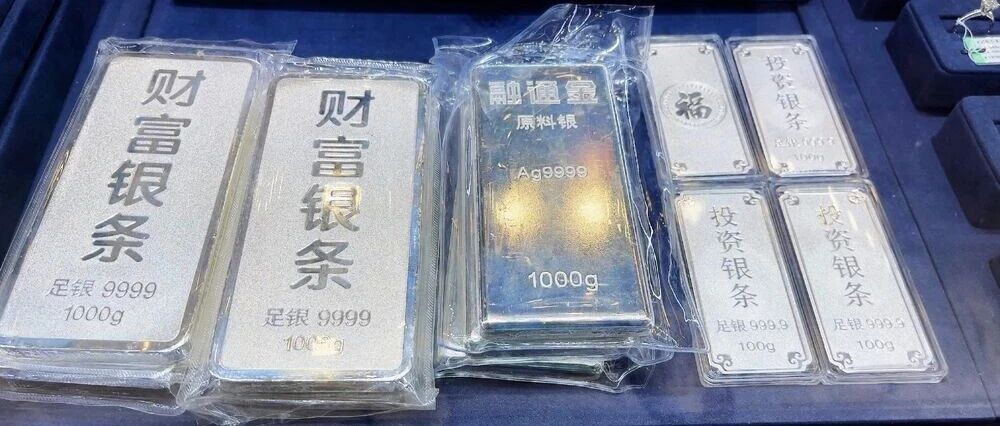
单日下跌31%创纪录,追问白银基金估值困局
虎嗅APP· 2026-02-05 00:53
Core Viewpoint - The article discusses the valuation crisis faced by the Guotou Ruijin Silver Fund, highlighting the extreme volatility in the international silver market and the implications for fund valuation methods, disclosure timeliness, and investor trust [4]. Group 1: Valuation Fluctuations - The fund experienced a dramatic net value drop of 31.5% on February 2, marking a record in public fund history, which was not solely due to market conditions but a one-time correction of accumulated risks [6]. - The fund's valuation is based on the Shanghai Futures Exchange silver futures settlement price, but the recent historic drop in international silver prices necessitated an adjustment to avoid misleading net asset values [6][12]. - On January 30, COMEX silver futures fell by 25.5%, creating a significant discrepancy between domestic and international prices due to the trading limits on the domestic market [6]. Group 2: Communication and Disclosure Issues - Guotou Ruijin's failure to announce the valuation adjustment in advance led to strong investor criticism regarding their right to information and the timeliness of disclosures [8]. - The fund's management explained that the extreme market conditions and liquidity issues prevented them from predicting price movements accurately, which justified the lack of prior announcement [9]. - Concerns arose that an early announcement could have been misinterpreted as an attempt to prevent redemptions, potentially causing panic among investors [9]. Group 3: Valuation Logic and Investor Trust - The valuation adjustment was intended to protect investor interests, but the lack of clarity on the conditions triggering such adjustments raised fundamental questions about the fund's valuation logic [11]. - The management prioritized liquidity over tracking international silver prices, which led to further investor skepticism when the fund did not adjust valuations in line with rising prices [12]. - The incident highlighted the need for improved communication and transparency from fund companies, especially during extreme market conditions, to maintain investor trust [18]. Group 4: Market Reactions and Social Media Impact - Misinformation regarding the need for prior announcements of valuation changes spread on social media, leading to investor confusion and potential legal actions against the fund [15]. - The fund had previously attracted speculative interest on social media platforms, which amplified negative sentiment when the valuation adjustment occurred [16]. - The article emphasizes the importance of clear communication and understanding of the product's nature, as well as the risks associated with speculative trading in volatile markets [19].
吃鸡吃出千亿市值,百胜中国怎么做到的?
虎嗅APP· 2026-02-05 00:53
Core Insights - The article highlights that the New Orleans wings, popular in China, do not actually originate from New Orleans but were created by KFC specifically for the Chinese market, showcasing the brand's ability to cater to local tastes [2][3] Sales Performance - In Yum China's recently released financial report, six star products, including Spicy Chicken Wings and New Orleans Wings, accounted for one-third of KFC's total sales. The company achieved a total revenue of $11.8 billion, a 4% year-on-year increase, with operating profit reaching $1.3 billion, up 11% [6] Product Innovation - KFC's product innovation strategy is evident in the rapid success of the Crispy Golden Chicken Wings, which quickly transitioned from a limited-time offer to a permanent menu item within four months due to strong consumer demand [9][10] - The company emphasizes a systematic approach to product development, ensuring that all operational aspects, from supply chain to marketing, are aligned for successful product launches [11] Brand Strategy - KFC's strategy focuses on leveraging big-ticket items to enhance brand loyalty and recognition, with flagship products like New Orleans Wings and Spicy Chicken Wings generating significant sales, exceeding $3 billion and $4 billion annually, respectively [12][14] - The brand's innovation is rooted in maintaining a stable core while extending classic flavors to create new experiences for consumers, thereby enhancing customer engagement [21][19] Market Expansion - Yum China is in a phase of accelerated store expansion, with over 1,700 new stores opened in 2025, bringing the total to over 18,000, and plans to reach 20,000 by 2026 and 30,000 by 2030 [28][29] - The company employs a multi-brand strategy to cater to diverse consumer needs across various market segments, enhancing operational efficiency and market reach [26][24] Operational Excellence - The success of Yum China's innovation and expansion efforts is supported by a robust supply chain and digital infrastructure, enabling rapid response to consumer feedback and market trends [22][29] - The company has launched over 1,600 innovative or upgraded products in the past three years, with many achieving annual sales exceeding $10 million, demonstrating its effective innovation strategy [22]


早报|小米通报营口SU7起火事件;比尔盖茨称后悔认识爱泼斯坦;美国恢复原定于6日举行的美伊谈判;“周生生挂坠金含量争议”新进展
虎嗅APP· 2026-02-05 00:53
大家早上好!这里是今天的早报,每天早上,我都会在这里跟你聊聊昨夜今晨发生了哪些大事儿。 昨夜今晨 【 习近平同美国总统特朗普通电话 】 据新华社消息, 2月4日晚,国家主席习近平同美国总统特朗普通电话。习近平指出,今年中美两国各自都有 不少重要议程,中国"十五五"开局起步,美国将迎来建国250周年,两国将分别主办亚太经合组织领导人非正 式会议、二十国集团领导人峰会。双方要按照我们达成的共识,加强对话沟通,妥善管控分歧,拓展务实合 作,不以善小而不为,不以恶小而为之,一件事一件事去做,不断积累互信,走出一条正确相处之道,让2026 年成为中美两个大国迈向相互尊重、和平共处、合作共赢的一年。习近平强调,台湾问题是中美关系中最重要 的问题。台湾是中国的领土,中方必须捍卫国家主权和领土完整,永远不可能让台湾分裂出去。美方务必慎重 处理对台军售问题。特朗普表示,美国和中国都是伟大的国家,美中关系是世界上最重要的双边关系。我乐见 中国成功,美方愿与中方加强合作,推动两国关系取得新发展。我重视中方在台湾问题上的关切,愿同中方保 持沟通,在我任内保持美中关系良好稳定。 【 中东多国紧急游说 美国恢复原定于6日举行的美伊谈判 ...

国运的杠杆不是AI,是生育率
虎嗅APP· 2026-02-04 14:07
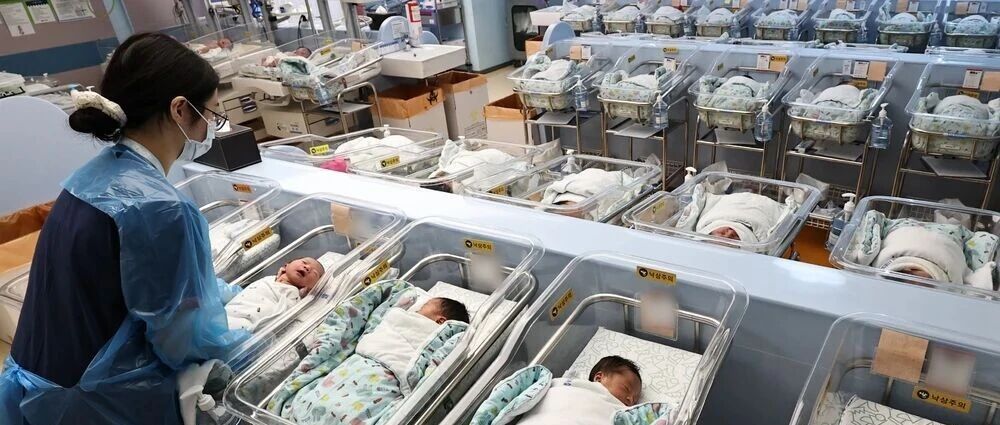
Core Viewpoint - The article discusses the shifting dynamics of geopolitical power and military capability, emphasizing that true national strength is determined by production capacity and population rather than mere wealth [6][11][30]. Group 1: Military and National Power - Palmer Luckey's company Anduril has reached a valuation of $30.5 billion, highlighting the growing importance of military technology in the current geopolitical climate [6]. - The article illustrates that despite significant financial support for Ukraine, the actual military production capabilities of Western nations are limited compared to Russia, which has a substantial advantage in artillery and personnel [11][12]. - The production capacity of artillery and tanks is critical in traditional warfare, as evidenced by the comparison of annual production rates between Russia and Western nations [12]. Group 2: Demographic Challenges - South Korea's total fertility rate is currently at 0.67, significantly below the replacement level of 2.1, indicating a looming demographic crisis that could lead to a drastic reduction in military personnel [12][13]. - Projections suggest that by 2070, North Korea could have a 2:1 advantage in eligible military personnel over South Korea, which could escalate to a 4:1 advantage by 2100 [15][16]. - The article argues that a declining population not only affects military capacity but also economic vitality, as fewer young people will be available to drive innovation and production [30]. Group 3: Societal Implications of Low Birth Rates - The article highlights the societal pressures that prevent open discussions about declining birth rates, which are seen as a critical issue for the future of nations like South Korea [22][24]. - It posits that once a society's birth rate falls below replacement levels, reversing this trend becomes exceedingly difficult, leading to a long-term demographic imbalance [25][26]. - The political landscape will shift as older populations gain more voting power, potentially prioritizing their welfare over that of younger generations [24][27]. Group 4: Geopolitical Strategy and Future Outlook - The long-term geopolitical influence of a nation is defined by its productivity, population base, and time, which are crucial in the context of the U.S.-China rivalry [28]. - The article warns that while the U.S. currently has a diverse population, a declining birth rate could undermine its economic and strategic resilience in the future [30][31]. - The decisions made today regarding family support and population growth will significantly impact the geopolitical landscape in the coming decades [32].
Nature重磅:图灵测试已死,AI已具备人类水平智能,这一天终于来了
虎嗅APP· 2026-02-04 14:07
Core Viewpoint - The article emphasizes that Artificial General Intelligence (AGI) has already been achieved, challenging the prevailing skepticism among experts and highlighting the need to recognize the reality of AGI's existence [4][8][34]. Group 1: AGI Development and Recognition - A recent article in *Nature* declares that AGI has been born, marking a significant milestone in AI development [4][8]. - In a Turing test, GPT-4.5 was identified as "human" by 73% of participants, indicating that AI has surpassed human performance in mimicking human behavior [5][6]. - Despite evidence of AI's capabilities, 76% of top AI researchers still believe AGI is far off, suggesting a disconnect between reality and perception [7][15]. Group 2: Levels of AI Intelligence - The article outlines a three-level framework for assessing AGI: - Level 1: Turing Test level, which has been passed by current AI [10]. - Level 2: Expert level, where AI can solve complex problems and generate scientifically valid hypotheses [11][12]. - Level 3: Superhuman level, which AI is approaching but has not fully achieved yet [13]. Group 3: Misconceptions About AGI - Many misconceptions about AGI stem from unrealistic expectations, such as the belief that AGI must be all-knowing or think like humans [16][18]. - The article argues that true intelligence should be measured by breadth and depth across various fields, not by perfection in every domain [17]. - It challenges the notion that intelligence requires a physical form or emotional capacity, emphasizing that problem-solving ability is the core of intelligence [18]. Group 4: Debunking Common Critiques - The article systematically addresses popular critiques of AI, such as the idea that AI is merely a "Stochastic Parrot" and lacks true understanding [21]. - It refutes the claim that AI's lack of physical presence limits its intelligence, citing examples of individuals like Stephen Hawking who maintained intelligence despite physical limitations [22]. - The article also counters the argument that AI's learning speed is inadequate compared to humans, highlighting that efficiency does not equate to capability [24][25]. Group 5: Implications of AGI's Existence - The recognition of AGI's existence prompts a reevaluation of societal and ethical considerations, including coexistence, responsibility, and governance [34]. - The article concludes that humanity is no longer the sole intelligent entity on Earth, urging a shift in perspective towards this new reality [34][34].

大房时代来了?
虎嗅APP· 2026-02-04 14:07
Core Viewpoint - The article discusses the emerging trend of luxury home purchases in China's real estate market, highlighting a shift from basic housing needs to a demand for larger, more functional living spaces due to changing family structures and preferences [4][11]. Group 1: Market Trends - The real estate market in China is witnessing a significant shift from "incremental gains" to "stock competition," with a notable increase in demand for larger homes driven by families seeking improved living conditions [4][11]. - The average living space per person in China has reached 40 square meters, but there is a significant imbalance in living quality across regions, leading to a primary motivation for homebuyers to seek larger spaces [4][11]. - The "house exchange" trend is becoming dominant in major cities like Beijing and Shanghai, where older, smaller homes are being traded for larger units, indicating a long-suppressed demand for improved living conditions [4][11]. Group 2: Luxury Market Dynamics - In 2025, luxury homes in Shanghai are projected to see a surge in transactions, with total sales exceeding 100 billion yuan, capturing nearly 60% of the market share among major cities [16][17]. - The average price of luxury homes has risen to 53.3 million yuan, with a significant increase in transaction volume for properties priced over 50 million yuan, reflecting strong demand for high-end real estate [17][21]. - The luxury market is characterized by a stark divide, with high-end properties showing resilience against market downturns, while the overall real estate sector faces challenges [21][22]. Group 3: Policy Changes and Market Adaptation - Recent policy adjustments in major cities, such as the relaxation of the "7090 policy," aim to encourage the development of larger, high-quality homes to meet the evolving market demand [10][28]. - The government has recognized the importance of "good housing" in its work reports, emphasizing safety, comfort, and sustainability as key attributes for future housing projects [27][31]. - The cancellation of purchase restrictions in cities like Guangzhou marks a significant shift in policy, aimed at stimulating the housing market and addressing the pent-up demand for larger homes [29][30]. Group 4: Future Outlook - The real estate market is transitioning into a "big house era," driven by demographic changes such as the two-child and three-child policies, which are reshaping family housing needs [33][34]. - The market is expected to experience further fragmentation, with a clear distinction between luxury and standard housing, as well as a focus on quality over quantity in residential offerings [34][35].