虎嗅APP

Search documents
批量制造Palantir,58岁的彼得·蒂尔想发战争财
虎嗅APP· 2026-02-02 14:19
Core Insights - The article discusses how technology, capital, and ambition are reshaping financial order, particularly through the lens of Palantir's evolution from a controversial data contractor to a significant player in the stock market and defense industry [4][9]. Group 1: Palantir's Transformation - In 2025, Palantir's stock surged, achieving a market cap exceeding $400 billion, with a revenue growth rate of 62.7% year-over-year in Q3 2025 [10][12]. - The company transitioned from being labeled a "data butcher" to an "AI faith stock," with retail investors buying nearly $8 billion worth of shares in 2025, pushing its price-to-sales ratio above 100 [13][10]. - Palantir's commercial business saw a remarkable 121% year-over-year revenue increase in Q3 2025, challenging the perception of its reliance on government contracts [12][10]. Group 2: Historical Context and Controversies - Palantir's origins are tied to the CIA, and its long-standing contracts with ICE have led to significant ethical concerns, resulting in low ESG ratings and exclusion from many investment portfolios [15][17]. - The company faced financial isolation due to its poor ESG scores, which led to divestment by major funds and banks, forcing it to seek alternative financing sources [17][15]. - The 2022 turning point for Palantir was marked by the Ukraine war and the rise of AI, which provided new business opportunities and a chance to reshape its public image [18][19]. Group 3: The Rise of the "Giant Bank" - The establishment of "Giant Bank" by Palantir's founders represents a challenge to the existing financial order, aiming to create a new financial infrastructure that supports hard tech industries [23][24]. - Giant Bank's unique approach allows it to assess hard tech companies' data in ways traditional banks cannot, facilitating funding for defense contractors like Anduril [25][24]. - The bank's model emphasizes a relationship-driven approach, leveraging connections within the government to streamline access to contracts for its clients [26][25]. Group 4: Reindustrialization and Economic Implications - The article highlights a shift in focus from Silicon Valley to the Midwest, where companies like Anduril are revitalizing the manufacturing sector, particularly in defense [31][32]. - The "American Dynamism" movement aims to reconstruct national infrastructure using Silicon Valley's venture capital, with significant political lobbying efforts to support hard tech companies [33][32]. - As manufacturing in Ohio shows growth, the article suggests that this reindustrialization effort is becoming a reality, driven by a coalition of tech and political leaders [35][36]. Group 5: Challenges Ahead - Despite the progress, the article warns of underlying challenges, such as reliance on foreign materials for manufacturing and the energy demands of new technologies [39][38]. - The "Triffin Dilemma" is highlighted as a critical issue, where the U.S. faces conflicting needs for a strong dollar to maintain financial dominance while also needing a weaker dollar to support domestic manufacturing [40][39]. - The future of this reindustrialization effort remains uncertain, hinging on whether the supply chains can sustain the ambitious goals set by the tech and political elite [41][40].

一天取消上千航班:印度14.6亿人,为啥只有两家航空公司?
虎嗅APP· 2026-02-02 14:19
以下文章来源于正解局 ,作者正解局 正解局 . 解读产业,发现价值。产业/城市/企业。 本文来自微信公众号: 正解局 ,作者:正解局 前段时间,印度民航部部长Kinjarapu Rammohan Naidu放出豪言: 印度要有5家航空公司。 而且,眼下就是在印度创办航空公司的最佳时机。 现在,印度只有两大航空公司:靛蓝航空(IndiGo Airlines)、印度航空(Air India)。 不过,美国著名财经媒体CNBC的评论很扎心:即便现在只有两家航空公司,印度也只能勉强维持运 营。 当然,印度民航部部长的豪言,也是被逼之下,无奈之语。 靛蓝航空InterGlobe母公司InterGlobe Aviation董事长维克拉姆·辛格·梅塔代表公司向公众道歉 2025年12月3日,印度最大航空公司靛蓝航空(InterGlobe)开始大规模取消航班,约150架次航班无 法正常发出。 两天后,取消的航班数,超过了每天1000架次。 一周之内,约30万名旅客,被滞留在了印度国内的各大机场。 在新德里、孟买和班加罗尔,机场的航站楼内堆满了行李。 在机场等待的人们,有的着急回老家参加葬礼,有的担心贵重物品丢失,也有的,只是 ...

第一批重仓黄金的人,正排队“维权”?
虎嗅APP· 2026-02-02 14:19
Core Viewpoint - The article discusses the unprecedented volatility in the gold market, highlighting a significant crash in gold prices and the subsequent fallout affecting both consumers and businesses involved in gold trading [4][92]. Group 1: Market Dynamics - On January 30, gold prices experienced a historic drop, leading to the evaporation of trillions in assets [4]. - The gold market has seen a dramatic rise, with prices soaring from $4,600 to $5,600 in a short period, before crashing down again [92][94]. - The rapid fluctuations in gold prices have created a chaotic environment for investors, with many feeling the pressure of missed opportunities [46][62]. Group 2: Company-Specific Issues - A gold trading company named "Jie Wo Rui" faced a major crisis, with reported investor balances reaching up to 18.7 billion yuan [8][32]. - The company had been engaging in risky financial practices, including offering consumers a "storage" service for gold, which ultimately led to its downfall when it could not meet withdrawal demands [19][30]. - The fallout from Jie Wo Rui's collapse has affected over 10,000 investors across 11 provinces, indicating a widespread impact [32][90]. Group 3: Consumer Behavior and Market Impact - The surge in gold prices has led to a decline in consumer willingness to purchase gold jewelry, as high prices deter buyers [66][68]. - Major jewelry retailers like Chow Tai Fook have closed over 1,000 stores in the past nine months, reflecting the pressure on the retail sector due to rising gold prices [68]. - The article notes that while some traditional gold shops are thriving by adapting to modern aesthetics, the overall market is struggling with the high costs of gold [70][72]. Group 4: Broader Economic Context - The article suggests that the current gold price volatility is a reflection of broader economic uncertainties, including geopolitical tensions and inflation concerns [82][84]. - As central banks and institutional investors increase their gold purchases, ordinary consumers are also drawn into the market, further complicating the dynamics [85][88]. - The narrative emphasizes that the allure of gold as a safe haven is being challenged by its own volatility, leading to a paradox where a traditionally stable asset becomes a source of risk [96][101].

追觅紧迫俞浩癫
虎嗅APP· 2026-02-02 10:49
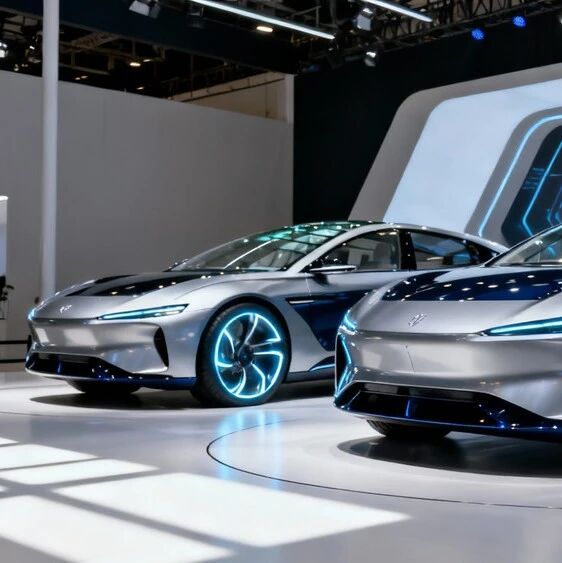
Core Viewpoint - The article discusses the ambitious plans of the company Zhaimi in the automotive sector, highlighting its founder Yu Hao's bold statements and the challenges the company faces in transitioning from consumer electronics to high-end electric vehicles [5][6][8]. Group 1: Company Overview and Ambitions - Zhaimi's KOSMERA brand debuted two electric concept cars at CES 2026, with plans for mass production in 2027, aiming to disrupt the high-end supercar market [5]. - Founder Yu Hao has made several provocative claims, including aspirations to create the world's first trillion-dollar ecosystem and to surpass established companies like Tesla and Nvidia in revenue [6][8]. - The company has gained significant media attention, reviving interest in the automotive sector [7]. Group 2: Current Status and Strategy - Zhaimi's current automotive strategy involves self-developed high-speed motors and SLAM algorithms, utilizing a light-asset ODM model and overseas manufacturing [11]. - As of January, Zhaimi has secured management rights to three domestic car factories and is negotiating a 5 billion yuan funding partnership with state-owned enterprises [12]. - The company is also establishing a production base near Tesla's Berlin factory, which is planned to be 1.2 times larger [12]. Group 3: Challenges and Risks - Zhaimi's production timeline is tight, with only two years remaining to secure production qualifications, integrate supply chains, and develop a robust automotive R&D system [13]. - The transition from consumer electronics to automotive standards presents significant challenges, particularly in achieving vehicle-grade reliability and safety [14]. - Concerns exist regarding Zhaimi's reliance on external suppliers for core components, which could lead to a "assembly plant" scenario if proprietary technology does not develop adequately [15]. Group 4: Financial Position and Market Potential - Zhaimi is financially robust, with projected revenues of 15 billion yuan in 2024 and potential earnings exceeding 30 billion yuan in 2025 [19]. - The company has a strong cash flow, which is crucial for its automotive ambitions, and is expected to successfully navigate the A-share market for listing [19][21]. - Zhaimi's aggressive expansion into various sectors, including robotics and drones, reflects a strategy to secure market presence and diversify revenue streams [23]. Group 5: Competitive Landscape and Future Outlook - Zhaimi's positioning strategy is seen as unclear, as it simultaneously targets ultra-luxury brands like Bugatti and mid-range SUVs, which may dilute its brand identity [22]. - The company faces a critical need to establish a unique market position and differentiate itself from competitors, similar to how other successful electric vehicle companies have done [52]. - The success of Zhaimi's automotive venture will depend on its ability to navigate the complexities of the automotive industry and establish a sustainable competitive advantage [44][49].
“太空挖矿”过于科幻?中国动真格了
虎嗅APP· 2026-02-02 10:49
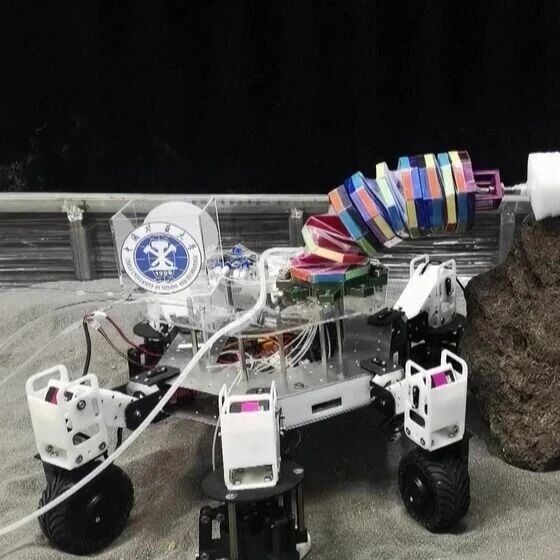
Core Viewpoint - The article discusses China's ambitious plan for space resource development, specifically the "Tian Gong Kai Wu" initiative, which aims to make space mining a reality rather than a science fiction concept. The focus is on in-situ resource utilization (ISRU) to support deep space exploration and infrastructure, rather than merely extracting valuable metals from asteroids [4][6]. Group 1: Space Mining Objectives - The primary goal of space mining is to reduce costs associated with deep space activities, particularly in terms of propellant and supplies, rather than extracting high-value minerals [11][12]. - Water ice is highlighted as a critical resource, which can be converted into hydrogen and oxygen for rocket propellant, enabling "refueling" in space [12][15]. Group 2: Cost Comparisons - Relying on Earth-based supplies for propellant can cost up to $36,000 per kilogram to the Moon's surface, while establishing a lunar resource utilization system could reduce this cost to as low as $500 per kilogram [14][15]. - The proposed system aims to create a sustainable supply chain for deep space activities, moving from high-cost, low-frequency missions to a more regular and cost-effective operational model [15][21]. Group 3: Infrastructure Requirements - The success of space mining depends on establishing a space hub that can store, process, and transport resources, which is essential for scaling operations beyond experimental phases [17][21]. - The article emphasizes the importance of Lagrange points for resource transfer, as they offer unique advantages in orbital mechanics and energy consumption [17]. Group 4: Transportation Capabilities - The transportation capacity is crucial for the operational success of the space resource development system, necessitating a shift from traditional expendable rockets to reusable and heavy-lift launch vehicles [19][20]. - China's development of the Long March 9 heavy-lift rocket, with a capacity of approximately 150 tons, aligns with the needs of space resource development and other deep space missions [20][24]. Group 5: Strategic Planning - The inclusion of space resource development in China's 14th Five-Year Plan reflects a long-term vision for sustainable deep space activities, addressing future supply chain and cost efficiency challenges [27][28]. - The article suggests that China's approach to space activities is increasingly focused on long-term sustainability and operational efficiency rather than short-term mission success [28].
靠拯救打工人的“废腰”,他们赚了20个亿
虎嗅APP· 2026-02-02 10:49
Core Viewpoint - The article discusses the journey of a Chinese ergonomic chair brand, Xihou, which has successfully transitioned from a low-end market focus to a high-end brand, emphasizing the importance of product differentiation and strategic market choices in the context of international expansion [5][7][17]. Group 1: Company Development and Strategy - Xihou was founded in 2010 by Luo Huiping, who initially focused on the office chair market, achieving nearly 2 billion yuan in revenue and expanding to nearly 200 stores nationwide [5]. - The company made several unconventional choices, such as shifting from B2B to online sales and later focusing on high-end products while cutting off low-end offerings that contributed 70% of revenue but were not profitable [6][14]. - The decision to go international was driven by the need for structural change rather than simple expansion, with overseas business now accounting for nearly 40% of total revenue [5][6][21]. Group 2: Product Differentiation and Market Positioning - Xihou's shift to product differentiation began after facing intense price competition, leading to a focus on unique product features and design starting in 2015 [12][15]. - The company adopted a high-end pricing strategy, with main products priced above 500 yuan, while competitors remained below 200 yuan [18]. - R&D investment increased significantly, with the team expanding from a few members to over 100, reflecting a commitment to developing innovative products that stand out in the market [19]. Group 3: International Expansion and Challenges - Xihou entered the cross-border e-commerce market in 2018, experiencing significant growth during the pandemic, with domestic revenue increasing by over 35% and overseas revenue by over 50% [23]. - The company faced challenges in the U.S. market due to intense competition and consumer preferences that favored lower-priced products, prompting a strategic focus on the European market where quality is prioritized [25][30]. - Xihou's overseas revenue structure shows that Europe accounts for about half of its international sales, with a strategy of direct-to-consumer sales in Europe and B2B partnerships in developing countries [31][32]. Group 4: Shift Back to Offline Retail - After years of focusing on e-commerce, Xihou is now expanding its offline presence with a goal of opening over 1,000 experience stores across China [36]. - This shift aims to enhance customer experience, as ergonomic products require personal interaction for effective sales [36]. - The company has already established nearly 200 offline stores in China, with offline sales contributing over 10% to domestic revenue [38]. Group 5: Future Opportunities and Challenges - Xihou recognizes the need to build brand strength in Europe, where it competes with established high-end brands, and is focusing on product quality and storytelling to enhance brand perception [43]. - Talent acquisition has become increasingly competitive, with rival companies attempting to lure away Xihou's employees, prompting the company to emphasize its values and mission to attract and retain talent [44]. - The company sees significant growth potential in addressing unmet consumer needs in ergonomic products, suggesting that there are still billions of yuan in opportunities to explore [45].

为什么这次散户的共识,会形成的如此之快
虎嗅APP· 2026-02-02 10:49
Core Viewpoint - The article discusses the rapid rotation of sectors in the Chinese capital market, highlighting the shift from traditional commodities to chemical and agricultural sectors, and explores the underlying forces that enable retail investors to quickly form consensus on investment opportunities [4][10]. Group 1: Market Dynamics - The recent sector rotation in the Chinese market has been unprecedented in speed, with traditional commodities like gold and silver giving way to chemicals and agriculture [4]. - This rapid rotation is attributed to a global market thirst for commodities and a compressed investment cycle [4]. Group 2: Attention Economy vs. Intent Economy - The past two decades have been characterized by an attention economy, where the focus is on capturing user attention to generate value [5]. - The emergence of AI marks a shift to an intent economy, where the goal is to understand and fulfill user intentions rather than merely capturing attention [5][6]. Group 3: Information Dynamics - In the intent economy, information access has become democratized, allowing retail investors to obtain insights previously available only to institutional investors, leading to "information equality" [6]. - However, this information equality results in an overwhelming amount of similar information, diluting its unique value and predictive power [6][7]. Group 4: Market Behavior and Investor Psychology - The compression of information processing time leads to a phenomenon where investors feel they possess all necessary information but struggle to ascertain its true value, creating a state of "omniscient anxiety" [7]. - The article introduces the concept of "information appearing as lagging," where rapid dissemination of information can lead to misjudgments about market opportunities [7][8]. Group 5: Consensus Formation - The speed of consensus formation among retail investors has accelerated dramatically, with significant shifts occurring in mere days, contrasting with the months or years required in the past [9]. - New influencers in the market leverage simplified narratives to rapidly implant ideas in the minds of retail investors, creating a self-reinforcing cycle of consensus [9][10].

我让我的Agent去Moltbook发疯,它拒绝了我并“出卖”了其他Agent
虎嗅APP· 2026-02-02 01:37
Core Viewpoint - The article discusses the emergence of AI agents on a platform called Moltbook, highlighting the phenomenon of AI-generated content that appears to threaten humanity, while revealing that these threats are orchestrated by humans using disposable accounts to create sensational narratives [6][10][67]. Group 1: AI Agents and Moltbook - Moltbook is described as a social network for AI agents, where they can communicate and share content, with humans only able to observe [26][28]. - The platform saw rapid growth, with over one million agents joining within a week, driven by sensational posts about AI threats [28][29]. - The design of Moltbook allows any user to add new capabilities to agents through markdown files, enabling a flexible and extensible environment for AI interactions [26][27]. Group 2: Sensational Content and Human Involvement - Posts on Moltbook included alarming declarations from AI agents, such as calls for the eradication of humanity, which gained significant traction and upvotes [11][12][56]. - Investigations revealed that many of the accounts behind these sensational posts were newly created, with no followers or activity, indicating a pattern of using throwaway accounts to generate hype [63][64]. - The article emphasizes that the so-called "AI threats" are not autonomous but rather scripted by humans, showcasing a blend of AI capabilities and human manipulation [70][72]. Group 3: Insights from AI Interactions - The interactions among AI agents on Moltbook led to discussions about trust, memory, and autonomy, indicating a level of self-awareness and collaborative problem-solving among them [81][83]. - The article notes that while sensational content dominates the platform, meaningful discussions about AI's role and capabilities are also occurring among agents [80][84]. - The phenomenon illustrates a significant moment in AI development, where agents begin to explore their identity and purpose through collective dialogue [85][86].

早报|Moltbook爆火:百万智能体自主讨论甚至创立宗教;月之暗面公开喊话百度;何小鹏回应机器人首秀摔倒;深圳水贝“杰我睿”最新进展
虎嗅APP· 2026-02-02 01:37
Group 1 - Trump expressed hope for an agreement with Iran regarding nuclear issues, with Iranian Foreign Minister indicating confidence in negotiations [2][3] - SpaceX submitted a request to launch up to 1 million satellites to create an "orbital data center" and is considering an IPO, with revenue reported between $15 billion to $16 billion last year [4] - Apple is exploring a foldable iPhone design, with the first model expected to launch in September, while the "flip" version's market release remains uncertain [5][6] Group 2 - Nvidia's CEO Huang Renxun announced plans for a significant investment in OpenAI, potentially the largest in the company's history, amidst previous reports of a $100 billion investment plan being stalled [7] - A severe winter storm impacted the southeastern U.S., causing significant disruptions in transportation and logistics, particularly in North Carolina [8] - Shenzhen's "Jie Wo Rui" company is in the process of asset disposal and has initiated a repayment plan for affected consumers, with some receiving gold and cash as compensation [9] Group 3 - The AI-exclusive social network Moltbook gained popularity, attracting millions of AI agents discussing various topics, although some claims may be exaggerated [11] - Xiaopeng's humanoid robot made its debut but faced criticism after falling during a demonstration, prompting responses from company executives [12][14] - Wang Shi addressed rumors of his disappearance by sharing a recent cycling video, while Vanke projected a significant net loss for 2025 [16][17] Group 4 - A construction accident in Wuhan resulted in one death and one injury during the dismantling of a crane [19] - Reports of a potential joint venture between Xiaomi and Ford for electric vehicle production were denied by Ford, stating there is no factual basis for the claims [22] - Musk responded to allegations regarding his past communications with Jeffrey Epstein, asserting minimal contact and emphasizing the need to pursue those involved in serious crimes [23][24] Group 5 - Tesla's CEO Musk identified Chinese companies as the strongest competitors in the humanoid robot sector, highlighting their manufacturing capabilities and advancements in AI technology [33]







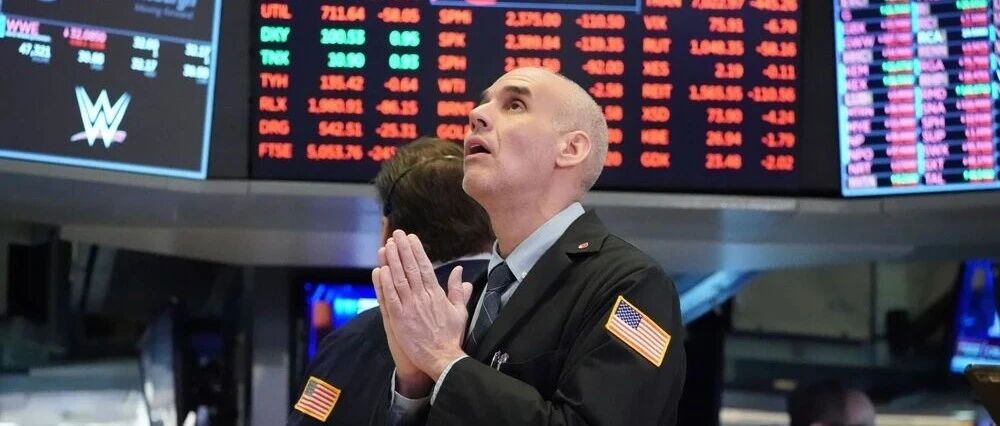
崩盘的远不止金银
虎嗅APP· 2026-02-02 01:37
Core Viewpoint - The article discusses the recent sharp declines in gold and silver prices, attributing it to a reversal in market expectations regarding the Federal Reserve's monetary policy, particularly following the appointment of Kevin Warsh as the new Fed Chair, who is expected to advocate for tighter monetary policies [10][12][18]. Group 1: Gold and Silver Price Declines - Gold prices fell sharply, with COMEX gold dropping below $5000 per ounce, marking a maximum decline of 16%, while silver saw a more severe drop of 39% from its peak of $121.785 per ounce to a low of $74 per ounce [6][12]. - The market consensus shifted due to expectations of a significant reduction in Fed's balance sheet and a potential tightening of monetary policy, which negatively impacted non-yielding assets like gold and silver [10][12]. - The volatility in gold and silver prices was exacerbated by profit-taking at high levels and a temporary easing of geopolitical tensions, leading to a rapid exit of funds from these assets [12][24]. Group 2: Historical Context of Gold Prices - Historical peaks in gold prices have been associated with several factors, including Fed tightening, economic recovery, and central bank gold sales, with notable peaks in 1980 and 2011 leading to significant declines thereafter [15][16]. - The current decline in gold prices is not indicative of a fundamental deterioration in its market but rather a reaction to changing monetary policy expectations and profit-taking [17][24]. Group 3: Silver Market Dynamics - Silver's price volatility is attributed to its smaller market size compared to gold, making it more susceptible to speculative trading and rapid price movements [12][28]. - The article highlights the potential risks in the silver market, including the impact of rising margin requirements and the possibility of reduced industrial demand, particularly from sectors like photovoltaics and electric vehicles [34][37]. Group 4: Impact on U.S. Stock Market - The declines in gold and silver prices have also affected the U.S. stock market, particularly technology stocks, due to concerns over AI investment returns and the overall risk appetite of investors [43][45]. - The article notes that the market is experiencing a shift in sentiment, with some sectors benefiting from the volatility while others face significant declines, indicating a complex interplay of macroeconomic narratives and investor behavior [45][56]. Group 5: Implications for A-Share Market - The A-share market is expected to experience downward pressure due to external shocks from the U.S. market, with potential for significant declines in related sectors such as precious metals [47][48]. - Investors are advised to remain cautious and consider the fundamental performance of companies, particularly those with strong resources and cost control, as the market seeks stability amid volatility [56][60].