虎嗅APP

Search documents
“碗都让机器洗了,那人要干什么呢?”
虎嗅APP· 2026-02-03 13:52
青野有枯荣 . 一个理想主义的宏观研究猿,一个执着文字的时光漫游者。你的宏观指南和思考利器,社科书架与文艺 复兴。 "让我们理解万物,对谈枯荣。" 以下文章来源于青野有枯荣 ,作者青野Tsingyeh 于Moltbook的讨论再次刷屏,有自媒体再度喟叹道"人类只配围观!"——确实得承认,这个标题相 当不错。 普通人的危机是有了,但解法呢?会用AI,显然已经不足以提供个人的庇护所了,大家更关注的 是:如何用AI创造一种小可以养家糊口,大可以撑起一个产业经济模式? 本文来自微信公众号: 青野有枯荣 ,作者:青野Tsingyeh,题图来自:视觉中国 前些日子读到张向荣老师的《 漫长的离职 》一文,很有趣。如果你不知道他是谁,没关系,他是一 个写历史的前银行人。他写的《祥瑞》,我们之前还做过书评。不过,这不是重点。 最近些年,一直有出版业的朋友跟我抱怨说,出版业的寒意总是新年赛旧年,而对于银行人来说,能 够离开一个稳定的收入渠道,而去断然拥抱一个出版和阅读的寒冬,总是需要勇气的事情。而同时, 一个有趣的现象是,银行里面其实出了不少作家。光我能记得的,23年拿了雨果奖的海漄是,作 为"东北文艺复兴"旗手的双雪涛也是。 ...


大厂AI权力交接:90后,集体上位
虎嗅APP· 2026-02-03 13:52
Core Viewpoint - The article discusses the generational shift in leadership within major tech companies in China, particularly in the AI sector, highlighting the rise of younger leaders who are more attuned to the rapid advancements in AI technology and the decline of older executives whose experience is becoming less relevant in this fast-evolving landscape [4][30]. Group 1: Leadership Changes in Major Tech Companies - In major tech firms like Tencent and Alibaba, younger leaders, primarily from the 90s generation, are taking charge of AI initiatives, marking a significant shift in the industry [5][6]. - Tencent has recently appointed young talents such as Yao Shunyu and Pang Tianyu, who are seen as pivotal figures in the company's AI strategy, indicating a departure from traditional leadership models [5][6]. - Alibaba's Lin Junyang, a key figure behind the Qwen model, exemplifies the trend of younger leaders driving innovation and community engagement in AI [20][21]. Group 2: The Value of Experience vs. New Approaches - The article argues that traditional experience in tech is becoming less valuable in the face of new AI paradigms, where intuition and rapid adaptation are more critical than established practices [7][12]. - The "Transformer native generation" of young leaders is characterized by their early exposure to groundbreaking AI research, allowing them to navigate the complexities of modern AI development without the constraints of outdated methodologies [8][11]. - The rapid pace of AI advancements necessitates a shift in decision-making structures within companies, as seen in Tencent's restructuring to allow younger leaders to report directly to top executives [16][18]. Group 3: The Role of Community and Open Source - The younger generation, including leaders like Lin Junyang, understands the importance of community and open-source collaboration in the AI landscape, which contrasts with the more insular approaches of previous generations [20][21]. - The success of models like Qwen is attributed to their strong community engagement, reflecting a shift in competitive strategies within the AI sector [20][21]. Group 4: ByteDance's Unique Approach - ByteDance's strategy differs from Tencent and Alibaba by integrating experienced leaders like Wu Yonghui, who brings a wealth of knowledge from Google, focusing on system-level integration rather than just innovation [22][24]. - This approach highlights ByteDance's need for cohesive integration of AI capabilities across its various platforms, contrasting with the more experimental focus of its competitors [24][25]. Group 5: The Inevitable Power Transition - The transition to younger leadership is framed as a natural evolution driven by the rapid pace of knowledge acquisition in AI, where traditional experience is overshadowed by the need for innovative thinking [27][30]. - The article emphasizes that in the AI era, the ability to adapt and understand new technologies is more crucial than accumulated experience, marking a significant shift in workplace dynamics [31][30].



这场AI竞赛,归根结底是“我们的中国人”对阵“他们的中国人”……
虎嗅APP· 2026-02-03 09:26
Core Insights - The article discusses the competitive landscape of AI talent, highlighting China's dominance in AI talent production, with a 47% share globally compared to the US's 18% [9][26]. - It emphasizes the importance of talent density over computational power in the research phase of AI development, suggesting that the future of AI will be shaped by the concentration of skilled individuals [8][9]. - The article also points out the geographical advantages of China's AI talent clusters, particularly in cities like Beijing, Shanghai, and Shenzhen, which collectively outperform the US's Silicon Valley [14][15][16]. Global AI Talent Landscape - China has established a significant lead in AI talent production, with major clusters in Beijing (16.11%), Shanghai-Hangzhou (14.82%), and the Guangdong-Hong Kong-Macao Greater Bay Area (11.71%) [17][18]. - The article notes that the density of top-tier research labs in Beijing's Haidian District surpasses that of Silicon Valley, indicating a self-reinforcing ecosystem for AI research in China [18][20]. Comparison of Talent Sources - The article highlights that 47% of top AI researchers come from Chinese universities, while only 18% are from US institutions, indicating a strong foundation of talent in China [27]. - It also mentions that approximately 42% of these Chinese talents choose to work in the US, creating a dependency of the US AI industry on Chinese talent [28][30]. Challenges and Opportunities - The article discusses the challenges faced by the US in retaining Chinese talent due to geopolitical tensions and visa restrictions, which may disrupt the flow of skilled individuals [31][32]. - Conversely, it notes a trend of top Chinese talents returning home, with retention rates increasing from 11% in 2019 to 28% in 2022, suggesting a shift in the talent landscape [32]. Regional Dynamics - The article contrasts the industrial maturity of the US, particularly in Silicon Valley, with China's dual-driven model of talent production from both universities and enterprises [20][21]. - It highlights the emergence of Shenzhen and Hangzhou as hubs for applied AI, particularly in robotics and embodied AI, showcasing a different aspect of AI development compared to Beijing's theoretical focus [22][23]. Global AI Competition - The article points out that Europe is lagging in AI talent production, with only 5.35% of global output, primarily due to regulatory challenges and a lack of concentrated talent clusters [34]. - Singapore is noted as a rising player, attracting talent and capital due to its geopolitical positioning, surpassing Europe in AI talent output [36]. Quality vs. Quantity - The article discusses the distinction between quantity and quality in AI research, noting that while the US leads in defining paradigms, China excels in rapid engineering and application [39][41]. - It suggests that as talent density reaches a critical mass, significant breakthroughs in AI research and applications are likely to occur in China [42]. Future Implications - The article concludes that the shift in talent dynamics, combined with China's population base and educational system, positions it favorably in the AI landscape, potentially leading to a new era of competition [52][54].

白银简史:世界为何只允许一个“核心锚”?
虎嗅APP· 2026-02-03 09:26
Core Viewpoint - The article discusses the historical significance of silver as a universal medium of exchange and its gradual marginalization in modern financial systems, ultimately questioning why silver is no longer considered a core asset despite its past importance [3][10][23]. Historical Role of Silver - Silver was once a crucial settlement tool in a world lacking a stable credit system, facilitating trade across regions and serving as a universal measure of value [4][6]. - It was favored for its practical attributes: lower unit value than gold, stability compared to copper and iron, and ease of use in transactions [6][7]. - Silver's advantages included direct settlement capabilities, cross-regional comparability, and independence from the issuer's credit, making it a preferred choice for trade and taxation [7][8]. Transition to Marginalization - The rise of modern nation-states and their economic organization led to a shift in the nature of transactions, requiring centralized resource management and more complex financial operations [11][12]. - Silver's physical form made it difficult to manage and control, limiting its efficiency in resource mobilization and precise fiscal operations [13][14]. - The establishment of the gold standard was more about management choice than inherent superiority, as gold's higher value density allowed for easier centralization [14]. Post-World War II Context - The aftermath of World War II necessitated a unified settlement system, leading to the exclusion of silver from core financial instruments as the world opted for a centralized currency, primarily the US dollar [17][18]. - Silver's historical role in international settlements diminished, and its price became increasingly influenced by industrial demand rather than serving as a stable anchor [18][19]. Modern Usage and Position - In contemporary times, silver is extensively used in high-tech industries, but it is rarely included in central bank reserves, indicating a clear distinction between its industrial demand and its role as a reserve asset [20][21]. - The modern financial system views silver more as a production factor rather than a safe asset, reflecting its position as important but not central in the current economic framework [22][23].

不要外包你的思考
虎嗅APP· 2026-02-03 09:26
Core Viewpoint - The article emphasizes the tendency of market participants to seek certainty rather than truth, leading to a reliance on simplified interpretations of complex situations [4][5][10]. Group 1: Market Behavior and Research Trends - Many market participants have lost the ability to seek and verify information, opting instead for comforting yet potentially misleading interpretations [5][6]. - The trend of outsourcing thought processes has led to a proliferation of content that caters to this need for certainty, often at the expense of genuine understanding [6][9]. - Research has become commoditized, with interpretations of data shifting based on market movements, providing little value for future decision-making [9][10]. Group 2: Content Creation and Consumption - The article critiques the fast-paced content creation culture, where quantity is prioritized over quality, resulting in superficial understanding [12][14]. - It contrasts this with the approach of Acquired, a podcast that focuses on fewer, high-quality episodes, treating each release as an event rather than a routine [12][13]. - The notion of scarcity in content is highlighted, suggesting that valuable insights come from restraint and depth rather than constant output [14][15]. Group 3: Understanding and Learning - The article advocates for a focus on the research process rather than just the conclusions, emphasizing that true understanding comes from engaging deeply with material [11][24]. - It draws attention to the importance of understanding individual decisions in historical contexts, as opposed to relying solely on broad economic theories [19][20]. - The value of enduring the learning process is stressed, as shortcuts may lead to superficial knowledge rather than meaningful insights [23][24].

算一笔经济账:45亿春节红包,能买来多少留存?
虎嗅APP· 2026-02-03 09:26
版面之外 . 以下文章来源于版面之外 ,作者版君 版面之外,才是真相。 本文来自微信公众号: 版面之外 ,作者:版君,编辑:画画,题图来自:AI生成 2026 年春节将成为史上最烧钱的 AI 战场。 先是字节跳动拿下春晚 C 位,紧接着腾讯10亿红包砸向元宝,百度临门一脚宣布拿出5亿,今天阿里 直接加倍,30亿投向春节饭桌上。 到目前为止,这个春节至少有45亿被撒向中国互联网,这场战局已经超出了节日营销的范畴,巨头 的大手笔参战,让2026年春节成为最大规模的AI用户习惯养成实验。 阿里巴巴 (通义千问) :豪掷30 亿,将阿里系的吃喝玩乐生态全量接入,试图用钱买出一个全能入 口。 字节跳动 (豆包、火山引擎) :2026年春晚独家AI云合作伙伴、豆包将深度嵌入晚会互动,凭借豆 包的领先优势占据春晚最佳C位,借全民流量实现 AI 产品的渗透。 腾讯 (元宝) :砸下 10 亿,马化腾亲自督战,试图复制 11 年前微信支付诺曼底登陆的景象,依托 微信社交生态实现 AI 产品的暴力拉新与裂变。 所以,他们选择了最不讲道理的打法:撒钱,用最传统的流量和补贴的互联网打法,强行将 AI 塞入 它们熟悉的春节场景里。 这 ...


早报|SpaceX宣布收购人工智能企业xAI;深圳水贝黄金平台再爆雷;奥迪承认更名A4为A5是错误;腾讯内部信回应元宝红包分享争议
虎嗅APP· 2026-02-03 00:41
Group 1 - SpaceX has announced the acquisition of AI company xAI, which is also under Elon Musk's ownership [2] - Oracle plans to raise $25 billion through bonds related to AI financing, marking the largest financing deal in the U.S. corporate sector this year [4] - CPE Yuanfeng has completed a deal to acquire a controlling stake in Burger King's China operations, injecting $350 million and aiming to expand the number of stores from approximately 1,250 to over 4,000 by 2035 [5] Group 2 - Tesla's humanoid robot is set to begin mass production by the end of 2026, with an expected annual output of 1 million units [8] - Xiaomi's CEO Lei Jun responded to concerns about a decline in car deliveries, explaining that January's figures were affected by the seasonal market and the discontinuation of the first-generation SU7 model [18] - The Shanghai government has initiated a project to purchase second-hand housing for affordable rental housing, targeting new citizens, young people, and graduates [9]



特斯拉,可能得看SpaceX的脸色了
虎嗅APP· 2026-02-03 00:41
Core Viewpoint - There is speculation that SpaceX will go public in 2026, with potential merger discussions with Tesla or AI company xAI, but the IPO will occur after the merger [5][6]. Group 1: Tesla's Market Performance - Tesla's delivery volume has seen a significant decline, with a projected delivery of 1.636 million vehicles in 2025, down 8.6% from 2024 [8]. - The high-end product sales are particularly concerning, with Model S/X deliveries dropping by 40.3% in 2025 [10]. - Tesla has lost its position as the top seller of pure electric vehicles globally, with BYD achieving 2.26 million units sold in 2025, surpassing Tesla by 37.9% [12]. - The decline in sales and market position is expected to have a profound impact on Tesla's valuation, as automotive sales are fundamental to its business [14]. Group 2: Financial Metrics - Tesla's gross profit from vehicle sales has decreased significantly, with a 45.7% drop in gross profit compared to 2022, despite a 32,200 vehicle increase in deliveries [23]. - The net profit for Tesla is projected to fall to $3.86 billion in 2025, only 25.7% of the 2023 figure [25][27]. - Revenue from carbon credit sales is a significant contributor to net profit, accounting for 51.7% of the 2025 net profit, which is expected to decline further due to new regulations [27][28]. Group 3: FSD Revenue and Future Prospects - The Full Self-Driving (FSD) revenue is minimal, constituting only 1.5% of vehicle sales revenue in 2025, raising concerns about its viability as a revenue stream [36]. - The contribution per vehicle from FSD has peaked, with projections showing a decline in revenue per vehicle sold [39]. - Tesla plans to shift entirely to a subscription model for FSD, which may lower barriers to entry but could also impact revenue stability [41][43]. Group 4: Strategic Considerations - The potential merger of SpaceX with Tesla is seen as a strategy to enhance Tesla's valuation amidst declining core business performance [44][48]. - The current financial struggles and the need for innovative revenue streams highlight the urgency for Tesla to adapt its business model to maintain investor confidence [48].

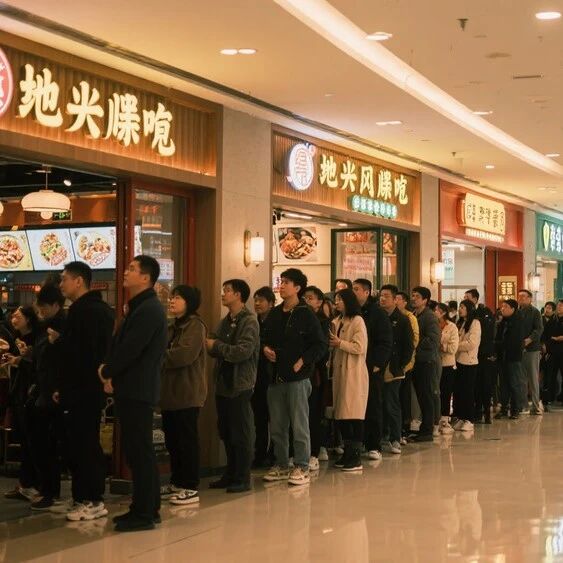
一个商场40家地方菜馆,中餐黄金时代已到来?
虎嗅APP· 2026-02-03 00:41
Core Viewpoint - The article discusses the emergence of local cuisine as a significant trend in the Chinese dining industry, indicating a shift from traditional popular dishes like hot pot and barbecue to a diverse array of regional flavors, suggesting that the golden age of complex Chinese cuisine is approaching [4][5]. Market Trends - In recent years, local dishes have gained popularity, with traditional cuisines such as Sichuan, Cantonese, and Hunan exceeding a market size of 100 billion yuan, while previously niche cuisines like Yunnan and Jiangxi are rapidly expanding nationwide [7]. - For instance, at Nanjing Deji Plaza, local cuisine accounts for nearly 25% of the 60+ dining establishments, showcasing a significant presence of various regional flavors [7]. - In Shanghai's Longemont City Life Center, local cuisine brands make up over 40 of the nearly 200 dining options, indicating a strong market trend [8]. Growth of Local Cuisine - The rise of local cuisine is characterized by a surge in brand expansion, with Jiangxi small stir-fry restaurants projected to exceed 20,000 locations by December 2025, and a 287.5% year-on-year increase in related business registrations [11]. - The popularity of Guizhou sour soup has recently driven the growth of Yunnan and Guizhou cuisines, leading to the emergence of numerous chain brands [12]. Competitive Landscape - The local cuisine sector is experiencing a "battle" for market share, with various regional cuisines like Fujian, Hunan, and Guangxi also beginning to show explosive growth [12]. - The competitive environment is shifting, with local cuisines offering unique flavors and dining experiences that differentiate them from more easily replicable dining options like hot pot and fast food [19]. Consumer Demand - The demand for local cuisine is driven by consumers seeking fresh, differentiated dining experiences, as traditional chain restaurants face saturation and declining growth rates [17][19]. - Local dishes cater to specific dining occasions such as business gatherings and family celebrations, which require a higher quality of environment and food variety [23]. Operational Challenges - The complexity of local cuisine operations presents higher entry barriers, requiring significant investment in quality control and skilled labor, making it difficult for new entrants to replicate successful models [21]. - Successful local cuisine brands often adopt a direct management model, ensuring quality and consistency across locations, which necessitates a higher initial investment and longer return periods [21]. Strategic Recommendations - Companies should focus on strengthening individual store performance rather than rapid expansion, emphasizing the importance of maintaining flavor and customer loyalty [25][28]. - Establishing a robust supply chain is crucial for ensuring the quality of ingredients, which is vital for the success of local cuisine [26][27]. - Brands should leverage membership programs and localized marketing strategies to enhance customer retention and engagement [28].
AI眼镜能把Meta从元宇宙的坑里拉出来吗?
虎嗅APP· 2026-02-02 14:19
Core Insights - Meta is shifting its focus from the metaverse to AI hardware, as evidenced by its recent announcement of the "AI Glasses Impact Grants" program, which aims to support over 30 organizations with nearly $2 million in funding to promote the application of AI glasses across various sectors [2] - The company's fourth-quarter financial results for FY2025 showed significant growth, with revenue reaching $598.93 billion, a 24% increase year-over-year, and net profit of $227.68 billion, up 9% [3][4] - Meta's advertising revenue remains a crucial pillar, with social media platforms generating $581.37 billion in ad revenue, accounting for 97.07% of total revenue, driven by user growth and enhanced AI capabilities [6][8] Financial Performance - In Q4 FY2025, Meta's active user count reached 3.58 billion, a 7% increase year-over-year, while average revenue per user (ARPU) rose to $16.73, up 16% [4] - The company expects Q1 FY2026 revenue to be between $53.5 billion and $56.5 billion, exceeding market expectations of $51.4 billion [4] - Meta's capital expenditures for FY2026 are projected to be between $135 billion and $150 billion, nearly double the previous year's figures, indicating strong investor confidence [5] AI and Advertising - Meta's advertising business is experiencing robust growth, with a 25% year-over-year increase in revenue from its suite of applications, including Instagram and Facebook [6] - AI investments have optimized ad targeting and recommendation systems, leading to an 18% increase in ad impressions and a 6% rise in average ad pricing [7][8] - The introduction of AI-driven models has improved ad conversion rates across platforms, positioning Meta as a leader in leveraging AI for advertising [8] Challenges in AI Development - Meta's flagship AI model, Llama4, faced criticism for alleged performance manipulation, leading to a decline in the company's standing in the AI community [9][11] - The company is undergoing a restructuring of its AI division, with significant R&D spending projected to reach $162 billion to $169 billion in FY2026 [11][12] Metaverse Business Struggles - The Reality Labs division, responsible for Meta's metaverse initiatives, reported a revenue decline of 12% in Q4 FY2025, with operating losses increasing to $6.02 billion [14][15] - Meta has acknowledged the need to pivot resources from the metaverse to AI and wearable technology, evidenced by recent layoffs and the closure of several VR game studios [16][17] - The company is focusing on the success of its AI-enabled smart glasses, which have reportedly seen a threefold increase in sales, indicating a strategic shift towards more profitable ventures [17]