高工锂电

Search documents
巴掌大的传感器,如何守住动力电池焊接“生命线”?
高工锂电· 2025-07-21 10:37
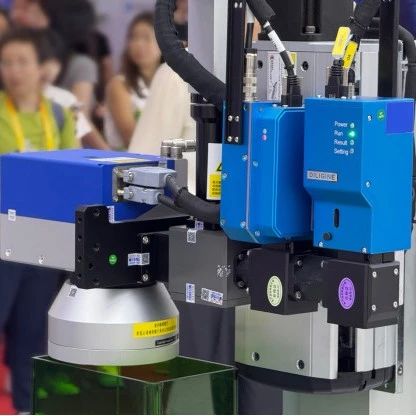
Core Viewpoint - The article highlights the significance of laser welding technology in the precision manufacturing of power batteries, emphasizing the need for comprehensive quality control systems that integrate AI for real-time monitoring and defect detection [1][3][21]. Group 1: Laser Welding Technology - Laser welding is a critical process in the manufacturing of power battery components, where even minor defects can lead to safety hazards [2][3]. - The quality control technology in laser welding is becoming a competitive battleground within the industry [3][10]. - The laser welding online monitoring system showcased by the company at the Chain Expo demonstrates a full-process quality control capability, from pre-welding control to in-welding monitoring and AI decision-making [1][4]. Group 2: Company Innovations - The company presented its laser focus measurement device (LFS) and laser welding defect detection device (WDD) at the Chain Expo, which significantly enhance the yield and stability of the welding process [6][7]. - The LFS achieves a precision of ten micrometers and can adjust the focus in real-time, while the WDD utilizes optoelectronic sensing technology for immediate defect detection and production line correction [8][11]. - The company has developed AI-integrated detection technology that combines optical detection with proprietary AI algorithms, marking a core breakthrough in their patented technology [9][21]. Group 3: AI Integration - The integration of AI in laser welding detection is transitioning from passive detection to proactive prevention, with features like AI Overkill Reduction (AIOR) and AI Fault Diagnosis (AIFA) being implemented in top-tier production lines [15][16]. - AIOR reduces the overkill rate by 50%, allowing previously misclassified good parts to remain in production, thus enhancing efficiency and economic benefits [16]. - AIFA functions as a monitoring system that analyzes quality signal trends to preemptively detect anomalies in processing parameters, enabling real-time adjustments to improve yield [17][19]. Group 4: Industry Impact - The company's advancements reflect a broader trend in the lithium battery manufacturing sector, moving towards a "zero-defect" goal through digital twin technology that creates traceable quality data for each weld point [20][21]. - The development of a comprehensive detection system not only fills a domestic technological gap but also positions the company at an international standard, indicating a shift towards a new era of quality competition in the lithium battery industry [21].

人形机器人爆发,电池企业停止观望
高工锂电· 2025-07-21 10:37
Core Viewpoint - The core challenges for humanoid robot power batteries are stringent technical requirements and an unbalanced economic equation, which hinder deeper collaboration between battery manufacturers and humanoid robot companies [1][2]. Group 1: Market Trends and Growth - Humanoid robots are expected to see significant market growth, with the Chinese market projected to reach 21.58 billion yuan in 2024 and nearly 380 billion yuan by 2030, reflecting a compound annual growth rate of over 61% [9]. - The demand for batteries in the robotics sector is anticipated to grow from 2 GWh in 2025 to 100 GWh by 2030, indicating a rapid increase in battery needs as the humanoid robot market approaches a breakout phase [10]. Group 2: Technical Requirements for Batteries - Humanoid robots require high energy density, high discharge rates, safety, wide temperature adaptability, and cost-effectiveness from their power batteries to effectively replace human labor [3][4][5]. - Current battery solutions primarily utilize 18/21 series cylindrical batteries, achieving energy densities of 240-300 Wh/kg and maintaining discharge rates of 3-5C, which are deemed sufficient under current material and design standards [6]. Group 3: Collaboration and Innovation in Battery Technology - Battery companies are beginning to prioritize the humanoid robot sector, with solid-state batteries emerging as a potential new collaboration opportunity [8]. - New battery technologies, such as semi-solid and solid-state batteries, are maturing and may provide battery manufacturers with a competitive edge in the humanoid robot market [10][11]. - Companies like Envision AESC and Gotion High-Tech are actively developing solid-state battery technologies, with advancements in energy density and performance expected to support the needs of humanoid robots [11].

H1探获超3000万吨锂矿,中国“锂焦虑”迎战略破局
高工锂电· 2025-07-20 12:11
摘要 湖南 鸡脚山探明碳酸锂当量超过Greenbush 2025 年,中国公布的一系列锂矿勘探成果,正从根本上改写其在全球锂资源格局中的地位。 自然资源部在年初宣布,国内新增锂资源量超 3000 万吨 、 覆盖 辉石型、盐湖型、锂云母型 三 种类型 ,使中国锂资源储量占全球的比重从 6% 跃升至 16.5% ,排名升至世界第二。 这一宏观数据 揭示后 , 国内又进一步迎来了 数个世界级矿藏的发现。 在湖南省南部的临武县,鸡脚山矿区已探明一座超大型锂矿。根据湖南省自然资源厅 7 月公布的数 据,该矿区拥有 4.9 亿吨矿石量, 其中 氧化锂资源量达 131.35 万吨。按标准系数折算, 这相当 于超过 324 万吨碳酸锂当量。 其开发商大中矿业已启动采、选、冶一体化项目建设,规划年产 8 万吨碳酸锂, 一期项目预计 2026 年投产。 与此同时,在数千公里外的四川省马尔康市,加达锂矿的勘探也取得重大进展。截至今年 2 月,其 首采区探明氧化锂资源量约 23 万吨, 折合碳酸锂当量约 60.4 万吨。 该储量已在 6 月通过国家 评审备案,预计首期产能将在 2026 至 2027 年间释放。 这些新发现的规模极具 ...

锂电行业“反内卷”:从价格厮杀走向“理性繁荣
高工锂电· 2025-07-20 12:11
Core Viewpoint - The "anti-involution" policy is reshaping market expectations and is seen as a 2.0 version of China's supply-side reform, particularly impacting emerging industries like lithium batteries, photovoltaics, and electric vehicles [2][3]. Group 1: Industry Overview - The lithium battery industry has experienced explosive growth over the past decade, with total production reaching 1170 GWh and industry output exceeding 1.2 trillion yuan in 2022, compared to just 29.868 GWh in 2014 [8]. - Despite significant growth, the industry faces challenges as rapid physical growth has not translated into corporate profits, with many companies selling inventory at prices just covering raw material costs [9][10]. - The lithium battery sector holds over 70% of the global market share, yet it is engaged in "bottom competition" internationally, leading to a decline in average prices [10]. Group 2: Policy and Legislative Changes - The "anti-involution" initiative has moved towards legislative depth, with new laws targeting price stability and fair trading conditions, including the prohibition of selling below cost [4]. - The government is addressing issues of homogeneous capacity caused by chaotic investment practices, emphasizing the need for transparent investment disclosures [5]. Group 3: Market Dynamics and Challenges - The industry is experiencing a price war, with over 30 car manufacturers reducing prices to clear inventory, leading to a significant drop in profit margins within the automotive sector [13]. - The lithium price has been on a downward trend since late 2022, with expectations of continued oversupply in the market, affecting upstream material suppliers [14]. Group 4: Future Directions and Innovations - The "anti-involution" marks a critical turning point for the lithium battery industry, focusing on the elimination of outdated capacity and driving technological upgrades [16][17]. - New investment trends are emerging, with a focus on battery recycling and solid-state batteries, indicating a shift towards a circular economy and technological innovation [20]. - Companies are increasingly investing in high-pressure lithium iron phosphate batteries, which are expected to enhance profit margins and meet rising demand for fast-charging solutions [21].

2025H1:新能源汽车增速超四成,动力电池装车量近300GWh
高工锂电· 2025-07-19 09:41
Core Viewpoint - The Chinese new energy vehicle (NEV) industry demonstrated robust growth in the first half of 2025, with production and sales reaching approximately 7 million units, reflecting year-on-year increases of 41.4% and 40.3% respectively, and a market penetration rate of 44.3% [2] Group 1: Market Performance - In the first half of 2025, domestic sales of NEVs reached about 5.88 million units, a year-on-year growth of 35.5%, while exports surged to 1.06 million units, marking a staggering increase of 75.2% [2] - The dual-driven demand from both domestic and international markets indicates a strong resilience and competitive edge of the Chinese NEV industry on a global scale [2] Group 2: Battery Industry Growth - The NEV market expansion has significantly boosted the power battery industry, with cumulative production of batteries reaching approximately 697 GWh, a year-on-year increase of 60.4%, and sales hitting about 659 GWh, up 63.3% [3] - Power batteries accounted for 485.5 GWh of the total sales, representing 73.7% of the market, with a year-on-year growth of 51.6% [3] Group 3: Structural Changes in Battery Installation - The commercial vehicle segment emerged as a surprising growth highlight, with domestic sales of new energy commercial vehicles reaching 354,000 units, a year-on-year increase of 55.9%, and exports of 49,000 units, which skyrocketed by 230% [4] - The demand for power batteries in commercial vehicles is driven by the dual push from the logistics industry's low-carbon transition and urban public transport electrification policies [4] - The trend of battery type differentiation is intensifying, with lithium iron phosphate batteries accounting for 81.4% of total installations, growing by 73% year-on-year, while ternary batteries saw a decline of 10.8% [4][5] Group 4: Export Performance and Globalization - Plug-in hybrid vehicle exports reached 390,000 units, a remarkable year-on-year increase of 210%, significantly outpacing the growth of pure electric vehicles [5] - The global demand for transitional electrification solutions, particularly in Europe, is driving the growth of plug-in hybrid models, presenting differentiated growth opportunities for supporting battery companies [5] - Cumulative exports of power and other batteries reached 127.3 GWh, a year-on-year increase of 56.8%, with power battery exports at 81.6 GWh, accounting for 64.1% of total exports, and growing by 26.5% [5] Group 5: Overall Industry Outlook - The collaborative growth of the NEV and power battery industries in the first half of 2025 is a result of technological advancements and market maturation, benefiting from the global energy transition [6] - The industry must remain vigilant against potential risks such as overcapacity and raw material price fluctuations, while continuing to innovate in emerging battery technologies like solid-state and sodium-ion batteries [7]
2025锂电IPO迎来“A+H”潮
高工锂电· 2025-07-19 09:41
Core Viewpoint - The lithium battery industry chain is collectively shifting towards the Hong Kong stock market, driven by multiple logics including "capital internationalization, breaking through internal competition, and capacity going overseas" [1][3]. Group 1: IPO Trends - In the first half of 2025, multiple companies in the lithium battery sector have initiated their IPO processes, with 240 companies submitting applications in Hong Kong, including successful listings like CATL, which achieved a market value of 1.3 trillion yuan, marking the largest global IPO in the first half of the year [2]. - The trend of "A+H" dual listings is on the rise, with companies like EVE Energy and Xinwangda announcing their intentions to list in Hong Kong, following the footsteps of previously listed companies such as BYD and Contemporary Amperex Technology [2][4]. Group 2: Market Dynamics - The lithium battery industry is experiencing a reshuffle, with a mismatch in supply and demand leading to a rapid decline in battery prices, which in turn pressures the profits of industry players. Larger companies are looking to raise funds through IPOs to enhance technology and market share [5]. - The successful listing of Haibo Technology aims to expand into international markets to improve its revenue structure and gross margins, amidst intense price competition in the domestic market [6]. Group 3: Internationalization and Capacity Expansion - The shift towards Hong Kong is also motivated by the need for lithium battery companies to attract overseas capital and enhance their financing capabilities for international market expansion. Companies like EVE Energy and CATL are focusing on overseas projects in Hungary and Malaysia, with significant portions of their IPO funds allocated for these developments [10][11]. - The postponement of the EU Battery Regulation provides a window for Chinese lithium battery companies to establish a stronger presence in the European market, which is expected to become the second-largest lithium battery market globally [10]. Group 4: Supporting Industries - Several leading material companies are also expanding their overseas production capacities, such as Rongbai Technology's planned production base in Poland and Tianci Materials' investment in Morocco [11]. - The collective movement of major players in the lithium battery supply chain towards Hong Kong indicates a new competitive landscape for the industry as it seeks to enhance its international footprint [12].


头部车企减产冲击:磷酸铁锂电池增速罕见落后于三元
高工锂电· 2025-07-18 10:08
Core Viewpoint - The lithium battery industry is entering a new round of capital expenditure amidst unclear demand signals, with a notable shift in production dynamics between lithium iron phosphate (LFP) and ternary batteries, indicating a demand "window" in the industry [1][3]. Group 1: Industry Dynamics - Since May 2025, the production growth rate of LFP batteries has fallen below that of ternary batteries, a rare occurrence that highlights a demand "window" in the industry [1]. - Major automotive and battery manufacturers have reported significant production cuts and slowed capacity expansion from May to July, reflecting strategic adjustments in response to market pressures [1][2]. - Some leading automotive companies may only achieve less than 40% of their annual sales targets in the first half of 2025, leading to downward revisions in sales forecasts [1]. Group 2: Price Trends - In the first and second quarters of 2025, the price of LFP batteries has decreased more than that of ternary batteries, with the second quarter's decline exceeding the average decline for all of 2024 [3]. - The price of LFP cathode materials dropped approximately 10% in the second quarter, marking the largest decline among major materials [3]. - The prices of LFP electrolytes have also fallen for two consecutive quarters, with declines greater than those of ternary electrolytes [4]. Group 3: Demand Challenges - A global demand gap has emerged, largely due to "advance overdraft" effects from previous surges in demand, particularly driven by U.S. tariff policies and the "Inflation Reduction Act" [6]. - In the first five months of 2025, exports of energy storage batteries from China to the U.S. saw a year-on-year growth exceeding 2000% [6]. - Concerns about the sustainability of demand are heightened by uncertainties surrounding domestic "trade-in" policies and the slowing growth of electrification [7]. Group 4: Capital Expenditure Trends - Despite cautious demand sentiment, a new round of capital expenditure is beginning in the industry, with improved capacity utilization rates in the first half of 2025 compared to the same periods in 2023 and 2024 [7]. - Capital expenditures for industry leaders like CATL have increased by over 40% year-on-year in the first quarter of 2025, with certain materials seeing a shift from negative to positive capital expenditure [7]. - Major battery equipment suppliers expect new orders to grow by over 45% in 2025, reversing the downward trend seen in 2023 and 2024 [7]. Group 5: Strategic Shifts - CATL is focusing on long-term strategies, including advancements in energy storage technology and transitioning from a pure manufacturer to an energy system operator [8]. - The industry faces a dilemma of prolonged capacity clearing and demand gaps while simultaneously entering a new capital competition [9]. - The parallel of "clearing" and "investment" complicates the industry's ability to establish clear expectations for price and profit recovery, emphasizing the importance of demand certainty [9].
孚能科技斩获10亿美元eVTOL订单独家配套
高工锂电· 2025-07-18 10:08
Core Viewpoint - The UAE company Autocraft has signed a significant procurement agreement with Chinese eVTOL manufacturer TCab to purchase 350 E20 eVTOLs for a total amount of $1 billion, aiming to promote low-altitude tourism and air travel in the Middle East and North Africa [1][6] Group 1: Procurement Agreement - Autocraft's order of 350 E20 eVTOLs represents a major step for Chinese high-end manufacturing in international markets, highlighting the importance of battery technology in the eVTOL industry [1][6] - The deal positions Funeng Technology as the exclusive supplier of the second-generation semi-solid state batteries for the E20 model, emphasizing the critical role of battery technology [1][6] Group 2: Battery Technology - Funeng Technology's second-generation semi-solid state battery has an energy density of 330-350 Wh/kg and a cycle life exceeding 4000 times, which could support over 1000 kilometers of range in passenger vehicles [2][6] - The eVTOL industry faces challenges in battery selection, with manufacturers exploring dual technology routes to meet varying energy density needs [3][6] - The soft-pack battery format allows for higher energy density chemical systems, particularly beneficial for accommodating high silicon and lithium metal anode expansion [4][6] Group 3: Market Implications - The successful procurement signals a breakthrough in safety for semi-solid state soft-pack batteries, which have previously faced safety concerns with traditional liquid electrolytes [5][6] - The commercial value of the order is significant, with battery costs typically accounting for around 40% of the eVTOL's total value, potentially generating over 2.5 billion RMB in contracts for Funeng Technology [5][6] - The eVTOL market is becoming increasingly competitive, with companies like Joby Aviation expanding production capabilities to launch air taxi services by 2026 [6]

透视美国征收93.5%石墨反倾销关税
高工锂电· 2025-07-18 10:08
Core Viewpoint - The article discusses the ongoing trade tensions between the U.S. and China regarding graphite used in lithium battery anodes, highlighting the U.S. Department of Commerce's preliminary anti-dumping duty of 93.5% on imported anode graphite from China, which could lead to a total estimated tariff of around 160% by December 5 [1][2][5]. Group 1: Trade Dynamics - The trade conflict over graphite mirrors the previous tensions over rare earth elements, characterized by a short-term "hit and talk" approach and a long-term structural confrontation [2]. - Both graphite and rare earths are strategic resources for emerging industries, with overlapping applications in sectors such as new energy, aerospace, and military [2]. - The U.S. heavily relies on imports for both graphite and rare earths, with 100% dependence on natural graphite and 90% on spherical graphite, primarily sourced from China [6]. Group 2: Tariff Implications - The anti-dumping tax applies to all anode-grade graphite materials meeting a carbon content requirement of at least 90%, covering natural, synthetic, and mixed forms [3][4]. - The U.S. producers, represented by the American Anode Materials Producers (AAAMP), argue that the current 25% tariff is insufficient to counteract the alleged dumping practices by Chinese suppliers, with claims of dumping margins as high as 920% [5][6]. Group 3: Industry Reactions - The imposition of tariffs has faced opposition from the U.S. electric vehicle industry, including companies like Tesla and Panasonic, due to potential increases in battery costs [7]. - The tariffs are seen as part of a broader strategy that intertwines trade policy with macroeconomic and geopolitical considerations, aiming to elevate the price of Chinese battery products to align more closely with U.S. or allied nations' products [7]. Group 4: Globalization Challenges - The uncertainty surrounding globalization is increasing, with implications for China's lithium battery industry and its international expansion strategies [8].

每日速递 | 追觅科技入局充电宝,目前处于前期规划阶段
高工锂电· 2025-07-18 10:08
Battery - Chasing Technology is entering the power bank market, utilizing solid-state battery technology [2] - The company is currently in the early planning stage for its power bank business and aims to provide safe and efficient charging solutions if the product meets market demand [2] Tesla - Tesla has officially launched the Model Y L, targeting the six-seat vehicle market, with a price expected around 400,000 yuan [4] - The Model Y L features dual motors with maximum power outputs of 142 kW and 198 kW, and is equipped with a lithium-ion battery produced by LG Energy [4] Sichuan Saike Power - Sichuan Saike Power's Yibin base has made significant progress with the installation of production equipment, aiming for production by October 2025 [6] - The base's core products have high energy density (>300 Wh/kg) and are certified for supply to leading electric aviation companies, with plans for applications in robotics and new energy vehicles [8] Materials - An international standard for silicon-based anode materials for lithium-ion batteries has been officially released, marking a significant milestone in the industry [10] - Safian has established a project in Hunan for high-safety coated separators, expected to be operational by Q4 this year, focusing on solid-state electrolyte applications [12] - Wanrun New Energy has terminated a 5 billion yuan investment project due to market conditions and internal resource optimization [14][15] Overseas - The U.S. Department of Commerce has preliminarily ruled to impose a 93.5% anti-dumping duty on high-purity graphite from China, potentially increasing battery prices significantly [16][17] - CATL has secured a framework supply agreement with Vanda RE for up to 2.2 GWh of battery storage systems in Indonesia, contributing to one of Southeast Asia's largest solar-storage projects [19]