
GEELY AUTO(00175)

Search documents
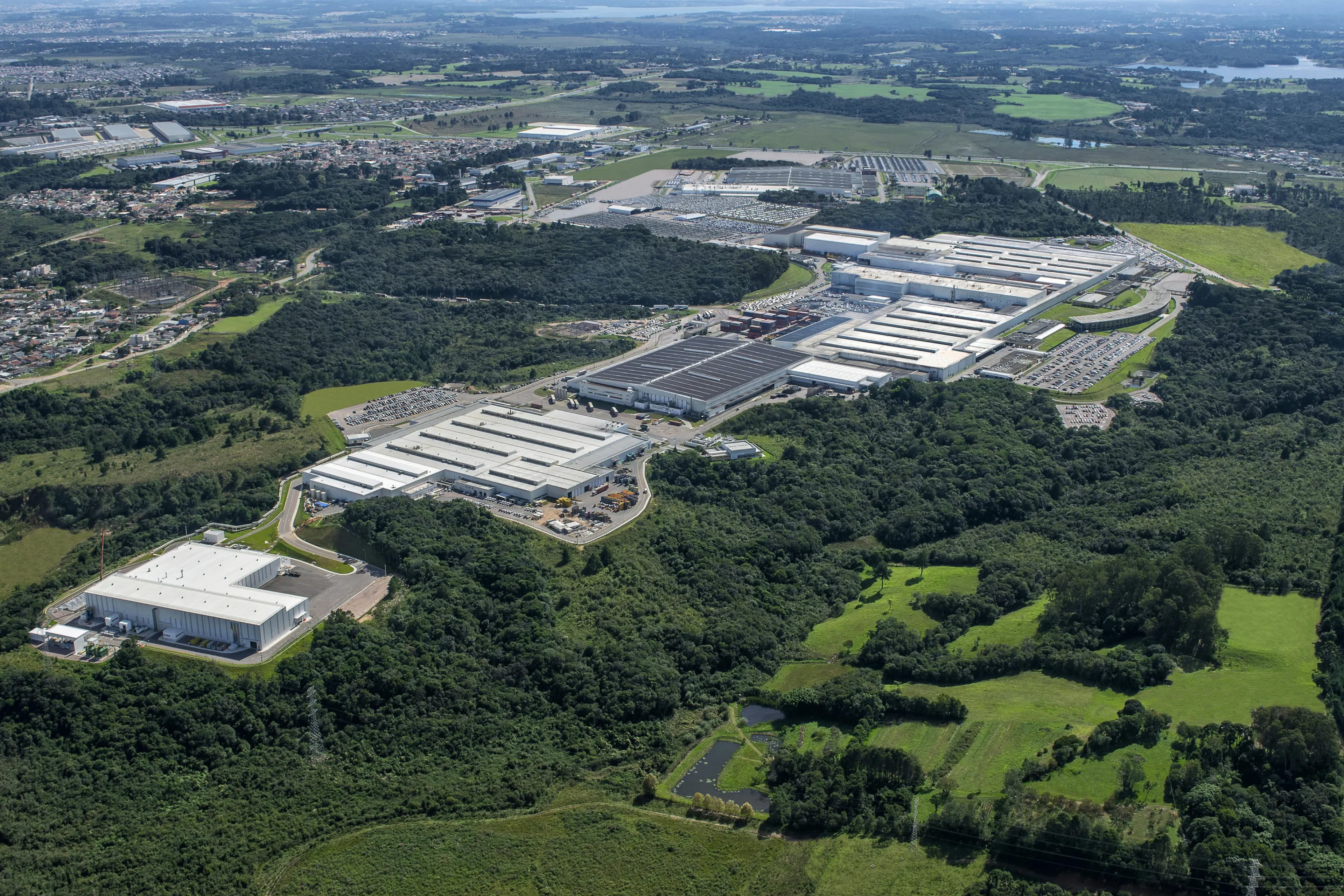
吉利将收购雷诺巴西公司26.4%的股份
Cai Jing Wang· 2025-11-03 23:04
Core Viewpoint - Geely Holding Group and Renault Group have signed a final strategic cooperation agreement to enhance collaboration in the production and sales of new energy vehicles in Brazil [1] Group 1: Strategic Partnership - Geely will acquire 26.4% of Renault do Brasil, while Renault will maintain its status as the controlling shareholder and consolidate financial statements [1] - As a minority shareholder, Geely will share Renault do Brasil's factory capacity and market network, facilitating expansion in the Latin American automotive market [1] Group 2: Product Distribution - Renault do Brasil will serve as the distributor for Geely's new energy vehicle products in Brazil [1] - Geely's electric SUV model EX5 will be sold through Renault's brand dealership network across the country [1]
收购部分雷诺巴西股权 吉利再补海外拼图
Bei Jing Shang Bao· 2025-11-03 16:24
Core Viewpoint - Geely Holdings Group and Renault Group have signed a strategic cooperation agreement to enhance their overseas expansion, particularly in the Brazilian market, focusing on electric vehicles and leveraging each other's strengths in production and sales [1][2][3]. Group 1: Strategic Cooperation - Geely has acquired a 26.4% stake in Renault Brazil, allowing it to share production capacity and market networks, while Renault remains the controlling shareholder [1]. - The partnership will enable Renault to utilize advanced new energy technologies from Geely to expand its product line and meet the growing demand for electric vehicles in Brazil [2]. - This collaboration marks a significant milestone following previous joint ventures and agreements between Geely and Renault, indicating a deepening relationship [3]. Group 2: Market Expansion - The Brazilian market is seen as a new growth opportunity for Chinese automakers, with electric and hybrid vehicle sales exceeding 170,000 units last year, reflecting an 85% year-on-year increase [3]. - Other Chinese automakers, such as BYD and Great Wall Motors, are also expanding their presence in Brazil, indicating a trend of Chinese companies moving towards direct production in overseas markets [3]. - The collaboration with Renault is part of Geely's long-term strategy to internationalize its products and enhance competitiveness in the global automotive market [2][3].
零跑八连冠 理想降四成 长城前十月销量完成率不足三成 车企年末冲刺各显神通
Guo Ji Jin Rong Bao· 2025-11-03 15:50
Group 1: New Energy Vehicle Sales Performance - In October, Li Auto's sales dropped to 32,000 units, a nearly 40% year-on-year decline, following a recall of over 10,000 units of the 2024 Li MEGA model due to safety concerns [2] - NIO delivered 40,400 vehicles in October, marking a 92.59% year-on-year increase, with the new ES8 contributing significantly to this growth [2] - Xpeng Motors achieved a record high of 42,000 deliveries in October, with a cumulative total of 355,000 units from January to October, reflecting a 190% year-on-year growth [2] - Leap Motor led the new energy vehicle segment with 71,000 deliveries in October, a remarkable 84% increase compared to the same month last year [1] Group 2: Traditional Automakers' Performance - BYD sold 442,000 new energy vehicles in October, showing an 11.5% month-on-month increase, although the growth rate is slowing [3] - Geely achieved sales of 307,100 vehicles in October, with a 12% month-on-month increase and a 35% year-on-year increase, marking its first month surpassing 300,000 units [4] - Chery Group reported total sales of 281,000 vehicles in October, with new energy vehicle sales exceeding 110,000 units, a historical high with a 54.7% year-on-year growth [4] Group 3: Market Trends and Future Outlook - Leap Motor's chairman expressed confidence in significant sales growth in 2026, with a strategic plan in place for the next five years [1] - The automotive industry is entering a competitive phase as companies prepare for the final two months of the year, with many aiming to meet their annual sales targets [5] - Changan Automobile reported total sales of 278,000 vehicles in October, with new energy vehicle sales reaching 119,000 units, a 36% year-on-year increase [5]



ST朗源(300175.SZ):大股东新疆尚龙及王贵美签署《股份转让协议》并放弃表决权

Ge Long Hui A P P· 2025-11-03 12:16
Core Viewpoint - The equity change of ST Langyuan is due to the share transfer agreement signed between major shareholder Xinjiang Shanglong and Wang Guimei, resulting in a transfer of 68,334,266 shares, accounting for 14.51% of the total share capital [1] Summary by Sections Share Transfer Details - Xinjiang Shanglong will transfer 52,800,000 shares (11.21% of total shares) and Wang Guimei will transfer 15,534,266 shares (3.30% of total shares) to Hangzhou Dongfang Xingzhi Equity Investment Fund [1] - The transfer price is approximately 5.31 yuan per share, totaling 362,862,500 yuan for the transaction [1] Voting Rights - Wang Guimei voluntarily and irrevocably waives voting rights for the remaining 44,418,694 shares (9.43% of total shares) after the transfer, effective for 18 months from the date of transfer completion [1] - The voting rights delegation agreement signed on April 30, 2024, will remain in effect until the transfer is completed, after which Wang Guimei's voting rights will automatically terminate [1] Control and Shareholder Structure - The equity change will not result in a change of the controlling shareholder or actual controller of the company, with Dongfang Xingzhi remaining the controlling shareholder and Zhao Zheng as the actual controller [1] - Following the completion of the share transfer, Zhao Zheng, Wang Guimei, Qi Yongmao, and Xinjiang Shanglong will terminate their concerted action relationship [1]
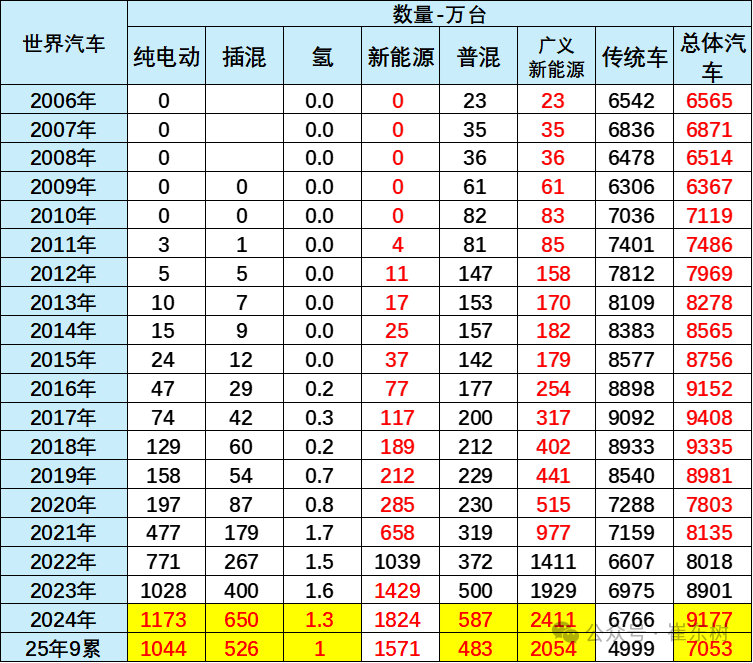
崔东树:2025年1-9月中国占世界新能源车份额68%
智通财经网· 2025-11-03 11:54
Global New Energy Vehicle Trends - In the first nine months of 2025, global new energy vehicle sales reached 1.571 million units, contributing to 29.2% of total vehicle sales, an increase of 2.9 percentage points compared to the entire year of 2024 [2][5] - The penetration rate of new energy vehicles globally is on a rapid rise, reaching 24.5% in the third quarter of 2025, up from 19.5% in 2024 [26][24] - China accounted for 68% of the global increase in new energy vehicles in the first nine months of 2025, while Germany and the United States contributed 5% and 4% respectively [1][27] Market Performance - In 2025, the global automotive market is projected to reach 70.53 million units, with new energy vehicles making up 1.571 million units [2][5] - The share of pure electric vehicles in new energy vehicles reached 14.8%, while plug-in hybrids accounted for 7.5% in the first nine months of 2025 [5][28] - The global new energy vehicle market is expected to continue its upward trajectory, with significant growth observed from 2021 to 2024 [8][10] Regional Insights - By September 2025, China's new energy vehicle penetration rate reached 46%, significantly higher than Germany's 27%, Norway's 80%, the UK's 32%, the US's 13%, and Japan's 2% [26][1] - The European new energy vehicle market is stabilizing, with a share of 17% in the global market as of September 2025, remaining relatively unchanged from the previous year [29][28] - The US new energy vehicle market showed improvement, with sales reaching 1.24 million units in the first nine months of 2025, marking a 16% increase [21][20] Competitive Landscape - Chinese brands have seen a significant increase in their share of the overseas new energy vehicle market, rising from 1.8% in 2021 to 14.5% by September 2025 [15][27] - The contribution of Chinese new energy vehicles to global sales is expected to remain dominant, with projections indicating a continued strong performance in the coming years [1][29] - The disparity in new energy vehicle development across regions highlights the varying levels of government support and market maturity [26][24]



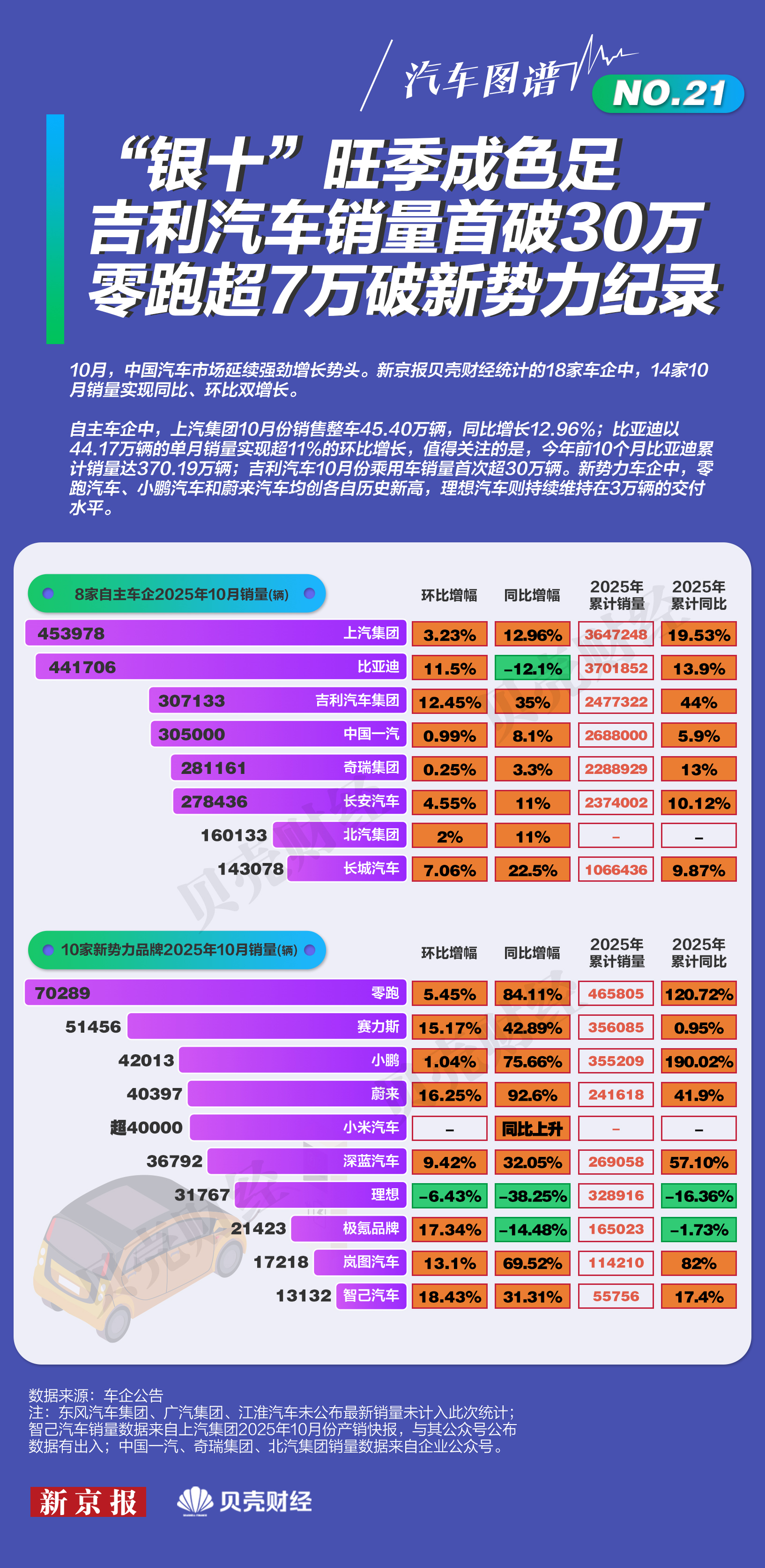
汽车图谱|“银十”旺季成色足,吉利、奇瑞新能源车销量创新高
Xin Jing Bao· 2025-11-03 11:42
Group 1 - The Chinese automotive market continued its strong growth momentum in October, with 14 out of 18 surveyed automakers reporting both year-on-year and month-on-month sales increases [2][5] - SAIC Motor Corporation led the sales chart with approximately 454,000 vehicles sold in October, marking a year-on-year increase of 12.96%. BYD followed closely with 441,700 vehicles sold, achieving over 11% month-on-month growth [5][6] - New energy vehicle sales saw significant growth, with Geely and Chery achieving breakthroughs in multi-brand operations and transitions to new energy. Geely's sales exceeded 300,000 vehicles for the first time in October, while Chery's sales grew by 3.3% year-on-year, with over 110,000 new energy vehicles sold [2][5] Group 2 - New energy vehicle brands under traditional automakers, such as Deep Blue, Lantu, and Zhiji, also experienced strong sales growth in October [3] - The China Automobile Dealers Association reported an increase in the automotive consumption index for October 2025, indicating a slight rise in the market for November. Factors contributing to this include the arrival of government subsidies and promotional activities during the Guangzhou Auto Show [3] - The market is expected to maintain an upward trend in November, driven by increased consumer demand due to government incentives and promotional efforts from dealers [3]

汽车图谱㉑|“银十”旺季成色足,吉利、奇瑞新能源车销量创新高
Bei Ke Cai Jing· 2025-11-03 11:29
Core Insights - The Chinese automotive market continued its strong growth momentum in October, with 14 out of 18 surveyed automakers reporting both year-on-year and month-on-month sales increases [1] Group 1: Domestic Automakers Performance - SAIC Motor Corporation led the sales chart with approximately 454,000 vehicles sold in October, marking a year-on-year increase of 12.96% [2] - BYD achieved a monthly sales volume of 441,700 vehicles, reflecting over 11% month-on-month growth, with cumulative sales reaching 3.70 million units in the first ten months of the year [2] - Geely Automobile and Chery Group made significant strides in multi-brand operations and the transition to new energy vehicles, with Geely's sales surpassing 300,000 units for the first time in October and Chery's sales increasing by 3.3% year-on-year, including over 110,000 new energy vehicles sold [3] Group 2: Export and International Market - The overseas market has become a crucial pillar for domestic automakers, with companies like SAIC, BYD, and Geely reporting year-on-year growth in export sales [4] Group 3: New Energy and Emerging Automakers - New energy vehicle startups experienced a surge in deliveries during the peak sales season, with Leap Motor exceeding 70,000 monthly deliveries for the first time, NIO surpassing 40,000, and XPeng maintaining over 40,000 deliveries for the second consecutive month [5] - Traditional automakers' new energy brands, such as Deep Blue, Lantu, and Zhiji, also showed strong performance with both year-on-year and month-on-month sales growth [6] Group 4: Market Outlook - The latest "Automotive Consumption Index" from the China Automobile Dealers Association indicates a reading of 90.5 for October, suggesting a slight increase in the automotive market for November [7] - Factors contributing to this positive outlook include the availability of government subsidies for vehicle trade-ins and promotional activities during the Guangzhou Auto Show and "Double 11" sales events, which are expected to stimulate consumer demand [7]
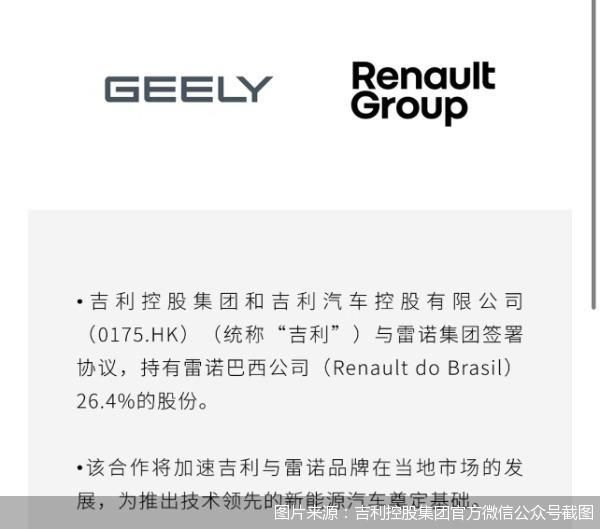
收购26.4%雷诺巴西股权,吉利再补海外拼图
Bei Jing Shang Bao· 2025-11-03 11:17
Core Viewpoint - Geely accelerates its overseas expansion by signing a strategic cooperation agreement with Renault to produce and sell new energy vehicles in Brazil [1][2][3] Group 1: Strategic Cooperation - Geely acquires 26.4% of Renault Brazil, while Renault retains controlling shareholder status and consolidates financial statements [1] - The partnership allows Geely to share Renault Brazil's production capacity and market network, facilitating entry into the Latin American automotive market [1][2] - Renault Brazil will act as a dealer for Geely's electric vehicle products in Brazil, creating new growth opportunities in sales, finance, and after-sales services [1][2] Group 2: Market Expansion and Technology Sharing - Geely's technology and new energy products will assist Renault in expanding its product line to meet the electric vehicle demand in Brazil [2] - The partnership aims to enhance production capacity utilization at Renault's industrial park in Brazil, improving competitiveness [2] - The collaboration is expected to help Geely internationalize its products by leveraging Renault's established channels and factories in Brazil [2][4] Group 3: Historical Context and Future Prospects - The relationship between Geely and Renault dates back to 2021, with previous agreements aimed at entering various markets, including Korea [2][3] - The current agreement marks a significant milestone following previous joint ventures in Korea and global powertrain projects [3] - The growing demand for electric and hybrid vehicles in Brazil, with sales exceeding 170,000 units last year, highlights the market's potential for growth [4]
吉利与雷诺签署协议 将在巴西开展战略合作
Yang Shi Wang· 2025-11-03 10:41
Core Insights - Geely Holding Group and Renault Group have signed a final strategic cooperation agreement in Brazil, focusing on the production and sales of new energy vehicles under both brands [1][4] - Geely will acquire 26.4% of Renault do Brasil, while Renault retains its controlling stake, allowing Geely to share production capacity and market networks in Latin America [1][4] Group 1 - The partnership aims to enhance collaboration and expand the electric vehicle product line to meet the growing demand in the Brazilian market [4] - Renault's industrial park in Ayrton Senna will produce both Renault and Geely brand products, improving capacity utilization and competitiveness [4] - The cooperation is seen as a significant step in Renault's international strategy, leveraging industrial systems and technological strengths for better market adaptability [4] Group 2 - Geely's chairman emphasized that this partnership is a milestone following previous collaborations, aiming for mutual growth and market expansion [4] - The strategic alliance is expected to create economies of scale, optimizing costs and enhancing service quality for consumers [4] - Geely's electric SUV model EX5 will be sold through Renault's dealership network, opening new growth opportunities in sales, finance, and after-sales services [1]
行业总量专题:2026年购置税补贴减半,预计电车销量仍可维持中高个位数增长
Hua Yuan Zheng Quan· 2025-11-03 09:20
Investment Rating - The industry investment rating is "Positive" (maintained) [3] Core Viewpoints - The 2026 purchase tax subsidy for new energy vehicles (NEVs) is set to be halved, yet it is expected that electric vehicle (EV) sales can still maintain a mid-to-high single-digit growth rate [3][9] - The impact of the subsidy reduction will be significant, affecting approximately 90% of NEV consumers, particularly in the low-price segment [6][17] - The overall market for NEVs is influenced by multiple factors beyond subsidies, including the introduction of quality supply and the gradual penetration of NEVs into various channels [7][9] Summary by Sections 1. Analysis of the Impact of the 2026 New Energy Vehicle Purchase Tax Policy - The purchase tax subsidy for NEVs will be halved from 2026 to 2027, with the maximum subsidy per vehicle reduced to 15,000 yuan [5][13] - The technical requirements for subsidies will also increase, with the pure electric range requirement for plug-in hybrid and extended-range vehicles rising from 43 km to 100 km [5][13][24] - The subsidy reduction will have broad implications, with 90% of low-price segment consumers feeling the impact significantly [6][17] 2. Overall Forecast - The expected growth rates for NEV insurance registrations are 19% for 2025 and 9% for 2026, with potential upward adjustments depending on advancements in autonomous driving technology [8][33] - Despite the subsidy reduction, the NEV penetration rate is anticipated to maintain a slight increase due to factors such as quality supply and market dynamics [7][9][41] - The total volume of NEVs is projected to grow moderately, with the potential for unexpected demand driven by technological innovations [8][40] 3. Investment Opportunities - Focus on high-end automakers less affected by the subsidy reduction, such as Jianghuai Automobile [9] - Attention to automakers with strong new product cycles that can offset the impact of subsidy reductions, including Geely Automobile and SAIC Group [9] - Consider companies that may create additional demand through technological innovations, such as Li Auto and Xpeng Motors [9]
