
CHINA JINMAO(00817)

Search documents
中华交易服务内房股指数下跌0.01%,前十大权重包含万物云等
Jin Rong Jie· 2025-07-29 14:29
Group 1 - The core index of the China Trading Service Real Estate Index (CESCPD) experienced a slight decline of 0.01%, closing at 1417.95 points with a trading volume of 2.491 billion [1] - Over the past month, the CESCPD index has increased by 8.47%, by 9.17% over the last three months, and has risen 16.00% year-to-date [1] - The CESCPD index tracks the overall performance of publicly listed companies in the mainland real estate development, services, management, and park industries within the Hong Kong Stock Connect [1] Group 2 - The top ten weighted stocks in the CESCPD index include China Resources Land (10.41%), China Overseas Development (9.49%), Beike-W (8.86%), Longfor Group (8.68%), China Resources Mixc Lifestyle (7.62%), Country Garden Services (4.86%), Sunac China (4.67%), China Jinmao (4.12%), Wanwu Cloud (3.99%), and Poly Property (3.65%) [1] - The CESCPD index is fully composed of stocks listed on the Hong Kong Stock Exchange, with a 100% allocation [1] - The index's holdings are entirely focused on the real estate sector, with a 100% allocation to this industry [1]



房地产行业周报:国务院公布住房租赁条例,上海发布住宅设计标准征求意见稿-20250729
Hua Yuan Zheng Quan· 2025-07-29 13:40
Investment Rating - Investment rating: Positive (maintained) [4] Core Viewpoints - The report emphasizes that since September 2024, the central government's clear requirement has been to "stabilize the real estate market and stock market," indicating that the stabilization of the real estate market is crucial for boosting social expectations and facilitating domestic demand circulation [5][48] - The report suggests that high-quality residential properties may experience a development wave due to policy guidance and changes in supply-demand structure [5] Market Performance - The Shanghai Composite Index rose by 1.7%, the Shenzhen Component Index by 2.3%, the ChiNext Index by 2.8%, and the CSI 300 Index by 1.7%, while the real estate sector (Shenwan) increased by 4.1% [5][8] - The top five stocks in terms of price increase were *ST Nan Zhi (+15.4%), Hainan Airport (+14.5%), Zhangjiang Hi-Tech (+12.4%), Tibet City Investment (+11.8%), and Dayuecheng (+10.6%) [5] Data Tracking New Housing Transactions - For the week of July 19-25, new housing transactions in 42 key cities totaled 1.69 million square meters, a week-on-week increase of 19.4% [15] - In July (up to the week of July 25), new housing transactions in 42 key cities totaled 5.77 million square meters, a month-on-month decrease of 28.4% and a year-on-year decrease of 17.9% [19] Second-Hand Housing Transactions - For the week of July 19-25, second-hand housing transactions in 21 key cities totaled 1.95 million square meters, a week-on-week increase of 1.8% [31] - In July (up to the week of July 25), second-hand housing transactions in 21 key cities totaled 6.96 million square meters, a month-on-month decrease of 3.9% and a year-on-year decrease of 5.5% [35] Industry News - The State Council announced the "Housing Rental Regulations," marking a new phase of legalization and standardization in the housing rental market [48] - The People's Bank of China reported a year-on-year increase of 0.3% in real estate development loans, indicating a recovery in growth [48] - The Ministry of Finance reported that the revenue from state-owned land transfers in the first half of 2025 was 1.43 trillion yuan, a year-on-year decrease of 6.5% [48] Company Announcements - China Merchants Shekou issued the first phase of corporate bonds worth 800 million yuan with an interest rate of 1.70% for a term of 3 years [51] - China Jinmao issued the first phase of unsecured medium-term notes worth 2 billion yuan with an interest rate of 2.30% for a term of 3 years [51] - Binhai Group acquired the land use rights for a state-owned construction site in Hangzhou, covering an area of 36,496 square meters with a total price of 1.53 billion yuan [51]




光大地产板块及重点公司跟踪报告:近期地产跑赢大市,优质龙头涨幅明显
EBSCN· 2025-07-29 03:11
Investment Rating - The report maintains a "Buy" rating for key companies in the real estate development sector, including Poly Developments, China Merchants Shekou, and Binjiang Group, while also giving a "Buy" rating to China Overseas Development, China Resources Land, and China Jinmao in the H-share sector [37][71]. Core Insights - The real estate sector has shown resilience, with the real estate (Shenwan) index rising by 7.8% from July 1 to July 25, 2025, outperforming the CSI 300 index by 2.93 percentage points [29][37]. - The report highlights a structural alpha opportunity in the real estate sector, particularly for leading companies with strong brand recognition and product reputation, despite a weak beta performance overall [4][65]. - The report emphasizes the importance of urban renewal and structural optimization in high-capacity core cities, which are expected to benefit from ongoing real estate policies [70][71]. Summary by Sections Real Estate Development Sector Valuation and Key Companies - As of July 25, 2025, the real estate (Shenwan) price-to-earnings (P/E) ratio is 42.93, with a historical percentile of 99.45% [11][20]. - The top-performing A-share real estate companies from July 1 to July 25, 2025, include New Town Holdings (+12.2%), China Merchants Shekou (+9.3%), and JinDi Group (+7.4%) [29][31]. Property Services Sector Valuation and Key Companies - The real estate services (Shenwan) P/E ratio is 46.73, with a historical percentile of 86.21% as of July 25, 2025 [2][40]. - The top-performing A-share property service companies during the same period are TeFa Service (+10.4%), World Union (+9.2%), and Ningbo Fuda (+5.9%) [51][55]. Public Fund Holdings in Real Estate Sector - As of the end of Q2 2025, public funds held a total market value of approximately 484.4 billion yuan in real estate stocks, representing a decrease from 548.4 billion yuan at the end of Q1 2025 [3][63]. Market Trends and Sales Performance - In the first half of 2025, the sales amount for commodity residential properties in major cities increased by 6.0%, while the overall sales amount for the top 100 real estate companies decreased by 11.4% [4][66]. - The report notes a significant increase in land transaction prices and areas in key cities, indicating a potential recovery in the real estate market [67][70]. Investment Recommendations - The report suggests focusing on three main lines for investment: stable leading companies with high product reputation, companies with rich existing resources, and the long-term growth potential of the property services sector [71][70].


研判2025!中国康养地产行业发展历程、发展背景、市场规模、竞争格局及发展趋势分析:康养地产已成为众多房企转型的重要方向[图]
Chan Ye Xin Xi Wang· 2025-07-28 01:16
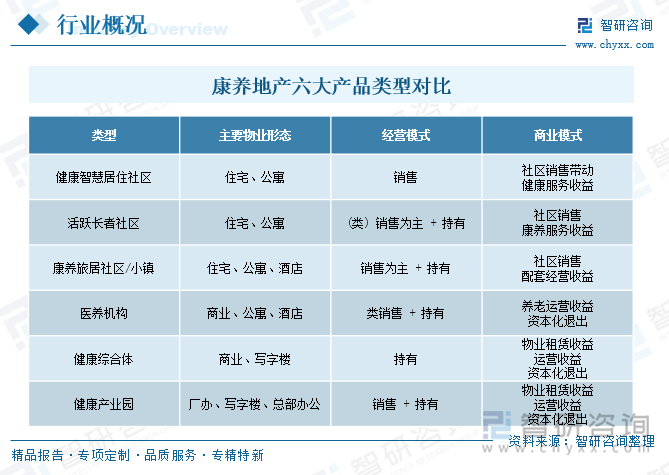
Overview - The aging population and increasing health awareness in China are driving rapid development in the health and wellness real estate market, with the market size reaching 15,510 billion yuan in 2022, a year-on-year increase of 1.51% [1][11] - However, the market is expected to decline to 13,918 billion yuan in 2024, a year-on-year decrease of 5.89%, due to the transition from a new housing era to a stock housing era [1][11] Market Segmentation - Health and wellness real estate products can be categorized into six types: smart health residential communities, active senior communities, health tourism communities/towns, medical and nursing institutions, health complexes, and health industrial parks [2][5] - The main revenue models include property sales, operational services, health and wellness services, elderly care operations, and property leasing [2] Development History - The health and wellness real estate industry in China began in the 1980s, initially focusing on basic medical care and daily assistance for the elderly [6] - The concept of "health and wellness" was proposed in 2010, leading to the establishment of health tourism demonstration bases and the integration of health services with tourism and leisure [6] Current Market Situation - The health and wellness real estate market is experiencing a downturn, with a significant decline in market size anticipated in the coming years [11] - The increasing elderly population, projected to reach 21,969 million by 2024, is creating a substantial demand for health and wellness services [9] Competitive Landscape - Major real estate companies such as Poly Developments, Greentown China, and China Resources Land are actively investing in the health and wellness sector [13][16] - Poly Developments has established a comprehensive "three-in-one" elderly care system, covering professional care, cognitive care, and travel elderly care [13][15] Future Trends - The health and wellness real estate sector is expected to focus on creating age-friendly communities that cater to both elderly and younger populations, emphasizing a vibrant community atmosphere [21] - There will be a greater emphasis on location selection, favoring suburban areas or satellite cities that offer a balance of natural surroundings and urban connectivity [21]


房地产行业周报:上海徐汇拍出全国地王,租赁住房条例正式出台-20250727
SINOLINK SECURITIES· 2025-07-27 06:49
Investment Rating - The report indicates a positive investment outlook for the real estate sector, suggesting a potential rebound in the market due to upcoming policy support and low valuations in the sector [6]. Core Insights - The A-share real estate sector saw a weekly increase of +4.1%, ranking 7th among various sectors, while the Hong Kong real estate sector increased by +4.2%, ranking 6th [2][16]. - The average premium rate for land transactions in 300 cities was reported at 15%, with a total land area sold of 667 million square meters, reflecting a 10% week-on-week increase but a 34% year-on-year decrease [2][27]. - The newly implemented Housing Rental Regulations aim to enhance rental rights and improve the rental market by regulating rental activities and promoting equal rights for renters [5][15]. Summary by Sections Market Performance - The report highlights that 47 cities sold a total of 291 million square meters of commercial housing, with a week-on-week increase of 15% and a year-on-year increase of 2% [3][33]. - In June, new home prices decreased by 0.3% month-on-month and 3.7% year-on-year, indicating a slight expansion in the decline [3][33]. Land Transactions - The report notes that the recent land auction in Shanghai resulted in the highest floor price for residential land in the country, with a floor price of 200,257 yuan per square meter for the Xujiahui plot [4][13]. - The top five companies in terms of land acquisition amounts include China Overseas, Greentown China, Poly Developments, Jianfa Real Estate, and Binjiang Group, with respective acquisition amounts of 54.2 billion, 52.8 billion, 41.4 billion, 35.6 billion, and 34.7 billion yuan [27][30]. Rental Market Regulations - The newly established Housing Rental Regulations consist of 7 chapters and 50 articles, focusing on standardizing rental activities and enhancing the rights of renters [5][15]. - The regulations support the revitalization of old factories and commercial properties for rental purposes and establish a monitoring mechanism for rental prices [5][15]. Investment Recommendations - The report suggests focusing on real estate stocks that are well-positioned to benefit from potential policy support, particularly developers with strong positions in core first- and second-tier cities [6]. - Recommended companies include Jianfa International Group, Greentown China, and China Overseas Development, which are expected to perform well due to their ongoing land acquisition capabilities [6].

上半年50+重磅级高管变动,2025商业地产企业都在“大手笔”抢人!
3 6 Ke· 2025-07-25 02:36
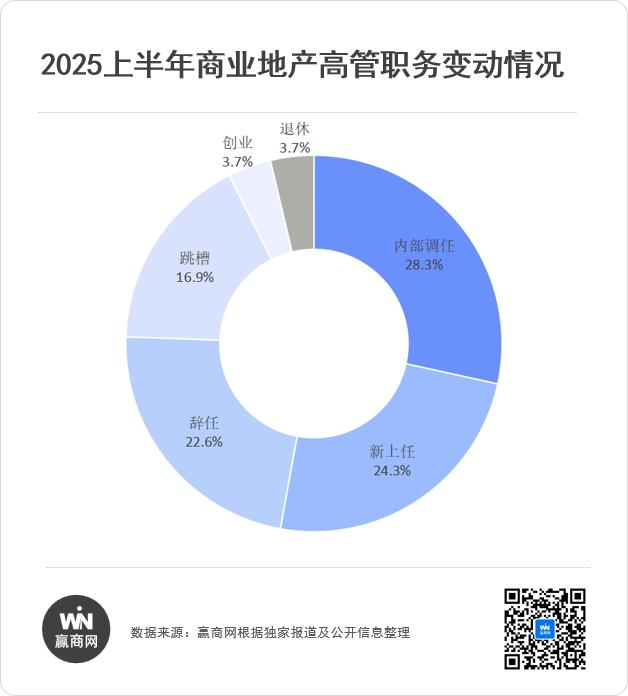
Group 1 - The core management teams of several major real estate companies, including Vanke and Swire Properties, are undergoing significant changes, with at least 53 personnel changes reported in the commercial real estate sector in the first half of 2025 [1][3] - Nearly 10 companies, including Vanke Group, China Resources Land, and Longfor Group, have initiated organizational transformations, focusing on strategic adjustments and streamlining operations [3][4] - Leading commercial management companies in mainland China are forming composite teams that excel in both commercial operations and asset management, achieving breakthroughs in organizational efficiency and product iteration [4] Group 2 - Vanke's commercial segment is transitioning from a "commercial operator" to a "market-oriented asset management platform," with significant organizational restructuring underway [5] - Joy City Holdings has upgraded its commercial management center to a commercial division, emphasizing refined operations and capital loop capabilities to enhance asset value [7] - Hong Kong-based companies are increasingly integrating with the mainland market, actively recruiting talent and adjusting their business strategies to focus on high-end commercial properties [8][9] Group 3 - Swire Properties is enhancing its retail business in mainland China by promoting local executives to key positions, reflecting the importance of the mainland market to its core business [9][11] - Hong Kong Land is accelerating its strategic transformation by hiring several key talents to strengthen its operations in the mainland commercial real estate sector [12][14] - The new strategy aims to recover up to $10 billion by 2035, focusing on high-end commercial assets and enhancing the company's long-term sustainable growth [14] Group 4 - Major players in the commercial real estate sector are prioritizing talent acquisition and development, recognizing that skilled personnel are crucial for driving business forward [15][16] - China Resources Vientiane Life has launched a talent recruitment plan aimed at attracting senior management in commercial and property management sectors, with a comprehensive onboarding program [16][18] - A trend of experienced executives starting their own ventures is emerging, with notable figures like Ling Changfeng and Tian Weilong establishing new companies focused on asset management and urban renewal [19][21] Group 5 - Ling Changfeng's new company, Ningpu Development, is focusing on light asset management and has secured partnerships for significant urban renewal projects [21] - Tian Weilong's Jinlou Group is targeting urban renewal and community commercial projects, with a strategic focus on asset securitization [22][24] - The competitive landscape is intensifying as top executives transition to new roles, with a notable increase in personnel changes within the commercial real estate sector [24][25]



上海金茂投资管理集团有限公司2025年度第一期中期票据获“AAA”评级
Sou Hu Cai Jing· 2025-07-24 09:30
Group 1 - The core viewpoint of the news is that Shanghai Jinmao Investment Management Group Co., Ltd. received an "AAA" rating for its 2025 first phase medium-term notes from China Chengxin International [1] - The rating agency recognized the strong support from China National Chemical Corporation and China Jinmao Holdings Group, along with the company's scale advantages and stable rental income from owned properties [1] - Concerns were raised regarding risks in the real estate industry and the significant scale of fund transactions in joint ventures affecting the company's overall credit status [1] Group 2 - The company was established in November 2007 with funding from China Jinmao Holdings Group, which is a platform enterprise under Sinochem Hong Kong [2] - The core business of the company includes urban operations, property development, and hotel management, primarily focusing on mid-to-high-end residential projects [2] - In December 2024, China Jinmao's subsidiary will increase its capital in the company through the contribution of 100% equity of four subsidiaries [2]
楼市早餐荟 | 上半年全国新开工改造城镇老旧小区1.65万个;北京顺义薛大人庄宅地挂牌,起始价10.3亿元
Bei Jing Shang Bao· 2025-07-24 01:50
Group 1: Urban Development and Housing Policies - In the first half of the year, 16,500 old urban residential communities were newly started for renovation across the country, with six regions exceeding an 80% commencement rate [1] - Kunming has adjusted the recognition standards for personal housing loans under the housing provident fund, relaxing the criteria for first and second homes [3] - Jinan has announced an increase in the housing provident fund contribution base for the 2025 fiscal year, with a maximum monthly contribution base of 32,586 yuan and a minimum of 2,010 yuan [4] Group 2: Real Estate Transactions - A residential land parcel in Shunyi District, Beijing, has been officially listed with a starting price of 1.03 billion yuan, covering an area of approximately 23,000 square meters [2] - China Jinmao's wholly-owned subsidiary has issued medium-term notes amounting to 2 billion yuan, with a maturity of three years and a final coupon rate of 2.3% [5]
消失的房企区域公司
21世纪经济报道· 2025-07-23 15:00
Core Viewpoint - The restructuring of regional companies in the real estate sector is a strategic move by leading firms to enhance efficiency and adapt to changing market conditions, focusing on high-potential cities and reducing management layers [2][6][10]. Group 1: Restructuring of Regional Companies - Several state-owned enterprises have begun to eliminate regional companies, shifting to a two-tier management model where headquarters directly manage city companies [2][4]. - China Resources Land and Vanke are among the firms that have adjusted their management structures to streamline operations and improve efficiency [5][6]. - The trend started with Jinmao, which dissolved five regional companies and restructured into 14 regional companies, indicating a broader industry shift [4][6]. Group 2: Focus on Core Cities - Leading real estate firms are concentrating their investments in first-tier and strong second-tier cities, with a focus on around ten key cities [6][10]. - Jinmao's investment strategy shows that 94.7% of its new saleable area is concentrated in first and second-tier cities, with Beijing and Shanghai being primary targets [6][8]. - Similarly, China Overseas Land's sales in major cities like Beijing and Shanghai accounted for over half of its total sales, highlighting the trend of focusing on core urban markets [7][8]. Group 3: Implications of Organizational Changes - The reduction of regional companies is seen as a defensive measure rather than a sign of stagnation, as these firms remain among the top performers in the industry [6][10]. - The shift to a two-tier management model is viewed as a rational response to the current market environment, where many firms are adopting similar structures to enhance operational efficiency [10][11]. - Analysts suggest that while streamlining operations, firms must balance centralized control with local market sensitivity to maintain competitiveness [11].

消失的房企区域公司
2 1 Shi Ji Jing Ji Bao Dao· 2025-07-23 11:53
Core Viewpoint - The restructuring of regional companies in the real estate sector is a strategic move by leading firms to enhance efficiency and adapt to a changing market environment, shifting from a multi-tier management structure to a more streamlined two-tier model [1][2][4]. Group 1: Company Restructuring - Several major state-owned enterprises have begun to eliminate regional companies, transitioning to a two-tier management model where headquarters directly manage city companies [1][2]. - China Jinmao initiated this trend by dissolving five regional companies and restructuring into 14 regional companies at the beginning of the year [2]. - Other companies like China Merchants Shekou and Poly Developments have followed suit, consolidating their regional operations to improve management efficiency [2][3]. Group 2: Market Focus - Real estate firms are increasingly concentrating their investments in high-tier cities, with a focus on around ten key cities, rendering regional companies redundant [4][5]. - Jinmao's investment strategy highlights this shift, with 37.6% of its new saleable area concentrated in first-tier cities like Beijing and Shanghai [4]. - China Merchants Shekou reported that 90% of its investment was directed towards its "core 10 cities," with 59% of total investment in first-tier cities [5]. Group 3: Strategic Implications - The reduction of management layers is seen as a rational response to the concentration of sales contributions from a limited number of core cities [6]. - Companies like China Overseas Land & Investment have noted that over 60% of their sales come from just four cities, indicating a need for a more centralized decision-making process [6]. - The restructuring is viewed as a proactive measure to enhance operational efficiency and adapt to the shrinking real estate market [7].