KUAISHOU(01024)

Search documents
云南省商务厅开展2026年第六期“坐诊”“巡诊”“上门问诊”活动
Sou Hu Cai Jing· 2026-02-10 12:09
Core Viewpoint - The Yunnan Provincial Department of Commerce is actively promoting consumption through various initiatives, including consumer vouchers and trade-in programs, to stimulate market activity and support local businesses in 2026 [1][4][11]. Group 1: Consumption Promotion Initiatives - The 2026 initiatives will build on the success of the 2025 "Yunnan Lifestyle" campaign, continuing to invest in consumer vouchers for dining and accommodation, and creating new consumption scenarios like "Food in Yunnan" and "Travel in Yunnan" [4][11]. - The department plans to enhance cooperation with e-commerce platforms to lower costs and promote collective development, particularly targeting rural markets to unlock their consumption potential [4][6]. Group 2: Financial Support and Policy Implementation - There is a call for increased financial support for small and medium-sized enterprises that are under pressure and not receiving subsidies, focusing on new consumption hotspots [5][6]. - The department will implement a consumption upgrade policy, optimize supply chains, and support the development of new consumption formats and scenarios [6][11]. Group 3: E-commerce Activities and Collaboration - The department aims to create a series of themed e-commerce events throughout the year, including a "Yunnan Gifts" online shopping festival, to enhance consumer engagement [8]. - There will be a focus on strengthening collaboration between platforms and local commerce departments to support instant retail and address consumer voucher accessibility [9]. Group 4: Past Performance and Future Goals - In 2025, over 11 million consumer vouchers were issued, leading to a direct consumption increase of over 14.5 billion yuan, demonstrating a significant leverage effect [11]. - The 2026 initiatives will include a series of promotional activities aimed at enhancing the integration of commerce, tourism, and culture, providing diverse and high-quality consumer experiences [11].





智通港股通活跃成交|2月10日
智通财经网· 2026-02-10 11:01
沪港通(南向)十大活跃成交公司 智通财经APP获悉,2026年2月10日当天,腾讯控股(00700)、阿里巴巴-W(09988)、长飞光纤光缆 (06869)位居沪港通(南向)成交额前3位,成交额分别为52.29 亿元、26.52 亿元、20.61 亿元;腾讯控 股(00700)、阿里巴巴-W(09988)、长飞光纤光缆(06869) 位居深港通(南向)成交额前3位,成交额分别 为42.37 亿元、21.69 亿元、12.08 亿元。 | 公司名称 | 成交金额 | 净买入额 | | --- | --- | --- | | 腾讯控股(00700) | 42.37 亿元 | -6.49 亿元 | | 阿里巴巴-W(09988) | 21.69 亿元 | -2.70 亿元 | | 长飞光纤光缆(06869) | 12.08 亿元 | +4.08 亿元 | | 中芯国际(00981) | 11.61 亿元 | -1.74 亿元 | | 泡泡玛特(09992) | 11.07 亿元 | -1.51 亿元 | | 美团-W(03690) | 10.28 亿元 | +1.83 亿元 | | 快手-W(01024) | 9 ...



又轮到快手追赶字节了
和讯· 2026-02-10 10:17
Core Viewpoint - The article discusses the launch and impact of Seedance 2.0, an AI video generation model by ByteDance, highlighting its capabilities and the competitive landscape in the AI video sector [5][7][10]. Group 1: Seedance 2.0 Features and Impact - Seedance 2.0 can create high-quality videos from text or images in 60 seconds, featuring multi-scene narratives and maintaining consistency in characters and visual style [5][7]. - The model's unique multi-scene storytelling capability allows for the automatic generation of interconnected scenes, making it suitable for creating complete narrative sequences [7][8]. - Analysts predict that Seedance 2.0 will significantly reduce production costs and accelerate content creation cycles [9]. Group 2: Competitive Landscape - The AI video generation sector has become competitive, with companies like Kuaishou's Keling gaining recognition for their rapid commercialization, putting pressure on ByteDance [5][7][10]. - Kuaishou's Keling achieved significant commercial success, with AI revenue reaching 140 million yuan by December 2025, while ByteDance's previous models did not perform as well [12]. - Despite initial setbacks, ByteDance is focusing on integrating Seedance 2.0 into its ecosystem rather than positioning it as a standalone app, aiming to create a seamless user experience from inspiration to publication [14]. Group 3: Challenges and Future Directions - ByteDance faced challenges regarding the ethical implications of using real human likenesses in video generation, leading to the temporary suspension of certain features [10][11]. - The company aims to address user safety and regulatory concerns to avoid the pitfalls experienced by other models like Sora [15]. - The long-term strategy involves leveraging Seedance 2.0 within existing platforms like Douyin and Jingying to enhance user engagement and build a comprehensive creative ecosystem [14].

港股策略观点更新:恒生科技:战略配置区间已至,逆势布局正当时-20260210
EBSCN· 2026-02-10 06:59
Group 1 - The current Hong Kong stock market is in a phase of oscillation and correction, with the Hang Seng Technology Index dropping from a peak of around 6000 points in mid-January to 5346.2 points by February 6, marking a weekly decline of 6.51%, the largest in recent weeks [1] - The adjustment within the sector shows significant differentiation, with semiconductor and internet leaders experiencing larger declines, while new energy vehicles and home appliances showed relative resilience, indicating that funds are concentrating on quality core assets rather than exiting the market entirely [1][2] - The report emphasizes that the current market conditions represent a "golden layout window" for investors, characterized by oversold valuations, counter-cyclical capital inflows, and improving fundamentals [1][10] Group 2 - Southbound capital has shown a "buy the dip" behavior, with a net inflow of 560.7 billion HKD in the week of February 6, the highest weekly net inflow in three months, indicating strong confidence from domestic investors in the Hong Kong technology sector [2] - The concentration of capital flows has increased, with technology ETFs becoming key tools for domestic investors, reflecting a shift from traditional high-dividend sectors to technology growth sectors [2][3] - The report notes that the Hang Seng Technology Index's PE (TTM) is at 22.1 times, significantly below its historical average of 32.1 times and the global comparable technology indices, highlighting a valuation discount of over 35% [4] Group 3 - The report identifies four solid support dimensions for the Hang Seng Technology Index: technical, valuation, capital, and fundamental aspects, which collectively create a "margin of safety" for the sector [3] - The technical indicators show that the index is severely oversold, with a strong support level around 5400 points, which has not been effectively breached despite recent declines [3][4] - The fundamental outlook is bolstered by the sector's deep integration with the AI wave, with over 70% of the index's components related to AI, indicating strong growth potential as the industry transitions from R&D to commercialization [6][7] Group 4 - The report attributes the recent decline in the Hang Seng Technology Index to short-term emotional disturbances rather than a reversal of fundamental trends, driven by external tightening expectations, internal profit-taking, and unfounded rumors [7][8] - It emphasizes that the current market downturn is a valuable opportunity for investors to acquire quality assets, as the emotional "panic low" often represents a "golden buying point" [9][10] - The report suggests a strategy of "buying in batches and holding long-term," focusing on core stocks that are rapidly commercializing AI applications and have stable cash flows [9][10]


快手也来「凑热闹」,春晚红包到底有什么「魔力」?
3 6 Ke· 2026-02-10 06:50
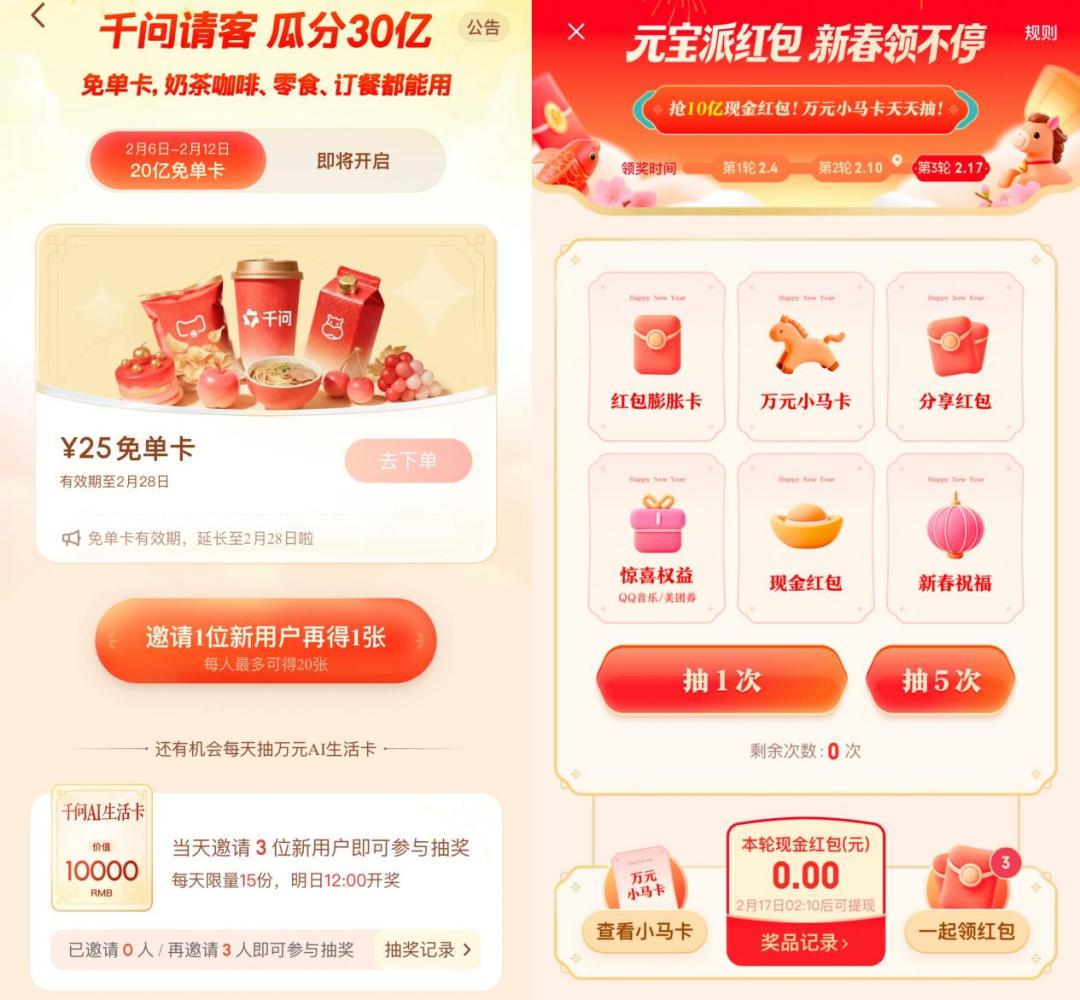
Core Insights - Kuaishou has officially announced a partnership with CCTV's Spring Festival Gala, utilizing live streaming, on-demand, and short video formats to present the 2026 gala content, with users able to receive cash red envelopes through interaction [1] - The competition for user engagement during the Spring Festival has shifted significantly, with major companies like Tencent, Baidu, and Alibaba investing a total of at least 4.5 billion yuan in cash red envelopes for AI product user acquisition [2][4] - This year's marketing strategy marks a fundamental shift in focus from mobile payment and short video traffic to positioning in the AI era, indicating a new competitive landscape [4] Group 1: Red Envelope War Evolution - The red envelope tradition has evolved through four distinct phases over the past decade, starting with the "payment entry competition" phase from 2015 to 2018, where Tencent and Alipay battled for dominance [5][6] - The second phase from 2019 to 2023 focused on "traffic ecosystem expansion," with companies like Baidu, Kuaishou, and Douyin increasing red envelope amounts to drive user engagement and ecosystem growth [6] - The current phase from 2023 to 2026 is characterized by a decline in red envelope activities, with companies now prioritizing more direct marketing strategies and user conversion [6] Group 2: AI Integration and Strategic Positioning - The 2026 red envelope activities are deeply integrated with AI products, requiring users to interact with AI assistants to earn rewards, marking the beginning of the "AI entry positioning phase" [6][10] - Major companies are investing heavily in AI to secure a foothold in the rapidly growing AI consumer market, projected to reach $1.3 trillion by 2030, with an annual growth rate exceeding 35% [12] - The Spring Festival serves as a critical opportunity for companies to establish user habits and expand their user base, as it is the only time of year that can achieve nationwide reach [15] Group 3: Challenges and User Retention - Despite the significant investments, companies face challenges related to user retention, as past experiences show that cash incentives often lead to low long-term engagement [21][23] - The quality of user interaction data is also a concern, as simplified motivations for engagement can lead to poor data quality, which negatively impacts AI model performance [23][24] - Ultimately, the success of AI assistants will depend on their inherent value and ability to solve real user problems, rather than solely on financial incentives [24]

超2800只个股下跌
第一财经· 2026-02-10 03:51
Core Viewpoint - The article discusses the performance of the A-share market, highlighting the fluctuations in major indices and the notable movements in specific sectors such as media and pharmaceuticals. Market Performance - The Shanghai Composite Index decreased by 0.02% to 4122.34, while the Shenzhen Component Index also fell by 0.02% to 14206.26. The ChiNext Index dropped by 0.14% to 3328.02, and the Sci-Tech Innovation Board Index rose by 0.19% to 1800.35 [4][12]. - The total trading volume in the Shanghai and Shenzhen markets reached 1.4 trillion yuan, with over 2800 stocks declining [6]. Sector Highlights - The media sector experienced significant gains, with multiple stocks such as Light Media and China Film hitting the daily limit, and Huace Film and Happiness Blue Sea rising over 15% [5][6]. - The innovative drug concept saw a surge, with stocks like Guangsheng Tang increasing by over 13% [6]. - The semiconductor sector also performed well, with stocks like Chipone Technology rising over 8% [10]. New Listings - Three new stocks were listed, with N Electric Technology opening at a remarkable increase of 750.05% on its first day [11]. Other Market Movements - The precious metals, shipping, and liquor sectors showed weakness, contrasting with the strong performance of the media and innovative drug sectors [5][6].



seedance2.0火爆多模态能力提升百花齐放,内容IP漫剧短剧下游受益
2026-02-10 03:24
Summary of Conference Call on AI Video Models and Their Impact on the Content Industry Industry Overview - The conference focused on the impact of AI video models, specifically ByteDance's CDS 2.0 and K3.0, on the film and entertainment industry, particularly in the realm of content generation and IP development [1][2][3]. Key Points on AI Video Models - **Significant Enhancements**: Both ByteDance's CDS 2.0 and K3.0 have shown remarkable improvements in film production capabilities, including better understanding of multiple modalities (text, video, images, sound) and cross-modal logical reasoning [2][7]. - **Automated Scene Planning**: CDS 2.0 can automatically plan shots and sequences based on the storyline, which is crucial for understanding camera movements and spatial dynamics [2][3]. - **Audio-Visual Synchronization**: The models support synchronized generation of audio and visuals, ensuring that expressions and tones match appropriately [3]. - **High Consistency in Multiple Subjects**: The models maintain high consistency in character actions and scene coherence, enhancing the overall quality of generated content [3][4]. - **Improved Success Rate**: The success rate for generating usable content has increased significantly, with CDS 2.0 achieving over 90% success compared to the previous average of around 20% [4][5]. - **Cost and Time Efficiency**: The improvements in success rates and production capabilities are expected to lower production costs and time, making AI tools more accessible for generating content [5][6]. Competitive Landscape - **Market Potential**: The multi-modal market space is vast, with applications extending beyond film production to include advertising and content creation for social media [11][12]. - **Leading Companies**: Key players in the domestic market include Kuaishou, Keling, and ByteDance, with ongoing competition to enhance model performance and application [11][12]. - **No Major Generational Gaps**: Current models from leading companies show no significant generational gaps, indicating a competitive environment focused on continuous iteration and improvement [12][13]. AI Manju (AI Comic) Market Insights - **Growth Potential**: The AI comic sector is viewed as a promising area, with expectations for rapid growth and profitability, distinguishing it from the saturated real-life short drama market [15][17]. - **Market Size**: The AI comic market is projected to reach nearly 20 billion, while the real-life short drama market was around 67 billion, with a growth rate of approximately 30% [20]. - **Token Consumption**: AI comics require significant token consumption for production, making them a vital customer for video models [21][23]. - **Platform Competition**: Major platforms are aggressively competing for AI comic content, with companies like Tencent and Baidu launching dedicated apps and channels to support this genre [24][25]. Company Strategies and Developments - **Investment in AI Comics**: Companies like Zhongwen Online and Zhangyue Technology are actively developing platforms for AI comic production, leveraging existing IP resources [26][27]. - **Market Positioning**: The competitive landscape is characterized by companies focusing on their unique strengths and user understanding to capture market share [12][14]. Conclusion - The advancements in multi-modal models are expected to revolutionize content production across various formats, providing significant opportunities for companies in the entertainment sector. The AI comic market, in particular, is poised for rapid growth, driven by technological advancements and strategic investments from key players in the industry [14][29].


快手-W、药明生物涨3%,AI应用、创新药接下来有哪些催化?
Mei Ri Jing Ji Xin Wen· 2026-02-10 02:15
(2)创新药方面,2~3月为港股药企业绩披露窗口,多家有望迎来减亏或扭亏;展望全年,AACR(4 月)、ASCO(5月)、ESMO(10月)等学术会议渐次到来,国产创新药有望进一步带来临床数据的兑现。 关注港股通科技ETF基金(159101.SZ)及其联接C(025806.OF),被动跟踪国证港股通科技指数,该 指数在恒生科技基础上,龙头权重更集中(阿里巴巴、腾讯控股合计占比30%),同时兼顾创新药龙头 (药明生物/信达生物/康方生物)。港股通科技ETF基金(159101.SZ)在深圳证券交易所上市,并支持 T+0日内灵活回转交易,为A股投资者提供低门槛、免开跨境户和免换汇的便利。 2月10日盘初,港股AI应用、创新药板块延续昨日涨势。阅文集团、智谱涨超6%,快手-W涨超4%,药 明生物、康方生物、信达生物涨超2%,港股通科技ETF基金(159101.SZ)盘中涨1%。 综合招商证券、国金证券等机构观点,港股科技资产前期回调较为充分,后市催化增多: (1)AI应用方面,腾讯、阿里纷纷在春节期间进行大模型宣传、快手可灵年化ARR超预期、DeepSeek 或在春节期间发布最新V4大模型。 ...
未知机构:快手网信办罚款靴子落地可灵30迭代有望拉动流水和估值2月-20260210
未知机构· 2026-02-10 02:15
Summary of Key Points from the Conference Call Company Overview - The document discusses Kuaishou Technology, a prominent player in the short video and live streaming industry in China. Core Insights and Arguments - On February 6, the Beijing Internet Information Office imposed a fine of 119.1 million RMB on Kuaishou for failing to fulfill cybersecurity protection obligations, which is approximately 0.5% of the company's profit during the reporting period [1] - The Kuaishou App was not taken down for rectification, indicating that the company can continue its operations without significant disruption [1] - The release of the Kuaishou 3.0 version of the Keling product is expected to drive revenue and valuation growth [2] - Keling 3.0 is designed to be more suitable for professional creators, offering higher flexibility and freedom in content creation compared to competitors [2] Comparative Analysis of Keling and Seedance - **Video Length**: Both support 15-second videos, but Keling allows for extended writing up to 2 minutes, while Seedance does not support this feature [2] - **Material Support**: Keling supports up to 4 reference images, whereas Seedance offers higher multimodal flexibility with support for 9 images, 3 videos, and 3 audio files [2] - **Resolution**: Keling has a resolution cap of 4K, providing professional film-grade output, which is also supported by Seedance [2] - **Cost Efficiency**: The current membership version of Keling shows a competitive cost-performance advantage [2] Financial Performance - Keling's revenue exceeded 20 million USD in December, with an annualized ARR of 240 million USD [2] - The new version and features like motion control are expected to enhance revenue growth on a month-over-month basis [2] - Keling is currently the highest-grossing pure AI application in China, with the 3.0 version anticipated to further boost revenue growth and valuation flexibility [2]
未知机构:Seedance及Kling模型突破有望进一步强化中国短漫剧全球领先地位东-20260210
未知机构· 2026-02-10 02:05
Summary of Conference Call Records Industry Overview - The Chinese short drama industry holds a significant global leading advantage, with platforms like Reelshort, Dramabox, and Dramawave outperforming local competitors in revenue generation, supported by the comprehensive strengths of Chinese cultural enterprises in web literature IP, short drama production, and promotional strategies. Short dramas have become a crucial category for Chinese cultural exports [1][1]. Key Insights 1. **Growth in Short Drama and Comic Drama Sectors**: The comic drama sector is expected to experience accelerated growth by Q4 2025, with a notable increase in the number of projects and materials being produced [2][2]. 2. **Dramatic Increase in Comic Drama Projects**: Data from DataEye-ADX indicates that the number of comic drama projects will surge from 234 in January to 17,944 by December 2025, representing a growth of over 76 times. Similarly, the number of comic drama materials will rise from 27,000 to 1,623,000, a growth of over 59 times [2][2]. 3. **Recognition of Seedance and Kling Models**: The Seedance 2.0 and Kling 3.0 models have gained significant industry recognition, enhancing their global influence. These models have shown remarkable advancements in key areas such as intelligent camera work, consistency, and audio-visual synchronization [2][2]. 4. **Investment Opportunities in Multi-modal Fields**: The advancements in video models present investment opportunities in the multi-modal sector, with industry leaders acknowledging the impressive capabilities of AI in understanding and integrating multi-modal information [2][2]. Recommendations - **Long-term Investment in Short/Comic Drama**: It is recommended to focus on long-term investment opportunities in the short and comic drama sectors, particularly in companies with strong IP accumulation and early positioning in the comic drama field, such as Chinese Online, Huayi Brothers, Kunlun Wanwei, and others [3][3]. - **Attractive Valuation for Kuaishou**: Kuaishou is highlighted as having an attractive valuation, with the release of the Ling 3.0 model expected to further enhance the company's AI business revenue and valuation [2][2]. Financial Projections - The projected non-IFRS net profits for the company from 2025 to 2027 are estimated at 20.6 billion, 22.9 billion, and 25.2 billion yuan, respectively. The current market capitalization corresponds to a valuation of only 12 times for 2026, maintaining a "buy" rating [3][3]. Risks - Potential risks include the pace of model technology iteration not meeting expectations, slow commercialization of AI applications, and regulatory policy risks within the industry [3][3].