BYD(01211)

Search documents
研报掘金丨长江证券:维持比亚迪“买入”评级,盈利能力有望继续提升
Ge Long Hui· 2026-02-12 07:10
Group 1 - BYD's overall sales in January reached 210,000 units, representing a year-on-year decline of 30.1% and a month-on-month decline of 50.0% [1] - Passenger vehicle sales totaled 206,000 units, with a year-on-year decrease of 30.7% and a month-on-month decrease of 50.5% [1] - Export sales remained strong at 100,000 units in January, showing a year-on-year increase of 43.3% [1] Group 2 - Domestic inventory reduction is ongoing, positioning the company to embrace a new cycle [1] - The expansion of the overseas vehicle matrix and the launch of plug-in hybrid models abroad are expected to sustain monthly export sales growth [1] - The introduction of high-end models such as Z9GT, Z9, Leopard 8, N9, and N8L is anticipated to enhance market penetration and improve per-vehicle profitability [1] Group 3 - The company is committed to its strategic transformation towards intelligent driving, with the release of the Super e platform marking a significant innovation in pure electric technology [1] - The product lineup for high-end markets is being accelerated with a rich reserve of models from brands like Tengshi, Yangwang, and Fangchengbao [1] - Continued efforts in overseas expansion and the enhancement of overseas channels and vehicle matrix are expected to further improve profitability [1] Group 4 - The company forecasts a net profit attributable to shareholders of 35 billion yuan by 2025, corresponding to a PE ratio of 23X, maintaining a "buy" rating [1]


“链”动区域|“河南造”新能源汽车驶向全球
Ke Ji Ri Bao· 2026-02-12 06:40
Core Insights - The core focus of the articles is on the rapid development of the new energy vehicle (NEV) industry in Henan Province, China, which has been recognized as a key area for growth within the advanced manufacturing sector, aiming to create a trillion-yuan industry cluster [1][10]. Group 1: Industry Growth and Achievements - Henan has integrated NEVs into its key manufacturing clusters, leading to a significant increase in production, with an expected output of 681,000 vehicles in 2024, representing a 117.3% year-on-year growth [1]. - The province's NEV exports are projected to reach 30.87 billion yuan in 2025, marking a growth of over 253% [1]. - Yutong Bus, a leading company in Henan, achieved a record of 49,518 bus sales in 2025, with a 5.54% increase, and 18,356 of these being new energy buses, reflecting a 22.94% growth [3]. Group 2: Technological Advancements and Innovations - Yutong Bus invests over 5% of its revenue annually in R&D, leading to innovations such as a battery management system capable of operating in extreme temperatures [3]. - The collaboration with CATL in Luoyang has established a battery production base that is among the top globally, producing battery cells at a rapid pace [7]. - Companies like Zhonghang Lithium Battery and LYC have developed advanced technologies and products that support the NEV supply chain, enhancing local production capabilities [8]. Group 3: Collaborative Ecosystem and Supply Chain Development - Yutong Bus has fostered collaboration with over 290 local suppliers, achieving a local supply rate of 41% [4]. - The establishment of a "10-minute industrial circle" in Luoyang has facilitated rapid development of related industries, including battery manufacturing and precision components [7][8]. - The government has implemented supportive policies and a "chief service officer" mechanism to enhance the business environment for NEV companies [9]. Group 4: Strategic Vision and Future Outlook - Henan aims to transition from a major automotive province to a strong automotive province by leveraging its full industrial chain and ecosystem [10]. - The province's strategic planning includes appointing the provincial governor as the leader of the NEV and intelligent connected vehicle industry chain, ensuring high-level support for development [9][10]. - The overall vision is to position Henan as a global player in the NEV market, with a comprehensive approach to industry development [5][10].


【月度分析】2026年1月份全国乘用车市场分析
乘联分会· 2026-02-12 06:06
Overall Market - In January 2026, the retail sales of passenger cars reached 1.544 million units, a year-on-year decrease of 13.9% [14] - The decline in retail sales is attributed to complex market factors and a historical pattern of fluctuating sales in January [14] - The end of the new energy vehicle purchase tax exemption in December 2025 has led to a recovery period for the new energy vehicle market, with some consumers having made purchases in December to take advantage of the policy [14] - January 2026 saw a significant increase in exports, with passenger car exports reaching 576,000 units, a year-on-year increase of 52.0% [16] - The production of passenger cars in January 2026 was 2.003 million units, a year-on-year decrease of 4.4% [16] - The wholesale volume for January 2026 was 1.973 million units, a year-on-year decrease of 6.2% [17] New Energy Market - In January 2026, retail sales of new energy vehicles (NEVs) totaled 596,000 units, down 20.0% year-on-year [18] - The penetration rate of NEVs in the domestic market was 38.6%, while the export penetration rate was 49.6% [15] - The production of NEVs reached 938,000 units, a slight decrease of 0.6% year-on-year [18] - The wholesale volume of NEVs was 864,000 units, down 3.3% year-on-year [18] - The export of NEVs reached 286,000 units, a significant increase of 103.6% year-on-year, accounting for 49.6% of total passenger car exports [22] Company Performance - BYD, Geely, and Chery are leading in the new energy vehicle market, with BYD's sales reaching 205,518 units in January 2026 [24] - The market share of domestic brands in the new energy sector is increasing, with a notable rise in the export of new energy vehicles to Europe and Southeast Asia [15][22] - The new energy vehicle market is characterized by a shift towards higher quality products, with an increase in the proportion of high-end NEVs [15] Market Outlook - February 2026 is expected to see lower sales due to the shorter working days caused by the extended Spring Festival holiday [27] - The market is anticipated to stabilize post-holiday, with potential recovery in the entry-level electric vehicle segment [28] - The overall sentiment in the consumer market remains cautious, influenced by high costs and economic factors [28]




中汽协:绝大多数重点车企已把账期压缩至60天内,一些车企要求供应商下调价格
Xin Jing Bao· 2026-02-12 01:41
Core Insights - The China Automotive Industry Association (CAAM) released a report indicating that most key automotive companies have reduced their payment terms to within 60 days, with an average payment term of approximately 54 days, which is a reduction of about 10 days compared to the same period last year [1] - All surveyed companies are committed to fulfilling their payment term promises, with many establishing special task forces and implementing institutional documents to ensure compliance [2] - By June 2025, 17 automotive companies, including GAC, Dongfeng, FAW, Geely, and BYD, have pledged to standardize supplier payment terms to within 60 days [3] Payment Terms and Practices - The average payment term for key automotive companies is around 54 days, with four companies having terms below 50 days [1] - All 15 surveyed companies utilize cash or bank acceptance bills for payments, with five companies having a cash payment ratio exceeding 50% and two companies exceeding 70% [1] - 17 key companies have set a maximum payment term of 60 days from the acceptance of goods, with 14 companies offering additional preferential policies for small and medium-sized enterprises (SMEs) [1] Process Optimization - Many companies have optimized their financial processes and improved information systems to facilitate automatic payments, reducing delays caused by manual operations [2] - Some companies have changed the starting point for payment terms from the billing date to the date of delivery acceptance, and increased the frequency of settlements from monthly to bi-weekly [2] - Several companies are preparing special funds exceeding 10 billion to improve payment terms for suppliers [2] Challenges and Issues - Despite the improvements, some companies still face issues in supplier payment practices, such as varying starting points for payment terms and management inconsistencies leading to extended payment periods [2] - A few companies have pressured suppliers to lower product prices or accept unreasonable terms under the guise of shortened payment terms [2]
历史性时刻!出口乘用车中新能源占比首次超一半
Di Yi Cai Jing· 2026-02-12 01:03
Group 1 - In January 2026, China's automobile exports reached 681,000 units, marking a year-on-year increase of 44.9% [1] - Passenger car exports accounted for 589,000 units, with a year-on-year growth of 48.9%, while commercial vehicle exports were 93,000 units, up 23.6% [1] - The export of new energy vehicles (NEVs) significantly contributed to this growth, with 302,000 units exported, representing a year-on-year increase of 100% [1] Group 2 - The structure of NEV exports showed that pure electric vehicle exports were 202,000 units, doubling year-on-year, while plug-in hybrid vehicle exports reached 99,000 units, up 97.3% [1] - The shift in the export landscape indicates a historic change, with NEVs now dominating over traditional fuel vehicles in terms of export volume [1] - The report from the China Passenger Car Association highlighted that plug-in hybrid vehicles are becoming a new growth point for exports, particularly in the pickup segment [2] Group 3 - Among the top ten automobile exporters in January, nine companies reported positive growth, with Chery leading at 119,000 units, followed by BYD (100,000 units) and SAIC (97,000 units) [3] - The overall export volume for Chinese automobiles is projected to reach 8.32 million units in 2025, reflecting a year-on-year increase of 30% [3] - The growth is attributed to enhanced overseas market presence and brand investment by Chinese automakers, alongside improvements in the domestic supply chain [3] Group 4 - Recent trends indicate strong performance in automobile exports to regions such as Central and South America, Southeast Asia, and the Middle East, with expectations for continued growth as international market conditions stabilize [4]
小米车主遭特斯拉车主恶意别车、持续辱骂,「母亲吓得脸色发白」,小米发声;曝字节拟年产10万颗自研AI芯片;曝魅族手机业务即将解散
雷峰网· 2026-02-12 00:35
Group 1 - Xiaomi's legal department supports a car owner's rights after a road rage incident involving a Tesla driver, emphasizing the importance of protecting brand reputation and user rights [5][6][7] - ByteDance plans to produce 100,000 self-developed AI chips this year, with ambitions to increase production to 350,000, and is negotiating with Samsung for manufacturing [10][11] - Meizu's mobile phone business is reportedly facing dissolution, with indications of project halts and employee layoffs, although no large-scale layoffs have been confirmed yet [12][13] - Alibaba is increasing investments in Taobao's flash sales, with a focus on instant retail and a commitment to not worry about losses for the next three years [13][14] - TSMC reported a net profit of approximately 378.2 billion yuan for 2025, with plans for a capital budget of about 44.9 billion USD to expand production capacity [15][16] - Domestic AI models are rapidly evolving, with new releases from DeepSeek and Zhiyuan, indicating a competitive landscape in AI development [18][19] Group 2 - xAI, founded by Elon Musk, is experiencing significant personnel changes, with two co-founders leaving within 48 hours, raising concerns about the company's stability [40][41][42] - Amazon has received approval to deploy 4,500 satellites as part of its plan to compete with SpaceX, aiming to provide satellite internet services [42][43][44] - New regulations in the U.S. require that electric vehicle charging stations funded by federal money be 100% manufactured in the U.S., which may hinder the development of the charging network [45][46] - OpenAI is collaborating with Samsung and SK Hynix to establish data centers in South Korea, reflecting the growing demand for AI infrastructure [47] - BYD has surpassed Ford in global sales, achieving 4.6 million units sold, marking a significant milestone in the automotive industry [48]




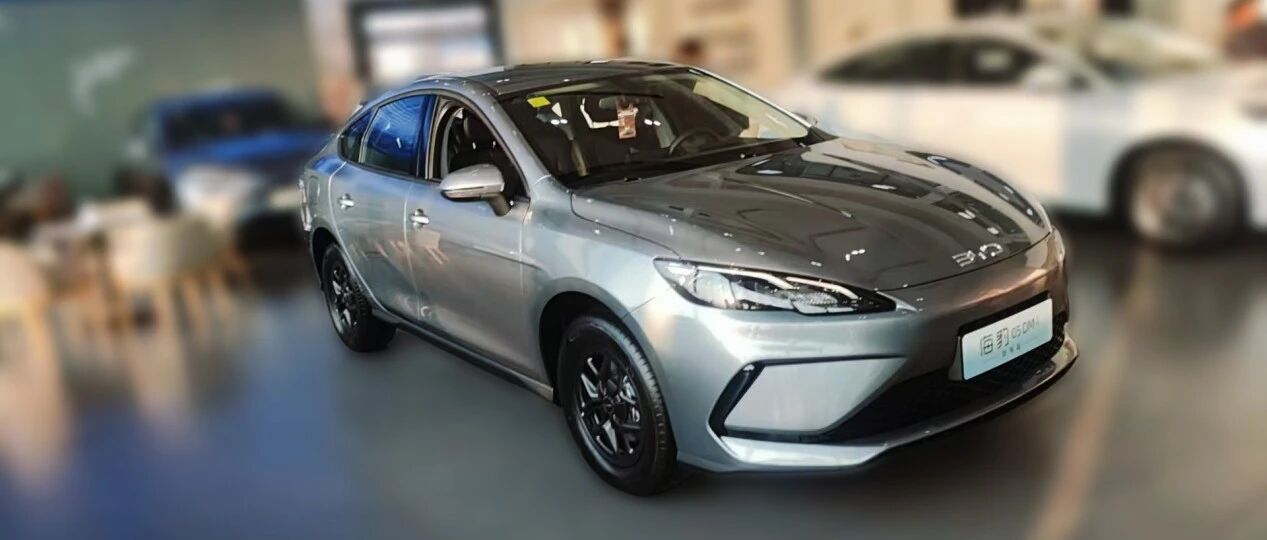
海豹05:新款纯电续航210km,大哥说买完车就准备去辞职
车fans· 2026-02-12 00:29
Core Viewpoint - The article discusses the launch and market positioning of the BYD Sea Lion 05, highlighting its competitive pricing and features, particularly the 210 km range version, while also addressing market challenges and customer perceptions [1][4][20]. Group 1: Product Launch and Pricing - The Sea Lion 05 was launched on January 18, with two models priced at 89,800 yuan and 99,800 yuan, respectively, and no current discounts available [2][4]. - The new model primarily features an extended range of 210 km, with no significant changes to other specifications, and lacks a formal launch event [8][15]. - The sales strategy is closely tied to the popularity of the Qin model, with customers expressing concerns about potential price drops in the future [10][19]. Group 2: Customer Insights and Market Competition - Customers often compare the Sea Lion 05 with the Qin and models from Geely, with Geely being a significant competitor due to its quality and design [10][12]. - There is a perception among customers that the current economic climate may lead to further price reductions, impacting their purchasing decisions [8][10]. - A customer shared that using the Sea Lion 05 for ride-hailing could provide a better work-life balance, indicating a shift in consumer behavior towards flexibility in work [12][13]. Group 3: Financing and Purchase Timing - Financing options include a two-year interest-free loan from Agricultural Bank, which is appealing to customers given the vehicle's lower price point [17][18]. - The article suggests that now is a good time for customers in need of a vehicle to make a purchase, especially considering the current market conditions [19]. - The sales team believes that the Sea Lion 05 offers strong value for daily commuting and ride-hailing, despite challenges in the broader market [20].
智通ADR统计 | 2月12日
智通财经网· 2026-02-11 22:31
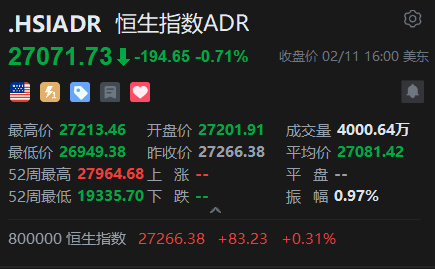
Core Viewpoint - The Hang Seng Index (HSI) closed at 27,071.73, down 194.65 points or 0.71% from the previous close, indicating a decline in market performance [1]. Group 1: Market Performance - The HSI reached a high of 27,213.46 and a low of 26,949.38 during the trading session, with a trading volume of 40 million shares [1]. - The average price for the HSI was 27,081.42, while the 52-week high and low were 27,964.68 and 19,335.70, respectively [1]. Group 2: Major Blue-Chip Stocks - HSBC Holdings closed at HKD 139.794, unchanged from the Hong Kong close, while Tencent Holdings closed at HKD 543.262, down 0.86% [2]. - Among the major stocks, Alibaba (HKD 160.100, down 0.25%), and Xiaomi (HKD 37.100, up 4.27%) showed varied performance [3]. - Notable gainers included BYD Company, which rose by 3.50% to HKD 99.150, while Pop Mart International fell by 5.49% to HKD 255.000 [3].





任泽平带你看前沿科技:2026研学计划
泽平宏观· 2026-02-11 16:07
Core Viewpoint - The article emphasizes the importance of practical learning experiences in cutting-edge technology sectors, highlighting the value of direct engagement with leading companies and experts in the field [12][24]. Schedule Overview - The schedule for 2025 includes visits to major technology companies such as Huawei, BYD, Tencent, and others, focusing on sectors like artificial intelligence, new energy, and biotechnology [23][24]. - Specific events are planned, including closed-door investment research meetings and thematic explorations of emerging industries [8][9]. Learning Experience - Participants will engage in deep explorations of technology companies, gaining insights into the full chain of development from laboratory to industrialization [12]. - The program aims to provide practical empowerment through discussions on cutting-edge technology trends, emerging industry ecosystems, and innovative business strategies [12]. Participant Feedback - Feedback from participants indicates that the program enhances understanding of macroeconomic trends and provides valuable networking opportunities with industry leaders [46][47]. - Participants express appreciation for the practical insights gained from direct interactions with top executives and the focus on real-world applications of theoretical knowledge [46][47].


连续4年“双第一”,中国工业第一城的跃迁!
Bei Jing Ri Bao Ke Hu Duan· 2026-02-11 15:29
Core Insights - Shenzhen's industrial economy is experiencing high-quality development, with a projected industrial added value growth of 5.4% in 2025, following a record growth of 9.7% in 2024, marking the highest rate in nearly 13 years [1][24] - The city's industrial output value exceeded 5 trillion yuan during the 14th Five-Year Plan period, with an average annual growth rate of 6.6%, and it has maintained the top position in both industrial output and added value among Chinese cities for four consecutive years [2][24] - Shenzhen's industrial structure is continuously optimizing, transitioning from traditional manufacturing to "smart manufacturing," which enhances its global competitiveness [3][4] Industrial Achievements - During the 14th Five-Year Plan, Shenzhen's industrial output value surpassed 5 trillion yuan, with the total industrial added value reaching 1.2 trillion yuan, achieving an average annual growth of 6.0% [2][24] - The number of national-level specialized and innovative "little giant" enterprises in Shenzhen reached 1,333, ranking first among cities in China [2] - The city has established 11 industrial projects with over 10 billion yuan in investment, with total industrial investment expected to exceed 1 trillion yuan [7] Innovation and R&D - The coverage rate of R&D institutions among industrial enterprises in Shenzhen increased from 40% to over 70% during the 14th Five-Year Plan, indicating a high density of innovation [12][14] - R&D investment in Shenzhen rose from 151.08 billion yuan in 2020 to 245.31 billion yuan in 2024, with an R&D intensity of 6.67%, the highest among Chinese cities [14][24] - Shenzhen's industrial technology transformation investment is expected to grow by 19.2% in 2025, reflecting the city's commitment to embracing new technologies [15] Future Development Plans - Shenzhen aims to enhance its modern industrial system with stronger international competitiveness, focusing on high-quality development and the promotion of new industrialization [20][23] - The city plans to accelerate the development of emerging industries, including new-generation electronic information and new energy vehicles, while also exploring new growth areas such as low-altitude economy and biomedicine [21][23] - By 2026, Shenzhen will implement a new round of key industrial chain development actions to solidify its manufacturing advantages and promote traditional industries' upgrades [20][23]