
BYD(01211)

Search documents
古巴这个大坑,中国能力挽狂澜么?
虎嗅APP· 2026-03-25 14:11
Core Viewpoint - The article discusses China's significant role in providing solar and energy storage solutions to Cuba amidst its energy crisis, highlighting the limitations of these solutions in addressing systemic issues within Cuba's energy infrastructure [4][7]. Group 1: China's Energy Solutions in Cuba - China has made substantial investments in solar power in Cuba, increasing the solar energy share from 5.8% to over 20% within a year [7]. - Despite these advancements, the fundamental issues in Cuba's energy system, such as aging infrastructure and fuel shortages, cannot be resolved solely through renewable energy [10][11]. Group 2: Global Energy Storage Market - China's energy storage sector is experiencing rapid growth, with overseas orders reaching 366 GWh last year, a 144% increase year-on-year [12]. - The top two export markets for Chinese energy storage batteries are Australia and the United States, with orders of approximately 55 GWh and 50 GWh, respectively [13]. Group 3: Competitive Landscape - In the global energy storage market, Chinese companies dominate, accounting for 93.2% of the global energy storage cell shipments in 2024 [14]. - The leading Chinese company, CATL, reported a revenue of 283.1 billion yuan in Q3 2024, a 9.28% increase year-on-year, with a net profit of 49 billion yuan, up 36.2% [14]. Group 4: Renewable Energy Growth - China is leading the world in renewable energy installations, with an expected addition of 373 million kW in 2024, representing over 50% of global new capacity [20]. - The cumulative installed capacity of renewable energy in China has surpassed 2 billion kW, equivalent to 90 Three Gorges Dams [21]. Group 5: Energy Storage Technology - The article emphasizes the importance of energy storage in stabilizing renewable energy output, as solar and wind power are intermittent [24][26]. - The shift towards lithium iron phosphate (LFP) batteries in China has led to a significant market share increase, from 33% in 2020 to around 90% currently, outperforming nickel-cobalt-manganese (NCM) batteries [34]. Group 6: International Market Dynamics - The U.S. renewable energy market is rapidly expanding, becoming the second-largest storage market globally, driven by the need for modernized infrastructure [36]. - Chinese energy storage solutions are also gaining traction in developing countries, where they are seen as essential for ensuring basic electricity needs [38][39].



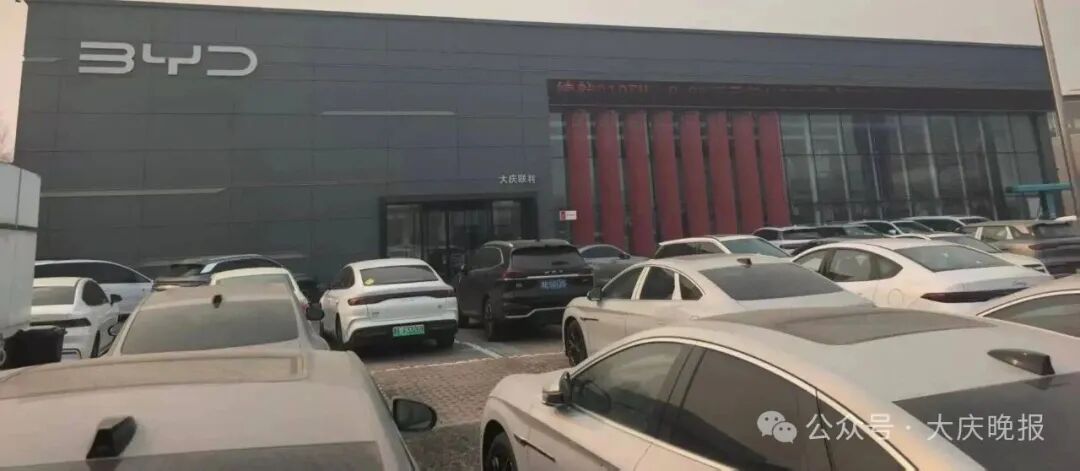
大庆一市民购车,本想买“26款”提车是“25款”!比亚迪4S店:集团已同意退款
Xin Lang Cai Jing· 2026-03-25 13:13
Core Viewpoint - A consumer dispute has arisen involving Mr. Chen and the BYD Daqing Lianli 4S dealership regarding the purchase of a vehicle that was not as advertised, leading to complications in the refund process [1][3]. Group 1: Purchase Details - Mr. Chen visited the dealership on February 27 and selected a BYD Qin L model, paying 79,900 yuan, but the payment was directed to a personal account rather than a corporate account, and no formal invoice was issued [3][11]. - Upon picking up the vehicle, Mr. Chen discovered it was manufactured in November 2025, contrary to his expectation of a 2026 model, which was displayed in the showroom [7][14]. Group 2: Refund Process - Initially, the dealership agreed to a refund when Mr. Chen requested it, but later claimed that the situation did not qualify for a refund, stating that the funds could only be used for in-store purchases [9][14]. - The dealership's management acknowledged that the payment to a personal account was improper and confirmed that the refund process was delayed due to initial disapproval from the group [16]. Group 3: Dealership's Response - The dealership's representative stated that Mr. Chen did not explicitly request a specific production date at the time of purchase and that the vehicle was considered a stock car [9][16]. - The dealership indicated that new vehicles were expected to arrive in March or April, which would include the 2026 models [16].
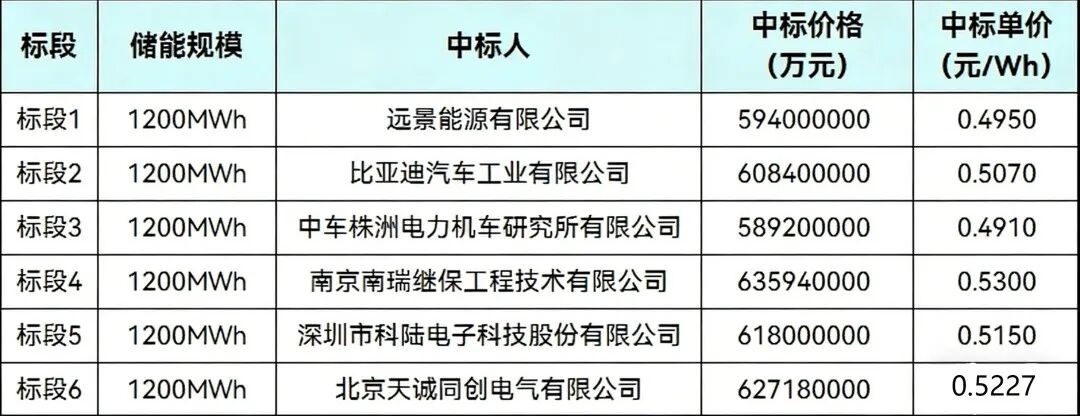
中广核7.2GWh储能系统框采:远景/比亚迪/中车株洲所/科陆等6企中标
Xin Lang Cai Jing· 2026-03-25 13:12
Core Insights - CGN New Energy announced the results of its 2026 energy storage system framework procurement, which includes six bidding sections with winning bids ranging from 0.491 to 0.53 CNY/Wh [1][15]. Group 1: Procurement Overview - The procurement is divided into six sections, each with a storage capacity of 1200 MWh, totaling 7200 MWh across all sections [3][17]. - The winning bidders are Envision Energy, BYD, CRRC Zhuzhou Electric Locomotive Research Institute, Nanjing Nari Technology, Shenzhen Kelu Electronics, and Beijing Tiancheng Tongchuang Electric [1][15]. Group 2: Bid Details - Bid prices for each section are as follows: - Section 1: Envision Energy, 594 million CNY, 0.4950 CNY/Wh [2][16]. - Section 2: BYD, 608.4 million CNY, 0.5070 CNY/Wh [2][22]. - Section 3: CRRC Zhuzhou, 589.2 million CNY, 0.4910 CNY/Wh [2][23]. - Section 4: Nanjing Nari, 635.94 million CNY, 0.5300 CNY/Wh [2][26]. - Section 5: Shenzhen Kelu, 618 million CNY, 0.5150 CNY/Wh [2][27]. - Section 6: Beijing Tiancheng, 627.18 million CNY, 0.5227 CNY/Wh [2][30]. Group 3: Technical Specifications - The supply scope for each project includes lithium iron phosphate batteries, battery management systems (BMS), energy management systems, and various supporting facilities [4][19]. - The framework contract is valid from January 2026 to January 2027 [4][19].

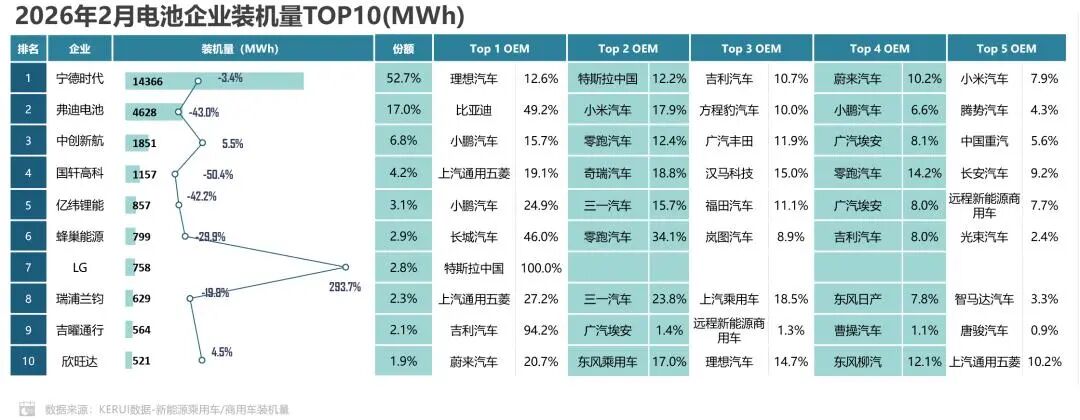
17.9%!比亚迪电池外供第一竟是小米
Xin Lang Cai Jing· 2026-03-25 13:12
Core Insights - In February 2026, BYD's Fudi Battery achieved an installed capacity of 4628 MWh, capturing 17.0% of the domestic market share, with Xiaomi Automotive emerging as its largest external customer at 17.9% procurement share, surpassing other partners [1][6][9] Group 1: Market Performance - The overall domestic power battery market is undergoing structural adjustments, with a year-on-year decline in installed capacity, yet lithium iron phosphate batteries maintain a dominant position due to their comprehensive advantages [4][9] - Fudi Battery's performance during this adjustment period is attributed to its technological and production capacity advantages, as well as strong support from external customers like Xiaomi [4][9] Group 2: Customer Dynamics - Xiaomi Automotive's procurement share of 17.9% positions it as the leading external customer for BYD batteries, significantly ahead of other clients such as Equation Leopard and XPeng, which have shares of 10.0% and 6.6% respectively [2][7] - The collaboration between Xiaomi and BYD has deepened, with multiple Xiaomi models utilizing Fudi's lithium iron phosphate batteries, enhancing their competitive edge in the market [3][8] Group 3: Strategic Developments - BYD is transitioning from a "self-supply" model to becoming a "global super supplier," with its external supply ratio exceeding 20% in the first three quarters of 2025, doubling from the end of 2024 [3][8] - The partnership with Xiaomi is expected to expand BYD's external supply landscape and foster deeper cooperation in technology development and production capacity [4][9]

新能源“攻上”矿山,千亿蓝海呼之欲出?
高工锂电· 2026-03-25 11:12
Core Viewpoint - The transition from diesel to renewable energy in mining is driven by economic factors rather than just environmental concerns, marking a significant shift in the industry [6][34]. Group 1: Economic Benefits of Renewable Energy in Mining - The introduction of renewable energy in mining drastically reduces costs, with electricity prices dropping from $0.4 per kWh to $0.1 per kWh, attracting global mining giants [7][8]. - In the Kamoa-Kakula copper mine in the Democratic Republic of Congo, a solar power project is expected to reduce electricity costs from $0.35 to $0.12 per kWh, a decrease of over 60% [8][9]. - A medium-sized mine with an annual electricity consumption of 100 million kWh can save $23 million annually by switching to renewable energy [9]. Group 2: Technological Advancements and Market Dynamics - The cost of battery technology has significantly decreased, with lithium carbonate prices dropping from 600,000 yuan per ton to around 200,000-300,000 yuan for a 700 kWh electric mining truck battery [15][16]. - The market for electric mining trucks is projected to reach nearly 100 billion yuan by 2030, driven by increasing penetration rates and the need for sustainable mining solutions [21][23]. Group 3: Industry Collaborations and Strategic Moves - Strategic partnerships are forming, such as the collaboration between CATL and Rio Tinto, aimed at supporting the electrification of mining operations [18]. - Companies like BYD are also investing in technology for autonomous mining trucks, indicating a competitive landscape for electric mining solutions [21][27]. Group 4: Challenges and Future Outlook - Despite the economic advantages, challenges such as grid stability, battery safety, and initial investment costs remain significant hurdles for the transition to renewable energy in mining [29][30][31]. - The shift towards distributed energy systems is gaining traction, with off-grid mining solutions already being implemented in regions like Africa [33][38].

公司问答丨银河微电:目前公司已进入比亚迪、蔚来、博世、大陆集团等全球顶级Tier1及终端车企供应链
Ge Long Hui· 2026-03-25 09:29
Core Viewpoint - The company, Galaxy Microelectronics, is positioned as a leading player in the automotive electronics sector, with a strong focus on automotive-grade semiconductor devices and a robust supply chain integration with top-tier automotive manufacturers [1] Group 1: Company Advantages - Galaxy Microelectronics is the first domestic manufacturer of discrete devices to join the AEC International Automotive Electronics Association, ensuring all its automotive-grade products meet AEC-Q certification standards [1] - The product range includes silicon-based diodes, transistors, and MOSFETs, with applications expanding from peripheral systems like headlights and seats to critical systems such as body control, ADAS, and powertrains [1] Group 2: Market Position and Growth - The company has successfully entered the supply chains of global top-tier automotive manufacturers such as BYD, NIO, Bosch, and Continental, with automotive product sales experiencing rapid growth over the years [1] - Strong customer collaboration and loyalty provide a solid foundation for continued volume growth in the automotive sector [1] Group 3: Future Outlook - The automotive-grade semiconductor device industrialization project is progressing as planned, with future expansions in automotive capacity and a richer portfolio of high-reliability products [1] - The company aims to deepen cooperation with core customers and capitalize on the opportunities presented by the localization of new energy vehicles and industry development, driving rapid growth in the automotive business [1]


华为20年老兵赴港IPO,96%收入靠比亚迪
和讯· 2026-03-25 09:23
Core Viewpoint - Chengtai Technology, a hard-tech company led by veterans from Huawei, has submitted its IPO application to the Hong Kong Stock Exchange, with significant revenue growth but underlying risks due to high dependency on a single client, BYD, and declining profit margins [1][13][28]. Group 1: Company Background and Technology - Chengtai Technology has developed a complete self-research capability over nearly a decade, holding 88 patents, including 35 invention patents, and has a product matrix that meets various levels of intelligent driving needs [5]. - The company specializes in millimeter-wave radar, which is essential for autonomous driving functions, and has become a key supplier for BYD, integrating its products into over 20 models [2][5]. Group 2: Financial Performance - Chengtai Technology's revenue has surged from 156.5 million yuan in 2023 to 1.122 billion yuan in 2025, with a compound annual growth rate of 167.8% [13]. - Despite revenue growth, the company has faced continuous negative operating cash flow, with net outflows of 61.89 million yuan in 2023, 6.98 million yuan in 2024, and 137.93 million yuan in 2025 [24][25]. Group 3: Client Dependency and Profitability Issues - Over 96.4% of Chengtai Technology's revenue is derived from BYD, indicating a significant risk tied to the performance of a single client [13][18]. - The gross margin for its core products has dropped from 34.0% in 2024 to 15.1% in 2025, with the average selling price of forward radar falling to 118 yuan and corner radar to 108 yuan, resulting in a profit margin of less than 20 yuan per unit [17][18]. Group 4: Capital and Funding - Chengtai Technology has completed eight rounds of financing since its inception, raising over 350 million yuan, with notable investors including major market institutions and state-owned funds [7][11]. - The company's valuation has increased from 80 million yuan post-angel round to 1.32 billion yuan post-C round, reflecting strong investor confidence [11]. Group 5: Future Outlook and IPO Significance - The upcoming IPO is seen as a crucial step for Chengtai Technology to alleviate liquidity issues and reduce reliance on BYD, enabling the company to pursue independent growth [28]. - The company faces a significant cash shortfall, with only 14.59 million yuan in cash against 323 million yuan in short-term debt, highlighting the urgency of its IPO [27].

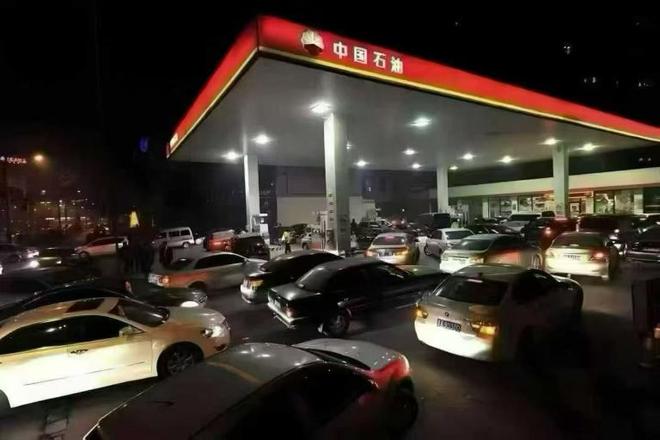
油价重回“9元时代”,比亚迪插混成为现实解法
Guan Cha Zhe Wang· 2026-03-25 08:08
Core Viewpoint - The rising oil prices and geopolitical tensions are amplifying the value proposition of electric vehicles (EVs), particularly plug-in hybrid electric vehicles (PHEVs) like those from BYD, which offer a dual fuel option that enhances consumer certainty in uncertain times [1][5]. Group 1: Market Dynamics - The recent increase in domestic fuel prices, with gasoline rising by approximately 0.87 yuan per liter, has led to an average price of 8.53 yuan for 92-octane gasoline and over 9 yuan for 95-octane gasoline, resulting in an additional cost of around 50 yuan for a full tank [1]. - The closure of the Strait of Hormuz has driven global oil prices higher, potentially accelerating the shift towards electric vehicles, with Chinese EVs gaining a competitive edge over traditional fuel vehicles [3]. Group 2: Consumer Preferences - Mainstream family fuel vehicles are priced between 100,000 to 150,000 yuan, but consumers face challenges with short-range pure electric models in this price range, while PHEVs often have issues like limited electric range and high fuel consumption when depleted [3]. - BYD's large battery PHEVs are addressing these consumer pain points, with models like the 2026 Qin PLUS DM-i offering a pure electric range of 210 km and starting prices around 80,000 yuan [3]. Group 3: Cost Analysis - From a cost perspective, BYD's large battery PHEVs are even cheaper than comparable fuel models, with annual energy costs for daily commuting estimated at under 4,000 yuan, compared to nearly 13,000 yuan for fuel vehicles [4]. - The fifth-generation DM technology from BYD has optimized fuel consumption in depleted states to 2.6 liters per 100 km, translating to a cost of approximately 0.23 yuan per kilometer, thus extending the refueling intervals for users [4]. Group 4: Shift in Consumer Focus - In a high oil price volatility environment, consumers are increasingly concerned about the controllability of usage costs rather than just technical specifications and range figures [5]. - BYD's PHEVs are transforming uncertain energy prices into flexible travel options, providing a new level of certainty for global consumers [5].
承泰科技赴港IPO:业务“只做比亚迪”,占比96%以上
Jing Ji Guan Cha Bao· 2026-03-25 04:04
Core Insights - The company, Chengtai Technology, is attempting to make a significant leap in the capital market amidst the smart driving wave by filing for an IPO on the Hong Kong Stock Exchange [1] - Chengtai Technology has shown rapid revenue growth, with a projected increase from 156.5 million yuan in 2023 to 1.1225 billion yuan in 2025, indicating nearly a sevenfold growth in just two years [2][3] - The company's growth is heavily reliant on a single major client, which poses risks due to a lack of customer diversification [3][4] Revenue Growth - Chengtai Technology's revenue is expected to grow significantly, with figures of 156.5 million yuan in 2023, 348.1 million yuan in 2024, and 1.1225 billion yuan in 2025 [2] - The majority of this revenue growth is attributed to a single client, with revenue contributions from the largest customer projected to be 91.3% in 2023, 93.6% in 2024, and 96.4% in 2025 [3] Customer Dependency - The company lacks a diversified customer base, with the top five clients accounting for 99.4% of revenue, indicating a high concentration risk [3] - The primary client is widely believed to be BYD, which has been identified as a significant player in the supply chain [3] Long-term Stability Concerns - The company's growth model lacks stability as it does not have long-term contracts that cover the entire lifecycle of the vehicle models, relying instead on less binding agreements [4][5] - This dependency on a single client for revenue raises concerns about the company's long-term viability and pricing power [5][11] Financial Performance - Despite revenue growth, the company's gross margin is expected to decline significantly, from 34.0% in 2024 to 15.1% in 2025, indicating a shift towards lower-margin products [8] - The average selling price of products is projected to drop from 184 yuan per unit to 111 yuan per unit, reflecting a strategy of price reduction to gain market share [8] Cash Flow Issues - The company has experienced negative operating cash flow, which is expected to worsen, primarily due to increased accounts receivable and inventory levels [9][10] - The financial structure has been improved through accounting maneuvers, but operational cash flow remains under pressure [10] Market Position and Risks - Chengtai Technology's business model is heavily reliant on the continued expansion of external procurement by its core client, BYD, which is also enhancing its in-house capabilities [12][13] - The company has not established a stable multi-client structure, making it more sensitive to changes in strategy from its primary client [15] Structural Challenges - The company faces a set of interrelated structural challenges, including weak bargaining power due to customer concentration, declining margins, and cash flow pressures [18] - The company's growth trajectory resembles that of a function embedded within BYD's supply chain rather than an independent growth entity [19]
「寻找比亚迪股东星球合伙人」计划正式启动!
Xin Lang Cai Jing· 2026-03-25 03:59
Group 1 - The company is launching the second phase of the "Shareholder Star Community," which will provide a special "ID card" to participants [16][18] - The community aims to be a creative hub for shareholders, encouraging them to share their experiences, investment insights, and connect with like-minded individuals [20][22] - A new feature called "Shareholder Suggestions" will be introduced, allowing shareholders to voice their opinions and contribute to the company's development [25][26] Group 2 - The community is designed to foster collaboration and engagement among shareholders, transforming them from mere observers to active contributors [13][26] - The initiative emphasizes the importance of shareholders as essential partners in the company's journey [13][30] - Participants can join the community by searching for the "BYD Shareholder Star" mini-program on WeChat [28]
