LI AUTO-W(02015)

Search documents
多家车企相继发布“七年低息贷”金融政策 汽车股普遍受压 理想汽车-W(02015)跌3.97%
Xin Lang Cai Jing· 2026-02-26 10:21
Group 1 - Automotive stocks are under pressure, with notable declines in companies such as Li Auto (-3.97%), Xpeng (-3.52%), Leap Motor (-3.34%), BYD (-2.73%), Great Wall Motors (-2.76%), Seres (-2.64%), and Chery (-2.35%) [1][2] - Since the beginning of the Year of the Horse, multiple car manufacturers have launched "seven-year low-interest loan" financial policies, indicating a growing trend in the automotive sector [1][2] - In February alone, nearly ten automotive brands have introduced the "seven-year low-interest loan" policy, with the total exceeding twenty brands when considering January and February combined [2]

美股中概股盘前普跌,理想汽车跌3%


Xin Lang Cai Jing· 2026-02-26 09:04
Group 1 - U.S. Chinese concept stocks are experiencing a pre-market decline, with Pinduoduo down by 1% [1] - JD.com and Tencent Music both fell by 2% [1] - Xpeng Motors, Li Auto, Baidu, Beike, and Alibaba all saw a drop of 3% [1]
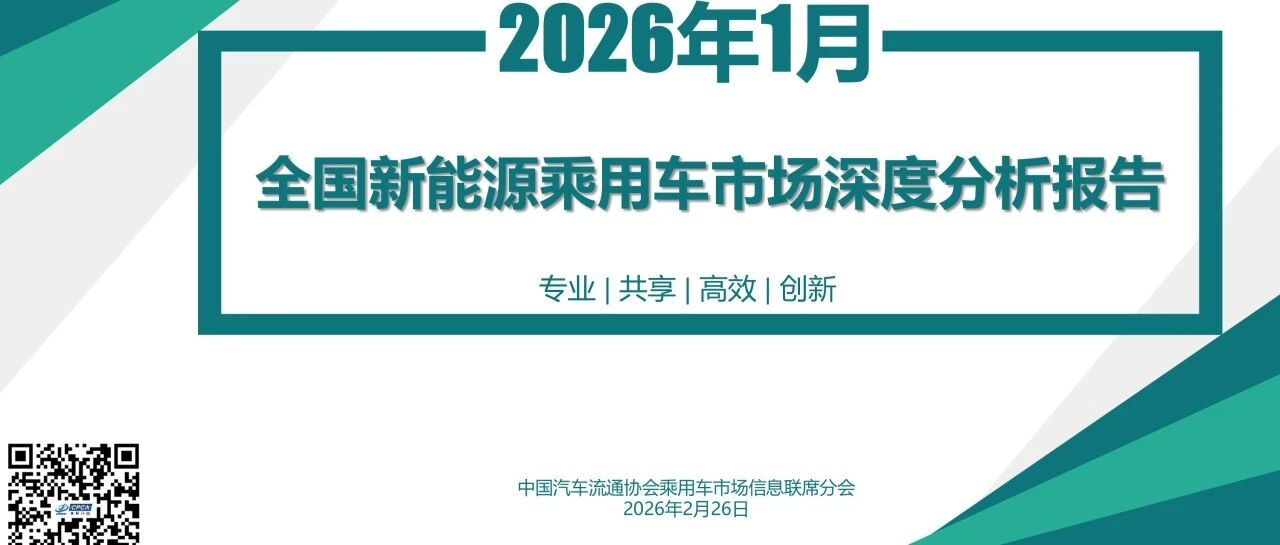
【深度分析】2026年1月份全国新能源市场深度分析报告
乘联分会· 2026-02-26 08:36
点 击 蓝 字 关 注 我 们 本文为中国汽车流通协会乘用车市场信息联席分会发布的权威深度市场分析报告,涵盖了: 一、整体总市场 二、 细分总市场 三、 出口市场 四、 厂商表现 五、 车型大类细分市场 六、 品牌定位细分市场 七、 国别定位细分市场 八、 价格定位细分市场 Contents 说明: 总市场 (轿车、MPV、SUV) : ICE+BEV+PHEV 新能源市场(轿车、MPV、SUV): BEV+PHEV 出口:整车+CKD NEV: 新能源 BEV: 纯电动 PHEV: 插电混动 ICE: 燃油车 NEV= BEV (含FCV) +PHEV (含EREV) 产销数据来源 ,能力的领 中国汽车流通协会乘用车市场信息联席分会月报表(零售表,狭义汇总) -终稿 未计入份额低于2%的细分市场 登录品牌 奔驰、宝马、奥迪 凯迪拉克、捷豹、路虎、沃尔沃、英菲尼迪、讴歌 特斯拉、仰望、尊界 价格: 以起步市场指导价划分 10-20 分为10万以下、10-20万、20-30万、30-40万、40万以上五档 3、出口市场 4、厂商表现 型 本点 | | | | 整体总市场产销情况 | | | | --- | -- ...






港股汽车股尾盘持续走低,小鹏汽车(09868.HK)跌超5%,理想汽车(02015.HK)跌超4%,比亚迪股份(01211.HK)、赛力斯(09927.HK)等跟跌。
Jin Rong Jie· 2026-02-26 07:43
Group 1 - Hong Kong automotive stocks continued to decline towards the end of trading, with Xpeng Motors (09868.HK) dropping over 5% [1] - Li Auto (02015.HK) fell more than 4%, indicating a broader trend in the sector [1] - Other companies such as BYD Company (01211.HK) and Seres (09927.HK) also experienced declines, reflecting a negative sentiment in the automotive market [1]
港股汽车股尾盘持续走低,小鹏汽车(09868.HK)跌超5%,理想汽车(02015.HK)跌超4%,比亚迪股份(01211.HK)、赛力斯(09927....
Jin Rong Jie· 2026-02-26 07:19
Group 1 - Hong Kong automotive stocks experienced a decline towards the end of trading, with Xpeng Motors (09868.HK) falling over 5% [1] - Li Auto (02015.HK) also saw a drop of more than 4% [1] - Other companies such as BYD Company (01211.HK) and Seres (09927.HK) followed suit with declines [1]
港股异动 | 汽车股集体走低 1月汽车销量同环比回落 机构看好节后景气度回升
Zhi Tong Cai Jing· 2026-02-26 06:05
Core Viewpoint - The automotive sector is experiencing a collective decline in stock prices, with major companies like Li Auto, Xpeng Motors, Great Wall Motors, and GAC Group reporting significant drops in their share prices amid a decrease in overall vehicle sales in China [1] Group 1: Automotive Sales Performance - In January, China's overall vehicle sales decreased by 3.2% year-on-year, while new energy vehicle sales saw a marginal increase of 0.1% [1] - According to the China Passenger Car Association, wholesale sales of new energy passenger vehicles fell by 3.3% year-on-year, and retail sales dropped by 20.0% [1] - Analysts from Guotai Junan Securities indicated that the decline in sales is attributed to demand being pulled forward at the end of the previous year, with expectations for market recovery as new models are launched and new purchase subsidies are issued post-Chinese New Year [1] Group 2: Company-Specific Developments - Li Auto's stock fell by 4.11% to HKD 68.9, while Xpeng Motors dropped by 3.59% to HKD 68.55, Great Wall Motors decreased by 2.68% to HKD 13.05, and GAC Group fell by 2.11% to HKD 3.72 [1] - Tesla China announced a new round of financial incentives for vehicle purchases, offering low-interest loans across all models until March 31, with specific models like Model 3 and Model Y available for a 5-year interest-free option, interpreted as a strategy to boost terminal sales [1]
比亚迪加入、马年“金融战”再开打!超二十家汽车品牌力推七年低息贷款
Xin Lang Cai Jing· 2026-02-25 07:28
Group 1 - Multiple automotive brands have launched "seven-year low-interest loan" financial policies since the beginning of the Year of the Rabbit, with BYD offering daily payments as low as 29 yuan [1] - Nearly ten automotive brands have introduced "seven-year low-interest loan" policies in February alone, including brands like Chery, Jietu, and NIO, with the total exceeding twenty brands when considering January and February [1] - Tesla was the first to introduce a limited-time ultra-long-term car purchase plan in China, offering annual interest rates below 1% for Model 3 and Model Y, reflecting banks' confidence in Tesla's product reliability [1] Group 2 - Following Tesla, companies like Geely, Xiaomi, and Li Auto quickly adopted similar financial strategies, with Dongfeng Nissan even offering an "eight-year ultra-long-term low-interest" plan [2] - In addition to financial policies, various promotional activities have emerged in the automotive market, such as GAC Honda's significant discount on the Accord, showcasing a trend of aggressive marketing strategies [2] - The introduction of seven-year low-interest loans has become a favored promotional tool among mainstream automakers, helping to stimulate orders and capture market share while maintaining a respectable pricing strategy [2]

太猛了!16家汽车企业2026年销量目标马力全开
Zhong Guo Qi Che Bao Wang· 2026-02-24 06:11
Group 1 - In 2025, China's automobile production and sales both exceeded 34 million units, setting a new historical record [1] - The year 2026 marks the beginning of the "14th Five-Year Plan," with many automotive companies setting ambitious sales targets and clear strategies for growth [1] Group 2 - China FAW aims for a sales target of 3.546 million units in 2026, a year-on-year increase of 7.39% from 2025 [4] - Dongfeng Motor targets 3.25 million units for 2026, with over 30% year-on-year growth, focusing on new energy vehicles and exports [6] - Changan Automobile sets a goal of 3.3 million units for 2026, a 13.3% increase, with a strong emphasis on new energy vehicle sales [8] Group 3 - SAIC Motor's sales target for 2026 is projected between 4.5 million and 5 million units, reflecting a pragmatic approach [10] - BAIC Group aims for 2.2 million units in 2026, with a focus on new energy products and smart technology [12][13] - GAC Group's sales in Q4 2025 reached 537,800 units, showing a significant quarter-on-quarter increase of 25.56% [16] Group 4 - Chery aims for a sales target of 3.2 million units in 2026, a 14.03% increase from 2025, with plans to launch 17 key models [20] - BYD achieved a record of 4.602 million units in 2025 and plans to sell 1.3 million vehicles overseas in 2026, a 24.3% increase [22][23] - Geely targets 3.45 million units for 2026, a 14% increase, with a focus on new energy vehicle launches [25][26] Group 5 - Great Wall Motors sets a target of 1.8 million units for 2026, a 36% increase from 2025, supported by new technology [28][29] - Li Auto aims for 550,000 units in 2026, with a growth plan of approximately 40% [31] - NIO's sales target for 2026 is between 456,000 and 489,000 units, with plans to expand its battery swap station network [33] Group 6 - XPeng Motors targets 550,000 to 600,000 units for 2026, with a growth rate of approximately 28% to 39.7% [36] - Leap Motor aims for a sales target of 1.05 million units in 2026, a 67.5% increase, with plans to launch four new models [38] - Xiaomi Auto sets a target of 550,000 units for 2026, a 34% increase, focusing on technology development and user experience [40] Group 7 - Harmony Smart aims for over 1 million units in 2026, with plans to launch more than 10 new models [43]


理想汽车加入欧盟中国商会
Xin Lang Cai Jing· 2026-02-23 23:22
2月24日,据欧盟中国商会消息,经董事会一致批准通过,理想汽车以正式会员身份加入欧盟中国商 会,并成为商会汽车工作成员。欧盟中国商会期待包括理想汽车在内的汽车工作组成员及所有会员继续 通力合作,不仅在商业上共谋发展,更致力于共同维护在欧中企的合法权益,营造中企在欧的良好营商 环境,推动中欧经贸合作迈向更高水平。 ...
现象七十二变,2026中国汽车产业认知全景图谱
汽车商业评论· 2026-02-23 23:04
设计 | 常 笑 撰文 | 轩 辕矩阵 编辑 | 黄大 路 2026年,岁次丙午,中国汽车产业在"火马年"的奔腾与热烈中,迎来了一个深具历史意义的节点。 为此,"轩辕矩阵"推出"大咖同行,认知过年"特别策划,邀请72位主机厂和供应链领袖人物和高级管理者,为《汽车商业评论》《轩辕科技评 论》以及《铃声ECHO》的读者们献上新春贺词。 如我们所看到的那样,他们并未重复传统的新春祝词,而是选择以自省式的深度洞察,共同勾勒出这份关于产业焦虑、范式革命与战略转向的 深度白皮书。 这不仅是中国汽车人的一次集体认知"补课",更是向过去十年"唯规模论"时代的正式告别。 加入轩辕同学 , 成就新汽车人! 站在这个从量变向质变跃迁的关键隘口,他们的发声指明了2026年中国汽车的五大核心进化方向: 经营哲学上:行业正从无序的"血酬竞争"转向价值主义,强调品牌向上与可持续的利润回血,守住长期主义的底线。 AI转型上:汽车正从单一的硬件实体向AI原生智能体跃迁,AI不仅重塑了人机交互,更彻底改变了车企的研发体系与组织效能。 全球化进程上:中国市场已由"贸易输出"转型为全球创新的生态中心,出海逻辑从简单的车辆出口升级为技术标准与本土化服 ...