LI AUTO-W(02015)

Search documents
恒生科技重回20日线!多因素共振,港股科技资产迎补涨
Mei Ri Jing Ji Xin Wen· 2026-01-23 01:43
Group 1 - The Hang Seng Tech Index has returned above the 20-day moving average, indicating a short-term bullish trend, with notable stock movements from major companies like Baidu, Alibaba, Bilibili, Kuaishou, SMIC, Hua Hong Semiconductor, and Li Auto [1] - Since October of last year, Hong Kong tech assets have been under pressure due to structural industry differences, negative impacts from delivery subsidies, and year-end liquidity constraints. However, these factors are expected to improve by 2026, driven by AI industry growth, a cycle of overseas interest rate cuts, foreign capital inflows, and the return of southbound funds, suggesting a potential rebound for undervalued Hong Kong tech stocks [1] - Year-to-date, southbound funds have seen a cumulative net inflow of nearly 68 billion HKD into the Hong Kong stock market. Looking ahead to 2026, domestic AI models like DeepSeek are expected to launch around the Chinese New Year, while major domestic companies are increasing capital expenditures to enhance overall model capabilities [1] Group 2 - The National Securities Hong Kong Stock Connect Technology Index includes biotech leaders such as BeiGene, Innovent Biologics, and WuXi Biologics, currently trading at a rolling P/E ratio of only 27 times, which is below the 50th percentile of the past decade, indicating significant mean reversion potential [2]


中国资产大涨 阿里巴巴涨超5%!美国公布重磅数据 特斯拉市值一夜增超4100亿元!国际金价银价同创历史新高
Mei Ri Jing Ji Xin Wen· 2026-01-22 23:21
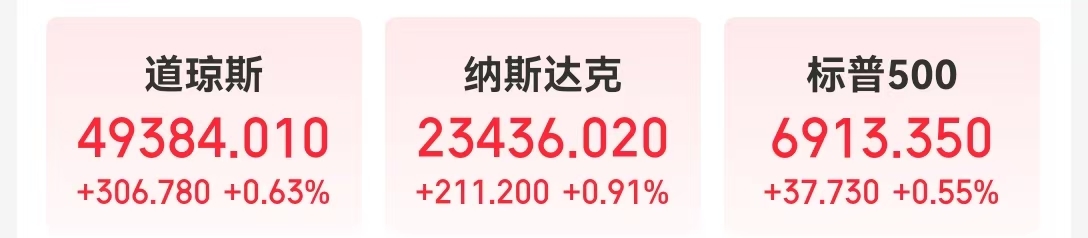
Group 1: Market Performance - US stock markets closed higher on January 22, with the Dow Jones up 0.63%, Nasdaq up 0.91%, and S&P 500 up 0.55% [1] - Technology stocks saw significant gains, with Meta rising 5.7%, Oracle up over 2%, and Tesla increasing by over 4% [2][3] Group 2: Tesla Developments - Tesla's market value increased by $59.6 billion (approximately 415.6 billion RMB) in one night [3] - CEO Elon Musk announced that Tesla may start selling its humanoid robot "Optimus" to the public by the end of next year, with the robots currently performing simple tasks in factories [4] - Musk predicts that by the end of 2026, these robots will be capable of completing more complex tasks [5] Group 3: Intel Financials - Intel reported fourth-quarter revenue of $13.67 billion, a year-over-year decrease of 4.1%, with adjusted earnings per share of $0.15, up from $0.13 the previous year [6] - The company expects first-quarter adjusted earnings per share of $0.00, with revenue projected between $11.7 billion and $12.7 billion [6] Group 4: Economic Indicators - The US third-quarter GDP annualized growth rate was revised to 4.4%, slightly above the expected 4.3% [9] - Initial jobless claims for the previous week were reported at 200,000, below the expected 210,000 [8]


基于9份官网招聘推理, 理想打算做量产的用于工业生产的人形机器人
理想TOP2· 2026-01-22 17:57
Core Viewpoint - The article suggests that the company is developing a high-performance humanoid robot aimed at industrial manufacturing scenarios, seeking mass production rather than merely creating a demo or a consumer-grade product [2][4]. Group 1: Job Descriptions and Implications - The company is actively recruiting for various engineering positions, indicating a focus on developing a humanoid robot with capabilities such as dexterous manipulation and bipedal movement [1][2]. - The job descriptions emphasize the need for candidates to address structural issues during trial and mass production phases, which implies a serious commitment to bringing the product to market [3][4]. - Specific requirements for embedded hardware engineers include experience with high-power electrical components, indicating the robot's design is intended for industrial applications rather than consumer use [6][7]. Group 2: Technical Requirements and Standards - The robot's design incorporates advanced industrial communication protocols like EtherCAT, which is known for its high real-time performance and complexity, further supporting its industrial application focus [5][7]. - The emphasis on thermal management and fault diagnosis in the design process suggests that the robot will operate under high power conditions, necessitating robust safety measures [3][4]. - The requirement for automated calibration tools indicates that the company aims for consistent performance across units, a hallmark of mass production rather than experimental prototypes [4][5].

车企密集推出“7年低息”购车方案 超长期低息方案的真实让利边界、成本分摊方式及其对行业竞争秩序的影响 仍有待市场检验
Zheng Quan Ri Bao· 2026-01-22 16:40
Core Viewpoint - The automotive market is shifting from direct price reductions to low-interest financing options, with several brands introducing long-term low-interest plans to stimulate demand amid consumer hesitation and inventory pressure [1][3]. Group 1: Low-Interest Financing Strategies - Following Tesla's introduction of a "7-year low-interest" financing plan, brands like Xiaomi, Li Auto, Xpeng, and Dongfeng Yipai have launched similar "6 to 7-year low-interest" and "low down payment, low monthly payment" installment policies [1][2]. - Tesla's financing plan offers an annual interest rate as low as 0.5% (approximately 0.98% annualized), with options tailored to different models and down payment levels [2]. - Xiaomi and Li Auto have adopted the "7-year low-interest" model to attract budget-sensitive consumers, emphasizing low monthly payments and down payment thresholds [2]. Group 2: Market Dynamics and Consumer Behavior - The introduction of low-interest financing is closely linked to fluctuations in consumer demand, with data indicating a 3.8% year-on-year increase in retail sales of passenger vehicles in 2025, but a decline in December retail numbers [3]. - The current market environment, characterized by consumer hesitation, has led automakers to utilize financial tools to stimulate demand and secure orders [3]. Group 3: Regulatory Environment and Compliance - Regulatory bodies have emphasized the need to resist chaotic price wars, enhancing the tactical value of financial subsidies as a means to maintain market order [4]. - The Ministry of Industry and Information Technology and other agencies have called for strict monitoring of pricing behaviors and compliance with regulations to ensure fair market practices [4]. - The introduction of guidelines for pricing behavior in the automotive industry aims to standardize promotional and pricing practices, indicating that financial subsidies are not outside regulatory scrutiny [5]. Group 4: Potential Implications and Concerns - While low-interest financing can reduce immediate cash flow pressure and encourage purchases, there are concerns about the long-term sustainability of such strategies [5]. - Risks include potential consumer leverage issues, demand being pulled forward, and the possibility of a return to price wars if financial incentives are not managed properly [5][6]. - The future effectiveness of these promotional strategies will depend on transparent compliance with promotional rules and the ability of companies to provide sustainable product value beyond financial incentives [6].


纳斯达克中国金龙指数涨超2%,1药网涨9.38%
Mei Ri Jing Ji Xin Wen· 2026-01-22 15:21
Group 1 - The Nasdaq China Golden Dragon Index increased by over 2% on January 22 [1] - 1药网 (1Drug Network) rose by 9.38% [1] - 阿里巴巴 (Alibaba) saw a gain of 6.90% [1] - 理想汽车 (Li Auto) experienced a rise of 5.99% [1] - 世纪互联 (Century Internet) increased by 6.03% [1] - 康迪车业 (Kandi Technologies) grew by 5.64% [1]


美股异动 | 热门中概股普涨 理想汽车(LI.US)涨超7%
智通财经网· 2026-01-22 14:57
Group 1 - The Nasdaq China Golden Dragon Index opened with a gain of 1.6%, indicating a positive trend in popular Chinese concept stocks [1] - Notable stock performances include Li Auto (LI.US) rising over 7%, Alibaba (BABA.US) increasing by more than 6%, and GDS Holdings (GDS.US) up over 4% [1] - Other companies such as NIO (NIO.US), Bilibili (BILI.US), and Pony.ai (PONY.US) also saw gains exceeding 3% [1] Group 2 - The Governor of the People's Bank of China, Pan Gongsheng, stated that there is still room for further reserve requirement ratio cuts and interest rate reductions this year [1] - The People's Bank of China aims to effectively implement and supervise interest rate policies to maintain low comprehensive financing costs in society [1] - Luke Browne, Head of Asset Allocation at Manulife Investment Management for Asia, expressed a preference for Chinese stocks, suggesting that while explosive returns are not expected, there are still investment opportunities available [1]


基于9份官网的急招岗位, 推测理想在做人形机器人
理想TOP2· 2026-01-22 12:16
Core Viewpoint - The company is actively recruiting for various engineering positions related to humanoid robotics, indicating a strategic focus on developing advanced robotic technologies. Group 1: Job Positions and Responsibilities - The company is hiring for roles including dexterous robotic hand design, algorithm development, embedded software engineering, and joint module engineering, suggesting a comprehensive approach to humanoid robot development [1][5] - Specific roles emphasize the need for experience in bipedal walking algorithms, coordination of body parts, and the design of multi-joint systems, indicating a focus on complex motion control [1][8][9] Group 2: Technical Specifications - The robotic hand will utilize a direct drive structure rather than a cable-driven system, highlighting a preference for advanced motor technologies such as hollow cup and brushless DC motors [2] - The core driving mechanism will involve high-power joint modules with hundreds of amperes and a hybrid architecture combining reinforcement learning and model predictive control, emphasizing the importance of advanced algorithms in motion control [3] - The system architecture will incorporate STM32 or TI C2000 series microcontrollers, with real-time operating systems like FreeRTOS and RT-Linux, indicating a focus on high-performance computing and real-time processing [4] Group 3: Design Challenges - The design of the dexterous hand requires independent control of fingers and the ability to handle multimodal data from visual and tactile sensors, which presents significant engineering challenges in terms of bandwidth and latency [4] - The integration of high-torque direct drive motors in compact spaces while managing heat dissipation and wiring issues is a critical design challenge, necessitating collaboration between mechanical and electronic engineering teams [4]

理想的VLA,不只是辅助驾驶
Jin Rong Jie· 2026-01-22 09:22
Core Insights - The introduction of the VLA (Visual-Language-Action) driver model by Li Auto in 2025 marks a significant leap in AI's understanding of the physical world, moving beyond traditional assisted driving to a more advanced form of intelligent interaction [1][9][14] Group 1: Evolution of Assisted Driving - Li Auto's evolution in assisted driving reflects the technological advancements and cognitive deepening within China's smart automotive industry, transitioning from rule-based systems to AI-driven models [3][6] - The shift from "imitation" to "thinking" in driving models highlights the limitations of earlier systems, which relied heavily on human-engineered rules and lacked deep reasoning capabilities [3][6] - The introduction of the VLA model aims to overcome the communication barriers and slow reasoning speeds that hindered previous models, enhancing the overall performance of assisted driving [6][10] Group 2: VLA Technology and Its Implications - The VLA model is positioned as a foundational technology for the next generation of AI systems, transforming vehicles from passive tools into proactive service robots [9][12] - Li Auto's commitment to the VLA model is supported by a vast dataset from over 1.5 million vehicles, enabling a data loop that enhances the model's training and performance [6][10] - The VLA model's ability to exhibit "human-like" behaviors signifies a shift towards a more intuitive interaction between humans and vehicles, allowing for voice commands and complex decision-making [7][10] Group 3: Future of the Automotive Industry - The ongoing development of the VLA model is expected to lead to the emergence of "automobile robots," capable of achieving higher levels of automation and intelligence [12][14] - Li Auto's exploration of VLA technology is influencing other leading companies in the industry, indicating a broader trend towards integrating large-scale data and advanced algorithms into automotive systems [12][14] - The ultimate goal of the assisted driving industry may evolve from merely achieving "autonomous driving" to creating mature embodied intelligent products, marking a new era in the automotive and AI sectors [12][14]
美股异动丨理想汽车盘前涨3.5% H股今日涨超4% 全新理想L9 3月登场
Ge Long Hui· 2026-01-22 09:18
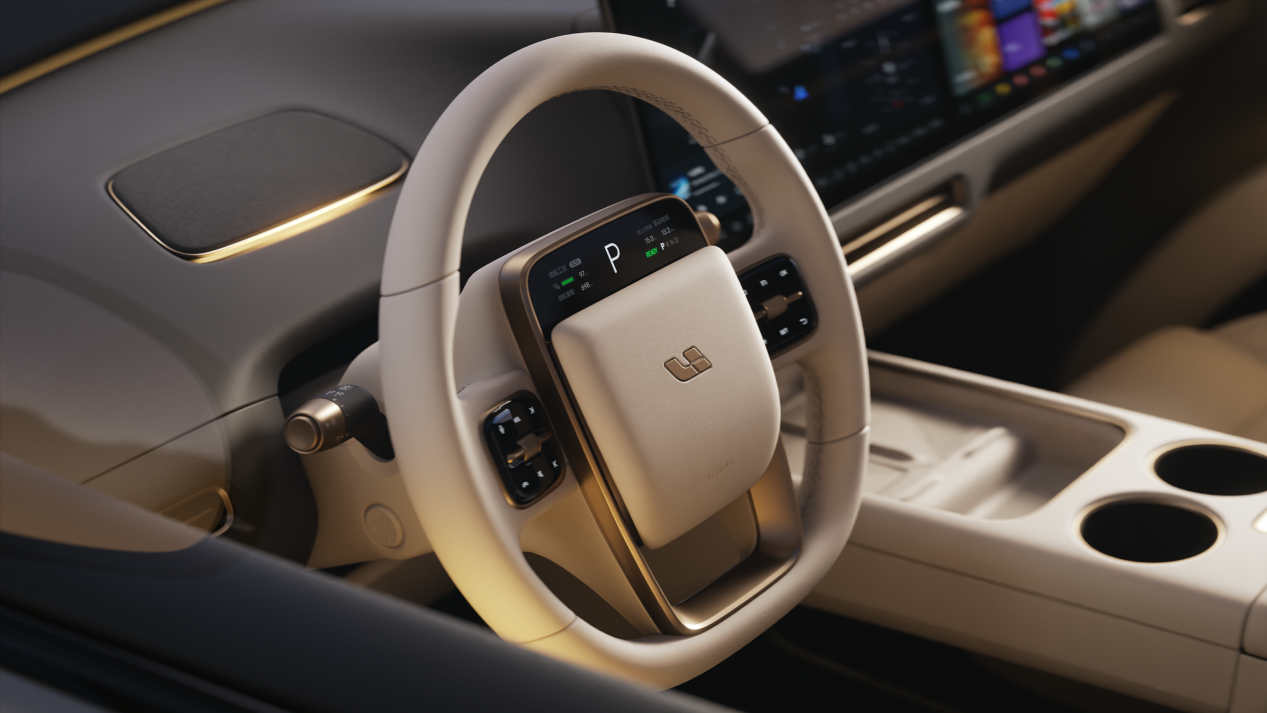
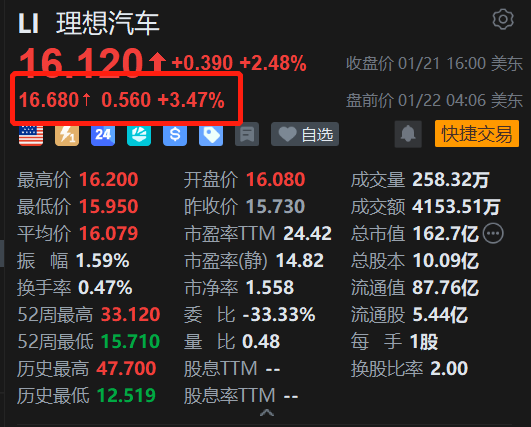
Core Insights - Li Auto's Hong Kong stock rose over 4%, leading to a 3.5% pre-market increase in its U.S. shares, driven by anticipation for the new model, the Li L9, set to launch in March [1] Group 1: Company Performance - The closing price of Li Auto on January 21 was $16.120, with a pre-market price of $16.680, reflecting a 3.47% increase [2] - The stock's highest price was $16.200, and the lowest was $15.950, with a trading volume of 2.5832 million shares [2] - The total market capitalization of Li Auto is approximately $16.27 billion, with a total share count of 1.009 billion [2] Group 2: New Model Launch - The new Li L9 model is expected to create significant market impact due to its multiple upgrades, although specific pricing details have not yet been disclosed [1] - Industry expectations suggest that the new model will maintain a competitive price-performance ratio while enhancing brand premium through upgraded features [1]
Macquarie Keeps an Underperform Rating on Li Auto Inc. (LI)
Insider Monkey· 2026-01-22 08:30
Core Insights - Artificial intelligence (AI) is identified as the greatest investment opportunity of the current era, with a strong emphasis on the urgent need for energy to support its growth [1][2][3] - A specific company is highlighted as a key player in the AI energy sector, owning critical energy infrastructure assets that are essential for meeting the increasing energy demands of AI technologies [3][7] Investment Opportunity - Wall Street is investing heavily in AI, with hundreds of billions directed towards developing smarter technologies, but there is a looming question regarding the energy supply needed to sustain this growth [2] - The company in focus is positioned to benefit from the surge in demand for electricity driven by AI data centers, making it a potentially lucrative investment [3][8] Company Profile - The company is described as a "toll booth" operator in the AI energy boom, collecting fees from energy exports and poised to capitalize on the onshoring trend due to tariffs [5][6] - It possesses significant nuclear energy infrastructure, enabling it to play a crucial role in the U.S. energy strategy and LNG exportation [7][8] Financial Health - The company is noted for being debt-free and having a substantial cash reserve, which is approximately one-third of its market capitalization, providing it with a strong financial position [8][10] - It is trading at a low valuation of less than 7 times earnings, making it an attractive option for investors seeking undervalued stocks in the AI and energy sectors [10][11] Market Trends - The article discusses the broader trends of AI disruption across industries, emphasizing the importance of investing in companies that are adapting to these changes [11][12] - The influx of talent into the AI sector is expected to drive continuous innovation and advancements, further solidifying the importance of investing in this field [12][13] Future Outlook - The potential for significant returns is highlighted, with projections suggesting a possible 100% return within 12 to 24 months for investors who act now [15][19] - The company is positioned to benefit from the convergence of AI, energy infrastructure, and tariff-driven onshoring, making it a unique investment opportunity [14][19]