
LI AUTO-W(02015)

Search documents
出于经营效率考量,理想汽车将关闭部分门店
Guan Cha Zhe Wang· 2026-01-23 12:21
Group 1 - The core viewpoint is that Li Auto's delivery volume for 2025 is projected to be 406,000 units, representing a year-on-year decline of approximately 19%, failing to meet the adjusted sales target [1][3] - Li Auto plans to close some underperforming retail stores as part of a strategy to improve operational efficiency, although the exact number of closures is still under evaluation [2] - The number of retail centers has significantly increased from 206 in 2021 to 467 in 2023, with further growth expected to 502 by the end of 2024 and 548 by the end of 2025 [2] Group 2 - Li Auto's performance in 2025 is impacted by several factors, including the MEGA recall, low sales of the L series before its upgrade, and the nascent stage of its pure electric products [3] - The company plans to revert to a "startup management model" starting in Q4 2025 to address challenges posed by new technologies and market conditions [3] - Li Auto's self-developed chip, the M100, is set to be commercially deployed next year, which is expected to transform the vehicle experience from a passive product to one that actively provides services to users [3]

理想汽车:将关闭一些低能效门店!分析:部分门店因选址不当、市场饱和或竞争激烈等原因 运营效率低下
Mei Ri Jing Ji Xin Wen· 2026-01-23 10:55
Core Viewpoint - The company, Li Auto, plans to close underperforming stores to enhance overall operational efficiency and reallocate resources to more promising areas [2]. Group 1: Store Operations - The company has been expanding its store network significantly over the past five years, with a total of 548 retail centers across 159 cities as of December 31, 2025 [2]. - The company also operates 561 after-sales service and authorized repair centers, covering 224 cities [2]. Group 2: Market Strategy - Analysts suggest that during the expansion phase, companies may open numerous stores to quickly capture market share, but some locations may suffer from poor site selection, market saturation, or intense competition, leading to low operational efficiency [2]. - Closing these low-efficiency stores allows the company to concentrate resources in core markets or high-potential areas, thereby strengthening market competitiveness and brand influence in those regions [2].

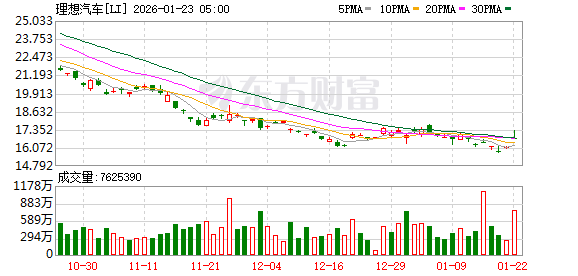
理想常州工厂春节前现反差:增程产线闲置,纯电车间忙碌
Ju Chao Zi Xun· 2026-01-23 10:50
Core Viewpoint - Li Auto is experiencing a stark contrast in production at its Changzhou base, with significant declines in sales of its range-extended models while its pure electric models are seeing increased production and demand [2] Group 1: Production and Sales Performance - The production area for range-extended models L7 and L8 is quiet, with workers on a "three days on, four days off" schedule for nearly a month, leading to a sharp decline in income [2] - In contrast, the production line for the pure electric model i6 is operating at full capacity with a double shift, achieving a daily output of over 700 units [2] - In 2025, Li Auto's total sales volume dropped by 19% year-on-year, with retail sales of the L7 and L8 models plummeting by 66% and 79% respectively, losing market share to competitors like AITO and Leap Motor [2] Group 2: Financial Performance - Li Auto delivered a total of 406,300 vehicles in 2025, only achieving 63% of its revised sales target, and ended the third quarter with a net loss of 624 million yuan, marking the end of 11 consecutive profitable quarters [2] Group 3: Strategic Adjustments - In response to the declining performance, Li Auto has initiated a strategic adjustment, returning to a startup management model, focusing on range-extended and high-end markets, and streamlining the L series models [2] - The company plans to launch a new version of the L9 equipped with its self-developed M100 chip [2] - 2026 is identified as a critical year for the company to improve production line operations and fulfill salary commitments, with the success of this strategic transformation pending market validation [2]

理想汽车:将关闭一些低能效门店!分析:部分门店因选址不当、市场饱和或竞争激烈等原因,运营效率低下
Mei Ri Jing Ji Xin Wen· 2026-01-23 10:30
Core Viewpoint - The company, Li Auto, plans to close underperforming stores to enhance overall operational efficiency and reallocate resources to more promising areas [1] Group 1: Store Operations - Li Auto will shut down some low-efficiency stores that were opened during its expansion phase to quickly capture market share [1] - The closures are attributed to factors such as poor site selection, market saturation, and intense competition, which have led to low operational efficiency [1] - By closing these stores, the company aims to concentrate resources in core markets or high-potential areas, thereby strengthening its market competitiveness and brand influence [1] Group 2: Store Growth Data - Over the past five years, Li Auto has seen a year-on-year increase in the number of its stores [1] - As of December 31, 2025, Li Auto will have 548 retail centers across 159 cities, along with 561 after-sales service and authorized repair centers covering 224 cities [1]

销量增速放缓 理想汽车被传将关闭低效门店
Xi Niu Cai Jing· 2026-01-23 10:21
Core Insights - Li Auto is planning to close a number of underperforming retail stores, primarily those opened during its rapid expansion phase, although the exact number of closures is still under evaluation [2] - The company has not yet made an official response to this news [2] Delivery Performance - In 2021, Li Auto delivered 90,500 vehicles, a year-on-year increase of 177.4% - In 2022, the total delivery volume reached 133,200 units, growing by 47.2% - In 2023, deliveries surged to 376,000 units, marking a 182.2% year-on-year growth - For 2024, the expected delivery volume is projected to grow by 33.1% to 500,500 units - However, in 2025, the retail volumes for the Li L7 and L8 models are expected to drop significantly, with year-on-year declines of 66% and 79% respectively, leading to an overall delivery volume of 406,000 units, a decrease of approximately 19% from the previous year [2] Retail Expansion - Li Auto has rapidly expanded its retail channels, adding 179 new retail centers in 2023 alone, reaching a peak expansion rate - By the end of 2025, the company plans to have over 540 retail centers across nearly 160 cities in China [2] Strategic Initiatives - In mid-2025, Li Auto will launch the "Hundred Cities Star Plan," aimed at penetrating lower-tier markets through a light-asset model by recruiting partners [3] - Founded in 2015, Li Auto is recognized as a new force in China's new energy vehicle market, having been listed on NASDAQ and the Hong Kong Stock Exchange in 2010 and 2021 respectively [3] - The company focuses on range-extended electric vehicle technology, targeting the mid-to-large family vehicle segment with the brand philosophy of "creating a mobile home, creating a happy home" [3]
理想汽车:批量闭店、裁员均为不实信息,今年会关停少量能效较低的商超门店
Xin Lang Cai Jing· 2026-01-23 10:02
Core Viewpoint - The company has addressed rumors regarding mass store closures and layoffs, stating that these claims are false. Only a small number of underperforming retail locations will be closed, not in bulk [1] Group 1: Company Operations - The company currently operates 548 retail centers across 159 cities in China as of December 31, 2025 [1] - The projected delivery volume for the company in 2025 is 406,000 vehicles, which has not met the annual sales target [1]
内部人士证实:理想汽车将关闭部分不赚钱门店
Di Yi Cai Jing· 2026-01-23 09:17
Group 1 - The core viewpoint is that Li Auto plans to close some underperforming retail stores, including unprofitable supermarket locations, as part of its efficiency improvement strategy [1] - The company is currently in the evaluation phase regarding the number of stores to be closed, indicating a strategic reassessment of its retail footprint [1] - The stores mentioned refer specifically to retail centers and do not include after-sales service centers or authorized repair centers [1]
内部人士证实:理想汽车将关闭部分不赚钱门店
第一财经· 2026-01-23 08:49
Group 1 - The core viewpoint of the article indicates that Li Auto plans to close some underperforming retail centers, particularly unprofitable supermarket locations, as part of its efficiency improvement strategy [1] - The company is currently in the evaluation phase regarding the number of stores to be closed, with no specific figures provided at this time [1] - The closures will focus on retail centers and will not affect after-sales service centers or authorized repair centers [1]
国产“卷王”围堵BBA:问界M9L、蔚来ES9王炸升级,新旧势力迎来终极对决
3 6 Ke· 2026-01-23 07:37
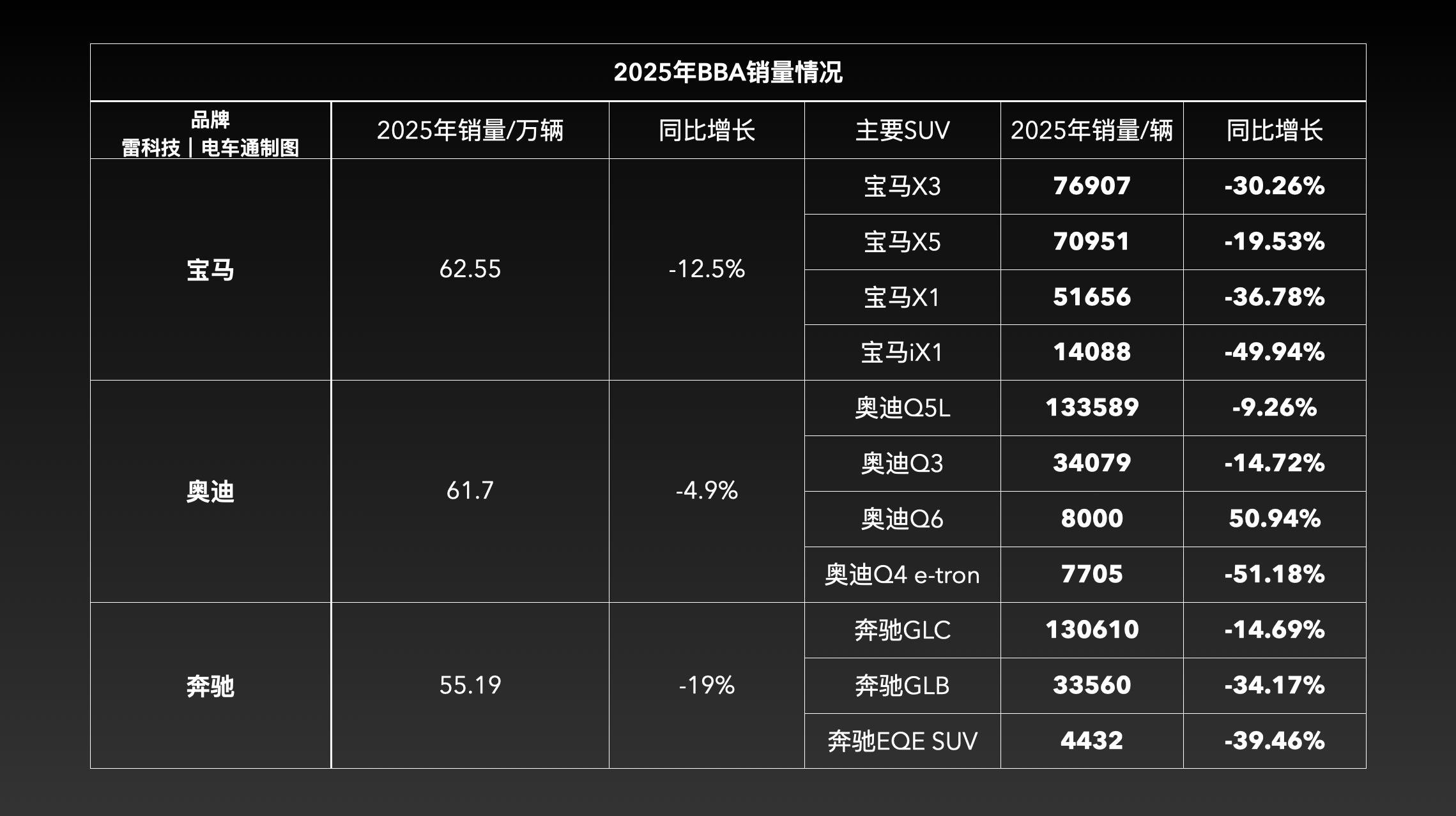
Core Viewpoint - The luxury SUV market in China is experiencing a significant shift, with traditional brands like BBA (BMW, Benz, Audi) facing declining sales due to the rise of domestic new energy vehicle manufacturers [1][17]. Group 1: Sales Performance - BBA's combined sales in China have dropped significantly, with Mercedes-Benz's sales falling to 551,900 units, marking a 12% decrease [2][1]. - In the high-end SUV segment, traditional models like Audi Q5L, Mercedes-Benz GLC, and BMW X3/X5 have seen substantial declines, while new entrants like Xiaomi YU7 and AITO M8 are gaining traction [2][1]. Group 2: Competitive Landscape - The competition in the high-end SUV market has intensified, with new players leveraging technology and consumer insights to capture market share from BBA [18][21]. - The market dynamics are shifting towards a focus on practical luxury and value, as consumers are less willing to pay for brand prestige alone [17][21]. Group 3: Product Innovations - New models such as the Ideal L9 and AITO M9 are set to challenge BBA's dominance, with significant upgrades in technology and features aimed at enhancing user experience [5][9]. - Upcoming models like the Zeekr 8X and Lido L80 are expected to offer competitive pricing and features, appealing to a broader consumer base [10][13]. Group 4: Market Trends - The high-end SUV market is witnessing a transformation where the focus is shifting from brand loyalty to practical benefits and technological advancements [17][20]. - Future competition will likely center around the ability to deliver practical technology and user-friendly features rather than just high specifications [22][21].

造车新势力10年沉浮:“蔚小理”分化
Jing Ji Guan Cha Wang· 2026-01-23 02:48
Group 1 - The three new forces in the electric vehicle market, namely NIO, Xpeng, and Li Auto, have experienced fluctuating sales and rankings since 2021, with distinct development paths emerging [1] - NIO, once a leader in delivery volume, saw its ranking decline after being surpassed by Xpeng in 2021, and is projected to be at the bottom among new forces by 2025, despite a 47% year-on-year increase in sales to 326,000 units [1] - NIO's strategy includes launching new brands, such as Ladao and Firefly, and introducing a new ES8 model at a significantly reduced price to enhance market competitiveness [1] Group 2 - Xpeng Motors led the market in 2025 with sales of 429,000 units, a 126% year-on-year increase, exceeding its annual target of 380,000 units [2] - Despite previous challenges, including a decline in monthly sales in 2023, Xpeng has begun to recover by appointing a new president and launching low-cost models in collaboration with Didi [2] - Li Auto experienced a 19.6% year-on-year decline in sales to 405,900 units in 2025, failing to meet its annual target of 640,000 units, marking a significant drop from its previous three-year championship status [2] Group 3 - Li Auto initially focused on range-extended electric vehicles, achieving market success with its model ONE, but faced challenges in 2025 with new electric models underperforming and increased competition in the range-extended hybrid market [3] - The competition in the electric vehicle market is intensifying, with new entrants like Huawei and Xiaomi, as well as traditional manufacturers launching new brands, posing challenges for the established players [3] - Brands like Changan's Deep Blue and Geely's Zeekr are gaining traction, with Deep Blue selling 333,000 units in 2025, surpassing NIO [3]
