
NAYUKI(02150)

Search documents
六大新茶饮巨头半年“捞金”超55亿,靠外卖撑起“半边天”?
Xin Lang Cai Jing· 2025-09-16 08:20
Group 1 - The core viewpoint of the article highlights the strong performance of major tea beverage brands in the first half of 2025, with total revenue exceeding 33 billion yuan and net profits surpassing 5.5 billion yuan despite a challenging market environment [1][2] - Six major tea brands reported significant revenue growth, with Mixue Ice City achieving 14.87 billion yuan in revenue and 2.72 billion yuan in net profit, reflecting year-on-year increases of 39.3% and 44.1% respectively [2][3] - The takeaway from the performance indicates that delivery services have become a crucial driver for revenue growth among tea brands, with platforms like JD.com reporting over 100 million orders for brands like Mixue Ice City within four months of launching [5][6] Group 2 - The industry is witnessing a trend of closing unprofitable stores, with over 2,500 franchise locations shut down by leading tea brands in the first half of the year, as companies shift focus from expansion to improving profitability [9][11] - Companies like Nayuki Tea and Guming have adopted strategies to enhance operational efficiency by closing underperforming stores while focusing on direct-operated models, resulting in improved sales performance [11][12] - The strategy of targeting lower-tier markets remains a priority, with brands like Guming increasing their store presence in second-tier and below cities, which now account for 81% of their total stores [12][13] Group 3 - Major tea brands are diversifying their product offerings, with coffee becoming a common strategic choice, as seen with Guming and others integrating coffee into their existing store formats [13][15] - Nayuki Tea has launched a new light food and beverage concept, expanding its product range to include healthy options and all-day dining, thereby broadening its consumer appeal [18] - The exploration of new store formats and product lines is seen as a key strategy for brands to capture additional market share and adapt to varying consumer needs across different city tiers [17][18]

社会服务行业双周报(第114期):预制菜国标草案通过审查,港股高教板块行情强势-20250915
Guoxin Securities· 2025-09-15 11:53
Investment Rating - The report maintains an "Outperform the Market" rating for the social services sector [4][27]. Core Views - The pre-prepared food national standard draft has passed review, marking a significant regulatory shift in the industry, which is expected to enhance competitive advantages for companies with robust supply chains and quality management systems [3][17]. - The consumer services sector outperformed the market during the reporting period, with a 0.69% increase, surpassing the Shanghai and Shenzhen 300 Index's 0.56% rise by 0.13 percentage points [2][13]. Summary by Sections Market Performance - The consumer services sector saw notable stock performances, with top gainers including Yuhua Education (up 43.14%), New Higher Education Group (up 23.85%), and Zhongjiao Holdings (up 22.81%) [2][15][16]. - Conversely, stocks like Dongfang Zhenxuan and Naixue's Tea experienced significant declines, with losses of -16.65% and -16.33% respectively [2][15][16]. Industry and Company Dynamics - The introduction of the pre-prepared food safety national standard is expected to standardize the industry and increase entry barriers, benefiting compliant companies [3][17]. - High-frequency updates from Gaode Map's "Street Ranking" feature indicate a strong consumer engagement, with over 40 million users on the first day [3][18]. - Haier's launch of its Robotaxi strategy and the HR1 model aims for large-scale autonomous driving operations within two years, indicating a shift towards advanced mobility solutions [3][19]. - The rapid expansion of Lucky Coffee, surpassing 8,000 stores, reflects strong market penetration and sales performance, with average monthly sales per store reaching 500,000 CNY [3][22]. Investment Recommendations - The report suggests focusing on companies such as Atour, Ctrip Group-S, Xiaocaiyuan, BOSS Zhipin, and others, indicating a favorable outlook for these stocks in the current economic environment [4][27]. - Mid-term recommendations include China Duty Free, Meituan-W, and others, highlighting a diverse range of investment opportunities within the sector [4][27]. Stock Ownership Changes - Notable changes in stock ownership during the reporting period include an increase in holdings for key companies like Haidilao (up 1.49% to 24.48%) and Mijia Group (up 2.53% to 14.36%) [3][26].

暑期档57起联名,34亿营销费,新茶饮们还“卷”得动吗?
3 6 Ke· 2025-09-11 02:55
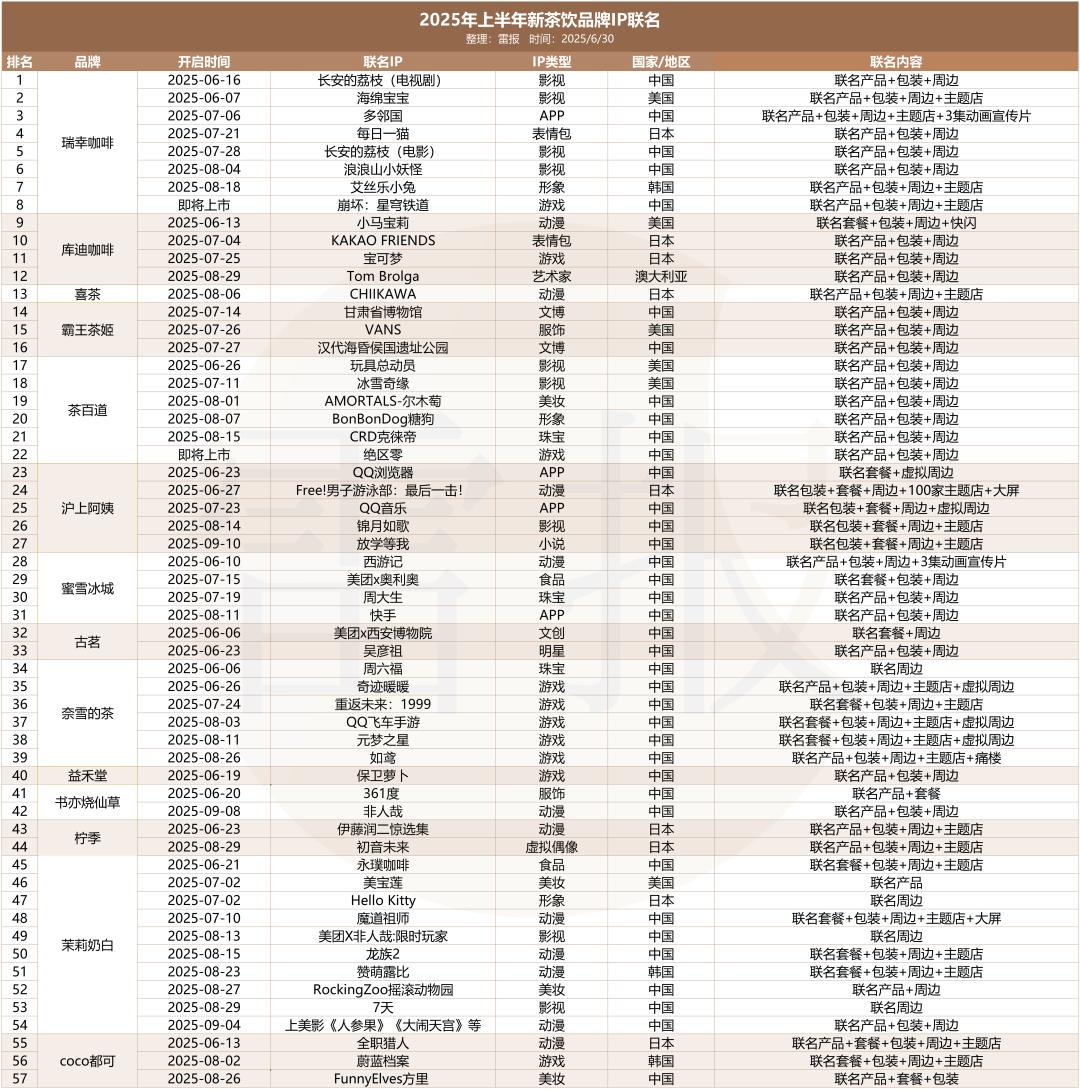
Core Insights - The summer of 2025 sees a continued trend of collaboration in the new tea beverage industry, with brands leveraging various IPs for marketing, indicating a shift towards more strategic partnerships rather than mere quantity [1][2] - Domestic IPs dominate the collaboration landscape, with 38 out of 57 partnerships involving local brands, reflecting a growing preference for local content in marketing strategies [2][3] - The effectiveness of collaborations is increasingly tied to supply chain capabilities and execution, as seen in the contrasting outcomes of different brand partnerships [8][12] Industry Trends - The new tea beverage sector has witnessed 57 IP collaborations in the first half of 2025, with domestic IPs accounting for over two-thirds of these partnerships [2] - High-density collaborations have become standard in the industry, but brands must balance between creating long-term user assets and avoiding excessive competition for collaborations [1][4] - The preference for anime and gaming IPs reflects a strategy to engage younger consumers and enhance brand loyalty through emotional connections [6][10] Marketing Strategies - Marketing expenditures among seven listed new tea brands exceeded 3.4 billion yuan in the first half of 2025, with Luckin Coffee leading at 1.089 billion yuan [12][13] - Despite high marketing costs, five out of seven brands reported a decrease in marketing expense ratios, indicating a shift towards more efficient spending [13][14] - Brands are moving from aggressive spending to more calculated marketing strategies, focusing on the return on investment from collaborations [15][17] Case Studies - Luckin Coffee's collaboration with the language learning app Duolingo resulted in the sale of 9 million cups in the first week, showcasing the potential of effective IP partnerships [1][6] - The partnership between Nayuki and the mobile game "Like a Kite" faced backlash due to supply issues and product quality, highlighting the risks associated with high-profile collaborations [8][10] - Heicha's exclusive collaboration with Chiikawa aimed to create scarcity and enhance perceived value, although it raised concerns about sustaining long-term brand engagement [17]
外卖补贴“散场”,七大品牌550亿元营收背后,茶饮咖啡高增长如何“续杯”?
Mei Ri Jing Ji Xin Wen· 2025-09-10 11:41
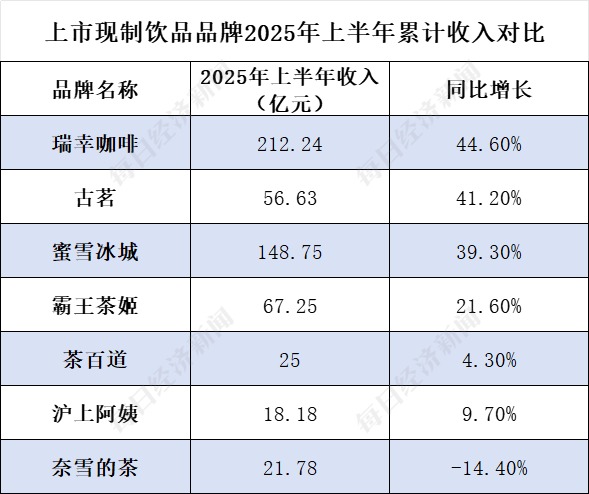
Core Insights - The recent subsidy war among food delivery platforms has significantly impacted the ready-to-drink beverage market, leading to a temporary surge in sales but raising questions about the sustainability of this growth [1][6][9] Industry Overview - The ready-to-drink tea and coffee sector has seen a dramatic price drop, with many brands offering products below 10 yuan due to aggressive subsidies [2][7] - Major brands like Luckin Coffee, Gu Ming, and Mi Xue Bing Cheng reported substantial revenue increases in the first half of 2025, with total revenue reaching 550 billion yuan, a year-on-year increase of 135 billion yuan [1][3][4] Financial Performance - Luckin Coffee reported a net income of 212.24 billion yuan, a 44.6% increase year-on-year, while Gu Ming achieved 56.63 billion yuan in revenue, up 41.2% [3][4] - Other brands also showed growth, with Mi Xue Bing Cheng at 148.75 billion yuan (39.3% increase) and Ba Wang Cha Ji at 67.25 billion yuan (21.6% increase) [4] Market Dynamics - The rapid expansion of store numbers has been a key driver of revenue growth, with Mi Xue Bing Cheng adding over 5,700 stores in the first half of the year [5][8] - The reliance on subsidies has raised concerns about the long-term viability of sales growth, as many brands may struggle to maintain performance without these incentives [5][7] Regulatory Environment - The State Administration for Market Regulation has indicated a focus on monitoring the competitive landscape of the food delivery industry, emphasizing the need for quality service and fair pricing [1][6] - The regulatory body has urged platforms to control subsidies to avoid disrupting the normal pricing structure, which could lead to a decline in consumer demand once subsidies are removed [6][7] Strategic Shifts - Brands are beginning to shift focus towards in-store sales and improving operational efficiency to mitigate the impact of fluctuating delivery orders [8] - There is a growing consensus among leading brands to enhance digital operations and supply chain management to better meet consumer demands and improve profitability [8][9]
产业观察丨外卖补贴“散场”,七大品牌550亿元营收背后,茶饮咖啡高增长如何“续杯”?
Mei Ri Jing Ji Xin Wen· 2025-09-10 11:14
Core Viewpoint - The recent subsidy war among food delivery platforms has significantly impacted the ready-to-drink beverage market, leading to a surge in sales for various brands, but the sustainability of this growth is in question as regulatory scrutiny increases [1][5][9]. Industry Overview - The competition in the ready-to-drink beverage sector intensified during the summer, with major platforms like Meituan, Alibaba, and JD.com engaging in aggressive subsidy strategies, resulting in a chaotic pricing environment where many drinks were sold for as low as a few yuan or even for free [1][5]. - The market regulator has expressed concerns over the impact of these subsidies on the normal pricing system and has called for improved service quality and food safety [1][9]. Financial Performance - In the first half of 2025, seven listed beverage brands reported a combined revenue of 55 billion yuan, an increase of 13.5 billion yuan year-on-year [1]. - Luckin Coffee reported a net income of 21.22 billion yuan, a 44.6% increase year-on-year, while other brands like Gu Ming and Mi Xue Ice City also saw significant revenue growth [6][7]. Growth Drivers - The revenue growth for these brands is attributed not only to subsidies but also to factors such as store expansion and improved single-store efficiency [8]. - Mi Xue Ice City added over 5,700 new stores in the first half of the year, with a significant portion located in lower-tier cities [8][12]. Challenges Ahead - Analysts express skepticism about the sustainability of the sales growth driven by subsidies, suggesting that a return to normal pricing could lead to a sharp decline in order volumes [10][12]. - The heavy reliance on delivery subsidies has raised concerns about the long-term health of franchise operations, as many orders have shifted from dine-in to delivery, impacting profitability [10][12]. Strategic Shifts - In response to the changing landscape, brands are focusing on enhancing in-store dining experiences and optimizing operational efficiency to mitigate the impact of fluctuating delivery volumes [12]. - Companies are also exploring international markets and enhancing digital operations to better understand consumer needs and improve supply chain efficiency [12][13].
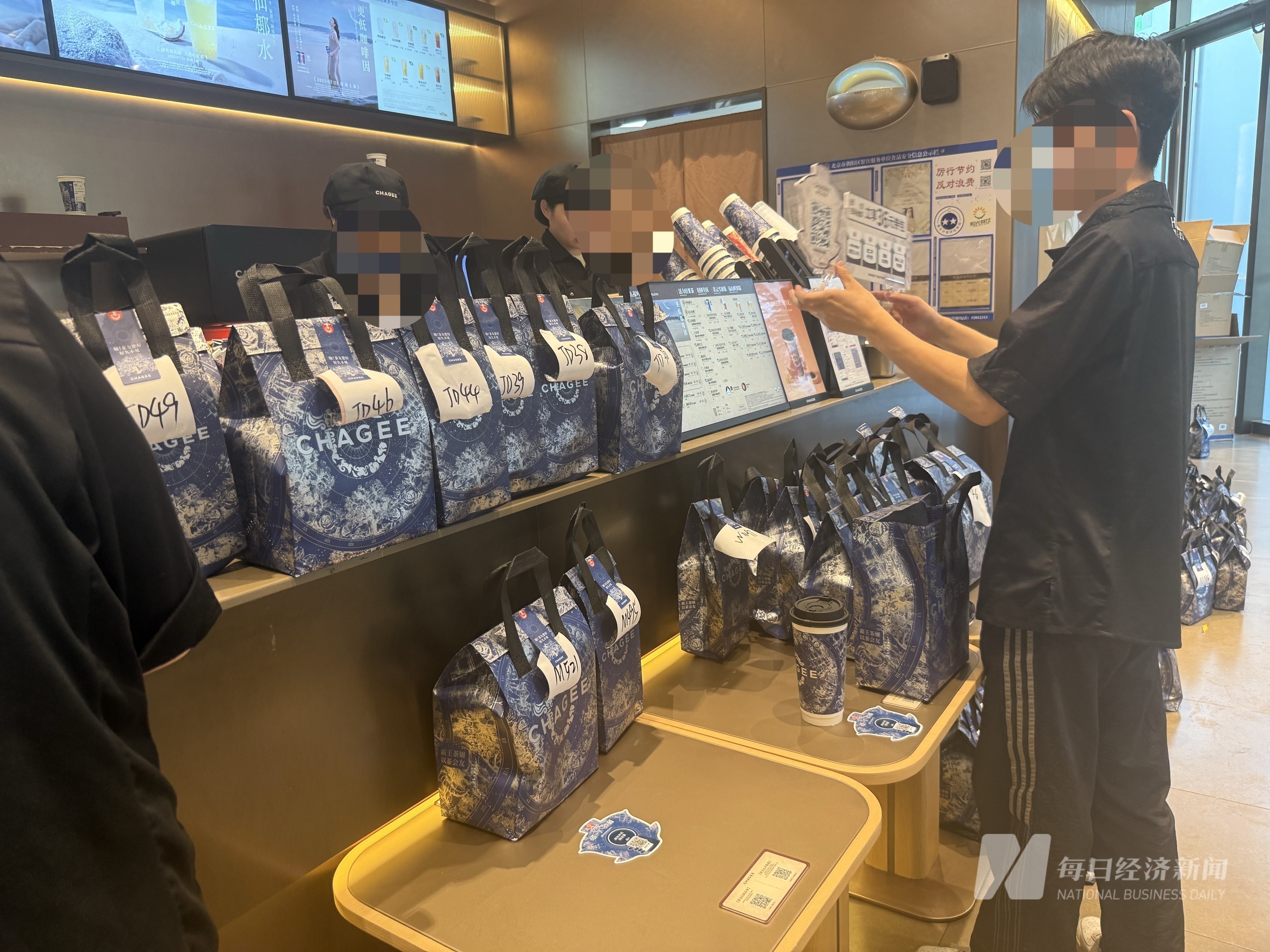
奈雪的茶2025年中期业绩分析:健康战略转型与财务表现评估
Xin Lang Zheng Quan· 2025-09-05 10:06
Core Insights - The company reported a significant reduction in adjusted net loss by 73.1%, from 438 million to 118 million yuan year-on-year [1] - Operating cash flow increased by 33.1% to 138 million yuan, maintaining positive inflow for three consecutive reporting periods [1] - Revenue decreased by 14.4% to 2.178 billion yuan, primarily due to the closure of 132 underperforming stores [1][2] Financial Performance: Loss Reduction and Cash Flow Improvement - The company showed improvements in various financial metrics, with a notable reduction in loss and stable cash flow [2] - Revenue structure adjusted with a 14.4% year-on-year decline, resulting from proactive optimization of the store network [2] - As of June 30, cash reserves stood at 2.79 billion yuan, supporting business operations and development [2] Operational Data: Store Efficiency and Membership Growth - Average daily sales per store increased by 4.1%, from 7,300 yuan to 7,600 yuan, while average daily order volume rose by 11.4% [3] - Performance varied across city tiers, with new first-tier cities seeing over 9% growth in daily sales per store [3] - Membership continued to expand, reaching 111 million, with an increase of 8.3 million members, and a higher proportion of young consumers [3] Product Strategy: Health Positioning and Market Feedback - The company established a health-focused product strategy, launching the "No Sugar Natural Nutrition+" initiative [4] - The "Little Purple Bottle" series achieved sales of 500,000 cups within three days of launch, becoming a top-selling item [4] - Testing of new store formats, such as "Nai Xue Green," aimed at covering various consumption scenarios, showed promising early sales [4] Development Strategy: Store Optimization and Product Innovation - The company plans to advance business development through three main directions in the second half of 2025 [5] - Continued adjustment and optimization of store models, with an expansion of the "Nai Xue Green" format [5] - Ongoing product development will focus on health, with plans to introduce more products using natural ingredients [5] Membership Operations and International Market - The company aims to deepen precise marketing through its existing membership system while cautiously advancing international expansion [6] Industry Environment and Future Outlook - The ready-to-drink tea industry remains competitive, with the market size projected to reach 374.93 billion yuan by 2025 [7] - The company faces challenges such as homogenization, cost control, and changing consumer preferences [8] - Plans for the second half of 2025 include further optimization of the store network and exploration of new store models [8] - The shift in the tea industry from scale expansion to quality improvement is evident, with the company attempting to establish a differentiated competitive advantage [8]
奈雪的茶(02150) - 截至二零二五年八月三十一日止月份之股份发行人的证券变动月报表
2025-09-02 10:35
股份發行人及根據《上市規則》第十九B章上市的香港預託證券發行人的證券變動月報表 截至月份: 2025年8月31日 狀態: 新提交 致:香港交易及結算所有限公司 公司名稱: 奈雪的茶控股有限公司 呈交日期: 2025年9月2日 I. 法定/註冊股本變動 | 1. 股份分類 | 普通股 | 股份類別 不適用 | | | 於香港聯交所上市 (註1) | | 是 | | | --- | --- | --- | --- | --- | --- | --- | --- | --- | | 證券代號 (如上市) | 02150 | 說明 | | | | | | | | | | 法定/註冊股份數目 | | | 面值 | | 法定/註冊股本 | | | 上月底結存 | | | 5,000,000,000 | USD | | 0.00005 USD | | 250,000 | | 增加 / 減少 (-) | | | 0 | | | USD | | 0 | | 本月底結存 | | | 5,000,000,000 | USD | | 0.00005 USD | | 250,000 | 本月底法定/註冊股本總額: USD 250,00 ...
媒体报道新茶饮冷热不均奈雪的茶处调整期 港股跌4%
Zhong Guo Jing Ji Wang· 2025-09-02 09:23
(责任编辑:徐自立) 第一财经8月30日报道《新茶饮企业上半年冷热不均:蜜雪赚了26.9亿,奈雪仍处关店调整期》显 示,近日,新茶饮公司纷纷披露了上半年的成绩单。奈雪的茶(2150.HK)是今年上半年唯一亏损的茶 饮上市公司,但亏损同比收窄。 公司财报显示,报告期间公司关闭了部分经营不善的门店,亏损已大幅缩窄。2025年下半年,公 司将为提振门店收入表现与优化成本结构继续努力,将持续优化存量门店,并主要以调整门店店型为 主。 中国经济网北京9月2日讯 奈雪的茶(02150.HK)港股今日收报1.410港元,跌幅4.08%。 ...
食品饮料及新消费行业跟踪报告:茶饮上半年业绩亮眼,泡泡玛特新品成爆款
Shanghai Aijian Securities· 2025-09-02 06:34
Investment Rating - The food and beverage industry is rated as "stronger than the market" [1] Core Views - The food and beverage industry index increased by 2.13% in the week of August 25-29, outperforming the Shanghai Composite Index, which rose by 0.84% [9] - The industry is currently at a historical low valuation, with a PE-TTM of 22.51x, corresponding to the 17th percentile over the past 15 years [16] - The liquor sector is expected to see a weak recovery in demand as policy pressures ease, with leading companies like Kweichow Moutai and Wuliangye showing strong dividend potential [6] Summary by Sections Weekly Performance - The food and beverage industry outperformed the market with a 2.13% increase, ranking 7th among 31 sub-industries [9] - The snack sector saw the highest increase at 10.20%, followed by dairy products at 2.67% and liquor at 2.14% [12] Liquor Sector - Wuliangye launched a new 29° product aimed at attracting younger consumers, reflecting a trend towards modernizing the liquor market [26] - The price of Feitian Moutai has decreased, with current prices at 1820 RMB for original and 1795 RMB for scattered [25] Tea Beverage Sector - Mixue Group reported a revenue of 14.88 billion RMB in the first half of 2025, a 39.3% year-on-year increase, with a net profit of 2.72 billion RMB, up 44.1% [32] - The number of Mixue stores reached 53,014, a 22.7% increase year-on-year, with a significant expansion in mainland China [33] New Consumption - Pop Mart's new mini LABUBU product saw over 1 million units sold within minutes of its launch, indicating strong consumer demand and improved production capacity [38] - The company has significantly increased its production capacity to 30 million units in August, ten times that of the previous year [38] Cost Indicators - Prices for sugar and glass have slightly decreased, which may positively impact the cost structure of the food and beverage industry [39]





港交所一杯茶:茶饮中场激战正酣,半年报透视生死局
Ge Long Hui· 2025-09-01 19:18
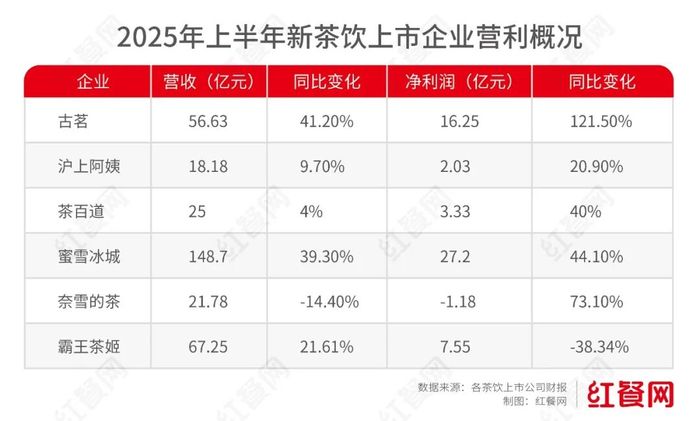
Core Insights - The new-style tea beverage industry is undergoing rapid differentiation and reshuffling, shifting from "scale expansion" to "quality competition" [1] - The industry is experiencing a Matthew effect, where strong players dominate while weaker ones struggle [1] Company Performance - Mixue Ice City reported revenue of 14.875 billion and net profit of 2.718 billion, with both revenue and net profit growth exceeding 39% [1] - Gu Ming demonstrated impressive growth with revenue of 5.663 billion, a year-on-year increase of 41.2%, and net profit soaring by 121.5% to 1.625 billion [1][3] - Hu Shang A Yi achieved revenue of 1.818 billion, up 9.7%, and net profit of 203 million, an increase of 20.9% [3] - Cha Bai Dao's total revenue was 2.5 billion, a slight increase of 4%, but net profit rose significantly by 40% to 333 million [3] - Nai Xue's Tea faced challenges with revenue of 2.178 billion, a year-on-year decline of 14.4%, and a net loss of 118 million [3] Market Dynamics - The number of stores and supply chain capabilities have become critical competitive advantages for tea beverage giants [4] - Mixue Ice City has over 53,000 stores globally, adding nearly 10,000 in the first half of 2025, while Gu Ming has 11,179 stores [4] - Supply chain management is increasingly viewed as a key differentiator in the industry, with companies like Mixue and Gu Ming focusing on self-sourcing and efficient logistics [4][13] Consumer Trends - There is a growing consumer preference for low-sugar, low-calorie, and functional tea beverages, while many brands remain focused on traditional offerings [6] - The industry faces cost pressures, with significant portions of revenue consumed by material, labor, and rental costs [6] Strategic Directions - Major tea beverage companies are targeting lower-tier markets as a new growth area, with Mixue and Gu Ming establishing a strong presence in these regions [8] - The coffee segment is emerging as a secondary battleground, with companies like Mixue and Gu Ming expanding their coffee offerings significantly [9][10] Investment Landscape - The tea beverage industry is seeing a wave of IPOs, emphasizing the importance of profitability over mere expansion [12][15] - Companies that can effectively manage their supply chains and demonstrate profitability are more likely to attract investor interest [13][15]