PICC P&C(02328)

Search documents
人保财险高淳:签订党建共建协议,共促“保险+气象”融合发展
Jiang Nan Shi Bao· 2025-09-12 10:15
Core Points - The signing of the party-building cooperation agreement marks a new phase in the collaboration between the insurance company and the meteorological bureau in the "insurance + meteorology" sector [1][2] - The partnership aims to enhance service capabilities and social responsibility through the integration of insurance services with meteorological data, particularly benefiting agricultural insurance [1] - The collaboration will focus on data sharing and analysis, product innovation and service optimization, disaster prevention and reduction, and volunteer services [2] Summary by Sections Partnership Objectives - The agreement aims to explore innovative service models to support high-quality local economic and social development [1] - The insurance company intends to leverage meteorological expertise to improve agricultural insurance products and enhance disaster warning and claims service efficiency [1] Benefits of Collaboration - The meteorological bureau anticipates that the partnership will maximize the value of meteorological data, enhancing the practicality and specificity of meteorological services [1] - The collaboration is expected to play a significant role in disaster prevention and risk warning, contributing to resource sharing and complementary advantages [2]
人保财险南京 市分公司召开五级机构建设工作布置会议
Jiang Nan Shi Bao· 2025-09-12 10:15
Group 1 - The core focus of the meeting was the construction of the five-level institution, with the number of planned institutions increasing from 5 to 16 [1] - The assessment system will be adjusted to include a new "monthly assessment evaluation" and "county manager index" in addition to the existing measures [1] - The agricultural insurance department provided a comprehensive analysis of the scoring criteria, current completion status, and existing issues related to the assessment indicators [1] Group 2 - Each responsible department reported on their next steps and expected completion status by the end of the year, emphasizing teamwork and communication [1] - There is a collective commitment to enhance collaboration among departments to achieve the goals set for the five-level institution construction [1]
人保财险南京:践行“两山”理念,创新保险为“绿”护航
Jiang Nan Shi Bao· 2025-09-12 10:15
Core Insights - The collaboration between Nanjing Agricultural Rural Bureau and Nanjing Insurance Company focuses on deepening rural revitalization through insurance innovation and promoting green development [1][2] Group 1: Insurance Innovation and Services - Nanjing Insurance Company has introduced various insurance services aimed at supporting rural revitalization, including initiatives aligned with the "dual carbon strategy" to facilitate agricultural green transformation [1][2] - The company plans to innovate in areas such as agricultural non-point source pollution insurance, ecological farm insurance, and "zero-carbon countryside" insurance to enhance the modernization of agriculture and rural areas [1] Group 2: Government Support and Collaboration - The leadership from Nanjing Agricultural Rural Bureau praised Nanjing Insurance Company's achievements in rural revitalization insurance, highlighting its comprehensive coverage and benefits to farmers [2] - The bureau expressed commitment to support Nanjing Insurance's insurance innovation efforts in agricultural green transformation and aims to collaborate closely to create a distinctive rural revitalization insurance model for Nanjing [2] Group 3: Recent Developments and Future Plans - Nanjing Insurance Company has actively supported the "dual carbon strategy" by developing various insurance products, including public welfare forest insurance and shrimp-rice co-cultivation insurance [2] - In 2024, the company plans to explore new pathways such as "carbon sink + insurance" and has developed the country's first comprehensive value insurance for vegetation carbon sinks, addressing the insurance gap in domestic vegetation, arable land, and soil carbon sinks [2]
人保财险南京农险部:协同南京市气象、农技推广部门调研水稻生长情况 共护秋粮丰收
Jiang Nan Shi Bao· 2025-09-11 07:15
Core Insights - The research conducted by the insurance company in collaboration with meteorological and agricultural departments aims to ensure a successful autumn harvest by assessing the impact of high temperatures on rice growth [1][2] - The ongoing high temperatures in Nanjing have posed a threat to rice yield during the critical flowering period, necessitating on-site evaluations and tailored agricultural advice [1] - The establishment of "Insurance Demonstration Fields" in Jiangning District integrates weather alerts, agricultural guidance, and insurance support to provide comprehensive risk management services for farmers [1] Summary by Sections - **Research Purpose**: The research aims to provide technical support for the upcoming autumn harvest by evaluating the effects of high temperatures on rice growth and offering targeted agricultural recommendations [2] - **Collaboration Efforts**: The insurance company plans to strengthen cooperation with meteorological and agricultural departments to enhance agricultural insurance services, ensuring comprehensive and precise risk protection for farmers [2] - **Demonstration Fields**: Two "Insurance Demonstration Fields" have been established in Jiangning District, which serve as practical examples of integrating disaster prevention, loss reduction, and risk compensation services for farmers [1]
中国财险(2328.HK):综合成本率改善驱动业绩增长 财险龙头地位愈发稳固
Ge Long Hui· 2025-09-10 20:08
Core Insights - The company achieved record high performance in the first half of 2025, with insurance service revenue reaching 249 billion yuan, a year-on-year increase of 5.6% [1] - Net profit for the first half of 2025 was 24.5 billion yuan, up 32.3% year-on-year, indicating strong core business profitability [1] - The company plans to distribute a dividend of 0.24 yuan per share, reflecting a 15.4% increase compared to the previous year [1] Financial Performance - Insurance service revenue from auto insurance was 150.3 billion yuan, a 3.5% increase year-on-year, while non-auto insurance revenue reached 98.7 billion yuan, growing by 8.8% [1] - The underwriting profit, excluding investment fluctuations, rose significantly by 44.6% to 13 billion yuan [1] - The company's net assets increased by 7.9% from the beginning of the year [1] Cost Management and Risk Reduction - The company improved its combined operating ratio (COR) to 94.8%, a decrease of 1.4 percentage points year-on-year, indicating better cost management [2] - The COR for auto insurance improved by 2.2 percentage points to 94.2%, while the COR for non-auto insurance decreased to 88.4% [2] - The company reported a significant reduction in losses from major disasters, with losses of 2.51 billion yuan in the first half, down 38.3% year-on-year [2] Investment Performance - Total investment income reached 17.26 billion yuan, a year-on-year increase of 26.6%, with an annualized total investment return rate of 2.6% [3] - The total investment assets grew by 5.2% to 711.5 billion yuan [3] - The company increased its allocation to equities, with stock holdings rising to 9.2%, focusing on high-dividend blue-chip stocks and sectors related to "new productivity" [3] Market Position and Future Outlook - The company is positioned as a leading player in the property insurance industry, benefiting from scale and cost advantages [4] - The strong performance in the first half of 2025 is expected to continue, supporting high-quality growth for the full year [4] - The target price for the company's stock is set at 22.2 HKD, representing a potential upside of 22.3% from the current price, with a buy rating maintained [4]
“政银保”携手赋能科技创新 共筑西城区金融服务新生态
Xin Hua Cai Jing· 2025-09-10 16:47
Core Viewpoint - The signing of the "Special Agreement for Serving Technological Innovation in Xicheng District" aims to integrate policy guidance and financial services to build a new system for technology finance in Xicheng District [1]. Group 1: Agreement Details - The agreement was signed between Bank of China Beijing Branch and PICC Property and Casualty Company Beijing Branch, witnessed by the Xicheng District People's Government [1]. - The collaboration will establish a new mechanism for "government-bank-insurance" coordinated services, combining policy guidance, financial services, and insurance protection [1]. Group 2: Objectives and Contributions - The initiative is part of Xicheng District's efforts to implement the central government's financial policies and support the capital's development [1]. - The Bank of China will enhance comprehensive financial services for key enterprises in Xicheng, while PICC will provide risk protection and innovative insurance services [1]. - The Xicheng District People's Government will continue to optimize the business environment and provide policy support [2]. Group 3: Future Plans - Xicheng District plans to deepen "government-bank-insurance" cooperation and improve the technology finance service system to inject new momentum into regional economic development [2].
大摩周期:市场对宁德锂矿复工有误解,原材料反内卷5天调研,保险油运工业的投资机会
2025-09-10 14:38
Summary of Conference Call Industry or Company Involved - **Industries Discussed**: Lithium mining, copper, aluminum, steel, cement, coal, shipping (cruise industry), express delivery, logistics, insurance, industrial equipment. Key Points and Arguments Lithium Mining - Market misunderstanding regarding the resumption of operations at Ningde lithium mines, with a target for resumption set for November [4][3] - Seven mines in Yichun are awaiting a government decision on their operational status, with results expected by October or November [3][4] Copper - Copper smelting processing fees are currently negative, but no significant changes in smelting operations are anticipated [6][6] - New regulations on waste copper suppliers may increase domestic costs and affect supply, with an estimated monthly supply impact of 50,000 to 55,000 tons [7][7] Aluminum - The impact of anti-involution on alumina is minimal, with the industry remaining in a state of oversupply [8][8] Steel - Regional differences in steel production cuts, with some provinces actively implementing reductions while others, like Tangshan, have not yet enforced cuts [9][9] - Profitability in the steel sector has dropped significantly, leading to potential voluntary production cuts [9][9] Cement - Cement demand is declining, particularly in cities like Shanghai, prompting discussions among leading companies about potential production cuts [10][10] Coal - Coal prices are expected to stabilize between 600 and 700, with production checks likely if prices fall below 600 [11][11] Shipping (Cruise Industry) - The cruise industry has faced demand dilution due to illegal oil transport, impacting market performance [14][14] - Recent increases in shipping rates, from around 30,000 to 60,000, indicate a potential recovery in the sector [15][16] - Supply-side changes are expected to drive future price increases, with a focus on compliance and sanctions affecting operational efficiency [20][20] Express Delivery - The express delivery sector is experiencing a gradual price increase, with major players locking in market shares to stabilize pricing [26][26] - Concerns about social security changes impacting delivery costs were noted, but no drastic regulatory changes are expected [29][29] Logistics (Aneng Logistics) - Aneng is positioned as a leading player in the express delivery market, benefiting from structural changes and a growing market share [30][30] - The company is expected to see continued growth due to favorable market dynamics and competitive advantages [31][31] Insurance - The insurance sector has reported strong performance in the first half of the year, with a focus on cost control and structural improvements [39][39] - The growth in the insurance market is driven by fewer catastrophic events and improved expense management [39][39] Industrial Equipment - The industrial sector is entering a new upcycle, particularly in engineering machinery and lithium battery equipment, with expected growth rates of 46%, 24%, and 21% over the next three years [52][57] - Key drivers include equipment replacement cycles, infrastructure projects, and overseas market growth [54][55] Other Important but Possibly Overlooked Content - The overall sentiment in various sectors indicates a cautious optimism, with potential for recovery in specific industries despite ongoing challenges [12][12] - The discussion highlighted the importance of regulatory changes and market dynamics in shaping future performance across sectors [12][12][12]

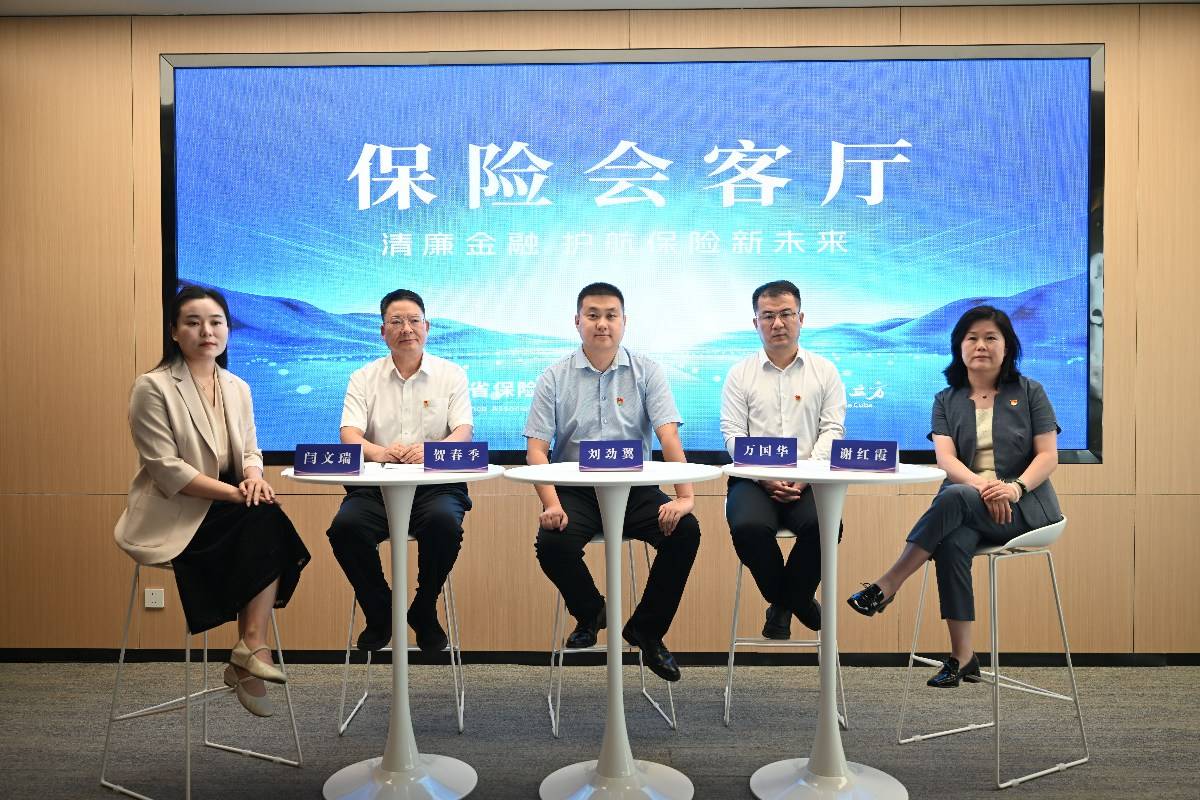
“保险会客厅”第四期:清廉金融 护航保险新未来
Sou Hu Cai Jing· 2025-09-10 10:20
Core Viewpoint - The live broadcast focused on the theme "Clean Finance to Safeguard the New Future of Insurance," emphasizing the importance of clean financial culture in the insurance industry, particularly in Henan Province [1][3]. Group 1: Importance of Clean Financial Culture - Clean financial culture is seen as a crucial measure for promoting integrity and compliance within the insurance industry, significantly enhancing customer satisfaction and operational conduct [3][4]. - The insurance sector's response to disasters, such as the 2021 heavy rainfall, showcases the strength of clean culture in driving the industry back to its core mission of serving the real economy [3]. - Clean financial culture is essential for ensuring that insurance resources are directed towards ordinary consumers and farmers, thereby preventing corruption and ensuring risk protection [3][4]. Group 2: Implementation Practices - Various insurance companies shared their unique practices for embedding clean principles into their operations, such as the "Clean Finance Code" initiative by PICC Henan, which has engaged over 760,000 participants [5][6]. - Yong'an Insurance has implemented a self-underwriting system that reduces human intervention to over 90%, enhancing the integrity of the underwriting process [5][6]. - China Pacific Life Insurance has introduced educational initiatives and compliance mechanisms to ensure transparent operations and risk management [6]. Group 3: Challenges and Solutions - The industry faces challenges in forming a consensus on clean culture, with calls for stronger regulatory oversight and collaborative efforts among institutions [7]. - Key challenges include insufficient recognition of clean culture, incomplete execution of regulations, and a lack of cultural acceptance [7]. - Suggestions for improvement include enhancing party leadership, strengthening institutional execution, and fostering a shared understanding of clean practices across the industry [7]. Group 4: Future Trends - The integration of technology and the involvement of younger professionals are anticipated to drive the evolution of clean financial culture in the next 3 to 5 years [8]. - AI and blockchain technologies are expected to enhance risk management and transparency in transactions, while younger employees will promote innovative and engaging methods of clean culture communication [8]. - The vision for the future includes a collaborative approach combining technology, governance, and cultural resonance to foster a robust clean financial environment [8].


非银金融债指南针系列之三:财险行业评分模型构建与结果分析
Western Securities· 2025-09-10 07:37
1. Report Industry Investment Rating No information about the industry investment rating is provided in the report. 2. Core Viewpoints of the Report - The report conducts a comprehensive analysis of the property insurance industry's business operations, regulatory policies, and builds a scoring model to rank the risks of 11 property insurance companies with outstanding sub - debt as of September 3, 2025. It aims to recommend bond targets with relatively high risk - return ratios for investors with different risk preferences [1]. - Through multi - dimensional indicators such as qualitative and quantitative ones, the report analyzes the credit risks of the property insurance industry to assist investment decisions [2]. 3. Summary by Relevant Catalogs 3.1 Property Insurance Company Business Operation Status - **Insurance Business**: Industry - wide, the proportion of property insurance company premium income remains around 30%, with positive but slowing growth. The ratio of life insurance to property insurance premium income is about 7:3. Since 2018, property insurance company premium income has shown positive growth, but the growth rate has declined, and it has been below 10% after 2021. By the end of 2024, the original premium income of property insurance companies was about 1.69 trillion yuan, with a growth rate of 6.55%. The diversification of insurance types is a key concern, with motor vehicle insurance still dominant but its proportion decreasing, while the proportions of liability insurance, agricultural insurance, and health insurance have increased slightly [17][18]. - **Investment Business**: The proportion of property insurance company investment assets is generally lower than that of life insurance companies, but it remains at a relatively high level. The financial investment yield of property insurance companies has declined overall, while the comprehensive investment yield has shown an upward trend. From the first half of 2022 to the end of 2024, the financial investment yield of property insurance companies fluctuated and decreased, reaching 3.05% by the end of 2024, lower than that of life insurance companies. In 2024, the comprehensive investment yields of property and life insurance companies increased significantly. The balance of property insurance company insurance funds has increased with premium income, with an increase in the proportion of bond investments and a decrease in bank deposits [24][27]. 3.2 Property Insurance Company Financial Aspects - The main difference between life and property insurance companies is that the comprehensive cost ratio cannot accurately measure the profitability of life insurance companies because the earned premium of life insurance companies does not deduct life insurance liability reserves and long - term health insurance liability reserves, resulting in a large "bubble" in earned premium [31]. - The liquidity regulatory indicators, recognized assets, and recognized liabilities of property insurance companies are similar to those of life insurance companies. 3.3 Property Insurance Industry Regulatory Points and Compliance Penalty Situations - **Regulatory Policies**: Property insurance regulatory policies are oriented towards serving the real economy, emphasizing "price reduction, quality improvement, and efficiency enhancement" to protect consumer rights. For example, the reform of motor vehicle insurance has put pressure on insurance company premium income and profit growth, while agricultural insurance has developed rapidly under the background of rural revitalization [30][35]. - **Regulatory Ratings**: The risk comprehensive rating is an important indicator for measuring the solvency of insurance companies, and property insurance companies, similar to life insurance companies, focus on this regulatory indicator. Additionally, the regulatory rating in the "Insurance Company Regulatory Rating Method" issued by the National Financial Supervision and Administration in January 2025 also needs attention [38]. - **Compliance Penalties**: Property insurance companies are more frequently penalized than other insurance companies, with fines being the main form of administrative penalty. In 2024, property insurance companies accounted for 59.43% of the total fines in the insurance industry, and the amount of fines for property insurance companies was generally higher [39][43]. 3.4 Property Insurance Industry Credit Analysis Core Indicators and Model Construction - **Credit Analysis Core Indicators**: The report constructs a credit analysis scoring model from four dimensions: corporate governance, operational strength, financial performance, and risk management. - **Corporate Governance**: The shareholder background of property insurance companies is mainly state - owned enterprises, with relatively low shareholder default risks. The average proportion of state - owned legal person shareholding in the top ten shareholders of property insurance companies is 61.51%, and 75% of property insurance companies are state - owned enterprises [52][53]. - **Operational Level**: In terms of overall scale, there is a significant "head effect" among property insurance companies, with China Property Insurance and Ping An Property Insurance being prominent. The insurance business income is highly correlated with the total asset scale, and the market concentration is relatively high. The dispersion degree of insurance business and the claim settlement ratio of property insurance companies vary greatly, and the investment business risks of Yingda Property Insurance and Beibu Gulf Property Insurance are relatively low [55][58][62]. - **Financial Level**: Yingda Property Insurance has relatively stronger overall profitability. The average operating expenditure - to - income ratio of sample property insurance companies from 2022 - 2024 was 96.0%, the average comprehensive cost ratio was 99.2%, and the average comprehensive investment yield was 3.0% [67]. - **Risk Management**: In terms of solvency, property insurance companies have a relatively thick "safety cushion." As of the end of 2024, the average comprehensive solvency adequacy ratio of sample property insurance companies was 255.8%, and the average core solvency adequacy ratio was 188.4%. Most sample insurance companies have a risk rating of A or above, with Yingda Property Insurance receiving the highest rating [69]. - **Adjustment Items**: China Property Insurance, CPIC Property Insurance, and Ping An Property Insurance have good credit risk indicators, with Ping An Property Insurance having an advantage in risk management [75]. - **Scoring Results and Verification**: The report uses the minimum - maximum normalization method to score 11 property insurance companies with outstanding bonds as of September 3, 2025. The correlation coefficient between the 3 - year ChinaBond valuation yield and the credit score of property insurance companies is - 0.89, indicating a strong negative correlation, which verifies the scoring results [77][78]. 3.5 Insurance Company Subject Investment Value Judgment - **Subjects with a Score Above 70**: China Property Insurance, CPIC Property Insurance, and Yingda Property Insurance are above the trend line, with high scores and low risks, suitable for investors seeking stable returns and bottom - position allocation assets [5][82]. - **Subjects with a Score between 50 - 70**: Sunshine Property Insurance is slightly above the trend line, with a current outstanding bond valuation yield of not less than 2.2% and relatively controllable risks. It is suitable for investors with certain requirements for absolute returns and relatively stable liability ends [5][90].

内险股午后涨幅扩大 险企分红险转型表现亮眼 机构称板块估值修复动能有望持续强化
Zhi Tong Cai Jing· 2025-09-10 06:34
申万宏源发布研报称,分红险独立账户独立投资,风险偏好较一般账户更高;预定利率非对称调整后, 分红险的相对吸引力有望进一步提升。兴业证券则表示,保险股自2024年4月启动的估值修复行情,本 质是市场对过度悲观的利率下行预期的修正。此前板块因利差损风险担忧遭显著错杀,当前随着投资者 对"预期差"认知的深化,保险股特别是港股保险股估值修复动能有望持续强化。 内险股午后涨幅扩大,截至发稿,中国太保(02601)涨4.85%,报32.84港元;中国人保(01339)涨3.28%, 报6.93港元;中国财险(02328)涨3.27%,报18.93港元;中国人寿(02628)涨3%,报23.38港元。 消息面上,上半年上市险企分红险转型表现亮眼,太平人寿分红险在长险首年期缴保费中占比87.1%; 中国人寿分红险占个险渠道首年期交保费超50%,新单保费占比超19.87%;太保寿险分红险占新保期缴 的42.5%,新单保费占比16.1%;新华保险自二季度起开始着重发力推动分红险转型,上半年公司分红 险新单保费占比10.9%。 ...