Haitong Securities(06837)

Search documents
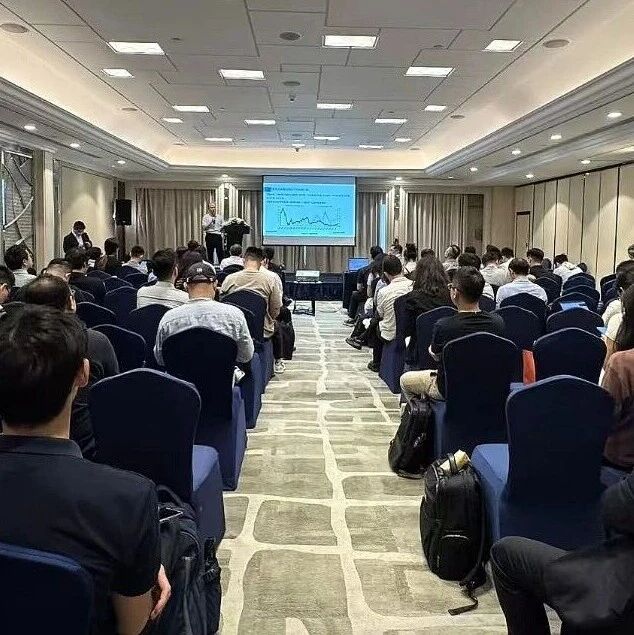
分论坛:大国博弈与中资出海|国泰海通证券2026年度策略会
国泰海通证券研究· 2025-10-29 06:09
Core Insights - The article discusses the establishment of a new order in global geopolitics and the challenges and opportunities faced by Chinese enterprises going abroad amidst a multi-polar world [1] Agenda Summary - The conference is hosted by Chen Ximiao, head of the National Research Institute of Policy and Industry at Guotai Junan Securities, featuring several experts discussing various topics related to international relations and economic conditions [2] - Key topics include the changing geopolitical landscape and the trajectory of China-U.S. relations, the current economic situation in Europe and its impact on China-Europe trade relations, challenges and new opportunities for Chinese enterprises in the Middle East, and cooperation between China and Africa under the strategic context of critical minerals [3]



会议议程|启航新征程·国泰海通2026年度策略会
国泰海通证券研究· 2025-10-29 06:09
Core Insights - The article discusses the upcoming 2026 Annual Conference, highlighting key topics and speakers that will address macroeconomic challenges, investment strategies, and technological advancements in various sectors [2][4][12]. Group 1: Macroeconomic and Investment Outlook - The conference will feature discussions on China's macroeconomic challenges and strategies to address them, presented by experts from the Chinese Academy of Social Sciences [4]. - A session will focus on the outlook for the U.S. economy and monetary policy, providing insights into global economic trends [4]. - Investment strategies for 2026 will be explored, including equity investment strategies in China and Hong Kong, as well as financial engineering strategies [4][5]. Group 2: Technological Advancements - The future of artificial intelligence (AI) and its opportunities will be a key topic, with discussions on AI's impact on various industries [4][5]. - The conference will also cover advancements in humanoid robotics, including product iterations and applications, as well as the development of AI infrastructure in China [5][8]. Group 3: Consumer and Sectoral Insights - The conference will address the transformation of traditional consumption and the rise of new consumption trends, emphasizing the high growth potential in sectors like food and beverage, beauty, and home appliances [12][14]. - Insights into the agricultural sector will be shared, focusing on opportunities in pet care and livestock farming [14][23]. Group 4: Financial Strategies and Asset Allocation - Discussions will include asset allocation strategies in a low-interest-rate environment, with a focus on the implications for various asset classes [21][31]. - The role of ETFs and quantitative products in modern investment strategies will be examined, highlighting their relevance in the current market landscape [9][32].

国泰海通证券:9月快递单价降幅收窄 反内卷持续扩散
Xin Hua Cai Jing· 2025-10-29 05:42
Core Viewpoint - The report from Guotai Junan Securities indicates a positive growth trend in China's express delivery industry, with expectations for improved profitability in the second half of the year due to a reduction in price competition and regulatory oversight from the postal administration [1]. Summary by Categories Industry Growth - By September 2025, the total volume of express delivery packages in China is projected to reach 16.88 billion, representing a year-on-year growth of 12.7% [1]. - For the period from January to September 2025, the total volume is expected to be 145.08 billion packages, showing a year-on-year increase of 17.2% [1]. Revenue and Pricing - In September 2025, the express delivery industry's revenue is anticipated to grow by 7.2% year-on-year, while the average revenue per package is expected to decline by 4.9% [1]. - From January to September 2025, the industry's revenue is projected to increase by 8.9% year-on-year, with a 7.1% decrease in average revenue per package [1]. Competitive Landscape - The decline in average revenue per package has shown signs of narrowing both year-on-year and month-on-month, indicating a moderation in price competition within the industry [1]. - The concept of "anti-involution" is expected to alleviate competitive pressures, leading to a potential recovery in profitability for e-commerce express delivery services in the latter half of the year [1]. - Future profitability will depend on the sustainability of price increases, and there is a recommendation to closely monitor the regulatory efforts of the postal administration [1].
推动开放证券生态共建 强化金融服务实体经济能力
Zhong Guo Zheng Quan Bao· 2025-10-28 21:11
Core Insights - The 2025 Guotai Junan Financial Technology Cultural Festival concluded with a forum aimed at promoting the integration of finance and technology, enhancing financial services for the real economy, and building a collaborative "finance + technology" ecosystem [1][2] Group 1: Event Overview - The forum attracted over 150 participants, including government officials, technology experts, and representatives from financial institutions, emphasizing the importance of collaboration in the financial technology sector [1] - A strategic cooperation agreement was signed between Guotai Junan and the Jing'an District government to deepen collaboration in financial technology and industry innovation [2] Group 2: Technological Advancements - Guotai Junan launched a global lighthouse model for digital transformation in collaboration with Huawei, showcasing innovations in core trading upgrades, AI applications, and data platforms [2][3] - The company introduced a resilient network and information security protection system, which focuses on rapid threat detection and automated response, setting a new standard for security in the brokerage industry [3] Group 3: Strategic Collaborations - During the forum, Guotai Junan established comprehensive strategic partnerships with ten technology companies to foster joint innovation and deepen collaboration in the financial technology space [3][4] - The festival included various activities over four months, culminating in the forum that highlighted the company's commitment to empowering the industry through technology and serving the real economy [4] Group 4: Expert Insights - Notable speakers shared insights on AI in data management, financial security, and the transformative impact of high-quality data sets on the securities industry, emphasizing the role of AI in enhancing financial services [5]
大类资产配置模型周报第39期:国内权益资产全线收涨,全球资产 BL 策略本周涨幅 0.5%-20251028
GUOTAI HAITONG SECURITIES· 2025-10-28 12:07
- The BL model is an improvement of the traditional mean-variance optimization (MVO) model, developed by Fisher Black and Robert Litterman in 1990. It integrates Bayesian theory to combine subjective views with quantitative asset allocation models, optimizing asset weights based on investor forecasts of market returns. This model addresses MVO's sensitivity to expected returns and offers higher tolerance compared to purely subjective investment approaches, providing efficient asset allocation solutions[12][13] - The BL model was implemented for both global and domestic assets. For global assets, it utilized indices such as S&P 500, Hang Seng Index, and Nanhua Commodity Index. For domestic assets, it included indices like CSI 300, CSI 1000, and SHFE Gold. Two versions of BL models were developed for each market, focusing on equities, bonds, commodities, and gold[13][14] - The Risk Parity model, introduced by Bridgewater in 2005, aims to equalize risk contributions across asset classes in a portfolio. It calculates initial asset weights based on expected volatility and correlation, then optimizes deviations between actual and expected risk contributions to determine final weights[17][18] - The Risk Parity model was constructed in three steps: selecting appropriate underlying assets, calculating risk contributions of each asset to the portfolio, and solving optimization problems to determine asset weights. It was applied to both global and domestic assets, using indices like CSI 300, CSI 1000, and COMEX Gold for domestic assets, and S&P 500, Hang Seng Index, and Nanhua Commodity Index for global assets[19][21] - The macro factor-based asset allocation model incorporates six macro risks: growth, inflation, interest rates, credit, exchange rates, and liquidity. Using Factor Mimicking Portfolio methodology, high-frequency macro factors were constructed. The strategy involves calculating asset factor exposures, determining benchmark exposures, setting subjective factor deviations based on macro forecasts, and solving for asset weights to reflect macro risk judgments[23][26] - The macro factor-based model was applied to domestic assets, including indices like CSI 300, CSI 1000, and SHFE Gold. For example, in September 2025, subjective factor deviations were set as 0 for growth, inflation, interest rates, and credit, 1 for exchange rates, and 0 for liquidity, reflecting macroeconomic conditions at the time[25][27] - Domestic BL Model 1 achieved weekly returns of 0.1%, monthly returns of 0.38%, and annual returns of 3.97%, with annualized volatility of 2.23% and maximum drawdown of 1.31%[14][17] - Domestic BL Model 2 recorded weekly returns of -0.01%, monthly returns of 0.48%, and annual returns of 3.68%, with annualized volatility of 2.02% and maximum drawdown of 1.06%[14][17] - Global BL Model 1 delivered weekly returns of 0.54%, monthly returns of 0.03%, and annual returns of 1.02%, with annualized volatility of 2.04% and maximum drawdown of 1.64%[14][17] - Global BL Model 2 achieved weekly returns of 0.37%, monthly returns of 0.35%, and annual returns of 2.43%, with annualized volatility of 1.65% and maximum drawdown of 1.28%[14][17] - Domestic Risk Parity Model recorded weekly returns of 0.14%, monthly returns of 0.34%, and annual returns of 3.47%, with annualized volatility of 1.34% and maximum drawdown of 0.76%[21][22] - Global Risk Parity Model achieved weekly returns of 0.22%, monthly returns of 0.39%, and annual returns of 2.99%, with annualized volatility of 1.46% and maximum drawdown of 1.2%[21][22] - Macro Factor-Based Model delivered weekly returns of -0.25%, monthly returns of 0.73%, and annual returns of 4.29%, with annualized volatility of 1.54% and maximum drawdown of 0.64%[27][28]
国泰海通|非银:投融资再平衡的新阶段——关于吴清主席在2025金融街论坛年会主题演讲的点评
国泰海通证券研究· 2025-10-28 12:00
Core Viewpoint - The speech by the Chairman of the China Securities Regulatory Commission (CSRC) at the 2025 Financial Street Forum emphasizes the need for comprehensive reform in the capital market to support high-quality development during the 14th Five-Year Plan and transition into the 15th Five-Year Plan, highlighting the importance of balancing investment and financing [1][2]. Group 1: Reform Framework - The reform framework focuses on four core tasks: advancing sector reforms, solidifying market stability, expanding institutional openness, and enhancing risk prevention and investor protection [2]. - The implementation of the "1+6" policy in the Sci-Tech Innovation Board has shown effectiveness, leading to the initiation of reforms in the ChiNext and optimization of the Beijing Stock Exchange system [2]. - A new refinancing framework is proposed to guide long-term capital into the market, alongside deepening public fund reforms [2]. Group 2: Market Opportunities - The reforms are expected to create new opportunities for investment banking, with an anticipated increase in equity financing driven by the expansion of the Sci-Tech Innovation Board and ChiNext reforms, as well as broader merger and acquisition channels [2]. - In the first three quarters, A-share IPOs increased by 67% year-on-year, while refinancing (excluding large issuances) rose by 139%, indicating a robust market environment for leading brokerage firms [2]. - Wealth management and institutional business are expected to see dual upgrades, with long-term capital inflows likely boosting fund distribution and custody services [2]. Group 3: Competitive Advantage - Leading brokerage firms with strong corporate client resources, professional service capabilities, and cross-border service abilities are positioned to maintain their competitive edge in the evolving investment banking ecosystem [2].

国泰海通|策略:中国“转型牛”:改革迈向新高度——2025金融街论坛金融政策和资本市场改革点评
国泰海通证券研究· 2025-10-28 12:00
Group 1 - The article emphasizes the upcoming financial policy and capital market reforms in China, which are expected to further promote economic transformation and enhance the perception of Chinese assets [2][3]. - The Shanghai Composite Index is approaching 4000 points, indicating a "transformation bull" market in China, which is becoming an increasingly important asset in global allocations [2]. - The 20th Central Committee's Fourth Plenary Session reaffirmed the focus on economic development, serving as a cornerstone for capital market valuations [2]. Group 2 - The People's Bank of China announced the resumption of public market treasury bond trading, signaling a shift towards substantial monetary policy easing and a decrease in risk-free interest rates [3]. - The introduction of the "Double Innovation" reform and the new refinancing framework is expected to create a virtuous cycle between capital markets, economic transformation, and technological advancement [4]. - The establishment of the Sci-Tech Innovation Board's growth tier and the reform of the ChiNext Board will support economic transformation and align with national strategies [4]. Group 3 - Strict regulatory measures and the establishment of market stabilization mechanisms are aimed at improving the investability of Chinese assets and enhancing resilience against risks [5]. - The article highlights the potential for a diverse market with various sectors, including technology, new materials, and financial stability, to experience revaluation [5]. - The focus on technology growth sectors such as internet, TMT, new energy, and innovative pharmaceuticals is noted as a key driver for the current market trend [5].

国泰海通|固收:买卖国债如何理解:从“长”计议
国泰海通证券研究· 2025-10-28 12:00
Core Viewpoint - The resumption of government bond trading is more significant for long-term logic than for short-term market points, indicating a potential shift in monetary policy and market stability [1][2]. Group 1: Short-term Market Reactions - The People's Bank of China (PBOC) announced the resumption of government bond trading, which may serve as a response to recent market conditions and the Fourth Plenary Session's directives [1]. - The bond market showed a stronger performance in long-term bonds compared to short-term ones, with 10-year and 30-year government bonds declining over 5 basis points [1]. - The strengthening of the RMB in the night market suggests that foreign capital may interpret the resumption as an expansionary economic stimulus policy [1]. Group 2: Long-term Implications - The primary significance of resuming government bond trading is to provide a safety net for the bond market, establishing an upper limit on long-term interest rates and enhancing the safety cushion for long-term bond investments [2]. - The resumption allows for better coordination with fiscal policies, especially as government leverage increases, preventing rapid upward movement of bond market interest rates that could constrain fiscal space [2]. Group 3: Flexible Operations Post-Resumption - The operations following the resumption of government bond trading are expected to be more flexible, with uncertainty regarding the pace, direction, duration, and scale of transactions [3]. - The approach may resemble the reform of reverse repos and MLF, allowing for adjustments based on market conditions rather than a fixed strategy [3]. Group 4: Broader Market Impact - The resumption of government bond trading is not only beneficial for the bond market but is also expected to support the stock market in the medium to long term [4]. - The fundamental nature of government bond trading as a liquidity management tool can complement fiscal issuance, potentially benefiting equity assets in a broader economic context [4]. - The current bond market conditions validate the expectation of a "weak front, strong back" scenario for the fourth quarter, with opportunities for capital gains in long-term bonds [4].

国泰海通证券2025海外市场投资峰会成功举办
国泰海通证券研究· 2025-10-28 12:00
Core Insights - The conference "AI Accelerates, Connecting Global Capital Markets" held by Guotai Junan Securities focused on AI transformation and investment opportunities, gathering insights from listed companies, industry experts, and investment institutions to enhance global capital market connectivity [1][3]. Group 1: Conference Highlights - Guotai Junan Securities aims to enhance its global research and asset allocation capabilities driven by technology, showcasing its international service capabilities through this summit [3]. - The chief analyst of overseas technology at Guotai Junan, Qin Heping, emphasized that globalization through social networks is accelerating, creating a collaborative global community that enhances AI application and evolution [3]. - The summit attracted over 40 listed companies from Hong Kong and the US for in-depth discussions on new engines in the AI era, allowing investors to better understand the operational strategies of technology companies [5]. Group 2: Future Directions - Guotai Junan Securities plans to leverage its research advantages in the global technology sector and build an overseas research network focused on cutting-edge technologies like AI and semiconductors [5]. - The research institute will actively participate in top international technology summits and organize closed-door seminars with industry experts to strengthen technology ecosystem connections and help clients seize investment opportunities in global technological innovation [5].
京北方与国泰海通证券达成战略合作
Zheng Quan Shi Bao Wang· 2025-10-28 06:20
Core Insights - The article highlights the strategic partnership between Jingbeifang and Guotai Junan Securities, marking Jingbeifang's first deep collaboration with a leading domestic brokerage [1] Group 1: Company Developments - Jingbeifang's chairman, Fei Zhenyong, signed a strategic cooperation agreement with Guotai Junan Securities during the "2025 Guotai Junan Financial Technology Cultural Festival Theme Forum and Shanghai Suhe Bay Conference" [1] - The partnership aims to promote the integration of financial technology and capital markets, exploring new development paths [1]