
JD(09618)

Search documents
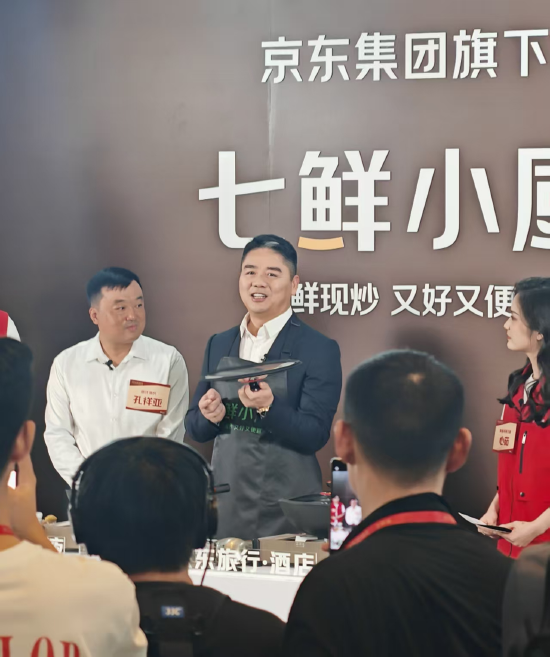
刘强东炒宿迁家乡菜:到全世界各地,也会一直带着老家的酱豆子
Xin Lang Ke Ji· 2025-11-17 09:22
Group 1 - The core event involved JD Group's founder Liu Qiangdong cooking live during a wine tasting event, showcasing traditional dishes from his hometown [1] - Liu Qiangdong prepared two specific dishes: rolled pancakes with spicy fish and stir-fried eggs with fermented soybeans, highlighting his connection to local cuisine [1] - He shared personal anecdotes about his childhood, emphasizing the importance of fermented soybeans and fish as protein sources during different seasons [1] Group 2 - Liu Qiangdong expressed a strong attachment to his hometown's fermented soybeans, stating that he carries them with him wherever he goes [1]


京东Q3财报公布研发投入累计近1600亿元,超级供应链将驱动政企采购提质增效
Cai Fu Zai Xian· 2025-11-17 09:17
Core Viewpoint - JD Group reported a revenue of 299.1 billion RMB for Q3 2025, marking a year-on-year growth of 14.9%, exceeding expectations [1] Group 1: Financial Performance - JD Group's revenue for Q3 reached 299.1 billion RMB, reflecting a 14.9% increase year-on-year, which is above market expectations [1] - The company's cumulative R&D investment has approached 160 billion RMB, focusing on enhancing its super supply chain infrastructure [1] Group 2: Business Development and Initiatives - JD's government and enterprise business is leveraging its super supply chain to enhance procurement efficiency for clients, contributing to consumption stimulation and regional development [1] - Initiatives like the "Mid-Autumn Welfare Season" and "Enterprise Super Savings Month" have been launched to tap into the potential of the government and enterprise procurement market [2] - The "Enterprise Super Savings Month" saw record highs in active customer numbers and transaction volumes, with double-digit growth in brand merchants and procurement amounts in sectors like transportation, energy, and manufacturing [2] Group 3: Strategic Partnerships and Ecosystem - JD's government and enterprise business has introduced the "Billion Market Partner Program," aiming to assist over 300 brand partners in achieving annual sales exceeding 100 million RMB [3] - The establishment of the "Billion Brand Alliance Club" includes several well-known brand enterprises as initial members [3] - Collaborations with major clients such as Changan Automobile and Ningde Times are enhancing JD's super supply chain capabilities for various industries [3] Group 4: Service Expansion and Customer Engagement - JD's enterprise services have made progress in integrating welfare procurement with delivery services, providing high-quality dining solutions for corporate clients [3] - The PLUS enterprise membership system has gained popularity, with transaction volumes increasing by 300% during the 11.11 shopping festival [3] - The "City Summit" series has been launched to facilitate efficient communication and collaboration among regional enterprises, focusing on digital transformation and high-quality economic development [4] Group 5: Client Base and Future Outlook - JD has served over 8 million government and enterprise clients, including more than 30,000 large clients, covering over 90% of the Fortune Global 500 companies in China [4] - The company aims to continue accelerating procurement integration through its super supply chain, positioning itself as a long-term value partner for intelligent procurement [4]
京东折扣超市落地北京门头沟,对快乐猴“贴脸开大”
东京烘焙职业人· 2025-11-17 08:35
Core Viewpoint - The competition between JD's discount supermarket and Meituan's "Happy Monkey" supermarket in Beijing's Mentougou district highlights the struggle of internet giants to penetrate the community retail market, aiming for both traffic and profit amidst rising online customer acquisition costs [4][9]. Group 1: Market Dynamics - JD's discount supermarket is strategically located in Mentougou, targeting the untapped consumer potential in suburban areas, where operational costs are lower compared to core urban areas [5][6]. - The proximity of JD and Meituan stores indicates a fierce competition for community retail, which is seen as a testing ground for business models due to its high-frequency and essential consumption characteristics [4][8]. Group 2: Business Models - JD adopts a "large store, multiple SKUs" strategy with its first store covering approximately 5000 square meters and offering over 5000 SKUs, aiming to create a "one-stop shopping" experience [11][16]. - In contrast, Meituan's "Happy Monkey" focuses on a smaller footprint of about 1000 square meters with around 1000 SKUs, emphasizing immediate access to high-frequency essential goods [12][14]. Group 3: Competitive Strategies - JD's model leverages its mature supply chain to achieve direct sourcing and lower costs, while Meituan capitalizes on its local life services and instant delivery capabilities [15][17]. - Both companies face the challenge of maintaining profitability in a low-margin environment, with industry average profit margins ranging from 1.5% to 5% [18][19]. Group 4: Challenges and Opportunities - The hard discount model, while promising, faces significant challenges such as low profit margins, high operational costs, and intense competition leading to homogenization in offerings [21][22]. - Companies must differentiate themselves through unique supply chain advantages, digital capabilities, and service quality to avoid being eliminated in the competitive landscape [23][24]. Group 5: Future Outlook - The ongoing competition between JD and Meituan in Mentougou is indicative of a broader trend in the retail industry, with both companies expanding their hard discount models across various regions [26][27]. - The hard discount model presents dual appeal for consumers and businesses, serving as a litmus test for the evolution of instant retail [27].

2025双11战报消失,电商平台转向差异化增长
Sou Hu Cai Jing· 2025-11-17 03:44
Core Insights - The 2025 Double 11 shopping festival marks a shift in the e-commerce landscape, moving away from the traditional GMV (Gross Merchandise Volume) reporting to a more subdued and diversified approach to growth metrics [1][3][14] Group 1: Changes in E-commerce Dynamics - The excitement and frenzy associated with Double 11 have diminished, with platforms no longer publicly announcing GMV figures, indicating a transition in consumer engagement and marketing strategies [3][4][6] - Despite the absence of GMV reports, transaction volumes continue to grow, suggesting that the underlying market remains active, albeit with a different focus [5][13] - Platforms are now emphasizing differentiated growth strategies rather than competing solely on GMV, reflecting a more sustainable approach to e-commerce [6][11] Group 2: Consumer Behavior Shifts - Consumers are increasingly prioritizing value over discounts, with a notable decrease in the proportion of shoppers motivated by sales promotions compared to previous years [7][10] - The shopping experience has evolved, with consumers now more inclined to compare products and seek out quality, rather than simply chasing the lowest price [10][12] - The rise of younger consumers (post-95 and post-00) is reshaping shopping habits, favoring instant purchases and diverse product categories, which contributes to the changing dynamics of Double 11 [13][14] Group 3: Technological Integration and Efficiency - Platforms are leveraging AI and digital tools to enhance operational efficiency and improve user engagement, with notable examples including Tmall's AI "Smart Benefit Engine" and JD's digital influencers [12][14] - The integration of online and offline shopping experiences is becoming more prevalent, with over 48% of consumers engaging in a blended shopping journey [13][14] - The focus has shifted from creating hype to ensuring operational efficiency and customer retention, indicating a more mature phase in the e-commerce sector [11][14]
腾讯、京东三季报超预期,中芯国际产能利率用95.8%!港股通科技ETF招商(159125)快速拉升
Ge Long Hui· 2025-11-17 03:37
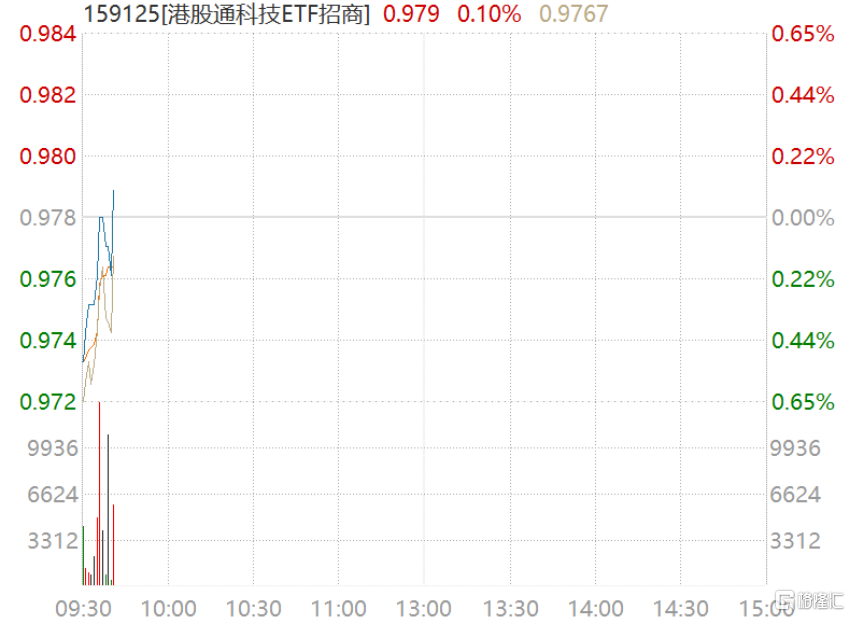
Group 1 - Hong Kong stocks opened lower but quickly rebounded, with the Hong Kong Stock Connect Technology ETF showing strong performance, led by companies like Hua Hong Semiconductor, Meituan, Bilibili, and SMIC [1] - Recent financial reports from several Hong Kong technology companies for Q3 2025 indicate a robust growth trend, with notable performance in revenue, profit, and user engagement metrics [3] Group 2 - Tencent Holdings reported Q3 revenue of 192.9 billion yuan, a 15% year-on-year increase, and a net profit of 63.1 billion yuan, up 19% [5] - JD Group achieved Q3 revenue of 299.1 billion yuan, a 14.9% increase, with retail revenue reaching 250.6 billion yuan, up 11.4% [5] - SMIC's Q3 revenue was 17.162 billion yuan, a 9.9% increase, with a net profit of 1.52 billion yuan, up 3.1% [5] - Bilibili reported Q3 revenue of 7.69 billion yuan, a 5% increase, with adjusted net profit soaring 233% to 786 million yuan [6] Group 3 - The Hong Kong Stock Connect Technology Index has risen over 87% since the beginning of 2024, indicating strong market performance [7] - Analysts believe AI will continue to drive revenue growth for internet giants, with domestic companies expected to increase capital expenditures significantly starting mid-2024 [8] - Market sentiment is expected to improve, benefiting Hong Kong technology stocks, especially with potential foreign capital inflows and the Fed's possible interest rate cuts [8]


大行评级丨高盛:京东第三季收入增长稳健 评级“买入”
Ge Long Hui· 2025-11-17 02:48
高盛发表研究报告指,京东第三季收入增长稳健,按年升15%,分别高于该行及市场预测1%及2%,京 东零售利润率更创新高至5.9%。该行认为,京东零售首九个月的利润稳固,按年增34%,已超越2024财 年全年的水平,并可能促使京东在新的增长领域采取积极的投资策略。该行表示,基于京东的零售规 模,并具有独特1P在线直销及市场平台模式,辅以内部仓储和供应链能力,予其"买入"评级,美股目标 价45美元,目标价174港元。 ...
晨会纪要:2025年第195期-20251117
Guohai Securities· 2025-11-17 01:31
Group 1 - The report highlights that Electric Power Investment Energy plans to acquire 100% equity of Baiyin Hwa Coal Power for 11.149 billion yuan, which will enhance the company's coal, electricity, and aluminum advantages [4][5][6] - Baiyin Hwa Coal Power has significant assets, including an annual lignite production capacity of 15 million tons, 192 MW of installed power generation capacity, and an aluminum production capacity of 40,530 tons per year [6][7] - The acquisition is expected to increase the company's profit by over 30%, with Baiyin Hwa Coal Power contributing approximately 20 billion yuan to net profit in 2025 [7][8] Group 2 - The report indicates that the top-level design continues to support the development of energy storage, with rising prices for hexafluorophosphate [9][10] - The photovoltaic sector is experiencing significant fluctuations, but there is confidence in supply-side reforms, which are expected to improve industry conditions [9][10] - Wind power projects are anticipated to accelerate due to favorable pricing policies, with a projected annual demand of around 140 GW for wind turbines during the 14th Five-Year Plan [11][12] Group 3 - JD Group's Q3 2025 revenue reached 299.1 billion yuan, a year-on-year increase of 15%, with a notable growth in retail and logistics segments [19][20][21] - The retail segment's revenue grew by 11% to 250.6 billion yuan, driven by high growth in daily necessities and advertising services [21][22] - New business segments, including food delivery, are showing potential for user conversion and revenue growth, despite initial losses [22][23] Group 4 - JD Health reported a Q3 2025 revenue of 17.1 billion yuan, a year-on-year increase of 28.7%, with adjusted net profit growing by 42% [38][40] - The company is expanding its online healthcare services, enhancing user conversion through online medical insurance payment integration [40][41] - Strategic partnerships with major pharmaceutical companies are expected to strengthen JD Health's market position and product offerings [41] Group 5 - Alibaba has initiated the "Qianwen" project to develop a personal AI assistant app, marking a shift towards consumer-oriented AI applications [42][43] - The project aims to compete directly with ChatGPT, leveraging Alibaba's existing AI infrastructure and models [43][46] - The Qwen model's advancements are expected to enhance the app's capabilities, making it a strong contender in the AI market [46][47]



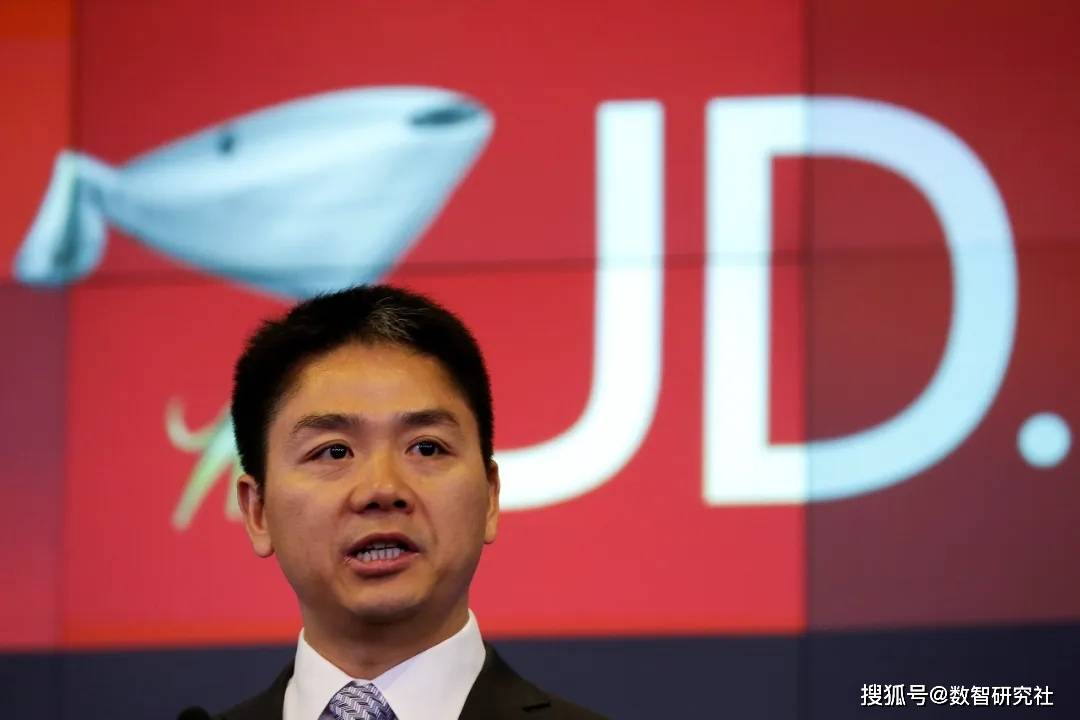
刘强东送外卖,日亏1.16亿元
Sou Hu Cai Jing· 2025-11-17 01:20
Core Viewpoint - JD.com is aggressively pursuing its food delivery business to boost platform activity amid declining government subsidies and a plateau in traditional e-commerce traffic, but this strategy has led to significant financial losses [2][3][6]. Financial Performance - In Q3, JD.com reported revenue of 299.1 billion yuan, a year-on-year increase of 14.9%, marking four consecutive quarters of double-digit growth since Q4 2024 [2]. - The new business segment, primarily consisting of the food delivery service, saw revenue surge by 213.7% to 15.592 billion yuan, but incurred a record operating loss of 15.736 billion yuan [2][3]. - Cumulatively, the new business has lost 31.84 billion yuan in the first nine months of the year, averaging a daily loss of 1.16 million yuan [2][3]. Strategic Focus - JD.com’s push into the food delivery sector began in February, with significant investments in subsidies and marketing efforts, including CEO Liu Qiangdong personally delivering food [3][4]. - The company aims to leverage high-frequency food delivery to enhance user engagement and support its low-frequency retail business [3][4]. User Engagement - The strategy has resulted in user growth, with Q3 active user numbers and shopping frequency increasing by over 40% year-on-year [5]. - In September, JD.com reported a 14.8% year-on-year increase in monthly active users, leading among major e-commerce platforms [5]. Challenges and Concerns - Despite increased traffic from the food delivery service, the growth in product revenue slowed from 20.7% in Q2 to 10.5% in Q3, indicating inefficiencies in converting traffic into sales [6]. - The substantial losses from the food delivery business have raised questions about the sustainability of the "burning money for growth" model [7]. Leadership and Management - Liu Qiangdong's increased visibility and hands-on approach reflect his anxiety about the company's direction, as he seeks to revitalize JD.com after a perceived lack of innovation and growth over the past five years [9][10]. - His management style includes direct involvement in various operational aspects, aiming to enhance organizational effectiveness [9]. Cash Flow and Market Reaction - JD.com’s operating cash flow turned negative, dropping from a positive 33.204 billion yuan to a negative 1.888 billion yuan in the first three quarters, highlighting the financial strain from new business ventures [10]. - Despite reporting record sales during the recent "Double Eleven" shopping festival, consumer sentiment appears less enthusiastic, with concerns about pricing strategies and potential data inflation [10]. Diversification Efforts - JD.com is diversifying into various sectors, including alcohol, international e-commerce, and automotive sales, but these efforts lack clear synergy and may appear disorganized [11]. - CEO Xu Ran expressed confidence in the long-term potential of the food delivery business, aiming for a sustainable business model that balances growth and efficiency [11].
智通港股沽空统计|11月17日
智通财经网· 2025-11-17 00:24
Core Insights - The article highlights the top short-selling stocks in the market, with AIA Group (81299), Anta Sports (82020), and BYD Company (81211) having the highest short-selling ratios at 100.00%, 100.00%, and 95.88% respectively [1][2] - Alibaba (09988), Tencent Holdings (00700), and Baidu (09888) lead in short-selling amounts, with figures of 2.789 billion, 2.349 billion, and 1.317 billion respectively [1][2] - Geely Automobile (80175), BYD Company (81211), and Baidu (89888) show the highest deviation values, indicating significant short-selling activity compared to their historical averages, at 48.97%, 42.86%, and 38.49% respectively [1][2] Short-Selling Ratio Rankings - AIA Group (81299) and Anta Sports (82020) both have a short-selling ratio of 100.00%, with short-selling amounts of 437,700 and 225,700 respectively [2] - BYD Company (81211) has a short-selling ratio of 95.88% with a short-selling amount of 1,290,900 [2] - Lenovo Group (80992) and Tencent Holdings (00700) follow with short-selling ratios of 92.80% and 89.69% respectively [2] Short-Selling Amount Rankings - Alibaba (09988) leads with a short-selling amount of 2.789 billion, followed by Tencent Holdings (00700) at 2.349 billion and Baidu (09888) at 1.317 billion [2] - Other notable mentions include XPeng Motors (09868) with 1.069 billion and JD.com (09618) with 913 million [2] Deviation Value Rankings - Geely Automobile (80175) has the highest deviation value at 48.97%, indicating a significant difference from its historical short-selling average [2] - BYD Company (81211) and Baidu (89888) also show high deviation values of 42.86% and 38.49% respectively [2] - AIA Group (81299) has a deviation value of 37.15%, reflecting its current short-selling activity compared to past averages [2]




监管拟出新规促平台经济健康发展 8个风险提示为反垄断合规提供指引
Chang Jiang Shang Bao· 2025-11-16 23:44
Core Viewpoint - The recent "Double Eleven" shopping festival has highlighted ongoing issues of competition and regulatory scrutiny in the e-commerce sector, particularly regarding the "choose one" behavior among platforms, which may soon be addressed by new regulatory guidelines from the State Administration for Market Regulation (SAMR) [1][3]. Group 1: Regulatory Developments - On November 15, SAMR released a draft of the "Antitrust Compliance Guidelines for Internet Platforms," which aims to provide clear behavioral guidelines for platform operators and address new types of monopolistic risks in the industry [1][3][4]. - The guidelines consist of five chapters and 38 articles, focusing on four basic principles for antitrust compliance management and detailing eight specific risk examples related to monopolistic behavior [1][4]. Group 2: E-commerce Competition Issues - During the "Double Eleven" period, JD.com reportedly imposed price constraints on merchants, requiring them to maintain minimum prices on its platform and restricting promotional activities on competing platforms like Douyin [2][3]. - JD.com has faced accusations of enforcing "choose one" practices, which have led to public outcry and scrutiny, particularly after reports of significant fines imposed on brands like Midea [2][3]. Group 3: Market Dynamics and Implications - The ongoing conflict between platforms and merchants reflects a broader struggle for market dominance, with JD.com previously accusing competitors of similar "choose one" practices [3]. - The SAMR's response to these issues indicates a commitment to maintaining fair competition in the platform economy, which is crucial for protecting consumer rights and ensuring a healthy market environment [3][4].