NONGFU SPRING(09633)

Search documents
卖冰大火,农夫山泉们的“搭子”生意
Jing Ji Guan Cha Wang· 2025-06-28 03:47
Core Insights - The launch of bagged ice cubes by Sam's Club, sourced from Nongfu Spring, has sparked significant consumer interest, leading to shortages despite some price complaints [2][3] - The ice cup market has seen substantial growth, with sales increasing by 30% year-on-year since June, and a 300% growth in sales over the past two years in first-tier cities [3][4] - Major players in the ice market include Nongfu Spring, Yili, Mengniu, and various convenience store chains, indicating a competitive landscape [5][6] Product Overview - Sam's Club's new 2 kg bagged ice cubes are priced at 22.8 yuan, utilizing water from Qiandao Lake and a slow freezing process to enhance melting resistance [2] - Ice cups, a popular form of packaged ice, are often sold in convenience stores and supermarkets, providing convenience and hygiene compared to homemade ice [2][3] Market Dynamics - The entry of major companies into the ice market is expanding its potential, with various brands adopting different strategies, including self-production and outsourcing [5][6] - The cost structure of ice cups is heavily influenced by packaging and cold chain logistics, with transportation costs significantly impacting profitability [9][11] Consumer Behavior - Consumer confusion regarding the pricing of ice cups persists, as the cost of ice appears disproportionately high compared to the raw material (water) [7][8] - The trend of ice consumption is growing, particularly in urban areas, with significant increases in sales of ice cups and related products [12][13] Competitive Landscape - The ice market is characterized by a mix of established players and new entrants, with many companies formed in the last five years, indicating a rapidly evolving industry [14] - Companies like Nongfu Spring leverage their existing distribution channels to enhance their market presence in the ice segment [11][12] Future Outlook - The ice market is expected to continue growing, with potential for ice to become a staple product similar to drinking water, driven by changing consumer habits [13][14] - Companies are adapting to market demands by expanding product lines and exploring new consumer segments, indicating a proactive approach to competition [14]



高价冰块卖断货,农夫山泉抢了谁的市场?
Bei Jing Shang Bao· 2025-06-26 14:01
Core Viewpoint - Nongfu Spring has launched a new product, "Pure Transparent Edible Ice," priced at 22.8 yuan for a 2kg package, which has generated significant consumer interest and led to stock shortages in Sam's Club stores [1][3]. Pricing and Market Comparison - The price of Nongfu Spring's edible ice is notably high, at over four times the price of its bottled natural water, which is 1.42 yuan for a 550ml bottle [1][3]. - Compared to similar products on the market, such as Xiaoxiang edible ice (800g for 6.45 yuan) and Haomiao edible ice (500g for 4.9 yuan), Nongfu Spring's offering remains expensive [1][3]. Consumer Reception and Demand - The product has received 180 reviews on the Sam's Club app, with consumers from various provinces expressing their interest, indicating a strong demand for the product [3]. - Consumers appreciate the convenience of the product, noting that it melts slower than homemade ice, which adds to its appeal [3]. Production and Cost Structure - The production of high-quality edible ice involves significant costs related to water sourcing and purification processes, which are more expensive than standard water sources [4]. - The advanced freezing technology used by Nongfu Spring, which requires substantial investment in equipment and energy, contributes to the higher price point of the product [4]. Market Positioning and Strategy - Nongfu Spring aims to position itself in the edible ice market, which currently lacks dominant brands, by leveraging its reputation in the bottled water sector [5]. - The collaboration with Sam's Club is strategic, targeting a high-end market segment and enhancing brand visibility [6]. Industry Trends - The market for ice products is expected to grow significantly, with a projected annual growth rate of 39% from 2024 to 2026, potentially exceeding 63 billion yuan by 2026 [6]. - The ice cup category has seen a sales increase of over 300% for two consecutive years, indicating a growing consumer interest in ice-related products [6]. Regulatory Environment - Current national standards for edible ice primarily apply to pre-packaged products, raising concerns about the safety of freshly made ice [7]. - The existing standards do not adequately address the safety of on-demand ice production, leading to potential consumer safety issues [8].
钟睒睒偏向虎山行
3 6 Ke· 2025-06-26 07:58
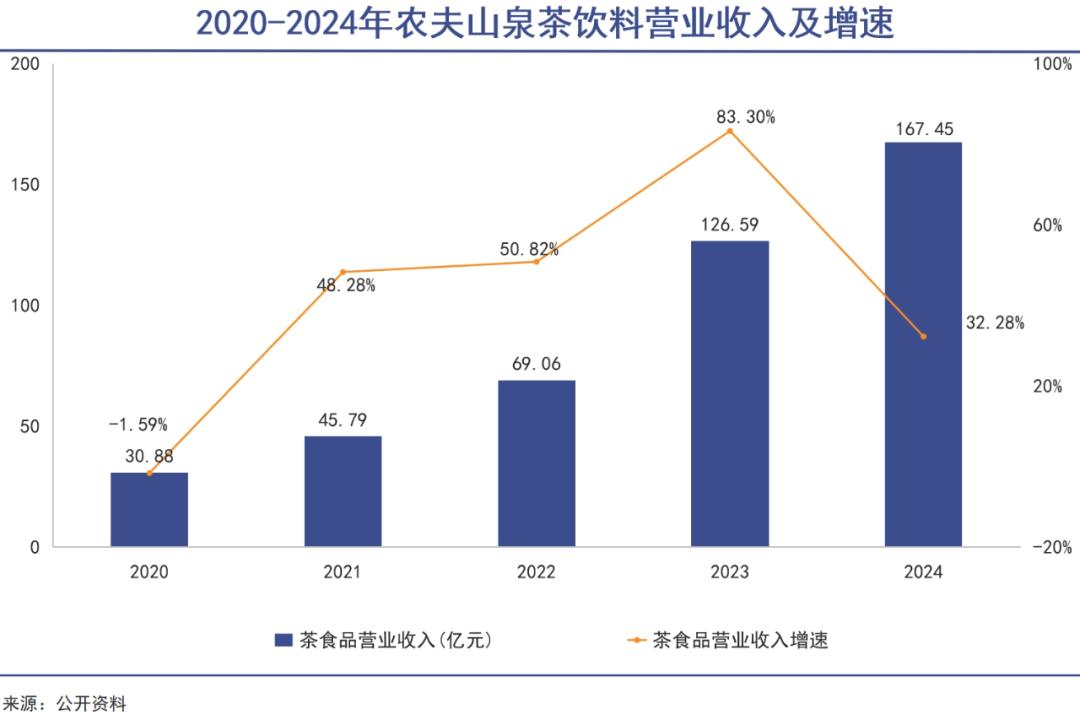
Core Insights - The article discusses the strategic moves of Nongfu Spring in response to market challenges and competition, particularly in the beverage sector, highlighting its focus on expanding product offerings and market presence [2][6][18]. Product Strategy - In June 2024, Nongfu Spring launched a carbonated lemon tea beverage priced at 5 yuan per bottle, which has drawn consumer attention due to its sugar content, contrasting with the trend of zero-sugar beverages [1][2]. - The company is diversifying its product matrix, introducing new items such as green bottle purified water and ice tea, aiming to strengthen its market position in competitive segments [3][13]. Market Performance - In 2024, Nongfu Spring's ready-to-drink tea products, led by the "Dongfang Shuye" brand, generated revenue of 16.745 billion yuan, accounting for 39% of total revenue, marking a nearly 10 percentage point increase from 2023 [6][9]. - Despite strong performance in tea beverages, the overall revenue growth for Nongfu Spring was modest, with total revenue reaching 42.896 billion yuan, a mere 0.5% increase year-on-year, the lowest growth rate in four years [9][12]. Competitive Landscape - The ready-to-drink tea market has surpassed carbonated beverages in market share, with ready-to-drink tea accounting for 21% of the market, and sugar-free tea making up 7.6% [6][14]. - Nongfu Spring's market share in the sugar-free ready-to-drink tea segment has exceeded 70% over four consecutive quarters, indicating strong dominance [9][12]. Brand Positioning - Nongfu Spring has established itself as a leading brand in the bottled water market, despite facing significant challenges from public scrutiny and competition [12][14]. - The company has a strong brand presence, ranking fourth globally in brand value among soft drink brands, and first in China, which aids in its market penetration [17][19]. International Expansion - The company is pursuing international market opportunities, starting with Hong Kong as a test market, and plans to expand its tea beverage offerings to developed countries, particularly in Europe [18][21]. - Nongfu Spring aims to leverage its domestic supply chain advantages to establish a global presence, focusing on exporting its unique business model rather than just products [23].
新财富创富榜来了!他首度登顶,梁文锋杀进前十



券商中国· 2025-06-24 03:30
Core Viewpoint - The 2025 New Fortune 500 Rich List reveals a significant increase in the total market value of listed entrepreneurs, reaching 13.7 trillion yuan, an 11% year-on-year growth, indicating a new wave of wealth creation driven by innovation and overseas expansion [3][14]. Group 1: Wealth Distribution and Rankings - The top ten wealthiest individuals are heavily influenced by AI, with Zhang Yiming of ByteDance topping the list with a holding value of 481.57 billion yuan, marking a 42% increase from the previous year [4][18]. - The list features a notable shift, with four individuals from Hangzhou, Zhejiang, highlighting the region's growing economic prominence [43]. - The average holding value of the 500 entrepreneurs is 273.8 million yuan, with a threshold of 66.2 million yuan to make the list [8]. Group 2: Industry Insights - The TMT (Technology, Media, and Telecommunications), pharmaceutical, and daily consumer goods sectors are the top three wealth-generating industries, contributing 110, 54, and 52 individuals respectively [51]. - The TMT sector saw a significant increase in wealth, with a total of 334.08 billion yuan, a 46% increase from the previous year [51]. - The pharmaceutical sector experienced a decline, with 54 individuals listed, down from 64, indicating ongoing valuation adjustments [51]. Group 3: AI and Technological Advancements - AI has emerged as a key driver of wealth creation, with companies like DeepSeek and ByteDance leading the charge in user engagement and valuation [4][21]. - The rise of AI has also led to a resurgence in the semiconductor industry, with China exporting 2.981 billion chips worth approximately 159.5 billion USD, marking a significant shift in the global market [56]. - The AI sector is still in its nascent stage, with notable entries like Liang Wenfeng of DeepSeek entering the top ten, reflecting the rapid growth and potential of AI applications [60]. Group 4: Regional Wealth Creation - Wealth creation is becoming more balanced across regions, with western provinces like Sichuan, Tibet, and Xinjiang seeing an increase in listed individuals, while traditional economic hubs like Zhejiang and Shanghai continue to grow [5][6]. - The shift from real estate to technology and AI reflects a broader transformation in China's economic landscape, with younger entrepreneurs increasingly dominating the wealth rankings [46][45]. Group 5: Future Outlook - The ongoing evolution of industries, particularly in AI and technology, suggests a promising future for innovation-driven wealth creation in China [60][62]. - The integration of AI into various sectors, including automotive and consumer electronics, is expected to further enhance China's competitive edge in the global market [62][63].

张一鸣首次问鼎首富,梁文锋跻身前十!最新榜单来了
中国基金报· 2025-06-24 02:48
Core Insights - The total market value of the 500 entrepreneurs listed in the "2025 New Fortune 500 Rich List" is 13.7 trillion yuan, an increase of 11% year-on-year [2] - The average market value per entrepreneur is 27.38 billion yuan, with a minimum threshold of 6.62 billion yuan to be included in the list [2] Group 1: Top Entrepreneurs - Zhang Yiming, at 42 years old, ranks first with a holding value of 481.57 billion yuan, marking a 42% increase from 2024 [8][9] - Zhong Shanshan, previously the richest, has seen a decline in wealth to 362.41 billion yuan, a drop of 21% [9][10] - The top ten includes significant increases in wealth for entrepreneurs like Ma Huateng (45% increase) and Lei Jun (96% increase) [9][10] Group 2: Industry Trends - The TMT (Technology, Media, and Telecommunications) sector leads with 110 entrepreneurs, a 25% increase from the previous year, and accounts for 33.4 billion yuan in total wealth [12][14] - The AI sector is a major driver of wealth, with significant contributions from chip manufacturing and AI applications [15][19] - The automotive industry, particularly in electric vehicles, has also seen a rise in wealth among its leaders, with six industry billionaires benefiting from this trend [20][21] Group 3: Economic Geography Shift - The economic focus has shifted, with four of the top ten entrepreneurs now based in Hangzhou, Zhejiang, compared to six from Guangdong eighteen years ago [11] - The rise of the internet and AI has transformed the primary industries contributing to wealth creation, moving away from real estate [11] Group 4: Consumer Sector Highlights - The consumer sector is emerging as a new highlight, with coffee and tea brands gaining prominence, featuring multiple entrepreneurs from this space in the rankings [25][24]



2025新财富500创富榜:钟睒睒落榜首富,蜜雪冰城等茶饮创始人上榜,劲牌、珍酒创始人成地区新首富
Sou Hu Cai Jing· 2025-06-24 01:03
Core Insights - The 2025 New Wealth 500 Rich List has been released, with ByteDance founder Zhang Yiming topping the list with a stock valuation of 481.57 billion yuan, surpassing second-place Zhong Shanshan by 120 billion yuan, marking Zhang's first time as the richest person in China [3][9] - The rise of the consumer sector is a significant highlight of this year's list, with many representatives from the coffee and tea industry making the rankings [3][10] - The list shows a notable shift in regional wealth, with several local billionaires emerging from the consumer sector, particularly in Henan, Heilongjiang, Hubei, and Guizhou [4][5][17] Company Highlights - Zhang Yiming's wealth is attributed to ByteDance, which focuses on short video and social media products, while Zhong Shanshan's wealth has decreased due to a lack of engagement in the AI sector, resulting in a drop of nearly 100 billion yuan [9][10] - The consumer sector saw 89 individuals on the list, an increase of three from the previous year, indicating strong market vitality and potential [9][10] - Notable figures in the coffee and tea industry include Zhang Hongchao and Zhang Hongbo from Mixue Ice City, who have a combined wealth of 117.94 billion yuan, making them the new billionaires of Henan [12][17] Regional Wealth Changes - The list indicates that 19 provinces have different billionaires compared to 2021, reflecting significant economic structural changes across regions [9][16] - In Henan, the emergence of Zhang Hongchao and Zhang Hongbo as the new local billionaires highlights the province's growing consumer market, particularly in food and beverage [17] - In Heilongjiang, Zhang Liguo from Fulejia became the new billionaire with a wealth of 12.76 billion yuan, while in Hubei, Wu Shaoxun from Jinpai Group and in Guizhou, Wu Xiangdong from Zhenjiu Li Du also emerged as new local billionaires [6][18]



高盛:继续看好饮料板块 竞争加剧但产品周期稳健且盈利具可预见性
智通财经网· 2025-06-19 10:01
Core Viewpoint - Goldman Sachs remains optimistic about the beverage sector, viewing it as a preferred sub-sector within essential consumer goods, with long-term sales growth expected to support profit growth prospects for 2025 [1] Group 1: Profit Forecasts and Target Price Adjustments - The firm has raised net profit forecasts for food and beverage companies by up to 9% and adjusted target prices by 7% to +25%, reflecting cost efficiencies, product cycles, and an extension of valuations to mid-2026 [1] - Year-to-date, the stock prices of covered Chinese beverage companies have increased by 19%, outperforming the MSCI China Consumer Staples Index's 8% gain [1] Group 2: Competition and Market Dynamics - Increased competition from takeout subsidies has led to greater pricing discounts for ready-to-drink beverages, potentially impacting market share in the short term [2] - The firm notes that while ready-to-drink beverage outlets number over 600,000, the impact of ready-to-drink beverages on the overall beverage industry remains limited [2] Group 3: Sales Impact Analysis - Scenario analysis indicates that ready-to-drink and freshly made beverage consumption may have a mutual cannibalization effect of about 50%, with seasonal subsidies boosting sales by 25% to 45% during peak periods [3] - The overall impact on ready-to-drink beverage sales is projected to be in the low to mid-single-digit percentage range [3] Group 4: Product Cycle and Consumer Trends - The product cycle remains a key driver, with no-sugar beverages, new flavors, and sports/energy drinks experiencing growth, contributing over 20% to beverage sales by 2025 [4] - Notable products include Dongpeng Beverage's "Brewed Water" and "Fruit Tea," as well as Nongfu Spring's "Oriental Tree Leaf," which are expected to see significant sales growth [4] Group 5: Profit Margin Resilience - Despite concerns over promotional risks affecting product prices, the firm believes that cost efficiencies will keep reinvestment levels manageable [5] - The forecast for unit cost reductions has been revised to 2.3% to 6.3%, with expectations that this will offset a decline in product prices of 1.0% to 3.2% [5] - The analysis suggests that overall costs could decrease by 1.2% to 5.3% if spot prices are utilized, theoretically countering the impact of price declines [5]


兴业证券:产品+渠道双壁垒打造软饮增长引擎 推荐东鹏饮料(605499.SH)等
智通财经网· 2025-06-19 03:42
Group 1 - The core viewpoint is that leading companies are accelerating diversification strategies, leveraging product and channel barriers to create growth engines [1] - Dongpeng Beverage is recommended for its stable main business growth and expanding second curve growth potential, with energy drinks growing faster than the industry average and increasing market share [1] - Nongfu Spring is highlighted for its nationwide distribution network and water source barriers, maintaining a strong position in packaged water and leading the no-sugar tea segment through continuous innovation [1] Group 2 - The Chinese beverage industry has undergone significant changes over the past 40 years, with structural growth opening new spaces, particularly in bottled water, energy drinks, and ready-to-drink coffee [2] - The market for bottled water is expected to reach a 36% share by 2024, with energy drinks and ready-to-drink coffee growing at rates significantly higher than the overall beverage industry [1][2] - The growth of low-sugar carbonated drinks, coconut water, and 100% fruit juice is notable, with respective CAGR from 2010 to 2024 of 30%, 25%, and 8% [1] Group 3 - Different beverage categories have varying growth cycles, with long-cycle products like packaged water and energy drinks showing upward trends, while short-cycle products may face long-term limitations [2] - The penetration rate of no-sugar tea in China was only 7.7% in 2022, indicating significant growth potential compared to Japan [2] - The long-term ceiling for major products in the beverage sector is projected to exceed 20 billion yuan for bottled water, carbonated drinks, and energy drinks, with traditional tea drinks and no-sugar tea also having substantial ceilings [3]

国货最好的时代,才刚刚开始
3 6 Ke· 2025-06-18 09:22
Core Viewpoint - The resurgence of domestic brands in China, particularly during the "618 Shopping Festival," highlights a significant shift in consumer preferences towards national products, surpassing many international brands in sales [1][6]. Group 1: Historical Context of Domestic Brands - The concept of "national goods" dates back to the late Qing Dynasty when foreign products dominated the market, leading to a push for the protection of domestic brands [2]. - The first "National Goods Year" was established in 1933, but the development of domestic brands faced significant challenges until the economic reforms post-1978, which marked a golden era for national brands [4]. - From 1980 to 2000, numerous well-known domestic brands emerged across various sectors, including food and beverage, daily chemicals, apparel, home appliances, and technology [4]. Group 2: Challenges Faced by Domestic Brands - The entry of foreign brands after China's accession to the WTO drastically changed the competitive landscape, causing many domestic brands to lose market presence due to a lack of competitiveness in products, channels, and marketing [5]. Group 3: Current Trends and Consumer Behavior - Recent data indicates that over 90% of the top 100 best-selling products on Douyin's e-commerce platform are domestic goods, with younger consumers (post-90s and post-00s) showing a strong preference for these brands [6]. - The rise of domestic brands can be attributed to four key factors: the internet, the Z generation, national cultural momentum, and self-evolution [6]. Group 4: Key Factors Driving the Resurgence - The internet has transformed retail, allowing domestic brands to compete more effectively against foreign brands by leveraging e-commerce and live streaming as new sales channels [7]. - The Z generation, characterized by their access to information and preference for quality and value, is less enamored with international brands and more inclined to support domestic products [8][9]. - The increasing cultural influence of China on the global stage enhances the appeal of domestic brands, as consumers now feel a stronger connection and recognition towards them [11][12][13]. - Domestic brands are evolving by focusing on differentiation, product innovation, and effective brand marketing to adapt to the new market environment [14]. Group 5: Future Directions for Domestic Brands - To succeed, domestic brands must engage with younger consumers, understand their preferences, and innovate continuously in product design and marketing strategies [17][19]. - Innovation is crucial for high-quality development, with examples of successful product diversification and new market creation demonstrating the potential for growth [20][21][22]. - A long-term commitment to quality and detail is essential for building a sustainable brand, as opposed to relying on short-term marketing tactics [23][24][25]. Group 6: Conclusion - The rise of domestic brands is not merely a trend but a result of collective efforts from various Chinese enterprises, emphasizing the importance of quality and cultural identity in the global market [28][29][30].

夏日冰茶酣战,巨头与新锐的三重博弈战:命名、价格与创新的全维较量
Cai Jing Wang· 2025-06-17 12:33
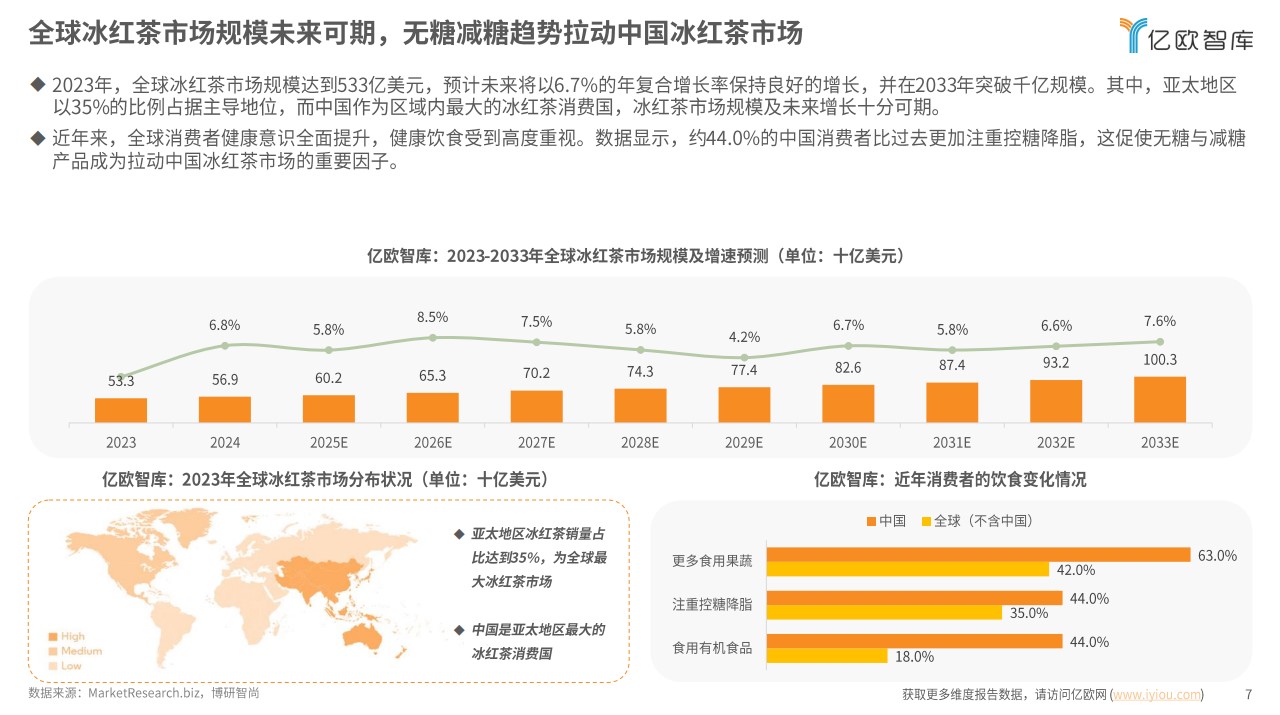
Core Insights - The ice tea market in China is experiencing rapid growth, with a projected market size of 53.3 billion USD in 2023 and an expected compound annual growth rate of 6.7%, potentially exceeding 100 billion USD by 2033 [1][4][27] - Health-conscious consumers are driving the demand for low-sugar and no-sugar options, with 71.4% of consumers prioritizing these labels when selecting ice tea [4][10] - New brands are emerging, focusing on health and quality, reshaping the industry landscape [9][19] Market Dynamics - The competition in the ice tea market is intensifying, with established brands like Yuanqi Forest and Nongfu Spring launching new products to capture market share [1][14] - Yuanqi Forest's innovative approach includes using fresh ingredients and reducing sugar content, leading to significant sales growth, with projections of 1 billion units sold in 2024, up from 200 million in 2023 [11][21] - The entry of Nongfu Spring into the ice tea market with a similarly named product has raised concerns about consumer confusion due to brand similarities [16][18] Consumer Preferences - The shift in consumer behavior reflects a growing preference for healthier beverage options, with a focus on natural ingredients and lower sugar content [10][27] - Younger consumers are increasingly discerning, valuing quality and taste over price, which is reshaping purchasing decisions in the beverage sector [9][10] Product Innovation - Yuanqi Forest has successfully differentiated its products by emphasizing "true tea and true fruit juice" concepts, appealing to health-conscious consumers [19][24] - Traditional beverage giants are also innovating, with brands like Wahaha and Master Kong reformulating their products to reduce sugar and enhance health benefits [18][19] Future Outlook - The ice tea category is expected to continue evolving, with a focus on health and quality as key competitive advantages [27] - Brands that prioritize understanding consumer needs and invest in product innovation are likely to succeed in this rapidly changing market [27]