
LEAPMOTOR(09863)

Search documents
零跑汽车双星闪耀2025成都车展,B01交付破万辆、B10交付超5万辆
Zhong Guo Jing Ji Wang· 2025-08-29 11:09
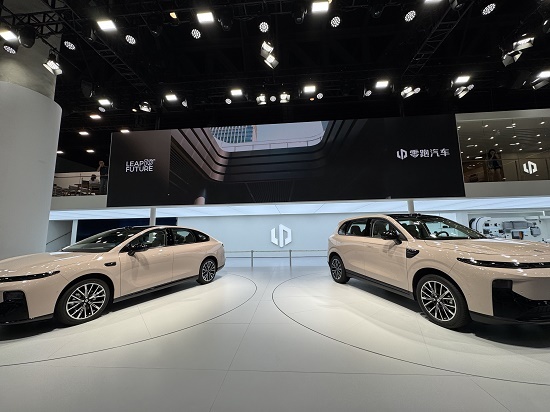
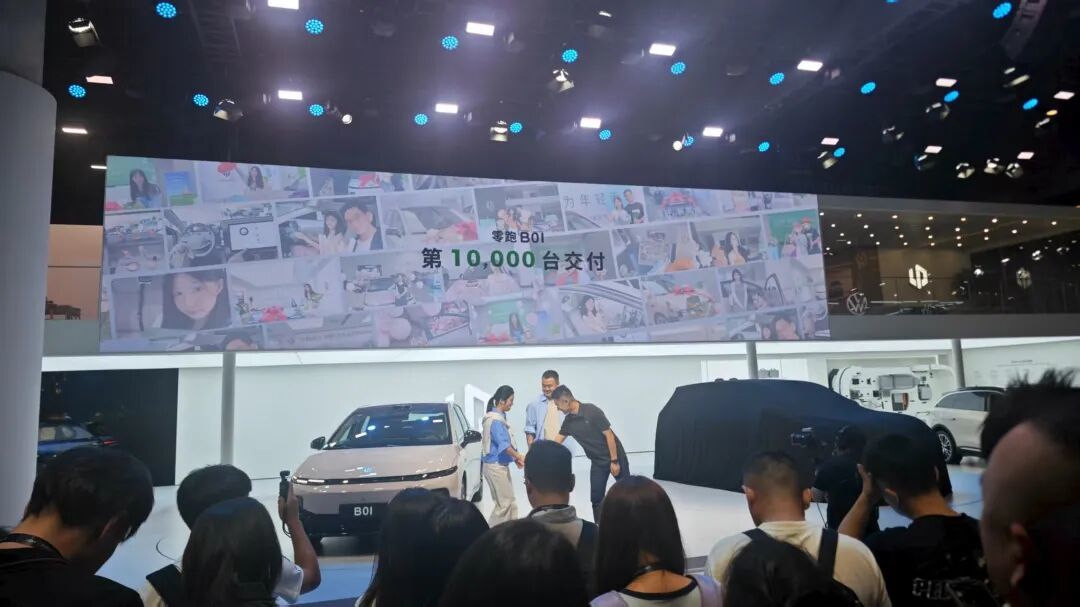
Core Insights - Leapmotor has achieved significant milestones in vehicle deliveries, with the first 10,000 units of the Leapmotor B01 delivered just one month after its market launch [1] - The B series, particularly the B10 model, has quickly become a new growth driver for Leapmotor, with over 50,000 units delivered within four months of its launch [3] - Leapmotor aims to reach an annual sales target of 500,000 vehicles, having maintained the top position in domestic sales among new car manufacturers for five consecutive months [3] Delivery Performance - The B10 model has seen rapid market acceptance, with over 10,000 units delivered in May and 14,312 units in June, totaling over 50,000 units by the time of the recent event [3] - The B01 model has also performed well, with over 20,000 pre-orders and 10,000 deliveries achieved in just 37 days [4] Export and Global Strategy - Leapmotor has exported 24,980 vehicles from January to July, leading in export sales among Chinese new energy vehicle brands [3] - The B10 model is set for a global launch, with plans for a showcase at the Paris Auto Show in October 2024 and extensive road testing across 18 countries and 200 cities starting in June 2025 [3] Technological Advancements - The B series features advanced technology, including Qualcomm 8650 chips and laser radar for enhanced driving assistance, achieving a high daily usage rate of over 80% for its AI voice interaction system [4] - The vehicles are designed with a focus on safety, utilizing CTC2.0 Plus battery technology and a robust chassis structure that exceeds national safety standards [5] Design and User Experience - The B series emphasizes a blend of style and functionality, with unique color options and interior designs that have won multiple international design awards [5] - The B10 model offers impressive range and fast charging capabilities, addressing consumer concerns about range anxiety [5]


【深度分析】2025年7月份全国新能源市场深度分析报告
乘联分会· 2025-08-29 08:58
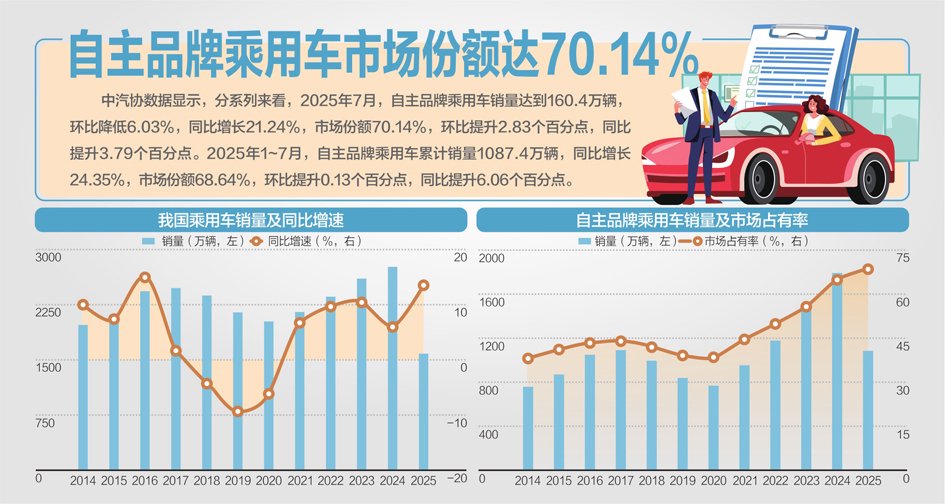
Overall Market - The total market for passenger vehicles includes ICE (Internal Combustion Engine), BEV (Battery Electric Vehicle), and PHEV (Plug-in Hybrid Electric Vehicle) [5] - In the first seven months of 2025, the total production of new energy vehicles (NEV) reached 1,988,426 units, with a year-on-year growth of 13.4% [6][9] - The retail sales of NEVs in July 2025 were 1,843,625 units, reflecting a 7.3% increase compared to the same period in 2024 [11] Submarket Analysis - The NEV market is segmented into different vehicle types, with significant growth observed in the A0 sedan segment, which saw a 101.5% increase in sales [24] - The SUV segment also performed well, with a 48.3% increase in sales for the A segment [24] - The MPV segment recorded a 44.1% increase in sales, indicating a growing consumer preference for multi-purpose vehicles [24] Manufacturer Performance - BYD remains the leading manufacturer in the NEV market, with wholesale sales of 341,030 units in July 2025, a slight increase of 0.1% year-on-year [16] - Geely and Changan also showed strong performance, with Geely's wholesale sales increasing by 120.4% to 130,142 units [16] - Tesla's sales, however, declined by 8.4% in the same period, highlighting competitive pressures in the market [16] Vehicle Type Breakdown - In July 2025, the retail sales of NEVs were dominated by sedans, which accounted for 476,186 units, while SUVs and MPVs sold 467,153 and 43,217 units respectively [20] - The overall market saw a decline in fuel vehicle sales, with a 1.1% decrease in sedan sales and a 10.4% decrease in MPV sales [20] - The total market for NEVs in the first seven months of 2025 reached 6,455,609 units, with a penetration rate of 50.6% [24] Brand Positioning - The luxury segment, including brands like Mercedes-Benz and BMW, continues to face challenges as the market shifts towards more affordable NEVs [5] - The price segmentation of the market shows a growing demand for vehicles priced below 200,000 yuan, which is driving competition among manufacturers [5] Country Positioning - The Chinese market remains the largest for NEVs, with significant exports contributing to the overall growth of the sector [6] - The market dynamics indicate a shift towards domestic brands, which are gaining market share against traditional foreign competitors [5]




零跑汽车(09863):半年报符合预期,新车推动下增长空间广阔
Shenwan Hongyuan Securities· 2025-08-29 07:07
Investment Rating - The report maintains a "Buy" rating for the company, indicating a positive outlook for its stock performance in the near term [7]. Core Insights - The company reported a significant increase in revenue and sales volume in its 2025 half-year report, with revenue reaching 24.25 billion RMB, a year-on-year increase of 174%, and sales volume of 222,000 vehicles, up 156% year-on-year [4][5]. - The introduction of the B series models is expected to drive further sales growth, with the B10 model contributing significantly to sales since its launch [7]. - The company is projected to achieve substantial revenue and profit growth in the coming years, with revenue estimates for 2025, 2026, and 2027 revised upwards to 65.32 billion RMB, 133.26 billion RMB, and 178.08 billion RMB, respectively [5][7]. Financial Data and Profit Forecast - The company’s financial projections show a recovery in net profit, with estimates of 691 million RMB for 2025, 5.47 billion RMB for 2026, and 8.3 billion RMB for 2027, reflecting a strong growth trajectory [5][8]. - The earnings per share (EPS) is expected to turn positive in 2025, with an estimate of 0.52 RMB per share, increasing to 6.21 RMB per share by 2027 [5][8]. - The company’s gross margin is projected to improve, with a gross margin of 14.1% reported for the first half of 2025, up 13 percentage points year-on-year [4]. Sales and Market Expansion - The company plans to expand both domestically and internationally, with new models and strategic partnerships expected to enhance sales and profitability [7]. - The B series models are anticipated to match the sales performance of the C series, contributing to the overall sales target of over one million vehicles in the next year [7]. - The company is also focusing on enhancing its overseas market presence, with local production in Europe expected to begin next year, which will help mitigate tariffs and improve margins [7].
一汽筹划入股零跑汽车10%股份?最新回应
Zheng Quan Shi Bao· 2025-08-29 06:42
Group 1 - China FAW Group is reportedly planning to acquire approximately 10% of Leap Motor's shares to become a strategic shareholder, with the proposal currently circulating within relevant departments of FAW [1] - Leap Motor and China FAW have previously signed a strategic cooperation memorandum in March to enhance technological integration and product competitiveness through joint development of new energy vehicles and components [1] - The strategic cooperation aims to explore the feasibility of deepening capital collaboration to achieve resource synergy across the entire industry chain [1] Group 2 - Leap Motor's senior vice president, Cao Li, stated that the management does not focus on stock prices, emphasizing that sales performance and market recognition will naturally drive stock price increases [2] - Leap Motor delivered its 10,000th B01 vehicle during the Chengdu Auto Show, and the B10 model was unveiled with a new color, achieving over 50,000 deliveries within four months of its launch [2][4] - Leap Motor has maintained the top sales position among new force brands in China for five consecutive months, with cumulative export sales reaching 24,980 units from January to July 2025, also ranking first among new force brands in exports [4] - The company achieved a monthly sales record of over 50,000 units in July 2025, with total deliveries exceeding 900,000 units by August 21, and reported a net profit for the first half of the year, marking a historical revenue high [4] - Leap Motor's core philosophy focuses on self-research and development, aiming to create higher quality, well-configured, and competitively priced products [4]

零跑汽车回应“中国一汽正在筹划入股零跑汽车”传闻
Zheng Quan Shi Bao Wang· 2025-08-29 06:31
Core Viewpoint - China FAW Group is reportedly planning to acquire a stake in Leap Motor, aiming to become a strategic shareholder, with initial plans to acquire approximately 10% of Leap Motor's shares [1][1][1] Company Response - Leap Motor's Senior Vice President, Cao Li, expressed confusion regarding the collaboration with FAW, stating that ongoing projects under the strategic agreement are progressing, and any equity or other cooperation details will be officially announced [1][1][1] Media Reports - Multiple media outlets reported on August 20 that China FAW is in the process of planning an investment in Leap Motor, with the proposal currently circulating within relevant departments of FAW [1][1][1]
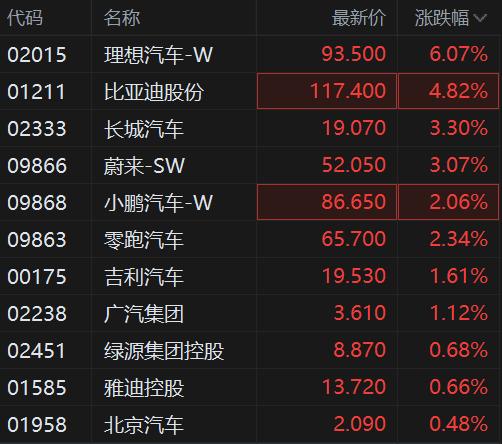
汽车股拉升 理想汽车涨超6% 比亚迪股份涨近5%
Ge Long Hui· 2025-08-29 04:09
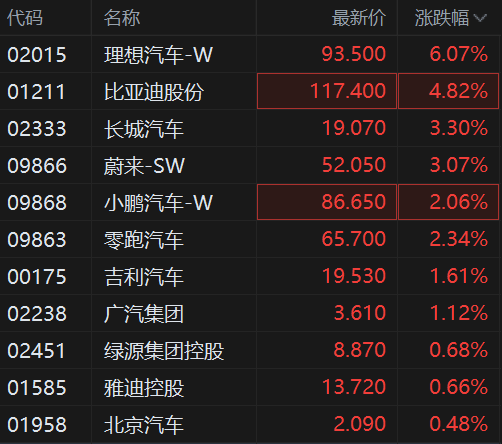
Group 1 - Hong Kong automotive stocks collectively rose, with Li Auto up over 6%, BYD up nearly 5%, Great Wall Motors and NIO up over 3%, and XPeng Motors and Leap Motor up over 2% [1] - Recent earnings reports show Li Auto's Q2 revenue at 30.2 billion yuan, a quarter-on-quarter increase of 16.7%, with an operating profit of 827 million yuan, a year-on-year increase of 76.7% and a quarter-on-quarter surge of 204.4% [1] - Leap Motor achieved Q2 revenue of 14.23 billion yuan, with a gross margin of 13.6% and a net profit of 160 million yuan, marking a profitable quarter that exceeded expectations [1] Group 2 - XPeng Motors reported a net profit of -66.05 million USD for the second fiscal quarter of FY2025, an increase of 62.68% year-on-year [1] - BYD is expected to announce its Q2 results on August 30, forecasting a net profit between 10.5 billion to 12.914 billion yuan, representing a year-on-year growth of 15.9% to 42.5% [1] - Analysts suggest that Chinese automotive brands have gained the capability to compete with global traditional giants in design, technology, and experience, particularly in electrification and intelligence [1]


港股异动丨汽车股拉升 理想汽车涨超6% 比亚迪股份涨近5%
Ge Long Hui A P P· 2025-08-29 03:29
Group 1 - Hong Kong automotive stocks collectively rose, with Li Auto up over 6%, BYD up nearly 5%, Great Wall Motors and NIO up over 3%, and XPeng Motors and Leap Motor up over 2% [1] - Li Auto reported Q2 revenue of 30.2 billion yuan, a quarter-on-quarter increase of 16.7%, with an operating profit of 827 million yuan, a year-on-year increase of 76.7% and a quarter-on-quarter increase of 204.4% [1] - Leap Motor achieved Q2 revenue of 14.23 billion yuan, with a gross margin of 13.6% and a net profit of 160 million yuan, marking a profitable quarter that exceeded expectations [1] Group 2 - XPeng Motors reported a net profit of -66.05 million USD for the second fiscal quarter of FY2025, an increase of 62.68% year-on-year [1] - BYD is expected to announce its Q2 results on August 30, predicting a net profit of 10.5 to 12.914 billion yuan, a year-on-year increase of 15.9% to 42.5% [1] - Analysts suggest that Chinese automotive brands have the capability to compete with global traditional giants, particularly in electrification and intelligence, and are actively entering developed markets such as Europe and Australia, while positioning Mexico as a gateway to the North American market [1]
汽车早报|零跑汽车欧洲本土化生产落地西班牙 丰田7月全球产量销量均创同期新高
Xin Lang Cai Jing· 2025-08-29 00:38
Group 1: Industry Insights - The passenger car intelligence index for July 2025 is reported at 34.2, with the intelligent cockpit index at 36.5, intelligent driving index at 38.4, and external intelligent index at 16.5. The intelligent driving index saw a month-on-month decrease of 1.3 units, indicating a slight retreat from previous growth trends [1] - Toyota's global production in July reached 846,771 units, marking a 5.3% increase year-on-year, while global sales rose by 4.8% to 899,449 units, both achieving record highs for the period [7] - Nissan's global production in July was 227,563 units, down 4.2% year-on-year, but sales increased by 0.5% to 262,745 units. In China, production rose by 14.6% to 48,469 units, and sales increased by 21.8% to 57,359 units [8] - Honda's global production in July decreased by 7.0% to 277,635 units, with a cumulative production of 2,014,016 units from January to July, down 7.6% year-on-year. In China, July production fell by 23.1% to 55,941 units [9] Group 2: Company Performance - Li Auto reported Q2 2025 revenue of 30.2 billion yuan, a year-on-year decline of 4.5%, with a net profit of 1.1 billion yuan, down 0.4% year-on-year. The company expects Q3 delivery volumes to be between 90,000 and 95,000 units [2] - SAIC Motor Corporation disclosed a net profit of 6.018 billion yuan for the first half of 2025, a year-on-year decrease of 9.21%, despite a revenue increase of 6.23% to 294.336 billion yuan [4] - Great Wall Motors increased its registered capital from approximately 8.487 billion yuan to about 8.559 billion yuan, reflecting ongoing growth and investment in its operations [5] - Horizon Robotics announced the mass production of its high-speed NOA auxiliary driving chip, with initial models including Aion's Baolong, MG4, Roewe M7 DMH, and others set for delivery starting in Q3 2025 [6]


2025成都车展今日开幕
Mei Ri Jing Ji Xin Wen· 2025-08-28 23:03
Core Insights - The 28th Chengdu International Auto Show opened on August 29, featuring nearly 120 automotive brands and over 1,600 vehicles displayed across 220,000 square meters, focusing on key industry trends such as complete vehicles, modified cars, humanoid robots, and three electric systems [1] Group 1: New Energy Vehicles - The new energy vehicle exhibition area expanded by 40% compared to last year, reaching a historical high, with Xiaomi Auto making its debut with a nearly 1,000 square meter booth [3] - Brands like BYD, Chery, and Chang'an showcased their products in dedicated exhibition halls, with BYD introducing new technologies such as the "God Eye" system and "Megawatt Flash Charge" [4][5] Group 2: Domestic Brands - Domestic brands made a significant impact, with Chery Group showcasing multiple brands in a dedicated hall, including the new luxury electric hybrid series and the return of the Weilin brand [4] - Several key models were launched, including the Zeekr 9X SUV and the new Geely Galaxy series flagship SUV [5] Group 3: Luxury Vehicles - Notable luxury brands were absent, but significant models were still presented, such as the new Volvo XC70, which is the brand's first super hybrid model with a starting price of 299,900 yuan [6] - Mercedes-Benz and Audi also showcased new models, including the AMG CLE 53 and the Q6L e-tron family [6] Group 4: Local Development and Consumer Incentives - Joint venture brands displayed locally developed models, highlighting the trend of localized production [7] - The Chengdu Auto Show serves as a catalyst for regional consumption, with government incentives such as vehicle trade-in subsidies of up to 20,000 yuan per vehicle and a new car purchase reward program [8][9] Group 5: Market Trends - The Chengdu Auto Show is crucial for the growth of new energy vehicles in the central and western regions of China, showcasing cutting-edge models and technologies to enhance consumer awareness and acceptance [9]
零跑汽车首次上榜中国民营企业500强榜单
Zheng Quan Shi Bao Wang· 2025-08-28 12:21
Group 1 - The core viewpoint of the articles highlights Leap Motor's significant achievements, including its debut on the "China Top 500 Private Enterprises" list and its continuous presence on the "China Top 500 Private Manufacturing Enterprises" list, reflecting its strong growth momentum since 2025 [1] - Leap Motor delivered over 220,000 vehicles in the first half of the year, achieving its first half-year profit, and broke the monthly delivery record with over 50,000 units in July, maintaining its position as the top-selling new energy vehicle manufacturer for five consecutive months [1] - The company also excelled in overseas exports, with nearly 25,000 units exported from January to July, leading the new energy vehicle export rankings [1] Group 2 - Leap Motor is recognized as a technology-driven electric vehicle company, with 60% of its vehicle costs attributed to self-developed and manufactured core components, including advanced technologies such as the industry's first eight-in-one electric drive and CTC battery chassis integration technology [2] - The current product lineup includes models such as B01, B10, C16, C10, C11, C01, and T03, offering both pure electric and range-extended power options [2] - In 2023, Stellantis Group invested in Leap Motor, and a joint venture was established in May 2024 to expand into international markets [2]