JIUMAOJIU(09922)

Search documents
九毛九求“鲜”
Bei Jing Shang Bao· 2025-12-23 16:03
Core Insights - The core focus of the news is on the recent strategic adjustments made by Jiumaojiu Group to address performance pressures and enhance market positioning through brand upgrades and new restaurant concepts [1][6]. Group 1: Brand Expansion and New Concepts - Jiumaojiu Group has opened its first "Jiumaojiu Shanxi Restaurant" in Guangzhou, emphasizing fresh ingredients with a menu featuring signature Shanxi dishes [3][4]. - The new restaurant model includes a focus on "freshness," similar to the previously launched "Tai Er" brand, which has introduced a "5.0 Fresh Model" highlighting live fish and fresh meats [6][7]. - The company has also launched its first barbecue brand, "Chao Nabei," further diversifying its offerings [6]. Group 2: Performance Metrics and Challenges - Recent data indicates a decline in same-store daily sales across Jiumaojiu's main brands, with a year-on-year decrease of 9.3% for Tai Er, 19.1% for Song Hotpot, and 14.8% for Jiumaojiu [6][8]. - The total number of Jiumaojiu's stores has decreased from 824 to 686 over the past year, reflecting the company's struggle to maintain growth [6][8]. Group 3: Strategic Adjustments and Market Trends - The company is responding to industry trends that shift focus from price competition to value enhancement, emphasizing ingredient quality and customer experience [7][9]. - Jiumaojiu Group is implementing measures such as menu transparency and enhanced ingredient sourcing to improve customer trust and satisfaction [8][9]. - The group aims to strengthen brand synergy across its various offerings, optimizing supply chain and marketing strategies to reduce costs and improve efficiency [9].

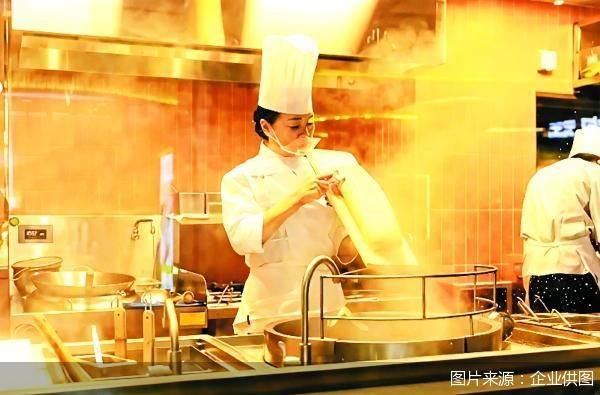
开新餐厅、爆改旗下品牌 九毛九集团想靠“新鲜”求生
Bei Jing Shang Bao· 2025-12-23 11:05
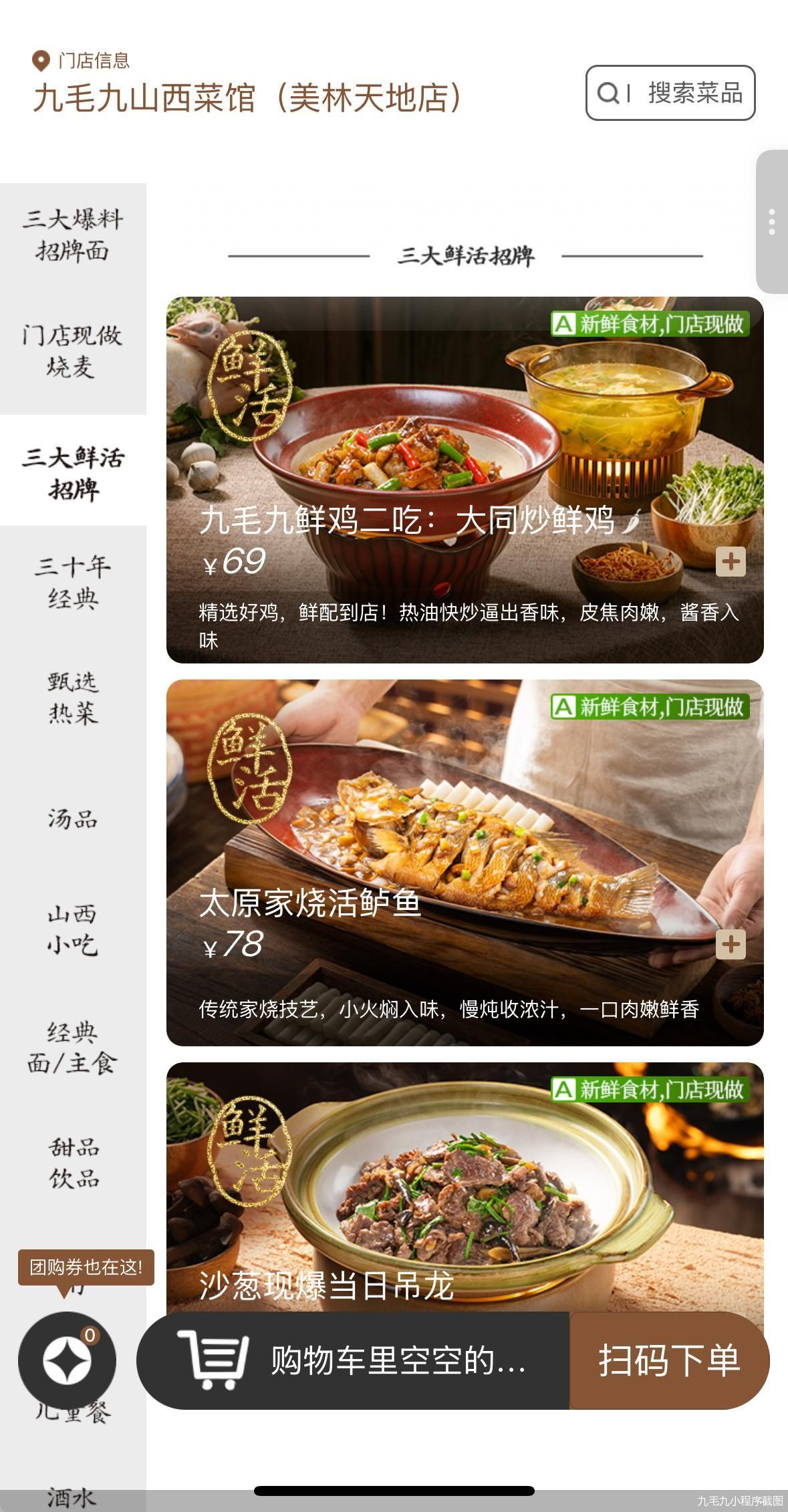
Core Insights - The core viewpoint of the news is that Jiumaojiu Group is actively implementing strategic adjustments to address growth challenges and stabilize its market position, as evidenced by the opening of new restaurant concepts and a decline in same-store sales [1][7]. Group 1: New Brand Initiatives - Jiumaojiu Group has launched its first "Jiumaojiu Shanxi Restaurant" in Guangzhou, focusing on fresh Shanxi cuisine with a tagline emphasizing "freshly made" dishes [5]. - The new restaurant features signature dishes priced between 69 to 78 yuan, highlighting the use of fresh ingredients [5]. - The company is also testing a new model for its Shanxi cuisine, with plans for future expansion yet to be disclosed [6]. Group 2: Performance Challenges - Jiumaojiu Group's same-store daily sales have seen a decline, with a drop of 9.3% for Taier, 19.1% for Song Hotpot, and 14.8% for Jiumaojiu in the latest quarter [7]. - The total number of stores has decreased from 824 to 686 over the past year, indicating significant operational pressure [7]. - Despite these challenges, there are signs of improvement, with Taier's same-store sales showing a narrowing decline and positive growth in major cities [8]. Group 3: Strategic Adjustments - The company is undergoing a brand upgrade and model transformation, including the introduction of a new "5.0 Fresh Model" for Taier, which emphasizes fresh ingredients [7]. - Jiumaojiu Group is also launching its first barbecue brand, "Chao Nabei," as part of its diversification strategy [7]. - The shift in focus from price competition to value-driven offerings reflects a broader industry trend, with consumers increasingly prioritizing ingredient quality and dining experience [8]. Group 4: Brand Synergy and Market Positioning - Jiumaojiu Group is working to enhance brand synergy by eliminating special dining rules and exploring delivery options [9]. - The company aims to establish a transparent menu system for Taier, categorizing dishes based on ingredient freshness to improve customer choice [10]. - There are concerns about potential brand confusion as Jiumaojiu expands into Shanxi cuisine, necessitating a clear communication of the brand's identity and culinary focus [11].
率先实现正餐全菜单透明化 “爆改”后的太二如何重塑餐饮信任?
Xin Jing Bao· 2025-12-19 04:44
Core Insights - The article discusses the transformation of the restaurant industry in China, particularly focusing on the brand "Tai Er" and its commitment to transparency and freshness in food preparation [1][5][12] Group 1: Company Initiatives - Tai Er has launched a comprehensive menu transparency initiative, categorizing dishes based on ingredient freshness and pre-processing levels into four classes, with Class A representing the freshest ingredients [1][4] - The brand's "5.0 Fresh Model" was initiated in March 2023, and by December 2025, Tai Er aims to have over 200 restaurants operating under this model, up from an initial target of 150 [5][12] - The company emphasizes that all dishes are 100% made in-house, with a visible kitchen setup allowing customers to observe the cooking process [5][10] Group 2: Industry Trends - The chain restaurant penetration rate in the dining industry has increased from 18% in 2021 to 23% in 2024, reflecting a growing consumer demand for freshness [3][7] - The Chinese dining market is projected to reach 5.5 trillion yuan in revenue by 2024, with a year-on-year growth rate of 5.3%, surpassing the growth of retail sales [7] - Consumer preferences are shifting towards a more cautious approach, valuing authentic experiences over mere affordability, with a significant increase in searches for "fresh" and "live" food options [7][8] Group 3: Operational Challenges - The implementation of the "Fresh Strategy" poses challenges for Tai Er, particularly in managing the supply chain for fresh ingredients, which requires high standards for cold chain logistics and inventory turnover [11][12] - The company has adopted a "batch killing" method for fish to balance efficiency and freshness, ensuring that customers do not experience long wait times while maintaining quality [10][12] - Despite the positive reception of upgraded stores, the increased costs associated with fresh ingredients have led to a decline in profit margins for new store formats [12]
有餐企以新鲜度将菜品分“ABCD级”,餐饮透明化是趋势
Di Yi Cai Jing· 2025-12-18 10:26
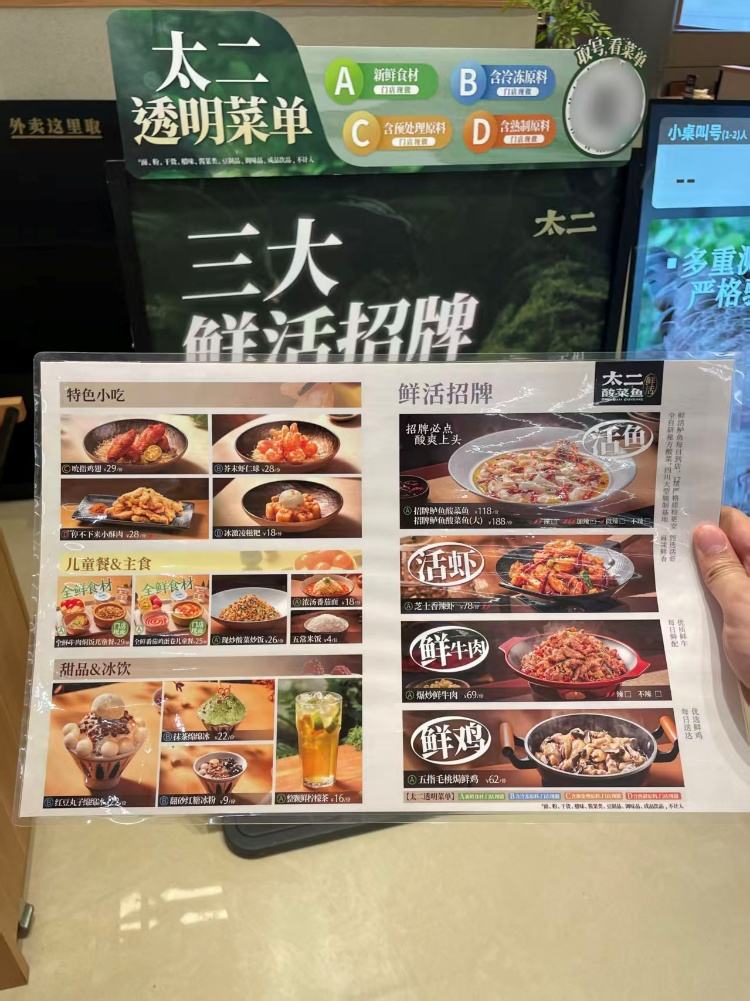
Core Viewpoint - The recent focus on pre-prepared meals in China has prompted significant actions from both the government and restaurant brands to enhance transparency regarding food ingredients and preparation processes [1][4]. Group 1: Company Initiatives - Chain restaurant brand Tai Er has launched a full menu transparency classification system, categorizing dishes based on the freshness of ingredients [1]. - Tai Er's transparent menu divides dishes into four categories, with A class representing the freshest ingredients, including live fish and fresh vegetables, while B, C, and D classes indicate varying levels of processing [3]. - Fast food brand Lao Xiang Ji has implemented a similar system with a "three-color label" to indicate the processing level of dishes, enhancing consumer awareness [4]. Group 2: Industry Trends - The food industry analyst Zhu Danpeng emphasizes the need for a balance between taste and industrialization, as well as the importance of establishing national standards for pre-prepared meals [3]. - The State Council's Food Safety Office has recognized the growing public concern over pre-prepared meals and is working with various departments to expedite the formulation of national standards [4]. - The push for transparency in the restaurant industry is driven by consumer demand for fresh ingredients and visible processes, alongside regulatory pressures [4].

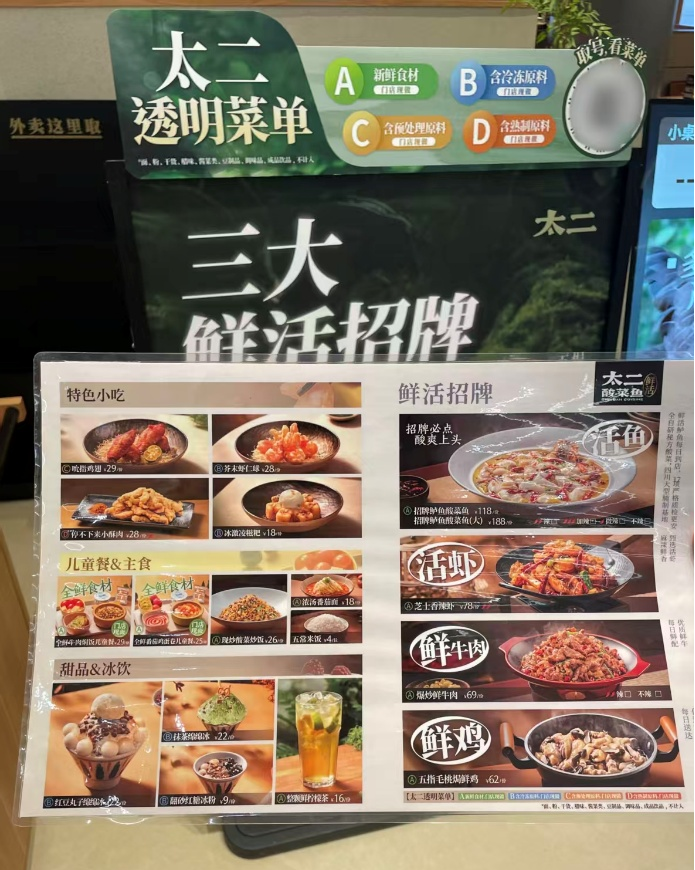
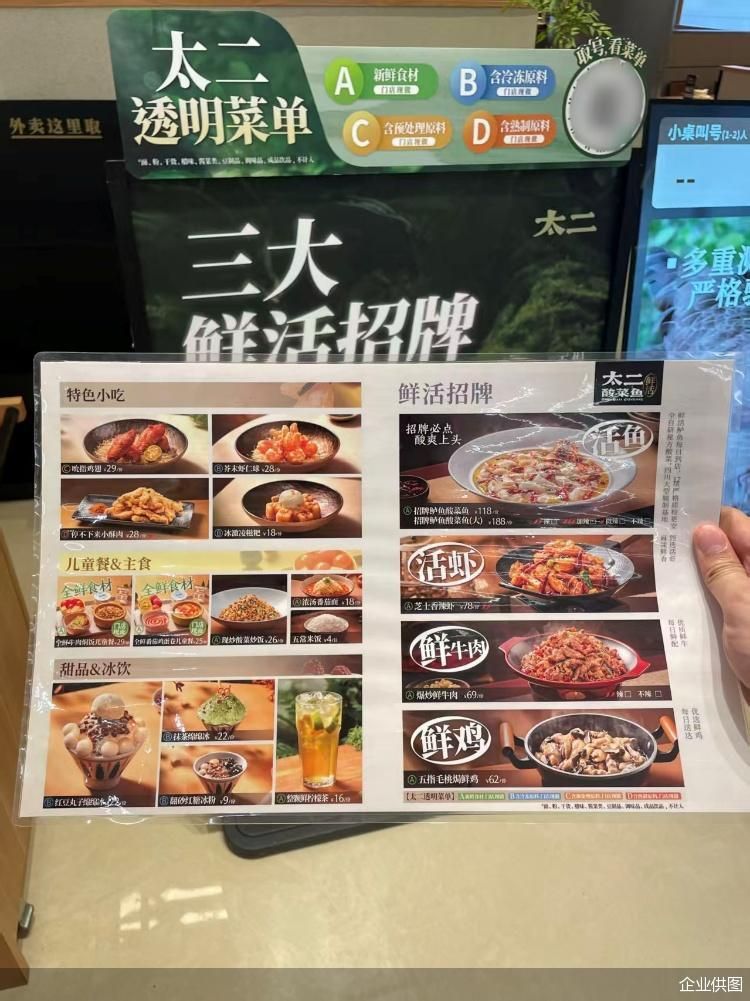
太二酸菜鱼启动全菜单透明分类制度
Bei Jing Shang Bao· 2025-12-18 05:40
Core Viewpoint - Tai Er Sauerkraut Fish has launched a comprehensive transparent classification system for its entire menu, focusing on the freshness of ingredients and clearly indicating the usage of raw materials [1][3] Group 1: Menu Classification - The menu is divided into four categories based on the freshness and pre-processing of main ingredients, with certain auxiliary ingredients excluded from this classification [1][3] - Category A represents the freshest items, including live fish, live shrimp, fresh chicken, fresh beef, and fresh vegetables, with daily fresh deliveries to the store [3] - Categories B, C, and D include items made with frozen or pre-processed ingredients, such as frozen squid and marinated pork neck, with clear labeling for consumer awareness [3] Group 2: Consumer Engagement - The initiative aims to empower consumers by allowing them to make choices based on their preferences regarding ingredient freshness and preparation methods [3] - The company maintains a commitment to 100% in-store preparation of all dishes, enhancing transparency through visible cooking processes [3] Group 3: Brand Expansion - The transparent menu classification system has been implemented across other restaurant brands under the parent company, Jiumaojiu Group, including "Jiumaojiu Shanxi Cuisine," "Song Hotpot Factory," and the newly launched "Chao Nabei" [3]
连锁餐饮的「中间地带危机」
36氪· 2025-12-17 11:45
Core Viewpoint - The article discusses the current challenges and dynamics within the Chinese restaurant industry, particularly focusing on the "middle ground" segment of chain restaurants that are facing criticism for their use of pre-prepared dishes while trying to maintain a balance between cost and quality [4][32]. Group 1: Industry Dynamics - The restaurant industry is experiencing a divide, with some brands like Lao Xiang Ji and Da Mi Xian benefiting from their low-cost offerings, while others, similar to Xi Bei, are facing backlash for perceived quality issues related to pre-prepared meals [4][5][6]. - The "middle ground" segment of restaurants typically has a customer price point around 100 yuan and operates approximately 500 locations, which has become a focal point for criticism [8][34]. - The operational model of these middle-ground restaurants often combines elements of both low-cost and high-end dining, attempting to leverage the benefits of both segments [16][17]. Group 2: Business Models - Low-cost restaurants like Lao Xiang Ji focus on standardization and rapid expansion through franchising, with low menu prices and high turnover rates, often exceeding 1,000 locations [9][10]. - High-end restaurants, represented by brands like Xin Rong Ji, maintain a small number of locations with high price points, emphasizing quality and direct control over food preparation [13][15]. - The middle-ground restaurants, such as Hai Di Lao, have successfully integrated supply chain management and standardized processes to achieve significant market valuations while maintaining a balance between quality and cost [16][17]. Group 3: Market Trends - The rapid growth of commercial real estate in 2014 provided a favorable environment for chain restaurants, with the average share of dining in shopping centers surpassing 25% for the first time [26][27]. - The period from 2016 to 2018 saw significant growth for brands like Tai Er, with a compound annual growth rate of 182.3%, highlighting the potential for expansion in the restaurant sector [30]. - However, the industry is now facing challenges, with many middle-ground restaurants experiencing stagnation in customer traffic and pricing power, leading to a decline in average spending per customer [32][44]. Group 4: Consumer Behavior - Consumer expectations for quality and freshness in dining experiences are high, particularly in the context of pre-prepared meals, which can lead to dissatisfaction when prices do not align with perceived value [50][51]. - The psychological price point for mid-range dining appears to be a barrier, as consumers react negatively to perceived overpricing, especially when pre-prepared dishes are involved [46][48].


九毛九20251216
2025-12-17 02:27
Summary of Jiamaojiu Group Conference Call Company Overview - Jiamaojiu Group has closed 132 underperforming direct-operated stores, currently operating a total of 510 stores, including 22 franchise stores and 33 located in Hong Kong, Macau, and overseas, aiming to optimize store structure [2][3] Key Points and Arguments New Store Model Implementation - The company has launched the 5.0 Fresh Model for its Tai Er brand, focusing on family dining options and upgraded environments and services, with over 160 new model stores opened [2][3] - New model stores have seen a 10% year-on-year increase in revenue and over 15% growth in dine-in revenue [2][5] - The average customer spending has increased by 2-3 RMB due to menu adjustments and improved service, attracting more customers [2][6] Cost Management and Profitability - Despite an increase in workforce by 3-4 employees per new model store, the company has effectively controlled labor costs through training and supply chain optimization [7][9] - The company aims for a gross margin of 64%, with labor costs at 20%-21% and rent below 10%, targeting an operating profit margin of over 18% by 2027 [9][10] - The company is optimistic about future profit recovery, expecting to achieve a stable state for new model stores by 2027 [9][10] Sales Performance and Market Outlook - Same-store sales turned positive starting from the last week of November 2025, with expectations for December to show significant recovery [12] - The new model stores have outperformed traditional stores, particularly in first-tier cities like Beijing and Shanghai, with a 15% increase in dine-in sales compared to a 10% decline in traditional models [15] Future Expansion Plans - The company plans to complete the renovation of over 200 stores by mid-2026, with no specific annual opening targets but focusing on locations with a two-year payback period [13][25] - The company is exploring new brand opportunities, including a new barbecue brand "Zhao Zhao Na Bian," with plans to open its first store in Guangzhou [21] Financial Performance Expectations - The company anticipates a more favorable financial report for 2026, with all unprofitable stores closed by the end of 2025 and a significant reduction in impairment losses [23][24] - The dividend payout ratio is expected to remain at a minimum of 40%, with adjustments based on actual performance [27] Additional Important Insights - The company is focusing on using fresh ingredients sourced directly from suppliers to balance procurement costs and enhance product quality [10] - The transition to a fresh model has not negatively impacted store efficiency; instead, it has improved overall store performance [17] - The company has established central kitchens in Guangzhou, Shanghai, and Chongqing, with further expansions planned [19] This summary encapsulates the key insights from Jiamaojiu Group's conference call, highlighting their strategic adjustments, financial expectations, and market outlook.
连锁餐饮的“中间地带危机”
3 6 Ke· 2025-12-16 23:39
Core Insights - The public relations crisis surrounding Xibei has subsided, but consumer backlash against pre-prepared dishes continues, creating a divide in the restaurant industry [1][2] - Restaurants like Laoxiangji and Dami Xiansheng are favored by workers despite using pre-prepared ingredients, while others face scrutiny for charging fresh dish prices for pre-prepared meals [2][3] Group 1: Industry Dynamics - The restaurant industry is experiencing a split, with some brands thriving while others, particularly those similar to Xibei, are under fire for their pricing strategies [2][4] - The "middle ground" restaurants, characterized by moderate pricing and a specific number of outlets, are facing challenges in maintaining customer loyalty and operational efficiency [4][17] Group 2: Business Models - The "middle ground" restaurants typically have a customer price range around 100 yuan and about 500 outlets, with examples including Xibei, Xiaocaiyuan, and Tai Er Suancaiyu [4][24] - The operational model of low-priced fast food relies on standardization and franchise expansion, while high-end dining focuses on high prices and direct management [5][7] Group 3: Market Challenges - The "middle ground" restaurants are encountering a ceiling in growth, struggling with stagnant customer prices and declining turnover rates [17][21] - The expansion strategy that worked in urban areas is facing competition from local brands in lower-tier cities, which offer high-quality, cost-effective options [23][24] Group 4: Consumer Perception - Consumer sentiment towards mid-range dining is shifting, with a growing expectation for value, leading to backlash against perceived overpriced pre-prepared dishes [30][31] - The cultural emphasis on fresh ingredients in China complicates the acceptance of pre-prepared meals, particularly at higher price points [31][32]
连锁餐饮的“中间地带危机”
远川研究所· 2025-12-16 13:10
Core Viewpoint - The public relations crisis surrounding Xibei has subsided, but consumer backlash against pre-made dishes continues, highlighting a divide in the restaurant industry between different types of dining establishments [1] Group 1: Industry Dynamics - The restaurant industry is experiencing a split, with brands like Laoxiangji and Dami Xiansheng being favored by workers despite their use of pre-made dishes, while others similar to Xibei are facing public scrutiny [1] - The "middle ground" in the restaurant sector is characterized by brands with moderate pricing and a specific number of outlets, typically around 500, such as Xibei (470+ stores, average spending of 98 yuan) and Xiaocaiyuan (700+ stores, average spending of 60 yuan) [3][4] - High-end dining establishments like Xinrongji, which focus on quality and exclusivity, contrast sharply with budget-friendly fast food chains like Laoxiangji, which prioritize standardization and rapid expansion [4][7] Group 2: Business Models - The operational model of budget restaurants relies on "standardized pre-made dishes and franchise expansion," allowing for rapid growth while minimizing cooking processes at the store level [5] - In contrast, high-end restaurants like Xinrongji operate on a "high average spending and non-standardized direct management" model, focusing on quality control and customer experience [7][9] - The "middle ground" restaurants attempt to balance the benefits of both models, leveraging standardized expansion while also enjoying higher profit margins associated with direct management [11] Group 3: Market Challenges - The restaurant industry has faced challenges in maintaining customer turnover rates, with many brands in the "middle ground" experiencing a disconnect between store expansion and operational efficiency [23] - The expansion strategy of these mid-tier restaurants, which often mirrors that of Haidilao, has encountered limitations in lower-tier cities where local brands dominate [25] - Despite attempts to increase average spending, many restaurants have seen a decline in customer spending, with brands like Tai Er experiencing a drop from 79 yuan to 70 yuan over four years [29][32]
港股收评:指数集体上扬!大金融股、黄金股走强,药品股低迷


Sou Hu Cai Jing· 2025-12-12 09:01
Market Overview - The market sentiment improved significantly due to favorable news from the Central Economic Work Conference, with the Hang Seng Index rising by 1.75% and returning to 26,000 points [1] - Major technology stocks collectively increased, with NetEase rising over 4%, Tencent and Alibaba up over 2%, and other tech companies like Xiaomi, Baidu, JD.com, and Kuaishou also seeing gains [1][3] Sector Performance - **Electric Power Equipment**: Strong performance with Dongfang Electric up over 13% and other companies like Harbin Electric and Shanghai Electric also showing significant gains [1][5] - **Financial Sector**: All major financial stocks, including China Pacific Insurance and CITIC Securities, saw increases, with HSBC reaching a market value of over HKD 2 trillion [1][8] - **Precious Metals**: Gold and silver prices surged, leading to active trading in gold stocks, with China Silver Group rising nearly 6% [1][6] - **Consumer Sector**: Restaurant stocks were active, with companies like Da Shi and Haidilao seeing notable increases, driven by policies aimed at boosting consumption [10] - **Real Estate**: Property stocks rose, with Longguang Group increasing over 4%, supported by policies to stabilize the real estate market [12] Individual Stock Highlights - **NetEase**: Stock price increased by 4.20% to HKD 218.40 [4] - **Dongfang Electric**: Stock price surged by 13.59% to HKD 24.90 [5] - **China Pacific Insurance**: Stock price rose by 5.68% to HKD 34.60 [9] - **China Silver Group**: Stock price increased by 5.80% to HKD 0.730 [7] - **Xuan Bamboo Bio**: Stock price increased by 25.19% to HKD 96.90, reaching a new high [16][19] Economic Policy Impact - The Central Economic Work Conference emphasized the importance of domestic demand and consumer spending, with plans to implement measures to boost consumption and stabilize the real estate market [10][12]