SAIC MOTOR(600104)

Search documents
汽车行业周报:多数车企作出承诺,行业转向良性发展-20250616
Guoyuan Securities· 2025-06-16 14:43
Investment Rating - The report maintains a positive outlook on the automotive industry and leading companies' performance [4][6]. Core Insights - The automotive industry is experiencing a healthy transition with commitments from multiple automakers to shorten supplier payment terms to within 60 days, aimed at stabilizing the supply chain and enhancing operational resilience [2][49]. - Retail and wholesale sales of passenger vehicles in early June showed a year-on-year growth of 19% and 10% respectively, while the new energy vehicle market saw a significant retail growth of 40% [1][21]. - The report highlights the importance of technological advancements in driving the industry's future, particularly in smart driving and core component opportunities [4]. Summary by Sections 1. Weekly Market Review (June 7-13, 2025) - The automotive sector index decreased by 0.85%, with the passenger vehicle segment experiencing the largest decline of 2.03% [12][16]. - The commercial vehicle segment saw a notable increase of 6.67% [12]. 2. Weekly Data Tracking (June 7-13, 2025) - From June 1-8, 2025, retail sales of passenger vehicles reached 343,000 units, a 19% increase year-on-year, while wholesale sales totaled 311,000 units, a 10% increase [21]. - New energy vehicle retail sales during the same period reached 202,000 units, marking a 40% year-on-year growth [21]. 3. Industry News (June 7-13, 2025) - Major automakers are calling for a return to rational competition, emphasizing the need to focus on technology and quality rather than price wars [36]. - The Ministry of Commerce reported progress in negotiations regarding the EU-China electric vehicle trade dispute [37][38]. - SAIC, Huawei, and China Automotive Technology & Research Center established a cooperation task force to enhance smart and connected vehicle technologies [39].





ID.3 GTX套件款重磅上市,上汽大众2025 ID.Festival与用户玩在一起
Zhong Guo Qi Che Bao Wang· 2025-06-16 08:10
Core Insights - SAIC Volkswagen hosted the fourth ID.Festival in Guangzhou, focusing on the launch of the ID.3 GTX package and the official modified concept car, emphasizing a new trend in automotive modification [1][10] - The ID.3 GTX package is available in two versions, priced at 137,388 yuan and 144,888 yuan, with the first 50 buyers receiving a limited edition car cover [3][16] - The company aims to enhance the "playability" of the ID.3 GTX package, incorporating elements of sports aesthetics, racing spirit, and modification space [6][12] Product Features - The ID.3 GTX package features a distinctive GT style, including a unique color "GT Red," high-gloss black sports surround, and 20-inch wheels, enhancing its sporty appearance [9][14] - New configurations include full LED matrix headlights, heated and ventilated front seats, and an AR-HUD smart navigation feature, making it more advanced than the ID.3 2025 model [9][12] - The ID.3 GTX package is designed to cater to the growing demand for personalized modifications, with plans for more compliant aftermarket parts to be launched [16][18] User Engagement - The festival gathered 100 ID. car owners and showcased creative modified cars, fostering a strong modification culture [10][14] - The "ID.Creator Inspiration Co-Creation Plan" was launched, rewarding the top ten creative contributors with limited edition car covers, promoting user engagement and creativity [18] - The event highlighted the importance of individuality, safety, space, handling, and style as key reasons for choosing the ID. family of vehicles [12]


汽车行业点评报告:车企优化供应商支付账期,产业走向规范化
KAIYUAN SECURITIES· 2025-06-16 05:06
Investment Rating - The industry investment rating is "Positive" (maintained) [1] Core Viewpoints - The automotive industry is experiencing intensified competition, with companies committing to optimize supplier payment terms, which is expected to lead to a more standardized industry [5][24] - The high-end vehicle market is showing a favorable competitive landscape, with domestic automakers improving their product offerings and profitability [5][26] - There is a strong outlook for leading manufacturers in intelligent driving and component companies transitioning to robotics, with significant growth opportunities anticipated [5][26] Summary by Sections Industry Trends - The automotive sector has seen a 0.85% decline this week, ranking 20th among primary industries, while the cumulative increase since 2025 is 7.83%, ranking 4th [14][13] Recent Developments - Multiple automakers have pledged to limit supplier payment terms to no more than 60 days, alleviating cash flow pressures for suppliers and promoting healthy industry development [5][33] - The Ministry of Industry and Information Technology supports the 60-day payment commitment from automakers, emphasizing its importance for sustainable industry growth [33] Investment Recommendations - Recommended automakers include XPeng Motors, SAIC Motor, BYD, Changan Automobile, Great Wall Motors, and Leap Motor, with component companies like Huayang Group, Desay SV, and Junsheng Electronics highlighted for their growth potential [7][37]

摩根大通:中国汽车行业-第 13 届全球汽车行业大会十大亮点
摩根· 2025-06-16 03:16
Investment Rating - The report maintains a positive investment rating for companies such as Leap Motor, Xpeng Motors, BYD, Li Auto, and Geely, while holding a conservative long-term outlook on state-owned joint venture automakers like Dongfeng Motor, SAIC Motor, and GAC Group [1]. Core Insights - The report identifies ten structural trends in the automotive industry, emphasizing the potential for profit growth, investor positioning, and the current automotive market environment [1]. - Key themes include the expansion of Chinese automakers into Europe, innovation in technology, restructuring of dealer networks, focus on autonomous driving, and the impact of pricing strategies and tariffs [1][3]. Summary by Themes Theme 1: Expansion into Europe - Chinese automakers are increasingly focusing on the European market due to higher profit margins and less competition compared to China [3]. - The average selling price of vehicles in the EU can be 2-3 times higher than in China, with Chinese manufacturers potentially achieving 50-100% higher profitability in Europe despite tariffs [3][4]. Theme 2: Innovation and Technology - Chinese automakers are noted for their rapid technological innovation, with significant advancements in electric vehicle components and systems [6][8]. Theme 3: Restructuring Dealer Networks - The report highlights a trend of restructuring among Chinese dealers due to intense competition and declining profitability, with discount rates reaching record highs [18][19]. Theme 4: Strong Model Cycles - Companies like Mercedes-Benz and Xpeng are expected to launch several new models starting in 2025, indicating a strong product pipeline [22]. Theme 5: Focus on Autonomous Driving - The industry is shifting towards autonomous driving technologies, with AI playing a crucial role in enhancing vehicle capabilities [23]. Theme 6: Global Collaborations - Partnerships between Chinese automakers and global manufacturers are increasing, with companies like Xpeng collaborating with Volkswagen and Leap Motor with Stellantis [25][30]. Theme 7: Pricing Competition - The report discusses the ongoing price competition in the Chinese market, driven by demand slowdown and oversupply, with significant discounts affecting profitability [35]. Theme 8: EU Pricing Strategies - In the EU, consumers prioritize monthly payments over manufacturer suggested retail prices, influencing sales strategies for Chinese brands [42]. Theme 9: Impact of US Tariffs - The report assesses the limited impact of US tariffs on Chinese automakers, as they have not significantly exported to the US since previous tariff implementations [54]. Theme 10: Rare Earth Issues - The discussion on rare earth materials highlights potential supply chain risks for North American electric vehicle manufacturers, although current inventories mitigate immediate impacts [55].



Jefferies:中国的 OEMs’ 60 天付款周期承诺_对汽车零部件公司的影响》
2025-06-16 03:16
Summary of Key Points from the Conference Call Industry Overview - The conference call discusses the automotive industry in China, specifically focusing on Original Equipment Manufacturers (OEMs) and auto parts companies [1][2]. Core Insights and Arguments - **Payment Cycle Commitment**: Chinese OEMs, including BYD, Geely, GWM, GAC, and Chery, have pledged to shorten supplier payment terms to within 60 days. This initiative aims to stabilize the supply chain and follows government directives against harmful price competition [1][2]. - **Positive Impact on Auto Parts Companies**: The commitment to a shorter payment cycle is expected to improve cash flow for auto parts suppliers and reduce financing costs. Companies with longer accounts receivable (AR) days, such as Wuhu BTL, are likely to benefit the most [1][5]. - **Current Payment Terms**: The average payment term for suppliers currently ranges from 100 to 120 days. Reducing this to 60 days could enhance profit margins by approximately 0.3%, assuming a short-term loan cost of 2-3% [5]. - **Implementation Uncertainty**: The actual impact of the policy will depend on how it is implemented and the specific arrangements between OEMs and suppliers. Some OEMs currently use supply chain finance platforms that may not be adjusted under the new terms [5]. Important but Overlooked Content - **Accounts Receivable Days**: The report includes a comparison of AR days for various auto parts companies, indicating that most companies are experiencing lengthening AR days in 2024 compared to 2023 [4][5]. - **Potential Risks**: There is a possibility that OEMs may offset the costs associated with shortened payment terms by imposing greater annual price cuts on auto parts suppliers, which could negate some of the benefits of the new payment cycle [5]. Companies Mentioned - **Auto Parts Companies**: Wuhu BTL, Shanghai Baolong, Sanhua, Jiangsu Xinquan, Tuopu, Joyson Electronic [4][5]. - **OEMs**: BYD, Geely, GWM, GAC, Chery, SAIC [1][2]. This summary encapsulates the key points discussed in the conference call, highlighting the implications for the automotive industry and the potential benefits and risks for auto parts companies.


深度|行业热议车企账期,供应链金融工具该背锅吗?
Di Yi Cai Jing· 2025-06-15 15:56
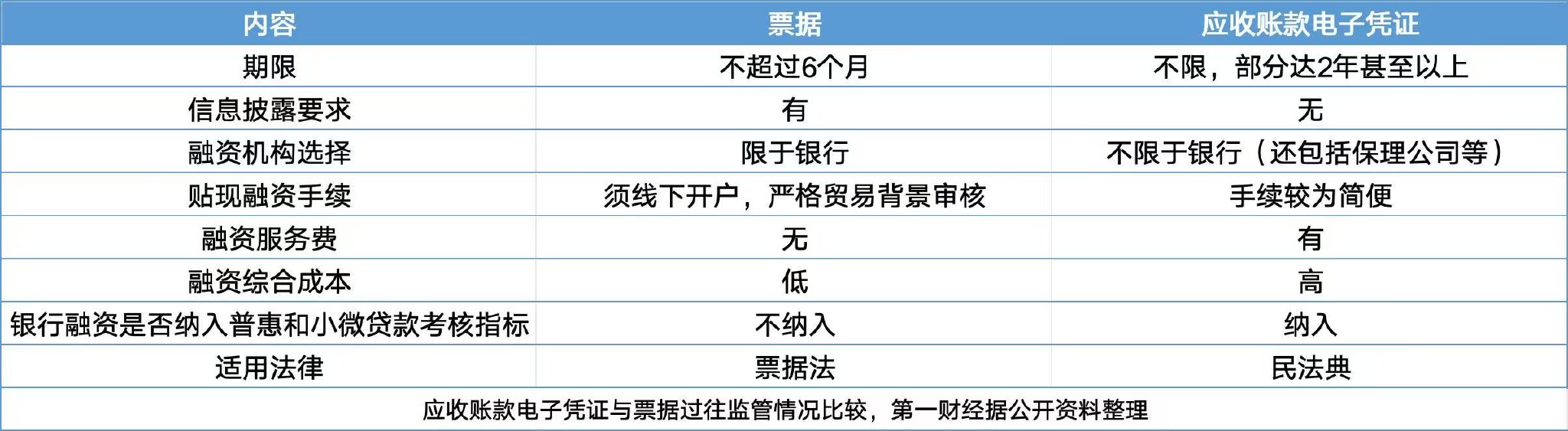
Core Insights - Major automotive companies are standardizing supplier payment terms to within 60 days, raising concerns about the implications for supply chain finance tools [1][2] - The implementation of new regulations aims to address the long payment cycles and "triangular debt" issues faced by small and medium-sized enterprises (SMEs) [3][4] - The market for accounts receivable electronic certificates is projected to reach 4.4 trillion yuan in 2024, indicating significant demand for this financial tool [11] Group 1: Payment Terms and Regulations - Nearly 20 automotive companies have committed to a unified payment term of 60 days, but many have not clarified the calculation rules for this period [1][5] - The revised "Regulations on Payment of Funds to Small and Medium-sized Enterprises" mandates that large enterprises must pay within 60 days of delivery, prohibiting the use of non-cash payment methods to extend payment terms [3][4] - The new regulations are seen as a response to the increasing scale of accounts receivable, which reached nearly 26 trillion yuan by April 2023, with an average recovery period of 70.3 days [4] Group 2: Supply Chain Finance Tools - The discussion around the exclusion of accounts receivable electronic certificates from supply chain finance tools has emerged, with some advocating for a complete ban on such tools [2][9] - The accounts receivable electronic certificate was initially designed to alleviate financing difficulties for SMEs but has faced criticism for being misused by some core enterprises [11][12] - The recent regulations emphasize the need for a real trade background and set a maximum payment term of one year for electronic certificates, aiming to enhance transparency and accountability [16][17] Group 3: Industry Impact and Future Outlook - The automotive sector's shift towards standardized payment terms is viewed as a positive signal, but the actual impact will depend on the clarity of the payment cycle calculation [8][16] - The reliance on non-cash payment methods, such as commercial bills and electronic certificates, remains a concern, particularly for SMEs facing cash flow pressures [6][8] - The future of accounts receivable electronic certificates is uncertain, with industry experts suggesting that while there is a need for regulation, a complete ban is unlikely due to the existing demand [16][18]
ESG信披观察 | A股新能源汽车整车行业近七成企业披露碳排放数据,产品安全披露不足
Mei Ri Jing Ji Xin Wen· 2025-06-15 13:43
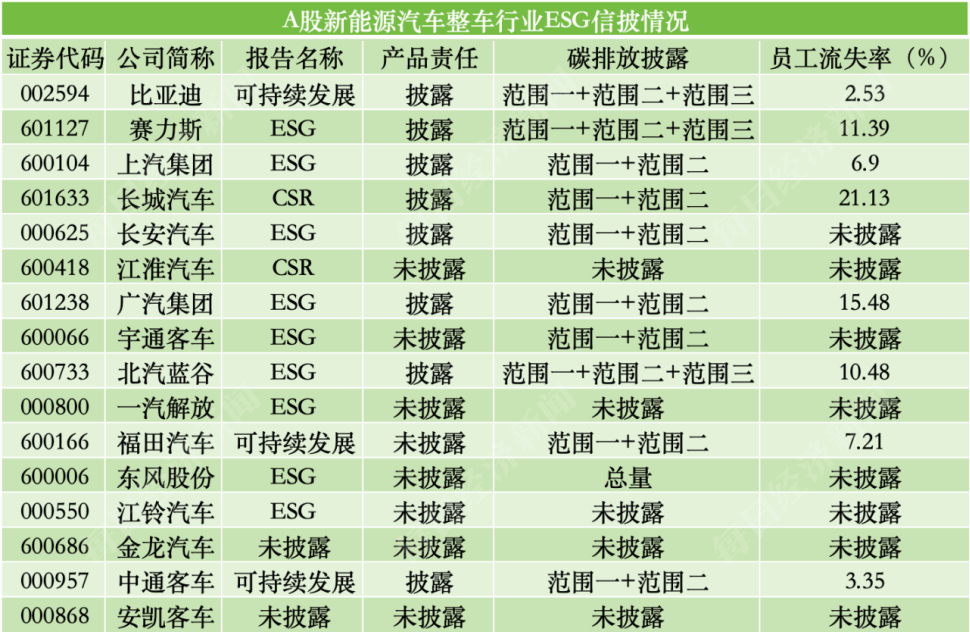
Core Viewpoint - The recent release of new models by leading electric vehicle companies has drawn significant market attention, highlighting the importance of ESG (Environmental, Social, and Governance) issues for the survival and development of these companies [1] ESG Disclosure Summary - Among the 16 listed companies in the A-share electric vehicle sector, 14 have disclosed ESG-related reports, resulting in a disclosure rate of 87.5%, which is significantly higher than the overall industry rate of 45.94% [1][2] - In terms of carbon emissions, 11 companies have disclosed relevant data, achieving a disclosure rate of 68.75%. However, only 3 companies have disclosed Scope 3 emissions data, resulting in a low disclosure rate of 18.75% [2][4] - The types of reports disclosed include 3 sustainability reports, 2 corporate social responsibility reports, and 9 ESG reports, with sustainability reports being favored due to their broader applicability [2] Product Responsibility and Employee Turnover - Eight companies have disclosed product responsibility-related issues, but the quantitative data on product quality, such as recall rates and customer complaints, is limited [6][8] - Employee turnover rates have been disclosed by 8 companies, with Great Wall Motors reporting the highest turnover rate. However, most companies only report voluntary turnover rates, with little information on involuntary turnover [9] Challenges in Carbon Emission Disclosure - The ability to disclose carbon emissions varies among companies, with larger firms having more leverage to require suppliers to provide data. Smaller companies may lack this capability, affecting their disclosure practices [4][5] Market Dynamics and ESG Importance - The high ESG disclosure rates among electric vehicle companies are partly driven by the need to meet international sustainability standards, especially for those exporting to Europe [1][2]



想要60天内结款,车企供应商还得过6道关
阿尔法工场研究院· 2025-06-15 11:39
Core Viewpoint - The commitment of car manufacturers to a maximum payment term of 60 days for suppliers is a response to the revised "Regulations on Payment for Small and Medium Enterprises" effective June 1, 2025, but suppliers express skepticism about the effectiveness of this change due to existing operational hurdles and potential price reductions tied to these commitments [4][6][32]. Group 1: Commitment to Payment Terms - Multiple car manufacturers, including major players like GAC, BYD, and NIO, have publicly committed to a maximum payment term of 60 days for suppliers [2]. - In addition to the 60-day payment term, some manufacturers like SAIC and BAIC have pledged not to use commercial acceptance bills, which can increase financial pressure on suppliers [3][38]. - The new regulations stipulate that large enterprises must pay small and medium enterprises within 60 days of delivery, with no conditions tied to third-party payments [6]. Group 2: Supplier Concerns - Despite the commitment to better payment terms, suppliers are frustrated with the numerous hurdles they face in receiving payments, including complex approval processes and lengthy verification stages [7][20]. - Suppliers report that the bidding process has become increasingly competitive and challenging, with frequent re-bidding and price pressures that erode profit margins [16][19]. - The verification process for payments is often cumbersome, with suppliers facing difficulties in confirming project completion and receiving timely payments [25][30]. Group 3: Payment Mechanisms - Suppliers express strong dissatisfaction with the use of commercial acceptance bills, preferring bank acceptance bills due to their better liquidity and lower costs [34][35]. - The reliance on acceptance bills can create additional financial burdens for suppliers, as they may face challenges in discounting these bills [36]. - The commitment from manufacturers to avoid commercial acceptance bills is seen as a more genuine effort to support suppliers compared to merely extending payment terms [38]. Group 4: Industry Dynamics - The financial dynamics of car manufacturers often involve significant liabilities to suppliers, which contrasts with foreign manufacturers that tend to owe more to banks and financial institutions [41]. - The rapid development of the automotive industry in China has led to a focus on cost-cutting at the expense of supplier relationships, highlighting a need for manufacturers to adopt a more collaborative approach [42][43]. - The overall sentiment in the industry suggests a desire for a more equitable and transparent competitive environment, as the current practices lead to mutual dissatisfaction among both manufacturers and suppliers [46].
“蓝军”傅强:危机意识,上汽大众穿越周期的诺亚方舟
2 1 Shi Ji Jing Ji Bao Dao· 2025-06-13 09:11
Core Viewpoint - SAIC Volkswagen is facing a significant crisis in the rapidly evolving electric vehicle market, where the growth of range-extended and hybrid vehicles has outpaced that of pure electric vehicles, prompting a strategic shift towards developing range-extended products like the ID.ERA, set to launch in 2026 [1][2][6]. Group 1: Market Dynamics - The pure electric vehicle market grew by 107% in 2023 compared to 2021, while range-extended and hybrid products surged by 492%, nearly five times the growth of pure electric vehicles [1]. - SAIC Volkswagen's ID. series has sold over 180,000 units in two and a half years, making it the leading joint venture electric vehicle series, although it has not met initial sales targets of 200,000 to 300,000 units annually [4][20]. Group 2: Strategic Shifts - The company has initiated the development of its first range-extended SUV, ID.ERA, to compete with models like Li Auto's L8/L9, marking a significant strategic pivot towards range-extended vehicles [2][10]. - The partnership with Volkswagen has evolved into a "Joint Venture 2.0" model, where product definition rights are transferred to China, allowing for more localized decision-making [7][8]. Group 3: Internal Changes and Leadership - The company has adopted a "red-blue army" strategy, inspired by Huawei, to foster internal competition and improve product development processes [5][24]. - The leadership emphasizes the importance of crisis awareness, a principle instilled since the company's early days, to adapt to market changes and consumer preferences [21][22]. Group 4: Product Development Focus - Key focus areas for the ID.ERA include achieving industry-leading energy management systems and enhancing smart cabin and driving assistance technologies [10][11]. - The development process involves careful trade-offs to ensure optimal vehicle weight and safety features, such as a backup capacitor system for accident scenarios, despite increasing costs [12][13]. Group 5: Marketing and Sales Strategies - The company has implemented a "one-price" sales model to simplify the purchasing process and enhance customer trust, moving away from traditional negotiation practices [31][33]. - Upcoming marketing strategies for 2025 and 2026 will focus on improving service quality and launching multiple new energy products, with a commitment to elevating customer satisfaction [34][36].
【联合发布】一周新车快讯(2025年6月7日-6月13日)
乘联分会· 2025-06-13 08:57
Group 1 - The article discusses the upcoming electric vehicle models set to launch in June 2025, highlighting their specifications and market positioning [2][3][5] - BYD's Seal 06 EV will be available in three variants with prices ranging from 10.98 to 12.98 million yuan, featuring a range of 470 to 545 km [6][5] - SAIC Audi's A7L will offer a price range of 41.87 to 66.62 million yuan, with engine options including 2.0T and 3.0T, and a focus on luxury SUV market [14][13] - Geely's Lynk & Co 01 facelift will be priced between 14.98 and 18.18 million yuan, targeting the A SUV segment with a 2.0T engine [22][21] - Toyota's bZ5 will enter the B SUV market with a price range of 12.98 to 19.98 million yuan, offering a range of 550 to 630 km [27][28] - Chery's QQ Domi will be positioned in the AO HB segment with prices from 5.99 to 6.99 million yuan, featuring a range of 305 to 405 km [34][37] - Chery's Little Ant will be priced at 5.49 million yuan, targeting the A00 segment with a range of 251 km [42][45] Group 2 - The article provides detailed specifications for each vehicle, including dimensions, power output, and battery capacity [6][14][22] - The engineering change scale for most models is noted, indicating the extent of modifications from previous versions [6][14][22] - The article emphasizes the competitive pricing and features of these new models, suggesting a strategic approach to capture market share in the growing electric vehicle sector [6][14][22][27]