
SAIC MOTOR(600104)

Search documents
汽车行业周报:鸿蒙智行尊界S800轿车11月交付破2000台,宇树科技完成IPO辅导-20251207
KAIYUAN SECURITIES· 2025-12-07 10:13
Investment Rating - The industry investment rating is "Positive" (maintained) [1] Core Views - The automotive sector is experiencing significant growth, with a focus on high-end luxury vehicles and electric vehicles, indicating strong future performance potential [7] - The report highlights the rapid delivery milestones achieved by new energy vehicle brands, particularly Hongmeng Zhixing, which reached over one million deliveries in just 43 months [5][13] - The report emphasizes the increasing competition in the automotive market, particularly in the electric vehicle segment, and the need for companies to innovate and adapt to changing consumer demands [7][25] Industry News - Hongmeng Zhixing's "Five Realms and Ten Cars" has achieved over one million deliveries, setting a record for the fastest delivery by a new energy vehicle brand in China [5][13] - Zeekr has announced its entry into the South Korean market, signing agreements with four local dealers to establish a sales and service network [14] - The new Wuling Blue Mountain smart version has begun pre-orders, featuring advanced driving assistance technology [15] - Cao Cao Mobility has upgraded its Robotaxi strategy, planning to cover 100 cities over the next decade [16] - A new national standard for automotive steering systems has been released, supporting steer-by-wire technology and removing mandatory mechanical connections [17][18] Market Performance - The automotive sector's performance this week saw the CSI 300 index increase by 1.28%, with the automotive sector rising by 1.27%, ranking 10th among A-share industries [6][26] - The passenger vehicle index increased by 0.20%, with Xiaomi Group and SAIC Motor leading the gains [6][31] - The commercial vehicle index rose by 2.24%, with Yutong Bus and China National Heavy Duty Truck leading the sector [6][32] - The automotive parts index increased by 1.56%, with Fosa Technology and Aerospace Science and Industry leading the gains [6][33] Investment Recommendations - For passenger vehicles, the report recommends investing in Jianghuai Automobile, Seres, and Xpeng Motors, with Geely Automobile identified as a beneficiary [7] - In the automotive parts sector, companies like Desay SV, Zhejiang Xiantong, and Meili Technology are recommended, with additional beneficiaries including Weichai Power and Baojun Technology [7]



11月中国乘用车批发销量达299.2万辆,前11个月汽车以旧换新超1120万辆
Xinda Securities· 2025-12-07 08:11
11 月中国乘用车批发销量达 299.2 万辆,前 11 个月汽车以旧 换新超 1120 万辆 [Table_Industry] 汽车周报 [Table_ReportDate] 2025 年 12 月 7 日 2 证券研究报告 行业研究 [Tabl 行业周报e_ReportType] | [Table_StockAndRank] 汽车 | | | --- | --- | | 投资评级 | 看好 | | 上次评级 | 看好 | 赵启政 汽车行业分析师 执业编号:S1500525030004 邮箱:zhaoqizheng@cindasc.com [Table_Title] 11 月中国乘用车批发销量达 299.2 万辆,前 11 个月汽车以旧换新超 1120 万辆 [Table_ReportDate] 2025 年 12 月 7 日 投资要点: | 图 1:本周汽车板块涨 1.38%,涨跌幅位居 A 股申万一级行业第 10 位 4 | | --- | | 图 2:A 股汽车板块本年度涨跌幅申万一级行业排名第 11 位 4 | | 图 3:乘用车板块表现 4 | | 图 4:商用车板块表现 5 | | 图 5:汽车 ...

特朗普松绑油耗标准:全球车企抢跑“油电同强时代”
智通财经网· 2025-12-06 09:08
Core Viewpoint - The proposal by former President Trump to terminate strict fuel economy standards set by the Biden administration poses a significant challenge to Europe's aggressive policies on banning fuel vehicles, highlighting a shift in the automotive industry's dynamics towards a more sustainable and diversified future led by China's oil-electric hybrid strategy [1][9]. Group 1: Policy Changes and Impacts - Trump's proposal aims to reduce the average cost of purchasing new cars by $1,000, potentially saving Americans $109 billion over five years [3]. - The new fuel efficiency standard proposed by Trump's administration requires vehicles to achieve approximately 34 miles per gallon by 2031, compared to Biden's target of 50 miles per gallon [2]. Group 2: Industry Dynamics - The automotive industry's core profits are derived from fuel vehicles, and the transition to electric vehicles represents a significant restructuring of interests, with traditional automakers facing survival pressures due to lost profits from engine manufacturing and after-sales services [4]. - The shift in stance among U.S. automakers from supporting electric vehicle initiatives to opposing stringent regulations reflects the industry's struggle with profit erosion amid changing policies [4]. Group 3: European Market Challenges - European automakers are under severe pressure from the EU's legislation to ban fuel vehicles by 2035, which is seen as overly ambitious and detrimental to businesses [5]. - The EU's "Fit for 55" plan aims for a 55% reduction in new car carbon emissions by 2030, with a complete transition to zero emissions by 2035, but this has led to some companies planning to abandon engine development altogether [5]. Group 4: Global Automotive Trends - The trend of oil-electric hybrid strategies is gaining traction globally, with Asian automakers, particularly Chinese brands like BYD, Geely, and Chery, significantly increasing their market share [7][8]. - The global automotive market remains predominantly fuel-based, with 73% of vehicles still using fuel, indicating that a rapid transition to electric vehicles is unlikely in the short term [8]. Group 5: China's Strategic Position - China's oil-electric hybrid strategy is viewed as a successful model, with the recent release of the 3.0 roadmap emphasizing the continued importance of internal combustion engines alongside electric vehicles [10]. - By 2040, it is projected that 85% of new passenger vehicles in China will be electric, with a significant market still remaining for non-pure electric models, positioning Chinese automakers as key players in the global automotive technology landscape [10].




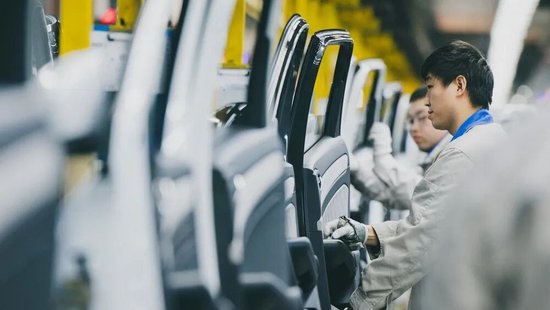
中国汽车的真正考验,才刚开始
Xin Lang Cai Jing· 2025-12-06 07:04
Core Viewpoint - The Chinese automotive industry is facing a significant downturn, with 2026 expected to be one of the most challenging years in its history due to declining sales and market conditions [5][37]. Group 1: Market Performance - Retail sales of passenger cars in China saw a 15% year-on-year increase earlier this year, but growth has rapidly declined since July, with October experiencing an overall negative growth [7][39]. - In November, daily retail sales averaged 4.6 million units, down 19% year-on-year in the first week, and 6.7 million units, down 9% in the second week [8][39]. - Major automakers are struggling to meet their sales targets, with only a few smaller new players achieving their goals by November [8][40]. Group 2: Industry Challenges - The automotive industry is transitioning from subsidy-driven growth to competition based on real demand and efficiency, indicating a significant shift in market dynamics [40][41]. - The impact of subsidies is diminishing, with over 50% of sales in 2025 attributed to trade-in programs, highlighting a reliance on government incentives [9][41]. - The market is experiencing a "strategic waiting" phase among consumers, leading to a decline in new orders as buyers anticipate better deals [15][48]. Group 3: Future Outlook - The expected decline in new energy vehicle purchase tax incentives in 2026 is anticipated to further exacerbate market challenges [15][47]. - The penetration rate of new energy vehicles is slowing, with a notable drop in total retail volume despite high growth rates in percentage terms [15][47]. - The industry is likely to undergo a significant restructuring, with weaker companies facing exit from the market, marking a shift from scale expansion to value competition [32][65]. Group 4: Technological Developments - The automotive sector is exploring various technological advancements, including smart driving and battery innovations, but progress varies across different areas [51][54]. - The introduction of solid-state batteries and centralized computing is underway, but widespread adoption is not expected until 2026 or later [54][55]. - The smart driving sector is experiencing a technological leap, with new models expected to enhance user trust and influence purchasing decisions in 2026 [57][60].


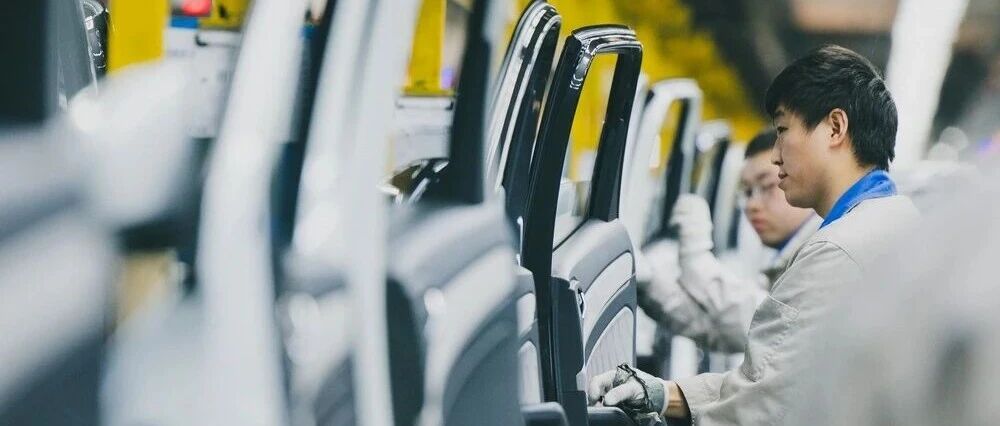
中国汽车的真正考验,才刚开始
虎嗅APP· 2025-12-06 03:32
Core Viewpoint - The article highlights that 2026 is expected to be a challenging year for the Chinese automotive industry, with significant declines in sales and a shift from subsidy-driven growth to competition based on real demand and efficiency [2][9]. Sales Performance - Retail sales of passenger cars in China saw a 15% year-on-year growth at the beginning of the year, but the growth rate has sharply declined since July, with October experiencing an overall negative growth [4][8]. - In November, the average daily retail sales of passenger cars were 46,000 units, down 19% year-on-year in the first week, 9% in the second week, and 7% in the third week [6]. Company Targets and Achievements - BYD aimed for 4.6 million units and achieved 4.18 million units by November, facing challenges to meet its target [7]. - SAIC Group set a target of 4.5 million units, with 4.11 million units sold by November, likely to meet its goal [7]. - Chery and Li Auto are unlikely to meet their targets, while Xiaomi and Leap Motor have already achieved theirs [11]. Market Dynamics - The automotive industry is experiencing its lowest profit margins in five years, with an average profit margin of only 3.8%, leading to significant price reductions [8]. - The market is shifting from a subsidy-driven model to one focused on genuine consumer demand and efficiency, indicating a potential industry "cold wave" in 2026 [8][41]. Subsidy Impact - The impact of subsidies is diminishing, with over 50% of sales in 2025 attributed to trade-in programs, which are now facing adjustments and reductions in many regions [10][13]. - The withdrawal of subsidies is leading to a significant drop in consumer purchasing activity, as many are adopting a "wait-and-see" approach [19][23]. Technological Developments - The article discusses various technological advancements in the automotive sector, including developments in autonomous driving and battery technology, which are seen as potential growth areas for 2026 [26][30]. - The shift towards "software-defined vehicles" and advancements in intelligent driving systems are expected to play a crucial role in the market's future [30][40]. Industry Outlook - The automotive industry is facing a structural adjustment, with weaker companies likely to exit the market as competition intensifies [47]. - The transition from scale expansion to value competition is seen as essential for the long-term health of the industry, with a focus on innovation and efficiency [47][48].

2025年1-10月中国汽车产量为2732.5万辆 累计增长11%
Chan Ye Xin Xi Wang· 2025-12-06 02:43
2020-2025年1-10月中国汽车产量统计图 数据来源:国家统计局,智研咨询整理 知前沿,问智研。智研咨询是中国一流产业咨询机构,十数年持续深耕产业研究领域,提供深度产业研 究报告、商业计划书、可行性研究报告及定制服务等一站式产业咨询服务。专业的角度、品质化的服 务、敏锐的市场洞察力,专注于提供完善的产业解决方案,为您的投资决策赋能。 上市企业:比亚迪(002594),长城汽车(601633),上汽集团(600104),广汽集团(601238),一汽解放 (000800),东风汽车(600006),赛力斯(601127) 相关报告:智研咨询发布的《2025-2031年中国汽车行业市场深度评估及投资机会预测报告》 根据国家统计局数据显示:2025年10月中国汽车产量为328万辆,同比增长11.2%;2025年1-10月中国汽 车累计产量为2732.5万辆,累计增长11%。 ...




上汽集团:11月12日,智己LS9上市25分钟大定突破5000台
Zheng Quan Ri Bao· 2025-12-05 15:48
(文章来源:证券日报) 证券日报网讯 12月5日,上汽集团在互动平台回答投资者提问时表示,11月12日"上汽旗舰大六座"智己 LS9上市,25分钟大定突破5000台。 ...
上汽集团:MG4半固体电池“安芯版”搭载的半固体电池由清陶动力提供
Zheng Quan Ri Bao· 2025-12-05 15:43
证券日报网讯 12月5日,上汽集团在互动平台回答投资者提问时表示,MG4半固体电池"安芯版"搭载的 半固体电池由清陶动力提供。清陶动力主要产品为半固态电池、全固态电池,客户主要为上汽乘用车等 整车企业。清陶动力的全固态电池产线已在上海安亭实现全线贯通,今年年底将实现样件生产下线,明 年将进行全固态电池样车测试,力争2027年实现全固态电池的量产交付。 (文章来源:证券日报) ...
上汽集团:上汽MG4半固体电池“安芯版”搭载的半固体电池液态电解质含量压缩到5%
Zheng Quan Ri Bao· 2025-12-05 15:43
证券日报网讯 12月5日,上汽集团在互动平台回答投资者提问时表示,上汽MG4半固体电池"安芯版"搭 载的半固体电池液态电解质含量压缩到5%,从根本上减少了起火爆炸的风险,使用的创新"陶瓷盾 牌"材料,从根本上避免正负极短路,循环寿命与安全协同提升。 (文章来源:证券日报) ...
上汽集团:清陶动力全固态电池产线已在上海安亭实现全线贯通
Zheng Quan Ri Bao Wang· 2025-12-05 15:42
Core Viewpoint - SAIC Motor Corporation has announced the progress of its all-solid-state battery production line, aiming for mass production by 2027 [1] Group 1: Company Developments - The all-solid-state battery production line has achieved full connectivity in Anting, Shanghai [1] - Sample production is expected to commence by the end of this year [1] - Testing of sample vehicles using the all-solid-state battery is planned for next year [1]