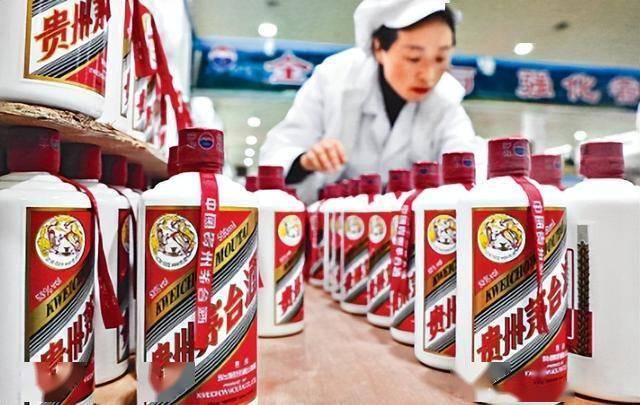
KWEICHOW MOUTAI(600519)

Search documents
1月30日每日研选丨白酒“回马枪”,是反弹还是反转?
Shang Hai Zheng Quan Bao· 2026-01-29 23:53
Core Viewpoint - The recent surge in the liquor sector, particularly on January 29, indicates a potential turning point for the industry, driven by multiple factors including short-term market signals, low valuations, and macroeconomic easing expectations [1][2]. Group 1: Market Performance - On January 29, the liquor sector saw a significant rally, with the Shenwan liquor index rising over 5%, reflecting strong performance from multiple stocks [1]. - The high-end liquor prices have established a "price bottom," with Moutai's bottle price stabilizing around 1560 yuan and Wuliangye's price also showing stability [1]. Group 2: Valuation and Dividend Appeal - The liquor sector's valuation is at a historical low of 4.1%, suggesting a high safety margin and potential for rebound [2]. - The sector's dividend yield is approximately 3.64%, with Wuliangye leading at over 5%, making it attractive for risk-averse investors [2]. Group 3: Macroeconomic Factors - Expectations of macroeconomic easing, particularly regarding potential quantitative easing (QE) by the Federal Reserve, could open up monetary policy space in China, potentially driving consumption upgrades and benefiting the liquor sector [2]. Group 4: Future Outlook - The liquor industry may be on the verge of recovery after a deep adjustment, with expectations of improved sales and financial performance in the latter half of 2026 [2]. - High-end liquor companies like Moutai and Wuliangye are actively reforming marketing strategies and expanding consumer bases, positioning themselves for future growth [2]. Group 5: Investment Opportunities - Investors are advised to focus on high-end liquor leaders with strong brand certainty, such as Moutai and Wuliangye, as well as regional companies likely to benefit from local consumption trends [3]. - Monitoring post-Spring Festival inventory reduction and price stability will be crucial for assessing the industry's bottoming out [3].




华尔街见闻早餐FM-Radio | 2026年1月30日
Hua Er Jie Jian Wen· 2026-01-29 23:27
Market Overview - Microsoft experienced a significant drop in stock price, falling 10% and creating concerns about AI spending, leading to a market-wide decline [2][13] - The Nasdaq index decreased by 0.72%, while Meta's stock surged over 10% [2] - Gold prices initially rose by 3.3% before dropping sharply, and silver reached a historical high before a significant decline [4] Company News - Apple reported a record high in revenue and iPhone sales, with a nearly 40% increase in revenue from China [33] - SanDisk's performance exceeded expectations due to a surge in storage demand driven by AI applications, resulting in a stock price increase of nearly 15% [14] - Nvidia's CEO stated that the recent visit to China was very successful, with expectations for significant growth this year [29] AI and Technology Developments - ByteDance and Alibaba are set to launch new AI models around the Spring Festival, intensifying competition in the AI application market [30] - Alibaba plans to increase its investment in AI and cloud computing from 380 billion to 480 billion yuan over the next three years [8] - Microsoft reported a record capital expenditure of $37.5 billion, but concerns arose regarding the immediate returns on this investment [37] Semiconductor Industry - Samsung Electronics reported record revenue of 93.8 trillion won in Q4, with a 465% increase in operating profit from its memory business [35] - SK Hynix's annual profit surpassed Samsung for the first time, driven by a strong market for HBM memory [35] Commodity Market - The World Gold Council reported that global gold demand exceeded 5,000 tons for the first time, with retail and institutional investors being the primary buyers [39] - Copper prices saw significant volatility, with a peak increase of over 10% before retreating [39] International Relations - Xi Jinping met with UK Prime Minister Starmer, resulting in several positive outcomes for China-UK economic cooperation [6][29] - The U.S. Senate failed to advance a key funding bill, raising concerns about potential government shutdowns [12]




“错版马茅”搅动风云 茅台双线狂飙
Mei Ri Shang Bao· 2026-01-29 22:17
Core Viewpoint - The recent surge in the price of Guizhou Moutai's products, particularly the "Horse Moutai" due to a printing error, has created a buying frenzy, leading to significant price increases in both retail and secondary markets [1][2][5]. Price Surge and Market Reaction - The wholesale price of the 24-year Flying Moutai has reached 1750 yuan, while the classic "Horse Moutai" saw a single-day increase of 180 yuan [1]. - Guizhou Moutai's stock price surged over 8%, marking its largest single-day increase in nearly a year, with the stock closing above 1400 yuan and a trading volume exceeding 26.3 billion yuan [1][4]. - The classic version of "Horse Moutai" was officially priced at 1899 yuan, but market prices have surged to 2350 yuan and even 2750 yuan within a few days, reflecting a rapid increase of 400 yuan in just four days [4]. Supply Chain and Consumer Behavior - Following the announcement of the printing error, many consumers reported being unable to pick up their orders at physical stores, leading to a tightening of supply channels [2][3]. - Some stores have indicated that even consumers willing to accept the misprinted packaging cannot complete their pickup, as new stock has not yet arrived [3]. - The announcement of the recall has triggered a psychological response among consumers, driving demand for the misprinted bottles, which are now being marketed as "limited edition" or "rare" [5]. Impact on Related Stocks - The surge in Guizhou Moutai's stock has positively affected other A-share liquor stocks, with nearly 20 related stocks experiencing significant gains [5].
代表委员面对面|张瑜委员:适配白酒消费新场景 做优产品供给
Sou Hu Cai Jing· 2026-01-29 17:11
Core Viewpoint - The Guizhou liquor industry needs to transition from "selling products" to "selling lifestyles" to activate new growth momentum for domestic demand in Guizhou [1] Group 1: Industry Growth and Consumer Trends - The Guizhou liquor industry is a significant driver of consumption growth in the province [3] - Current consumer psychology is shifting towards "emphasizing experience, health, and cost-effectiveness" [3] - There is a need to adapt to new consumption scenarios and improve product offerings [3] Group 2: Product Development and Quality Assurance - It is essential to leverage the opportunity of expanding domestic demand by revitalizing non-sauce aroma production capacity [3] - Development of low-alcohol and fruit-flavored herbal innovative liquors is recommended to create a product system that combines sauce aroma with multiple aromas [3] - Implementing full-chain supervision of key production indicators is necessary to ensure quality and build market trust [3] Group 3: Tourism Integration and Cultural Promotion - The integration of liquor and tourism should be deepened by collaborating with well-known local scenic spots to offer unique tasting packages [3] - Developing themed tourism routes centered around liquor can shift tourists' focus from merely "viewing liquor" to "tasting, purchasing, and cultural transmission" [3] Group 4: Innovation and Talent Development - Increasing R&D investment is crucial to foster new growth momentum [3] - Collaboration between liquor companies and universities or medical institutions is needed to improve brewing processes and reduce health risks [3] - There is a call to develop low-concentration, fruit-flavored "light taste" products to cater to the younger demographic [3]

在A股,“老登”耍起酒疯来比“小登”还野
Sou Hu Cai Jing· 2026-01-29 16:07
Core Viewpoint - The "old assets" in the liquor and real estate sectors have experienced a significant rebound after a prolonged period of decline, indicating a potential shift in investor sentiment towards these traditionally stable investments [3][5][11]. Liquor Industry - The liquor sector, particularly represented by Moutai, has seen a dramatic increase in stock prices, with 19 out of 20 companies in the sector hitting the daily limit up, marking the highest single-day gain in 16 months [3][7]. - The recent price surge is attributed to a change in supply strategy, where companies are now controlling supply to maintain prices, creating a sense of scarcity that has driven demand [8][9]. - As of January 29, the price of a bottle of Moutai has increased by 20 yuan, reaching 1610 yuan per bottle, reflecting a broader trend of rising prices across various Moutai products [8][9]. Real Estate Industry - The real estate sector is experiencing a recovery as regulatory pressures ease, allowing companies to report fewer metrics and potentially reducing financial costs [10][11]. - Predictions suggest that further regulatory relaxations are likely, which could lead to additional improvements in the sector's valuation [10][11]. Market Dynamics - The shift in investor focus from "small assets" (highly volatile tech stocks) to "old assets" (liquor and real estate) is driven by a desire for stability and value, especially after a period of high volatility in tech stocks [15][19]. - The current market environment suggests that if "old assets" continue to rise, younger investors may flock to them, transforming their characteristics and volatility [19][20]. - The cyclical nature of the market indicates that as "old assets" gain popularity, they may attract speculative investments, leading to increased volatility and potential profit-taking by long-term holders [21][22].

茅台涨疯了?批发商单日5次调价
Sou Hu Cai Jing· 2026-01-29 14:50
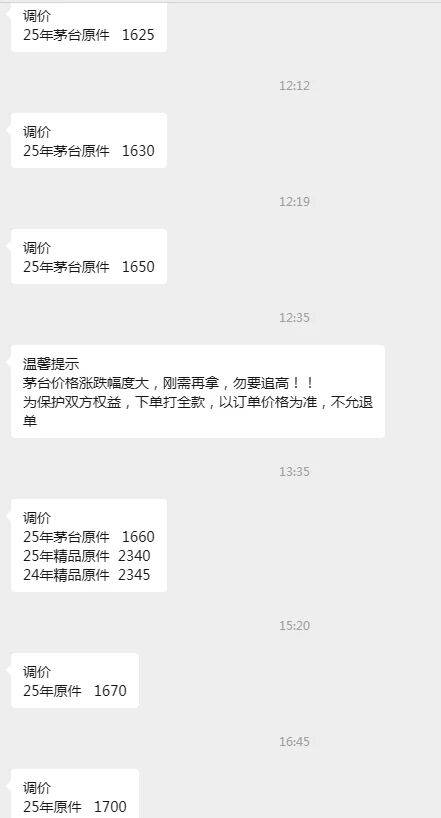
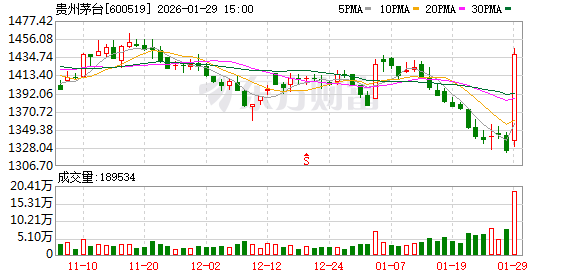
Core Viewpoint - The stock price of Kweichow Moutai (600519) experienced a significant increase, with a rise of 8.61% to reach 1437.72 CNY per share, marking the largest single-day gain in nearly a year [5]. Price Movements - The price of 25-year Moutai (original) rose from 1625 CNY to 1700 CNY within a single day, reflecting a strong demand in the wholesale market [5]. - The overall price for 25-year Moutai (original) was reported at 1620 CNY per bottle, while the scattered version was at 1580 CNY [5]. - Other Moutai products also saw price increases, with the 25-year flying Moutai (original) priced at 1620 CNY and the 24-year version remaining stable at 1750 CNY [4]. Market Performance - The trading volume for Kweichow Moutai reached 189,500 shares, with a total transaction value of 26.306 billion CNY [1]. - The stock opened at 1335.00 CNY and hit a high of 1445.00 CNY during the trading session [1]. - The overall market for liquor stocks saw a collective surge, with several companies, including Wuliangye and Luzhou Laojiao, also experiencing significant gains [3][5]. Recent Trends - Prior to the recent surge, Kweichow Moutai's stock had been on a downward trend, hitting a low of 1351.06 CNY on January 21, 2024 [6]. - The increase in stock price and demand for Moutai products indicates a potential recovery in the market after a period of decline [5][6].
飞天茅台连日售罄,有人用外挂抢酒?茅台称已在收集固定证据
Nan Fang Du Shi Bao· 2026-01-29 14:33
Core Insights - The demand for Feitian Moutai has surged, leading to reports of the use of "hacks" to increase the success rate of purchasing the product on the iMoutai platform [2][3] - Moutai has stated that the sale and use of such software is illegal and is collecting evidence to take legal action against those involved [2][3] - Since its launch on January 1, 2023, Feitian Moutai has been sold out every day for 29 consecutive days at a suggested retail price of 1499 yuan per bottle [2] Group 1: Market Dynamics - The price of Feitian Moutai has increased, with the wholesale price rising above 1600 yuan per bottle and the retail average reaching 1760 yuan per bottle [4] - The high demand for Feitian Moutai has led to all quotas for January and February being sold out according to some distributors [3] Group 2: Regulatory Response - Moutai has emphasized that the use of purchasing hacks undermines market order and violates multiple laws, including the Civil Code and the Cybersecurity Law of China [3] - The iMoutai platform has implemented a robust risk control system, successfully intercepting 426 million instances of abnormal behavior since its launch [3]
A股晚间热点 | 停牌、限购、调整保证金 白银、石油、白酒基金批量提示风险
智通财经网· 2026-01-29 14:22
Group 1: China-UK Cooperation - Chinese Premier Li Qiang emphasized the need for China and the UK to deepen cooperation in emerging industries such as artificial intelligence, advanced manufacturing, clean energy, digital economy, and modern shipping services [1] Group 2: Service Consumption Growth - The State Council of China issued a work plan to accelerate the cultivation of new growth points in service consumption, aiming to optimize and expand service supply and enhance service consumption quality [2] - Specific measures include supporting real estate projects, promoting the automotive aftermarket, extending visa-free policies for tourism, and optimizing financial support for service sector enterprises [2] Group 3: Market Risks - Several funds, including Guotou Silver LOF and E Fund Gold Theme LOF, announced risk warnings, with Guotou Silver LOF halting trading and adjustments made to margin requirements for silver contracts [3] - The oil fund LOF will also suspend trading, while the liquor fund LOF warned investors about potential price premium risks [3] Group 4: Liquor Sector Performance - The liquor sector experienced a significant surge on January 29, attributed to its perceived undervaluation after a prolonged decline, attracting short-term capital [4] - Institutions like CITIC Securities predict stable sales for liquor during the 2026 Spring Festival, indicating a potential bottoming opportunity in the industry [4] Group 5: US-China Trade Relations - The Chinese Ministry of Commerce expressed willingness to maintain and implement important consensus reached by the leaders of China and the US, aiming for stable and sustainable development of bilateral trade relations [6] Group 6: Guizhou Moutai Clarification - Guizhou Moutai denied rumors regarding its participation in SpaceX's Series A funding, labeling the information as false [7] Group 7: AI and Robotics Developments - Beijing launched its first humanoid robot pilot verification platform, capable of producing 5,000 units annually, marking a significant step in the humanoid robot industry [13] - The industry is expected to enter a commercialization phase by 2026, with major investments anticipated in AI infrastructure and cloud computing [20] Group 8: Company Announcements - Jin Tian Co. plans to repurchase shares worth 200 million to 400 million yuan, while Hengyuan Coal Power intends to repurchase shares worth 200 million to 250 million yuan [21] - Several companies, including China Communications Construction and Shenghe Resources, reported significant projected net profit increases for 2025, indicating strong growth potential [21]

白酒板块,大涨!
Jin Rong Shi Bao· 2026-01-29 14:00
Group 1 - Traditional industries, particularly liquor and cultural media, led the A-share market on January 29, with the Shanghai Composite Index rising by 0.16% while the Shenzhen Component and ChiNext indices fell by 0.30% and 0.57% respectively [1] - The liquor sector index surged by 9.93% on January 29, with 17 stocks, including Wuliangye and Luzhou Laojiao, hitting the daily limit. Kweichow Moutai, the industry leader, closed at 1437.72 CNY per share, marking an 8.61% increase, the largest single-day rise in 16 months [1] - The price of Moutai liquor continued to rise on January 29, with the 25-year Flying Moutai priced at 1620 CNY per bottle and the 26-year Flying Moutai at 1610 CNY per bottle, both increasing by 20 CNY from the previous day [1] Group 2 - Since 2026, significant events and changes in the liquor industry have driven channel upgrades and breakthroughs, with leading companies actively engaging consumers and enhancing consumer education [2] - Central government policies are expected to continue promoting consumption while limiting the addition of inefficient production capacity, encouraging mergers and restructuring in the industry, which will facilitate a transition from extensive to intensive growth [2] - The liquor industry faces considerable short-term pressure, but long-term trends indicate increasing polarization among operators, with a rise in industry concentration likely benefiting leading companies [2]
网传参与SpaceX上市A轮融资?贵州茅台:不实
Sou Hu Cai Jing· 2026-01-29 13:51
资料显示,SpaceX计划于2026年6月中旬启动首次公开募股,目标融资500亿美元,估值锁定1.5万亿美 元,这一规模将超过2019年沙特阿美290亿美元的IPO,成为全球史上最大规模公开上市事件。 盘面上,贵州茅台1月29日收涨8.61%,报1437元/股,总市值1.80万亿元。不过,当天午后白酒股已持 续拉升,五粮液、酒鬼酒等十余股涨停,因此暂无法判断SpaceX相关传闻对贵州茅台股价的单独影 响。 《星岛》记者 钟凯 广州报道 1月29日,针对市场所流传的"贵州茅台证实参与SpaceX上市A轮融资"消息,贵州茅台向《星岛》表示 系"不实消息"。 ▲资料来源:雪球 ...